RSS Feed

December 26

December 26, 1947 – The Pluto Short Film Pluto’s Blue Note is Released to Theaters

vlcsnap-2013-12-26-20h01m58s31

“’Twas a moment like this, do you remember?”

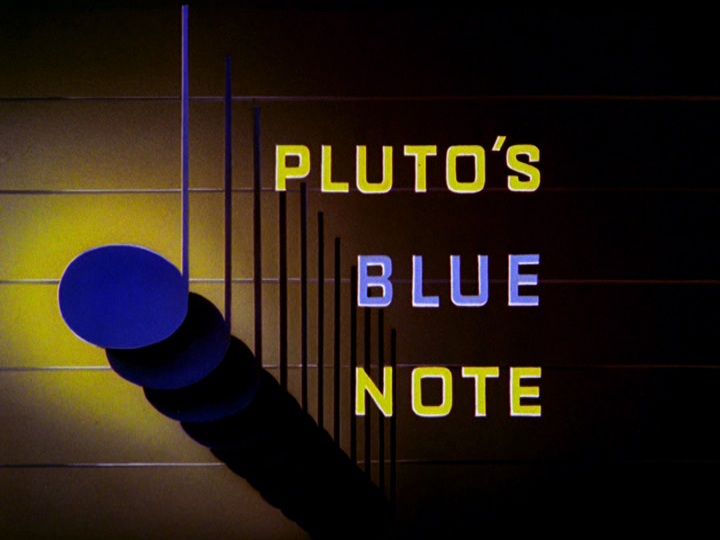
On December 26, 1947, the Pluto short film Pluto’s Blue Note was released to theaters. It features the song “You Belong to My Heart” from the 1945 animated feature film The Three Caballeros. The short was directed by Charles Nichols, with story by Milt Schaffer and Jack Huber.

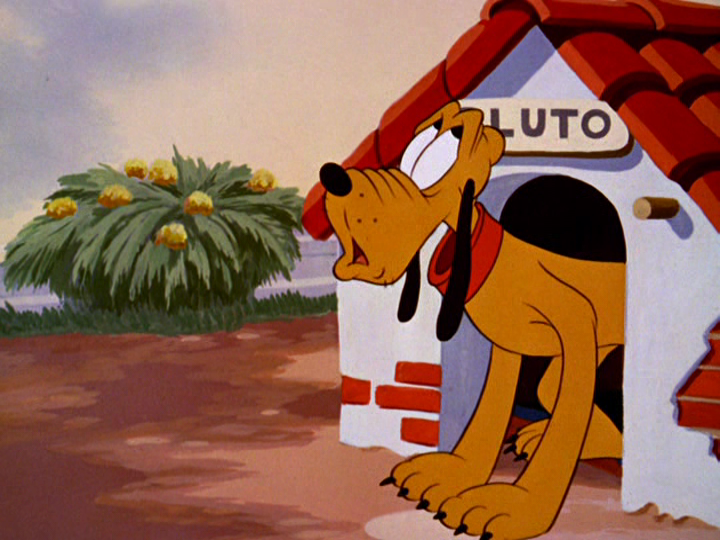
The birds are singing on a lovely spring day, but are soon interrupted by the sound of Pluto trying to join them in their tweeting. However, Pluto’s singing is rather awful, as the birds point out before they fly away. Pluto then decides to sing along with a bee’s buzzing, but once again is informed that his singing is terrible. Suddenly, Pluto hears the sound of a strange tune coming from the music store across the street. Entranced by the tune, Pluto starts dancing along. When he starts singing with it, however, the store owner pulls the radio away from the howling dog. Pluto sneaks inside the store to listen to the radio, and accidentally turns on a record player, with his tail acting as the needle. When he opens his mouth, the music from the record player comes out, and Pluto is overjoyed at this development.

Pluto begins his crooning, thanks to the record player hidden in his doghouse

Pluto begins his crooning, thanks to the record player hidden in his doghouse

Pluto then gets an idea, and when the birds come back, he uses the trick to pretend that he can sing with a beautiful voice. The female dogs of the neighborhood start screaming with joy when they hear his “singing,” and Pluto hams it up for the audience. Near the end of the performance, his ruse is almost exposed when the record starts skipping, but Pluto manages to quickly fix it and finish the song, with all the female dogs fainting from his crooning. The short ends with Pluto giving a smile to the audience.

December 25

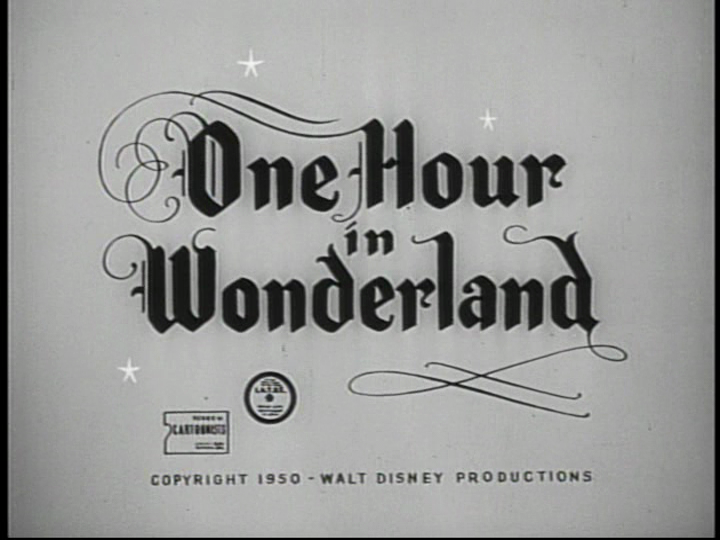
December 25, 1950 – The Christmas Special “One Hour in Wonderland” Premieres on Television
vlcsnap-2013-12-25-19h32m23s212

“We now bring you Walt Disney and his beloved characters in their world television premiere.”

On December 25, 1950, the first Disney television show and the Christmas special “One Hour in Wonderland” premiered on television. The episode was sponsored by Coca-Cola, and was touted as the world television premiere of Walt Disney and his cast of characters. The show had several noticeable guest stars, including Edgar Bergen (with Charlie McCarthy and Mortimer Snerd). The special was presented on NBC, and was actually an advertisement for the animated feature film Alice in Wonderland.

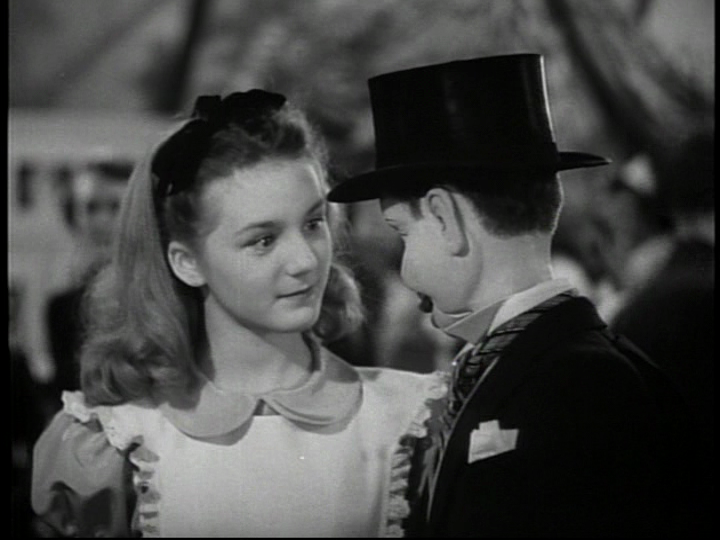
The special begins with Mortimer, Charlie, and Bergen getting ready to attend a tea party at the Walt Disney studios. On the way to the party, Bergen explains the story of Alice in Wonderland, as the voice for Alice has been asking to meet Charlie. They arrive at the studio, and find that Santa has left Walt a model train, which he is showing off to his guests. Walt introduces Kathryn Beaumont to Charlie, who is quite smitten with her on first sight.
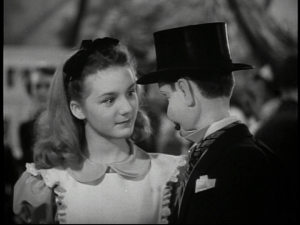
Kathryn meets Charlie McCarthy, who is quite taken with the girl at first sight

Kathryn meets Charlie McCarthy, who is quite taken with the girl at first sight

Kathryn takes Charlie to meet Bobby Driscoll, who is surrounded by several girls asking for his autograph. Charlie is unimpressed with Bobby, even though Kathryn mentions that Bobby has won an Academy Award. As Bergen is explaining ventriloquism to the party guests, Walt asks him to sit down. As he does, he accidentally ends up sitting on Donald Duck, who loudly proclaims his pain by his squawking. Walt sends Donald downstairs, much to the disappointment of the guests. Walt then tells a story to the guests about a magic mirror, revealing that he has bought the magic mirror and unveils it to the guests. They call forth the slave of the magic mirror, who doesn’t react well to Charlie’s insults.

Walt then orders that whatever Kathryn wishes, the mirror should do. Kathryn then asks the mirror to see the “Silly Song” segment from Snow White and the Seven Dwarfs, and the mirror happily complies. After the segment, Charlie rudely asks to see a young actor known the world over, and although he speaks of himself, the mirror instead shows a scene from the Mickey Mouse short Clock Cleaners. After this, Kathryn talks to Bobby about what he wishes to see, and Bobby recalls the Uncle Remus stories from Song of the South. After showing the scene of B’rer Rabbit leaving the Briar Patch, Kathryn finds that they’ve been overworking the mirror, and everyone decides to take a break with a bottle of Coca Cola.
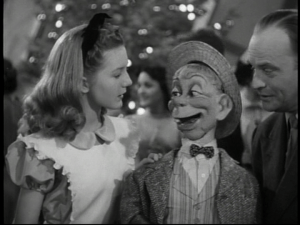
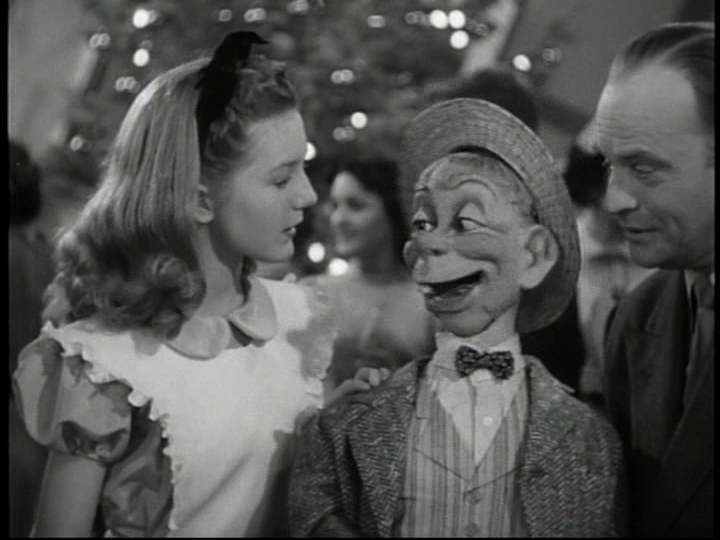
After others have had a chance, Kathryn asks Mortimer to request a vision from the magic mirror

After others have had a chance, Kathryn asks Mortimer to request a vision from the magic mirror

After the break, Kathryn convinces Mortimer to ask the mirror to see something, and the mirror shows the Pluto short film Bone Trouble. After this, Bergen wishes to see the Firehouse Five Plus Two, although he wishes to see them working hard as Disney animators rather than the band. Walt agrees that he wants to see this, and tells Bergen that the band members would never let the music interfere with their work. The mirror complies with Bergen’s request, and the guests are treated to an impromptu performance by the Firehouse Five Plus Two, who ignore their work to play their music as they think Walt is not watching. The men soon receive a note from Walt that they “look great,” and realize that the magic mirror is watching them. Everyone is disappointed that they are unable to see a clip from Alice in Wonderland, as the mirror cuts out before Ward Kimball can show them anything. The mirror makes excuses, as does Walt, but they finally agree to show a small snippet of the film after everyone begs. After the clip, Bergen, Charlie, and Mortimer head home, with Bergen being allowed to take home the magic mirror to keep an eye on Charlie and Mortimer.
December 24

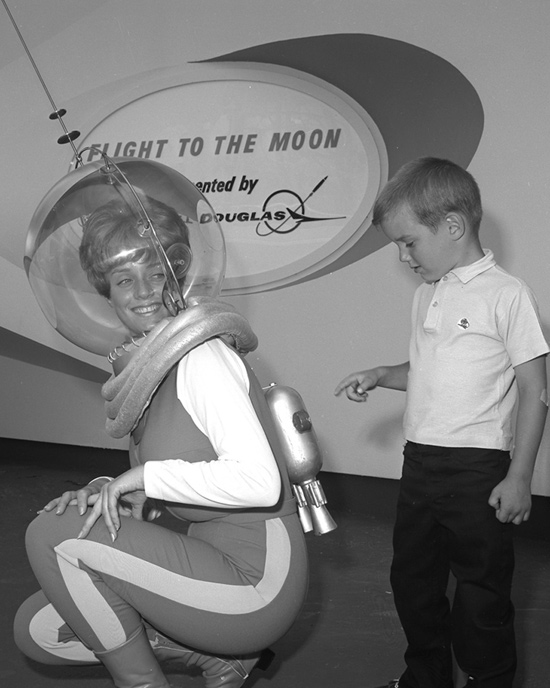
December 24, 1971 – The Flight to the Moon Attraction Opens in Walt Disney World’s Tomorrowland

non596423SMALL

“Our Flight to the Moon takes place sometime in the future, when travel to outer space will be an everyday adventure.”

On December 24, 1971, the Tomorrowland attraction Flight to the Moon opened in Walt Disney World’s Magic Kingdom park. The attraction was based on the original Disneyland attraction, which opened in 1967. After men had already been to the moon, the attraction lost popularity due to it being dated, and was closed on April 15, 1975. The attraction was then replaced with Mission to Mars, which opened on June 7, 1975.


December 23

December 23, 1998 – La Théâtre for Cirque du Soleil Opens in Downtown Disney

la nouba

“Be mesmerized by this extraordinary avant-garde spectacle as it makes the impossible, possible!”

On December 23, 1998, La Théâtre, the custom-built theater for Cirque du Soleil opened in west side of Walt Disney World’s Downtown Disney area. This theater was built to showcase the La Nouba show, which is still being performed to this day. The outside of the theater was built to resemble a white circus tent; the inside of the theater has a mechanical stage with several movable parts, including platforms and movable glass cages. The show La Nouba (translated means “the party”) has more than 65 performers from 15 countries creating a dreamlike atmosphere for the audience.


December 22

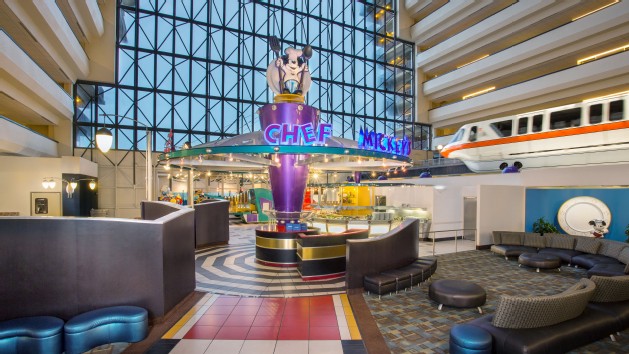
December 22, 1995 – The Contemporary Resort Restaurant Chef Mickey’s Opens

chef-mickeys-00

“Join some favorite Disney Friends for a fun-filled feast at Disney’s Contemporary Resort.”

On December 22, 1995, the restaurant Chef Mickey’s opened in Walt Disney World’s Contemporary Resort, replacing the Contemporary Café. The restaurant contains American cuisine at an indoor buffet, which features the famous Mickey waffles for breakfast, and a sundae bar at dinner where guests can customize their own ice cream sundae. Chef Mickey’s is also known for character dining, where guests can interact with the original Disney characters: Mickey, Minnie, Pluto, Donald, and Goofy. Guests are also treated to a view of the monorail as travels to and from the Magic Kingdom. This restaurant is not to be confused with the restaurant of the same name that existed in Downtown Disney from July, 1990 to September, 1995.


December 21

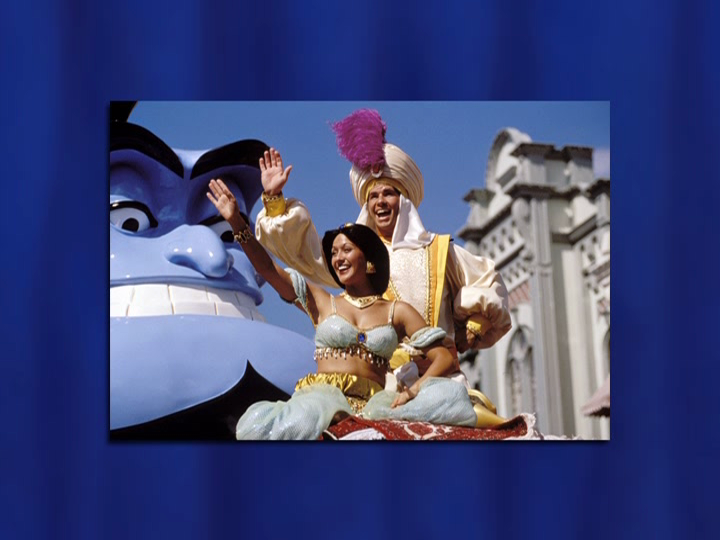
December 21, 1992 – The Aladdin’s Royal Caravan Parade Begins at Walt Disney World’s Disney-MGM Studios

vlcsnap-2013-12-21-18h31m36s25

“Prince Ali, fabulous he, Ali Ababwa, genuflect, show some respect, down on one knee!”

On December 21, 1992, the Aladdin’s Royal Caravan parade began its run at the Disney-MGM Studios park in Walt Disney World. Based on the hit Disney animated feature Aladdin, released November 25, 1992, the parade featured the song “Prince Ali,” sung by actor Robin Williams. One feature of the parade were the spitting camel floats, which had their heads turning side to side and shooting water at the crowds. These camels would eventually be a part of the Magic Carpets of Aladdin attraction in Adventureland of the Magic Kingdom. The parade lasted until August 27, 1995, and was replaced by Toy Story – The Parade.

December 20

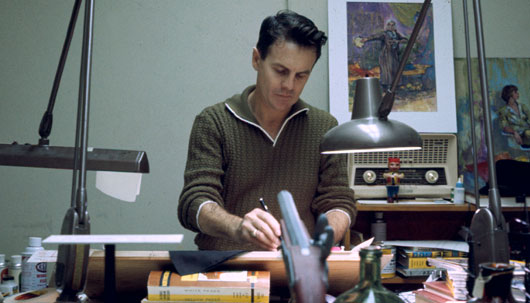
December 20, 1924 – Imagineer, Artist, Actor, and Disney Legend Sam McKim is Born

sam-mckim-feat

“Sam’s creations at Disneyland, Walt Disney World, and other parks are many. Frontierland comes to mind as one of his major contributions. It was an honor to know Sam McKim, a man of very high character.” – Former Imagineer George McGinnis

On December 20, 1924, John Samuel McKim was born in Vancouver, British Columbia, Canada. While still young, his family moved from Canada to Seattle, Washington; they would eventually move to Los Angeles due to his father’s health issues. He and his four siblings were child actors in Hollywood, with Sam, at age 10, being the first to enter the entertainment business. He got a contract with Republic Picutres, working mostly in B-films and Westerns, appearing with such stars as Spencer Tracy and Gene Autry. McKim always had a talent for art, and in high school, he sent his drawings to the Walt Disney Studios. He was then offered a job in the traffic department as a foot in the door; instead of taking the job, he decided to apply for the United States Army with his brother David. Although the two were turned down due to the fact that they were not U.S. citizens, the two applied for citizenship the next year and successfully applied for the Army after that, effectively leaving acting behind. McKim served in the American Infantry Division in WWII, and attended the Art Center College of Design after the war was over. Directly after graduation, he was drafted into the Korean War, and attended the Chouinard Art Institute after returning from Korea.

In 1953, McKim took a job at 20th Century Fox creating story sketches for films. After a series of layoffs at Fox in 1954, McKim took a job at the Walt Disney Studios, using his art skills to create inspirational sketches for Walt Disney’s pet project, Disneyland. McKim worked on sketches for almost every aspect of the park, including Pirates of the Caribbean and the Haunted Mansion. McKim was also asked to contribute to storyboarding of several Disney films and shows, including The Gnome Mobile, Big Red, and Zorro. During the development of Walt Disney World, McKim continued his contribution to the look of the park, developing sketches for Disney-MGM Studios (now Hollywood Studios) and several Epcot attractions. What McKim is most known for, however, is being the creator of the Disneyland souvenir maps from 1958 to 1964, which has become a highly sought collector’s item. In 1992, McKim was also asked to create the map for Disneyland Paris, in commemoration of its opening. In 1996, McKim was honored as a Disney Legend for his work as an Imagineer. He passed away on July 9, 2004, at the age of 79.

December 19

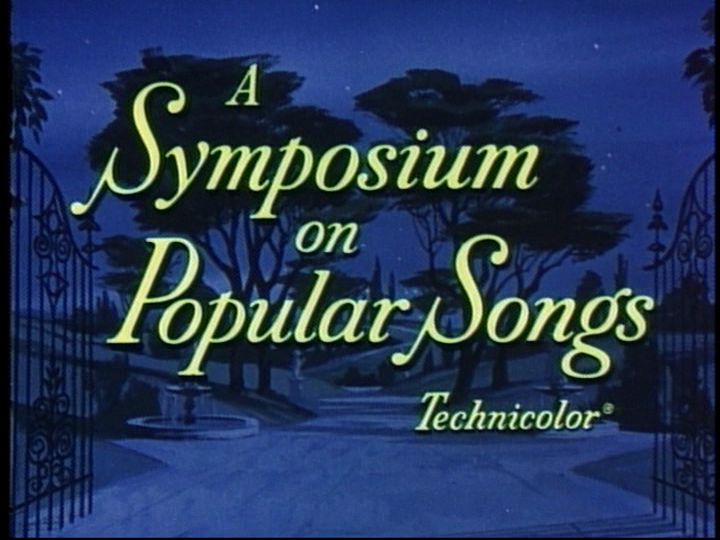
December 19, 1962 – The Special Short Film A Symposium on Popular Songs is Released to Theaters

vlcsnap-2013-12-19-19h50m01s221

“Come in and sit down and I’m going to play for you several hundred of the latest hit songs of the past 60 years, which, naturally, I wrote myself.”

On December 19, 1962, the special short film A Symposium on Popular Songs was released to theaters. The short is a mix of traditional animation and stop motion animation, relaying the history of popular music within the 20th century. The short was nominated for an Academy Award for Best Animated Short Film, but lost to The Hole by Storyboard Inc. and Brandon Films. The short was directed by Bill Justice, with story by Xavier Atencio. It stars the vocal talents of Paul Frees, Gloria Wood, Billy Storm, and Skip Farrell. The songs within the short were written by the Sherman Brothers, with musical arraignment by Camarata.

The short takes place inside Ludwig von Drake’s stately mansion, where he greets the audience at the door and brings them inside to talk about popular music. He begins with his life story at the beginning of the turn of the century where, inspired by his poverty and his ragged clothing, he created ragtime music. He then plays his hit song, “The Rutabaga Rag,” with some accompanying stop-motion animation of vegetables dancing. After this, he moves to the Roaring Twenties, where he was asked to come up with a new style of popular music to put Dixie on the map. He does so with the song “Charleston Charlie,” an allusion to popular ’20s singer Helen Kane.

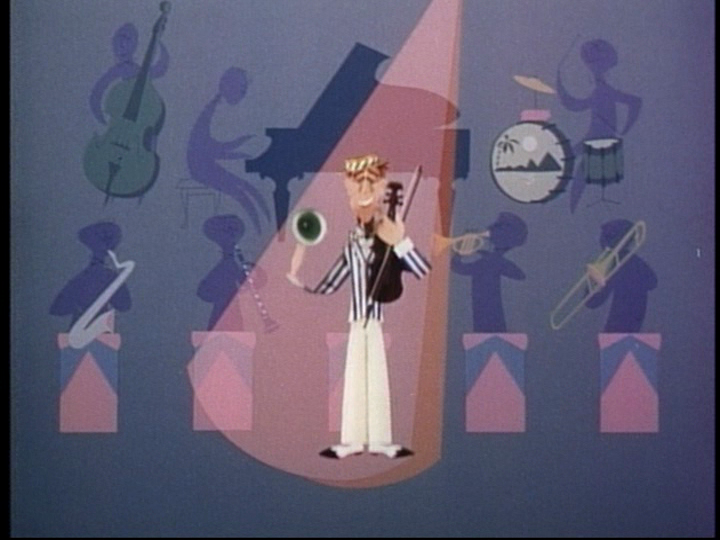
Ludwig moves to the Great Depression era of songs, and turns to a picture of a signer with a backing band

Ludwig moves to the Great Depression era of songs, and turns to a picture of a signer with a backing band

Moving to the Great Depression era, Ludwig has a bit of a panic when he talks about how he lost his money in the stock market. He bought a piano with his last nickel, and wrote the song “Although I Dropped $100,000.” The song parodies the popular songs of the time period, including “Let a Smile Be Your Umbrella” and “Stormy Weather.” Ludwig explains after this that he invented the microphone, and by doing so, invented the idea of a crooner. He wrote the love ballad “I’m Blue for You, Boo-Boo-Boo-Boo-Boo,” which has the singer imitating the crooning style of Bing Crosby. After this, Ludwig moved on to the style of Boogie Woogie, with three singers singing “The Boogie Woogie Bakery Man” which is allusion to the swing style, particularly the songs of the Andrews Sisters.

Ludwig then turns on the television to his favorite music show, The Von Drake Hour, which plays many of his hit songs. The song that starts to play is “Puppy Love is Here to Stay,” which is the beginning of the “modern era” of music (modern for the time the short was released). Soon, Ludwig turns off thetelevision and takes the audience into his hi-fi studio to play his final song, “Rock, Rumble, and Roar” which pays homage to the early rock and roll era in popular music. He forgot the record, and decides to play the song himself, which is segmented with snippets of all the earlier songs. The short ends with the house shaking and rocking along with the raucous music Ludwig is playing.

December 18

December 18, 1933 – Diane Disney Miller, Daughter of Walt Disney, is Born

vlcsnap-2013-12-18-18h41m11s123

“[Diane Disney Miller] is remembered by Disney fans around the world as the beloved daughter of Walt Disney, and one who graciously shared her family history and personal memories of her father.”

On December 18, 1933, Diane Marie Disney Miller was born in Los Angeles, California. Walt Disney was accepting an award from The Parents Magazine for “distinguished service to children,” when he was given the news that his wife Lillian was in labor; he murmured his thanks to the guests assembled and ran out the door to join his wife and welcome his daughter. Diane was the first daughter of the Disney family; sister Sharon was adopted by the family in 1936. At age 20, Diane met Ron Miller on a blind date in San Francisco; the two married on May 9, 1954. After serving in the Army and playing professional football, Miller would work at the Walt Disney Company, eventually serving as CEO. In 1984, Miller left the entertainment industry, and he and Diane opened the Silverado Vineyards Winery in Napa, California.

After dedicating her life to raising her family, Diane became a fierce advocate of her father and his legacy. She helped document the history of Walt and the company, especially with the creation of the Walt Disney Family Museum, which opened in 2009. Diane was also instrumental in the development and opening of the Walt Disney Concert Hall in 2004. Known for her fierce protection of her father’s legacy, she was honored for her efforts to preserve the history of Walt Disney and the company for nearly two decades. She continued to fight against inaccurate biographies and rumors circulating her father, and in 2001, she assisted the Walt Disney Family Foundation in creating a documentary film entitled The Man Behind the Myth.

On November 19, 2013, Diane passed away after sustaining injuries in a fall. She is survived by her husband, seven children, 13 grandchildren, and a great-granddaughter.


December 17

December 17, 1932 – The Mickey Mouse Short Film Mickey’s Good Deed is Released to Theaters

vlcsnap-2013-12-17-18h54m38s247

“Thank you! Merry Christmas!”

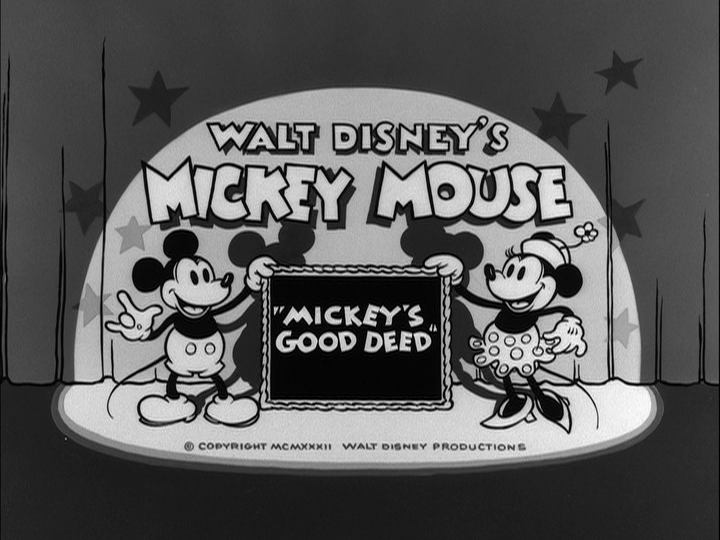
On December 17, 1932, the Mickey Mouse short film Mickey’s Good Deed was released to theaters. It was directed by Burt Gillett.

It’s a cold Christmas night, and Mickey is playing “O Come All Ye Faithful” on the cello while passersby throw him coins in his tin cup. Pluto howls along with Mickey’s playing, and the two are pleased that they have enough money to get something to eat. However, they find that people have been throwing them nuts and bolts instead of money, and are unable to buy any food. Mickey is discouraged, but cheers up quickly when he gets the idea to play outside of a rich person’s house. Inside the house, a spoiled piglet is loudly whining while his father and the butler try to entertain him. Suddenly, the piglet is distracted by Pluto’s howling outside, and demands that his father buy him the dog. The butler pursues Mickey and Pluto, but Mickey refuses to sell Pluto, as Pluto is his pal. Unfortunately, in the chase, Mickey’s cello is destroyed by a passing horse-drawn sled.

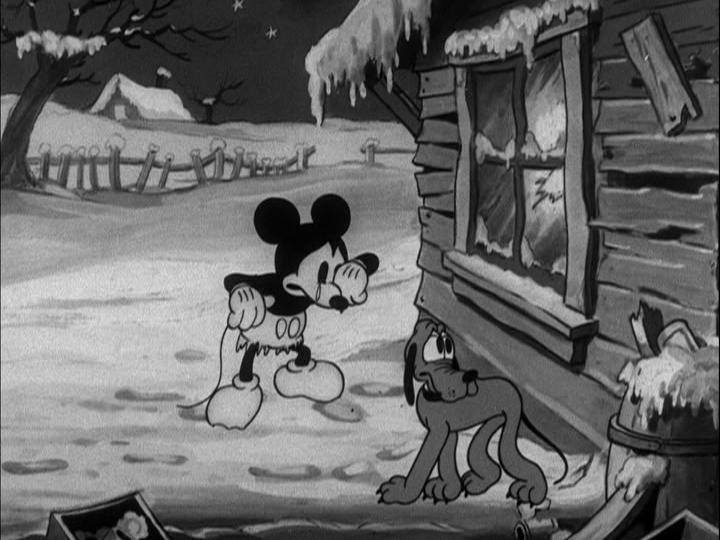
After seeing the poverty-stricken single mother and her several children, Mickey and Pluto are driven to tears

After seeing the poverty-stricken single mother and her several children, Mickey and Pluto are driven to tears

Mickey soon spies a woman crying in a dilapidated shack, and realizes that the money could help her and her several children for Christmas, and sells Pluto to the butler, provided that they give him a good home. Inside the home, the piglet starts abusing Pluto, hitting him with a hammer and chasing after him with a toy train. Meanwhile, Mickey uses the money to buy gifts for the children, and pretends to be Santa while packing their stockings. He wakes up the children as he leaves, and the children are delighted to find that Santa found them. Back at the hose, the piglet is causing even more havoc, with his father and the butler unable to stop him. The father is at his wits end, and decides to throw Pluto out. As the piglet whines, the father finally gives the piglet a long-overdue spanking. Pluto leaves the house and reunites with Mickey, and the two are pleased to find that the will have Christmas dinner, as the piglet tied a turkey to Pluto’s tail.