RSS Feed

December 16

December 16, 1983 – The Mickey Mouse Cartoon Featurette Mickey’s Christmas Carol Premieres in Theaters
vlcsnap-2013-12-16-19h31m33s118

“What’s this world coming to, Cratchit? You work all your life to get money, and people want you to give it away!”

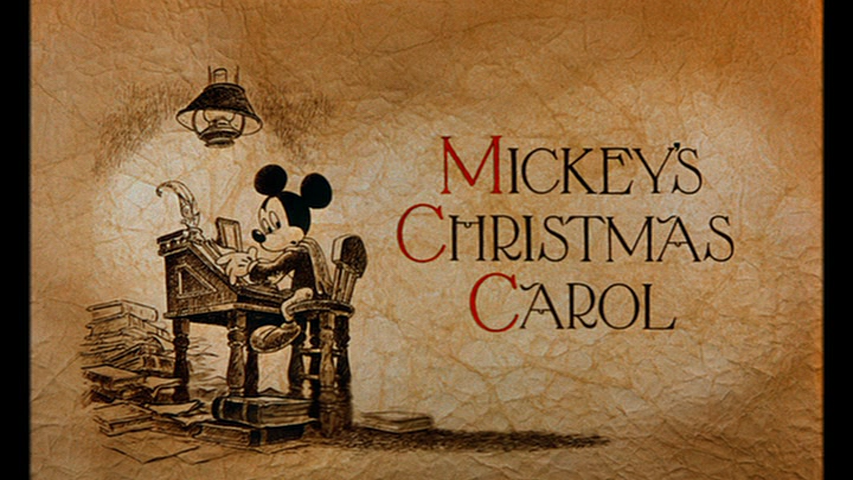
On December 16, 1983, the Mickey Mouse cartoon featurette Mickey’s Christmas Carol premiered in theaters. The 25 minute film was based on the classic Charles Dickens story A Christmas Carol, with Disney comic book staple Uncle Scrooge McDuck playing the part of Ebenezer Scrooge. Mickey portrays Bob Cratchit, Goofy plays Jacob Marley’s ghost, and Donald Duck plays Fred, among several other classic Disney characters. This was Mickey’s foray back into theaters after his last short film in 1953, The Simple Things. The idea for the film went back to the 1974 record of the same name. The film was released on a double billing with the film The Rescuers. It was eventually nominated for an Academy Award – the first Mickey Mouse short to be honored so since 1948’s Mickey and the Seal; it would lose to Sundae in New York. The film was directed by Burny Mattinson, with story by Mattinson, Tony L. Marino, Ed Gombert, Don Griffith, Alan Young, and Alan Dinehart. It stars Alan Young as Scrooge, Wayne Allwine as Mickey Mouse, Clarence Nash as Donald, Hal Smith as Goofy, Eddie Carroll as Jiminy Cricket, and Will Ryan as Willie the Giant and Pete.

The film begins on Christmas Eve in London, and Scrooge is heading back to his office, where he lectures employee Bob Cratchit for using a piece of coal in the stove. Cratchit works up the nerve to ask Scrooge for half of Christmas Day off, and Scrooge agrees, so long as his pay is docked. Scrooge goes back to his desk to count his money, but is soon interrupted by the appearance of his nephew Fred. Fred brings his uncle a wreath, but he and Cratchit are soon dismayed at Scrooge’s attitude about Christmas. Fred invites his uncle to Christmas dinner, but is soon kicked out of the office. After Fred leaves, two men arrive asking Scrooge for a donation for charity. He sends them on their way without a donation, and laments to Cratchit about how he doesn’t understand why everyone wants him to give his money away.
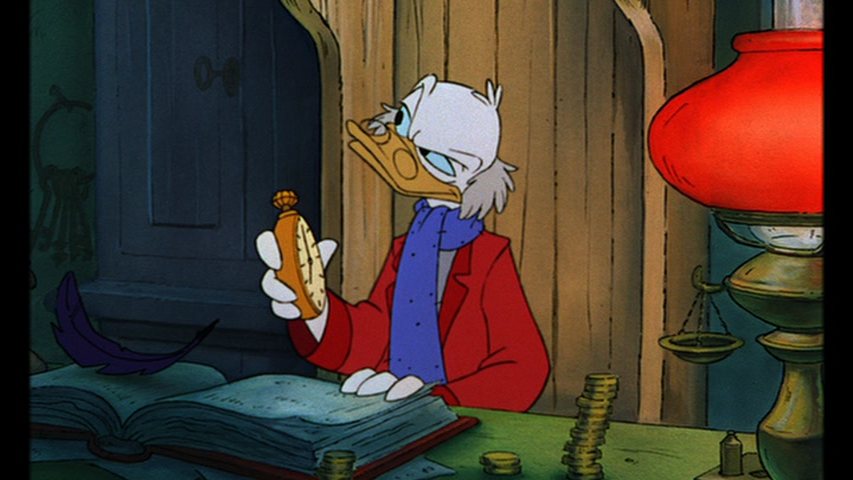
Scrooge eyes the clock, but begrudgingly lets Cratchit go home for Christmas

Scrooge eyes the clock, but begrudgingly lets Cratchit go home for Christmas

That evening, Cratchit leaves merrily to join his family for Christmas, and Scrooge heads home in the late London night. As he arrives home, his door knocker suddenly turns into the face of his old partner, Jacob Marley. Scrooge is startled, but thinks nothing of it. A shadow follows him up the stairs, and although Scrooge tries to hide, the ghost of Marley finds him and warns him of his fate – to have to carry heavy chains on his soul for all eternity, thanks to his sins. Marley tells him that three spirits will meet him through the night, should he want to avoid that fate. Scrooge heads to bed, worried about the spirits, but soon dismisses them and goes to sleep. The Ghost of Christmas Past arrives at one, and takes Scrooge back to his past, when he used to be kinder and believed in Christmas. After a dizzying flight through London, Scrooge arrives back at his old employer’s Christmas Party. Scrooge spies himself in the corner, and watches as he falls in love with Isabelle, the love of his life.

As they continue watching Scrooge’s life, they see the decline of Scrooge’s love for Isabelle, as money has become his only love. She leaves him, and Scrooge begs the spirit to take him home. When the clock strikes two, the Ghost of Christmas Present arrives, who is surrounded by the food of generosity. Scrooge argues that no one has ever offered him generosity, but the ghost shoots back that Scrooge never gave reason for anyone to show him any. The ghost takes Scrooge to the house of Bob Cratchit, where Scrooge sees his family, with the sickly Tiny Tim. Scrooge is concerned with the lack of food the Cratchits have, as well as the welfare of Tiny Tim, who may not live to see another Christmas. As Scrooge asks the spirit what happens to the boy, the spirit disappears, and all the lights around him go out.

Cratchit and his family mourn the loss of their youngest child, Tiny Tim

Cratchit and his family mourn the loss of their youngest child, Tiny Tim

The Ghost of Christmas Future arrives, with Scrooge being taken to the graveyard. Scrooge sees Cratchit mourning over his son’s grave, but when Scrooge begs for Tiny Tim’s life, he is interrupted by the laughter of two weasels, who are digging the grave for Scrooge. Scrooge is taken to his plot and sees his name on the tombstone, and is then pushed into the grave by the spirit. As the spirit laughs, Scrooge begs for his life, pleading that he will change. As he falls, he finds that he is back in his own room, arriving home on Christmas morning. Scrooge rushes outside, and starts his day by making a huge donation to the two men from yesterday. Scrooge then runs into his nephew Fred, and accepts the invitation to Christmas dinner before going shopping. He rushes over to Cratchit’s house, and pretends to be the same old Scrooge. He soon reveals his new demeanor, making Cratchit his partner and giving him a raise. The film ends with a celebration in the Cratchit house, with Scrooge acting as another father to Cratchit’s children.

December 15

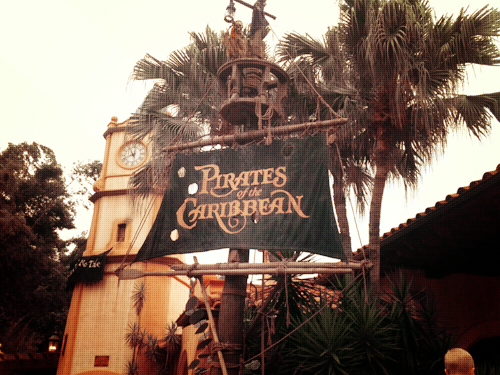
December 15, 1973 – The Pirates of the Caribbean Attraction Opens in Walt Disney World’s Magic Kingdom

tumblr_mk56v8bPCS1rhd7c3o1_500

“Set sail on a swashbuckling voyage to a long-forgotten time and place when pirates and privateers ruled the seas.”

On December 15, 1973, the Walt Disney World version of the Pirates of the Caribbean attraction opened, thanks to its popularity in the original Disneyland park. The attraction is mostly similar to the original Disneyland attraction, although there has been some modification during the 2006 alterations, which included elements from the hit Pirates of the Caribbean film series. Guests enter a world of pirates, entering sites like the Pirates Grotto, the Fort, Town Square, the Burning City, and the Dungeon. The attraction is still one of the most popular attractions in all of Walt Disney World.

December 14

December 14, 2003 – Walt Disney World’s Pop Century Resort Opens

Pop Century

“Experience the unforgettable fads of the 1950s through the 1990s all over again.”

On December 14, 2003, the Pop Century Resort at Walt Disney World opened. The theme of the resort is important pieces of popular culture that defined the United States starting from 1950 to 1990, including toys (Rubik’s Cube), activities (bowling), and innovations (laptop computers). The resort is also known for its several pools: the 1960s Hippy Dippy Pool, the 1950s Bowling Pool, and the 1990s Computer Pool. The ’60’s section also includes a playground for younger children. The resort was originally planned to be completed in 2002, but was postponed due to the effects on tourism from the terrorist attacks in New York City. A section known as the Legendary Years was planned and had extensive work done, but was never opened; this section eventually turned into the Art of Animation Resort, which opened in 2012.

December 13

December 13, 2005 – The Direct to Video Sequel Kronk’s New Groove is Released

KNG_1

“But then he did a whole 180, said vamoose to the shady lady, now he’ll teach your kid to talk like a squirrel.”

On December 13, 2005, the direct-to-video sequel to the 2000 animated feature film The Emperor’s New Groove, titled Kronk’s New Groove, was released. This sequel was nominated for three Annie Awards, including Best Home Entertainment Production, Best Storyboarding in an Animated Feature Production, and Best Writing in an Animated Feature Film. The film overall was panned, as critics considered the storyline weak. It was written by Tom Rogers, Anthony Leondis, and Michael LaBash, and was directed by Elliot M. Bour and Saul Andrew Blinkoff. The film includes the original cast from the first film, including Patrick Warburton as Kronk, Eartha Kitt as Yzma, David Spade as Kuzco, John Goodman as Pacha, and Patti Deutsch as the Waitress; the film also includes Tracey Ullman as Miss Birdwell, and John Mahoney as Kronk’s father.

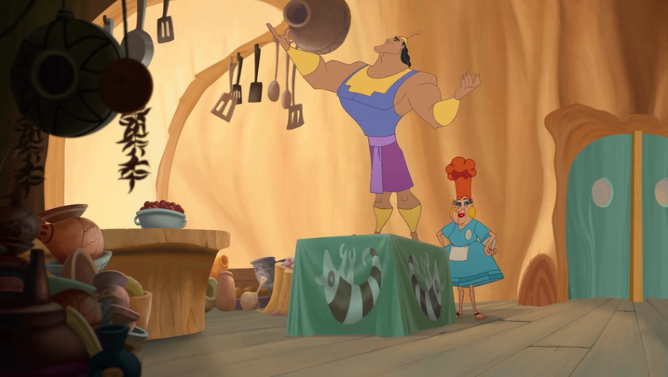
The film begins with a cheese explosion at Mudka’s Meat Hut, where Kronk is the head chef. Kronk is distressed, as his perfect life seems to have gone awry. He takes the audience back to when his troubles started – earlier that same day. Kronk has changed a lot since the end of his involvement with Yzma, with the whole town adoring him. Kuzco interrupts Kronk’s narration to talk about himself, but explains that the film really belongs to Kronk, but still interrupts here and there. Back at the Meat Hut, Kronk continues his duties as head chef and head delivery boy, and sees his friend Pacha and his family. Soon, an urgent message arrives for Kronk, which he attempts to hide from everyone. He is panicked that his father is coming for a visit, as he hasn’t told his father that he doesn’t have a wife, family, and a house on a hill. His father never approved of his cooking talents, and Kronk feels like he always disappointed his father.

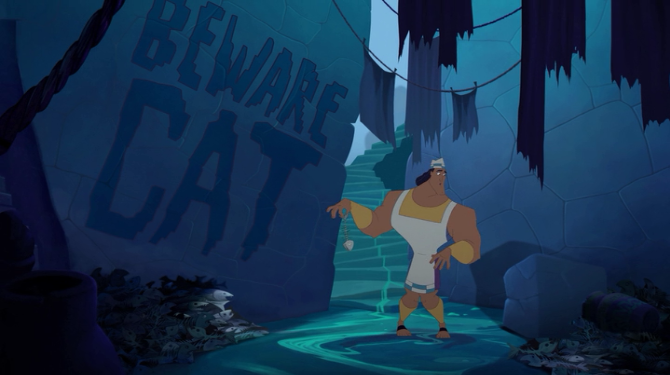
True to form, Kronk misses the signs that he's heading into a dangerous area

True to form, Kronk misses the signs that he’s heading into a dangerous area

Kronk begins telling the story about how he gained and lost his house on a hill to the waitress, where he first goes to the senior citizens home, where the seniors are wishing for a youth potion. He is unaware that he’s being watched by Yzma, who comes up with a trap to catch Kronk. She is no longer a cat, but still maintains some catlike qualities, including a tail. She claims that she has changed and wishes to help others, and takes him down to her secret lair, where she has created a youth potion. She tasks Kronk to sell the youth potion to the seniors, knowing that he needs the money to buy a big house and finally get a thumbs up from his father. Everyone takes the potion, and starts believing they are now young and beautiful, although they are really only having a placebo effect. Yzma soon reveals that she’s been running a scam, as the potion is nothing more than sewer slime.

Kronk soon makes a lot of money, and as the seniors need money to buy more youth potion, they sell Kronk the home. After a while, one of the seniors named Rudy stops by to visit, but isn’t wearing any clothing. Rudy reveals that he had to sell his clothes to buy more youth potion, and Kronk gives him a free bottle. Rudy then goes crazy on receiving the potion, and Kronk realizes that the potion was a fake. Kronk feels incredibly guilty for helping Yzma to cheat his friends, and Rudy reveals that the seniors were ready to elect Yzma as emperor. Kronk exposes Yzma as a fake, and the seniors chase after her. After they catch her, the seniors realize that they’re only as young as they feel, but still wish to get their belongings back from Yzma. She pulls out her most diabolical potion ever, and turns into a fluffy pink bunny, but is soon taken away by a hawk. Kronk then returns his attentions to the problems at hand, and decides to give his house back to the seniors.

Kronk finishes his story, and begins the tale of his lost love

Kronk finishes his story, and begins the tale of his lost love

As Kronk finishes telling the story of how he gained and lost his house on a hill, he starts to cry. The waitress sends Kronk back to work, but he then moves into a story about how he lost his girl. Kronk begins with taking the village children to Camp Chippamunka, competing for best troop for a third year. There, Kronk falls in love with troop leader Miss Birdwell, but thanks to the antics of his troop, the romance between Birdwell and Kronk doesn’t last long, turning into a rivalry between the troops. The two have a fight one night, but come to an understanding and work together to make a treat of raisin bread for their troops, which once again leads to a mutual attraction. The two declare to their troops that they are ending the feud, but are unaware that Tipo from Kronk’s troop is planning on playing a mean prank on Miss Birdwell’s troop. At the final event of the contest, Kronk’s troop performs exceptionally well, and Tipo puts his plan into action, accidentally leaving behind his empty pouch of itching powder in their grip chalk. After discovering Tipo’s bag of powder, marked with Tipo’s name, Kronk steps in to take the blame, and loses the woman he loves. He then goes back to the present, and the waitress points out that his father is on his way.

Kronk then comes up with the idea to borrow Pacha’s wife, kids, and house on a hill. Kronk’s father soon arrives at the restaurant, and Pacha’s family pretends that they are Kronk’s family. However, the idyllic scene is interrupted when Pacha enters the scene dressed as a woman, but Kronk pretends that he’s his mother-in-law. Kronk’s father, thinking Pacha is attractive, starts hitting on him. Kronk also has to pretend that he’s not the chef of the restaurant, and as he tries to balance cooking and meaningful, yet meddlesome, gestures from his friends as they try to assist him, the fondue explodes, bringing it back to the scene at the beginning of the film. Kronk finally explains the truth to his father, and resigns himself to being a failure. Chaca, one of Pacha’s kids, tells Kronk that he has the entire village, which cheers him up. His father finally gives him the thumbs up he’s always wanted, and tells him that he’s proud of him. The movie ends with Miss Birdwell returning, and the two rekindle their romance.

December 12

December 12, 1952 – The Goofy Short Film How to Be a Detective is Released to Theaters

vlcsnap-2013-12-12-19h56m20s101

“Every large city offers a wealth of opportunities for a good private detective. The requirements for such a job are quite simple: item number one, he needs office space.”

On December 12, 1952, the Goofy short film How to Be a Detective was released to theaters. It was directed by Jack Kinney, with story by Dick Kinney and Brice Mack.

The short begins with a city at night, with several crimes being committed in one building. One small spot at the top of the building has an “Office to Let” sign, which is soon taken away and replaced with a sign for Johnny Eyeball, Private Eye. Johnny (portrayed by Goofy), has his reading of a Mickey Mouse comic interrupted by a mysterious woman who requests him to “find Al.” She pays him $100, and the police chief appears, telling Johnny to leave the case to the police. A shady weasel approaches Johnny with a gun soon after, and threatens him. Johnny then heads to Al’s Joint, disguised as an old man, but is quickly recognized.

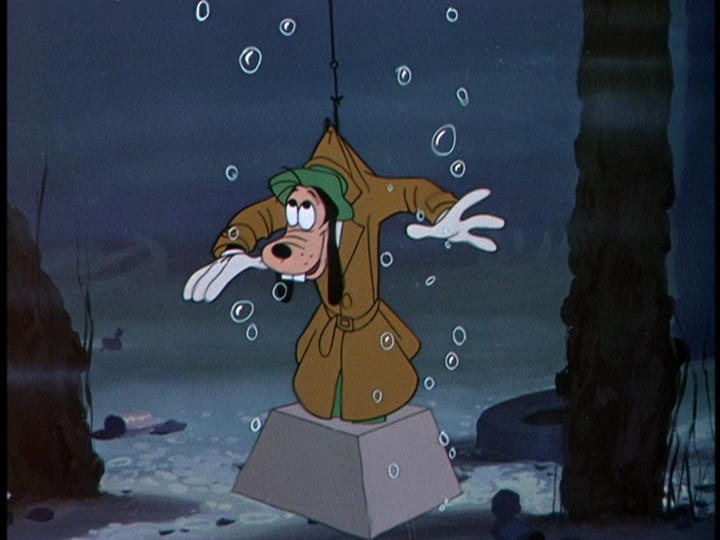
Johnny finds himself "sleeping with the fishes," but is soon pulled out by the police chief

Johnny finds himself “sleeping with the fishes,” but is soon pulled out by the police chief

When Johnny enters the bar, he asks the bartender for information on Al, bribing him with a dollar. The bartender drugs Johnny’s drink with “goof balls,” and Johnny soon finds himself in the bottom of the river wearing cement boots. The chief pulls Johnny out of the river and warns him again to let the police handle this case. Johnny then heads to the Chronicle’s files, but falls down an elevator shaft. He is then kicked out of the morgue, and tries to call the police. Everyone is on the Al case, and they follow a mysterious car in taxis from “Al’s Taxi,” but end up in various dangerous situations, including dodging trains and getting squished between two trucks. The chase continues for a while, which includes gunplay, when all three cars end up crashing into a hay bale. As the weasel, the woman, Johnny, and the police chief pop out of the hay, the woman takes the chief, who is the mysterious Al Muldoon they’ve all been searching for, by the ear and drags him into the nearby building of the Justice of the Peace, who happens to be the weasel. Johnny shrugs, and says simply that this case proves that crime doesn’t pay.

December 11

December 11, 2012 – Monsieur Paul Opens in Epcot’s France Pavilion

monsieur-paul-00

“Make it an evening to remember at Monsieur Paul, a gourmet restaurant serving classic French cuisine.”

On December 11, 2012, the French restaurant Monsieur Paul opened in the France Pavilion of Epcot’s World Showcase. It replaced the Bistro de Paris, which closed on July 31, 2012, after being open since 1984. It was named for renowned chef Paul Bocuse, who is known as one of the most prominent chefs in nouvelle cuisine. The menu was created by Chef Francisco Santin, who worked with Bocuse in France. The restaurant is located upstairs from the first France Pavilion restaurant, Les Chefs de France, and contains several dishes that fit the Bocuse tradition of fresh ingredients of the highest quality; this includes black truffle soup, lobster a l’Americaine, and Grand Marnier soufflé.

December 10

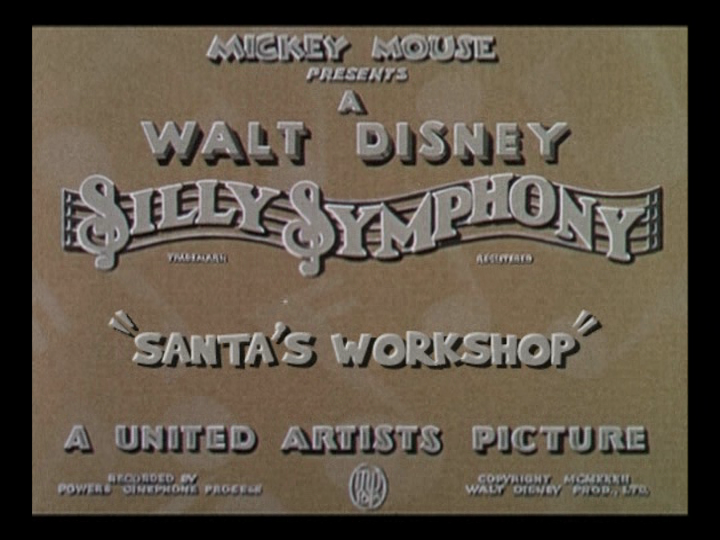
December 10, 1932 – The Silly Symphony Santa’s Workshop is Released to Theaters

vlcsnap-2013-12-10-18h24m25s57

“We’re the merry, merry men of the midnight sun, we work for Santa and have a lot of fun.”

On December 10, 1932, the Silly Symphony Santa’s Workshop was released to theaters. A sequel to this short, The Night Before Christmas, was released in 1933. There are several allusions to popular characters and often used stereotypes of the era, including a Charlie Chaplin wind-up doll. The short was directed by Wilfred Jackson.

At Santa’s Work Shop, all the elves are busy doing the final preparations for December 25th, including bringing mail and cleaning up his sled. Santa is seen reading his letters, and checking to see if the children that send the letters are on the naughty or nice list. An elf takes the letters to the factory, where dozens of elves are making the Christmas presents. An assembly line is seen working on rocking horses, while painters are seen working on blocks, dolls, and chess boards. Each toy goes to Santa for inspection, and he stamps them either with “OK” or “NG.” A marching band of tin soldiers marches through the factory, leading a parade of toys into Santa’s sack. As the sack is filled, Santa has his elves bring it out to his sled, and he bids his elves goodbye as he sets off to deliver the toys.

December 9

December 9, 1994 – Cosmic Ray’s Starlight Café Opens in Walt Disney World’s Tomorrowland

cosmic-ray-starlight-cafe-00

“A galaxy of choices!”

On December 9, 1994, the fast-food restaurant Cosmic Ray’s Starlight Café opened in Tomorrowland of Walt Disney World’s Magic Kingdom. It replaced the Tomorrowland Terrace, which closed in September 1994. This quick service restaurant gives guests three “bays” to choose from in picking their meal: Bay 1 is chicken and BBQ pork sandwiches, Bay 2 is burgers and hot dogs (including a vegetarian burger), and Bay 3 is sandwiches, soups, and salads. Guests can choose to eat either indoors or outdoors; the restaurant also features an Audio-Animatronic alien entertainer named Sonny Eclipse.

December 8

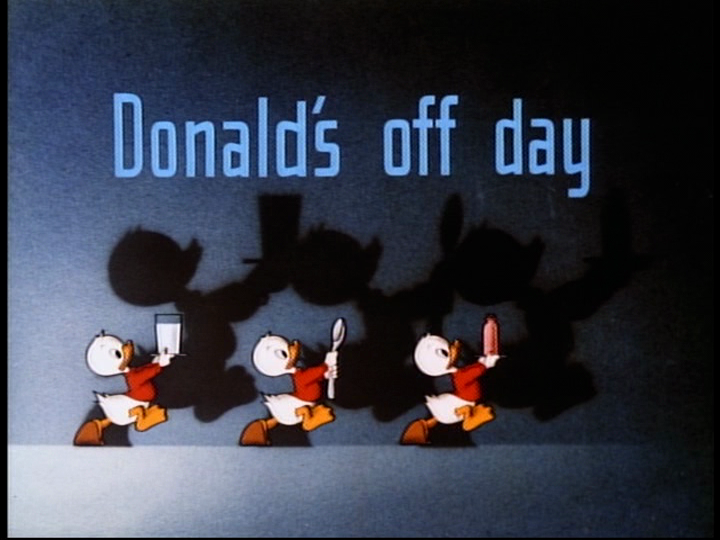
December 8, 1944 – The Donald Duck Short Film Donald’s Off Day is Released to Theaters

vlcsnap-2013-12-08-18h52m50s210

“Are you a well man? You may think so, but you probably need a doctor. Call Dr. Quack at Maine-13-uh-oh, or you may be a dead duck.”

On December 8, 1944, the Donald Duck short film Donald’s Off Day was released to theaters. It was the first short directed by Jack Hannah, who would go on to direct over 90 short films. The story was written by Bill Berg and Dick Shaw.

The sun is rising over the hill, shining through Donald’s window while someone is singing for the duck to get out of bed. His alarm then goes off, but he still doesn’t move from his bed, until the alarm clock falls over. He excitedly shoots out of bed to perform his morning exercises before getting ready for his big golf day. He rushes by the nephews and excitedly steps out, only to be greeted with a sudden storm. Dejectedly, he turns around and heads back inside, but stops when the storm suddenly disappears. As he marches off again, the storm returns, and Donald throws his hat down angrily, railing at the rain.

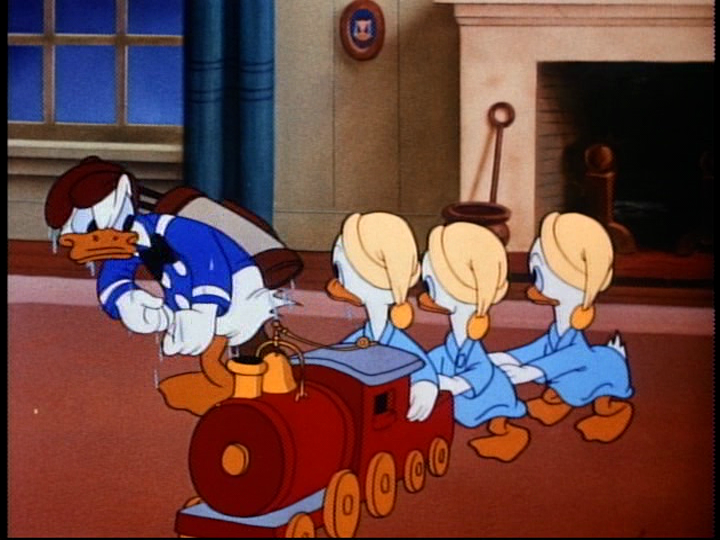
Donald storms back into the house, ready to unleash his frustration on his nephews

Donald storms back into the house, ready to unleash his frustration on his nephews

Donald goes back inside and starts yelling at his nephews, sending them to their room. He then sits by the radio, eating licorice, when he decides to pull out a book on diseases and their symptoms. Coincidentally, an ad for a Dr. Quack starts to play on the radio, warning Donald that he may need a doctor. He starts to flip through the book, and starts seeing symptoms for random diseases (a coated tongue, for instance, forgetting that he did just eat licorice). The nephews see Donald worrying, and decide to play a prank on him, making him believe he really is unwell. Donald, thinking he is unable to see, starts wandering around blindly before collapsing on the floor. The nephews put him on the couch and start attending to his needs before continuing their prank with a squeak toy which Donald believes to be his heart.

Donald, convinced he’s dying, pulls his nephews close and gives him his will, which bequeaths them his precious golf clubs. As Donald lies panicking, he suddenly notices that what he thought was his heart is the squeak toy, and catches his nephews in the act. He storms after them, recalling all they did to torment him, and as the nephews cower in the corner, awaiting his rage, the sun suddenly begins to shine. Forgetting his anger, Donald runs for his golf clubs and sprints outside, although he is struck by lightning the moment he steps out the door.

December 7

December 7, 1955 – The Disneyland Episode “The Goofy Success Story” Premieres

vlcsnap-2013-12-07-19h17m19s28

“He’s always been a modest, unassuming fellow, one who’s never let fame go to his head. So this program belongs to him.” – Walt Disney

On December 7, 1955, the Disneyland episode titled “The Goofy Success Story” premiered on ABC. The episode featured a fictionalized account of Goofy’s rise to stardom. Although his original name was “Dippy Dawg,” the name spelled out on his contract changes the spelling of “Dawg” to “Dog.” The episode was directed by Jack Kinney and Wolfgang Reitherman, and was written by Jack Kinney.

The episode begins with Walt introducing the special tribute to Goofy, who praises the character and leads into the animated story. The scene then opens on a theater, with curtains that pull back to reveal Goofy’s face, before revealing more and more curtains. Finally, the narrator takes the audience to Hollywood, where crowds are bustling about and talent scouts are everywhere, looking for the next big star. Goofy then is seen walking down the street, and has just enough money to buy a meal, but decides to spend his money on a Mickey Mouse film instead. As he sits in the theater and watches the short (the 1934 short film Shanghaied), his unique and loud laugh alerts the talent scouts.

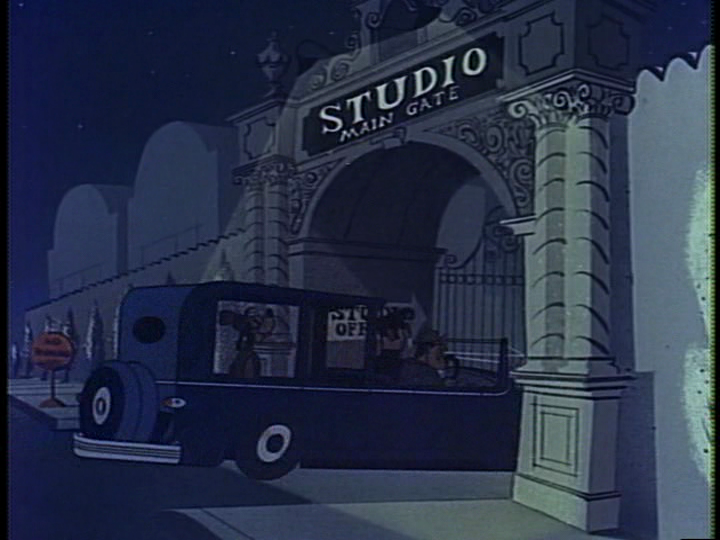
Goofy is soon whisked away to the studio with his "million dollar laugh"

Goofy is soon whisked away to the studio with his “million dollar laugh”

The talent scouts take him away to his first gig, which would eventually become the 1936 short film Moving Day. After the short ends, he is taken to the studio executive’s office to sign an iron-clad contract for $50 a week for 48 years, which he happily accepts. When he signs as Dippy Dog (his original name), the executives are unhappy with his name and decide to change it. The head executive comes up with the name “Goofy,” and Goofy happily accepts. He is paid his first paycheck, and left with nothing but a debt of $8. The executive then shows Goofy an actor’s progress chart, highlighting the rise and inevitable fall of an actor in a poetic fashion. Soon, Goofy is taken to his next picture, the 1937 short film Moose Hunters.

Goofy is soon seen on several magazine covers, and the audience is then taken to his mansion, the Hacienda Goofy. They view him in his bed, surrounded by several television cameras, which takes away all of his privacy, not that he seems to mind as he goes about his daily routine. After his morning swim, he then heads to the studio to film a new short, the 1950 short How to Ride a Horse, although it is seen that he annoys the horse before the short begins (which explains the horse’s distaste for Goofy during the short). After this, awards time has arrived in Hollywood, and Goofy readies himself to get an award, although he is dismayed to find that he has not won a single trophy, losing even to Pluto. He is soon seen alone in the theater, and leaves, depressed, walking out into the stormy streets, recalling his rise to stardom. He finds himself at the shore, and, thinking his life is over, hears the siren voice of the sea. However, he is interrupted by a telegram that provides him with the chance of a lifetime – the 1950 short film Motor Mania. The episode ends with Goofy finally winning his award.