RSS Feed

Tag Archives: 1950s

June 14

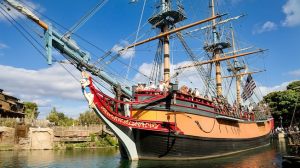
June 14, 1958 – The Columbia Sailing Ship Attraction Opens in Disneyland

“Sail boldly forth into the wilderness on a full-scale replica of a majestic 3-masted ship from the 18th century.”

On June 14, 1958, the Columbia Sailing Ship attraction opened in Disneyland’s Frontierland. Based on the original ship that circumnavigated the globe in 1787, the ship was meticulously designed to be extremely accurate to the time, and includes several displays that portray life for sailors in the 18th century. The ship sails in the Rivers of America, circling the Pirate’s Lair on Tom Sawyer Island.

April 26

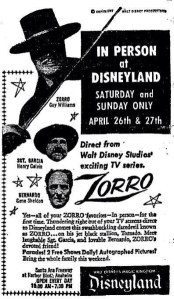
April 26, 1958 – The First Zorro Days Event Kicks Off in Disneyland

“Yes – all of your ZORRO favorites – in person – for the first time.”

On April 26, 1958, the first event featuring the cast of the popular show Zorro, advertised as “Zorro Days,” kicked off in Disneyland. The two-day event featured appearances by the entire cast of the show, including Guy Williams, who played the titular character. The show had been an incredible success for Disney, with this live event certainly emphasizing this. The event had the cast march in parades, as well as perform in live shows in Frontierland and sign autographs. This event went on to be the first of five total events: the other events were held on May 30 through June 1, 1958; November 27 through November 30, 1958; November 26 through November 29, 1959; and November 11 through November 13, 1960.

April 5

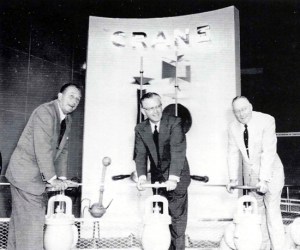
April 5, 1956 – The Display Attraction Crane Company Bathroom of Tomorrow Opens in Disneyland

Image credit: http://waltdisney.org

“This fabulous bathroom, actually designed for the future, is available for your home today!”

On April 5, 1956, the display attraction Bathroom of Tomorrow opened in Disneyland’s Tomorrowland. Sponsored by the Crane Plumbing Company, the attraction featured the newest ideas in designs for the bathroom, though was only meant to be viewed rather than used. Several notable designers were involved in the creation of the attraction, including Henry Dreyfuss, best known for the designs of the Hoover vacuum cleaner and the John Deere tractors. The attraction boasted many ideas deemed commonplace today, including air conditioning. Part of the attraction was interactive: guests were able to play with some faucets activated by larger wheels near the opening of the exhibit. The attraction was officially closed on August 31, 1960.

April 3

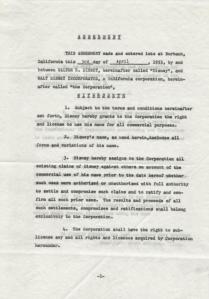
April 3, 1953 – Walt Disney Signs Legal License for Use of His Name

“Disney’s name as used herein, includes all forms and variations of his name…”

On April 3, 1953, Walt Disney signed a legal license that would grant him all commercial uses of his name to Walt Disney, Incorporated; this was the first step in ensuring that Disney would be able to control his films, televisions shows, and eventually the parks. This was a historic event in entertainment history, as this contract paved the way for Disney to become the global empire it is today. This agreement also helped pave the way for Disney to create his own distribution company, Buena Vista Distribution, as RKO was crumbling quickly after being acquired by Howard Hughes.

March 25

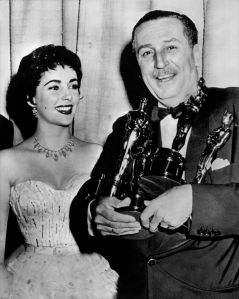
March 25, 1954 – Walt Disney Wins Four Academy Awards

On March 25, 1954, the 26th Academy Awards were held at the RKO Pantages Theatre in Hollywood, California. Walt Disney set a record at this awards ceremony by winning four awards, becoming the most Oscars won in the same year; this record has yet to be broken as of 2017. The awards Disney won include Best Animated Short Film for Toot, Whistle, Plunk and Boom; Best Documentary Feature for The Living Desert; Best Documentary Short for The Alaskan Eskimo; and Best Live Action Short Film, Two-Reel for Bear Country.

February 26

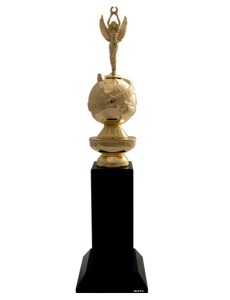
February 26, 1953 – Walt Disney is Awarded the Cecil B. deMille Award

“In 1928 [Walt Disney] created ‘Steamboat Willie’ introducing Mickey Mouse, and from that point there was no stopping the king of family entertainment in the U.S.”

On February 26, 1953, the 10th Annual Golden Globes were held at the Ambassador Hotel in Los Angeles, California. At this ceremony, Walt Disney was awarded the Cecil B. deMille award for his numerous contributions to the film industry, becoming the second recipient of this award after Cecil B. deMille himself. The award acknowledges the “outstanding contributions to the world of entertainment” made by the individual.

January 21

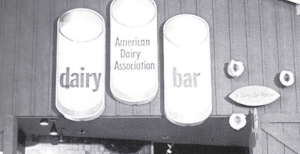
January 21, 1955 – The Dairy Bar Opens in Disneyland

dairy-bar

“Nature’s most nearly perfect food.”

On January 21, 1955, the Dairy Bar opened in Disneyland’s Tomorrowland area. Sponsored by the American Dairy Association, it was a mix of a presentation about the future of milk and milk delivery and a quick service restaurant serving milk in a small dining room. The area did not prove to be as popular as other future-looking presentations within Tomorrowland, and was closed on September 1, 1958.

January 18

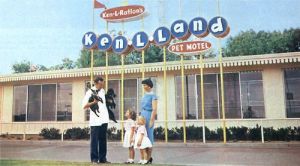
January 18, 1958 – The Pet Boarding Facility Ken-L-Land Opens

ken-l-land

“‘Man’s best friend’ has not been forgotten when the family visits Disneyland, thanks to Ken-L-Ration’s deluxe Pet Motel, Ken-L-Land.”

On January 18, 1958, the pet boarding facility Ken-L-Land opened just outside the Disneyland main gate. It was a place where families, who had traveled miles to get to Disneyland, could leave their pets rather than leave them in the parking lot. Sponsored by Ken-L-Ration dog food from the Quaker Oats Company, pets were fed exclusively from the brand, with a full day’s boarding and a can of food costing 25 cents. Ken-L-Ration’s sponsorship lasted until 1967; the sponsorship and name of the kennel changed over the years, including sponsorship by Kal Kan with the name change to Kennel Club in 1968 to 1977, sponsorship by Gaines with name change to Pet Care Kennel in 1986 to 1991, and sponsorship by Nestle’s Purina in 1993, with the name change to Disneyland Kennel Club.

January 5

January 5, 1951 – The Goofy Short Film Lion Down is Released to Theaters
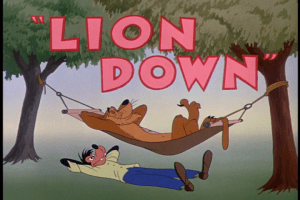
vlcsnap-2017-01-04-01h30m13s268

“Oh, the world owes me a living.”

On January 5, 1951, the Goofy short film Lion Down premiered in theaters. It was directed by Jack Kinney, with story by Milt Schaffer and Dick Kinney.

It’s a beautiful day, and Goofy is attempting to put his hammock, when he realizes he doesn’t have another tree with which to hook it up. As he lives on the roof of a tall apartment building, he sets out in his car to the nearby woods, where he decides to uproot a tree and take it home. He is unaware that there was a mountain lion asleep in that tree, and the mountain lion is given a rude awakening before he decides to follow Goofy home. Goofy quickly plants the tree and sets up his hammock, eager to take a nap. The doorbell rings, and as Goofy goes to answer the door, the mountain lion sneaks in and settles back into his tree. When the mountain lion spies the hammock, however, he decides he would rather sleep there, and decides to throw Goofy off the roof to claim the hammock. Goofy, however, quickly returns, pulling the same trick with the doorbell that the mountain lion played on him. The war between the two of them for the hammock quickly escalates, though at one point the mountain lion almost sabotages himself as the pair hang from one of the hammock ropes. The rope lets loose and the pair plummet to the ground, with the hammock acting as a parachute. The pair continue to fight in midair, until the doorbell rings, and Goofy heads up the fire escape to answer. The mountain lion hands Goofy back the hammock, but takes back his tree, leaving behind an acorn, which Goofy plants in anticipation of another tree with which to finally hang his hammock.
January 4

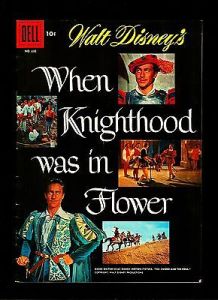
January 4, 1956 – The First Part of “When Knighthood Was in Flower” Premieres on Television

wkwif

“If your highness does not like the way we do and dance at my ball, you may retire as soon as you see fit.”

On January 4, 1956, the first part of the two-part television episode “When Knighthood Was in Flower” premiered on the Disney anthology series Disneyland. This two-part episode was the premiere of the live-action feature film The Sword and the Rose, which had been released to theaters on July 23, 1953, edited for a television audience and broadcasted in black and white. The title for the television airing is taken from the book on which the film was originally based, written by Edwin Caskoden (pen name for American author Charles Major). The second episode would premiere on January 11, 1956.