RSS Feed

July 4

Posted on

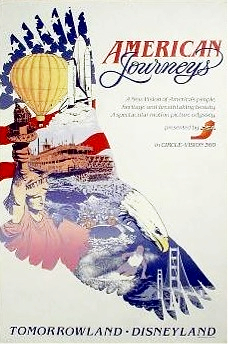
July 4, 1984 – The Circle-Vision Attraction American Journeys Opens in Disneyland

American Journeys

“A new vision of America’s people, heritage, and breathtaking beauty. A spectacular motion picture odyssey.”

On July 4, 1984, the Circle-Vision film attraction American Journeys opened in Disneyland. The film uses the Circle-Vision 360° technique, also used in Epcot’s O Canada! and Wonders of China; the technique includes nine screens arranged in a circle, with nine cameras used to film the scenery, giving the audience the perspective of really being in the scene. American Journeys, like its predecessor America the Beautiful, captured many highlights of the United States. A version of the film opened in Walt Disney World’s Tomorrowland on September 15, 1984, as well as in Tokyo Disneyland on May 17, 1986. The Disneyland attraction ended its run on July 7, 1996.

July 3

Posted on

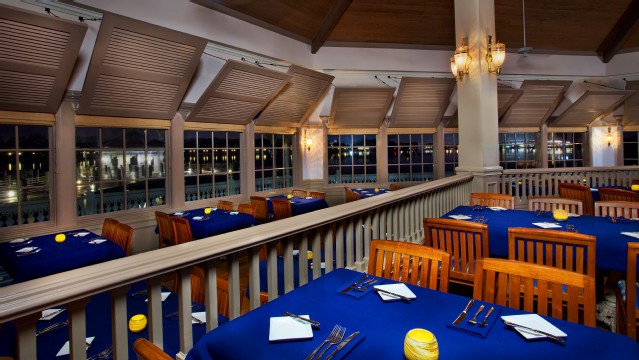
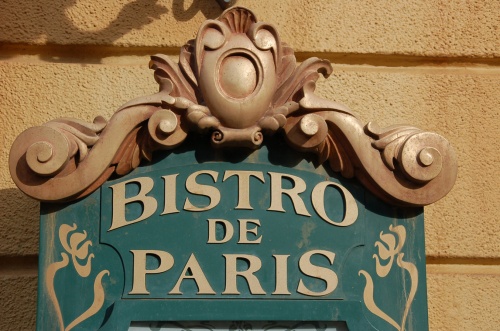
July 3, 1984 – The Restaurant Bistro de Paris Opens in Epcot’s France Pavilion

Bistro_de_Paris

“Gourmet restaurant located at the 2nd floor.”

On July 3, 1984, the table-service restaurant Bistro de Paris opened in the France Pavilion of Epcot’s World Showcase. Thanks to the popularity of the pavilion’s first restaurant, Les Chefs de France, it was decided by executives to add another restaurant in the empty space in Les Chefs upstairs area. The restaurant was similar to Les Chefs in that it served fine French cuisine, with standard dishes including filet mignon and crème brulee. On July 31, 2012, the restaurant was closed; it reopened in December as Monsieur Paul.

July 2

Posted on

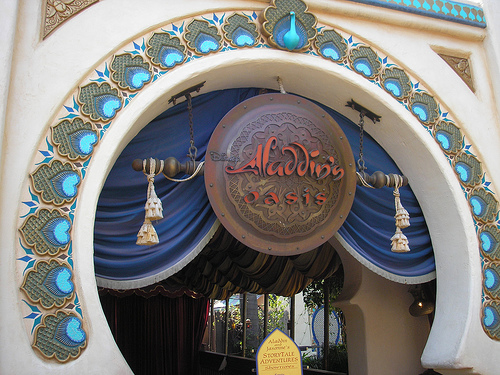
July 2, 1993 – The Dinner Theater Area Aladdin’s Oasis Opens in Disneyland

Aladdin's Oasis

“…a whole new world of fun, food, and adventure at Aladdin’s Oasis – the newest dinner show at Disneyland.”

On July 2, 1993, the dinner theater-style entertainment area Aladdin’s Oasis opened in Disneyland, replacing the Tahitian Terrace. The show was released to capitalize on the success of the 1992 animated feature film. The area gave guests a show filled with songs and dances by characters from the film while they enjoyed Americanized-versions of Middle Eastern food, including papadam wafers and tabbouleh. The show was discontinued after a couple of years, but the restaurant was still in operation until 1997, when it became a storytelling area; it has since become a meet-and-greet area where guests can meet Aladdin and Jasmine.

July 1

Posted on

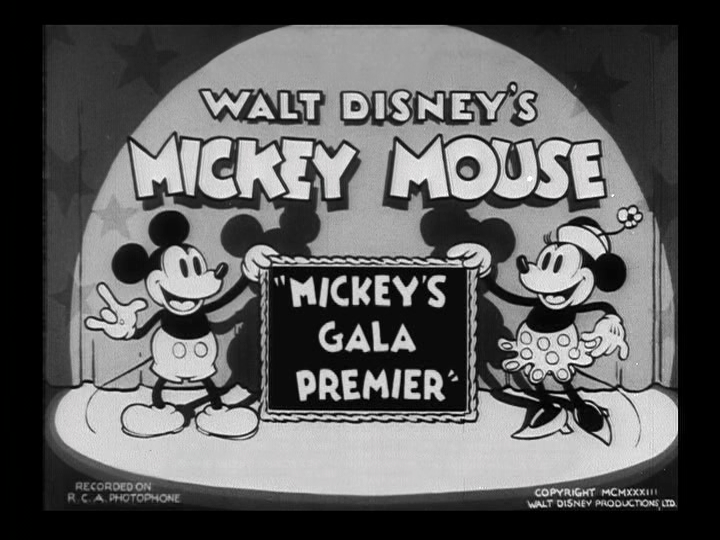
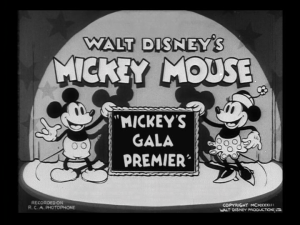
July 1, 1933 – The Mickey Mouse Short Film Mickey’s Gala Premiere is Released to Theaters
vlcsnap-2014-07-01-19h03m24s227

“Tonight’s the night of Mickey Mouse’s premiere, and every star in Hollywood will be here.”

On July 1, 1933, the Mickey Mouse short film Mickey’s Gala Premiere was released to theaters. Although Disney has officially called the short Mickey’s Gala Premiere, the original title card has it called Mickey’s Gala Premier; this could be seen as a play on words. The short features caricatures of several well-known stars of the day. It was directed by Burt Gillett.

It’s a big night in Hollywood, with celebrations taking place at Grauman’s Chinese Theater, and the stars arrive quickly. First to arrive are the stars of the film Rasputin and the Empress, in their costumes: Wallace Beery, Marie Dressler, Lionel, John, and Ethel Barrymore. Laurel and Hardy trail after them, with the Marx Brothers popping out of the window of the car for a cameo. Next, Maurice Chevalier stops at the microphone and sings about Mickey’s new film, joined by Eddie Cantor and Jimmy Durante. Jean Harlow, Joan Crawford, and Constance Bennett sing in an “Andrews Sisters” style; soon after, Clark Gable, Harold Lloyd, Edward G. Robinson, and Adolphe Menjou close out the song as if a barbershop quartet. The celebrities flock to the theater, with Mae West causing Sid Grauman to nearly melt in embarrassment.
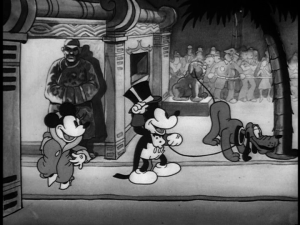
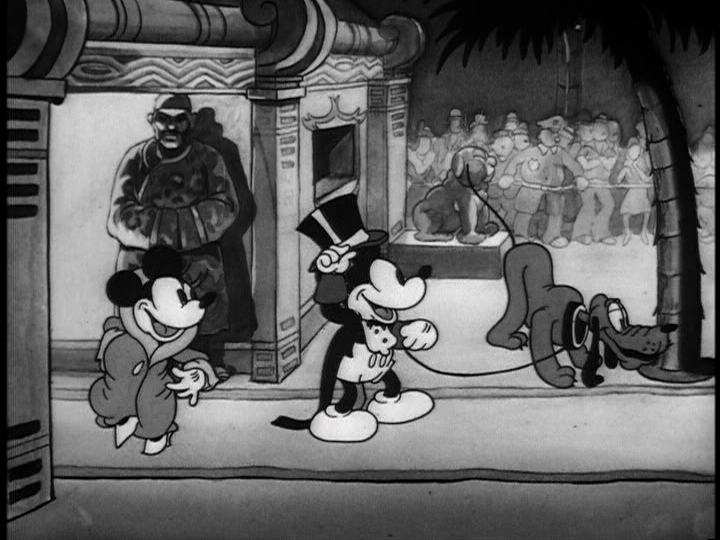
Mickey, Minnie, and Pluto arrive at their premiere, dressed to the nines

Mickey, Minnie, and Pluto arrive at their premiere, dressed to the nines

Soon, the star and his girl Minnie arrive in style, along with Pluto, Horace Horsecollar, and Clarabelle Cow. They enter the theater, and everyone is ready to see the new Mickey short, Galloping Romance. The short has Mickey playing a xylophone, and the audience sways along with the music. In the short, Pete kidnaps Minnie, and the audience laughs as Pete pins Mickey comically to the wall. They soon cheer when Mickey chases after Pete, but laugh again once Mickey’s chase grows increasingly comical, with many patrons rolling in the aisles. In the end, Mickey is able to save Minnie, while Pete meets a rather unfortunate end. Mickey is roped out onto the stage to shake hands with all the celebrities, with Greta Garbo coming up to give him a kiss. As she kisses him, Mickey wakes up to find that it’s not Greta Garbo, but Pluto, that’s been kissing him. Annoyed, Mickey pushes Pluto off the bed and tries to resume his happy dream.
June 30

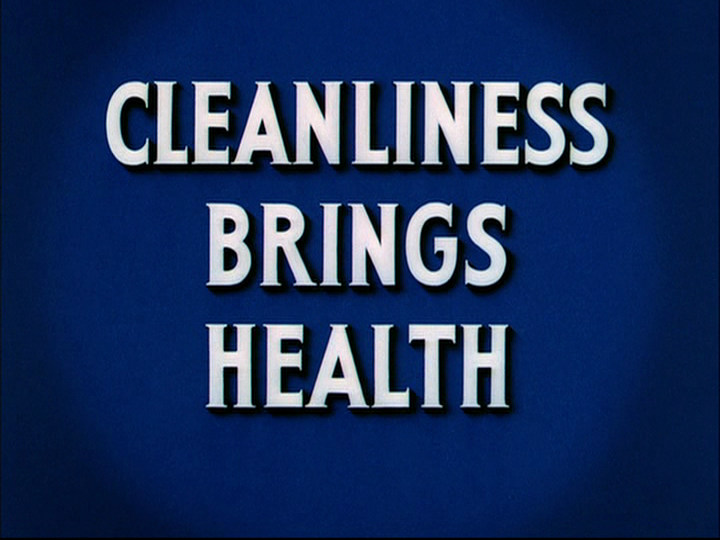
June 30, 1945 – The Educational Short Film Cleanliness Brings Health is Delivered

vlcsnap-2014-06-30-18h28m35s40

“This is the story of two families: one of them happy, one of them sad; one of them clean, the other, careless.”

On June 30, 1945, the educational short film Cleanliness Brings Health was delivered to the Coordinator of Inter-American Affairs.

The short introduces two families: one clean, happy, and healthy, the other careless, sick, and unhappy. The audience sees how the Clean family lives, and how they make sure everything is kept clean, including their dishes, food, and livestock. The father works in the corn field with his son, and all three members of the family are happy. The Careless family is seen doing several things that cause them to be constantly ill, including cooking on the floor and letting their livestock roam free. The son is seen on the ground with stomach cramps, and he goes into the corn field to relieve himself, although this causes his illness to spread through the crops and the dirt. The Clean family also has a problem with stomach cramps, but they create a simple latrine rather than use the old custom of going into the corn fields. The Clean family also washes themselves and their clothes to continue their health. Finally, the narrator reminds the audience that “cleanliness brings health and happiness.”

June 29

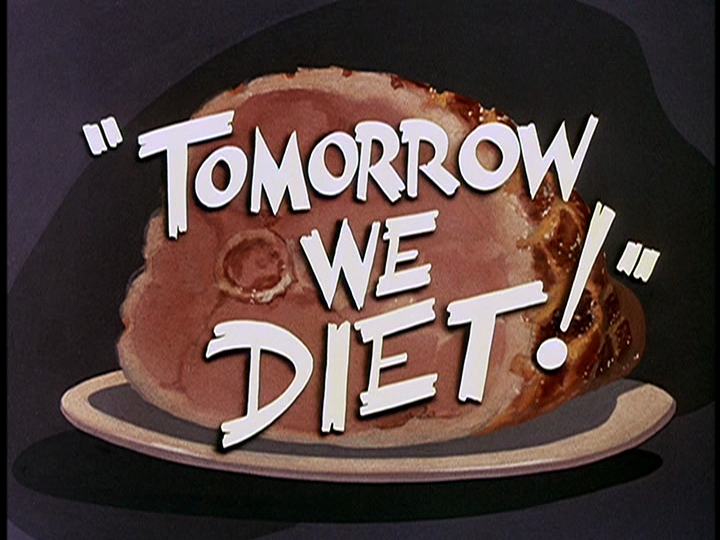
June 29, 1951 – The Goofy Short Film Tomorrow We Diet is Released to Theaters

vlcsnap-2014-06-29-18h49m23s188

“Eat, drink, and be merry, and tomorrow, we diet!”

On June 29, 1951, the Goofy short film Tomorrow We Diet was released to theaters. It was directed by Jack Kinney, with story by Milt Schaffer and Dick Kinney.

The short begins with Goofy pulling out several dishes from the refrigerator and scarfing them down all at once. After his meal, he passes by the mirror and admires his reflection. His reflection, however, has some choice words for him. Goofy argues that he’s as fit as a fiddle, but the reflection points out that he’s as fit as a bass fiddle. Although Goofy has several images of his younger, fitter days, he’s gained several pounds since then, and rips the seam of his pants as he struggles to put them on. The tailor has to take his awning to create a striped suit for Goofy, and when he enters a cab, he is heavy enough to cause the tires to pop. There are several instances of Goofy’s weight causing problems for him and those around him, including breaking two stools at the local café and crashing the elevator.

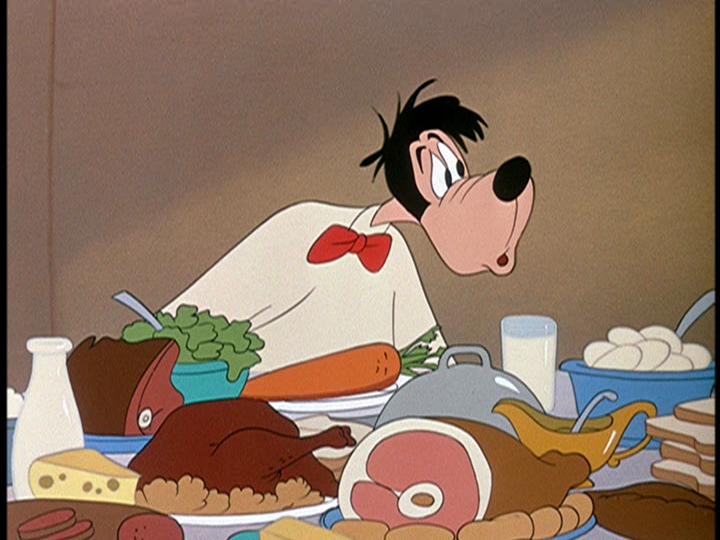
Goofy unloads the fridge of its contents, but is soon scolded by his reflection

Goofy unloads the fridge of its contents, but is soon scolded by his reflection

Goofy soon arrives home with a book called “Easy Ways to Reduce,” and the mirror taunts him to touch his toes. The moment the reflection mentions eating, however, Goofy is already digging around in the fridge. The mirror tells him what he cannot eat, leaving him with a solitary carrot. But then, Goofy decides to just leave the table altogether, but heads back to the fridge once again. His mind is obsessed with food, and his attempts at maintaining a diet are thwarted by his mind demanding he eat. His reflection compliments him on his willpower before they both go to sleep, but Goofy soon heads to the fridge in his sleep to eat. He is shocked, however, to find that all the food is gone; his reflection has taken all the food and enjoyed a good meal, proclaiming that tomorrow, they will diet.

June 28

June 28, 1988 – The Walt Disney World Restaurant Narcoossee’s Opens in the Grand Floridian Resort & Spa

narcoossees-gallery10

“Slip away to this elegant waterfront retreat for exquisite seafood specialties and spectacular views of Seven Seas Lagoon.”

On June 28, 1988, the signature dining restaurant Narcoossee’s opened its doors from its location in Walt Disney World’s Grand Floridian Resort & Spa. The restaurant’s menu serves a selection of seafood and steak, including whole-steamed Maine lobster, one of Narcoossee’s famous delicacies. The restaurant features a business casual dress code, requesting that guests do not wear tank tops, swim suits, and shirts with offensive language or graphics. Guests are given a view of the Magic Kingdom, and in the evening, are able to view the Wishes fireworks show from their table; the restaurant plays the music for the show to give guests the experience of the show while they dine.


June 27

June 27, 1930 – The Silly Symphony Arctic Antics is Released to Theaters

vlcsnap-2014-06-27-19h38m07s146

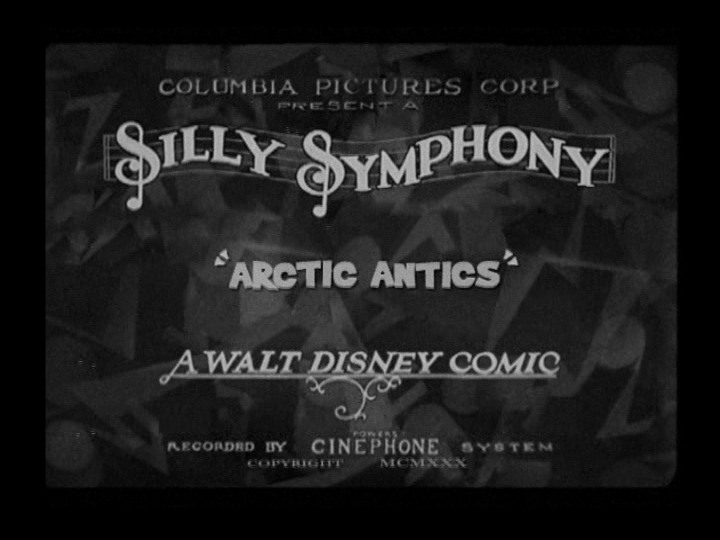
On June 27, 1930, the Silly Symphony Arctic Antics was released to theaters. It was directed by Ub Iwerks.

A polar bear cub is dancing about between the back of a polar bear and sheets of ice, followed by a parade of other polar bears and seals. One polar bear cub uses its tail to drive him forward on a sheet of ice like a speedboat. A walrus is seen chasing a fish, who jumps about, teasing it. A group of seals clap as they watch a female do a balancing act and dance with a fish, while another seal uses a walrus to create music before being chased off by the walrus, who wishes to sing instead. The seals applaud the walrus’ efforts before a troop of penguins marches on the scene, waddling in unison. One small penguin falls through the ice, but manages to quickly rejoin the group before they whistle their marching tune behind a large iceberg.

June 26

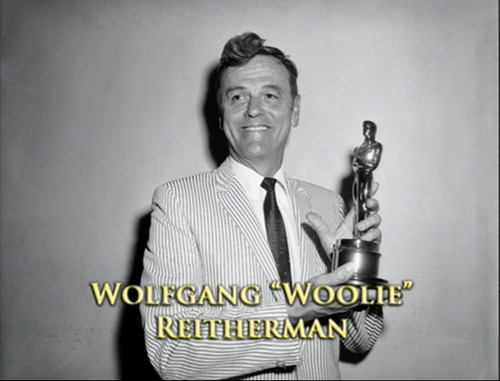
June 26, 1909 – Animator, Member of Disney’s Nine Old Men, Director, and Disney Legend Wolfgang “Woolie” Reitherman is Born

WolfgangReitherman

“I just felt [animation] was a twentieth century art form, probably the most unique of anything that had appeared on the art horizon for decades since perspective. I was just fascinated because you could move those things. You can’t move a painting.”

On June 26, 1909, Wolfgang Reitherman was born in Munich, Germany. His family moved to California when Reitherman was an infant. Fascinated with airplanes from a young age, he attended the Pasadena Junior College to study aircraft engineering, and later got a job at Douglas Aircraft as a draftsman. Reitherman changed his career path in 1931 to study his other passion of art, enrolling in the Chouinard Art Institute, studying watercolor. As fate would have it, Reitherman met an instructor who taught at the Disney Studios, and in 1933, Reitherman joined the company in the animation department. When World War II began, Reitherman served in the Air Force, earning the Distinguished Flying Cross for his services in Africa, China, India, and the South Pacific. He returned to the studio after the war, and contributed to more than 30 Disney short films throughout his career, including Water Babies and Donald in Mathmagic Land. Reitherman also contributed to several feature animated films, including Snow White and the Seven Dwarfs, Cinderella, and One Hundred and One Dalmatians.

Reitherman’s first foray into directing came with the animated feature film Sleeping Beauty. In 1961, Reitherman was named co-director of the film One Hundred and One Dalmatians alongside Hamilton Luske and Clyde Geronimi. In 1963, Reitherman was named the director of the film The Sword in the Stone, a first for an animator in the studio’s history. He would continue to serve as an animator of Disney features, which include The Jungle Book, The Arisocats, Robin Hood, and the cartoon feature Winnie the Pooh and the Blustery Day. A trademark in Reitherman’s films was the reuse of animation, as evidenced in Robin Hood’s “Phoney King of England” scene, which borrowed heavily from Snow White and the Seven Dwarfs. In 1981, Reitherman retired from the Disney Studios, having dedicated nearly 50 years of his life. Unfortunately, Reitherman died in a car accident on May 22, 1985, in Burbank, California. As a tribute to his life and his work at Disney, he was honored as a Disney Legend in 1989.

June 25

June 25, 1969 – The Walt Disney Educational Materials Co. is Incorporated

DEP Logo web

“Building thinkers every day.”

On June 25, 1969, the Walt Disney Company production asset The Walt Disney Educational Materials Company was incorporated. The company went through several name changes, finally settling on Disney Educational Productions, a moniker they still use today. For over 60 years, the company has provided educators with Disney educational films and materials, with several being nominated and/or awarded with honors from several organizations. The company’s materials fall under five main categories: Disneynature, Social Studies, Language & Arts, Math & Science, and Health & Safety; a sixth category is listed with all programs containing scientist Bill Nye.