RSS Feed

Tag Archives: Acquisition

March 7

March 7, 1942 – Former CEO of The Walt Disney Company Michael Eisner is Born
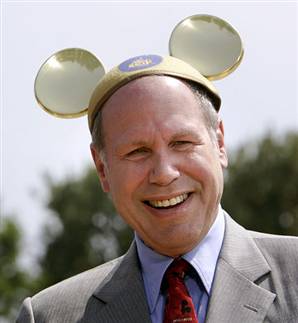
Michael Eisner

“Success is not a formula, but is based on everything else – the creativity, the right people, the right team.”

On March 7, 1942, Michael Dammann Eisner was born in Mount Kisco, New York. Growing up on Park Avenue, Eisner attended the Allen-Stevenson School through ninth grade, followed by the Lawrenceville School through 12th grade. He graduated from Denison University in 1964 with a B.A. in English. After graduation, Eisner briefly worked for NBC and CBS before being brought on at ABC as Assistant to the National Programming Director. He quickly rose through the company, becoming the Senior Vice President for Programming and Development. Barry Diller, who had hired Eisner at ABC, brought Eisner with him to Paramount Pictures and made him President and CEO. Under his leadership, Paramount had a string of successful films, beginning with Saturday Night Fever and including Raiders of the Lost Ark and Grease. After being passed over for the top position when Diller stepped down, Eisner went looking for other opportunities. At this time, Disney was going through some troubles with hostile takeovers, and Roy E. Disney decided to bring Eisner and Frank Wells in as CEO and President, respectfully. Under their tenure, Disney managed to go through a Renaissance period, beginning with the success of The Little Mermaid, along with the acquisition of ABC and ESPN. Eisner continued to grow the Disney Parks stateside, and contributed to the building of what is now known as Disneyland Paris. After Wells’ sudden death in a helicopter crash, Eisner shook up the posts at the studio, with Katzenberg resigning and being replaced with Michael Ovitz. Tension grew between Roy E. Disney and Eisner, and in 2005, Eisner stepped down from his role as CEO and board member, leaving Disney completely. After Disney, Eisner formed The Tornante Company, which acquires and invests in media and entertainment companies.


 

February 19

February 19, 2009 – Disney Announces the Acquisition of Kerpoof Studios

Kerpoof

“A standard-based, Web-based creative multimedia suite for students.”

On February 19, 2009, Disney announced that it had acquired Kerpoof Studios, an educational and entertainment media group that specialized in exploring creativity through image creation. The company was lauded for its emphasis on child safety and the educational aspects that made it a favorite in many classrooms. After Disney’s acquisition in 2009, four activities were released in the new combined URL: URock2 Digital Painter, DoubleDuck Comic Creator, Animoids, and JONAS and High School Musical Photo Mashup. However, as Disney’s focus shifted to mobile application development, the decision was made to close Kerpoof in April of 2014.

July 12

July 12, 1998 – The First ESPN Zone Restaurant Opens in Baltimore, Maryland

ESPNZone1

“Offering non-stop action, high-energy fun, unbelievable food, and much more.”

On July 12, 1998, the first ESPN Zone restaurant opened in Baltimore, Maryland, followed by openings in Chicago, New York, Atlanta, Washington DC, Anaheim, Las Vegas, and Denver. This was Disney’s first major commercial venture outside the theme parks, and was a sports restaurant complex based on the channel ESPN. The restaurant became well-known for its “Ultimate Couch Potato” contest, where customers competed to see who could out-sit each other while watching non-stop sports programming. The Atlanta and Denver restaurants closed in 2009, while the others, save for the one in Anaheim, closed in June, 2010.

June 25

June 25, 1969 – The Walt Disney Educational Materials Co. is Incorporated

DEP Logo web

“Building thinkers every day.”

On June 25, 1969, the Walt Disney Company production asset The Walt Disney Educational Materials Company was incorporated. The company went through several name changes, finally settling on Disney Educational Productions, a moniker they still use today. For over 60 years, the company has provided educators with Disney educational films and materials, with several being nominated and/or awarded with honors from several organizations. The company’s materials fall under five main categories: Disneynature, Social Studies, Language & Arts, Math & Science, and Health & Safety; a sixth category is listed with all programs containing scientist Bill Nye.

December 4

December 4, 2012 – Disney Announces Distribution Deal with Netflix

disney-netflix-slice

“Disney and Netflix have shared a long and mutually beneficial relationship and this deal will bring to our subscribers, in the first pay TV window, some of the highest-quality, most imaginative family films being made today.” – Ted Sarandos, Netflix Chief Content Officer

On December 4, 2012, Disney announced a deal with the online streaming service Netflix, making them the exclusive U.S. subscription television service for Disney films, which includes the Disney catalog, but films from four of Disney’s subsidiaries: Pixar, Marvel, Disneynature, and Disney Animation. This deal was reached after Netflix’s contract with Starz expired in February, 2012. The exclusive part of the deal begins with Disney films released in 2016, although Netflix is currently streaming several Disney animated classics and direct-to-video titles. This deal did not include a DVD component. After announcing the deal to the media, Netflix shares rose 14%. It was estimated that the company would be paying over $350 million a year for the Disney catalog.

November 6

November 6, 2001 – The Walt Disney Company Acquires The Baby Einstein Company

Baby_Einstein_logo.svg

“The acquisition of Baby Einstein provides The Walt Disney Company with another high quality brand franchise which serves on of our core customer segments – families with small children.” – Bob Iger, then-President and COO of The Walt Disney Company

On November 6, 2001, The Walt Disney Company made final the acquisition of the innovative media company for babies and toddlers, The Baby Einstein Company. In a press release on this day, Disney announced that the company’s founders, Julie Aigner-Clark and William Clark, would serve as consultants for the company, which would launch under the Disney Banner in late 2002. Aigner-Clark was quoted as saying “We’re thrilled to be putting our grass roots brand in the hands of The Walt Disney Company, and to watch our ‘baby’ grow up.” The Baby Einstein Company has won several awards since its founding, including the Video of the Year Award from Child Magazine; the company’s range spans various media types, including videotapes, DVDs, CDs, and books. The acquisition allows the company’s reach to expand internationally through retail channels.

August 31

August 31, 2009 – Disney Announces the Acquisition of Marvel Entertainment

1251727703400-0-2ED1-SB-DisneyMarvelEntertainmentAcquisition

“Marvel’s brand and its treasure trove of content will now benefit from our extraordinary reach.” – Bob Iger, CEO of the Walt Disney Company

On August 31, 2009, The Walt Disney Company announced a surprise deal to acquire Marvel Entertainment for $4 billion in cash and stock. The deal allows Disney to take Marvel’s cast of characters across the different media platforms Disney has at their disposal; Iger told investors that Pixar was especially excited about the opportunities this acquisition could produce. Disney also noted that they plan to bring to the forefront many characters from the Marvel library that weren’t well known. When the deal was announced, the Marvel stock shot up 26%.

February 10

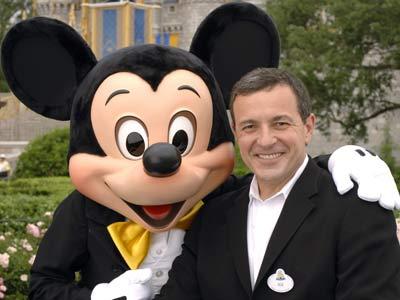
February 10, 1951 – Current Walt Disney Company Chairman and Chief Executive Officer Bob Iger is Born

bob-iger-1

“Animation has always been the heart and soul of the Walt Disney Company and it is wonderful to see Bob Iger and the company embrace that heritage by bringing the outstanding animation talent of the Pixar team back into the fold…we applaud and support Bob Iger’s vision.” – Roy E. Disney

On February 10, 1951, Robert A. Iger was born in Long Island, New York. He graduated from Ithaca College with a Bachelor of Science degree, and soon after became a weatherman for a local station. In 1974, Iger began working for the American Broadcasting Company and rose through the ranks to become President of the ABC Network Television group in 1993. In 1996, he was named Chairman of the ABC Group, officially joining the Disney senior management team; in 1999, he was also named the President of Walt Disney International. As President, Iger was instrumental in the expansion of Disney’s presence in the rest of the world. This complimented his work as the Chairman of the ABC Group, which had him overseeing all broadcast projects, including a merger between Capital Cities/ABC and the Walt Disney Company.

In 2000, Iger was named Disney’s President and Chief Operating Officer under Michael Eisner, filling a role that had been vacant since the departure of Michael Ovitz in 1997. On March 13, 2005, Disney announced that Iger would be assuming the role of Chief Executive Officer, which came into effect on October 1, 2005. Since then, Iger has been instrumental in several key acquisitions for the Walt Disney Company, beginning with the 2006 Pixar acquisition for $7.4 billion. Iger has also been lauded for the reacquisition of Disney’s first major star, Oswald the Lucky Rabbit, from NBC Universal by releasing Al Michaels from his ABC contract to join NBC Sports. Iger has also helped Disney acquire Marvel Comics in 2009, and more recently Lucasfilm in 2012. In 2011, it was announced that Iger would be named the Chairman of Disney following the March 2012 retirement of Chairman John Pepper.

February 2

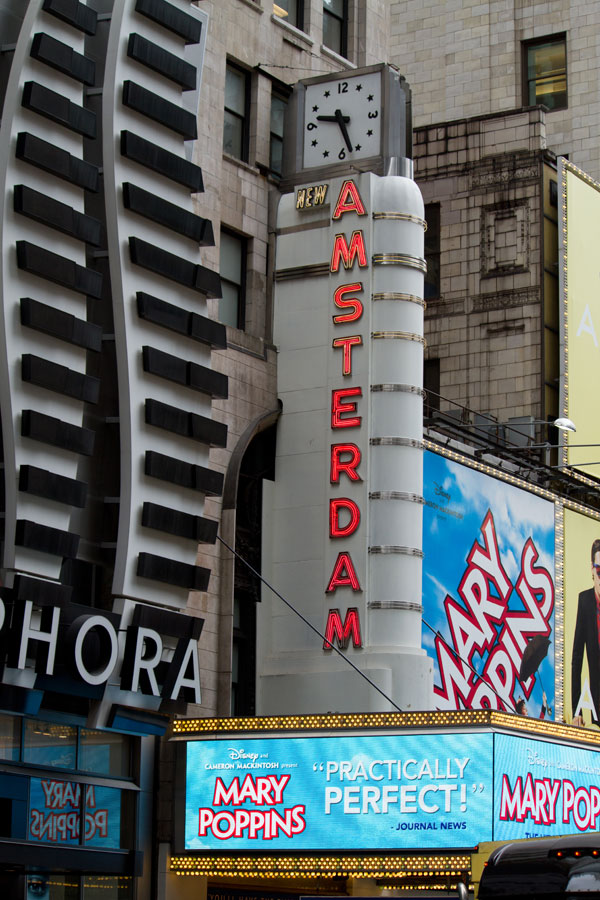
February 2, 1994 – Disney Announces Plans to Restore the New Amsterdam Theater in New York City

mary_poppins_new_amsterdam_theatre1

“The recent corporate influence on Broadway is often attributed to the success of the Walt Disney Company. But before the Broadway musical was resurrected by Disney, Disney was resurrected by the Broadway musical.” – Julie Andrews, Broadway: The American Musical

On February 2, 1994, The Walt Disney Company announced their $29 million plan to restore the historic New Amsterdam Theater on 42nd Street, New York City. Disney’s plan included restoring the theater to its original splendor and Art Nouveau style architecture, and using it as a permanent home for new theatrical productions. Currently, it is showing Mary Poppins.

The theater was built in 1903, and from 1913 to 1927 was home to the famous Ziegfeld Follies, which showcased such talents as Fanny Brice and Olive Thomas. In 1936, the theater was closed due to the economic downturn of the Great Depression and the effect it had on the theater industry, but the theater opened soon after as a movie theater. In 1982, it was purchased by the Nederlander Organization, but in 1990, the State and City of New York won ownership of the theater.

Disney negotiated with state and city agencies, contributing $8 million to the restoration, with the remaining amount loaned to the company from the 42nd Street Development Project. “New York City wanted to bring Disney’s wholesome image to its sleaziest playground,” Julie Andrews narrates on the documentary Broadway: The American Musical. “But Disney wanted assurance from Mayor Rudolph Guliani that the neighborhood would be safe for families,” as the 42nd Street neighborhood at the time comprised many adult entertainment centers. Disney’s acquisition of the theater helped bring new life to 42nd Street and Broadway, and brought a new venue of interest to major corporations. In the fall of 1997, Disney’s first musical, The Lion King, opened in the newly refurbished theater.

August 28

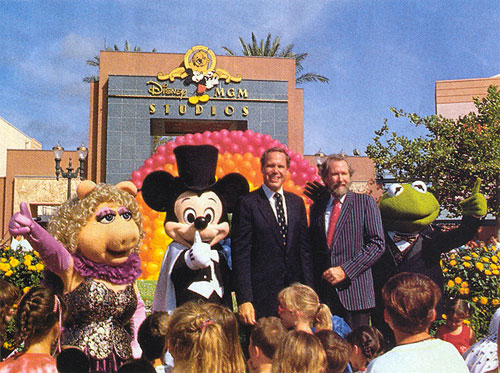
August 28, 1989 – CEO Michael Eisner and Jim Henson Announce Disney’s Plan to Acquire Henson Associates

Image credit: MuppetWiki

“I think hooking up with the Disney company creates such a wonderful force.” – Jim Henson.

On August 28, 1989, Disney CEO Michael Eisner and Jim Henson announced a deal for Disney’s acquisition of Henson Associates. The deal included all characters owned by Henson Associates, excluding the characters from Sesame Street (owned then by the Children’s Television Workshop, now owned by Sesame Workshop). Although the purchase price was not disclosed to the public, it was estimated that the price was about $150 million. The news was announced on an episode of ABC’s Good Morning America by both Eisner and Henson, which was then followed by a news conference at Disney-MGM Studios. The acquisition plan included Henson producing movies, television shows, Disney Channel specials featuring the characters, and attractions for the theme parks. Disney would not only acquire the Henson library, including all Muppet films and special films such as Labyrinth, but would also have exclusive rights to merchandising, publishing, and anything else related to the Muppet characters.

Unfortunately, the plans fell through after Henson’s death in 1990, with Disney and the Henson family clashing over terms. Although the Jim Henson Company was sold to a German corporation called EM.TV, the company bought itself back in 2003, and a new set of negotiations with Disney was opened in 2004. In February of that year, Disney successfully purchased the Muppets and characters of The Bear in the Big Blue House.