RSS Feed

Monthly Archives: April 2015

April 10

April 10, 2014 – Disney Parks Celebrate the 50th Anniversary of it’s a small world

iasw-50th

“It’s a world that we share, and it’s time we’re aware, it’s a small world after all!”

On April 10, 2014, celebrations kicked off to commemorate the 50th anniversary of the popular attraction it’s a small world. The attraction, first premiering at the 1964 World’s Fair, has become a staple of any park visit around the world. The celebrations began with a sing-along featured on the ABC morning show Good Morning America, with global awareness through the website SmallWorld50.com. Conversations were also held with Disney Legend Richard Sherman, who wrote the attraction’s catchy song with his brother Robert. Each park had their own way of celebrating: In Walt Disney World, guests joined the sing-along before the Disney Festival of Fantasy Parade, with several park performers incorporating the song in their routines; in Disneyland, Richard Sherman appeared in Main Street, leading guests in their own sing-along; Hong Kong Disneyland featured their the Hong Kong Children’s Choir singing the song in Cantonese; Tokyo Disneyland had cast members and guests sing the song in Japanese; Disneyland Paris had a special event with students from the European International School leading guests in a multi-language version of the song.

April 9

April 9, 1938 – Snow White and Dopey Appear on the Cover of Liberty Magazine

“Walt isn’t a bit surprised. He’s known all along bow marvelously he could, in his own way, make that story.”

On April 9, 1938, Liberty Magazine published an issue with a cover story about the success of the animated feature film Snow White and the Seven Dwarfs, four months after the film’s release. The cover featured an illustration of Snow White kissing Dopey on the head as he heads off to work, mimicking one of the iconic scenes of the film. The article itself, titled “The Story Behind Snow White’s $10,000,000 Surprise Party,” touches on the modesty of Walt Disney, as well as his unwavering belief in the film’s success. There are also some interesting facts about the challenges bringing the film to the silver screen, as the British Board of Film Censors “declared the film was harmful for children,” and speculation on how Dopey was the driving force for the success of the film, as Dopey “proceeded to steal the show and come to life.”

April 8

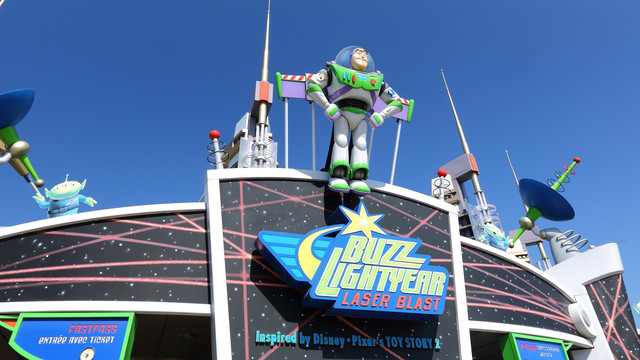
April 8, 2006 – The Attraction Buzz Lightyear Laser Blast Opens in Disneyland Paris

BLLB

“Blast off into space and help Buzz defeat Zurg in this intergalactic laser-shooting gallery.”

On April 8, 2006, the Buzz Lightyear Laser Blast attraction opened in Disneyland Paris’ Discoveryland area. The attraction is similar to the Buzz Lightyear Astro Blasters attraction that opened in Disneyland in 2005, itself based on the Walt Disney World attraction Buzz Lightyear’s Space Ranger Spin, which opened in 1998. Guests spin around a course, using “space cannons” equipped with lasers to shoot various targets laid out by Buzz Lightyear’s nemesis, the evil Emperor Zurg. At the end, guests are given their Star Command ranking, ranging from Space Cadet to Galactic Hero.

April 7

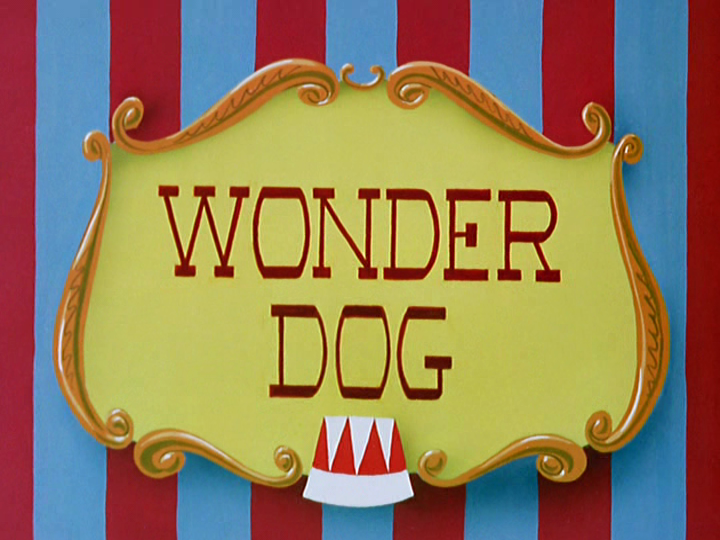
April 7, 1950 – The Pluto Short Film Wonder Dog Premieres in Theaters

vlcsnap-2015-04-07-19h12m16s81

On April 7, 1950, the Pluto short film Wonder Dog premiered in theaters. It was directed by Charles Nichols, with story by Bill Peed and Nick Banta. The short features Pluto’s on-again off-again girlfriend Dinah, and his nemesis Butch; the short also features circus music used in the feature film Dumbo.

Pluto is in his doghouse, dreaming of Dinah, when Dinah happens to pass by, ignoring him. Pluto tries to get her attention, but she is more interested in Prince, the Wonder Dog of the circus. Pluto slinks away, saddened by this, but gets an idea: if he were like Prince, then he would have Dinah’s affection. He then goes into a daydream of being Pluto the Wonder Dog, unaware that he is acting it out in reality, with his stunts waking up Butch. Butch laughs as Pluto continues to practice simple circus tricks, but stops laughing when he notices Pluto mocking him. When Butch chases after Pluto, Pluto is able to perform the stunts out of desperation to get way from Butch. Dinah is able to see Pluto performing, and is duly impressed. In the end, Pluto gets the affection he has so longed for from Dinah.


April 6

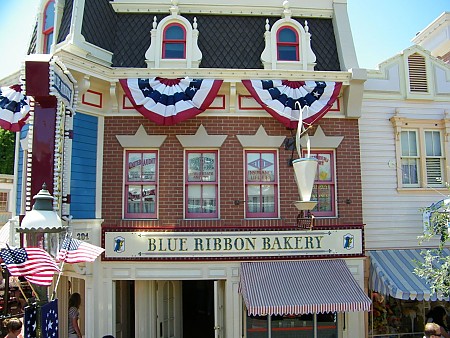
April 6, 1990 – The Blue Ribbon Bakery Opens

BlueRibbonBakery

“If you need an afternoon pick-me-up, head to Blue Ribbon Bakery on Main Street, U.S.A., for an iced coffee or mocha (you can add a white chocolate macadamia nut cookie, that’s up to you).”

On April 6, 1990, the Blue Ribbon Bakery opened on Disneyland’s Main Street. The quick service bakery replaced the Sunkist Citrus House, which closed in early 1989 after opening in 1960. The bakery specialized in specialty pastries and coffee, including the Matterhorn Macaroon and the Soundsational Cupcake. In 1997, the bakery was moved to the location of the former Carnation Ice Cream Parlor; on January 5, 2012, the Blue Ribbon Bakery was officially closed, with its space being used as an expansion for the Carnation Café. Pastry lovers are now able to go to Jolly Holiday Bakery on Main Street.

April 5

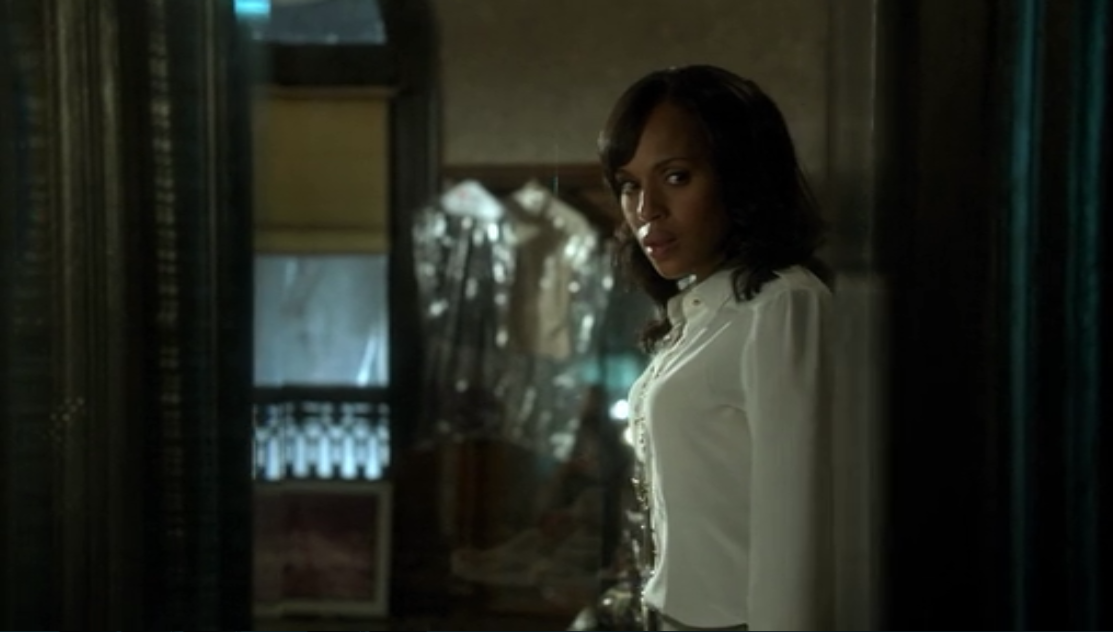
April 5, 2012 – The Drama Series Scandal Premieres on ABC
Scandal_1

“We’re not a law firm. We’re lawyers, but this is not a law firm…we solve problems.”

On April 5, 2012, the drama series Scandal premiered on ABC. The series premiered as a mid-season replacement, with the first season only running for seven episodes. Nevertheless, the series has garnered high ratings by critics and viewers alike, particularly for actress Kerry Washington’s portrayal of lead Olivia Pope. The series was created by Shonda Rhimes, and stars Kerry Washington as Olivia Pope, Henry Ian Cusick as Stephen Finch, Columbus Short as Harrison Wright, Darby Stanchfield as Abby Whelan, Katie Lowes as Quinn Perkins, Guillermo Diaz as Huck, Jeff Perry as Cyrus Beene, and Tony Goldwyn as President Grant.

The first episode, “Sweet Baby,” begins with lawyer Quinn Perkins trying to cancel a blind date with a man named Harrison Wright, but he informs her that it’s not a blind date, it’s a job interview. She’s not interested, until she hears that he works for Olivia Pope, and he tells her that Olivia has already given her the job. Meanwhile, Olivia is heading to an important meeting with Stephen Finch, who is rather nervous. Olivia drops off $3 million to Russian mobsters from an ambassador, and Olivia sweet-talks her way out of a situation when she is $3 million dollars short, but still able to take what they paid for. Wright brings Perkins into the office, and she meets the team, and what Olivia had to buy: the ambassador’s baby. As everyone gets ready to head home, someone heads into the office, bloodied, claiming that the police think he killed his girlfriend.
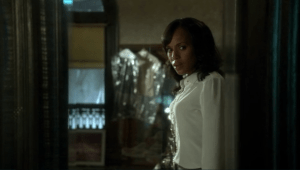
Olivia watches as they start the process of questioning St. James

Olivia watches as they start the process of questioning Sullivan St. James

The client in question, Lieutenant Colonel Sullivan St. James, is a war hero; he is the first living soldier awarded the Medal of Honor since Vietnam. Pope then explains the process of how they work to Perkins, beginning with interviewing him intensely, claiming that they are both the judge and the jury, and decide who he is. Pope has the deciding vote, and then sets the rules and warns them: do not lie, or all bets are off. Pope then begins her work, showing up at Assistant U.S. Attorney David Rosen’s house in the middle of the night, asking for 48-hours before they charge St. James, but he only gives her 24. Her team sets to work collecting evidence in the little time they have, although most think he’s guilty. In the middle of it, Pope is called to the White House by Cyrus Rutherford Beene, the White House Chief of Staff, because the President needs a favor: an aide is claiming that she is sleeping with the President, and Pope needs to shut her down. She then heads to Camp David to talk to the President, but everyone thinks that the President wants to give Pope her old job at the White House.

The team goes deeper in their investigation, discovering that St. James’ girlfriend was supposed to go to a French Consulate dinner, but cancelled at the last minute. The girlfriend used to be a party girl, and gave it up when she met St. James, but is still holding something back: the girlfriend is sleeping with someone else. Pope talks to the President, and they talk about intern Amanda Tanner, and the President denies ever sleeping with Tanner. Pope agrees to take the case, but turns down going back to the White House. Later, Perkins and Pope meet with Tanner in the park, and warn her about spreading lies, with the added bonus of convincing her to hand in her resignation and leave Washington DC. Later, Perkins is found crying in the bathroom, as she is shocked at how cold Pope is. As Pope continues to work her case, the St. James case is falling apart, as he knew that his girlfriend was sleeping with someone else, but he still claims that he did not kill her.
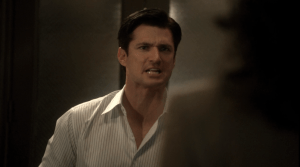
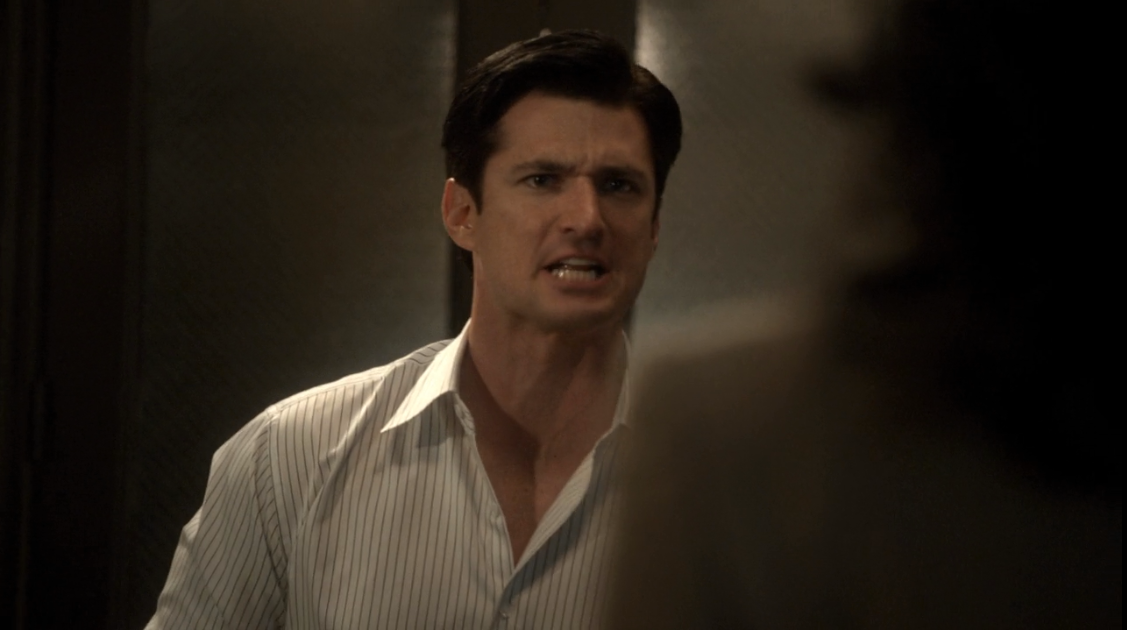
Sullivan lashes out when confronted with the evidence that he was with his boyfriend at the time of the murder

Sullivan lashes out when confronted with the evidence that he was with his boyfriend at the time of the murder

Time is up when the cops arrive at Pope’s office, but the team gets a lucky break with a security camera outside a bar, and are able to verify his alibi, at a price: St. James is meeting his boyfriend. St. James, however, would rather go to jail than admit that he’s gay. He allows himself to be arrested, much to the sadness of the team. As Pope heads to the police station, tech guy Huck tells Perkins that he got a message from an Amanda Tanner, who was admitted to the hospital for a suicide attempt. Pope still doesn’t believe Tanner’s story, until Perkins drops a supposed “pet name” from the President, and Pope heads straight for the White House. Pope confronts the President, who finally admits the truth: he had an affair because Pope had left him. Pope left him because he is married, revealing that the two also had an affair. While the President kisses Pope, Beene walks in, who never knew about Pope’s real relationship with the President. Pope quickly leaves and heads to a restaurant to meet with Finch, who is nervous about proposing to his girlfriend, as he doesn’t think of himself as a good guy. Pope convinces him to propose, and she watches before she hides and thinks about her own problems.

Pope heads back to the jail to talk to St. James, and convinces him to give her the name of his lover so she can secure his alibi. In the end, St. James gives a speech after getting cleared, and announces that he is gay. The case being over, the team clears up the office, although Perkins isn’t convinced that they are the “good guys.” As Pope works, Beene comes to her office, but Pope refuses to talk to the President again, especially since Tanner has become her client.
 

April 4

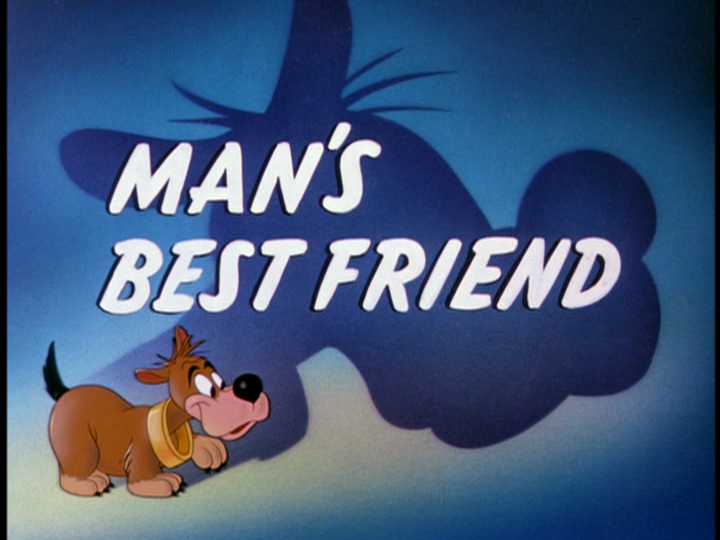
April 4, 1951 – The Goofy Short Film Man’s Best Friend is Released to Theaters

vlcsnap-2015-04-04-10h29m06s83

“Soon, the puppy becomes accustomed to his new surroundings, and makes himself at home in his master’s house.”

On April 4, 1952, the Goofy short film Man’s Best Friend was released to theaters. Another one of the Goofy “everyman” shorts, Goofy plays the part of George Geef, as seen on his mailbox. It was directed by Jack Kinney, with story by Milt Banta and Al Bertino.

A puppy is sitting in a pet shop window, hoping to attract the attention of just one passerby that would be willing to adopt him. He finds this in everyman George Geef, who is also holding a package of sausages. Geef tries to name the puppy, but the puppy refuses to move until Goofy picks a name that isn’t embarrassing or downright horrible. Settling on Bowser, the pair head home, with Geef’s nose stuck in a book about training. After settling in at Geef’s house, Bowser tears the once respectable home to shreds. Geef then attempts to train Bowser, but Goofy seems to be better at the tricks than Geef. Bowser then bites Geef’s hand after Geef gives him a treat. After a few months, Bowser has grown significantly, and is still causing mischief, which includes digging under fences, destroying his neighbors’ yards, and leaving destruction all around. When Geef gets home and settles with his evening paper, his solitude is disturbed by irate neighbors complaining about Bowser’s antics and demanding that Geef pay for the damage. When Geef heads out for the night, Bowser sleeps on the front stoop, unaware of a burglar and the ensuing shoot-out and arrest, and only wakes when Geef comes home, unfortunately chasing his master up a tree.

April 3

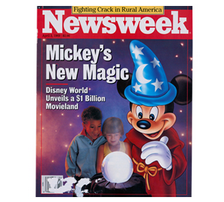
April 3, 1989 – The Walt Disney World Park Disney-MGM Studios is Covered in Newsweek

NewsWeek

“Disney World Unveils a $1 Billion Movieland”

On April 3, 1989, an issue of Newsweek was released featuring Mickey Mouse on the front cover as Sorcerer Mickey. The cover article focused on the opening of Walt Disney World’s newest park, Disney-MGM Studios (now known as Hollywood Studios), which was scheduled to open on May 1st of that year. Newsweek was allowed to go behind the scenes of the creation of the new park and explored other areas of Disney success in the process, including Cast Members and their standards, and, of course, then-CEO Michael Eisner. Other potential ventures were explored in the article, including the water park Typhoon Lagoon, Epcot’s Wonders of Life pavilion, and the new resorts The Swan and The Dolphin.

April 2

April 2, 1993 – The Daytime Parade Aladdin’s Royal Caravan Begins its Run at Disneyland

ARC

“Genuflect, show some respect, down on one knee.”

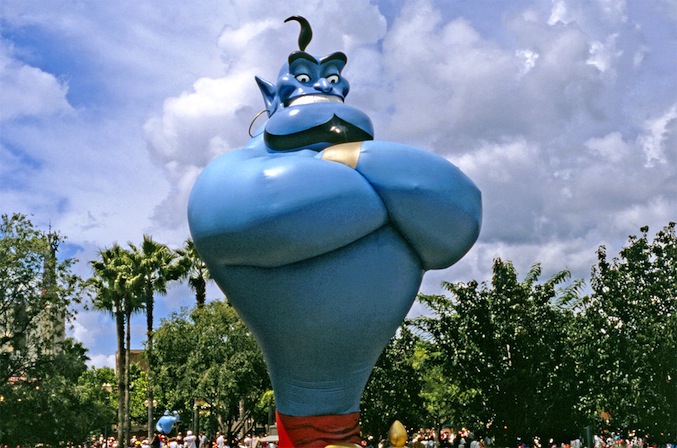
On April 2, 1993, the daytime parade Aladdin’s Royal Caravan began its run at Disneyland, several months after the parade’s beginning in Walt Disney World’s Disney-MGM Studios in December, 1992. The parade was based on the song “Prince Ali” from the animated feature film, with it being played throughout the parade run. The genie was featured in every float in the parade, including a 32-foot-tall Genie and a waving Genie puppet. This was the first parade to be based on a single animated feature film. The parade ended its run in June, 1994, and was replaced with The Lion King Celebration.

April 1

April 1, 1955 – The Segment Blame it on the Samba Released to Theaters as a Short Film

vlcsnap-2015-04-01-18h03m56s55

“So if three boisterous birds of a feather fall under the influence of this torrid tropical tempo, don’t blame them; blame it on the rhythm of the samba.”

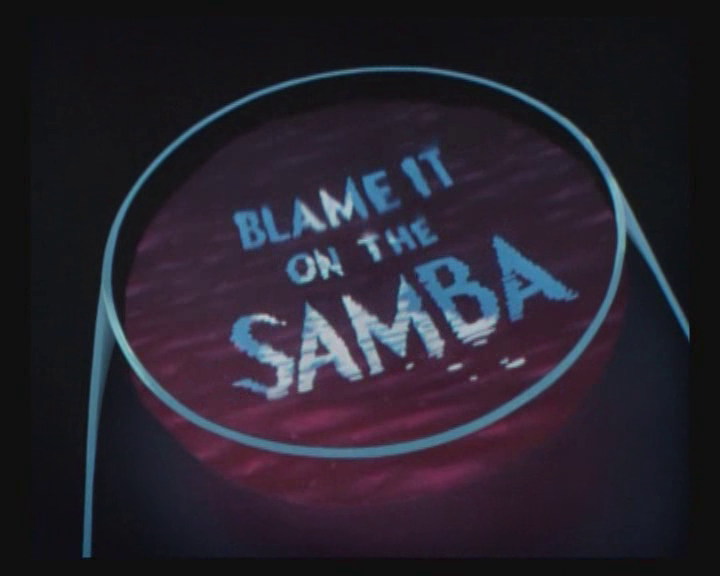
On April 1, 1955, Blame it on the Samba was released to theaters as a short film. The short was originally a segment of the 10th animated feature film Melody Time, and stars classic Disney character Donald Duck, as well as José Carioca and the Aracuan Bird from The Three Caballeros. The segment also features Ethel Smith and the Dinning Sisters singing the titular song.

The segment begins with Donald and José trudging along in a blue world, when they come across the Café do Samba, run by the Aracuan Bird. He quickly gives them a table, though they are less than enthused. To cheer their spirits, the Aracuan Bird starts playing the samba, cheering them up and having them cling to the rhythm of the samba. The Aracuan then creates a special drink of the ingredients needed to create the samba and dives in, where Jose and Donad are seen dancing on the organ of Ethel Smith. When brought back to their world, the samba continues, with the rhythm having taken over everything. Pleased with his work, the Aracuan Bird puts on a top hat and pulls out a cane as the scene fades away.