RSS Feed

Tag Archives: Animated Feature Film

July 2

Posted on

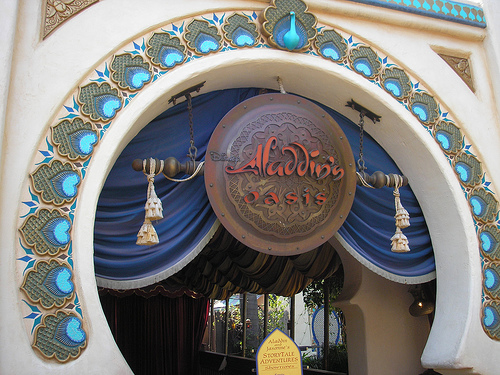
July 2, 1993 – The Dinner Theater Area Aladdin’s Oasis Opens in Disneyland

Aladdin's Oasis

“…a whole new world of fun, food, and adventure at Aladdin’s Oasis – the newest dinner show at Disneyland.”

On July 2, 1993, the dinner theater-style entertainment area Aladdin’s Oasis opened in Disneyland, replacing the Tahitian Terrace. The show was released to capitalize on the success of the 1992 animated feature film. The area gave guests a show filled with songs and dances by characters from the film while they enjoyed Americanized-versions of Middle Eastern food, including papadam wafers and tabbouleh. The show was discontinued after a couple of years, but the restaurant was still in operation until 1997, when it became a storytelling area; it has since become a meet-and-greet area where guests can meet Aladdin and Jasmine.

June 26

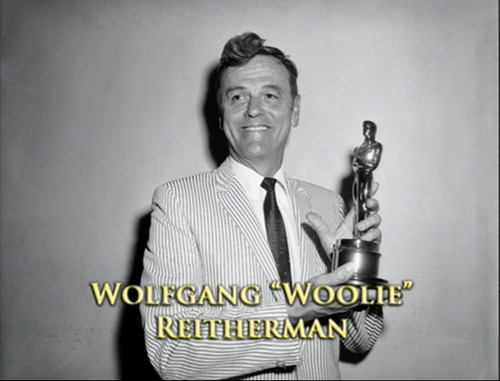
June 26, 1909 – Animator, Member of Disney’s Nine Old Men, Director, and Disney Legend Wolfgang “Woolie” Reitherman is Born

WolfgangReitherman

“I just felt [animation] was a twentieth century art form, probably the most unique of anything that had appeared on the art horizon for decades since perspective. I was just fascinated because you could move those things. You can’t move a painting.”

On June 26, 1909, Wolfgang Reitherman was born in Munich, Germany. His family moved to California when Reitherman was an infant. Fascinated with airplanes from a young age, he attended the Pasadena Junior College to study aircraft engineering, and later got a job at Douglas Aircraft as a draftsman. Reitherman changed his career path in 1931 to study his other passion of art, enrolling in the Chouinard Art Institute, studying watercolor. As fate would have it, Reitherman met an instructor who taught at the Disney Studios, and in 1933, Reitherman joined the company in the animation department. When World War II began, Reitherman served in the Air Force, earning the Distinguished Flying Cross for his services in Africa, China, India, and the South Pacific. He returned to the studio after the war, and contributed to more than 30 Disney short films throughout his career, including Water Babies and Donald in Mathmagic Land. Reitherman also contributed to several feature animated films, including Snow White and the Seven Dwarfs, Cinderella, and One Hundred and One Dalmatians.

Reitherman’s first foray into directing came with the animated feature film Sleeping Beauty. In 1961, Reitherman was named co-director of the film One Hundred and One Dalmatians alongside Hamilton Luske and Clyde Geronimi. In 1963, Reitherman was named the director of the film The Sword in the Stone, a first for an animator in the studio’s history. He would continue to serve as an animator of Disney features, which include The Jungle Book, The Arisocats, Robin Hood, and the cartoon feature Winnie the Pooh and the Blustery Day. A trademark in Reitherman’s films was the reuse of animation, as evidenced in Robin Hood’s “Phoney King of England” scene, which borrowed heavily from Snow White and the Seven Dwarfs. In 1981, Reitherman retired from the Disney Studios, having dedicated nearly 50 years of his life. Unfortunately, Reitherman died in a car accident on May 22, 1985, in Burbank, California. As a tribute to his life and his work at Disney, he was honored as a Disney Legend in 1989.

June 23

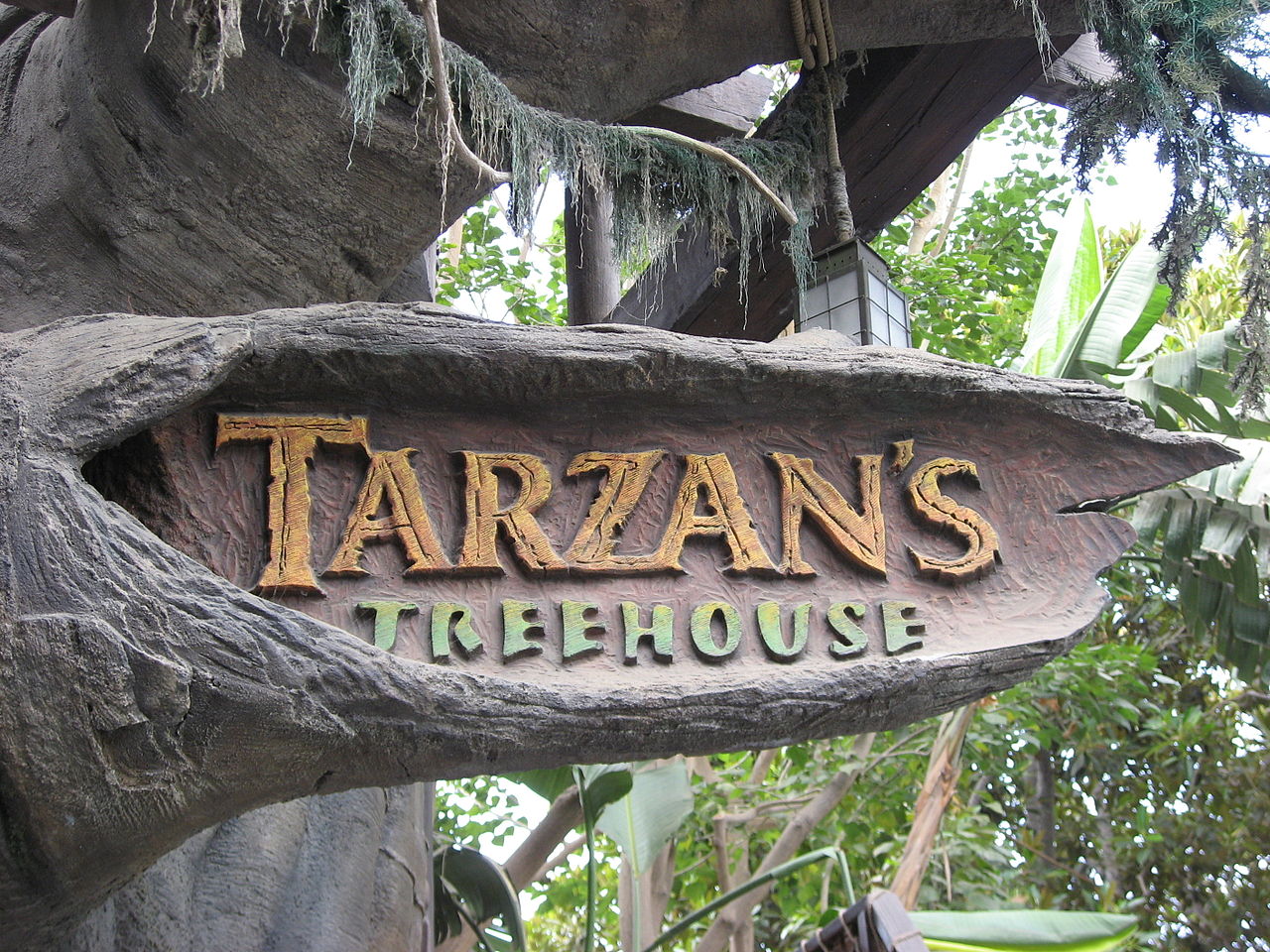
June 23, 1999 – The Adventureland Attraction Tarzan’s Treehouse Opens in Disneyland

1280px-Disneyland-TarzansTreehouse-sign

“Tour Tarzan’s jungle home – built aloft in an 80-foot tall tree – and see what it’s like to live on the wild side!”

On June 23, 1999, the Adventureland attraction Tarzan’s Treehouse opened in Disneyland. It replaced the Swiss Family Treehouse that has been in Disneyland since 1962, and was based on the 1999 animated feature film. To recreate the feel of the film, the staircase was rebuilt to resemble parts of a shipwreck, and the houses include scenes from the life of the title character. At the top of the attraction, guests are able to view all of Adventureland; at the base of the attraction, an area is set up for children to play and interact. The attraction was also recreated at Hong Kong Disneyland, and opened on September 12, 2005.

June 2

Posted on

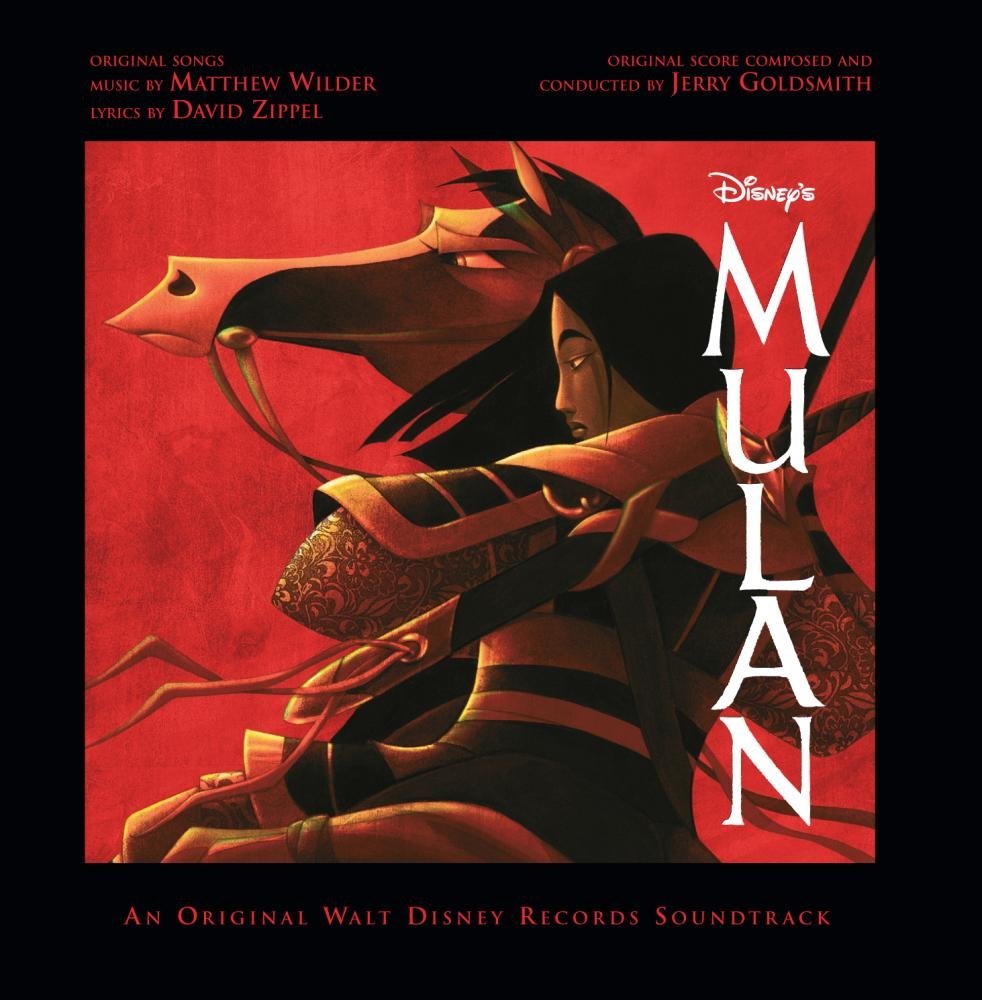
June 2, 1998 – The Soundtrack for the Animated Feature Film Mulan is Released Through Walt Disney Records

Mulan

“When will my reflection show who I am inside?”

On June 2, 1998, the soundtrack to Disney’s 36th animated feature Mulan was released through Walt Disney Records. The album features the vocals of Lea Salonga, Donny Osmond, Christina Aguilera, and Stevie Wonder, among others, and the score by Jerry Goldsmith. Although none of the singles charted on the Billboard Hot 100 charts, the album itself peaked at number 24 on the Billboard 200. The album was nominated for an Academy Award for Best Original Musical or Comedy Score, but lost to Stephen Warbeck’s Shakespeare in Love.

March 22

March 22, 2009 – The Short Film Super Rhino is Released

vlcsnap-2014-03-15-12h23m15s169

“My ancestry isn’t all hamster, I’m one-sixteenth wolf with a little wolverine…”

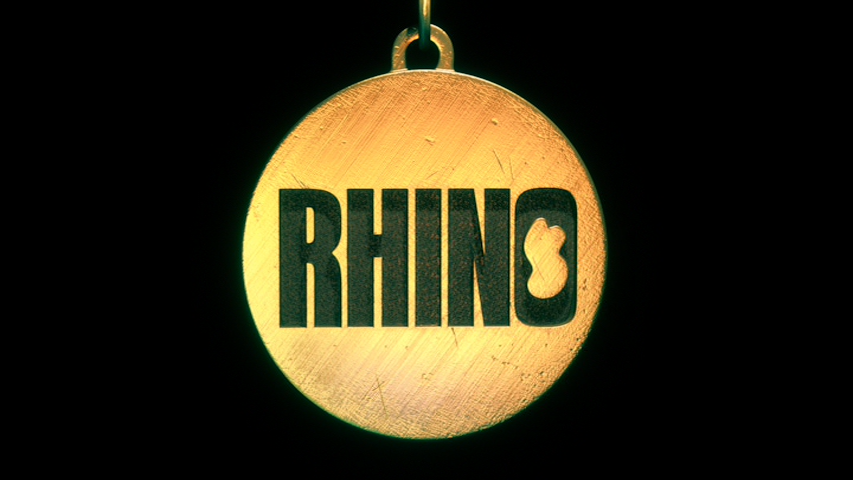
On March 22, 2009, the special short film Super Rhino was released on the DVD release of the Disney animated feature film Bolt. It was written and directed by Nathan Greno, and stars Mark Walton as Rhino, Malcolm McDowell as Dr. Calico, Miley Cyrus as Penny, and Susie Essman as Mittens.

The short begins with Calico already touting his success as an evil villain, as he has caught Penny and Bolt and has them suspended over a large pit of lava. Through a camera in Bolt’s collar, Penny’s father is able to see their capture, and although he can’t save her, he knows who can: Rhino the hamster. Penny’s father uses his scientific contraptions to create a super hamster, and Rhino is soon sent to save the pair. He attacks all the guards outside, and makes his way into Calico’s fortress, exclaiming that he created a door with lasers from his eyes. Calico looks dumbfounded as he sees a hamster standing before him. Every guard shoots everything they can at Rhino, but the newly super Rhino is able to avoid the shot and rides a missile, using it to cut down Penny and Bolt, and safely catches them as they fall. Calico starts proclaiming that he will win next time, but Rhino interrupts him and, using his own version of the “super bark,” sends a wave of lava flying over Calico, burning him and his cat. Penny and Bolt thank Rhino, who calls the two “cute,” before proclaiming he has an urgent matter to attend to. He is then seen at a concert, where he starts singing Hannah Montana’s song “Best of Both Worlds” to an adoring crowd. It is then revealed that he has been dreaming, and has woken up Mittens, who is not a fan of his singing. He rolls over and goes back to sleep, dreaming once again that he’s going to save the world after answering a call from the President of the United States.

March 14

March 14, 1948 – Actor, Writer, Producer, Comedian, Director, and Disney Legend Billy Crystal is Born

BillyC

“When we thought of Billy Crystal, we thought, this was going to be great. Of course, he just added his own unique spin to it.” – Pete Docter, Director of Monsters, Inc.

On March 14, 1948, William Edward Crystal was born in New York City. His father was a music promoter, and his uncle was Milton Gabler, a legendary music producer. Displaying a love of performing at an early age, Crystal and his older brothers would perform their own variety show for family members and at local events. After graduating from New York University’s Tisch School of the Arts in 1970, Crystal began his career in improv comedy, leading to a sketch on the first season of Saturday Night Live!. His breakout role was as Jodie Dallas on the sitcom Soap, which he played from 1977 through 1981. He rejoined Saturday Night Live! as a cast member during the 1984 – 1985 season, and then had an appearance in the series All in the Family, where he would meet actor and director Rob Reiner. Reiner hired Crystal for small parts in two films, This is Spinal Tap and The Princess Bride, which led to his being cast as the lead in When Harry Met Sally…. This film gave Crystal his first Golden Globe nomination for best actor.

Crystal was asked to be the voice of Buzz Lightyear in Pixar’s first full-length computer animated feature Toy Story, but he passed on the role, calling it one of the biggest regrets of his career. When he was offered the role of Mike Wazowski in Monsters, Inc., he jumped at the chance. He has since reprised the role in a short film, a cameo in Cars, and the prequel film Monsters University. Crystal also voiced the character Calcifer in the film Howl’s Moving Castle. Crystal continues to be active in entertainment, hosting the Academy Awards nine times, directing a made-for-television movie, and writing and starring in a one-man play called 700 Sundays. Crystal was named a Disney Legend in 2013.

February 7

February 7, 2004 – Pixar’s Finding Nemo Wins Nine Annie Awards

annie-awards-2014

“Sweeping all nine categories it was nominated in, the Disney/Pixar collaboration Finding Nemo proved to be the big winner at the 31st annual Annie Awards.”

On February 7, 2004, the 31st Annie Awards were held at the Alex Theater in Glendale, California. In all nine categories it was nominated, Pixar’s Finding Nemo took home the award, including the one for Best Animated Feature, beating out Warner Brothers’ Looney Toons: Back in Action, Les Armateurs’ Les Triplettes de Belleville, Go Fish Pictures’ Sennen Joyuu, and Walt Disney Feature Animation’s Brother Bear. Finding Nemo was also awarded for Character Animation (awarded to animator Doug Sweetland), Character Design in an Animated Feature Production (awarded to animator Ricky Nierva), Directing in an Animated Feature Production (awarded to Andrew Stanton and Lee Unkrich), Effects Animation (awarded to Martin Nguyen), Music in an Animated Feature Production (awarded to Thomas Newman), Production Design in an Animated Feature Production (awarded to Ralph Eggleston), Voice Acting in an Animated Feature Production (awarded to Ellen DeGeneres), and Writing in an Animated Feature Production (awarded to Andrew Stanton, Bob Peterson, and Dave Reynolds); the short film Boundin’ also won an award for Outstanding Achievement in an Animated Short Subject.

February 5

February 5, 2013 – Brave Wins Four Awards at the 11th Annual VES Awards

vesawards2013-553-M

“Each year, we put a spotlight on artists’ acheivements in visual effects that today more than ever define the experience of going to the cinema.” – Jeffrey A. Okun, Chair of the Visual Effects Society

On February 5, 2013, the 11th Annual Visual Effect Society (VES) Awards were held at the Beverly Hilton Hotel in Beverly Hills, California. Brave tied with Life of Pi as the most honored films of the evening, each winning four awards. Brave’s awards included Outstanding Animation in an Animated Feature Motion Picture for Mark Andrews, Steve May, Katherine Sarafian, and Bill Wise; Outstanding Animated Character in an Animated Feature Motion Picture for Travis Hathaway, Olivier Soares, Peter Sumanaseni, and Brian Tindall for the design of Merida; Outstanding Created Environment in an Animated Feature Motion Picture for Tim Best, Steve Pilcher, Inigo Quilez, and Andrew Whittock’s design of the forest; and Outstanding FX and Simulation Animation in an Animated Feature Motion Picture for Chris Chapman, Dave Hale, Michael K. O’Brien, and Bill Watral.

February 3

February 3, 1986 – Pixar Animation Studios is Founded

vlcsnap-2014-02-03-05h09m14s140

“The best scientists and engineers are just as creative as the best storytellers.” – Steve Jobs

On February 3, 1986, the Pixar Animation Studios was founded by Ed Catmull, Alvy Ray Smith, and Steve Jobs. Its history goes back to 1979, when Ed Catmull was recruited by George Lucas to head Lucasfilm’s new Computer Division. In 1983, after being fired by Disney, Jon Lasseter was brought on to the graphics group of the Computer Division as an “interface designer,” with the goal of having Lasseter bring the group one step closer to the dream of creating a computer animated film. Working together, the group created the short film The Adventures of Andre & Wally B, which was shown at the computer graphics conference SIGGRAPH to critical acclaim for its groundbreaking software developed to create the squash-and-stretch and motion blur techniques. The group also created the Pixar Image Computer, used mostly in government and medical communities (although Disney purchased a number of computers for what would later become the Computer Animation Production System, or CAPS). However, although this software and computer were the most powerful and impressive of their day, Lucas’ interest in the company waned, as he didn’t want to run a company selling software. Catmull and Smith gained Lucas’ blessing to spin off the company and call it Pixar, and found an investor in entrepreneur Steve Jobs, who invested $10 million into the struggling group.

In 1987, Pixar’s short film Luxo Jr. became the first 3D computer animated short film to be nominated for an Academy Award, and the lamp became the symbol of the company; in 1989, Pixar would win an Academy Award for their short film Tin Toy. To keep the company afloat while still working toward their dream, Pixar did commercial work for companies like Tropicana and Trident Gum. Pixar was then able to work on a collaborative effort with Walt Disney Studios, helping develop CAPS further, and Pixar also developed RenderMan, which became an industry standard in computer graphics. Despite all these technical advancements, the company was not able to make a profit, and Jobs contemplated selling it, with Microsoft being one of the potential buyers. Lasseter pitched an idea to the Walt Disney Studios about Pixar creating a 30 minute holiday special based on the award winning short Tin Toy; Disney thought that the short had a potential of being a full-length feature film, and gave Pixar the chance of reaching their dream. The film, Toy Story, became a spectacular success, grossing over $360 million at the box office. Since then, Pixar founded their studio in Emeryville, California, in 2000, and in 2006, was purchased by Disney. Pixar has had an unprecedented string of hits unlike any studio in history, with hit films including a bug’s life, Monsters, Inc., Finding Nemo, The Incredibles, Cars, Ratatouille, WALL-E, Up, and Brave.

January 20

January 20, 1971 – The Featurette Bongo is Released
vlcsnap-2014-01-20-17h45m26s195

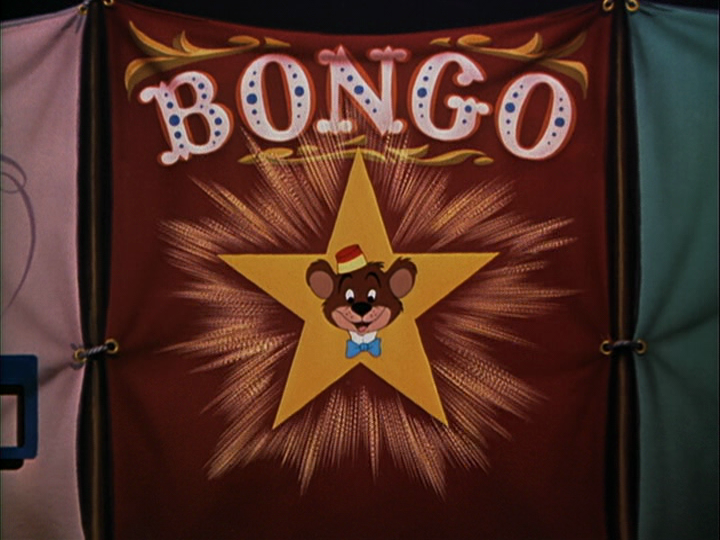
“But mostly, this is a story about Bongo. He was a circus bear: was born in the circus, grew up in the circus, in fact, Bongo was the star of the circus.”

On January 20, 1971, the Bongo segment from the animated feature film Fun and Fancy Free was released as a featurette. Based on the children’s story “Little Bear Bongo” by Sinclair Lewis, first published in 1930, it was originally slated to be a complete feature film, but the production was interrupted by the onset of World War II. In the end, with Bongo and The Legend of Happy Valley (later retitled as Mickey and the Beanstalk) were turned into a package film, as neither one was considered to be sophisticated enough to stand alone as a feature film. Bongo was narrated by musical star Dinah Shore.

The story begins with Dinah explaining that Bongo was the star of the circus, able to do any trick that was asked of him. He performs a tightrope trick while juggling several dozen items before jumping off the tightrope and landing on a wet sponge. However, life isn’t all that glamorous for Bongo, as he is chained and sent into a cage after the performance, “tossed around like an old shoe.” He dreams of living out in the wilderness, away from the circus, trains, and his current life. But every day it’s the same, he’s called out to perform, and then sent back into his gilded cage. One day, having had enough of his life, he decides to follow the call of the wild and escapes from his cage.
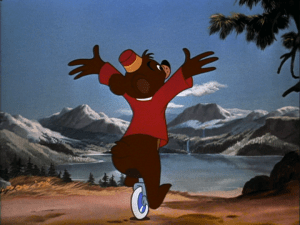
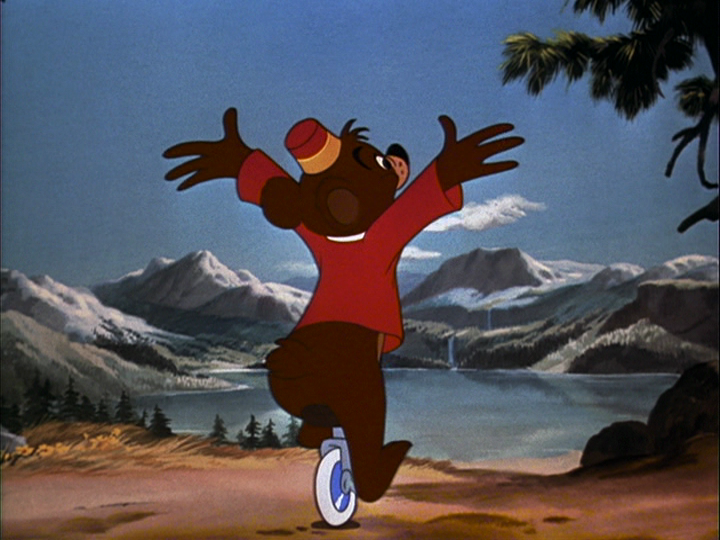
Bongo can hardly believe his good fortune that he is finally free

Bongo can hardly believe his good fortune that he is finally free

Free at last, he travels the woods excitedly, stopping to smell the flowers and jumping over tree roots. He meets the other animals of the forest, who laugh at his inability to act like a bear. He doesn’t get easily discouraged, as he is just happy to be free. That night, Bongo attempts to sleep, but is disturbed by the sounds and experiences of the forest before he gets caught in a storm. In the morning, Bongo wakes up to find himself on the ledge of a cliff, is very discouraged at his situation, as he doesn’t know how to act like a bear. He worries that he made a mistake, especially when he can’t catch anything for breakfast. He soon meets a female bear named Lulubelle, and the two proceed to flirt as they frolic through the woods.

Lulubelle and Bongo quickly fall in love, gathering all the attention of the bears in the woods. However, a bear named Lumpjaw, who also has feelings for Lulubelle, soon hears news of Lulubelle’s new beau, and decides to break the happy couple up with the intent of stealing Lulubelle for himself. He starts fighting Bongo, but Lulubelle stops Lumpjaw from beating him up, and then punches Bongo herself. Bongo is heartbroken, thinking that Lulubelle no longer loves him, and when she tries to punch Bongo for a third time, Bongo ducks, and she hits Lumpjaw instead. Bongo was unaware of the bear custom that slapping is a sign of affection, and sadly walks away while everyone else celebrates the “happy” couple of Lulubelle and Lumpjaw. As he looks back at the scene of the bears, he finally understands that bears “say it with a slap,” and goes back to challenge Lumpjaw. The two duke it out, and Bongo emerges victorious, using skills he learned in the circus. Bongo is reunited with Lulubelle, and gives her an affectionate slap, which she returns in kind.