RSS Feed

Tag Archives: Special

August 7

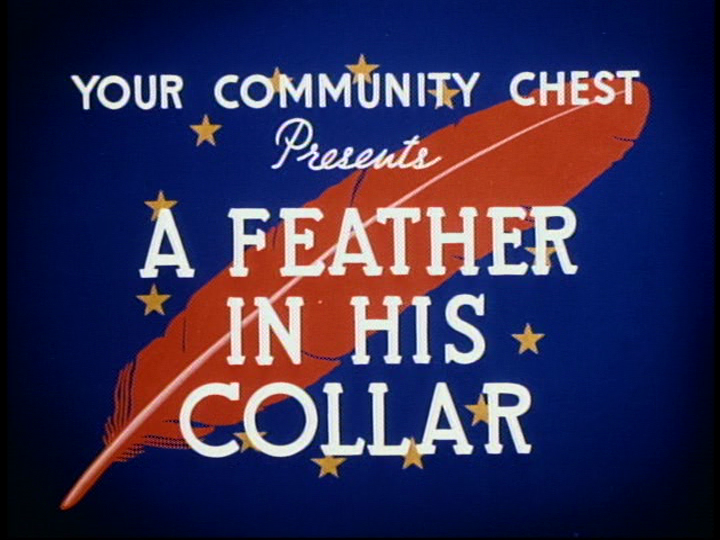
August 7, 1946 – The Special Pluto Short Film A Feather in His Collar is Delivered to the Community Chests of America

vlcsnap-2015-08-07-18h09m45s21

“That’s the spirit, Pluto! Thank you!”

On August 7, 1946, the special short film A Feather in His Collar was delivered to the Community Chests of America. During World War II, Disney characters were used frequently to encourage viewers to support the war effort, from buying war bonds to paying their taxes. This short film used Pluto to encourage people to donate to their local Community Chests.

The advertisement begins with Pluto sleeping in his doghouse when his nose is splashed with billboard paste. He sleepily looks up to see an ad asking people to give to their Community Chest. Pluto decides to open his safe and donate several of his bones, and is awarded with a red feather placed in his collar. Inspired, Pluto walks around town advertising for people to give to their Community Chest.

August 2

August 2, 2010 – The Special Summer Episode “Phineas and Ferb: Summer Belongs to You!” Premieres on Disney X D
PaF_SBTY_1

“By busting the boys, I’d be busting myself?”

On August 2, 2010, the special episode of the hit animated series Phineas and Ferb, entitled “Phineas and Ferb: Summer Belongs to You,” premiered on Disney X D. This episode was the first one-hour long special for the show, and had almost 4 million viewers on its premiere date. The episode then premiered on the Disney Channel four days later. It was directed by Robert F. Hughes and Dan Povenmire.

The episode begins with Candace calling her boyfriend Jeremy, who is vacationing in Paris. Candace hangs up because Phineas and Ferb’s robot creation is jumping rope in the backyard. In true fashion, the robot disappears when their mother arrives home. Phineas realizes that the summer is half over, and they need a real challenge. Candace is left in charge of the boys while their parents head out of town for two days. Meanwhile, Professor Doofenschmirtz is taking his daughter to Vanessa to Tokyo, though he has an ulterior motive in going to Japan. The next morning, Phineas reveals his plans to take the longest day of the summer and make it even longer: he and Ferb have created a rocket that will fly all the way around the world, following the sun, therefore making it the longest day ever. Buford is unconvinced that this could possibly be done, and bets the two that they can’t do it. Should they lose, they have to announce to everyone that they are governed by the laws of physics, summer’s not whatever they make of it, and they can’t do anything else the rest of the summer. Stunt singers Clay Aiken and Shaka Khan appears to sing a song rousing support for Phineas’ mission.
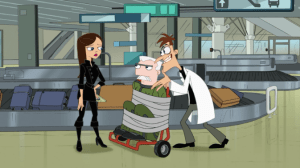
Vanessa is furious that her father brought work with him on their vacation to Tokyo

Vanessa is furious that her father brought work with him on their vacation to Tokyo

Perry heads down to his secret lair to get his assignment: Dr. Doofenshmirtz is off to Tokyo where the annual Good Guy Convention is being held, with Major Monogram as the keynote speaker. Meanwhile, Stacy is helping Candace through her worries that Jeremy might be seeing other girls while in Paris. Candace reveals that she and Jeremy aren’t officially “boyfriend and girlfriend” yet, and Stacy advises Candace to just call Jeremy her boyfriend first. In Tokyo, Doofenshmirtz has already captured Major Monogram and has taken him with him on vacation, much to Vanessa’s annoyance. Phineas and Ferb sets up their flight, and Candace, while originally wanting to bust the boys, decides to go because they will be heading to Paris. The group heads to Tokyo, where Doofenshmirtz has set up a giant water balloon to fall over the Good Guy Convention, with Monogram to get the blame. The plane crashes in Tokyo, where Stacy’s family has been waiting for them. They help them refuel with a musical number and head off, accidentally catching Vanessa as they go. Vanessa, who had decided to leave her dad and head to Paris on her own, was thrown from the Tokyo Tower by her father’s water balloon crashing into her. Vanessa decides to join Phineas and Ferb. Doofenshmirtz decides to go after them, begging for Monogram and Perry’s help to do so.

The boys’ plane crashes in the Himalayas, as they didn’t account for the weight of an extra person. Luckily, Baljeet’s uncle lives nearby, where he has set up a rubber-making factory. The group is able to borrow some of the rubber, and manage to make it out after a slight mishap. The group bounces around the world thanks to the rubber ball they’ve constructed. The rubber ball deconstructs by the time they reach Paris, so the group stops to get fuel and parts. The group splits up, and Candace finds Jeremy with a group of teenagers, and worries that Jeremy has found another girlfriend. Isabella tries to make her outing with Phineas romantic, but Phineas is more distracted by looking for parts for his plane. Doofenshmirtz arrives in Paris to take Vanessa back, and decides to go after listening to some advice from Ferb. Isabella and Candace are both despondent about their ruined romantic prospects. While Phineas cheers Candace up, Jeremy arrives, and Candace decides to tell him how she feels. Jeremy calls her his girlfriend, and the two establish their relationship.
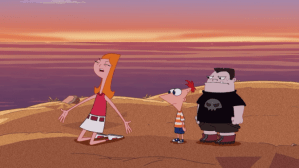
Candace cries out in anguish as she finds that they are stranded on a desert island

Candace cries out in anguish as she finds that they are stranded on a desert island

The group then sets off home, and are close to making it home, when the rocket completely disintegrates, leaving the group stranded on a deserted island. Candace despairs as she thinks romance is dead, and Buford brags that Phineas and Ferb will lose. Phineas tries to come up with a plan to leave, but realizes that he doesn’t have anything with which they can create anything. Isabella cries as she feels ignored by Phineas, who is frantically trying to come up with a plan. Finally, Isabella gives Phineas the self-esteem boost he needs, and he uses the map to create a special paper airplane to fly the group back home. Candace argues that the plan won’t fly, but the group convinces her to believe thanks to the lure of Jeremy. The group manages to arrive back in Danville, and are able to make it back to the backyard after Buford gives the group their bikes back. The group arrives home to a welcome home party in the backyard, and a musical number.
July 28

July 28, 1987 – The Special Computer-Animated Short Film Oilspot and Lipstick is Released at SIGGRAPH

O&L

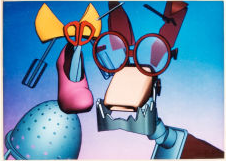
On July 28, 1987, the special short film Oilspot and Lipstick was released at the Special Interest Group on Graphics and Interactive Techniques conference, known as SIGGRAPH. The film was one of Disney’s earliest attempts at computer animation. It featured two dogs made out of junkyard parts, with a junkyard monster threatening the life of the female, Lipstick; she is rescued by the male dog, Oilspot.

July 18

July 18, 1956 – The Special Short Film Jack and Old Mac is Released to Theaters

vlcsnap-2015-07-18-19h20m25s79

“Go Mac, go Mac, go…run to the barnyard, join the fun…”

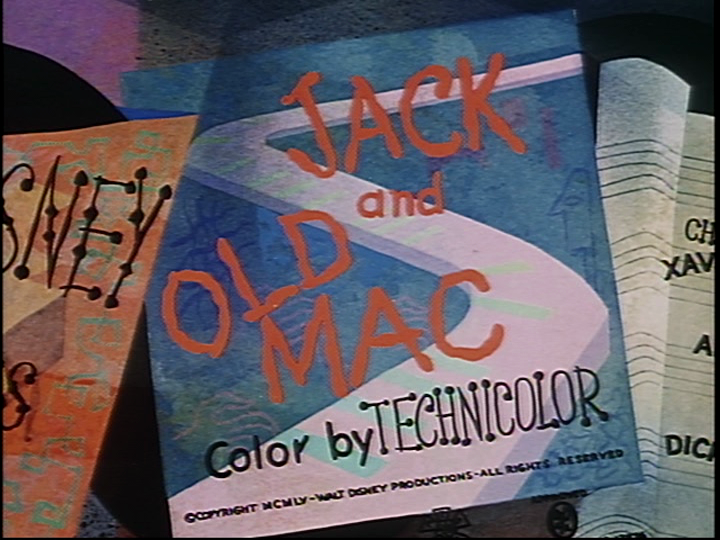
On July 18, 1956, the special short film Jack and Old Mac was released to theaters. It was directed by Bill Justice, with story by Dick Kinney and Roy Williams.

The first record, “The House that Jack Built,” takes specific words from the popular rhyme and turns them into drawings. This is then followed by an updated version of “Old McDonald Had a Farm,” turning into “Old McDonald Had a Band.” Old Mac plays the piano, while his wife chops firewood. The members of the farm accompany Old Mac, singing of the pig that plays the saxophone, the dog that plays the bass, the cow that plays the horn, and the horse that plays the drums. Old Mac then gets chickens to play the piano for him while everyone dances in the barnyard. Finally, Old Mac’s wife, having had enough of chopping firewood while her husband plays the piano, stops the party by hitting him over the head with a rolling pin.

July 16

July 16, 1954 – The Special Short Film Casey at the Bat is Released to Theaters

vlcsnap-2015-07-16-18h46m23s118

“Casey’s the guy with his eye on the ball, but mostly the ladies. Casey’s the guy who’s the idol of all – but mostly the ladies.”

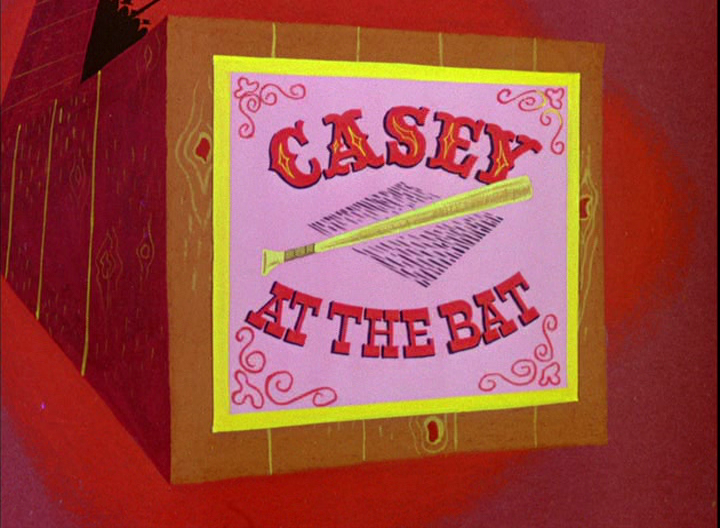
On July 16, 1954, the segment turned short film Casey at the Bat was released to theaters. Originally based on the poem by Ernest Thayer, the short was a segment in the animated package feature film Make Mine Music. It was narrated by Jerry Colona.

The time is 102, and everyone is heading to the ball game to see the game between Mudville and Burbank, particularly Casey, “the pride of them all.” The game doesn’t look good for Mudville, as they are losing by two. Each batter before Casey is bumbling, but they somehow manage to load the bases just as Casey gets up to bat to bring them home. Although distracted by the ladies, Casey leaves the crowd to once again be the hero, full of swagger and bravado. The pitcher is afraid to throw the ball, sweating profusely. When the ball arrives, Casey refuses to swing, and the crowd argues with the umpire’s call of a strike. Casey is able to calm the crowd down, and waits for his new pitch, though he ignores it again, resulting in another strike. Finally, the ball comes for a third time. Unfortunately, there is no joy in Mudville, as Casey struck out, and is left crying in the rain, trying once again to hit the ball, but has seemingly lost his ability.

July 15

July 15, 1955 – The Special Short Film The Flying Gauchito is Released to Theaters

vlcsnap-2015-07-15-19h24m36s67

“It’s a tale told by an old gaucho from Uruguay.”

On July 15, 1955, the segment turned short film The Flying Gauchito was released to theaters. It was originally a segment of the animated feature film The Three Caballeros.

The short begins in Uruguay, where a little bird came out of his nest early in the morning to see a little gauchito sneak out to go hunting. The gauchito heads up the mountain range to hunt a condor, and spots a large bird in a nest, only to find that it was actually a flying donkey. The donkey spots the gauchito and steals his hat, and the gauchito works quickly to capture him. The gauchito sets to work training the donkey before setting off to the race at the fiesta the next day. With a grand prize of 1,000 pesos, the two plan on winning the race, although they are laughed at by the crowd. The race doesn’t begin very well, with the crowd laughing at the donkey’s slow pace. Finally, gauchito reveals the donkey’s wings, and the two fly down the track as fast as can be, winning the pesos. Unfortunately, the ruse is up when the donkey flies up into the air, taking the gauchito far away with him.

June 24

June 24, 1955 – The Special Short Film Aquarela do Brasil is Released to Theaters

vlcsnap-2015-06-24-16h11m30s189

“What happened? Where am I?”

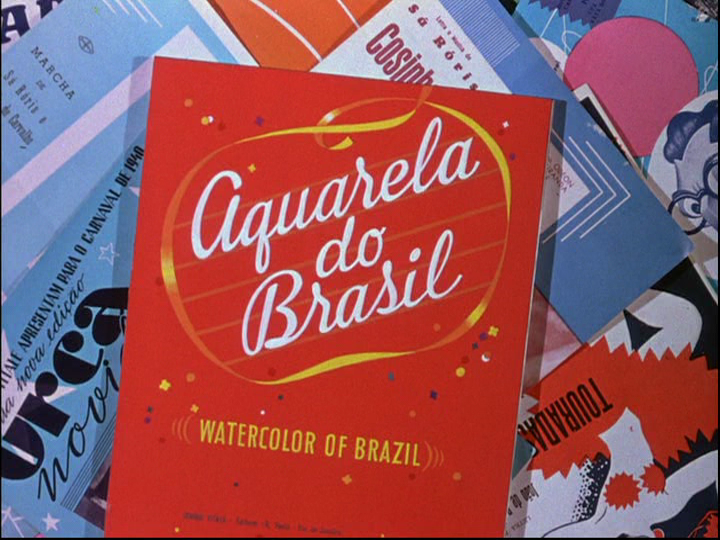
On June 24, 1955, the special short film Aquarela do Brasil was released to theaters. It was a segment from the 1943 animated feature film Saludos Amigos, featuring the characters Donald Duck and José Carioca. It features the samba piece Tico-Tico no Fubá; it also features the titular song, written by Ary Barroso, and featuring the vocals of Aloysio Oliveira. It also features José Oliveira as Carioca.

It starts with a blank piece of paper, with an artist drawing a simple paiting of Brazil, when he splashes it with blue paint to create a waterfall. The colors continue to be added in intensity, creating singing flowers and sambaing flamingos. Many fantastic elements of Brazil are painted with the artist’s magical paintbrush. One of the flowers soon turns into Donald Duck, who sees the paintbrush paint a strange character. He takes some paint from the character’s bow tie and draws his own character, but is punished by the paintbrush, pushing him into a giant puddle. He then meets the completed character, José Carioca, who is overjoyed to meet Donald. Unfortunately, Donald doesn’t speak any Portuguese, and José is too excited to notice, but he finally switches to English, asking Donald to go see the town. José starts dancing, and Donald tries to join in, with the pair dancing through the painting. The two stop at a café, where Donald is given something he thinks is soda, but causes him to spurt out fire. José declares that Donald has the gist of the samba, and the samba begins. The pair head to several clubs within Brazil as the segment comes to a close.

June 23

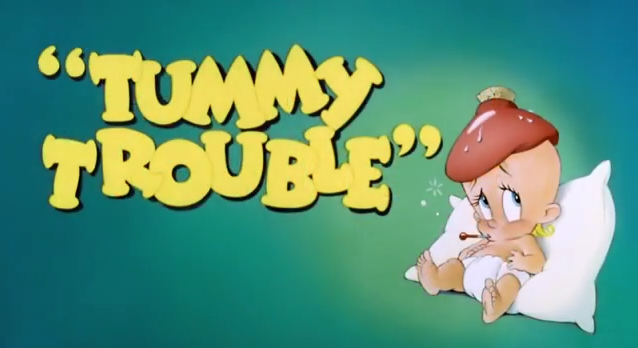
June 23, 1989 – The Roger Rabbit Short Film Tummy Trouble is Released to Theaters

TummyTrouble_1

“Don’t worry about a thing! I’ve learned my lesson! I’m a reformed rabbit! A better bunny! A happy hare!”

On June 23, 1989, the Roger Rabbit short film Tummy Trouble was released to theaters. It was the first short Disney had worked on in 24 years, and featured the characters from the hit film Who Framed Roger Rabbit. Tummy Trouble was the first in a series of three Roger Rabbit shorts, with a fourth one planned but cancelled. A Hidden Mickey can also be found in this short film. The animation was directed by Rob Minkoff, with the live action directed by Frank Marshall. It starred Charles Fleischer as Roger, April Winchell as Mom and Baby Herman, Lou Hirsch as Baby Herman, and Kathleen Turner as Jessica Rabbit.

The short begins with Uncle Roger being asked to take care of Baby Herman again, though he is warned to not mess things up like the previous time. After his mother leaves, Baby Herman starts wailing and throwing a tantrum, but Roger is prepared with a baby rattle. Unfortunately for Roger, Baby Herman swallows the rattle, and Roger screams out to call 911. At the hospital, Roger cries out that he wished this tragedy had befallen him. He then gives a hungry Baby Herman his bottle, and when Roger burps him, several things pop out, including the kitchen sink. The rattle then pops out, but Roger ends up swallowing it by accident. Baby Herman starts to cry, but is cheered up when Roger starts dancing, as the rattle shakes inside. Roger, instead of Baby Herman, is wheeled into surgery to remove the rattle. Meanwhile, Jessica is walking down the hall with a cart full of bottles, and Baby Herman follows her, hoping to retrieve a bottle. He then starts chasing one that has slipped from her cart and bounces down the hallway.

Roger tries to dodge his surgeons, but finds himself quickly captured. They pull out a chainsaw to cut him open, but soon leave for lunch. Baby Herman enters the room, still chasing a bottle, when he gets distracted by what he thinks is a giant bottle, but is really a large surgical laser. Baby Herman ends up causing more chaos within the room, sending hypodermic needles flying across the room and sending the pair flying across the hall into an elevator shaft. Baby Herman manages to save himself (though does accidentally swallow the rattle again) while Roger is crushed by the elevator. When looking for Herman again, the pair are caught on the rocketing laser, and fly into a pile of highly flammable chemical tanks. The pair are blasted into the sky, and the pair are both free of the rattle. Roger is ecstatic – until he sees the hospital bill. Even worse, Baby Herman swallows that rattle again. The short ends with Jessica taking Roger home to play a game of patty-cake.

June 19

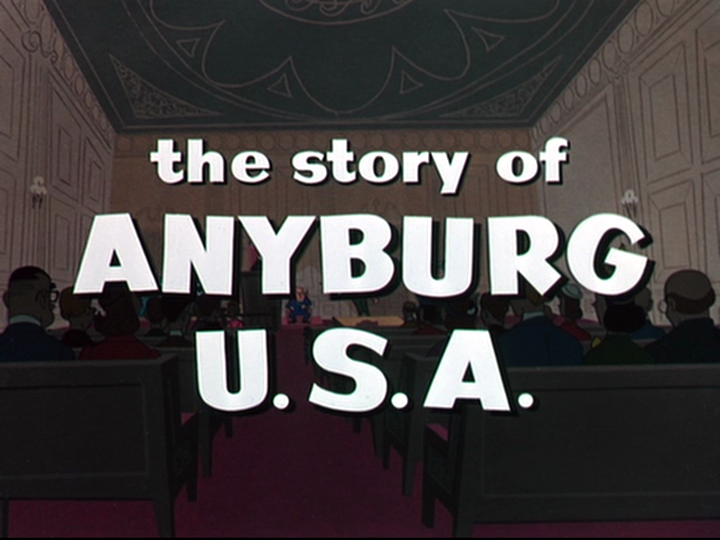
June 19, 1957 – The Special Short Film The Story of Anyburg, U.S.A. is Released to Theaters

vlcsnap-2015-06-19-20h38m24s122

“This is the story of a certain city, and what it did about this common curse that plagued the land.”

On June 19, 1957, the special short film The Story of Anyburg, U.S.A was released to theaters. It was directed by Clyde Geronimi, with story by Dick Heumer.

The story begins in Anyburg (population 500), with a horrible traffic problem, with dissatisfaction feedng into the problem. The town was so frustrated, that they placed the automobile on trial for its life. The prosecutor starts laying into the automobile, but the defense tries to calm it down. The prosecutor claims that the car flew through a 20 mph zone and crashed into a restaurant, with the defense having no questions. The sports car is then on trial for guzzling gasoline and burning rubber. Once again, the defense has no questions. Next is a worn out antique car, with the crime of being outdated and broken. Those that build the car and the safety features testify that though they invented several features, he number of automobile accidents continue to rise. Highways were then built, with helpful signs and lines, but the highways were ruined by too many automobiles and their actions. The jury agrees that the automobile must go – until the defense gives his closing remarks. He makes everyone realize that the problem isn’t the automobile, but the man within. The defense makes clear that whatever the automobile is accused of, it’s actually the fault of the driver, not the vehicle. When he finishes, everyone is gone, and the case has been dismissed, with the people admitting guilt and vowing to drive with safety and sanity…which quickly ends.

June 18

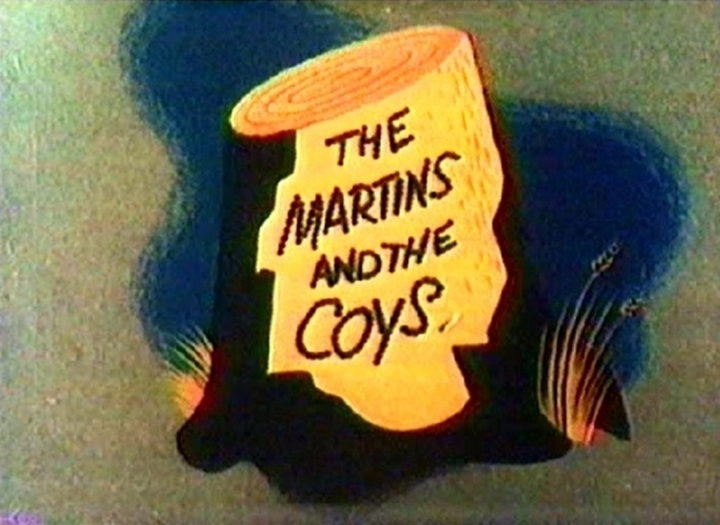
June 18, 1954 – The Special Short Film The Martins and the Coys is Released to Theaters

Martins and Coys

“Gather round me children and I’ll tell a story of the mountains in the days when guns was law, when two families got disputin’, it was bound to end in shootin’, so just listen and I’ll tell you what I saw.”

On June 18, 1954, the special short film The Martins and the Coys was released to theaters. The short is a segment from the animated feature package film Make Mine Music, and features music by the King’s Men. The segment has not been featured with the film on home release since its initial theatrical run, as it was panned by critics for its overuse of gun violence.

Back in the old days in the mountains, two families were feuding: the Martins, and the Coys. These families tended to solve their disputes through gunfights, being much too trigger happy. One day, a massive fight occurred with many members of both families dying, leaving one member on either side left. The sole Martin, Grace, and the sole Coy, Henry, meet face to face one day, and fall madly in love. The souls of their relatives are furious at this development, especially when Grace and Henry marry, effectively destroying the feud – so they think. However, Henry and Grace still have their feuding ways ingrained in them, and fight day after day, carrying on the feud just like before.