RSS Feed

Tag Archives: 1980s

March 28

March 28, 1987 – The First Disney Store Opens

DisneyStore

“Disney Store is your destination for the latest selection of exclusive and authentic Disney merchandise.”

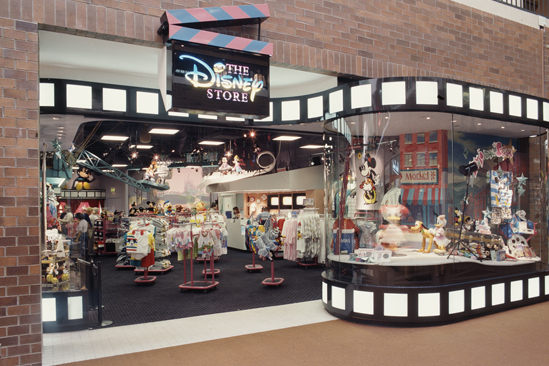
On March 28, 1987, the first Disney Store opened in California’s Glendale Galleria. Disney had never sold products in an official store before this, save for the Disney Parks. The idea of the store came from CEO Michael Eisner and President Frank Wells, as they felt that they were missing an opportunity of selling merchandise to consumers that wouldn’t necessarily make it to the parks. The concept was not only a successfully one, but it was soon copied by other studios, including Warner Brothers. The 50th store was opened just a little over two years later, with the first overseas store opening in London in November of 1990. As the number of stores grew, so did the amount of specialty merchandise available. The number of stores reached a peak in 1999, with almost 750 stores worldwide, with the less profitable stores were closed soon after. The stores in Japan were sold to the Oriental Land Company in 2001, the same company that owns Tokyo Disneyland, but were repurchased by Disney in 2010. Currently, there are at least 200 stores in the United States alone, with 479 locations worldwide; the Disney Store also sells items online, shipping all over the United States. The store sells items from all things Disney, Pixar, Marvel, and Lucasfilm.

March 4

March 4, 1989 – The Animated Series Chip ‘n’ Dale: Rescue Rangers Premieres

vlcsnap-2014-03-03-18h00m24s161

“There’s no case too big, no case too small, if you need help, just call!”

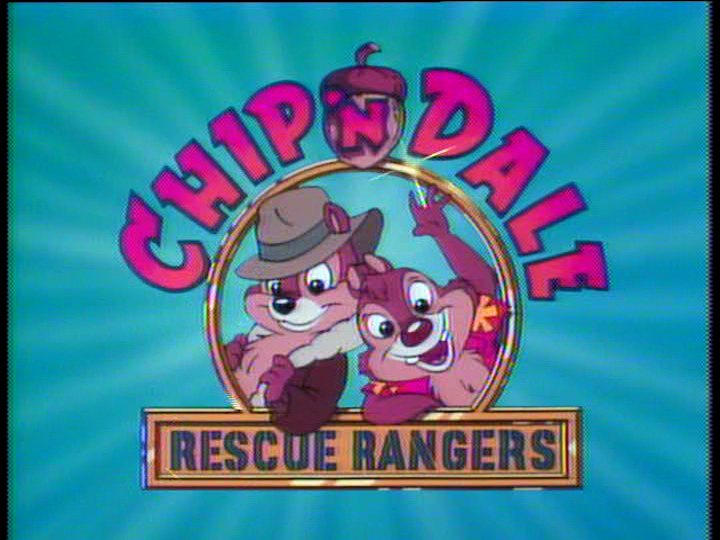
On March 4, 1989, the animated series Chip ‘n’ Dale: Rescue Rangers premiered on the Disney Channel with the episode “Piratsy Under the Seas.” The series entered syndication on September 18, 1989. After the success of Duck Tales in 1987, three series were created to be part of a line-up on the Disney Channel: Chip ‘n’ Dale, TaleSpin, and a show that would eventually become Darkwing Duck. The original version of Chip ‘n’ Dale did not feature the chipmunk duo; it was due to the urging of Michael Eisner that Chip and Dale were used, as it was thought to be better to use established Disney characters than create new ones. Chip was given the clothes of the original conceived character Kit, who was seen as an Indiana Jones-style explorer. Dale’s attire resembled that of Magnum, P.I., a popular detective series of the 1980s. The show was added to the Disney Afternoon lineup and, along with the other shows in that programming block, was very well received. The series was created by Tad Stones and Alan Zaslove, and starred Tress MacNeille as Chip and Gadget, Corey Burton as Dale and Zipper, and Peter Cullen as Monterey Jack.

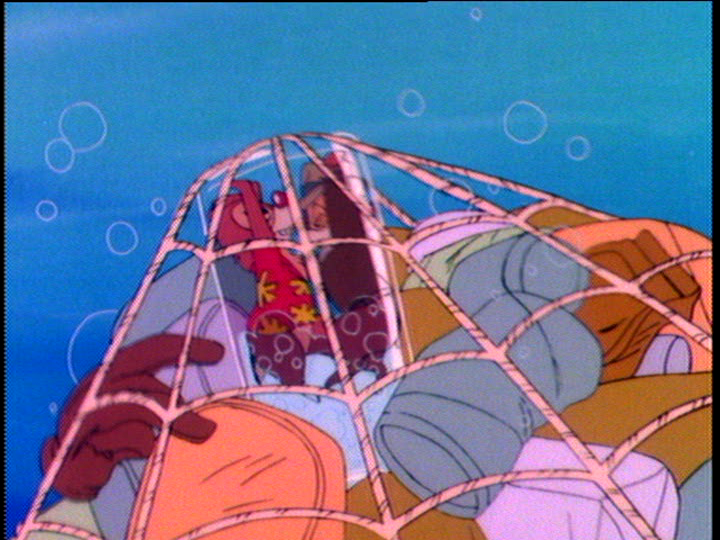
The first episode, “Piratsy Under the Seas,” begins with Chip waking up to find the treehouse a mess. He angrily asks Dale why he insists on living like a slob, and the two continue to argue until Gadget enters the room. Dale is then ordered to clean up by Chip, Gadget, and Monterey Jack. Chip watches and laughs as Dale trips into the trash can, but is alarmed to find that the garbage man is there for the daily pickup, and can only watch as Dale is thrown into the garbage truck. Chip and the team quickly follow after the truck in one of Gadget’s gadgets, but they hit a bump and are all thrown into the same garbage truck as it’s stopped at a stoplight. The gang then finds themselves drifting out to sea on a barge full of garbage and, thanks to Dale’s clumsiness, Chip and Dale get stuck inside a bottle. Gadget spots a barrel in the water, and a pirate flag springs from the top. The pirates set out a net to gather some of the trash from the barge, and captures Chip and Dale, dragging them into the ocean. Monterey and Gadget quickly attempt to follow them.

Chip and Dale push against the bottle to free themselves from the net

Chip and Dale push against the bottle to free themselves from the net

As they are pulled below, Chip and Dale manage to spring themselves free from the net, but are soon captured by an angry octopus, who pulls them down again. As the two finally manage to wrangle themselves free, they end up inside a wrecked ship, and are greeted by the pirates inside. They save them from “Billy the Squid,” and introduce themselves. The pirates are led by Jolly Roger, who invites Chip and Dale to a pirate’s feast. Meanwhile, on the surface, Gadget is still trying to concoct something that will help them travel underwater. Chip and Dale are at the feast, and Dale is happily surprised to find that the pirates are as messy as he is. As Dale rushes to join them on a treasure hunt, Chip lectures Dale that, as Rescue Rangers, they have a job to do, but Dale wants to play with the pirates for a while. Dale leads the pirates to the treasure, and Chip then attempts to leave, but the pirates tell them that, since they have seen the treasure, they will have to stay with the pirates for the rest of their lives. Gadget finally finishes her creation, and the rest of the team heads underwater, but end up running into Billy the Squid. They quickly escape and head inside the wreckage, narrowly avoiding Billy’s grasp. They end up in the treasure room, and Gadget tricks Billy into slamming his arm into a nearby treasure chest.

Monterey and Zipper search through the ship for Chip and Dale, while Gadget works on creating another vehicle. Monterey finds Chip and Dale locked up in a cage, and gets an idea to pretend to be the missing captain Long Lost Lafitte, who had disappeared over 200 years prior. The pirates are a bit suspicious, and call for Young Ned, who was the original captain’s cabin boy. Monterey passes the cabin boy’s test, and orders Dale and Chip free. Although Monterey reluctantly refuses to take the treasure with him to the surface, he is unable to resist the special cheese of Captain Lafitte, which Young Ned had been saving all those years. His disguise falls off as he runs to the cheese and, realizing he’s been tricked, the Jolly Roger and his crew tie up the Rescue Rangers and makes them walk the plank. Chip comes up with an idea, and the gang works together to stop themselves from becoming Billy the Squid’s food. Gadget then has the idea of sending the entire ship up to the surface, surmising that the weight of the treasure is what’s holding the wreckage down. Gadget, Chip, and Dale use a cannon to blast the treasure out of the ship, while Monterey and Zipper act as a distraction. Once the cannon is fired and the treasure freed, the ship quickly heads to the surface. The pirates are delighted to find that they can live on the surface again and have real adventures, and the Rescue Rangers wave them goodbye as they sail away.

February 13

February 13, 1988 – The Expo Robotics Demonstration Opens in Epcot

communicorerobots

“The intricate movements of the robotic arms amazingly performed various programmed tricks.”

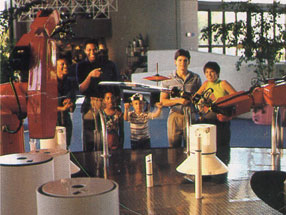
On February 13, 1988, the Expo Robotics demonstration opened in Epcot’s Communicore West area. Expo Robotics was an expansion of the already popular Bird and the Robot exhibit in World of Motion’s Transcenter. The demonstration featured several large robotic arms that performed a variety of programmed tricks, including drawing faces of guests and airbrushing Disney characters on t-shirts that were eventually sold. The demonstration also featured lively circus music to create the jolly atmosphere. The attraction eventually closed on October 3, 1993.

February 4

February 4, 1984 – The Exhibit Backstage Magic Opens in Epcot

commjulie

“Join your hostess Julie and her electronic sidekick I/O for a tour through Epcot’s Computer Central, the computer hub of Epcot Center.”

On February 4, 1984, the Epcot exhibit Backstage Magic opened in Epcot’s Communicore East. It replaced the Astuter Computer Review (1982 – 1984), and ran until October 1, 1993. It was hosted by a woman named Julie and her sidekick I/O, which stands for Input/Output. The attraction explained to guests how the Audio-Animatronic characters in the park work through the use of computers. Its closing was part of a major closing of Communicore, which reopened again in 1994 as Innoventions.

February 3

February 3, 1986 – Pixar Animation Studios is Founded

vlcsnap-2014-02-03-05h09m14s140

“The best scientists and engineers are just as creative as the best storytellers.” – Steve Jobs

On February 3, 1986, the Pixar Animation Studios was founded by Ed Catmull, Alvy Ray Smith, and Steve Jobs. Its history goes back to 1979, when Ed Catmull was recruited by George Lucas to head Lucasfilm’s new Computer Division. In 1983, after being fired by Disney, Jon Lasseter was brought on to the graphics group of the Computer Division as an “interface designer,” with the goal of having Lasseter bring the group one step closer to the dream of creating a computer animated film. Working together, the group created the short film The Adventures of Andre & Wally B, which was shown at the computer graphics conference SIGGRAPH to critical acclaim for its groundbreaking software developed to create the squash-and-stretch and motion blur techniques. The group also created the Pixar Image Computer, used mostly in government and medical communities (although Disney purchased a number of computers for what would later become the Computer Animation Production System, or CAPS). However, although this software and computer were the most powerful and impressive of their day, Lucas’ interest in the company waned, as he didn’t want to run a company selling software. Catmull and Smith gained Lucas’ blessing to spin off the company and call it Pixar, and found an investor in entrepreneur Steve Jobs, who invested $10 million into the struggling group.

In 1987, Pixar’s short film Luxo Jr. became the first 3D computer animated short film to be nominated for an Academy Award, and the lamp became the symbol of the company; in 1989, Pixar would win an Academy Award for their short film Tin Toy. To keep the company afloat while still working toward their dream, Pixar did commercial work for companies like Tropicana and Trident Gum. Pixar was then able to work on a collaborative effort with Walt Disney Studios, helping develop CAPS further, and Pixar also developed RenderMan, which became an industry standard in computer graphics. Despite all these technical advancements, the company was not able to make a profit, and Jobs contemplated selling it, with Microsoft being one of the potential buyers. Lasseter pitched an idea to the Walt Disney Studios about Pixar creating a 30 minute holiday special based on the award winning short Tin Toy; Disney thought that the short had a potential of being a full-length feature film, and gave Pixar the chance of reaching their dream. The film, Toy Story, became a spectacular success, grossing over $360 million at the box office. Since then, Pixar founded their studio in Emeryville, California, in 2000, and in 2006, was purchased by Disney. Pixar has had an unprecedented string of hits unlike any studio in history, with hit films including a bug’s life, Monsters, Inc., Finding Nemo, The Incredibles, Cars, Ratatouille, WALL-E, Up, and Brave.

January 30

January 30, 1988 – The Nighttime Fireworks Show IllumiNations Begins in Epcot’s World Showcase

epcot-gallery-18

“Behold the past, present, and future of Earth at this stunning fireworks show that celebrates the spirit of humanity.”

On January 30, 1988, the nighttime fireworks show IllumiNations began its run in Epcot’s World Showcase area, replacing the Laserphonic Fantasy. This show, featuring fireworks, lasers, fountains, and music, was originally sponsored by General Electric, although General Electric ended its sponsorship in December of 2002. Each area of the World Showcase was individually showcased with music highlighting the country, along with a spectacular laser show. The show ended with a fireworks show and symphonic music before the Epcot park closed for the night. Variations of the show have been created: IllumiNations 25 celebrated the 25th Anniversary of Walt Disney World, and IllumiNations 2000: Reflections of Earth was introduced to celebrate the millennium. IllumiNations 2000: Reflections of Earth has continued since its introduction in 1999, although it has dropped “2000” from its title.

December 16

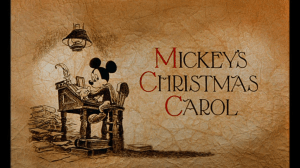
December 16, 1983 – The Mickey Mouse Cartoon Featurette Mickey’s Christmas Carol Premieres in Theaters
vlcsnap-2013-12-16-19h31m33s118

“What’s this world coming to, Cratchit? You work all your life to get money, and people want you to give it away!”

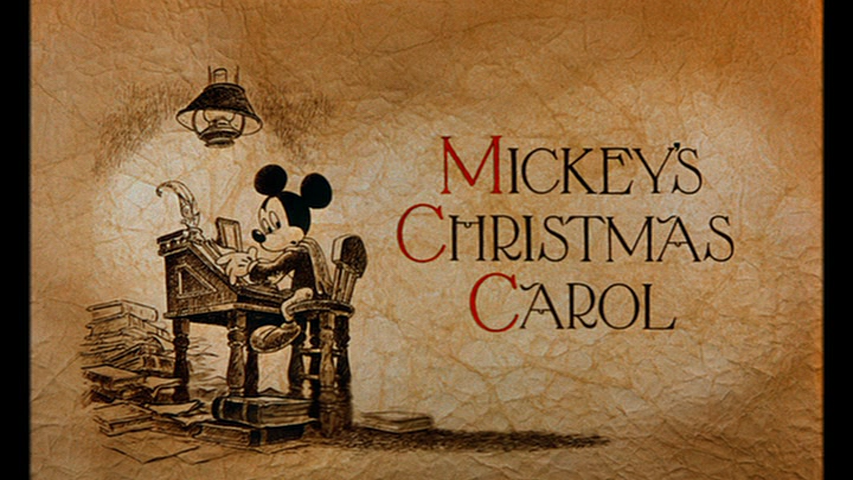
On December 16, 1983, the Mickey Mouse cartoon featurette Mickey’s Christmas Carol premiered in theaters. The 25 minute film was based on the classic Charles Dickens story A Christmas Carol, with Disney comic book staple Uncle Scrooge McDuck playing the part of Ebenezer Scrooge. Mickey portrays Bob Cratchit, Goofy plays Jacob Marley’s ghost, and Donald Duck plays Fred, among several other classic Disney characters. This was Mickey’s foray back into theaters after his last short film in 1953, The Simple Things. The idea for the film went back to the 1974 record of the same name. The film was released on a double billing with the film The Rescuers. It was eventually nominated for an Academy Award – the first Mickey Mouse short to be honored so since 1948’s Mickey and the Seal; it would lose to Sundae in New York. The film was directed by Burny Mattinson, with story by Mattinson, Tony L. Marino, Ed Gombert, Don Griffith, Alan Young, and Alan Dinehart. It stars Alan Young as Scrooge, Wayne Allwine as Mickey Mouse, Clarence Nash as Donald, Hal Smith as Goofy, Eddie Carroll as Jiminy Cricket, and Will Ryan as Willie the Giant and Pete.

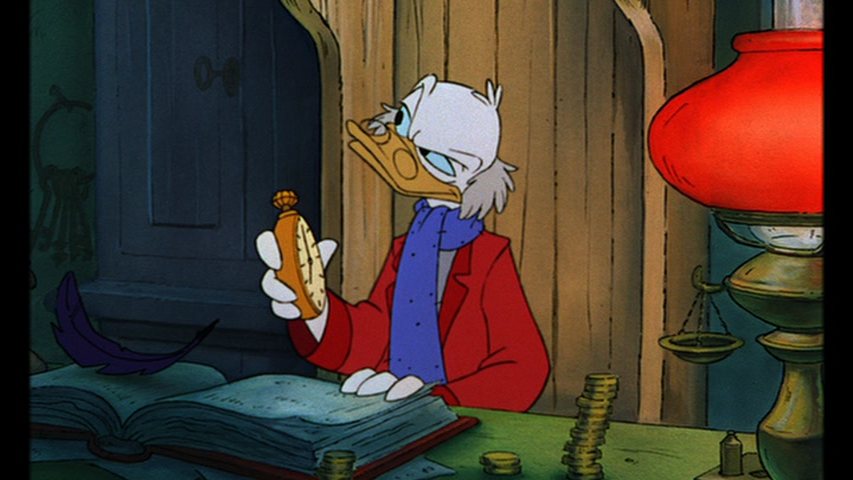
The film begins on Christmas Eve in London, and Scrooge is heading back to his office, where he lectures employee Bob Cratchit for using a piece of coal in the stove. Cratchit works up the nerve to ask Scrooge for half of Christmas Day off, and Scrooge agrees, so long as his pay is docked. Scrooge goes back to his desk to count his money, but is soon interrupted by the appearance of his nephew Fred. Fred brings his uncle a wreath, but he and Cratchit are soon dismayed at Scrooge’s attitude about Christmas. Fred invites his uncle to Christmas dinner, but is soon kicked out of the office. After Fred leaves, two men arrive asking Scrooge for a donation for charity. He sends them on their way without a donation, and laments to Cratchit about how he doesn’t understand why everyone wants him to give his money away.
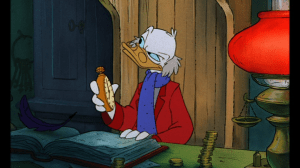
Scrooge eyes the clock, but begrudgingly lets Cratchit go home for Christmas

Scrooge eyes the clock, but begrudgingly lets Cratchit go home for Christmas

That evening, Cratchit leaves merrily to join his family for Christmas, and Scrooge heads home in the late London night. As he arrives home, his door knocker suddenly turns into the face of his old partner, Jacob Marley. Scrooge is startled, but thinks nothing of it. A shadow follows him up the stairs, and although Scrooge tries to hide, the ghost of Marley finds him and warns him of his fate – to have to carry heavy chains on his soul for all eternity, thanks to his sins. Marley tells him that three spirits will meet him through the night, should he want to avoid that fate. Scrooge heads to bed, worried about the spirits, but soon dismisses them and goes to sleep. The Ghost of Christmas Past arrives at one, and takes Scrooge back to his past, when he used to be kinder and believed in Christmas. After a dizzying flight through London, Scrooge arrives back at his old employer’s Christmas Party. Scrooge spies himself in the corner, and watches as he falls in love with Isabelle, the love of his life.

As they continue watching Scrooge’s life, they see the decline of Scrooge’s love for Isabelle, as money has become his only love. She leaves him, and Scrooge begs the spirit to take him home. When the clock strikes two, the Ghost of Christmas Present arrives, who is surrounded by the food of generosity. Scrooge argues that no one has ever offered him generosity, but the ghost shoots back that Scrooge never gave reason for anyone to show him any. The ghost takes Scrooge to the house of Bob Cratchit, where Scrooge sees his family, with the sickly Tiny Tim. Scrooge is concerned with the lack of food the Cratchits have, as well as the welfare of Tiny Tim, who may not live to see another Christmas. As Scrooge asks the spirit what happens to the boy, the spirit disappears, and all the lights around him go out.
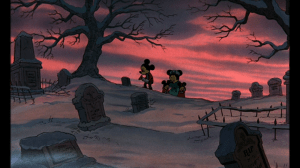
Cratchit and his family mourn the loss of their youngest child, Tiny Tim

Cratchit and his family mourn the loss of their youngest child, Tiny Tim

The Ghost of Christmas Future arrives, with Scrooge being taken to the graveyard. Scrooge sees Cratchit mourning over his son’s grave, but when Scrooge begs for Tiny Tim’s life, he is interrupted by the laughter of two weasels, who are digging the grave for Scrooge. Scrooge is taken to his plot and sees his name on the tombstone, and is then pushed into the grave by the spirit. As the spirit laughs, Scrooge begs for his life, pleading that he will change. As he falls, he finds that he is back in his own room, arriving home on Christmas morning. Scrooge rushes outside, and starts his day by making a huge donation to the two men from yesterday. Scrooge then runs into his nephew Fred, and accepts the invitation to Christmas dinner before going shopping. He rushes over to Cratchit’s house, and pretends to be the same old Scrooge. He soon reveals his new demeanor, making Cratchit his partner and giving him a raise. The film ends with a celebration in the Cratchit house, with Scrooge acting as another father to Cratchit’s children.
November 8

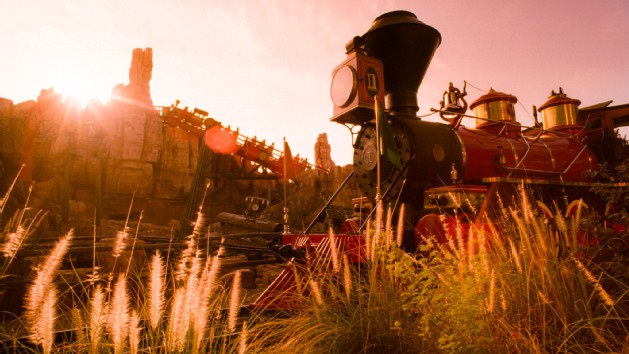
November 8, 1980 – The Attraction Big Thunder Mountain Railroad Officially Opens in Walt Disney World

big-thunder-mountain-railroad-00

“Dash in and out of desert caverns and rumble through a haunted mine aboard a speeding train.”

On November 8, 1980, the attraction Big Thunder Mountain Railroad had its official opening at Walt Disney World’s Frontierland. The attraction had already been in operation since September, and was based on the original attraction in Disneyland. Imagineer Tony Baxter, who designed the original attraction, based it on the scenery he observed in Utah’s Bryce Canyon National Park; the Walt Disney World version was based on Monument Valley, and is 25% larger than the original version. The attraction has become highly popular with guests, and has since been replicated in Tokyo Disneyland and Disneyland Paris.

October 13

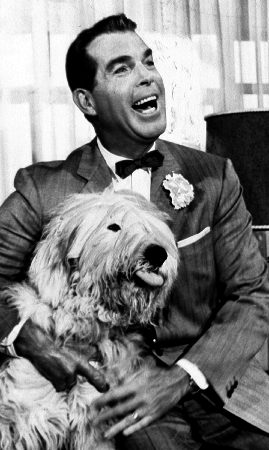
October 13, 1987 – Actor Fred MacMurray is Honored as the First Disney Legend

AFD 195498

“Fred MacMurray is the epitome of what we hope the Disney Legend Promenade will come to represent.” – Michael Eisner, then CEO of the Walt Disney Company

On October 13, 1987, actor Fred MacMurray was honored as the first Disney Legend, coming out of retirement to appear at the ceremony. MacMurray was honored for his work with the Disney Studios, beginning in 1959 with the blockbuster film The Shaggy Dog, which helped revitalize his career. Overall, he starred in six films for the company, including The Absent-Minded Professor, Son of Flubber, Bon Voyage, Follow Me Boys, The Happiest Millionaire, and Charley and the Angel. The ceremony was held at the newly created Disney Legends Promenade, located in front of the Studio Theater; this area would be relocated to the Legends Plaza in Burbank once the number of Disney Legends outgrew the area. MacMurray attended with his wife June Haver, received a special plaque, and placed his handprints in wet cement in the promenade in front of several Disney employees and members of the press.

October 6

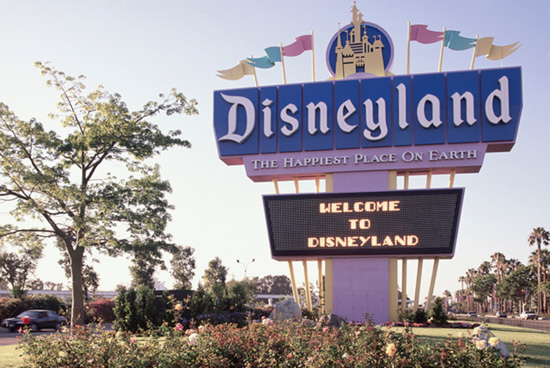
October 6, 1989 – A New Electronic Marquee is Introduced at Disneyland

sot133516SMALL

“Welcome to Disneyland!”

On October 6, 1989, a new electronic marquee was unveiled at the Disneyland park in Anaheim, California. This marquee replaced the original marquee from 1958, adding a new digital readerboard which greeted visitors in various languages, and was placed at the entrance to the parking lot at Harbor Boulevard. The sign remained in place for ten years, and was soon replaced by another colorful sign marking the parking lot.