RSS Feed

Tag Archives: 1950s

December 29

December 29, 1954 – The Disney Anthology Episode “Beaver Valley/Cameras in Africa” Premieres on ABC

vlcsnap-2016-12-29-19h14m48s389

On December 29, 1954, the Disneyland episode “Beaver Valley/Cameras in Africa” premiered in ABC. Part of the Disney anthology series, this episode showed an edited version Disney’s True-Life Adventure featurette Beaver Valley along with some behind the scenes footage of the filming for The African Lion. The footage for the latter segment included a look with Alfred and Elma Milotte, who shot many of the True-Life Adventures for the company, as they film many of Africa’s wildlife. The African Lion would go on to premiere in theaters on September 14, 1955. This episode would eventually be rerun under the title “Cameras in Africa/Beaver Valley.”

December 25

December 25, 1955 – The Mike Fink Keel Boats Open in Disneyland’s Frontierland

mfkb

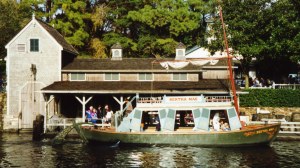
On December 25, 1955, the Mike Fink Keel Boats attraction opened in Disneyland’s Frontierland area. Based on the Davy Crockett episode “Davy Crockett’s Keel Boat Race,” the two boats were named the Gullywhumper and the Bertha Mae for characters Mike Fink and Davy Crockett. The attraction originally closed in 1994, but were reopened in early 1996. The Disneyland attraction was officially closed on May 17, 1997. Versions of this attraction also opened in Walt Disney World in 1971, closing in 2001; and Disneyland Paris in 1992 (renamed the River Rogue Keelboats), which runs as a seasonal attraction.

December 22

December 22, 1954 – The Disney Anthology Episode “A Present for Donald” Premieres

pfd

“Merry Christmas”

On December 22, 1954, the Disney Anthology episode “A Present for Donald” premiered on ABC. The episode is a holiday special, and features segments from the animated feature film The Three Caballeros, though Donald is receiving Christmas presents rather than birthday presents.

December 20

December 20, 1956 – The People and Places Featurette Disneyland, U.S.A. is Released to Theaters
vlcsnap-2016-12-20-18h35m02s904

“Here in Southern California, a new land has come into being. Its purpose is enlightenment; its product, happiness. This place is Disneyland, USA.”

On December 20, 1956, the People and Places featurette Disneyland, U.S.A. premiered in theaters. It was the sixth featurette in the series. It was directed by Hamilton S. Luske, and narrated by Winston Hibler.

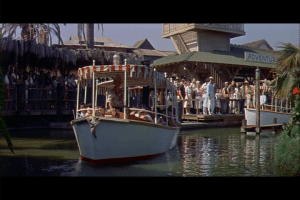
The featurette begins a look at Southern California, taking an aerial view over the land. The narrator explains Disneyland in general, pointing out that Disneyland will always grow and expand, so that the “new and unexpected” can continue to be found there. The audience is first brought to the Disneyland Hotel via tram, viewing all the recreational activities the hotel has to offer. Taking the train, the audience is then brought to Disneyland Station, and enters the main entrance to enter the park. They are brought through Main Street, with the narrator explaining the ways to get around in the time of the gas lamp. The camera pans around to several stores along the streets, including the Penny Arcade and the Main Street Movie House. The audience pauses in The Plaza area, the hub of Disneyland. The narrator points out each of the separate parts of Disneyland before looking at a panorama of Frontierland. The narrator points out the various selling points of Frontierland, including Tom Sawyer’s Island and Rainbow Ridge. The audience the boards a train to continue traveling through the land. Next is a look at the Rivers of America, with special attention paid to the Mark Twain paddleboat, before catching the railroad again to view another part of Frontierland: the Indian Village, where 17 different tribes are represented.
vlcsnap-2016-12-20-19h26m55s843

The audience then moves on to Adventureland, taking a boat on the Jungle Cruise and traveling through the many winding waterways. After the adventure, the audience quickly moves into Tomorrowland, where guests are given a glimpse at the way of the future. The tour begins at the Autopia attraction, with drivers of all ages heading to the track. There is also an area for model airplane clubs, and the Astro Jets for those that prefer to fly themselves. After this, the audience flies over Fantasyland, walking through the castle to an area of magic and childhood. The first attraction seen is Peter Pan’s Flight, where guests board a pirate ship to fly over London. The narrator then brings the audience to Storybook Land, where miniature scenes of classic Disney movies are shown on the riverbanks. This is followed by a look at the Mad Hatter’s Tea Party attraction, Dumbo the Flying Elephant, and the Skyway. The end of the featurette shows Walt Disney and Fess Parker leading a parade down Main Street before the falg is brought down at the end of the day.
November 12

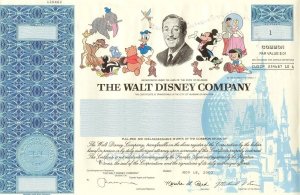
November 12, 1957 – Disney is Added to the New York Stock Exchange

disney-stock

“Based upon Disney’s returns OTC and on the NYSE, Disney probably has the ‘happiest’ shareholders on Earth.” – Business Insider

On November 12, 1957, the Walt Disney Company’s first stocks were listed on the New York Stock Exchange. The stock closed at $13.75 on its first day ($118.14 when adjusted for 2016 inflation), and managed to jump to a close of $59.50 in April of 1959 ($493.64 when adjusted for 2016 inflation). Since its introduction in the NYSE, Disney stock has been of the top performers, with an initial $1 investment in 1957 estimating to be worth at least $5000 today.

November 10

November 10, 1953 – The Special Short Film Toot, Whistle, Plunk and Boom is Released to Theaters

vlcsnap-2016-11-10-18h30m10s327

“The study of musical instruments is the subject for today.”

On November 10, 1953, the special short film Toot, Whistle, Plunk and Boom premiered in theaters. The short would go on to win the Academy Award for Best Short Film. The art is also notable for being the work of Eyvind Earle, who would go on to create the stylized look for Sleeping Beauty. Toot, Whistle, Plunk and Boom was directed by Charles Nichols and Ward Kimball, with story by Dick Huemer.

The short begins with Professor Owl running to his class to teach them about musical instruments. He explains that the music comes from a “toot, and a whistle, and a plunk, and a boom,” no matter from where the music comes. He then goes back to the dawn of history to where the music started. Starting with the “toot,” he moves from the caveman to Ancient Egypt, to the Romans, where they created a curved horn. The next aspect is the “whistle,” which began with a tube of grass, which then led to the creation of the clarinet and the saxophone. This is then followed with a look at the “plunk” of a bow, and the creation of what would eventually become a harp, and the violin. There are several variations of string instruments shown, unfortunately with all of them snapping a string. The last caveman shows the “boom” of how percussion instruments were born. The short ends at the symphony, where the cavemen have joined the orchestra.

October 31

October 31, 1952 – The Goofy Short Film Two Weeks Vacation is Released to Theaters

vlcsnap-2016-10-31-17h27m32s300

“So long, slaves!”

On October 31, 1952, the Goofy short film Two Weeks Vacation premiered in theaters. It was directed by Jack Kinney, with story by Al Bertino.

The short begins with Goofy at work, looking at a map in preparation for his two weeks paid vacation. The moment he can get out of the office, he rushes at top speed, bidding farewell to his chained-to-the-desk coworkers. As he drives, he nearly crashes into a trailer, but manages to brake in time – only to have his tire burst. Goofy pulls into a nearby garage, though the mechanic “fixes” everything but the tire; when Goofy tries to get the tire fixed, the mechanic goes on vacation for two weeks. Goofy manages to fix the tire himself, and stops to pick up a local hitchhiker, who skips Goofy’s offer when he sees the state of the car. Goofy runs into more problems, as he is continually passed by the trailer he nearly crashed into earlier. Later that evening, as he searches for a motel, he finds himself out of gas and ends up chasing his car down a hill, but manages to find a place to stay for the night. However, his place is right next to a railroad track, and he decides to leave, driving late at night and nearly falling asleep at the wheel – and running into the trailer again. When he finds no one is actually driving the car pulling the trailer, he is shocked and is sent flying into the car when he tries to avoid it. He is then pulled over by a police officer, but finds relief for the night when he ends up sleeping in a jail cell.

September 26

September 26, 1953 – Walt and Herb Ryman Discuss Disneyland Plans

vlcsnap-2016-09-26-17h46m35s226

“Herbie, we’re going to build an amusement park.”

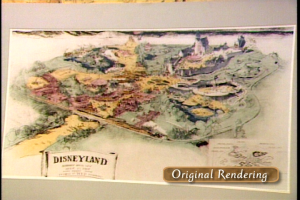
On September 26, 1953, Walt Disney called Herb Ryman to come to the Disney Studios as soon as possible. Ryman had worked for the studios in the 1940s, even as part of the South America goodwill trip, but had left to work at another studio while pursuing a career as an artist. Ryman came to the office and was told about Walt’s idea for an amusement park known as Disneyland. When Ryman voiced that he’d like to see it, Walt responded “You’re going to [draw] it.” Ryman had balked at this, especially being given the weekend to do it, as Roy was to talk to the bankers on Monday. Walt offered to stay with Ryman, and the two worked over 42 hours to create the initial rendering of what would become the Happiest Place on Earth.

September 2

September 2, 1955 – The Donald Duck Short Film Beezy Bear is Released to Theaters

vlcsnap-2016-09-02-20h28m35s320

“You think it was a bear. Oh no, it couldn’t have been one of my boys.”

On September 2, 1955, the Donald Duck short film Beezy Bear premiered in theaters. It was directed by Jack Hannah, with story by Dave Detiege and Al Bertino. It is one of the few Donald Duck short films filmed in Cinemascope.

It’s another day at Donald’s honey farm, and Humphrey the Bear is once again tring to steal Donald’s honey. Donald storms over to Ranger Audubon’s station to complain. Audubon doesn’t believe that it could be one of his bears, but Donald is adamant. Audubon and Donald reach an impasse where they agree not to cross into each other’s properties, with Humphrey going crazy over the honey he can’t eat. He manages to sneak into Donald’s farm again and traps the bees before making off with one of the cartons of honey, but the bees manage to chase him back into the national park. He continues to make his way back, trapping the bees in various (but inevitably failing) ways. Audubon still doesn’t suspect Humphrey, though he comes close to finding the truth several times. Donald manages to come across the bear at one point, taking his honey back. When he attempts to trick Humphrey, the trick backfires, and he, Humphrey, and Audubon end up in the lake.

September 1

September 1, 1950 – The Donald Duck Short Film Hook, Lion, and Sinker is Released to Theaters

vlcsnap-2016-09-01-17h00m26s217

“Now, watch your old man!”

On September 1, 1950, the Donald Duck short film Hook, Lion, and Sinker premiered in theaters. It was directed by Jack Hannah, with story by Bill Berg and Nick George.

A mountain lion is fishing using his tail as the pole, but hasn’t caught a thing. His cub sneaks up behind him and starts playing with the lure, much to the father lion’s anger. The father carries the cub back to their cave, where the cub is given a spanking, before the lion returns to his task. Meanwhile, at the nearby cabin, Donald returns, having caught many fish. The cub sees the catch and, after Donald drops a fish on the dock, runs over to claim it. He takes it back to his father, who is proudly showing off a tiny fish he caught, and is surprised that his son caught something bigger. The two then work together to grab the fish that Donald caught. Unfortunately, Donald has had many run-ins with mountain lions stealing his fish, as evidenced by the heads mounted on his wall. As Donald preps the fish, he sees the paw of the mountain lion near his oven, and tricks the lion into grabbing a hot piece of coal. Angered, the lion tries to leap inside, only to come nose to muzzle with a shotgun. Donald sends the two packing, and the cub has to pull bits of pellets out of his father’s backside. Nevertheless, they continue their plan, this time with the cub working to steal the fish. Donald catches the cub and throws him outside after giving him a spanking. The lion then tries fishing out the chimney, almost getting away with it until Donald has him fish out the shotgun. Again and again the lion and cub try, only to come face to face with Donald and his shotgun. In the end, all the lion is left with are the pellets that his cub has to pull out of his backside.