RSS Feed

Monthly Archives: February 2016

February 9

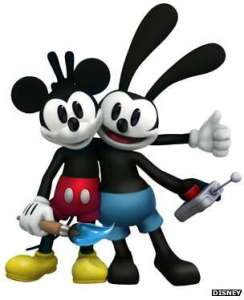
February 9, 2006 – Disney Trades to Reacquire Oswald the Lucky Rabbit

Mickey Oswald

“Oswald is definitely worth more than a fourth-round draft choice. I’m going to be a trivia answer someday.” – Al Michaels

On February 9, 2006, Disney-owned ESPN finalized a trade with NBC-Universal, trading the contract of NFL play-by-play analyst Al Michaels for one of Disney’s earliest popular creations, Oswald the Lucky Rabbit. Oswald, Walt’s first animated character, was lost to producer Charles B. Mintz at Universal in 1928. Mintz not only took all of Walt’s animators, but the character Oswald himself when Walt could not in good conscience accept the terms Mintz offered for a new contract. The trade gave Disney all rights to the earliest Oswald cartoons, as well as creative control of the character. Also included were exclusive rights for ESPN from NBC Sports, which included expanded coverage of the Kentucky Derby, the Olympics, and Notre Dame college football games until 2011 (or 2012 in the case of the Olympics).

February 8

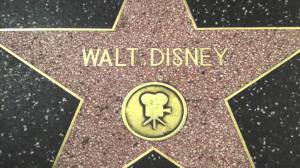
February 8, 1960 – Walt Disney Receives Two Stars on the Hollywood Walk of Fame

WDHWoF

“Disney is particularly noted for being a film producer and a popular showman, as well as an innovator in animation and theme park design.”

On February 8, 1960 Walt Disney was honored with two stars on the Hollywood Walk of Fame: one for motion pictures, and one for television. The Hollywood Chamber of Commerce honored Walt for his contributions and influence in the entertainment industry. At the time he was awarded, Disney was known for their innovative animated features and shorts, the television shows Disneyland and The Mickey Mouse Club, and, Walt’s crowning achievement, Disneyland. The Motion Picture star is located at 7021 Hollywood Boulevard, while the Television star is located at 6747 Hollywood Boulevard.


February 7

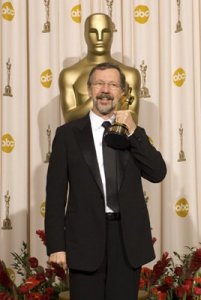
February 7, 2009 – Ed Catmull is Awarded the Gordon E. Sawyer Award

EdCatmull

“…for his lifetime of technical contributions and leadership in the field of computer graphics for the motion picture industry.”

On February 7, 2009, President of the Pixar Animation and Walt Disney Animation Studios was honored with the Gordon E. Sawyer Award at the Scientific and Technical Awards Presentation for the Academy of Motion Picture Arts and Sciences. The award, first presented in 1981, is presented to those whose technological advances have helped the industry. Catmull was instrumental in creating the fundamentals of what would become computer animation, with his film A Computer Animated Hand being hailed as groundbreaking. He would go on to found three computer graphics research centers at New York Institute of Technology, Lucasfilm Ltd., and Pixar. Catmull had previously received two Scientific and Engineering Awards for his work in the film industry, winning as part of a team for RenderMan software in 1992 and part of a team for Digital Image Compositing in 1995.

February 6

February 6, 1934 – Vice Chairman and Principal Creative Executive of WDI and Disney Legend Marty Sklar is Born
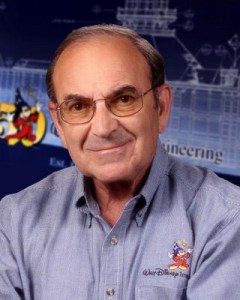
Marty Sklar

“Our training was by Walt, who was always there pitching in with new ideas and improving everyone else’s input. The fire was that we were constantly breaking new ground to create deadline projects never attempted before in this business. That, I’m proud to say, has never stopped in my years at Disney.”

On February 6, 1934, Martin A. Sklar was born in New Brunswick, New Jersey. He attended UCLA for undergraduate studies, and serves as the editor for the Daily Bruin college newsletter. In 1955, he was recruited to create a newsletter to be sold on Main Street of Disneyland for the park’s first year: The Disneyland News. Upon graduation, Sklar joined Disney, working with Disneyland’s publicity and marketing department and creating the Vacationland magazine. In 1961, Sklar joined WED Enterprises (now known as Walt Disney Imagineering) to work on the special shows for the 1964-1965 New York World’s Fair. During this time, he continued to do publicity work for Walt Disney specifically, writing material to be used in publications and television; he is best known for writing the material for a special 20 minute film about EPCOT. In 1974, Sklar became the Vice President of Concepts and Planning in WDI, where he helped with the development of Epcot in Walt Disney World. He continued to rise in the ranks, with being named Vice President of Creative Development in 1979, Executive Vice President in 1982, and President and Vice Chairman in 1987. He held the last role until 1996. During his tenure, Sklar led the efforts for entertainment concepts within Disneyland Paris, Tokyo Disney Resort, and Hong Kong Disneyland. In 2001, Sklar was not only honored with a special award for 45 years of service in the Disney Company, and was also named a Disney Legend. In 2005, the 50th anniversary of Disneyland, Sklar was named Imagineering’s international ambassador. In 2009, after 53 years at Disney, Sklar retired.
February 5

February 5, 2007 – Disney Announces Creation of ImageMovers Digital

IMD

On February 5, 2007, Disney announced the setup of a joint venture with director Robert Zemeckis, known as ImageMovers Digital. The goal of the studio was to develop 3D animated features using performance capture technology, which was used in Zemeckis’ film The Polar Express. Disney had been interested in expanding into 3D technology, as the 3D version of Chicken Little had been profitable for the studio. The first film released by the venture was A Christmas Carol in 2009, which was a box office success. However, the studio closed after the box office bomb of their second film, Mars Needs Moms.

February 4

February 4, 1999 – Pixar Announces PixarVision

Pixar

“[David DiFrancesco] recently led our team of scientists in developing PixarVision, which uses solid state lasers to record on multiple film formats with more quality and speed than ever before.” – Ed Catmull

On February 4, 1999, Pixar Animation Studios announced the creation of PixarVision, a new proprietary laser recording system that converts computer animation data onto motion picture film stock. The process was tested on the studio’s second animated feature A Bug’s Life, and was announced to be used on all Pixar animated features, starting with Toy Story 2. The process itself replaces the cathode ray tubes used to create the images that expose the filmstock with laser beams that are carefully controlled. The new process boasts higher quality color reproduction, sharper images, and faster recording. PixarVision, headed up by David DiFrancesco, was awarded by the Academy of Motion Pictures Arts and Sciences with a Scientific and Technical Academy Award on February 27, 1999.

February 3

February 3, 1993 – The First Half of The Best of Disney Music: A Legacy in Song Premieres on CBS

DisneyMusic

“Tonight we celebrate sixty years of Disney music.”

On February 3, 1993, part one of the special The Best of Disney Music: A Legacy in Song premiered on CBS. The special honored Disney music, ranging from the studio’s humble beginnings to the smash hits of the Disney Renaissance period. The special featured several guest stars and rolls of archival footage, with Angela Lansbury hosting the first half. The second half premiered on May 21, 1993, with Glenn Close hosting the second. The special was directed by Don Mischer.

February 2

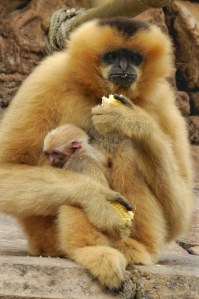
February 2, 2010 – An Endangered White-Cheeked Gibbon is Born in Disney’s Animal Kingdom

Gibbon

“Not all of the celebrating today is Super Bowl related.”

On February 2, 2010, the newest member of Disney’s Animal Kingdom, a white-cheeked gibbon, was born. The baby was the fourth gibbon born in the park, and was born to white-cheeked gibbon Melaka. The white-cheeked gibbon is an endangered species, and the birth was part of a survival effort by the Association of Zoos and Aquariums, with which Disney’s Animal Kingdom is heavily involved. With gibbons producing offspring once every two to three years, it is important to protect this species from extinction.

February 1

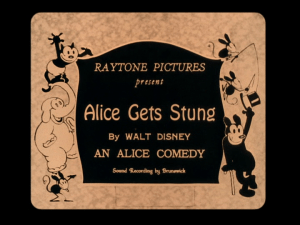
February 1, 1925 – The Alice Comedy Alice Gets Stung is Released to Theaters

vlcsnap-2016-02-01-18h08m21s252

“Oh, p-l-e-a-s-e kind sir, spare my life—-?”

On February 1, 1925, the Alice Comedy Alice Gets Stung was released to theaters. It is notable for being the last Alice Comedy to star Virginia Davis as Alice.

The short begins with Julius chasing a rabbit and catching it on its hind legs, but the rabbit manages to get away. The rabbit taunts Julius as he continues to try and catch the rabbit, but when Julius succeeds, the rabbit pleads for his life. Other rabbits notice the plight of their friend and start playing stringed instruments while the rabbit explains that there are several children waiting on her. Julius lets the rabbit go, sobbing, but it is soon revealed that the rabbit was lying. Angered, Julius begins the chase again and goes down the rabbit hole, but the rabbit scares him straight out. Alice comes along to help capture the rabbit through the use of a fire hose. The water shoots the rabbit up to the sky, and Julius climbs the column of water to catch it. When Alice turns off the water, the pair plummet to the ground, and once again the chase is on. Alice and Julius watch as other animals in the forest start dancing to their own band, and when Alice shoots at a bear, the bear dances past the shots, then angrily chases Alice and Julius. The pair hide in a barrel, where the bear drops a beehive before sending the barrel down the hill into the river.