RSS Feed

Monthly Archives: March 2015

March 11

March 11, 1959 – Disney Purchases the Golden Oak Ranch

GOR

“Located within the 30-Mile Zone, the Golden Oak Ranch is a movie ranch like no other.”

On March 11, 1959, Disney purchased 708 acres in the Placerita Canyon, called the Golden Oak Ranch. The ranch, located 25-miles away from the Disney Studios, became a filming location for several Disney productions, including the Spin and Marty serials and feature films The Parent Trap and Follow Me, Boys!. The ranch was also leased out to other studios for such projects as Dynasty and Back to the Future, and has continued to be used for Disney productions, including the recent Pirates of the Caribbean series and The Santa Clause. In 2009, Disney announced that there would be a plan to create a backlot studio for ABC with 58-acres of the property. In 2011, it was announced that two state-of-the-art backlots were completed on the property.

March 10

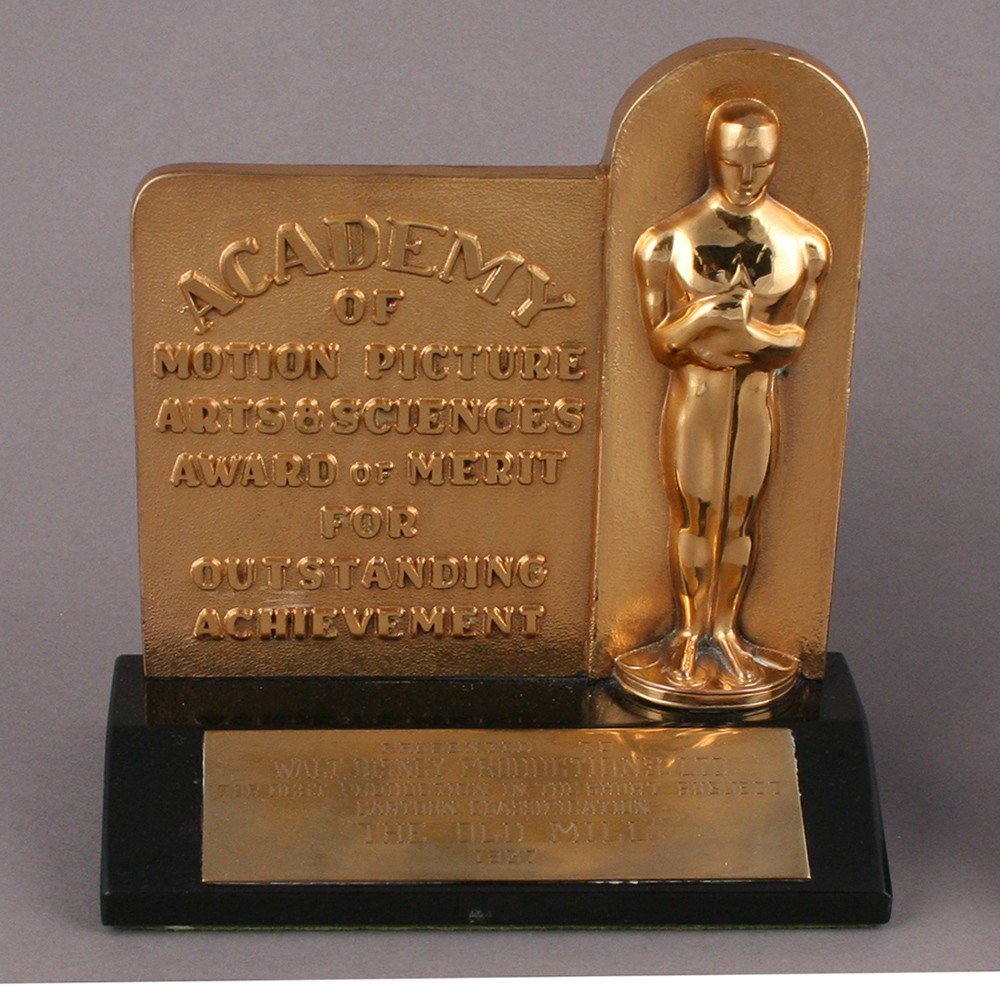
March 10, 1938 – Disney Wins Two Academy Awards for The Old Mill and the Multiplane Camera

Special Academy Award_1938

On March 10, 1938, the 10th Academy Awards were held at the Biltmore Hotel in Los Angeles, California. Disney’s groundbreaking short film The Old Mill, which was the first use of the multiplane camera and features realistic depictions of nature, won the Academy Award for Best Short Film, beating Paramount’s Color Classic Educated Fish and Columbia’s The Little Match Girl. The use of the multiplane on this short served as a testing ground for work on the feature film Snow White and the Seven Dwarfs. Creators of the multiplane camera were further honored at this ceremony by winning a special Academy Scientific and Technical Award

March 9

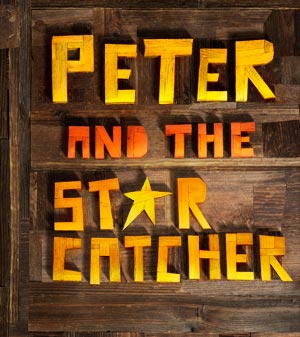
March 9, 2011 – The Off-Broadway Production of Peter and the Starcatcher Opens

PstSC

“In relating the back story of how a sullen, skeptical orphan became the eternal boy known as Peter Pan, ‘Starcatcher’ celebrates the leap of faith that occurs when we tell and believe improbable tales.” – The New York Times

On March 9, 2011, the Disney Theatrical Off-Broadway Production Peter and the Starcatcher opened at the New York Theater Workshop. Based on the bestselling book by Dave Barry and Ridley Pearson, the play gives the account of how Peter Pan became Peter Pan. It received mixed to positive reviews from critics, and was transferred to Broadway and opened on April 15, 2012. It garnered five Tony Awards, including one for Best Featured Actor in a Play for Christian Borle, and was nominated for Best Play. It starred Adam Chanler-Berat as Peter, Celia Keenan-Bolger as Molly, and Christian Borle as Black Stache.


March 8

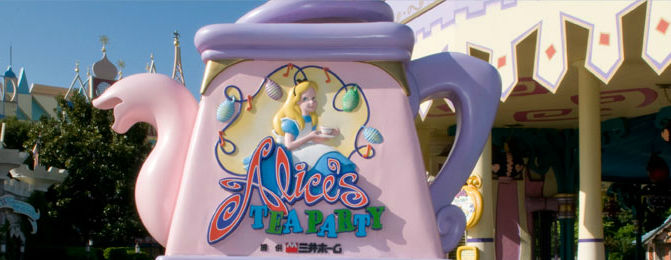
March 8, 1986 – The Fantasyland Attraction Alice’s Tea Party Opens in Tokyo Disneyland

Alice's Tea Party

“Let the tea party begin!”

On March 8, 1986, the Fantasyland attraction Alice’s Tea Party opened in Tokyo Disneyland. It is similar to the Mad Tea Party attraction that opened in Disneyland in 1955. The Tokyo Disneyland attraction features the Doormouse in the center tea cup. The attraction lasts about a minute and a half, and seats up to four people per tea cup.


March 7

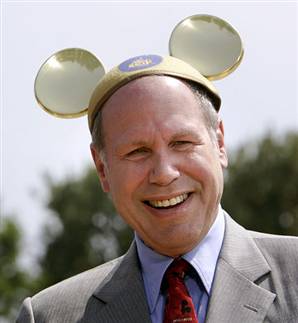
March 7, 1942 – Former CEO of The Walt Disney Company Michael Eisner is Born

Michael Eisner

“Success is not a formula, but is based on everything else – the creativity, the right people, the right team.”

On March 7, 1942, Michael Dammann Eisner was born in Mount Kisco, New York. Growing up on Park Avenue, Eisner attended the Allen-Stevenson School through ninth grade, followed by the Lawrenceville School through 12th grade. He graduated from Denison University in 1964 with a B.A. in English. After graduation, Eisner briefly worked for NBC and CBS before being brought on at ABC as Assistant to the National Programming Director. He quickly rose through the company, becoming the Senior Vice President for Programming and Development. Barry Diller, who had hired Eisner at ABC, brought Eisner with him to Paramount Pictures and made him President and CEO. Under his leadership, Paramount had a string of successful films, beginning with Saturday Night Fever and including Raiders of the Lost Ark and Grease. After being passed over for the top position when Diller stepped down, Eisner went looking for other opportunities. At this time, Disney was going through some troubles with hostile takeovers, and Roy E. Disney decided to bring Eisner and Frank Wells in as CEO and President, respectfully. Under their tenure, Disney managed to go through a Renaissance period, beginning with the success of The Little Mermaid, along with the acquisition of ABC and ESPN. Eisner continued to grow the Disney Parks stateside, and contributed to the building of what is now known as Disneyland Paris. After Wells’ sudden death in a helicopter crash, Eisner shook up the posts at the studio, with Katzenberg resigning and being replaced with Michael Ovitz. Tension grew between Roy E. Disney and Eisner, and in 2005, Eisner stepped down from his role as CEO and board member, leaving Disney completely. After Disney, Eisner formed The Tornante Company, which acquires and invests in media and entertainment companies.


March 6

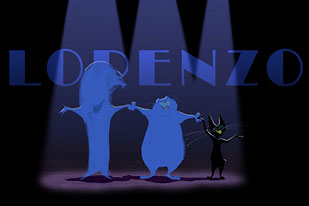
March 6, 2004 – The Animated Short Film Lorenzo Premieres at the Florida Film Festival

Lorenzo

“The five-minute short possesses a look that’s strikingly original: a moving painting that digitally captures the loose, dry, rough texture of a brushstroke.” – Bill Desowitz, Animation World Network

On March 6, 2004, the animated short film Lorenzo premiered at the Florida Film Festival in Orlando, Florida. The short film would later be released alongside the live-action film Raising Helen, and would be nominated for an Academy Award for Best Animated Short Subject. The story was originally proposed by Disney Legend Joe Grant during the production of Fantasia; it was revived by Mike Gabriel, who was given the short to work on after being removed from the project that would become Home on the Range. A new software called Sable was created by Dan Teece to capture the brushstroke style Gabriel used when drawing the titular cat character. The plot of the short film follows the cat Lorenzo, whose tail is cursed by a black cat named Molly to dance several ballroom styles with its owner.


March 5

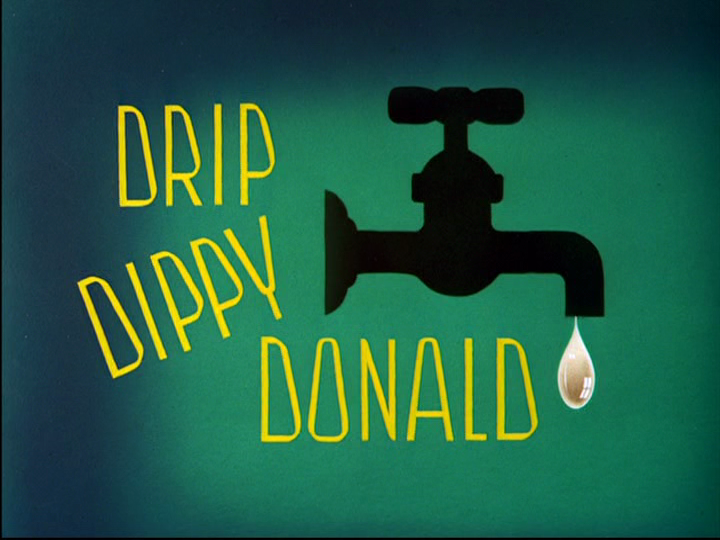
March 5, 1948 – The Donald Duck Short Film Drip Dippy Donald Premieres in Theaters

vlcsnap-2015-03-05-18h55m02s82

“I’m so sleepy…”

On March 5, 1948, the Donald Duck short film Drip Dippy Donald premiered in theaters. It was directed by Jack King, with story by Nick George.

Late one evening, Donald is on the bus, snoring away, when he is dropped off at his house. Exhausted, Donald sprints off the bus and goes through his routine before settling into bed. Unfortunately, he is unable to sleep thanks to a lighted advertisement from down the street shinging through his window. He pulls down the blind, but the blind rolls almost instantly back up. He ties the string to the blind down, but moments later, the blind pulls itself back up. When Donald pulls it down for a third time, he pulls it so hard that it comes off the wall. Annoyed, he finally nails it down, and proceeds to drift off to a deep sleep. No sooner has Donald finally settled in that his faucet starts dripping loudly, waking him up once again. The faucet noise starts to taunt him, and he rushes out of bed to turn it off. He then gets back in bed, eyes heavy, but the faucet drips faster than ever, dripping onto his dishes. As he rolls up in his mattress, the drips seem to grow in intensity, sounding like bombs and being strong enough to shake his entire house. Unable to take it anymore, he tries again to turn off the faucet, but ends off breaking off the tap and falling into the sink. He then tries several methods to keep the water from dripping loudly, but none seem to work. In the end, Donald comes up with a rather complicated Rube Goldberg-like contraption to capture each drop of water in a sponge, when his phone rings, letting him know that as he hasn’t paid his water bill, his water has been cut off. Sleep-deprived to the point of madness, Donald hits himself over the head with the phone and his sponge.


March 4

March 4, 2012 – The Dramedy Series GCB Premieres on ABC

GCB_4

“Do you think Grandma will like us more now that Dad’s dead?”

On March 4, 2012, the dramedy series GCB premiered on ABC. It was based on the novel Good Christian Bitches by Kim Gatlin. The series received mixed reviews from critics, and after ten episodes, the series was cancelled on May 6, 2012. It was created by Robert Harling, and starred Leslie Bibb as Amanda Vaughn, Kristin Chenoweth as Carlene Cockburn, Jennifer Aspen as Sharon Peacham, Marisol Nichols as Heather Cruz, Miriam Shor as Cricket Caruth-Reilly, David James Elliott as Ripp Cockburn, Mark Deklin as Blake Reilly, Brad Beyer as Zack Peacham, and Annie Potts as Gigi Stopper.

The pilot episode begins with Amanda Vaughn’s husband Bill grabbing cash from a safe in his office and leaving his home with his mistress. As they drive, she distracts him and he drives over the side of a cliff, killing them. Three months later, FBI agents are raiding the Vaughn residence as Bill was found running a Ponzi scheme. As the news outlets camp outside Amanda’s mansion, Amanda decides that she and her two kids need to move away from California, although she refuses to move to Texas to be near her mother Gigi. However, when faced with an empty house, she reluctantly calls home and makes plans to return to Dallas. Upon arriving, the Vaughns are given a “warm” welcome from Gigi’s pet Dobermans. Amanda is also unaware of how quickly the gossip of Amanda’s return has spread. Amanda’s daughter Laura flips through one of Amanda’s old yearbooks, and Amanda and Gigi recount the horrible things Amanda did to her fellow students, as she was the Queen Bee in high school. Later that night, Amanda tries to figure out what to do with her life, and decides to try and get a job as an interior designer.

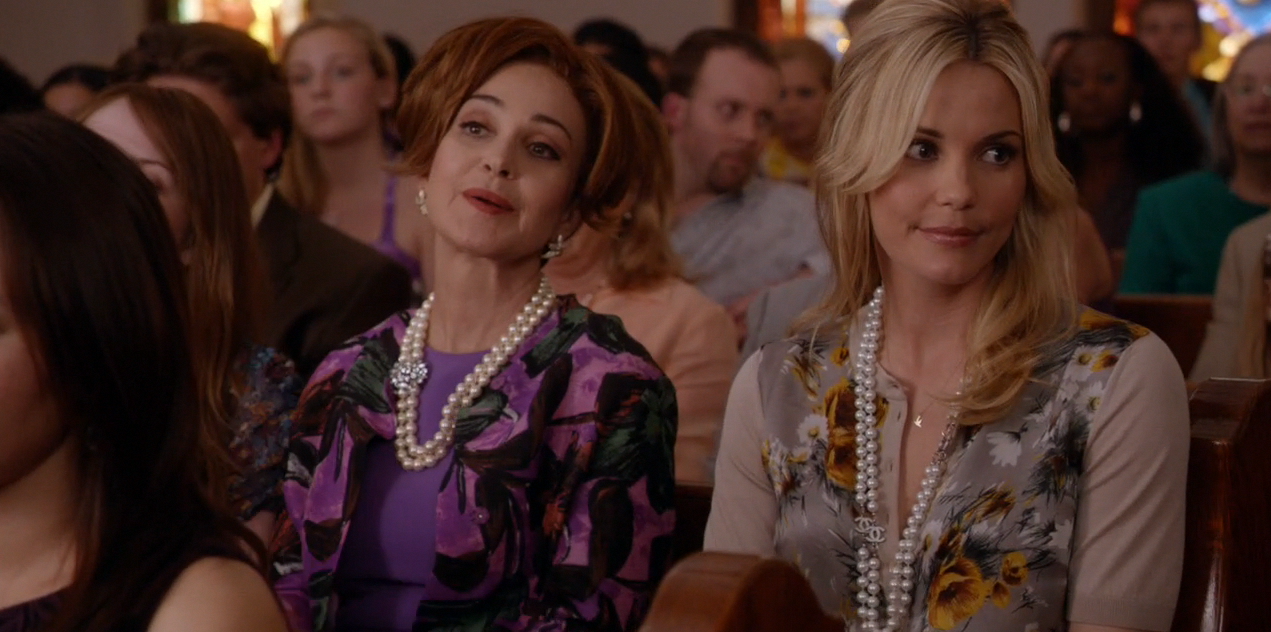
Amanda goes to church with her mother, against her will

Amanda goes to church with her mother, against her will

The next morning, however, Gigi demands that Amanda go to church, which Amanda vehemently does not want to do. Amanda then sees the people she knew (moreover, tormented) in high school, and is surprised to see how they’ve changed. She is also surprised at how much people hate her, as she thinks she’s changed. The next day, Amanda has several interviews lined up thanks to an old high school friend, although she isn’t pleased about the influence her mother is having on her kids. As she gets them ready for school, the whole family finds a new car in the driveway, addressed to Amanda from a secret admirer. Carlene Cockburn, who has been spying on Amanda from across the street and was one of those tortured by her, reports back to her friend Sharon Peacham, revealing that the car came from Sharon’s husband’s dealership, as evidenced by the vanity plate tag. Carlene and her band of girls decide to do a search on who gave Amanda a car. Zack Peacham calls Amanda, asking her over to talk about who gave her the car, and Amanda agrees. When she gets there, he reveals that he doesn’t know, but he considers her the love of his life. Carlene, who has continued to spy on Amanda, sees the conversation through Zack’s office blinds, and thinks that the two are having an affair, unaware of Amanda’s attempts to fight Zack off.

Amanda continues to butt heads with Gigi about how to treat the kids, but this is interrupted when more gifts arrive for Amanda, including racks of clothes. Amanda refuses to accept it, and refuses to go to the Longhorn Ball with her mother. She also has frustrations when dealing with realtor Heather Cruz, who has been showing Amanda run-down houses on purpose in retaliation for past abuse. Amanda confronts her, and Heather admits the truth and accepts Amanda’s apology. Heather then tries to warn her about something, but is interrupted by Carlene and the girls with a welcome basket. Heather tries to tell Carlene that Amanda has really changed, but Carlene refuses to accept this and threatens to take business away from Heather. Carlene and others start digging around for information, but Amanda feels overwhelmed. After the girls leave, Carlene tasks Sharon to find out who has been sending Amanda gifts. Unfortunately, Sharon botches the mission. Amanda is still struggling to find work, unaware that Cricket Caruth-Reilly, another of Carlene’s cronies, has been sabotaging all of her efforts. Out of options, Amanda decides to ask for work at a Hooters-style bar called Booby-licious. That night, Amanda has dinner with Cricket’s husband Blake, who was a good friend of hers in high school, and accidentally discovers that Blake is gay and having an affair with his ranch foreman.

A photo of Amanda at her new job is circulated around the other women of the community

A photo of Amanda at her new job is circulated around the other women of the community

Amanda’s new job is soon revealed to everyone, unbeknownst to her, and Carlene lets her know. Amanda refuses to be intimidated by Carlene and her friends, and the two have a confrontation. When Carlene reveals details from Bill’s death in front of Amanda’s kids, Amanda decides that it’s time to leave. At home, Gigi finally reveals that she is the one that has been leaving gifts for Amanda. Later, Amanda realizes that Carlene, who touts herself as a righteous Christian woman, owns the bar where Amanda works, exposing her hypocrisy. At church that Sunday, Amanda not only outs her new job to the entire community, but that Carlene owns the company. Amanda then realizes that she can hold her head high in this community.

March 3

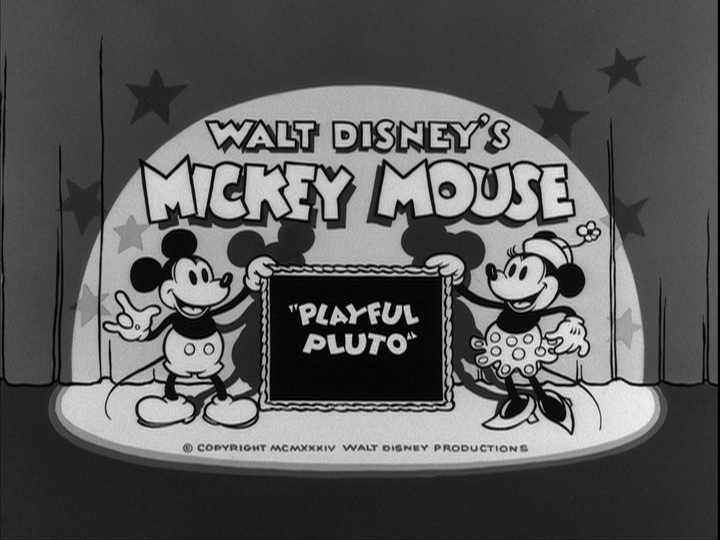
March 3, 1934 – The Mickey Mouse Short Film Playful Pluto is Released to Theaters

vlcsnap-2015-03-03-18h50m21s65

“Now see what you’ve done, you big clown!”

On March 3, 1934, the Mickey Mouse short film Playful Pluto was released to theaters. It contains a piece of animation by Norm Ferguson that has been hailed within the animation field as being one of the first examples of personality animation, with the cartoon character expressing thoughts and emotions through their actions. The scene inspired the likes of Ollie Johnston to go into animation. The short was directed by Burt Gillett.

The short begins with Mickey raking leaves in his backyard and playing around with Pluto. As Pluto fetches a stick from Mickey, a small whirwind sneaks into the yard and starts scattering all the leaves. As Mickey accidentally knocks himself out with the rake, the whirlwind takes his basket and whirls everything once again neatly into the basket – which is soon knocked over again by an eager Pluto. Mickey is angry with Pluto to begin with, but realizes he can’t stay mad at his best pal. Mickey continues with his chores, with Pluto curiously following along and getting into trouble by pulling out the tap. Mickey rushes into the root cellar to turn off the water main, with Pluto holding the flashlight for him. The water main jumps out and hits Pluto in the teeth, knocking the flashlight inside. As Pluto hiccups, the flashlight briefly turns on, scaring the poor dog. Pluto races around the cellar with Mickey trying to calm him down. Pluto runs through the screen door and hides within Mickey’s chest of drawers before realizing that everything is okay. As Mickey steps inside to find Pluto, he sees that a whole swarm of flies has entered through the hole in the screen door, and lays down some flypaper to catch them. Pluto notices a fly nearby and starts following it, unfortunately getting his nose caught on one of the many strips of flypaper. As Pluto frees his nose he then gets the flypaper caught on his paws and his ears before accidentally sitting on it. As Pluto struggles, he ends up caught in the window shade until Mickey frees him.

March 2

March 2, 2009 – Construction Begins on the Disney Dream

Disney Dream Construction

“With these new ships, we are continuing to build upon that vision of providing more families with an unforgettable cruise vacation and the chance to explore new destinations with Disney.” – Karl L. Holz, President of Disney Cruise Line

On March 2, 2009, a special steel-cutting ceremony was held at the Meyer Werft shipyard in Papenburg, Germany, for the new Disney Dream cruise ship. The first piece of steel that was cut for the ship was for the intricate scrollwork that is now found on the ship’s hull. The ship was given its name later that month, and the design was released on October 29, 2009. The ship is similar to its predecesors The Disney Magic and Disney Wonder in having a design reminiscent of the ocean liners of old, with an art deco elegance and a hint of Disney whimsicality in its overall design. The ship was completed in October of 2010, and went on its maiden voyage on January 26, 2011.