RSS Feed

Tag Archives: Animated Feature Film

January 18

January 18, 1992 – Beauty and the Beast Wins the Golden Globe for Best Picture – Musical or Comedy

vlcsnap-2014-01-18-19h20m15s215

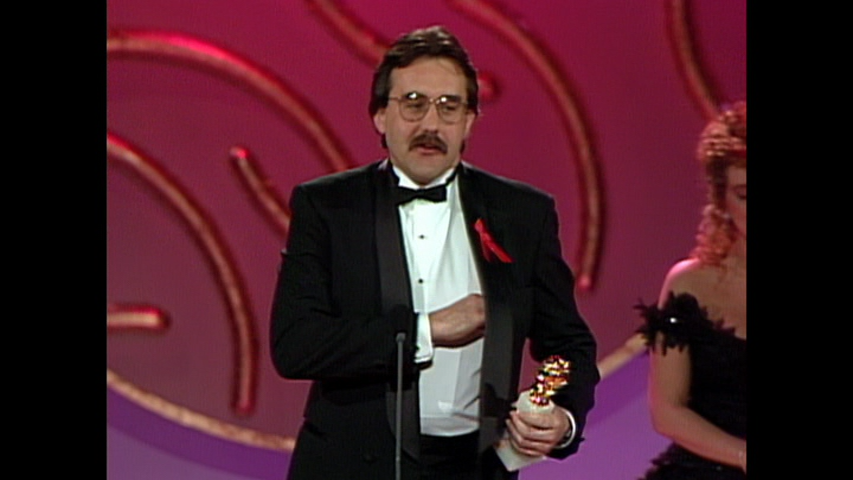
“We’d won the Bank of America award for Jeffrey [Katzenberg], and now the Golden Globe for the artists.” – Don Hahn, Producer.

On January 18, 1992, the 49th Golden Globe Awards were held. After scoring four nominations, the 30th Disney animated feature film Beauty and the Beast walked away with three Golden Globe Awards, including one for Best Picture – Musical or Comedy, beating out the likes of City Slickers, Fried Green Tomatoes, The Commitments, and The Fisher King. Beauty and the Beast was also awarded for Best Original Score for Alan Menken, which beat “At Play in the Fields of the Lord” by Zbigniew Preisner, “Bugsy” by Ennio Morricone, “Dead Again” by Patrick Doyle, “For the Boys” by Dave Grusin, and “Robin Hood: Prince of Thieves” by Michael Kamen. The other award was for Best Original Song, with the film awarded for “Beauty and the Beast,” winning against “Dreams to Dream” from An American Tail: Fievel Goes West, “(Everything I Do) I Do It For You” from Robin Hood: Prince of Thieves, “Tears in Heaven” from Rush, and “Be Our Guest” also from Beauty and the Beast.

January 10

January 10, 2008 – The Broadway Musical The Little Mermaid Officially Begins its Run

The+Little+Mermaid++A+Broadway+Musical+littlemermaid

“I knew how it would sound under the sea on stage, but not how it would look. That was the biggest challenge, and it was so out of my hands.” – Alan Menken

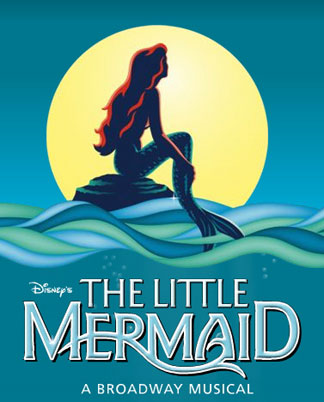
On January 10, 2008, the Broadway musical version of the hit 1989 animated feature film The Little Mermaid began its run at the Lunt-Fontanne Theater. Previews had run from November 3, 2007, with a pre-Broadway run at the Ellie Caulkins Opera House of the Denver Center for the Performing Arts. Originally supposed to open on December 6, 2007, this opening was delayed due to the stagehands strike of 2007. The challenge of the musical was to keep true to the story, but also portray a world underwater. Francesca Zambello, the director, had an extensive opera background, which made her quite willing to take on this task. Alan Menken, the original songwriter for the 1989 film, was brought in to be part of the production team, with lyricist Glenn Slater working with him to write 10 new songs for the musical. The book was written by Doug Wright, who made the focus of Ariel’s journey her pursuit of living her life on her own terms. The original cast included Sierra Boggess as Ariel, Sean Palmer as Eric, Brian D’Addario and Trevor Braun alternating the role of Flounder, Norm Lewis as King Triton, Sherie Rene Scott as Ursula, Tituss Burgess as Sebastian, Tyler Maynard as Flotsam, Derrick Baskin as Jetsam, Jonathan Freeman as Grimsby, and John Treacy Egan as Chef Louis. While the audience response to the musical was positive, critics were mixed, with most being rather critical. It was nominated for two Tony Awards: Best Original Score, and Best Lighting Design of a Musical. The musical closed on August 30, 2009, after 50 previews and 685 performances. Since then, it has had an American tour, and several international productions.

January 7

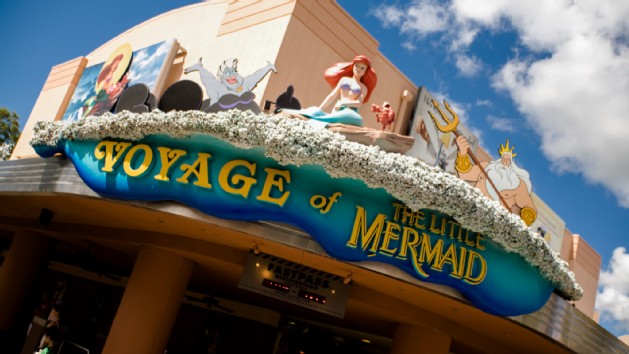
January 7, 1992 – The Attraction Voyage of the Little Mermaid Opens in Disney-MGM Studios

voyage-of-the-little-mermaid-00

“Celebrate highlights of the animated musical film, The Little Mermaid, at this 15-minute puppetry extravaganza!”

On January 7, 1992, the Voyage of the Little Mermaid attraction opened at Walt Disney World’s Disney-MGM Studios near the Animation Courtyard. It replaced the show Here Come the Muppets, and is a special multimedia show with animation, live performances, puppetry, and other special effects to give guests an immersive experience. The show is a summation of the key parts of the 1989 film The Little Mermaid, with select songs being performed by the live-action performers and puppeteers.

January 2

January 2, 1979 – The Dumbo’s Circus Parade Begins in Walt Disney World

Dumbo's Circus Parade

“In 1979, Walt Disney Entertainment brought a parade inspired [by Dumbo] to life in the Magic Kingdom Park in the form of Dumbo’s Circus Parade…”

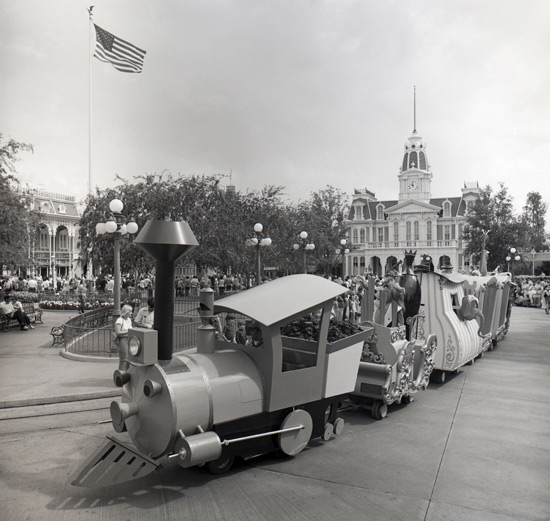
On January 2, 1979, the Walt Disney World parade Dumbo’s Circus Parade began its run through the Magic Kingdom. Based on the scene in the 1941 film Dumbo when the circus arrives to town, the parade features a float of the train Casey Jr., with various Disney characters playing the part of circus performers. Mickey Mouse played the part of the ringmaster, leading a three ring circus behind the train that featured Donald Duck as a snake charmer, and Goofy as a circus weightlifter. A barrage of clown characters followed behind this, featured on a float that acted as the clown headquarters. The parade lasted until December 21, 1979, and was replaced with the Tencennial Parade on October 1, 1981, which celebrated Walt Disney World’s tenth anniversary.

December 4

December 4, 2012 – Disney Announces Distribution Deal with Netflix

disney-netflix-slice

“Disney and Netflix have shared a long and mutually beneficial relationship and this deal will bring to our subscribers, in the first pay TV window, some of the highest-quality, most imaginative family films being made today.” – Ted Sarandos, Netflix Chief Content Officer

On December 4, 2012, Disney announced a deal with the online streaming service Netflix, making them the exclusive U.S. subscription television service for Disney films, which includes the Disney catalog, but films from four of Disney’s subsidiaries: Pixar, Marvel, Disneynature, and Disney Animation. This deal was reached after Netflix’s contract with Starz expired in February, 2012. The exclusive part of the deal begins with Disney films released in 2016, although Netflix is currently streaming several Disney animated classics and direct-to-video titles. This deal did not include a DVD component. After announcing the deal to the media, Netflix shares rose 14%. It was estimated that the company would be paying over $350 million a year for the Disney catalog.

December 1

December 1, 2008 – Bolt and Wall-E Receive Nominations for the 36th Annie Awards

AnnieAwards__111205172926

Bolt was second [in nominations] with 9 nods, and WALL-E third with 8.”

On December 1, 2008, the nominations for the 36th Annie Awards were announced; Walt Disney Animation Studios’ Bolt received 9 nominations, while Pixar’s WALL-E received 8. Both films were nominated for Best Animated Feature, up against DreamWorks Animation’s Kung Fu Panda, Sherman Pictures and Lama Films’ $9.99, and Sony Pictures’ Waltz With Bashir. When the awards took place on January 30, 2009, the ceremony was not without controversy, as Kung Fu Panda shut out both Disney features from all of their categories, with much criticism directed at the organization’s balloting practices. Pixar’s WALL-E would go on to win the Academy Award for Best Animated Feature.

October 30

October 30, 2012 – The Soundtrack to Wreck-It Ralph is Released Through Walt Disney Records

WIR-theCover?!D

“Wreck it, Wreck-It Ralph, as fast as you can. You know you can do it with your colossal hands.”

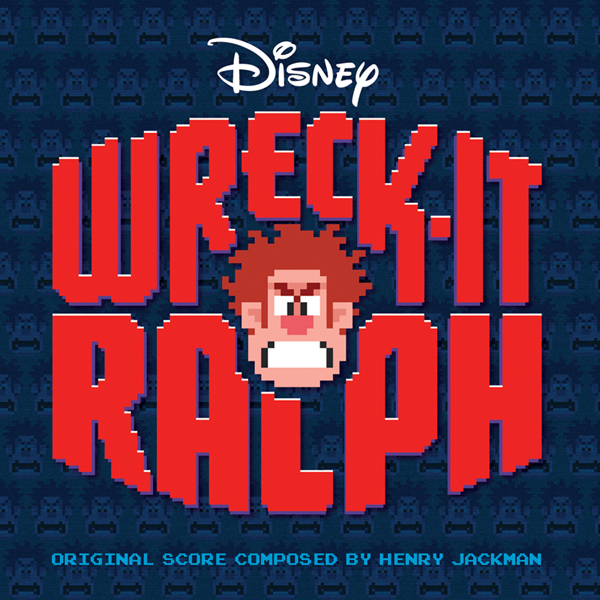
On October 30, 2012, the soundtrack to Disney’s 52nd animated feature Wreck-It Ralph was released through Walt Disney Records. The score was composed by Henry Jackman; the soundtrack includes original songs by Owl City, Buckner & Garcia, and Skrillex. Japanese performing group AKB48 was asked to perform a song for the film entitled “Sugar Rush,” which is also the name of the film in Japan. Also featured in the album are the songs “Celebration” by Kool & the Gang, and “Shut Up and Drive” by Rihanna.

October 5

October 5, 1949 – The 11th Disney Animated Feature Film, The Adventures of Ichabod and Mr. Toad, is Released to Theaters

vlcsnap-2013-10-05-17h16m12s116

“If you were asked to choose the most fabulous character in English literature, who would it be?”

On October 5, 1949, the 11th Disney animated feature film, The Adventures of Ichabod and Mr. Toad, was released to theaters. This was the sixth and final package film released by the studios, until 1977’s The Many Adventures of Winnie the Pooh. The two stories featured in this film were based on The Legend of Sleepy Hollow by Washington Irving, and The Wind in the Willows by Kenneth Grahame; the former was narrated by Bing Crosby, while the latter was narrated by Basil Rathbone. Due to the studios financial situation at the time, expenses were kept down on the film by reusing animation from earlier shorts and films, including the 1937 Silly Symphony The Old Mill. The two parts of the film were originally released separately when released on home video, but were finally combined into the complete feature once again starting with the laserdisc release in 1992. The film was directed by Jack Kinney, Clyde Geronimi, and James Algar, with story by Erdman Penner, Winston Hibler, Joe Rinaldi, Ted Sears, Homer Brightman, and Harry Reeves.

The film opens in a library, with the Basil Rathbone taking the audience through a list of fabulous characters in English literature, before introducing his choice: J. Thaddeus Toad, Esquire. Toad was an incurable adventurer, who only had three friends looking out for him: MacBadger, Mole, and Rat. This certain story begins with Mole being late for tea with Rat, when there is a knock at the door for Rat. He receives a special letter from MacBadger, who requests their presence at Toad Hall. Believing that Toad is once again up to trouble, they arrive to find a frazzled MacBadger, who had been working to put Toad’s affairs in order, as his adventures are driving Toad close to bankruptcy. MacBadger convinces the two of them to stop Toad from his new folly: parading around the countryside with a yellow gypsy cart and a horse named Cyril. When Rat and Mole try to convince Toad to give up his reckless behavior, Toad attempts to flee, when he comes across his new mania: a motor car.

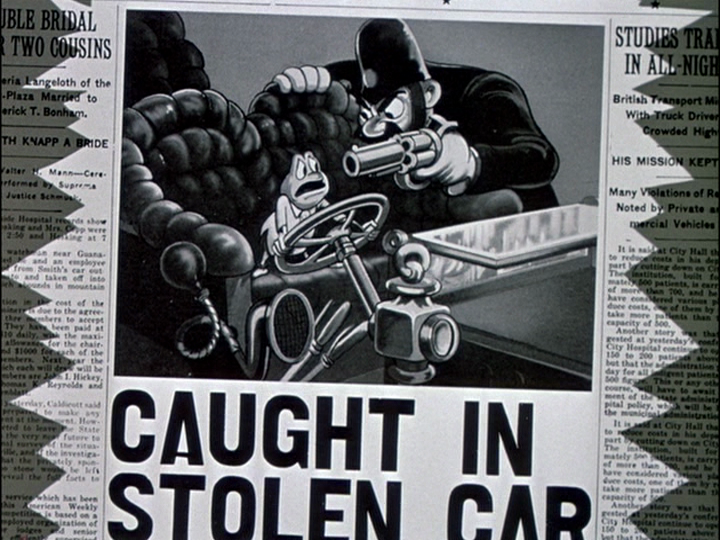
After a drastic attempt to feed his new mania, Toad is found and arrested for driving a stolen car

After a drastic attempt to feed his new mania, Toad is found and arrested for driving a stolen car

Rat and Mole take Toad back to Toad Hall and lock him in his room, keeping him there until the mania passes. That night, Toad sneaks out of the window and steals a motor car, and is promptly arrested. He is taken to court, where he defends himself. Cyril testifies that Toad headed to his place that night, and the two were walking when they saw the motorcar. It parked at a nearby pub, where the weasels driving the car exit. Toad goes inside the pub to buy the car from the weasels, not knowing that the car has been stolen. To pay for the car, he drew up a paper that signed over the deed to Toad Hall. The bartender arrives, tells the court that Toad tried to sell him a stolen motorcar, and Toad is promptly arrested. Around Christmas, Toad is seen serving his sentence in the Tower of London, and vows never to attempt such reckless behavior again. Cyril arrives to help Toad break out of jail, and soon the alarm sounds that Toad has escaped. The police are sent out all over London to find Toad, who is dressed as an old woman. He then boards a train and steals it, attempting to flee. He then jumps the train and lands in the river, but is weighed down by the ball and chain around his ankle.

Rat and Mole are the only people in England that remember Toad fondly, and are surprised to find Toad at their door. When there’s a knock at Rat’s door, Toad asks Rat to hide him, but they find MacBadger at the door. He tells them that Toad Hall has been taken over by the bartender, named Winkie, and the weasels; Winkie had lied on the stand, and Toad is completely innocent. MacBadger comes up with a plan to get the deed from Winkie to prove Toad’s innocence to the court. The four enter Toad Hall stealthily, and while Mole manages to grab the deed from the sleeping Winkie, their plot is foiled by a weasel watchman. A chase ensues around the hall for the deed, and the four manage to make it out of the Hall with the deed. Toad is exonerated, and he vows to be a new Toad, but this doesn’t last, as he shows off his new mania at the end: the airplane.

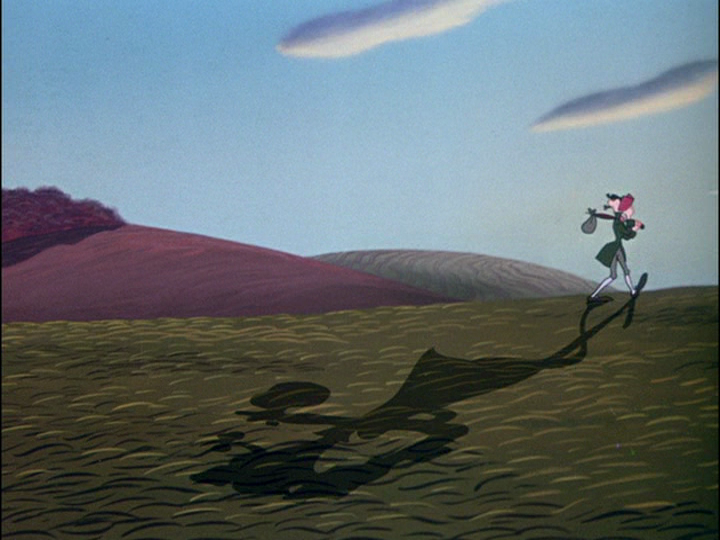
Bing Crosby narrates while introducing the story of the peculiar schoolteacher, Ichabod Crane

Bing Crosby narrates while introducing the story of the peculiar schoolteacher, Ichabod Crane

Bing Crosby then introduces the character of schoolmaster Ichabod Crane, who he describes as a “scarecrow eloped from a cornfield.” A group of men known as the Sleepy Hollow Boys are seen hanging out at the nearby pub, led by Brom Bones, and they notice Ichabod heading into town. Ichabod’s only weakness is food, and treats those students with great cooks for mothers with favor. He also improves his social standing by joining several societies, including the women’s choral society, where he plays the piano. Brom, who liked to cause mischief, decides to play pranks on Ichabod, although Ichabod doesn’t really mind. However, when Ichabod sets his eyes on Katrina van Tassel, daughter of the richest farmer in the county, Brom ups his pranks, seeing him as his rival.

Katrina invites Ichabod personally to a party at her father’s home for Halloween, and he is excited at the prospect of being Katrina’s beau, much to Brom’s annoyance. Brom then comes up with a plan to get Katrina away from dancing with Ichabod, but Ichabod is able to reclaim Katrina. No matter what Brom does, he is unable to best Ichabod for Katrina’s affections. At midnight, the guests begin to tell ghost stories. Brom realizes that this is his chance, as Ichabod is one of the most superstitious people he knows, believing in the existence of ghosts and spirits. Brom then tells the story of the Headless Horseman, which spooks Ichabod terribly. On his way home, he tries to calm himself by whistling, but is scared by the simplest of things in the woods. At one point, he hears the clattering of another horse’s footsteps, but soon realizes it’s just reeds hitting a log. Nearly driven mad with his worries, he and his horse laugh at his folly, until they hear maniacal laughter nearby, and spot the actual Headless Horseman. Ichabod tries to flee to the bridge, which the Horseman is unable to cross; although Ichabod crossed the bridge, the next morning, all that the townspeople could find was Ichabod’s hat near the bridge, and a shattered pumpkin. Soon after, Brom and Katrina were married, and the townspeople had a new legend.

September 20

September 20, 2002 – The Studio Ghibli Film Spirited Away is Given a Limited Release in the United States
vlcsnap-2013-09-19-17h04m50s65

“Why should I hire you? Anyone can see you’re a lazy, spoiled crybaby, stupid to boot! I’ve nothing for you – forget it!”

On September 20, 2002, the Studio Ghibli film Spirited Away (known in the original Japanese as 千と千尋の神隠し) was released in the United States in a limited amount of theaters, with a general release on September 27, 2002. The film was written by director Hayao Miyazaki, who was inspired by a friend’s ten-year-old daughter, wishing to write for her a character she could look up to. Disney asked Pixar’s John Lasseter, a fan of Miyazaki’s work, to oversee the English-language version of the film. The film became the most successful film in Japanese history, grossing over $229,000,000 in the Japanese box office. It would go on to win the Academy Award for Best Animated Feature at the 75th Academy Awards; its success helped solidify the popularity of Studio Ghibli films within the United States, with Disney internationally distributing most of the studio’s library.

The film begins with ten-year-old Chihiro sulking in the backseat as she and her parents drive to their new home. Chihiro hates the move, and doesn’t hesitate to let her parents know. They end up lost on a back road, and Chihiro notices a rather strange stone outside. They come across a dilapidated old building, and although Chihiro doesn’t want to explore, her parents let their curiosity get the best of them. Not wanting to be left alone, she follows them. Her father thinks it’s only an abandoned theme park, but Chihiro still has a bad feeling about the place. Her parents then smell something delicious, and discover a delectable feast. Chihiro refuses to eat, but her parents dig right in. Feeling something isn’t right, Chihiro looks around the buildings, and notices black smoke from the chimney of what appears to be a bath house. She comes across a boy on the bridge, who warns her to escape before it gets dark. As she runs back to her parents, she is shocked to find that they have turned into pigs.
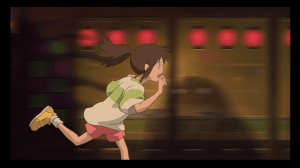
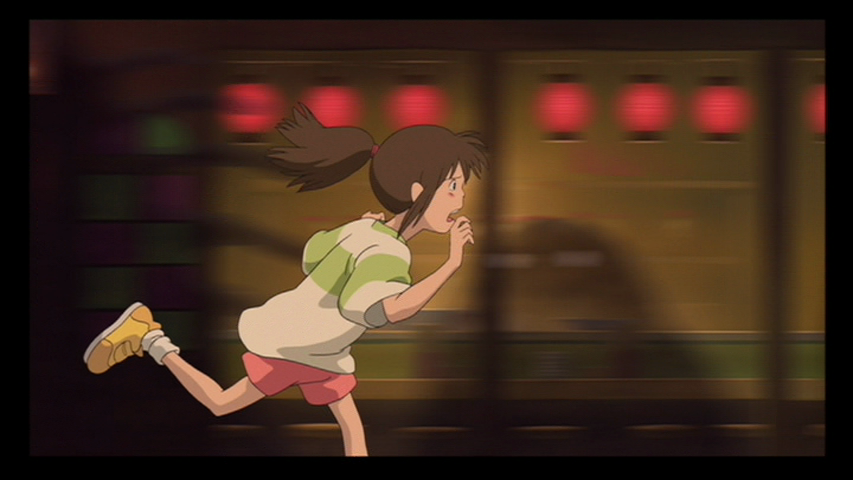
Chihiro runs through the bathhouse, looking for her parents, unable to believe they have been turned into pigs

Chihiro runs through the bathhouse, looking for her parents, unable to believe they have been turned into pigs

Chihiro runs around the bathhouse, and finds she is trapped at the bathhouse, as the nearest town is now far away across a river. As she moans to herself that she must be dreaming, she finds herself disappearing. She then sees several spirits making their way to the bathhouse from a ferry-boat and, frightened, she runs away. She is soon found by the boy from the bridge, who has her eat something so she won’t disappear, assuring her that she will not turn into a pig. He then protects her from a strange bird flying overhead, and takes her through several back passageways until they reach the bridge. He warns her not to breath as they cross the bridge, otherwise the spell keeping her invisible will wear off. A frog leaps into the boy’s face, and Chihiro lets out a breath of surprise, revealing herself. The boy, named Haku, continues to protect her, but gives her directions to go to the boiler room to find Kamaji and ask him for work, so she can stay and save her parents. Once she has work, the witch that runs his world will not be able to harm her.

Although frightened, Chihiro follows Haku’s instructions, ending up at Kamaji’s boiler room. When she asks him for a job, he first ignores her, then tells her that he doesn’t need any more help than the susuwatari that work for him. She assists one of the susuwatari by taking his piece of coal to the furnace, causing the rest of the susuwatari to pretend that they can’t carry their coal, wanting Chihiro to do their jobs. Kamaji then tells her that there is no work for her, just as a girl named Lin enters. As she panics upon seeing Chihiro, Kamaji tells her that Chihiro is his granddaughter. He convinces Lin to take Chihiro to Yubaba for a job, which Lin does begrudgingly. Lin then protects her from a suspicious attendant, leaving Chihiro to travel to Yubaba alone with a strange spirit. At first, Yubaba refuses to let Chihiro work at the bathhouse. She tries to find out who helped her, but Chihiro keeps demanding that she should be given a job. Yubaba then taunts her, but Chihiro tries to remain calm, even thought they are interrupted by a rather large baby.
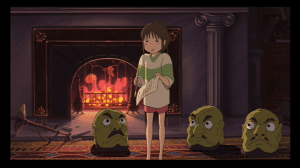
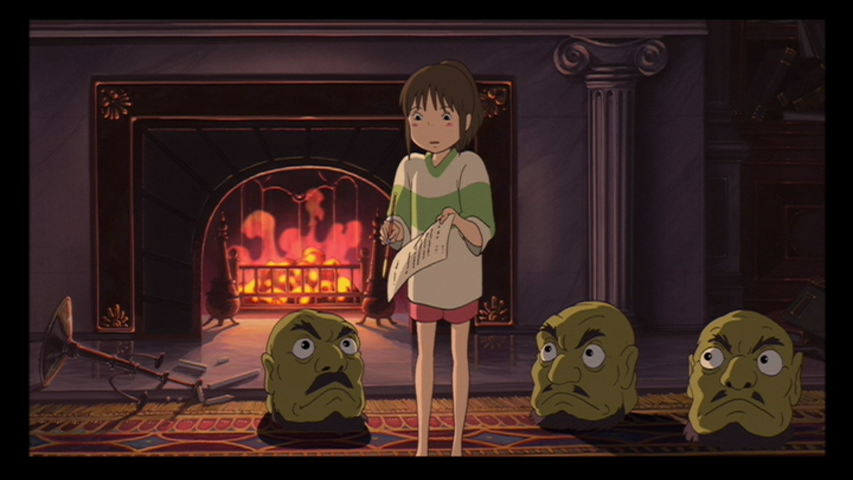
Chihiro, after her persistent asking, is given a contract by Yubaba

Chihiro, after her persistent asking, is given a contract by Yubaba

Yubaba then agrees to give Chihiro a job as she tried to calm the baby down, and gives Chihiro a contract to sign. Yubaba then takes Chihiro’s name, leaving her as just “Sen.” She calls for Haku, who is tasked to take care of her. As she tries to talk to him, he answers her coldly, telling her to call him “Master Haku.” Haku then calls out to Lin to take care of her, as no one wants to work with a human. In private, Lin reveals that she’s actually a kind person who is happy that Chihiro was able to make it past Yubaba. Lin warns Chihiro to stay away from Haku, as he is Yubaba’s henchman. The next morning, Haku sneaks into the room where Chihiro stays with the other women and tells her to meet him at the bridge, as he will show her where her mom and dad are. As she runs to the bridge, she comes across a strange spirit that seems to be watching her. Haku then meets her and takes her to the pig pen, and she starts to cry after seeing them. As she sits outside, he gives her her old clothes, with the farewell card her friend gave her. Haku tells her that Yubaba controls others by stealing their names, and she needs to remember her real name if she wishes to leave, but must keep it a secret. Haku no longer remembers his real name, but he strangely remembers hers. He kindly offers her food that will help her regain her strength, but she still starts to cry as she realizes what kind of situation she has found herself in. She heads back to her residence and hides her clothes, unaware that the strange spirit from before has followed her.

Work begins for the night, and Chihiro works as hard as she can, although she is given rather challenging tasks. She meets the spirit that’s been following her and leaves the door open for it. Chihiro and Lin are sent to scrub the big tub, which hasn’t been cleaned in ages. Meanwhile, Yubaba senses a spirit coming that she can only call “scum.” As she tries to get a tab for her bath, the foreman refuses her, but the spirit she let in kindly gives it to her. He appears a few minutes later with more tabs, although she refuses them, making him sad. Yubaba is then alerted that a Stink God is at the gate and, while she can’t refuse the customer, she wants to rush it out as soon as possible. Chihiro is then given the job to attend to it, although she struggles due to its stench. The god enters the bath, but needs another tab to clean itself. As Yubaba watches, Chihiro successfully cleans the god, revealing it to be not a Stink God, but a River God. Chihiro then earns the respect of Yubaba and the staff, thanks to her actions.
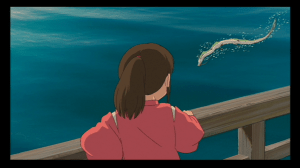
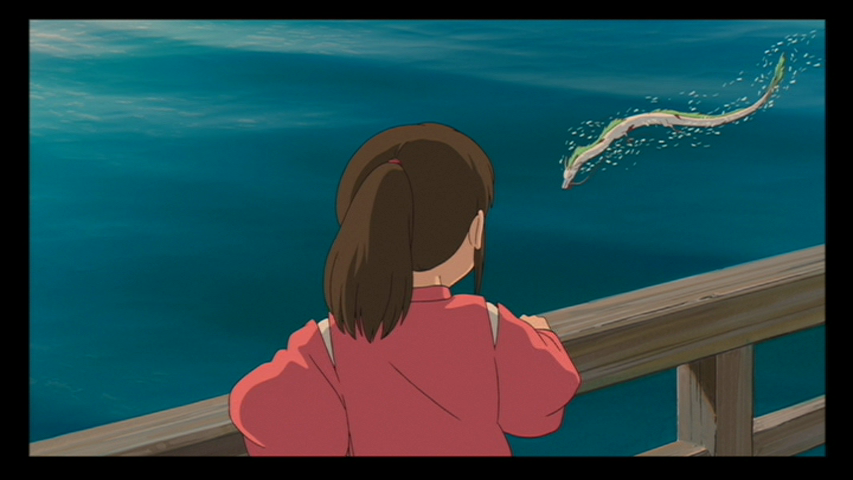
Chihiro sees Haku getting attacked by the paper birds

Chihiro sees Haku getting attacked by the paper birds

Late that night, the spirit, called No-Face, tempts a frog worker with gold before swallowing him. He then demands to be treated like a customer, using the frog’s voice to speak. He pays everyone with gold he created, and everyone rushes to keep him happy, so long as he gives them gold. Chihiro, however, is the only one not tempted by the gold, and stays in her room. She spies a dragon being attacked by several paper birds, and calls out to him, realizing that the dragon is Haku. The paper birds fly away when Haku crashes into her room, and while she wants to care for his injuries, he flies out to find Yubaba. Chihiro then rushes off to stop him, but is interrupted by No-Face, who offers her a large amount of gold. She refuses him, and No-Face is saddened by this. Angered, he starts eating employees. Meanwhile, Chihiro continues her search for Haku, and breaks into Yubaba’s residence. She then comes across Yubaba’s rather large baby, who threatens to scream and break her arm if she doesn’t play with him. One of the paper birds, which had attached itself to Chihiro, starts talking, mocking the baby. It is then revealed to be Yubaba’s twin sister, Zeniba, who turns the baby into a mouse, and Yubaba’s bird into an insect. She then demands to take Haku to kill him for stealing a magic seal from her, but Chihiro refuses to move.

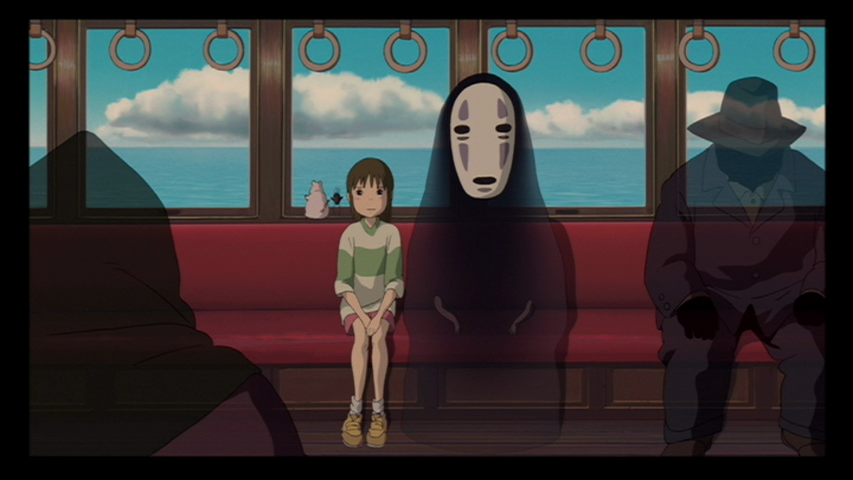
Haku wakes, breaks the spell that Zeniba cast to appear, and falls down a trap door, taking Chihiro with him. He regains consciousness enough to escape, flying into the boiler room. Chihiro then uses an emetic dumpling she received from the River God to free the seal from inside Haku, which is slowly killing him. The seal is spat out, and Haku is returned to human form, although he is once again unconscious. Kamaji then looks after Haku as Chihiro goes to return the seal to Zeniba. He gives Chihiro a train ticket to help her get to Zeniba’s, although she will have to walk back. As Chihiro looks for Yubaba, No-Face is tearing the place apart, wanting to see Chihiro. He tries to offer Chihiro anything she wants, but she refuses, telling him he should go back to where he came. He tells her that he is really lonely, and demands that she take the old. She gives him the other half of the emetic dumpling, and he releases everyone he ever swallowed. He follows her to the train, once again his silent, semi-transparent self. They all board the train and head to Zeniba’s.
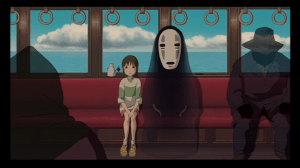
Chihiro and her friends sit on the long journey to Zeniba's

Chihiro and her friends sit on the long journey to Zeniba’s

Haku wakes up later that evening, and asks Kamaji where Chihiro is, and what happened, as he doesn’t remember anything, other than Chihiro calling out for him in the darkness. He then goes to Yubaba, asking if she still hasn’t noticed that she’s lost something precious. She finally realizes that her baby is longer with her, and the gold is just sand. She panics, looking for her baby, and angrily demands that Haku tell her where he is. When she finds that he’s with Zeniba, she sits down in dismay. Haku agrees to get the baby back, but only if she allows Chihiro and her parents to be sent back to their world. Meanwhile, Chihiro and her friends arrive at Zeniba’s, and are greeted by a lamppost that will show them the way. Inside, Zeniba proves to be a kindly witch, but sadly tells Chihiro that she can’t help her, and she will have to do it on her own. When Chihiro tells Zeniba she must go back, she provides Chihiro with a magic hairtie that will protect her. Haku then appears at Zeniba’s, and Zeniba forgives Haku, making him promise to protect her. She then keeps No-Face as her helper as she flies away on Haku’s back. Suddenly, Chihiro has a flashback to when she was little and nearly drowned in a river. She was rescued by Haku, the spirit of the river, and reveals his true name to be Kohaku. He turns back into human form, and thanks her for saving him by giving him back his real name.

They arrive back at the bathhouse, and Yubaba tricks Chihiro again, as Chihiro must guess which pigs are her parents in order to break the spell. Chihiro correctly answers that her parents aren’t there, and the contract is broken, freeing Chihiro and her family. Haku takes her back to her parents, but he can’t take her further than the gate, but he promises they will meet again, although she must not look back when she goes through the tunnel back to her world. Her parents act like nothing has happened, and Chihiro quickly makes her way back, resisting the urge to look back. Chihiro joins her parents as they set off for the new house.
September 7

September 7, 1911 – Animator and Disney Legend Fred Moore is Born

vlcsnap-2013-09-07-15h22m35s224

“Animation came too easily to him. He didn’t have to exert any real effort.” – Animator Les Clark

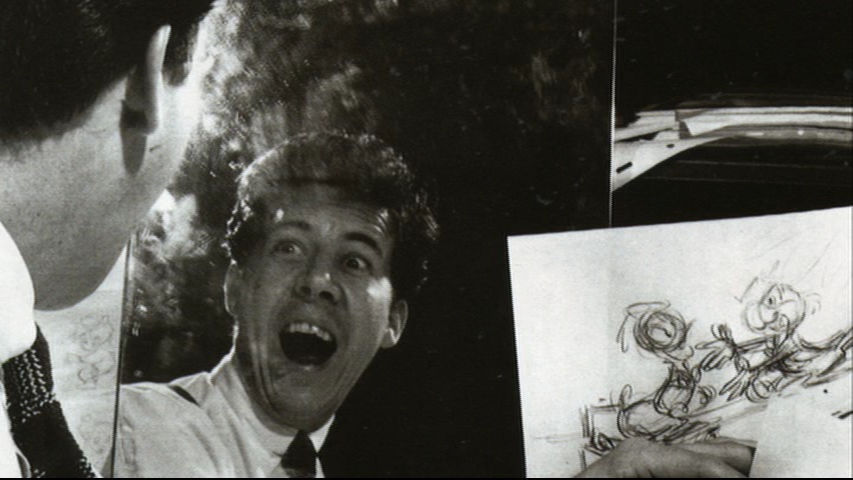
On September 7, 1911, Robert Fred Moore was born in Los Angeles, California. Despite limited training, he displayed a natural talent for animation, and worked at the Chouinard Art Institute as a janitor in exchange for art lessons. In 1930, at the age of 18, Moore was hired by the Disney studios. His first major assignment was on the Silly Symphony Santa’s Workshop in 1932, but his best known short assignment was that of a principal animator on Three Little Pigs. Moore was also known as the best animator of Mickey Mouse, creating the redesign of Mickey first seen in The Pointer in 1939, which was then used in “The Sorcerer’s Apprentice” segment of Fantasia. Caricatures of Moore have been seen in Disney animation: once in the Mickey Mouse short The Nifty Nineties as part of the song and dance act “Fred and Ward: Two Clever Boys from Illinois,” and the other is the character of Lampwick from Pinocchio, which is considered a self-caricature. In 1946, after a series of personal and professional problems, Moore was fired from the studio. He joined Walter Lantz, redesigning the character of Woody Woodpecker, before being hired once again by Disney in 1948. Sadly, in 1952, Moore was involved in a car accident, and was killed from a cerebral hemorrhage. He is still regarded as one of the finest Disney animators, and was awarded the Windsor McCay award in 1983, and inducted as a Disney Legend in 1995.