RSS Feed

Tag Archives: 1940s

June 28

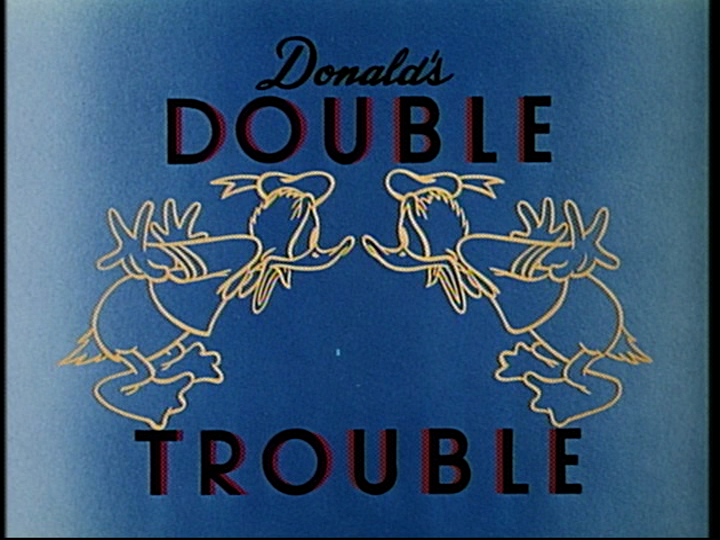
June 28, 1946 – The Donald Duck Short Film Donald’s Double Trouble is Released to Theaters
vlcsnap-2015-06-28-19h24m01s162

“Oh, the kiss? Don’t worry – it’s beginning to work like a charm, for you.”

On June 28, 1946, the Donald Duck short film Donald’s Double Trouble was released to theaters. It was directed by Jack King, with story by Roy Williams.

Donald is being lectured by Daisy over the phone, who breaks up with him. Donald, utterly destroyed, walks down the street dejected when he meets a duck that could be his twin, only speaking like Ronald Coleman. Donald struck with a plan to have the double stand in for him and help win her back for him. The double refuses, even when Donald offers him money. However, he agrees once he sees the picture of Daisy, and falls head over heels for her. Donald leads him to Daisy’s house, and the double charms Daisy off her feet. Donald soon realizes that he could lose Daisy to the smitten double, and his anger nearly gets the best of him. He follows the pair to the amusement park “for an evening of frivolity,” and starts counting the kisses and hugs between the double and Daisy. The double spots Donald spying on them, and tries to prevent Daisy from knowing the ruse. Donald spies them heading on the tunnel of love, he begs the double not to go on the ride. Finally, Donald beats up the double inside, only to come out with him on the other side, having accidentally beaten up Daisy instead. The two flee the park to escape Daisy’s wrath.
June 20

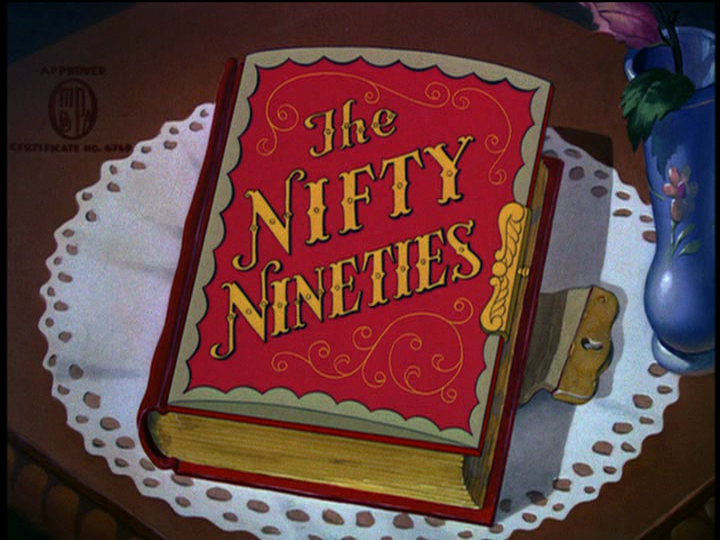
June 20, 1941 – The Mickey Mouse Short Film The Nifty Nineties is Released to Theaters

vlcsnap-2015-06-20-19h30m57s70

“A day in the nineties when grandma was a girl, the horseless carriage was quite the show, grandpa cussed when the thing wouldn’t go…”

On June 20, 1941, the Mickey Mouse short film The Nifty Nineties was released to theaters. This is one of the few shorts that features the appearances of all the “Fab Five,” as well as a special cameo of animators Ward Kimball and Fred Moore. The short was directed by Riley Thomson.

A photo album opens to reveal a picture of Mickey next to his car, and the scene is set in the nineties, where he decides to go for a stroll in the park. There, he meets Minnie, and the two fall in love at first sight. He offers Minnie some candy, and the two head off together for a stroll. They head to a vaudeville show, where they are first entertained by a melodrama called “Father, Dear Father.” The melodrama drives Minnie to tears, and Mickey tries to comfort her. Afterwards, they are delighted by the antics of Fred and Ward: Two Clever Boys from Illinois. Afterwards, the two go on a drive, passing by Goofy riding a penny-farthing, along with Donald, Daisy, and the nephews on their tandem bike. Mickey’s car races at 15 miles per hour through the farmland, and barely makes it up a hill, but spooks a cow on the other side. They crash into the cow, but everyone is able to laugh at the situation.

June 7

Posted on

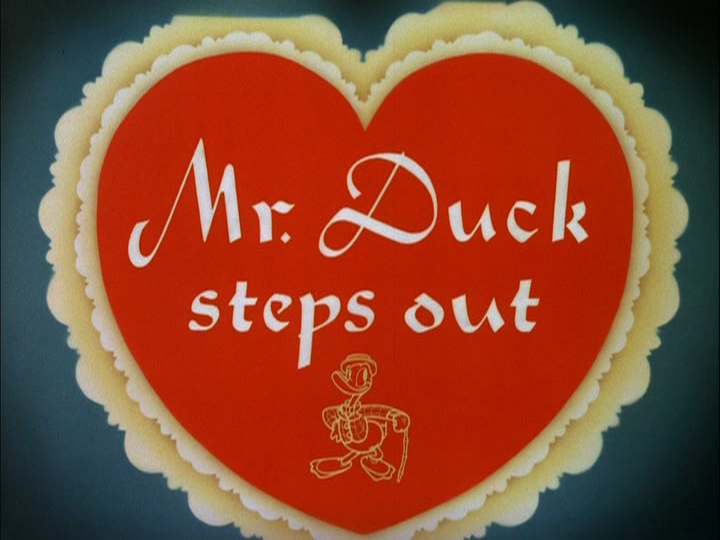
June 7, 1940 – The Donald Duck Short Film Mr. Duck Steps Out Premieres in Theaters

vlcsnap-2015-06-02-18h59m25s138

“Oh boy! What a jitterbug!”

On June 7, 1940, the Donald Duck short film Mr. Duck Steps Out premiered in theaters. It was directed by Jack King. This is one of the few shorts where Clarence “Ducky” Nash voices all the characters, including Daisy Duck.

The short begins with Donald preparing for his date with his sweetheart, Daisy. He dresses in his finest outfit, grabs a straw hat, a cane, and a box of chocolates, and dances his way into the living room, to find his nephews dancing with him with bouquets of flowers. He tricks the boys into the closet and locks the door before heading out on his date, unaware that the boys free themselves by sawing a hole through the wall. When Donald arrives at Daisy’s, the boys, who have already snuck inside, steal his gift. Donald chases after the boys, until he sees Daisy. Donald sheepishly says that he has brought his nephews with him, to which Daisy finds considerate and sweet. Donald bribes the boys to get some ice cream, which seems to leave Donald and Daisy alone. Daisy plays hard to get with Donald, but he is interrupted when trying to kiss her by the return of the nephews. Donald then gets Daisy to dance with him, but once again the happy pair are broken up by the nephews. Donald and the nephews continue to jockey over who gets to dance with Daisy, when one of the nephews gets an idea to use a hot corn cob to stop Donald. Donald accidentally swallows the heated cob, which starts to pop inside of him. Donald dances wildly while popping, and the boys accompany his movements. Daisy, seemingly unaware of any problem, continues to dance with Donald. The short ends with an excited Daisy covering Donald in kisses.

June 2

Posted on

June 2, 2003 – The Short Film Destino Premieres at the Annecy International Animated Film Festival

Destino

“It is a little different…for us, but I’m enormously proud that we’ve done this because it is about who we are as artists, how long our history is and how long we respect it.” – Roy E. Disney

On June 2, 2003, the special short feature Destino kicked off the Annecy International Animated Film Festival. The film was a long time in the making, beginning as a collaboration between Walt Disney and artist Salvador Dali in 1946. Although storyboarded for eight months, the film was mysteriously stopped and never brought to the light of day again, until Roy Disney championed its completion in 2002. The film was finished at Disney Studio France, which then garnered the attention of Annecy’s artistic directors. Complications arose in the completion of the project, as the contract between Disney and Dali stipulated that Disney possessed the storyboards, but didn’t own any aspect of the project until the movie was made. Using a portfolio of 80 sketches and a 15-second film reel. The completed short is a mix of 2D and CG animation, with the CG being used to replicate Dali’s “plastic” style. The film would go on to be nominated for an Academy Award for Best Animated Short. The story for the film was developed by Dali and John Hench, and features the song “Destino,” written by Armando Dominiguez. The song was performed by Dora Luz.

May 30

Posted on

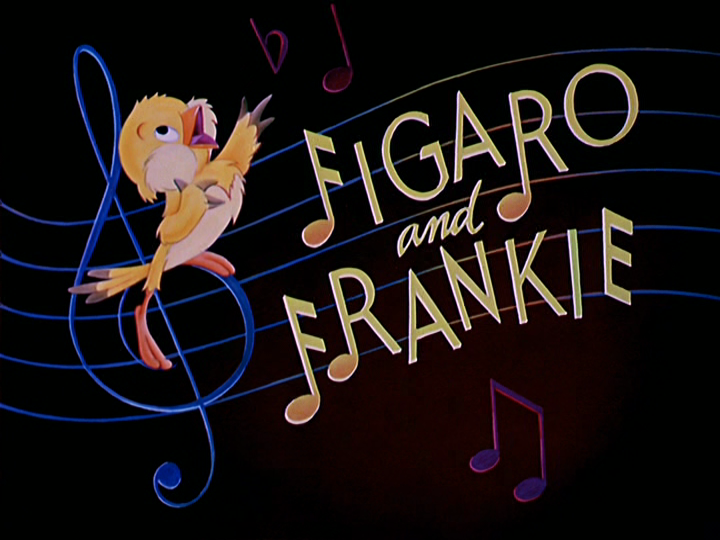
May 30, 1947 – The Figaro Short Film Figaro and Frankie is Released to Theaters

vlcsnap-2015-05-30-22h14m25s230

“Figaro, you fiend! You’re terrible! Of all the unspeakable, inhuman, barbaric, dreadful things!”

On May 30, 1947, the Figaro short film Figaro and Frankie was released to theaters. It was the last of the short series of Figaro cartoons, with the first being 1943’s Figaro and Cleo and 1946’s Bath Day. It was directed by Charles Nichols, with story by Eric Gurney and Bill de la Torre.

Frankie the canary is singing in his cage, waking poor Figaro, who is desperately trying to nap. He attacks Frankie’s cage and stops him for a brief moment, but he fights back with birdseed. When Figaro tries to get back at him, Minnie finds the kitten climbing up to the cage and rebukes him. Figaro walks away, but then decides to go after Frankie again and manages to knock over the cage. When Minnie runs in again, she thinks that Figaro has eaten Frankie, and chases him with the broom out of the house. After Minnie rushes Figaro out, it’s revealed that Frankie is indeed alive, and stares out the window, wishing he could fly now that he is free. Unfortunately, Frankie is unable to fly, and nearly falls into Figaro’s mouth, until Figaro is chased away by Butch the bulldog. Butch nearly eats Frankie, and is stuck between being eaten by Figaro and by Butch. Figaro’s conscience tries to convince Figaro to save Frankie, but to not avail, until he hits the cat with his halo. Figaro pushes a potted plant onto Butch’s head, driving the bulldog away. The two manage to make up, and Frankie goes back to annoying Figaro with his singing.

May 10

Posted on

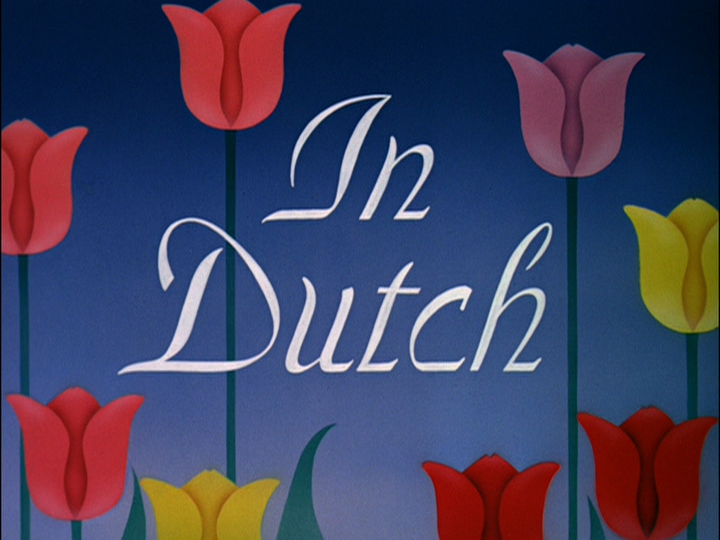
May 10, 1946 – The Pluto Short Film In Dutch is Released to Theaters

vlcsnap-2015-05-10-20h23m39s249

“And never don’t you two come back!”

On May 10, 1946, the Pluto short film In Dutch was released to theaters. It was directed by Charles Nichols, with story by Harry Reeves and Jesse Marsh.

Pluto is delivering milk in a small Dutch town, when he arrives at the mayor’s house, home of Dinah, Pluto’s sweetheart. He treats her to a small bowl of milk, though he gets distracted and accidentally pours out too much. He tries to make it up to her using tulips, which works, as Dinah kisses him. The two accidentally set off the dike alarm, warning the townspeople of a hole in the dike, and Pluto gets berated by the whole town. Pluto and Dinah are kicked out of town, but as they walk away, they realize that there really is a problem with the dike. Pluto rushes back to town to pull the alarm, but the townspeople think it’s another false alarm. Pluto then tricks the townspeople to follow him to the scene of the problem, where Dinah is dangerously close to drowning. The townspeople find the pair and realize that the two are heroes, and invite them back to town, where Dinah continues to help Pluto with his milk rounds.

April 29

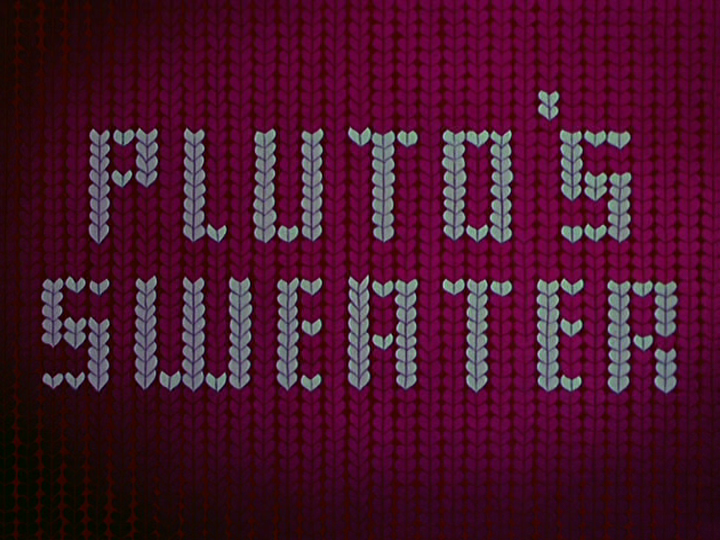
April 29, 1949 – The Pluto Short Film Pluto’s Sweater Premieres in Theaters

vlcsnap-2015-04-29-16h27m28s88

“You can go outdoors now, and your sweater will keep you so warm and comfy!”

On April 29, 1949, the Pluto short film Pluto’s Sweater was released to theaters. This is one of the few shorts that features both Figaro and Butch with Pluto. It was directed by Charles Nichols, with story by Eric Gurney and Milt Schaffer.

Pluto and Figaro are quizzically studying Minnie’s new knitting project, which Pluto thinks is a long john for Minnie. However, Figaro corrects him: the sweater is for him. Minnie forces Pluto to wear the sweater, which he finds incredibly itchy. Although Pluto doesn’t want to be seen in the pink monstrosity, Minnie insists that he go outside, and throws him out the doggie door. As he stands outside, Butch and his gang come across him, and laugh hysterically. Pluto tries to hide, but the pink makes him stand out. The sleeves on the sweater are also too big, and Pluto finds himself completely tied up at one point. Pluto tries to free himself and ends up in a pond; when he gets out, the sweater shrinks at an alarming rate, and Pluto heads home with the sweater around his head. When he arrives, Minnie is distraught and begins to cry, and Pluto feels guilty about upsetting her – until he realizes that the sweater is the perfect size for Figaro, who puts up a fight when Minnie places it on him.

March 28

March 28, 1941 – The Goofy Short Film Baggage Buster is Released to Theaters

vlcsnap-2015-03-28-19h14m38s200

“Feel better, miss?”

On March 28, 1941, the Goofy short film Baggage Buster was released to theaters. It was directed by Jack Kinney.

Goofy is busy at work at the telegram office, capturing a message about a magician’s trunk that must be on the 5:15 train. He then attempts to take the trunk to the train, but it falls away from him, leaving him holding only the handle. Goofy is surprised to see the trunk on the platform and not on the car, and when he goes to retrieve it, a black top hat pops up. Goofy decides to put the hat on, and is surprised when it not only starts moving, but releases several animals. He tries to recapture the rabbits in the hat, but the rabbits multiply before returning by their own accord, save for one that Goofy chases. Goofy ends up diving into the hat after the rabbit, and it sent out by a giant palm tree. When he finally manages to get the hat back in the trunk, the trunk levitates, taking Goofy with him. Goofy continues to have trouble with the trunk, as it seems to play tricks on him. At one point, he throws a red towel out of the trunk, which then makes a large bull appear. The bull sees Goofy wave the red towel and charges, but disappears into the towel again. When he waves the towel, a kangaroo jumps out and starts punching Goofy. The towel causes Goofy more problems than the trunk, particularly when it turns his head into a fishbowl full of water. Animals from the towel surround the depot, and suddenly he hears the sound of the 5:15 train. Goofy scrambles to get everything back in the trunk, and barely manages to get it on the train…so he thinks.

March 25

March 25, 1947 – Singer, Songwriter, and Disney Legend Sir Elton John is Born

EJ_DL

“I sat there with a line of lyrics that began, ‘When I was a young warthog,’ and I thought, ‘Has it come to this?’”

On March 25, 1947, Sir Elton John (born as Reginald Kenneth Dwight) was born in Pinner, Middlesex, England. As a young boy, John showed great promise for music, being able to play the piano starting at the age of three. After taking formal lessons at the age of seven, he was awarded a scholarship to the Royal Academy of Music at the age of 11. A keen composer, John met lyricist Bernie Taupin in 1967, and the two collaborated on several hit songs for other artists. John’s first album Empty Sky was released in 1969, but it was the second album Elton John in 1970 that established John as an artist with the top ten hit single “Your Song.” Between the years 1970 and 1982, Elton had 30 hits under his belt from 15 albums. In the early 1990s, John was asked to work with lyricist Tim Rice (known for his work with Andrew Lloyd Weber) for a new Disney animated feature, The Lion King. The film was a smashing success, with John and Rice earning three Academy Award nominations for “Circle of Life,” “Hakuna Matata,” and “Can You Feel the Love Tonight,” with the latter winning the award. In 1997, the film was then translated to the Broadway stage, with most of the songs intact. John and Rice collaborated again for Disney with the creation of the 2000 Broadway Musical Aida, which would go on to win three Tony Awards, including Best Original Musical Score. John has continued to stay busy in many areas, including theater, charity, and of course, music. He was knighted in 1998 to become Sir Elton John, CBE, for his humanitarian efforts in fighting against AIDS, and was further honored in 2004 with a Kennedy Center Honor. He was honored as a Disney Legend in 2006.

March 7

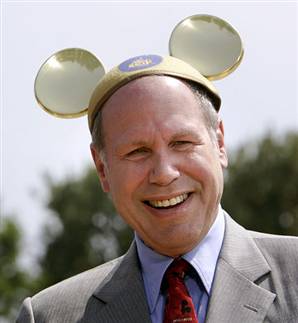
March 7, 1942 – Former CEO of The Walt Disney Company Michael Eisner is Born

Michael Eisner

“Success is not a formula, but is based on everything else – the creativity, the right people, the right team.”

On March 7, 1942, Michael Dammann Eisner was born in Mount Kisco, New York. Growing up on Park Avenue, Eisner attended the Allen-Stevenson School through ninth grade, followed by the Lawrenceville School through 12th grade. He graduated from Denison University in 1964 with a B.A. in English. After graduation, Eisner briefly worked for NBC and CBS before being brought on at ABC as Assistant to the National Programming Director. He quickly rose through the company, becoming the Senior Vice President for Programming and Development. Barry Diller, who had hired Eisner at ABC, brought Eisner with him to Paramount Pictures and made him President and CEO. Under his leadership, Paramount had a string of successful films, beginning with Saturday Night Fever and including Raiders of the Lost Ark and Grease. After being passed over for the top position when Diller stepped down, Eisner went looking for other opportunities. At this time, Disney was going through some troubles with hostile takeovers, and Roy E. Disney decided to bring Eisner and Frank Wells in as CEO and President, respectfully. Under their tenure, Disney managed to go through a Renaissance period, beginning with the success of The Little Mermaid, along with the acquisition of ABC and ESPN. Eisner continued to grow the Disney Parks stateside, and contributed to the building of what is now known as Disneyland Paris. After Wells’ sudden death in a helicopter crash, Eisner shook up the posts at the studio, with Katzenberg resigning and being replaced with Michael Ovitz. Tension grew between Roy E. Disney and Eisner, and in 2005, Eisner stepped down from his role as CEO and board member, leaving Disney completely. After Disney, Eisner formed The Tornante Company, which acquires and invests in media and entertainment companies.