RSS Feed

Tag Archives: Special

April 3

April 3, 1946 – The Education Short Film Planning for Good Eating is Delivered to the Coordinator of Inter-American Affairs
vlcsnap-2014-04-03-07h26m03s217

“Yes, it’s this same plan, a plan of eating the three necessary types of food that keeps our friends in fine health.”

On April 3, 1946, the educational short film Planning for Good Eating was delivered to the Coordinator of Inter-American Affairs. During wartime, the Disney Studios kept itself afloat by producing several educational and training shorts for various government offices; Disney kept up the practice after the war was over, which included several shorts featuring the likes of Donald Duck and Goofy.

The short begins with the narrator explaining the diet of several different animals, stating that their one source of food works well for them. He then introduces Careless Charlie and his family, who try to survive on one source of food. He notes their rundown condition, as they don’t seem to realize that man needs more than just beans and cornbread. Corn and beans are the same type of food, and the family is missing out on animal products, as well as fruits and vegetables. Each builds one of the three main needs of a human’s body: muscles, bones, and energy; a combination of the three builds resistance against disease. The narrator tells Charlie that he needs to eat the correct foods, and he is able to grow these foods in his own yard. His family helps him to provide the foods he needs. The family then sits down to a wonderful stew with all three types of foods, with the family looking much healthier and happier. Careless Charlie is then renamed Careful Charlie. Mrs. Charlie is then given a special shout-out, as she works to include all three types of foods into every meal she cooks. The narrator then provides a list of foods that are part of the individual food groups. He stresses the importance of eating fruits and vegetables, especially for growing children. Charlie is rewarded for his hard work, and a combination of all three protects his family from disease and granting them good health.
March 16

March 16, 1961 – The Special Short Film The Saga of Windwagon Smith is Released to Theaters

vlcsnap-2014-03-15-09h04m17s84

“The prairie is just like the ocean, only greener and drier, you see, and the billowing waves of buffalo grass make sailing quite easy to be.”

On March 16, 1961, the special short film The Saga of Windwagon Smith was released to theaters. The short was released near the end of the golden age of Disney short films, and at a time where the art was becoming more experimental. Jasper and Horace from One Hundred and One Dalmatians make a cameo appearance in this short. The short itself was directed by Charles Nichols, with story by Nichols and Lance Nolley. It features the voices of Rex Allen and the Sons of the Pioneers.

The story takes place in Westport, located at the start of both the Oregon and Santa Fe Trails. Most of the town is seen sleeping in the Kansas sun, but they are startled awake by a strange cloud running down Main Street. They hear a strange voice bellowing from the cloud, and as an anchor is tied to a hitching post, the town sees a covered wagon with a deck and a mast with a tiller attached to it. The man inside steps down and greets the town, and when asked by Mayor Crum where he is from, the man explains his name is Captain Smith. He had sailed the seven seas, he continues, and wishes to sail the prairies.  The town assumes that, as he has no oxen to pull his wagon, the wind must make it move, and Smith tells them that this is the case before hurrying into the nearest saloon for a bite to eat. When he takes a look at the waitress in the bar, the mayor’s daughter Molly, it’s love at first sight for Smith. Molly has also fallen for Smith, but her father soon sends her away so he and Smith can talk business.

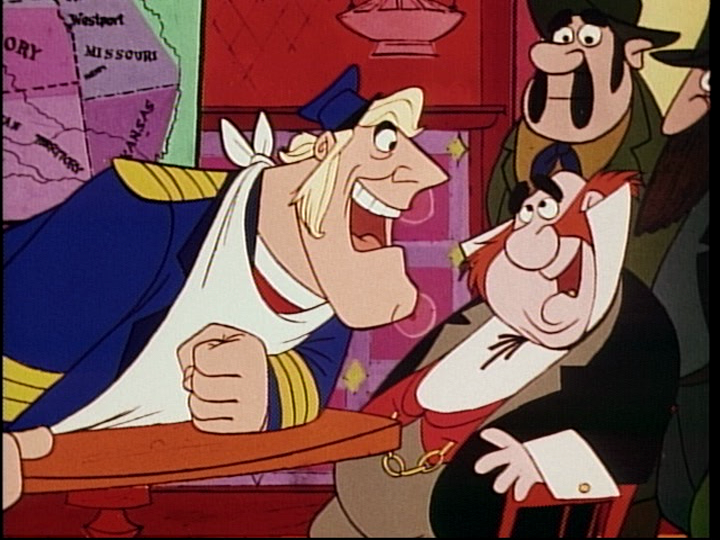
Smith and the mayor talk business about the windwagon, with the mayor wondering if it can hold cargo

Smith and the mayor talk business about the windwagon, with the mayor wondering if it can hold cargo

The mayor asks if Smith’s windwagon will haul freight, and Smith confirms this, as the hull can hold a full cargo. He then makes the grand claim that he can sail from Kansas to Santa Fe in only two weeks, as opposed to the two months it would take a regular covered wagon with oxen. The accountant of the town figures this would be a quarter of the time, with four times the profit. The town gets excited about the financial prospects of windwagon use, and decide to build a super windwagon with Smith’s help, creating a new company called The Prairie Clipper Company. Building soon begins, and every night after work, Smith and Molly meet on the unfinished deck to continue their romance. The mayor is furious at Molly’s romance with Smith, and warns her to stay away.

The day the windwagon is finished, everyone comes out to admire it before the roll it to the edge of town. Molly christens the ship, and everyone gets on inside, except for Molly, who is told by her father that this cruise was for men only. Smith climbs on board and gets ready to set sail. The windwagon heads off on the Santa Fe Trail, and the men inside start getting seasick. The men demand to be let out, and Smith begins to take them back to town, when the wheel gets stuck. As the windwagon passes town, the men jump out as fast as they can, leaving Smith all alone. As he vows to go down with the ship, he is surprised to find Molly on the deck. She had stowed herself away on the ship, and as a hurricane fast approaches the ship, Smith tries to convince her to leave, but she wishes to stay with him. The windwagon is swallowed by the hurricane, and after Smith fixes the tiller, the two sail on top of the hurricane, heading west, and the two are never heard from again. Legend has it when the sunset turns gold, you can see the wagon in the sky, with Smith steering the wagon with Molly by his side.

January 4

January 4, 1943 – The Educational Propaganda Short Film The Grain That Built a Hemisphere is Delivered

vlcsnap-2014-01-04-16h01m49s225

“Corn is the symbol of a spirit that links the Americas in a common bond of union and solidarity.”

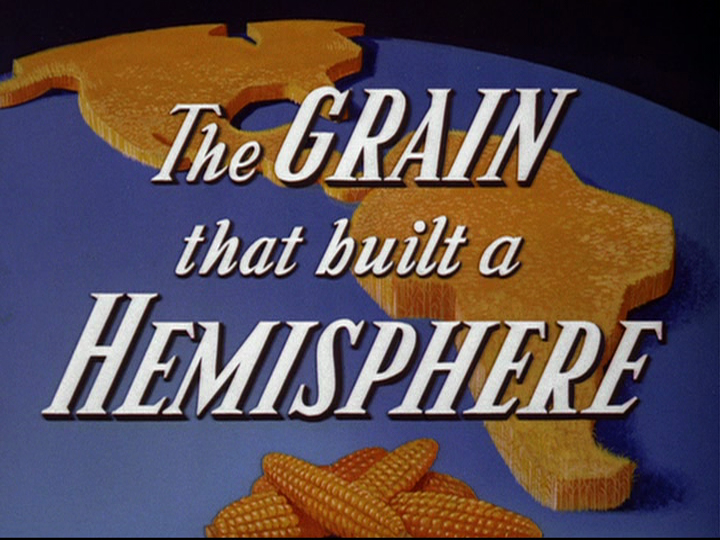
On January 4, 1943, the educational short film The Grain That Built a Hemisphere was delivered to the Coordinator of Inter-American Affairs. It was nominated for an Academy Award for Best Documentary in 1943, but lost to The Battle of Midway, Kokoda Front Line!, Moscow Strikes Back, and Prelude to War. This short also includes a short segment from the 1938 Silly Symphony Farmyard Symphony. The short was directed by Bill Roberts.

The short begins with an explanation of corn, and how it possibly came to be. The earliest version of corn grew on the mountains centuries ago, but was not noticed by hunters as they searched for food. When hunters were unable to find game, they were able to find corn and use it for food; this discovery is then credited as helping begin the civilization of the Americas. The narrator then directs the attention to the Mayan civilization, which was built around the growth and worship of corn, with great temples built in dedication to the corn gods, including Yum Kaax. The Aztecs also built a civilization based on corn, with their corn goddess named Centeotl. The Incas, located in the Andes, worshipped a sun god, who provided them with all they needed to grow their corn. The crop of corn spread around South America and all the way to Canada; it was also sent over the world through the conquistadors and spread from there.

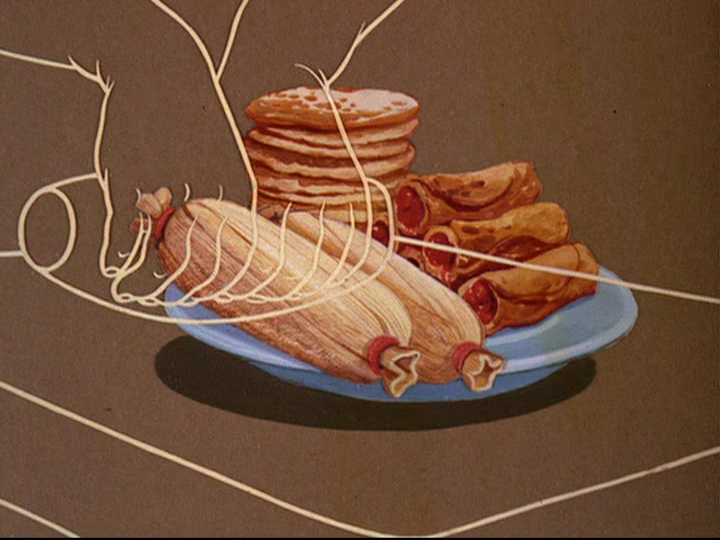
A list of foods made from corn is shown through animation

A list of foods made from corn is shown through animation

The narrator lists the various foods made from corn, including tortillas, succotash, and bourbon. Brought to present day, where it is explained that, thanks to advances in machinery, we can harvest enough corn in fifteen hours, compared to the 500 the Mayans needed. The next topic is how to inbreed corn, and the entire process is explained step by step. It produces small versions of the corn plant, but once two small unrelated inbred plants are cross-bred, that produces a stronger, larger stalk with more ears. Seventy-five percent of all corn produced in the United States goes to feed for livestock, with hogs eating the most of that percentage. After this, a scientific study of corn is presented, with an explanation of how the two parts of the corn kernel (the endosperm and the germ) are used to create oils and starches, which have a variety of uses. A hypothesis of how corn can be used to help the war effort is also presented, with the idea that corn can be used to create tough plastics, powerful fuels and explosives, tires, parachute fabrics, and more.

December 19

December 19, 1962 – The Special Short Film A Symposium on Popular Songs is Released to Theaters

vlcsnap-2013-12-19-19h50m01s221

“Come in and sit down and I’m going to play for you several hundred of the latest hit songs of the past 60 years, which, naturally, I wrote myself.”

On December 19, 1962, the special short film A Symposium on Popular Songs was released to theaters. The short is a mix of traditional animation and stop motion animation, relaying the history of popular music within the 20th century. The short was nominated for an Academy Award for Best Animated Short Film, but lost to The Hole by Storyboard Inc. and Brandon Films. The short was directed by Bill Justice, with story by Xavier Atencio. It stars the vocal talents of Paul Frees, Gloria Wood, Billy Storm, and Skip Farrell. The songs within the short were written by the Sherman Brothers, with musical arraignment by Camarata.

The short takes place inside Ludwig von Drake’s stately mansion, where he greets the audience at the door and brings them inside to talk about popular music. He begins with his life story at the beginning of the turn of the century where, inspired by his poverty and his ragged clothing, he created ragtime music. He then plays his hit song, “The Rutabaga Rag,” with some accompanying stop-motion animation of vegetables dancing. After this, he moves to the Roaring Twenties, where he was asked to come up with a new style of popular music to put Dixie on the map. He does so with the song “Charleston Charlie,” an allusion to popular ’20s singer Helen Kane.

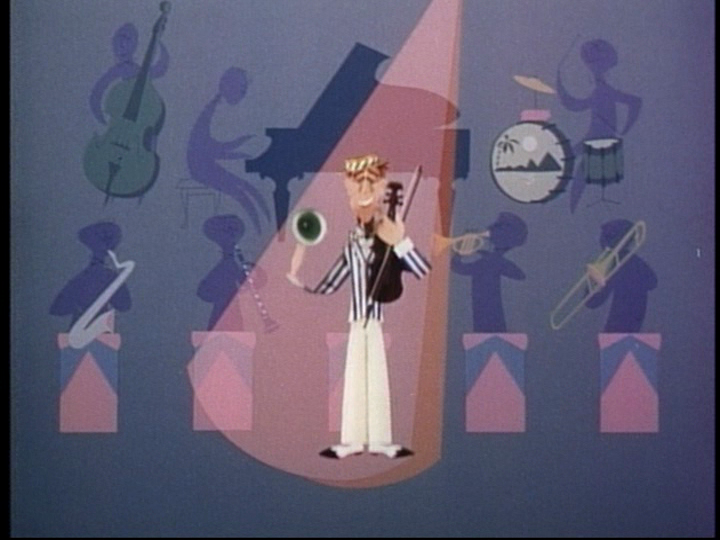
Ludwig moves to the Great Depression era of songs, and turns to a picture of a signer with a backing band

Ludwig moves to the Great Depression era of songs, and turns to a picture of a signer with a backing band

Moving to the Great Depression era, Ludwig has a bit of a panic when he talks about how he lost his money in the stock market. He bought a piano with his last nickel, and wrote the song “Although I Dropped $100,000.” The song parodies the popular songs of the time period, including “Let a Smile Be Your Umbrella” and “Stormy Weather.” Ludwig explains after this that he invented the microphone, and by doing so, invented the idea of a crooner. He wrote the love ballad “I’m Blue for You, Boo-Boo-Boo-Boo-Boo,” which has the singer imitating the crooning style of Bing Crosby. After this, Ludwig moved on to the style of Boogie Woogie, with three singers singing “The Boogie Woogie Bakery Man” which is allusion to the swing style, particularly the songs of the Andrews Sisters.

Ludwig then turns on the television to his favorite music show, The Von Drake Hour, which plays many of his hit songs. The song that starts to play is “Puppy Love is Here to Stay,” which is the beginning of the “modern era” of music (modern for the time the short was released). Soon, Ludwig turns off thetelevision and takes the audience into his hi-fi studio to play his final song, “Rock, Rumble, and Roar” which pays homage to the early rock and roll era in popular music. He forgot the record, and decides to play the song himself, which is segmented with snippets of all the earlier songs. The short ends with the house shaking and rocking along with the raucous music Ludwig is playing.

November 18

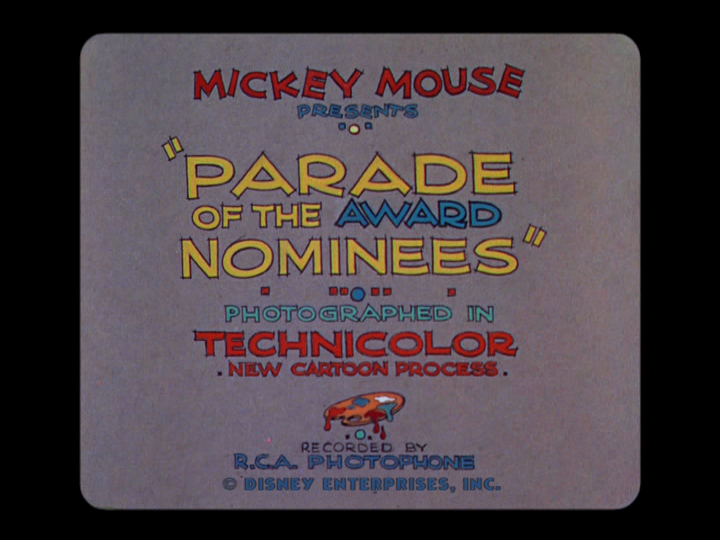
November 18, 1932 – The Short Film Parade of the Award Nominees Premieres at the Academy Awards

vlcsnap-2013-11-18-20h34m39s52

On November 18, 1932, the special short film Parade of the Award Nominees premiered at the 5th Academy Awards, held at the Ambassador Hotel in Los Angeles, California. This ceremony also introduced short films within the Oscar categories, with Disney’s Flowers and Trees winning the first Academy Award for Best Animated Short Film and being the first color winner. Parade of the Award Nominees was created specifically for the banquet, and the first short that showed Mickey Mouse in color. Pluto is also shown in color, but is a grey-ish brown rather than his standard yellow. Disney Legend Joe Grant was hired by the studio to create the caricatures of the actors for the short, and would remain at Disney for over 70 years.

Mickey is seen in a bandleader’s uniform, leading a parade which begins with Minnie holding a sing that says “Parade of the Award Nominees.” After three trumpeting pigs and a percussion set march by, a carpet is rolled out, with Clarabelle Cow throwing flowers on the ground for the actors to walk on. The first actor is Wallace Beery, for his role in The Champ, with costar Jackie Cooper. Following the two is Lynn Fontanne and Alfred Lunt for their roles in The Guardsman, and Helen Hayes for The Sin of Madelon Claudet. Next is Fredric March, who transforms to a hideous monster, as he represents his role as the titular Dr. Jekyll and Mr. Hyde. Last but not least is Marie Dressler for her role in Emma, who is followed by Pluto, who has “The End” on a flag tied to his tail.

September 15

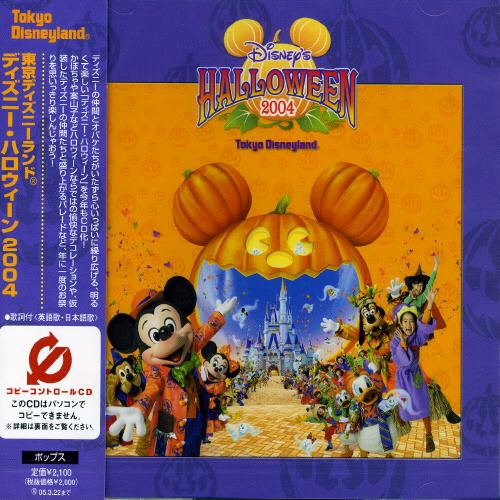
September 15, 2004 – Tokyo Disneyland’s Disney’s Halloween Event Begins

TDL_halloween

“This is Halloween, this is Halloween!”

On September 15, 2004, Tokyo Disneyland’s two-month Halloween event Disney’s Halloween began. The festivities helped to give the American holiday more popularity in Japan; celebrations of Halloween in Tokyo Disneyland actually began six years prior. Disney’s Halloween incorporated the Haunted Mansion Holiday Nightmare that was popular in the Disneyland resort, and added a special Halloween parade, decorations, and special merchandise to make the event more palatable to the Japanese. Thanks to an addition of trick-or-treating, guests were able to come in various elaborate costumes of their favorite Disney character, although guests had to wear a sticker that identified them as a guest. The event was a huge success, and has led the way to more elaborate events in Tokyo Disneyland.

September 11

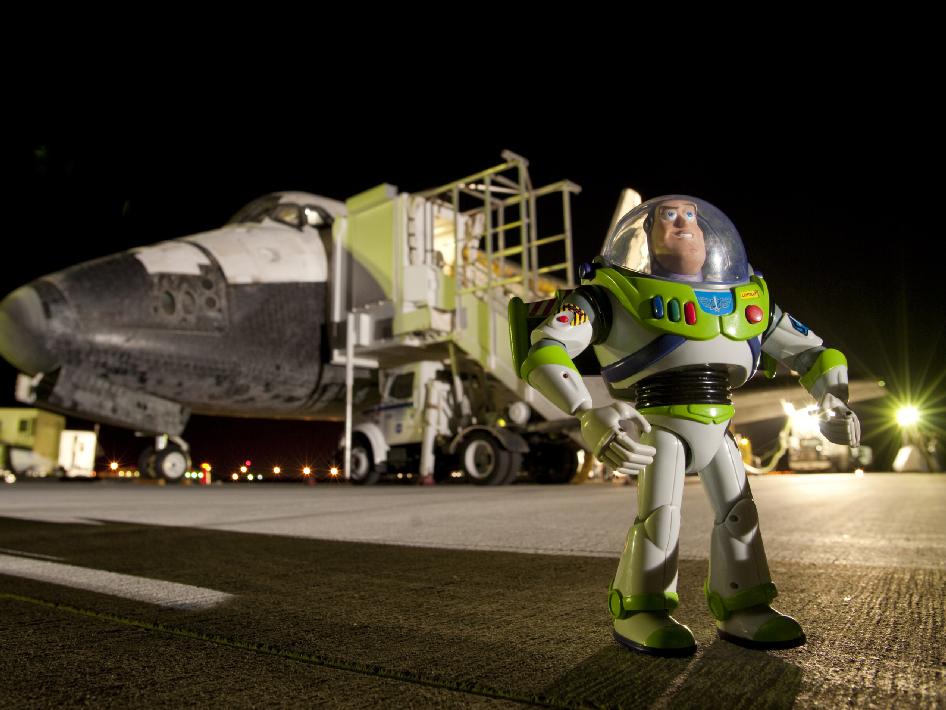
September 11, 2009 – Buzz Lightyear Returns to Earth on the Space Shuttle Discovery

Buzz

“Disney-Pixar Buzz Lightyear space ranger action figure disembarks from Space Shuttle Discovery following its landing at Edwards Air Force Base.”

On September 11, 2009, the Space Shuttle Discovery returned to Earth after 15 months in space on its STS-128 mission. On board was a 12-inch figure of Pixar’s Buzz Lightyear, as part of an educational and public outreach program partnership between Disney and NASA. During the time on the station, the figure was the star of several education videos posted on the NASA website; after the landing, Disney and NASA continued this partnership by creating an online game and a contest to create a patch. The figure, and Discovery, landed at Andrews Air Force Base; the figure was then treated to a ticker-tape parade at Walt Disney World.

August 28

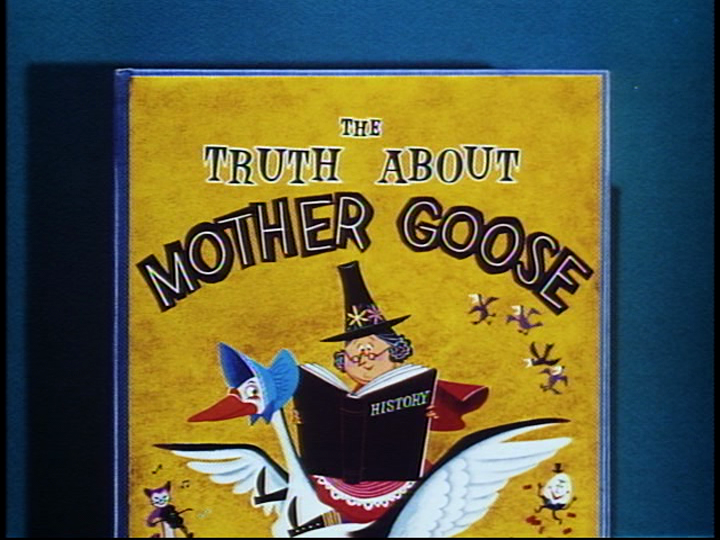
August 28, 1957 – The Special Short Film The Truth About Mother Goose is Released to Theaters

vlcsnap-2013-08-28-10h26m10s24

“What’s the truth about Mother Goose? Let’s clear up all the mystery. Her nursery rhymes from olden times are really part of history.”

On August 28, 1957, the special short film The Truth About Mother Goose was released to theaters. It was nominated for an Academy Award, but lost to Warner Brothers’ Birds Anonymous. It was directed by Woolie Reitherman and Bill Justice, with story by Bill Peet.

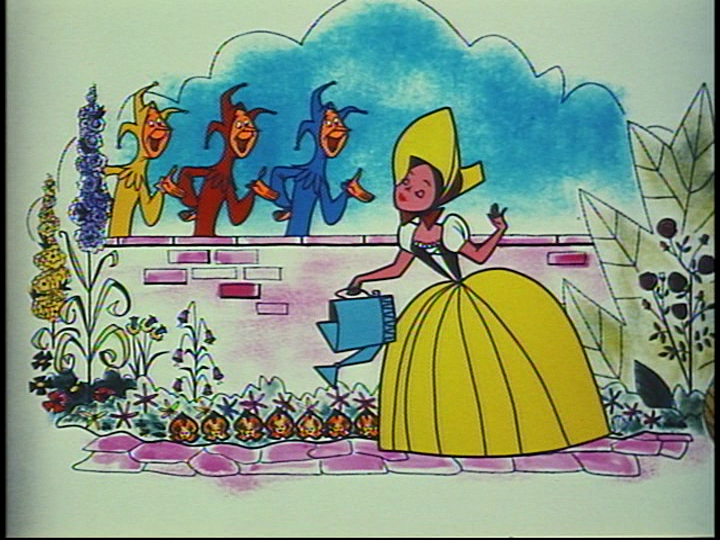
The short is narrated by three jesters and a voice-over narrator, with the jester singing their intention to give the history behind three popular nursery rhymes. They first begin with Little Jack Horner, which actually goes back to 16th century London. The real Jack Horner was the assistant to a city official, who was to deliver a Christmas present to Henry VIII. In this time period, in was a common practice to bake presents of great value into a pie. Knowing this, Jack pulled out from the pie a “plum,” which was a deed to a valuable estate. When Henry VIII found there was no gift, the city official was punished, and Jack ended up living in his stolen estate, although he may have been haunted by a popular rhyme that was gaining ground in London.

The jesters recite "Mary Mary Quite Contrary" before getting into the history of the rhyme

The jesters recite “Mary Mary Quite Contrary” before getting into the history of the rhyme

The next rhyme, Mary Mary Quite Contrary, is actually about the life of Mary Stuart, also known as Mary, Queen of Scots. She came from France to take over the Scottish throne, which was frowned upon by the Scottish court. The “silver bells” refer to Mary’s elaborately decorated attire, the “cockle shells” were a reference to her love of exotic foods, and the “pretty maids all in a row” were Mary’s ladies in waiting. The narrator then tells the tragic tale of Mary, who married Lord Darnley four years after her arrival in Scotland. Her marriage was unhappy, and when Mary found other lovers in a French poet and a court musician, these men were dispatched. She fell in love with the Earl of Bothwell, and after Darnley’s murder, she and the Earl were married. The Scottish people, outraged at Mary’s behavior, forced her to abdicate the throne, and imprisoned her in Lochleven. After a few months, the jailer’s son helped Mary to escape, and she organized an army to gain back the throne in Scotland, but was defeated. She then fled to England to seek refuge with her cousin, Queen Elizabeth I. Elizabeth soon became jealous of Mary, and was accused of being a traitor to the government. She was then executed, “quite contrary” until the end.

The last nursery rhyme discussed is London Bridge is Falling Down. Old London Bridge was built in 1176 to unite the two parts of London. It was finished in 1209, and a chapel was built over the central pier to sanctify it. Several beautiful buildings were also built on the bridge, and it was named a wonder of the world. Merchants would sell their wares on the lower floors of buildings on the bridge, with the upper stories of the buildings being sold as apartments. Celebrations of great moments in British history were also done on the bridge. Living on the bridge could also be hazardous, with the greatest hazard being fire; the worst fire was the Great Fire of London in 1666, when it broke out from the King’s bakery in Pudding Lane. The bridge would soon be rebuilt, but it never would return to its former glory. Its foundations were breaking from water and fire damage, and it was soon declared a public nuisance, ridiculed in rhyme. The bridge was given the declaration to be demolished on July 4, 1823. A new London Bridge would be built, which still stands today.

August 21

August 21, 2010 – The Disney Television Special Prep & Landing Wins Four Emmy Awards

P&LEmmy4

“Disney’s Prep & Landing was animation’s big winner at Saturday’s Creative Arts Emmys.”

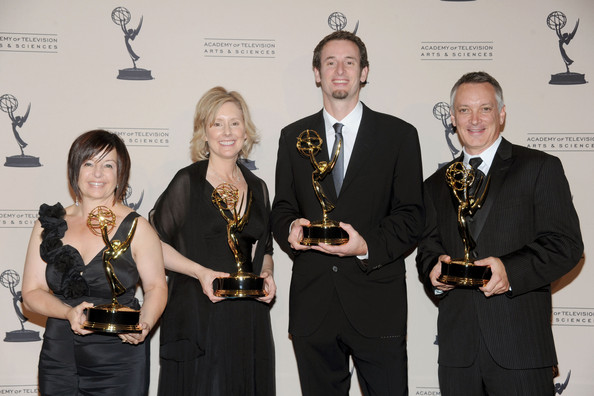
On August 21, 2010, the Creative Arts Emmy Awards were held at the Nokia Theatre in Los Angeles, California. That night, the Disney television special Prep & Landing won four Emmy awards, including Outstanding Animated Program; three Emmys were awarded for Outstanding Individual Achievements in Animation, for background key designer William M. George III, art director Andy Harkness, and storyboard artist Joe Mateo. The success of this special, including the awards won, led to a sequel in 2011, followed by another special planned for the future.

July 19

July 19, 1957 – The Special Short Film The Story of Anyburg, U.S.A is Released to Theaters

vlcsnap-2013-07-19-16h23m49s248

“This is the story of a certain city, and what it did about this common curse that plagued the land.”

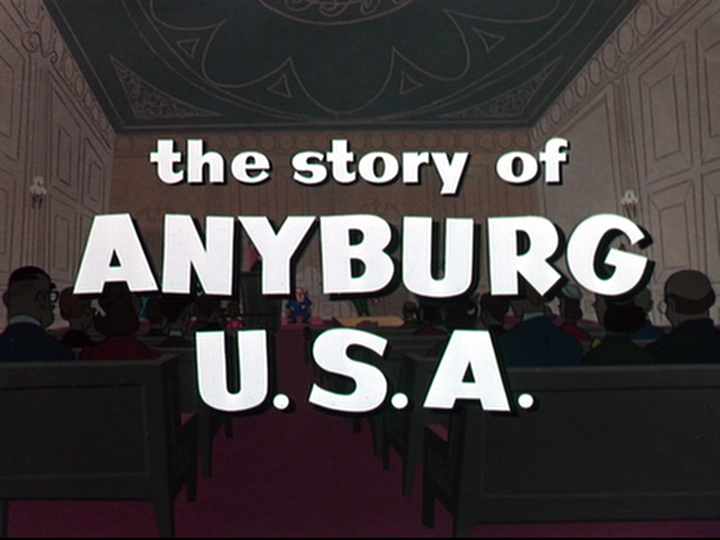
On July 19, 1957, the special short film The Story of Anyburg U.S.A. was released to theaters. It was directed by Clyde Geronimi, with story by Dick Huemer. The short stars the voices of Hans Conried, Thurl Ravenscroft, and Bill Thompson.

The narrator takes the audience to Anyburg, U.S.A, where the traffic situation, he explains, is normal enough. However, a feeling of dissatisfaction was growing among residents when it came to their traffic troubles. The residents decide to take their blame to court, and charge the automobile for the traffic crimes. An automobile witness starts to shake when the prosecution starts grilling it, and the judge tries to hurry things along, as his golf clubs are seen hiding under his chair. The first car is blamed for speeding into a restaurant and destroying the place, and surprisingly, the defense has no questions. The next witness is a sports car, blamed for guzzling gas and burning rubber on the road. Once again, the defense has no questions.

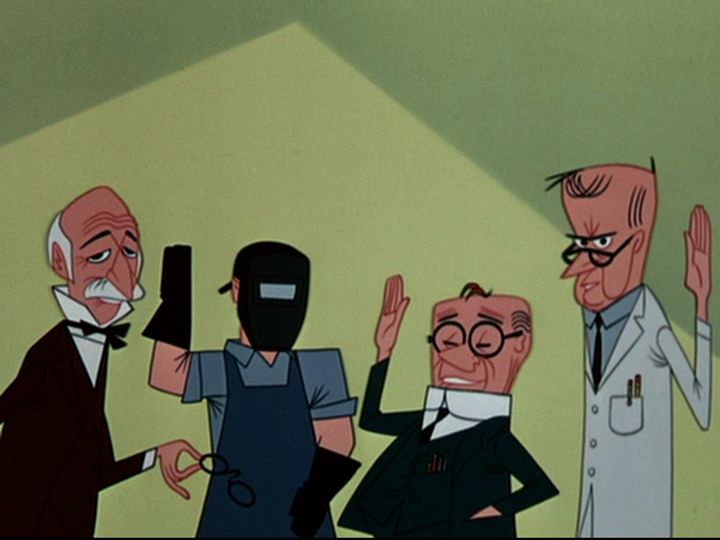
The safety experts vow that  they have made several safety modifications to the automobile, but to no avail

The safety experts vow that they have made several safety modifications to the automobile, but to no avail

A dilapidated old car is called next, and brought to tears by the prosecution, although the defense again has no questions. The men who build safe car parts (safety glass, safety tires, etc.) then testify, stating that although they have built such devices, accidents continue to occur at an alarming rate. The jury is then convinced that the automobile has to go. Next on the stand is Mr. Sirus P. Sliderule from the Bureau of Highways, who starts to cry once he talks about how, although he leveled hills, put up signs, and painted lines, the automobile made his beautiful highway a complete mess. The prosecution rests his case, and the defense finally speaks. He shows the audience footage of a speeding car, but proves that the man is the real culprit behind the accidents and problems on the road. He gets the judge to dismiss the case, and the people finally admit their guilt, vowing to drive with decency and courtesy – although this only lasts about two seconds.