RSS Feed

Tag Archives: Short film

August 4

August 4, 1941 – A Letter of Agreement is Signed Between Disney and the National Film Board of Canada
Disney+WWII

“I am convinced that certainly, in the technical film, the animated way is the best from the teacher’s point of view.” – John Grierson, Head of the National Film Board of Canada

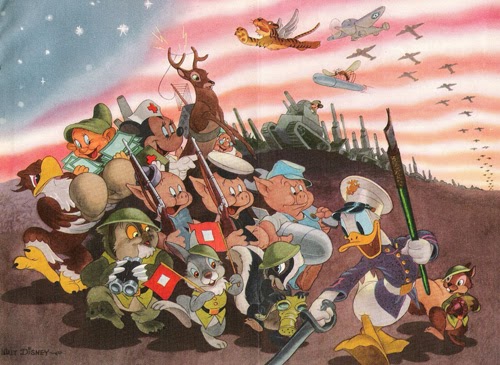
On August 4, 1941, a Letter of Agreement between Walt Disney Studios and the National Film Board of Canada was signed. Walt had met with John Grierson, the head of the board, who had realized that there were several limitations in creating technical training films with live-action. Grierson was impressed with the work that the studio had done for Lockheed Martin, which was the short training film Four Methods of Flush Riveting. The studio was hired to make four animated short films to sell war bonds, with the studio reusing animation to meet tight deadlines. The four shorts included The Thrifty Pig, 7 Wise Dwarfs, Donald’s Decision, and All Together. Also included in the agreement was a training film called Stop That Tank!, which taught Canadian soldiers how to use an antitank rifle. Disney Animators were also called on for promotional material, including the design of the cover of a war savings stamp folder.
July 29

July 29, 1938 – The Donald and Goofy Short Film The Fox Hunt is Released to Theaters

vlcsnap-2015-07-29-13h42m52s232

“Come on out, you big palooka, or I’ll come in after you! What kind of a fox hunt do you think this is?”

On July 29, 1938, the Donald Duck and Goofy short film The Fox Hunt premiered in theaters. It was directed by Ben Sharpsteen, and was the second short in the series starring both characters. The short also features cameos by Mickey, Minnie, Horace Horsecollar, and Clara Cluck.

Early in the morning, the riders head off on their fox hunt, with Donald holding the leashes of the bloodhounds and struggling with keeping them in line. Meanwhile, Goofy is gaily riding his horse until he runs into a tree, finding the fox hiding inside. He alerts Donald, and the chase is on, with the bloodhounds dragging Donald with them helplessly. Donald is thrown from their leashes when he is rammed into a tree, and is trampled by the rest of the riders. Goofy has his own problems when it is revealed that his horse is afraid to jump. Goofy decides to teach his horse how to jump, and is successful, with the horse landing on Goofy’s head. The two start splashing around in the pond on the other side of the hedge. Donald decides to chase after the fox on foot, and corners him into a hole. The fox manages to sneak away and bring Donald into a teasing game of hide and seek. Donald places a large boulder over one of the holes in the ground and blows his trumpet into the other one, thinking it will blow the fox out, but manages to send the boulder flying into the air and landing on Donald’s head. After using a rather ginormous puff of air, Donald is able to push the fox out from underground, and grabs it by the tail. The fox pulls Donald into a log, and Donald announces that he has caught the fox – only to find that in the scuffle, he has a skunk instead. Donald flees as fast as his legs will carry him before he gets sprayed by the miffed skunk.

July 28

July 28, 1987 – The Special Computer-Animated Short Film Oilspot and Lipstick is Released at SIGGRAPH

O&L

On July 28, 1987, the special short film Oilspot and Lipstick was released at the Special Interest Group on Graphics and Interactive Techniques conference, known as SIGGRAPH. The film was one of Disney’s earliest attempts at computer animation. It featured two dogs made out of junkyard parts, with a junkyard monster threatening the life of the female, Lipstick; she is rescued by the male dog, Oilspot.

July 25

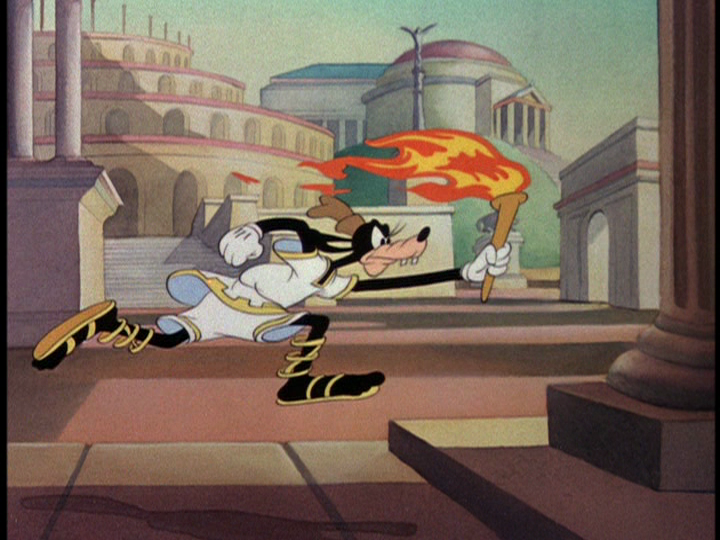
July 25, 1976 – The Television Special Superstar Goofy Premieres

vlcsnap-2015-07-25-20h08m29s116

“Two thousand, seven hundred and sixteen years ago, within the shadow of beautiful Mount Olympus in the land of ancient Greece, was born an institution known as the Olympic Games.”

On July 25, 1976, to coincide with the Olympic Games, the special Superstar Goofy premiered on NBC’s The Wonderful World of Disney. The special was a compliation of several Goofy short films, particularly from the “How To” series, including The Art of Skiing, How to Swim, and How to Play Golf. The special was also shown internationally, known as Dingo et Donald Champions Olympiques in France.

July 18

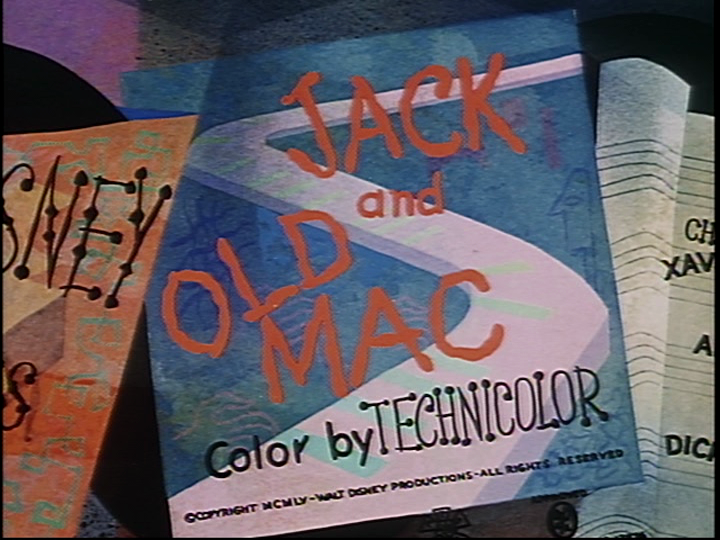
July 18, 1956 – The Special Short Film Jack and Old Mac is Released to Theaters

vlcsnap-2015-07-18-19h20m25s79

“Go Mac, go Mac, go…run to the barnyard, join the fun…”

On July 18, 1956, the special short film Jack and Old Mac was released to theaters. It was directed by Bill Justice, with story by Dick Kinney and Roy Williams.

The first record, “The House that Jack Built,” takes specific words from the popular rhyme and turns them into drawings. This is then followed by an updated version of “Old McDonald Had a Farm,” turning into “Old McDonald Had a Band.” Old Mac plays the piano, while his wife chops firewood. The members of the farm accompany Old Mac, singing of the pig that plays the saxophone, the dog that plays the bass, the cow that plays the horn, and the horse that plays the drums. Old Mac then gets chickens to play the piano for him while everyone dances in the barnyard. Finally, Old Mac’s wife, having had enough of chopping firewood while her husband plays the piano, stops the party by hitting him over the head with a rolling pin.

July 16

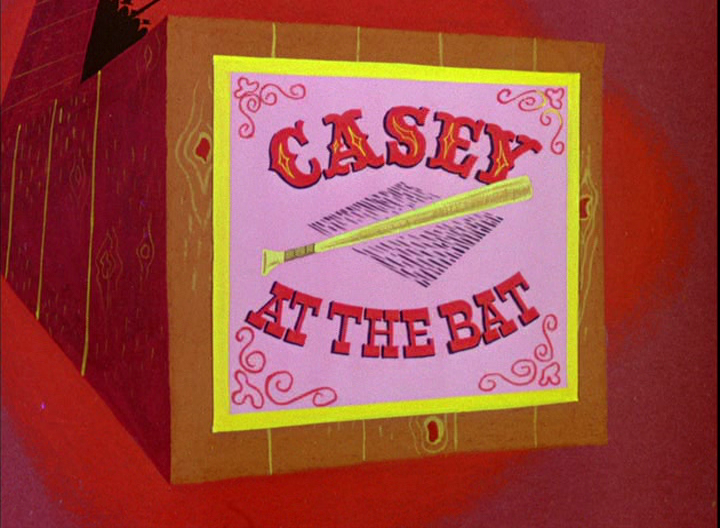
July 16, 1954 – The Special Short Film Casey at the Bat is Released to Theaters

vlcsnap-2015-07-16-18h46m23s118

“Casey’s the guy with his eye on the ball, but mostly the ladies. Casey’s the guy who’s the idol of all – but mostly the ladies.”

On July 16, 1954, the segment turned short film Casey at the Bat was released to theaters. Originally based on the poem by Ernest Thayer, the short was a segment in the animated package feature film Make Mine Music. It was narrated by Jerry Colona.

The time is 102, and everyone is heading to the ball game to see the game between Mudville and Burbank, particularly Casey, “the pride of them all.” The game doesn’t look good for Mudville, as they are losing by two. Each batter before Casey is bumbling, but they somehow manage to load the bases just as Casey gets up to bat to bring them home. Although distracted by the ladies, Casey leaves the crowd to once again be the hero, full of swagger and bravado. The pitcher is afraid to throw the ball, sweating profusely. When the ball arrives, Casey refuses to swing, and the crowd argues with the umpire’s call of a strike. Casey is able to calm the crowd down, and waits for his new pitch, though he ignores it again, resulting in another strike. Finally, the ball comes for a third time. Unfortunately, there is no joy in Mudville, as Casey struck out, and is left crying in the rain, trying once again to hit the ball, but has seemingly lost his ability.

July 15

July 15, 1955 – The Special Short Film The Flying Gauchito is Released to Theaters

vlcsnap-2015-07-15-19h24m36s67

“It’s a tale told by an old gaucho from Uruguay.”

On July 15, 1955, the segment turned short film The Flying Gauchito was released to theaters. It was originally a segment of the animated feature film The Three Caballeros.

The short begins in Uruguay, where a little bird came out of his nest early in the morning to see a little gauchito sneak out to go hunting. The gauchito heads up the mountain range to hunt a condor, and spots a large bird in a nest, only to find that it was actually a flying donkey. The donkey spots the gauchito and steals his hat, and the gauchito works quickly to capture him. The gauchito sets to work training the donkey before setting off to the race at the fiesta the next day. With a grand prize of 1,000 pesos, the two plan on winning the race, although they are laughed at by the crowd. The race doesn’t begin very well, with the crowd laughing at the donkey’s slow pace. Finally, gauchito reveals the donkey’s wings, and the two fly down the track as fast as can be, winning the pesos. Unfortunately, the ruse is up when the donkey flies up into the air, taking the gauchito far away with him.

July 9

Posted on

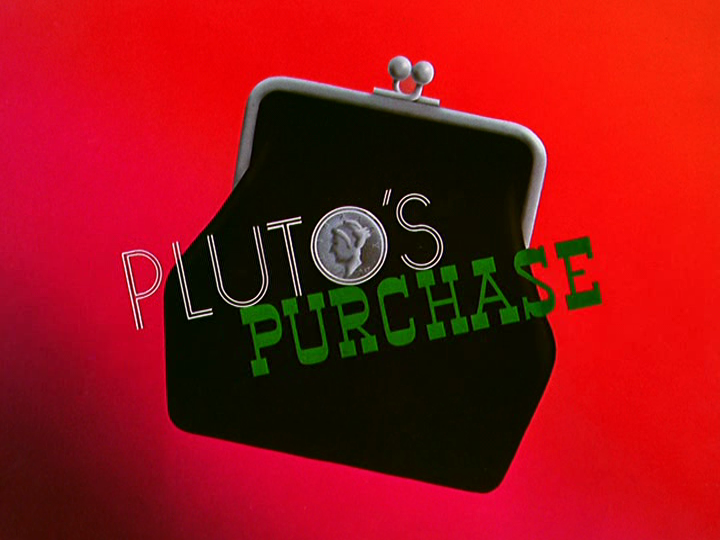
July 9, 1948 – The Pluto Short Film Pluto’s Purchase is Released to Theaters

vlcsnap-2015-07-09-16h57m38s214

“Now, here’s the money, and hurry home!”

On July 9, 1948, the Pluto short film Pluto’s Purchase was released to theaters. It was directed by Charles Nichols, with story by Eric Gurney and Bill de la Torre.

Pluto is snoring in the living room, when Mickey calls out for him. Mickey has a job for Pluto: to go to the butcher shop. Pluto excitedly sets off on his task, passing by enemy Butch on the way. When Butch sees where Pluto is going, he follows him, and makes sure that Pluto purchases the biggest sausage. He then slinks back to his fence, where he waits to trip Pluto up and steal the sausage. Unfortunately, Pluto just walks over Butch’s paw. He continues to try and snatch the sausage from Pluto, but Pluto unknowingly outwits him. Butch then attempts to use fleas to distract Pluto from his task, and Butch replaces the sausage with an iron block. Pluto finally spots Butch with the sausage, and attempts to take it back. A battle of strength and wits begins between the two, but Pluto manages to grab the sausage and make a break for it and trap Butch in the sewer. Butch manages to make his way out and chases Pluto across town, ending back at Mickey’s house. Mickey then tells Pluto that it’s a birthday present for a friend of his, which to Pluto means his sweetheart, Dinah. Unfortunately for Pluto, the “friend” Mickey means is Butch, who heads home with the sausage happily while Pluto sulks.

July 1

Posted on

July 1, 1924 – The Alice Comedy Alice and the Dog Catcher is Released to Theaters

AatD

“So we must set those poor dogs free.”

On July 1, 1924, the Alice Comedy Alice and the Dog Catcher was released to theaters. It was directed by Walt Disney, and starred Virginia Davis as Alice.

The short begins with a meeting of a secret society, where Alice is the leader. The meeting is interrupted by a latecomer, who warns them of the city dogcatcher rounding up all the strays in the neighborhood. Alice then thinks about her own dog being turned into sausages and starts to cry. Resolved to protect the dogs, she orders the society to sit down as she tells them of her dream. The scene then moves to the cartoon land, where all the dogs are following the dogcatcher as he tricks them with music. The dogcatcher catches all but one, but the dogcatcher finally triumphs and heads off with the dogs. Alice is distraught as she tells her tale, and the boys in the society also cry at the news. She continues with her story, where she comes across parents of the pups, who are beside themselves with worry. Alice heads straight for the pound, where she is sent away immediately. Alice hears the dogs cry for help, and grabs a nearby bomb to blow up the pound, setting all the dogs free. The society then decides to go and rescue all the dogs, much to the annoyance of the dogcatchers. They then drive off with the dogcatcher’s wagon, nearly crashing several times. In the end, the dogcatchers chase after their own car after Alice and her friends jump out, and the society is proud of what they have done to save the dogs of the neighborhood.

June 30

June 30, 1950 – The Goofy Short Film Motor Mania is Released to Theaters

vlcsnap-2015-06-30-21h37m18s29

“Truly, the average man is a creature of strange and unorthodox habits.”

On June 30, 1950, the Goofy short film Motor Mania was released to theaters. Since its release, it has become a favorite of many a driver’s education course. The short was directed by Jack Kinney, with story by Dick Kinney and Milt Schaffer.

The short begins with a look of the average man, namely the specific average man named Mr. Walker. Walker is considered a kind, considerate man, until he gets behind the wheel of his automobile, where he becomes Mr. Wheeler instead. This Jekyll and Hyde story shows how an average man becomes a monster while driving on the highway. Wheeler holds up traffic while enjoying the sunshine, and throws a tantrum when he sits at the signal. He then competes in a road race, but ends up crashing his car into a stoplight. Wheeler continues to be a public menace, with more misfortune befalling him. When Wheeler turns back into Walker and becomes a pedestrian, he finds that many people treat him with disdain and send him flying back onto the sidewalk. Walker reads a newspaper that declares that accidents are multiplying, and once he is back in his car, he becomes Mr. Wheeler again, although he damages his car severely, needing a tow.