RSS Feed

Tag Archives: Music

December 26

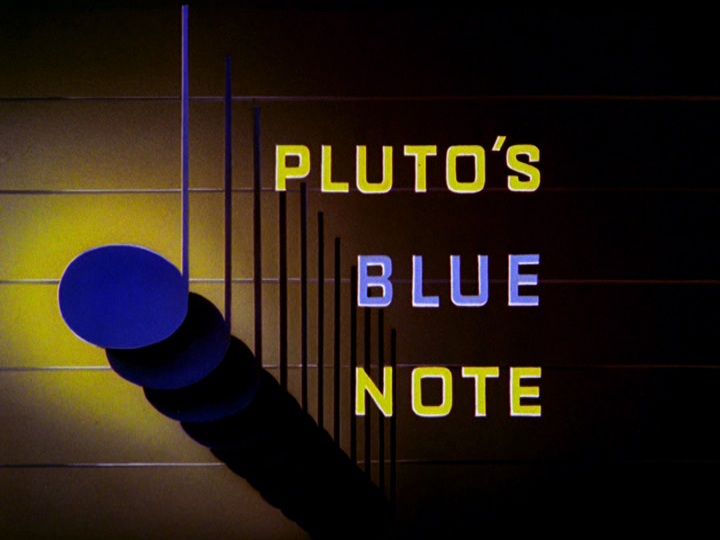
December 26, 1947 – The Pluto Short Film Pluto’s Blue Note is Released to Theaters

vlcsnap-2013-12-26-20h01m58s31

“’Twas a moment like this, do you remember?”

On December 26, 1947, the Pluto short film Pluto’s Blue Note was released to theaters. It features the song “You Belong to My Heart” from the 1945 animated feature film The Three Caballeros. The short was directed by Charles Nichols, with story by Milt Schaffer and Jack Huber.

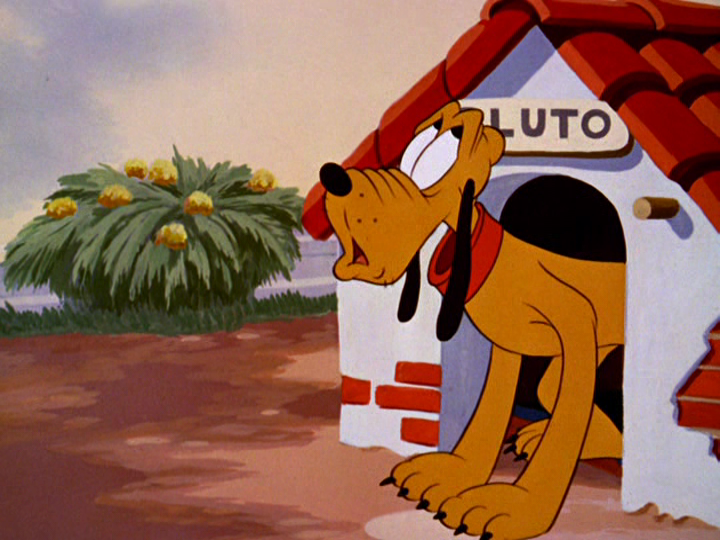
The birds are singing on a lovely spring day, but are soon interrupted by the sound of Pluto trying to join them in their tweeting. However, Pluto’s singing is rather awful, as the birds point out before they fly away. Pluto then decides to sing along with a bee’s buzzing, but once again is informed that his singing is terrible. Suddenly, Pluto hears the sound of a strange tune coming from the music store across the street. Entranced by the tune, Pluto starts dancing along. When he starts singing with it, however, the store owner pulls the radio away from the howling dog. Pluto sneaks inside the store to listen to the radio, and accidentally turns on a record player, with his tail acting as the needle. When he opens his mouth, the music from the record player comes out, and Pluto is overjoyed at this development.

Pluto begins his crooning, thanks to the record player hidden in his doghouse

Pluto begins his crooning, thanks to the record player hidden in his doghouse

Pluto then gets an idea, and when the birds come back, he uses the trick to pretend that he can sing with a beautiful voice. The female dogs of the neighborhood start screaming with joy when they hear his “singing,” and Pluto hams it up for the audience. Near the end of the performance, his ruse is almost exposed when the record starts skipping, but Pluto manages to quickly fix it and finish the song, with all the female dogs fainting from his crooning. The short ends with Pluto giving a smile to the audience.

December 19

December 19, 1962 – The Special Short Film A Symposium on Popular Songs is Released to Theaters

vlcsnap-2013-12-19-19h50m01s221

“Come in and sit down and I’m going to play for you several hundred of the latest hit songs of the past 60 years, which, naturally, I wrote myself.”

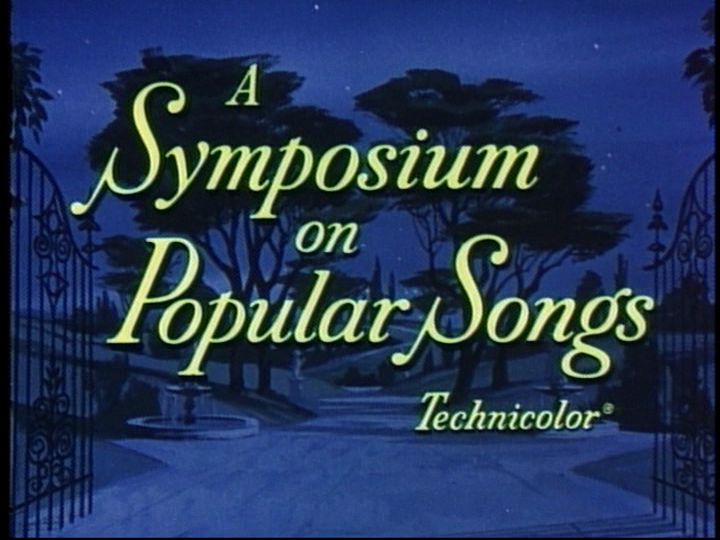
On December 19, 1962, the special short film A Symposium on Popular Songs was released to theaters. The short is a mix of traditional animation and stop motion animation, relaying the history of popular music within the 20th century. The short was nominated for an Academy Award for Best Animated Short Film, but lost to The Hole by Storyboard Inc. and Brandon Films. The short was directed by Bill Justice, with story by Xavier Atencio. It stars the vocal talents of Paul Frees, Gloria Wood, Billy Storm, and Skip Farrell. The songs within the short were written by the Sherman Brothers, with musical arraignment by Camarata.

The short takes place inside Ludwig von Drake’s stately mansion, where he greets the audience at the door and brings them inside to talk about popular music. He begins with his life story at the beginning of the turn of the century where, inspired by his poverty and his ragged clothing, he created ragtime music. He then plays his hit song, “The Rutabaga Rag,” with some accompanying stop-motion animation of vegetables dancing. After this, he moves to the Roaring Twenties, where he was asked to come up with a new style of popular music to put Dixie on the map. He does so with the song “Charleston Charlie,” an allusion to popular ’20s singer Helen Kane.

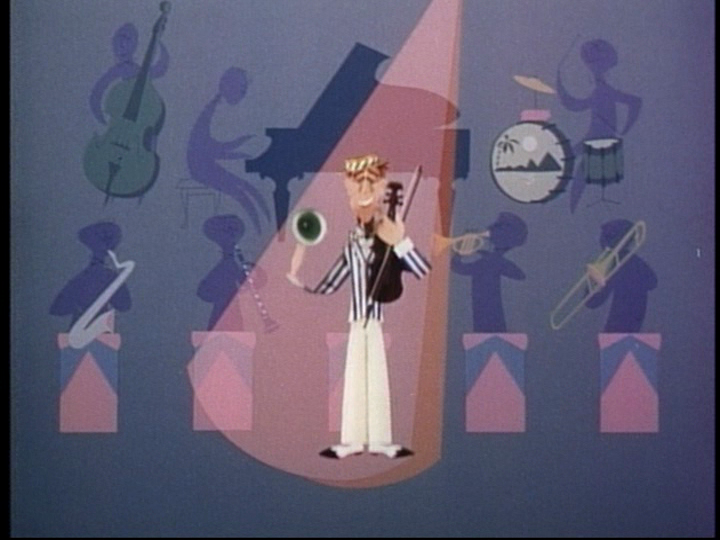
Ludwig moves to the Great Depression era of songs, and turns to a picture of a signer with a backing band

Ludwig moves to the Great Depression era of songs, and turns to a picture of a signer with a backing band

Moving to the Great Depression era, Ludwig has a bit of a panic when he talks about how he lost his money in the stock market. He bought a piano with his last nickel, and wrote the song “Although I Dropped $100,000.” The song parodies the popular songs of the time period, including “Let a Smile Be Your Umbrella” and “Stormy Weather.” Ludwig explains after this that he invented the microphone, and by doing so, invented the idea of a crooner. He wrote the love ballad “I’m Blue for You, Boo-Boo-Boo-Boo-Boo,” which has the singer imitating the crooning style of Bing Crosby. After this, Ludwig moved on to the style of Boogie Woogie, with three singers singing “The Boogie Woogie Bakery Man” which is allusion to the swing style, particularly the songs of the Andrews Sisters.

Ludwig then turns on the television to his favorite music show, The Von Drake Hour, which plays many of his hit songs. The song that starts to play is “Puppy Love is Here to Stay,” which is the beginning of the “modern era” of music (modern for the time the short was released). Soon, Ludwig turns off thetelevision and takes the audience into his hi-fi studio to play his final song, “Rock, Rumble, and Roar” which pays homage to the early rock and roll era in popular music. He forgot the record, and decides to play the song himself, which is segmented with snippets of all the earlier songs. The short ends with the house shaking and rocking along with the raucous music Ludwig is playing.

December 2

December 2, 2002 – The Theme Song for The Santa Clause 2, “Santa Claus Lane,” is Released

Santa Claus Lane

“Walking this Christmas down Santa Claus Lane, no need to wonder, no need to explain.”

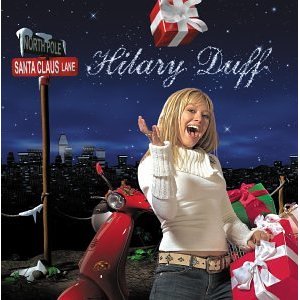
On December 2, 2002, the promotional single for the live-action feature film The Santa Clause 2, “Santa Claus Lane,” was released through Buena Vista Records. The single was the second single from Disney Channel star Hilary Duff’s debut album, Santa Claus Lane, a collection of Christmas songs. Duff also promoted the single on Disney Channel, particularly the Movie Surfers television program, which was also promoting the Tim Allen film. The single was released with the album version and two mixes: the North Pole Mix, and the Megamix.

November 30

November 30, 1935 – The Silly Symphony Cock o’ the Walk is Released to Theaters

vlcsnap-2013-11-30-18h38m38s55

On November 30, 1935, the Silly Symphony Cock o’ the Walk was released to theaters. The music used in the film, “Carioca,” was taken from the RKO film Flying Down to Rio, which was fitting, as 1935 was the last year that United Artists would distribute Disney films, as it would move to RKO the following year after a long courtship. It was directed by Ben Sharpsteen, and marks the debut of composer Albert Hay Malotte.

The short begins with a parade, welcoming home the world’s champion boxer, Cock o’ the Walk, who struts his stuff on a float, followed by all of the hens in the town. One hick rooster is professing his love to a skinny hen, but her attention is lost when she catches the eye of Cock o’ the Walk, who asks her to dance with him. The two begin to dance, and all of the hens in town begin to gossip and join in the dancing. The entire barnyard begins to dance, including chicks, caterpillars, and peacocks.

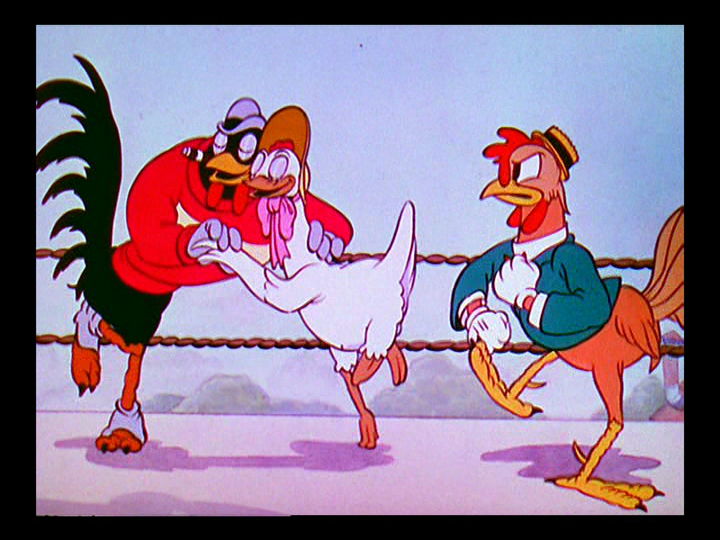
Angered by the champion taking his girl, the hick rooster tries to break them up

Angered by the champion taking his girl, the hick rooster tries to break them up

As Cock o’ the Walk continues to dance with the hick’s girl, the hick decides to put an end to it, and the hens laugh as Cock o’ the Walk mocks him. The hick challenges the champion to a fight, with the hick working more to dodge the advances before getting pummeled. Cock o’ the Walk’s bag is knocked into the skinny hen’s lap as she cheers for the champion, and discovers that Cock o’ the Walk is not only married, but he has 14 baby chicks. Angered at this realization, she slaps him, and tried to revive the hick rooster with a kiss. His strength is renewed, and he beats Cock o’ the Walk, winning the fight and sending the champion flying into his trophies. The short ends with the hick rooster and his skinny hen dancing together happily before he lays a large kiss on her and lets out a loud rooster call.

November 23

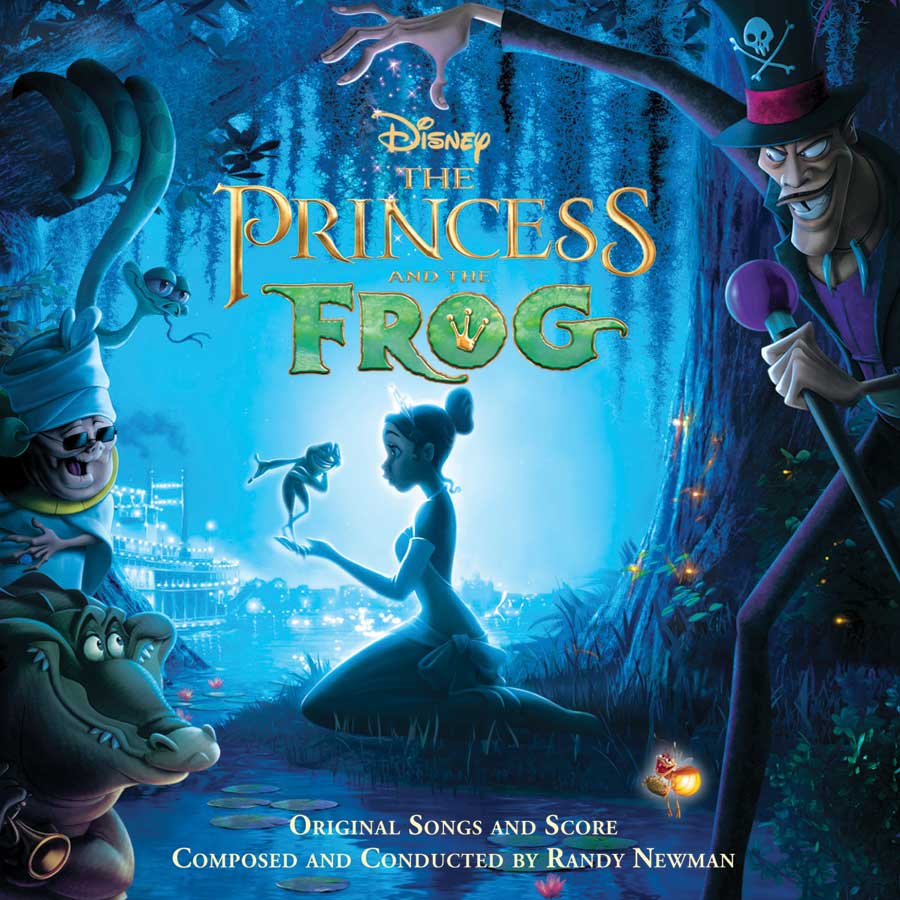
November 23, 2009 – The Soundtrack to The Princess and the Frog is Released Through Walt Disney Records

The Princess and the Frog (Original Songs and Score)

“But I’ve climbed the mountain, I’ve crossed the river, and I’m almost there.”

On November 23, 2009, the soundtrack to the forty-ninth Disney animated feature film The Princess and the Frog was released through Walt Disney records. It was released two days before the limited release of the film, and almost three weeks before the general release of the film. The soundtrack contains the nine songs used in the film, seven pieces of the original score composed by Randy Newman, and the song “Never Knew I Needed” by recording artist Ne-Yo, which was played over the closing credits. Two of the songs used in the film, “Almost There” and “Down in New Orleans” were nominated for the Academy Award for Best Original Song; “Down in New Orleans” was also nominated for a Grammy Award. The album peaked at number 80 on the Billboard 200 charts.

November 17

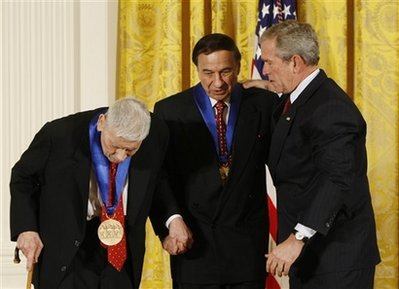
November 17, 2008 – The Sherman Brothers are Awarded the National Medal of Arts

“[The Sherman Brothers’] music has helped bring joy to millions.”

On November 17, 2008, the Sherman Brothers were awarded the National Medal of Arts by President George W. Bush, which is the highest honor the United States has for artists. The brothers were awarded thanks to their long-spanning career, which includes two Academy Awards. They began their association with Disney in 1960, after being noticed for the songs they wrote for Disney star Annette Funicello, writing over 200 songs for Disney films, television shows, and attractions in the park. Outside of their Disney work, the brothers have composed scores for films and Broadway musicals, including Chitty Chitty Bang Bang and Over Here!. The brothers were honored along with creator of comic-book franchises Stan Lee, actress Olivia de Havilland, jazz pianist Hank Jones, and sculptor Jesus Moroles.

November 16

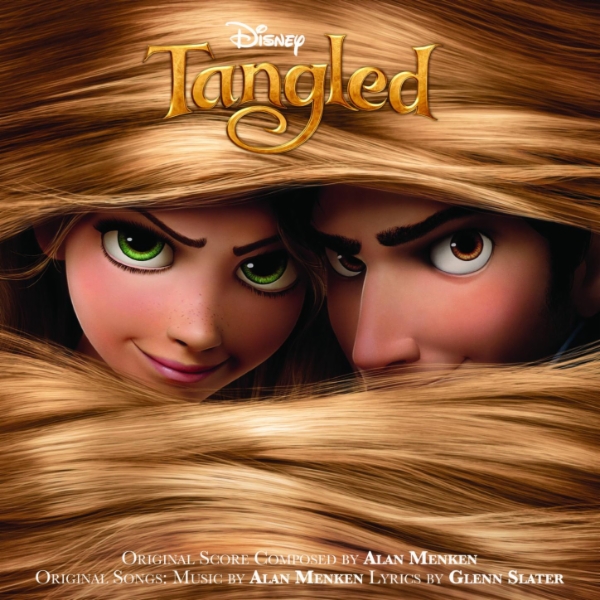
November 16, 2010 – The Soundtrack for the Film Tangled is Released Through Walt Disney Records

Tangled

“All at once, everything looks different, now that I see you.”

On November 16, 2010, the soundtrack for the 50th Disney animated feature film Tangled was released through Walt Disney Records. The soundtrack was released two days after the premiere at the El Capitan Theatre, and a week before the film’s general release nationwide. The soundtrack includes the original score by Alan Menken, songs from the film written by Alan Menken and Glenn Slater, and an original song by recording artist Grace Potter. One song included in the soundtrack was eventually cut from the film, which was the first reprise of “When Will My Life Begin?” sung by Mandy Moore, the voice of Rapunzel. The album peaked at number 44 on the Billboard 200, as well as number 7 on the Soundtrack chart, and number 3 on the Kid Albums chart.  The song “I See the Light” was nominated for an Academy Award, a Golden Globe, and a Broadcast Film Critics Association Award, and won a Grammy.

November 10

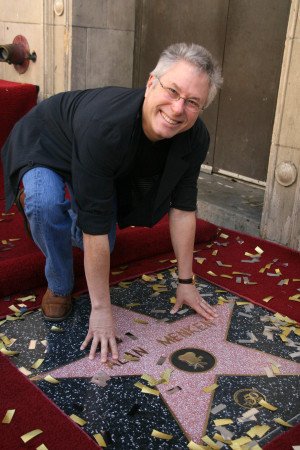
November 10, 2010 – Alan Menken is Awarded a Star of the Hollywood Walk of Fame

at the Alan Menken Hollywood Walk of Fame Star Ceremony, El Capitan Theater, Hollywood, CA. 11-10-10

“Back then there was a genuine outreach on the part of Disney…to work with theater people. I didn’t know it at the time, but Michael Eisner was a theater major in college.”

On November 10, 2010, composer and pianist Alan Menken was awarded a star on the Hollywood Walk of Fame. Through his work with Disney starting in the late 1980s, Menken has been awarded eight Academy Awards, with 18 overall nominations, as well as 10 Grammy awards. His star is placed near the Disney owned El Capitan Theater on Hollywood Boulevard. As his award was well-timed with the release of the Disney film Tangled, voice of Rapunzel Mandy Moore was on hand at the ceremony, as was Richard Sherman, well-known Disney composer and songwriter.

November 2

November 2, 1997 – Rodgers & Hammerstein’s Cinderella Premieres on The Wonderful World of Disney
vlcsnap-2013-11-02-16h52m43s56

“I doubt if he has any idea how a girl should be treated.” “Like a princess, I suppose.” “No! Like a person, with kindness and respect.”

On November 2, 1997, the made-for-television film Rodger’s & Hammerstein’s Cinderella premiered on ABC’s The Wonderful World of Disney programming block. This is the third televised production of the musical, with the first in 1957 with Julie Andrews as Cinderella, and in 1965 with Lesley Ann Warren. This production differed from the first two with the inclusion of three other songs: “The Sweetest Sounds” from No Strings (written by Rodgers), “Falling in Love with Love” from The Boys from Syracuse (written by Rodgers and Hart), and “There’s Music in You” from Main Street to Broadway (written by Rodgers and Hammerstein). The film was ranked number 1 in the ratings for the week of its premiere broadcast, with over 60 million viewers. The film would go on to be nominated for seven Emmy Awards, winning for Outstanding Art Direction for a Variety or Music Program. The film was directed by Robert Iscove, with Whitney Houston given credit as a producer. It starred Brandy as Cinderella, Whitney Houston as the Fairy Godmother, Paolo Montalban as Prince Christopher, Bernadette Peters as the Stepmother, Natalie Desselle-Reid as Minerva, Veanne Cox as Calliope, Whoopi Goldberg as Queen Constantina, Victor Garber as King Maximillian, and Jason Alexander as Lionel.

The story begins in town, with Cinderella following her stepmother and stepsisters with their shopping. She gets distracted by a puppet show about a prince and his princess, and sweet moments between family members and couples that walk about, wishing for a love of her own. A man walks around, just as entranced as Cinderella has been by the tender moments he sees, also longing for his own tender moment with someone special. As she nearly gets run over by a carriage from the palace, he stops to help her, and the two are immediately smitten with each other. He keeps trying to get her attention, but she tries to run away. The two share an awkward moment, as he accidentally offends her, but they realize they share more in common than they realize. She is soon called away by her step-mother, and he tells her he hopes to see her again before he leaves.
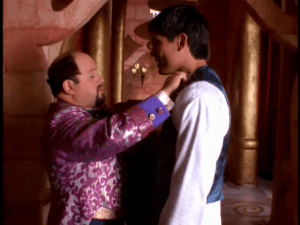
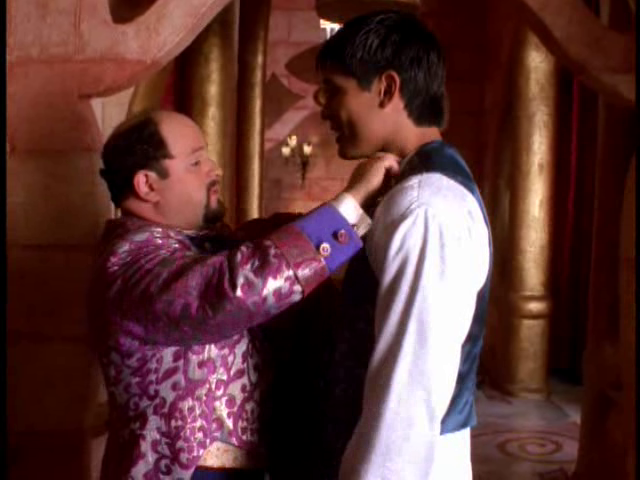
After the prince returns to the palace, his servant Lionel begs him to stop running away and attend to his duties

After the prince returns to the palace, his servant Lionel begs him to stop running away and attend to his duties

The stranger turns out to be Prince Christopher, who has a habit of escaping the palace in disguise as a regular person to explore his kingdom. His servant Lionel discourages him every time, and doesn’t understand why the prince doesn’t want to be a prince. Christopher goes to see his mother and father, who decide to throw him a ball, although Christopher doesn’t want another ball. They believe it’s time he chose a bride and had an heir. He begs them to let him pick his own bride, and fall in love naturally. He leaves again, and the king and queen continue planning the ball. Lionel and members of the palace head to town to announce that the Prince is giving a ball. The town is all abuzz with the news, and start the preparations.

Cinderella and her family arrive home after hearing the news, and her family starts bullying her again, with the step-mother claiming she has “too big a heart” for keeping Cinderella after her father died, as most people told her she should have thrown her out into the street. Cinderella gathers her courage and asks her step-mother to attend the ball, but her stepmother tells her she can’t go, that she should “know her place.” Dejected, she goes into the kitchen to prepare the things her stepsisters demanded, going off into her own daydreams, where she could be all that she wants to be.
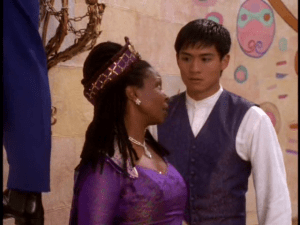
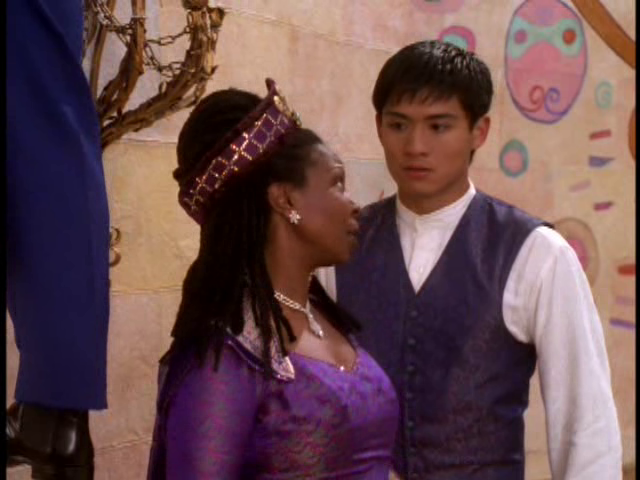
Although Christopher is angry that his mother went ahead and planned the ball behind his back, she refuses to cancel

Although Christopher is angry that his mother went ahead and planned the ball behind his back, she refuses to cancel

Back at the palace, Christopher tries once again to get his mother to cancel the ball, but she refuses. Lionel comes up with the perfect solution: if the prince does not find a bride at the ball, he is allowed to fall in love his own way, in his own time. Christopher and his father agree to the plan, but the queen is less certain of the plan. In Cinderella’s house, the stepmother is helping her daughters primp for the ball, much to their pain and dismay, as their mother’s motto is “beauty knows no pain.” She is certain the prince will pick either Minerva or Calliope as his bride. When Cinderella expresses her opinion of a man loving a woman despite her flaws, the stepmother calls her quaint. The stepsisters are captivated by Cinderella’s idea of love, but the stepmother declares that there’s a huge difference between love and marriage.

As they head out to the ball, Cinderella is left behind, upset that she will be unable to attend, although she tries to convince herself otherwise. She makes a wish to go to the ball, and her fairy godmother suddenly appears at her window, although she mocks her for her dreams, saying dreamers are crazy. When Cinderella says that she’s always dreamed someone would take her away, her fairy godmother says that she’ll have to go about it herself, to not rely on her dreams but to take action. Cinderella then makes a wish to go to the ball, but then says it’s impossible. The fairy godmother then tells her impossible things happen every day by those who believe in the impossible, and sets about to make her dream come true, including a beautiful dress. She warns her, however, that the magic only lasts until midnight, and sends her on her way to the ball.
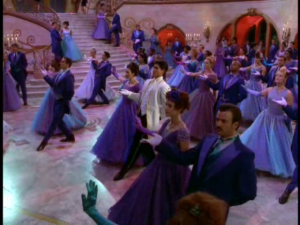
The prince dances with the girls, but is hardly impressed with any of them

The prince dances with the girls, but is hardly impressed with any of them

At the ball, Christopher is already bored, as he hasn’t met one interesting girl yet. The queen believes that he will meet someone tonight, but the king is not so certain. The stepmother tries to seduce Lionel to get her daughters to dance with the prince, but Lionel rebuffs her advances. Minerva gets a chance, but quickly blows it, as does Calliope. Christopher has Lionel speed up the music so he can get the ball over with as fast as possible. Cinderella soon arrives at the ball, and her fairy godmother gives her reassurance that she can handle this, and that she will have to handle it on her own if she wants her wish to come true. Once she enters the ballroom, the prince stops, smitten on first sight. The two begin to dance, much to the amazement of all attendees, who wonder who she is.

Christopher and Cinderella dance their way out into the courtyard, unaware that they’re being watched by Minerva and Calliope, who want to know why the prince would choose her over them. The stepmother, who thinks that Cinderella looks vaguely familiar, tries to get close to her to discover who she is. When the queen asks Cinderella if they know her mother and father, Cinderella suddenly gets frightened and flees, and asks her fairy godmother to leave. The fairy godmother accuses Cinderella of giving up. Christopher follows her out, and the two continue talking, with Christopher admitting that he never wanted to attend in the first place. He then tells her that he knows she’s the one, and able to be himself for the first time. The two share a kiss before the clock strikes midnight, and she suddenly rushes away. Although he chases after her, he is unable to find her, other than the shoe she left on the steps of the palace.
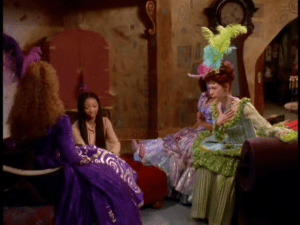
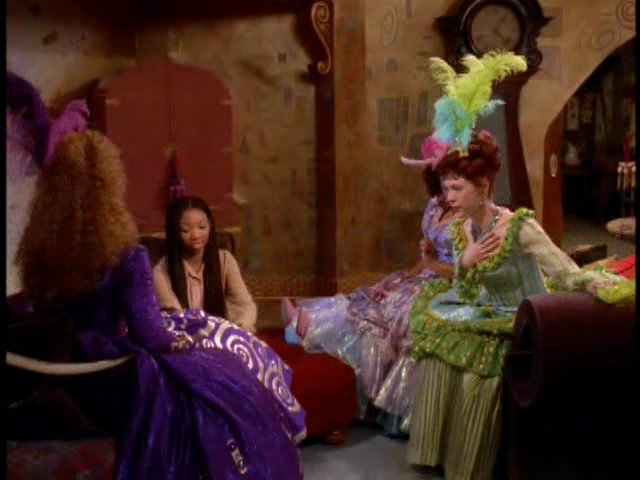
As she tends to her stepfamily, Cinderella asks them questions about the ball

As she tends to her stepfamily, Cinderella asks them questions about the ball

Cinderella dashes through the empty streets, making it back just in time before her family arrives home from the ball. She asks them for details, including details of a “princess” that danced with the prince. She tells them of her dream of the ball, and the stepmother says that she talks as if she was there. As she continues explaining her “dream,” the stepsisters are smitten with her imagination, and the stepmother suddenly realizes that Cinderella was the mysterious woman at the ball. The stepmother suddenly calls it all nonsense, and calls Cinderella nothing but common, and starts insulting her father. Cinderella heads out into the garden and starts talking to her deceased father. Although she promised him to stay and take care of the family, she realizes she can no longer stay and be abused. Her fairy godmother appears, and tells Cinderella that he should know who she is, if she truly loves him. She reassures her that he fell in love with her, not her dress.

Christopher refuses to give up his search for her, and his mother is concerned, wondering if she is really as wonderful as she seems. He believes that she is the one that he needs, and his father tells him to look for as long as it takes. Christopher, with the help of Lionel, decide to search every inch of the kingdom, and try the glass slipper on every maiden’s foot in the kingdom. When they arrive at Cinderella’s house, Calliope and Minerva both fail the test, and the stepmother locks Cinderella in the kitchen. The stepmother then decides to try the shoe on herself, and the shoe fits, although it is too tight of a fit that cuts off her circulation. The prince then asks if there’s anyone else, and while the family tries to hide Cinderella, Lionel opens the kitchen doors, although no one is inside. Saddened, Christopher leaves. As he steps outside, he sees Cinderella once again, spooked by the horses as she tries to run away. She recognizes his voice from the stranger she met in the market, and he has her try on the shoe. Realizing it fits, the two share a kiss. The film ends with the wedding of Cinderella and Christopher, with the whole town celebrating their union.
October 30

October 30, 2012 – The Soundtrack to Wreck-It Ralph is Released Through Walt Disney Records

WIR-theCover?!D

“Wreck it, Wreck-It Ralph, as fast as you can. You know you can do it with your colossal hands.”

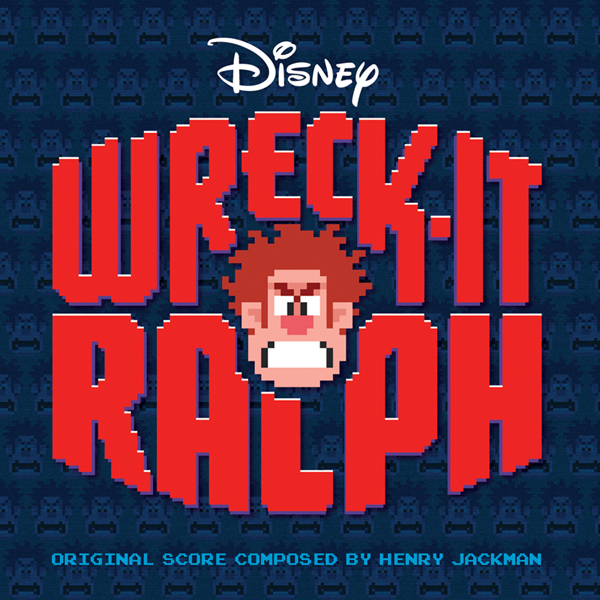
On October 30, 2012, the soundtrack to Disney’s 52nd animated feature Wreck-It Ralph was released through Walt Disney Records. The score was composed by Henry Jackman; the soundtrack includes original songs by Owl City, Buckner & Garcia, and Skrillex. Japanese performing group AKB48 was asked to perform a song for the film entitled “Sugar Rush,” which is also the name of the film in Japan. Also featured in the album are the songs “Celebration” by Kool & the Gang, and “Shut Up and Drive” by Rihanna.