RSS Feed

Tag Archives: Academy Award Nominated

June 21

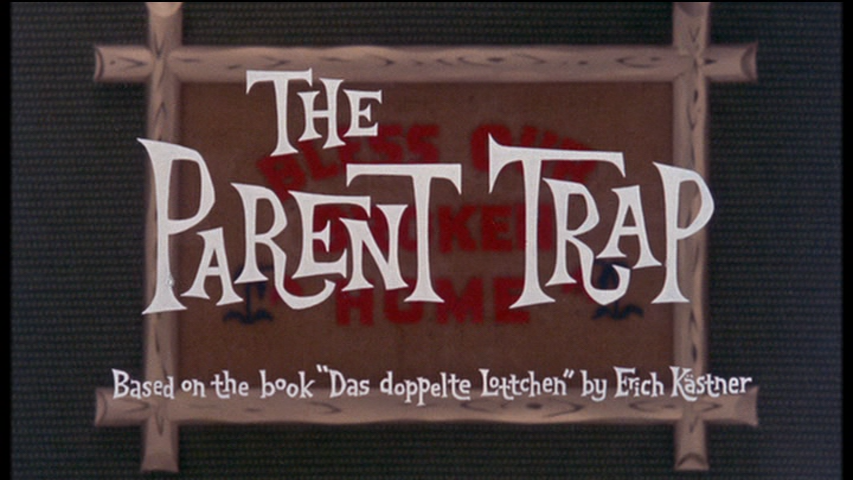
June 21, 1961 – The Live-Action Film The Parent Trap is Released to Theaters
vlcsnap-2014-06-21-12h56m07s175

“The nerve of her! Coming here with your face!”

On June 21, 1961, the live-action feature film The Parent Trap was released to theaters. It was based on the German children’s book Das doppelte Lottchen by Erich Kästner. The film is well-known for its use of split-screen shots to help create the illusion of twins, both played by Hayley Mills. The special effects were credited to Ub Iwerks, who was well known at this time for his technical innovations. The movie also includes three songs by famed songwriting duo the Sherman Brothers: “The Parent Trap” sung by Annette Funicello and Tommy Sands (who were filming Babes in Toyland at the time); “For Now, For Always” performed by Maureen O’Hara; and “Let’s Get Together” performed by Hayley Mills (with a short version heard at the camp dance by Annette Funicello). The film was quite successful on its release, and even more successful in its rerelease to theaters in 1968. The film was also nominated for two Academy Awards: Sound, and Film Editing. Although set in Boston and California, the film was mostly shot in California, with scenes at Mitch’s ranch filmed at the Golden Oak Ranch in Placerita Canyon. The film was adapted and directed by David Swift, who would go on to write the screenplay for the 1998 remake of the film. The original film stars Hayley Mills as Susan Evers and Sharon McKendrick, Maureen O’Hara as Margaret McKendrick, Brian Keith as Mitch Evers, Joanna Barnes as Vicky Robinson, and Una Merkel as Verbena.

The film begins with Sharon McKendrick arriving at Camp Inch from her home in Boston. She is soon taken to her cabin and meets her bunkmates Betsy and Ursula. They soon make their way to the mess hall for lunch, where Sharon soon bumps into a girl who looks exactly like her. At lunch, a camp dance is announced with Thunderhead Boys’ Camp, much to the excitement of the girls. Miss Inch, the owner of the camp, declares that girls who get enough demerits will not be allowed to attend. Later on, Sharon comes across the girl again, and when the girl (named Susan) mocks her, war begins between Sharon and Susan, including their bunkmates. Susan and her friends decide to trash Sharon’s cabin; the untidiness keeps them from the dance. Sharon, Betsy, and Ursula watch angrily as the dance goes on, and Ursula comes up with an idea. As Susan steps onto the deck with her date, the girls cut the back of her dress off, exposing her underwear. Susan’s friends try to cover her up, and bring her outside. The war comes to a head where the two girls attack each other, and the fight heads inside where they knock over the records, and ruin all of the food. The two are then given their punishment: they will spend the rest of the summer together, beginning with rooming in the isolation cabin named “Serendipity.”
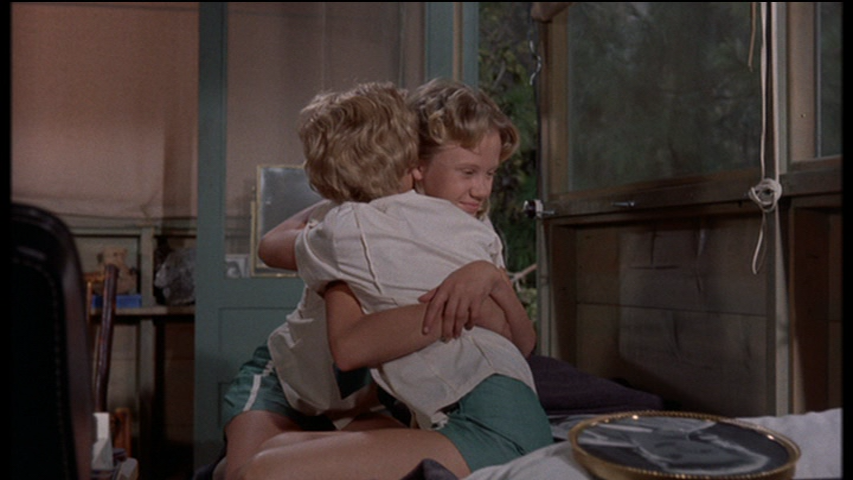
One stormy day, the girls bond and discover that they really are identical twin sisters

One stormy day, the girls bond and discover that they really are identical twin sisters

One stormy day, Susan is hanging pictures when a large gust of wind blows her pictures across the floor. When Sharon helps her, Susan thanks her sincerely, and the two begin to talk. They share stories of their home lives, and when Sharon sees a picture of Susan’s father, she suddenly gets goosebumps. She puts the pieces together, and shows Susan a picture of her mother. Susan asks why Sharon has a picture of her mother, and the two finally realize that they are sisters. Later, the two speculate why their parents split up, although they can’t understand why they would want to have broken up. Suddenly, Susan gets an idea: the two would switch places to meet the other parent. Sharon believes that if they switch, they’ll have to be unswitched, and they’ll bring their parents back together. They start teaching each other about their lives, and by the time the summer ends, they’re ready to switch.

Susan soon arrives in Boston, and is greeted warmly by her grandfather. She then meets her mother, Margaret, and is quite in shock when she does. Margaret makes comments on her daughter’s seemingly odd behavior, as it seems like “Sharon” had never seen her before, before finishing getting ready for her various meetings. Susan tricks her mother into staying home from her meetings, and the two go for a picnic in a park. Susan then asks for information on her father, and finds out information about their first date at a restaurant called Martinelli’s and the song they consider “their song.” Meanwhile, Sharon arrives in California and meets her father, Mitch, for the first time. Although initially nervous and flustered, she soon starts asking him a barrage of questions. He then attempt to have a serious talk with her, but doesn’t get very far. Sharon then meets ranch hand Hecky and housekeeper Verbena, with the latter thinking that something is very different with her. Her suspicions are further aroused when Susan’s dog Andromeda acts rather antagonistic towards Sharon. Sharon hears a strange woman’s voice when she enters the house, and acts Verbena about the woman she saw. Verbena doesn’t like the woman, and doesn’t hesitate to let Sharon know.
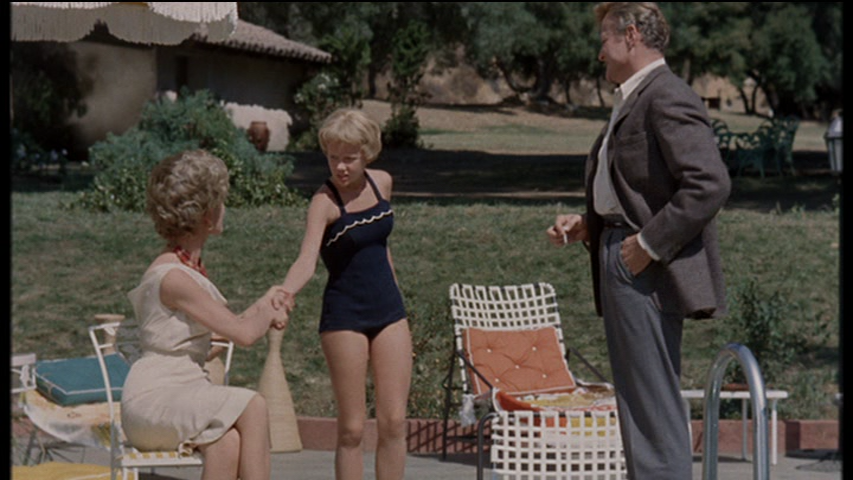
Sharon meets Vicky for the first time, though she realizes this gives her a huge problem with the plan

Sharon meets Vicky for the first time, though she realizes this gives her a huge problem with the plan

Sharon finally meets Vicky, Mitch’s young paramour, and a gold-digger to boot. Sharon tries to drive Vicky away, claiming that Mitch likes to “play the field,” although Vicky isn’t convinced. At three in the morning, Boston time, Susan waits for Sharon’s phone call. Sharon tries to warn Susan about Vicky, but Susan doesn’t listen and orders Sharon to bust up the relationship between Vicky and Mitch, as she refuses to give up her time with her mother. The next day, Mitch tries to tell Sharon that he wants to marry Vicky, although Sharon starts asking questions about her mother. Mitch tries to brush off her questions, thinking she wants the “sex talk.” She quickly changes the subject, trying to get him to talk about her mother instead, but he’s so flustered that he goes back to his golf game. They spend the rest of the day together, and Mitch finally gets the nerve to talk about marrying Vicky. Sharon storms off before he can get the words out and starts talking to herself, but Verbena overhears and starts questioning the girl. Sharon finally admits that she’s Sharon, not Susan, and Verbena promises to keep it a secret.

Mitch once again tries to talk to Sharon, but Sharon doesn’t take the news well. Vicky offers to have a talk with her one on one, and while the talk begins calmly, when Sharon points out that Vicky wants to marry Mitch for his money, Vicky becomes antagonistic. Later that night, Sharon sends a telegram to Susan, asking her to wait for her call again at 3 AM. When the two talk, Susan’s grandfather listens into the call, and corners Susan when she leaves the study. Revealing that he knows everything, Susan admits everything. Finally at the breakfast table the next morning, she admits the truth to everyone. Margaret is overcome with emotion for seeing Susan for the first time in over a decade, and the two talk about what really happened between Margaret and Mitch. Margaret and Susan pack to go to California, and Margaret’s father surreptitiously convinces her to change her look to keep up with the times in his way of helping Susan and Sharon’s plan on getting their parents back together.

Mitch is surprised to find Margaret in his house, and in his bathrobe

Mitch is surprised to find Margaret in his house, and in his bathrobe

Susan and Margaret soon arrive in California, and Sharon breaks the news to them about Mitch’s engagement, which visibly upsets Margaret, although she tries her best to cover it up. When Mitch returns, he starts chewing out Susan, with Susan catching on to how Sharon had been acting around the house. Soon after, Vicky, her mother Edna, and the Reverend Dr. Mosby arrive to talk with Mitch and see the house. Mitch goes upstairs to shower, leaving Susan to play hostess. He is unaware that Margaret has just used his bathroom to take a shower, and she slips out before he enters, wearing his bathrobe. Susan grabs Margaret so she can take a glimpse of Vicky. When Mitch finally goes downstairs, he spies Margaret running around outside, and is shocked enough that he trips over a table and drops the drinks he’s holding. When he takes the group on a tour of the outside, he spies Margaret again, and trips into the outdoor pond. He is pulled out of the water and heads inside to confront Margaret and Susan.

When Mitch gets inside, the two have a polite reunion before they start arguing loudly. Mitch is interrupted by Susan, and he suddenly realizes that Susan and Sharon are in his house. Margaret tells him of their plan to switch places, and he is thrilled that he was able to meet Sharon for the first time in years. Margaret sends the two girls away so she and Mitch can talk alone. Mitch is angry that Margaret would show up now of all times, but Margaret starts acting coy. The two then start arguing again, and she threatens to punch him, and when he starts manhandling her, she punches him in the eye. When she tries to study his eye, the Reverend walks in, and Mitch quickly tries to explain the situation, although he introduces Margaret as his wife. The Reverend takes a shine to Margaret, and seems to find humor in the entire situation. Margaret then decides to go change into something a little more comfortable than Mitch’s bathrobe; while away, Vicky informs Mitch that she is not at all thrilled with the situation and demands that she not stay the night.
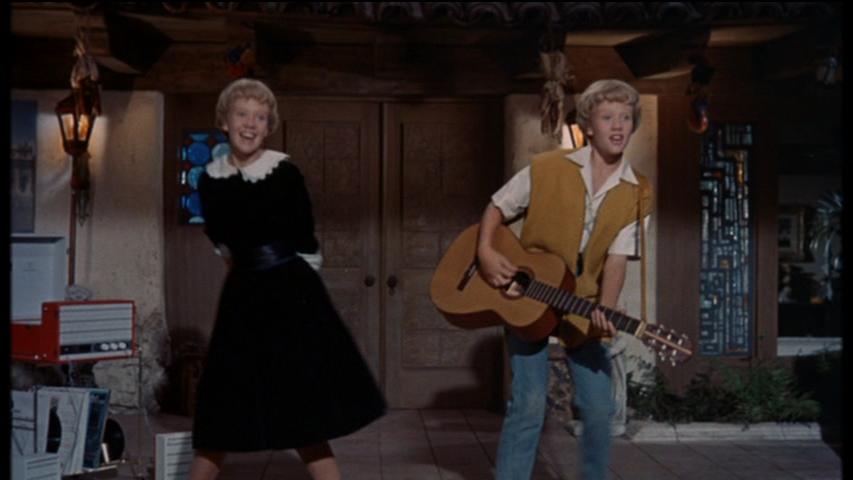
The girls recreate their parents' first date and entertain them with a floor show

The girls recreate their parents’ first date and entertain them with a floor show

Edna and Vicky soon make an excuse to leave, uncomfortable with Margaret’s appearance. Later, Susan, Sharon, and Verbina convince Hecky to help them with the next step of their plan: recreating the first date. Mitch goes out onto the patio, as instructed, and sees the setup. When Margaret arrives, the two sit down and have a terse interaction. However, they stop talking when the girls step out to perform a song for the couple. After their show, they leave the couple alone to have dinner. Margaret then tells Mitch that the girls are trying to recreate their first date, including their first song. Mitch starts reminiscing about their fights in their marriage, stating that they wouldn’t have lasted anyway, and that it was a mistake in the beginning, which upsets Margaret. The two argue again, and Margaret starts to storm off, but she stops herself. She lets him know that she’s leaving in the morning with Sharon, and sincerely wishes him the best with his marriage with Vicky.

The next day, the twins have come up with a new plan: they come down the stairs in matching outfits, with no one able to tell them apart. They inform their parents that neither girl is going back to Boston, they’re all going on the campout together, and will let them know which is Susan and which is Sharon when they get back. Vicky is furious that Mitch is going off with Margaret, and Margaret agrees. She then suggests that Vicky goes in Margaret’s place. The girls are angry about this development, and Vicky isn’t thrilled either. While hiking up to the campsite, the girls play a prank of Vicky with a lizard on top of a water bottle. She threatens the girls when Mitch isn’t listening, so they decide to up the ante with their pranks. Vicky is miserable the entire time, although she says she’ll stick it out. Although Mitch lectures the girls on playing pranks, he secretly finds them hilarious. That night, the girls play one last prank, mimicking the prank that Susan played on Sharon when they first met. Vicky wakes up to find two bear cubs licking the honey on her feet, and starts trashing the campsite due to anger. She then slaps one of the twins, and decides not to marry Mitch after all, with Hecky driving her back to civilization.
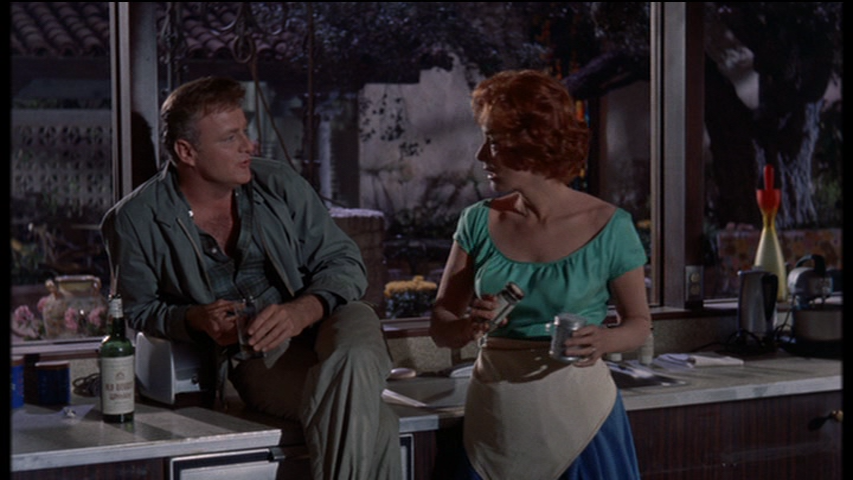
After coming back to the ranch, Mitch finally realizes how much he missed Margaret, and how much he still loves her

After coming back to the ranch, Mitch finally realizes how much he missed Margaret, and how much he still loves her

The group goes back to the ranch, and Margaret asks Mitch what happened to Vicky. The girls apologize to Mitch about what they did to Vicky, then leave to let the two adults talk. Mitch suddenly realizes that he still has feelings for Margaret and, finding that the two are alone, he goes upstairs to shave and put on a nice outfit. He brings up a bottle of wine and turns on some nice music, and the mood turns to the romantic. He tells her that he misses the wet stockings she used to hang in the shower, his razor being dull from her use, her hairpins, and more of the little things about her. He then admits that he misses her, and they kiss. Meanwhile, upstairs, Susan shares a dream she had with Susan of their future: the remarriage of their mother and father.
June 7

Posted on

June 7, 1946 – The Mickey Mouse Short Film Squatter’s Rights Premieres in Theaters

vlcsnap-2014-06-07-20h03m29s173

“Pluto, you put some logs in the stove and we’ll build a nice, big, roaring fire.”

On June 7, 1946, the Mickey Mouse short film Squatter’s Rights premiered in theaters. Although labeled as a Mickey Mouse short, it had been labeled by Disney as a Pluto short film, as Pluto is the main character. This was the second short to feature the characters of Chip and Dale, although they have still not been identified, and are still drawn similarly. The short was nominated for an Academy Award, but lost to MGM’s The Cat Concerto. It was directed by Jack Hannah.

It’s a snowy day at Mickey’s “Hydout,” which has been locked up for quite some time, and inside, Chip and Dale are sleeping peacefully inside the cabin’s stove. The two get ready for the day when they hear the strange sound of barking. Pluto and Mickey enter the cabin, startling the chipmunks, especially when Mickey asks Pluto put logs in the stove so he can start a fire. The chipmunks start distracting Pluto from his task, but after he tries to attack them, he is told off by Mickey, who thinks the pup is just goofing off. Pluto finally gathers the logs, and Mickey attempts to build a fire. Every match he lights, however, is blown out by the chipmunks. When they see Pluto grab the kerosene, they take the drastic action of using a match to light Mickey’ shoe. Pluto catches the pair under the stove, but they plant the used match in Pluto’s mouth, making Mickey believe that Pluto was the culprit. Mickey can’t stay mad at Pluto, and goes out to chop more wood. The moment he leaves, Pluto starts chasing the chipmunks around the cabin, leaving a mess in his wake.

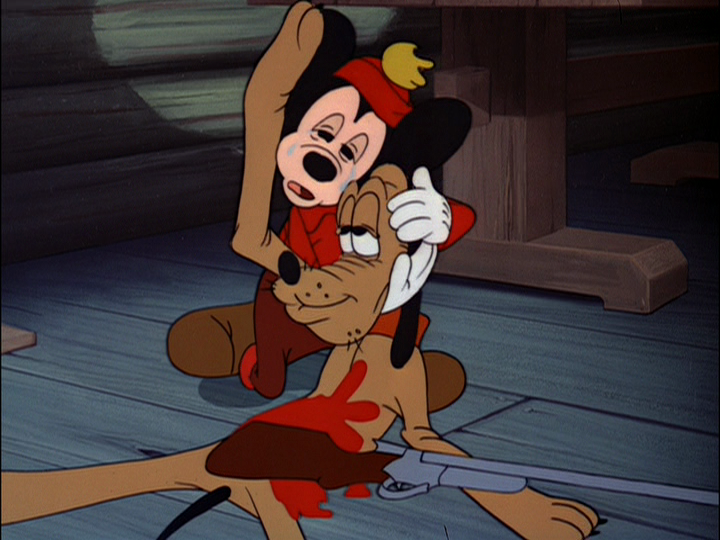
Mickey holds Pluto, thinking that the dog is dying from a gunshot wound

Mickey holds Pluto, thinking that the dog is dying from a gunshot wound

At one point, Pluto gets his nose stuck in the shotgun on the mantle, and as he triest remove it, he realizes that the trigger will be activated, and he will be shot. Pluto falls from the mantle and the gun goes off, luckily missing the dog; however, the butt of the gun hits Pluto on the head, knocking him unconscious. The chipmunks get an idea to get Pluto to believe he has indeed been shot, and use ketchup to resemble blood. Mickey enters the cabin again and, seeing Pluto lying on the ground covered in “blood,” rushes to his pal’s side. He picks Pluto up and rushes him out of the cabin, leaving Chip and Dale to celebrate their victory.

June 6

Posted on

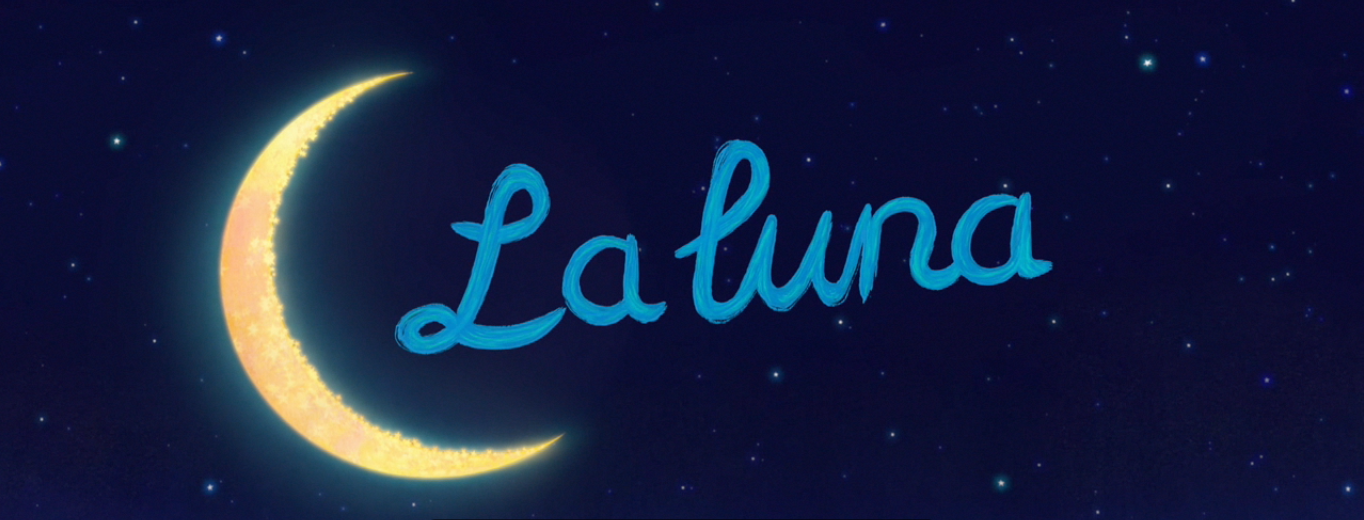
June 6, 2011 – The Pixar Short Film La Luna Premieres at the Annecy Film Festival

La_Luna 7

On June 6, 2011, the Pixar short film La Luna premiered at the Annecy Film Festival, held in the town of Annecy, France. The short was then released on June 22, 2012, with the theatrical release of Brave. It was nominated for an Academy Award at the 84th Academy Awards, but lost to The Fantastic Flying Books of Mr. Morris Lessmore by William Joyce and Brandon Oldenburg. It was written and directed by Enrico Casaroa, and stars Krista Sheffler as Bambino, Tony Fucile as Papa, and Phil Sheridan as Nonno.

A young boy heads out to sea with his father and grandfather, when his grandfather gifts him a new hat. Bambino is excited, until Papa and Nonno get into an argument about how the boy should wear the hat. Papa wins, and Nonno angrily turns down the lantern, leaving the trio in the dark, waiting in the open water. Suddenly, the moon rises to the sky, and Bambino is given the anchor while his father pulls out a giant ladder. As Bambino reaches the top of the ladder, the moon’s gravitational pull pulls him onto its surface, where he is surprised to see that the moon is covered with glittering stars. He quickly hooks the anchor into a crater so Papa and Nonno can reach the moon. Bambino soon discovers that it’s their family’s job to sweep the stars from the moon’s surface and, once again, Papa and Nonno get into an argument about which broom is better to use. In the middle of the argument, a giant star hurtles toward the moon, and the family runs for cover.

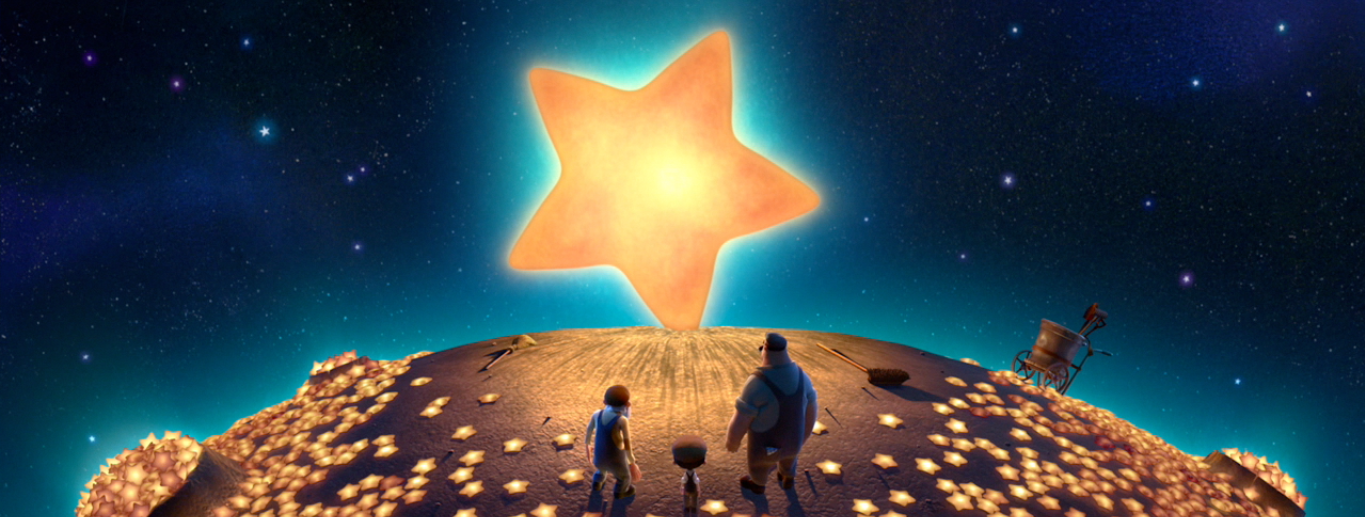
The family stares at the giant star, unsure of how to remove it

The family stares at the giant star, unsure of how to remove it

After the giant star lands, the family looks with confusion, as they are unsure what to do. They try to pull the star out, but break every tool in the process. While Papa and Nonno continue to argue, Bambino gets an idea, and is soon scaling up the star. Reaching the peak, Bambino hits the top with a hammer, and the star breaks into many little stars. In the end, Papa and Nonno realize that Bambino has his own way of doing things, and they finish their job. In the end, they let the moon back into the sky, revealing that they have swept the stars to make the moon shine as a crescent moon.

June 2

Posted on

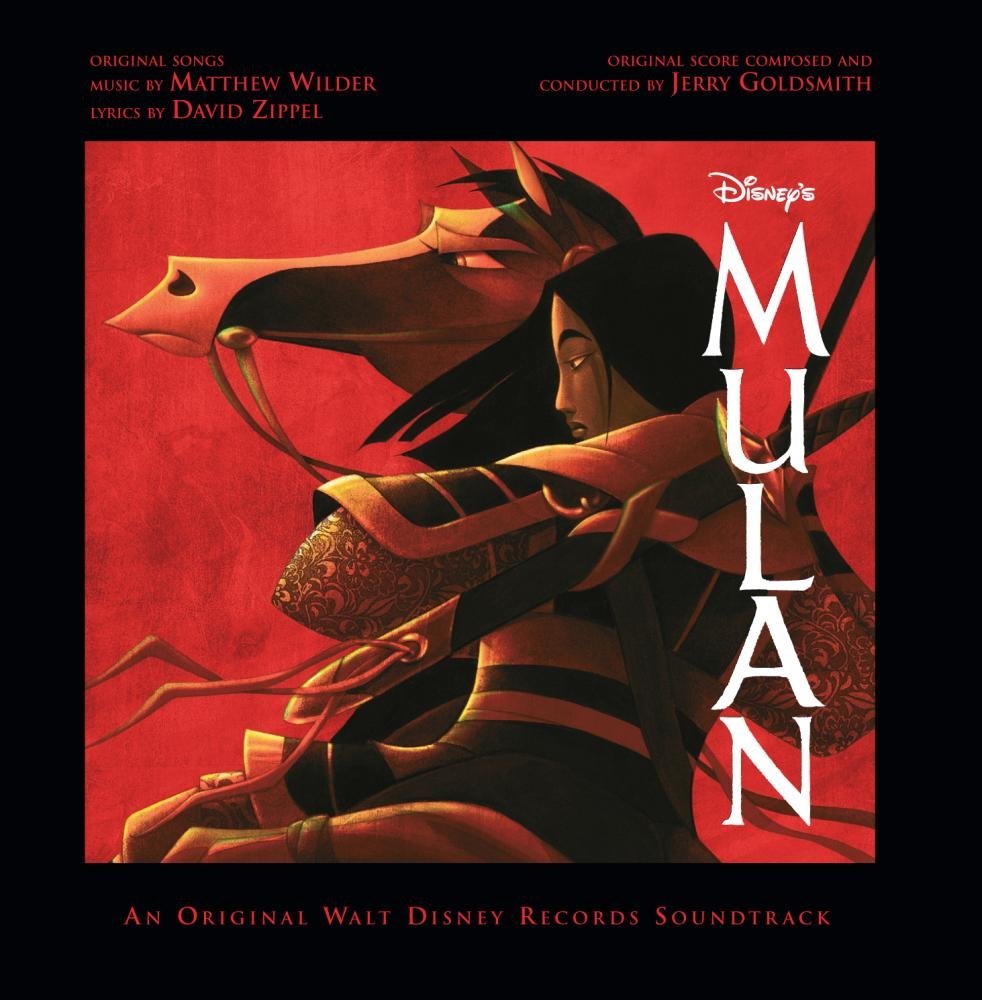
June 2, 1998 – The Soundtrack for the Animated Feature Film Mulan is Released Through Walt Disney Records

Mulan

“When will my reflection show who I am inside?”

On June 2, 1998, the soundtrack to Disney’s 36th animated feature Mulan was released through Walt Disney Records. The album features the vocals of Lea Salonga, Donny Osmond, Christina Aguilera, and Stevie Wonder, among others, and the score by Jerry Goldsmith. Although none of the singles charted on the Billboard Hot 100 charts, the album itself peaked at number 24 on the Billboard 200. The album was nominated for an Academy Award for Best Original Musical or Comedy Score, but lost to Stephen Warbeck’s Shakespeare in Love.

May 13

Posted on

May 13, 2006 – The Special Short Film The Little Matchgirl is Shown at the Eugene Film Festival

vlcsnap-2014-05-13-18h09m37s193

On May 13, 2006, the special short film The Little Matchgirl was screened at the Eugene Film Festival in Eugene, Oregon. It was then followed with a run in Los Angeles starting August 23 to qualify for an Academy Award, and then was released on the Platinum Edition of The Little Mermaid. The short has no dialogue, but features Alexander Borodin’s “String Quartet No. 2 in D Major.” The story was also changed to be set in Russia, rather than its original Denmark. It was directed and adapted by Roger Allers, and based on the story by writer Hans Christian Andersen. It was nominated for an Academy Award, but lost to Torill Kove’s The Danish Poet.

The short opens on a snowy day in Russia, and a little girl watches happily as people ice skate on the river. She is knocked over by a horse as she starts to walk away, and quickly gathers the matches that have fallen to the ground. The girl wears no shoes, only some fabric wrapped around her feet, leaving her toes bare. The girl walks around the marketplace, trying to sell her matches, but is ignored by the villagers. She watches as a family steps out of a store with presents for Christmas, and they ride off together in a sleigh. As the lamps are lit for the night, and everyone heads home, the girl walks to a small nook, where she tries to keep warm. Seeing her unsold matches, she is tempted to use one to stay warm, but resists. In the end, she lights a match, and sees a vision of a stove. After her match goes out, she lights another one, and sees the vision of a Christmas feast, complete with turkey. With four matches remaining, she lights another one, and this time sees herself in a horse-drawn sleigh, gliding across the snow covered plains to a warm and inviting house, where her grandmother lives. Wanting to see her grandmother again, she lights the remaining matches, and runs into her arms. She then sees a giant Christmas tree with presents all around. The next morning, the little girl’s soul is taken to Heaven by her grandmother, with her body remaining in the small crevice, the burnt out matches surrounding her. A shooting star travels across the sky, a symbol for a soul taken to Heaven.

February 3

February 3, 1986 – Pixar Animation Studios is Founded

vlcsnap-2014-02-03-05h09m14s140

“The best scientists and engineers are just as creative as the best storytellers.” – Steve Jobs

On February 3, 1986, the Pixar Animation Studios was founded by Ed Catmull, Alvy Ray Smith, and Steve Jobs. Its history goes back to 1979, when Ed Catmull was recruited by George Lucas to head Lucasfilm’s new Computer Division. In 1983, after being fired by Disney, Jon Lasseter was brought on to the graphics group of the Computer Division as an “interface designer,” with the goal of having Lasseter bring the group one step closer to the dream of creating a computer animated film. Working together, the group created the short film The Adventures of Andre & Wally B, which was shown at the computer graphics conference SIGGRAPH to critical acclaim for its groundbreaking software developed to create the squash-and-stretch and motion blur techniques. The group also created the Pixar Image Computer, used mostly in government and medical communities (although Disney purchased a number of computers for what would later become the Computer Animation Production System, or CAPS). However, although this software and computer were the most powerful and impressive of their day, Lucas’ interest in the company waned, as he didn’t want to run a company selling software. Catmull and Smith gained Lucas’ blessing to spin off the company and call it Pixar, and found an investor in entrepreneur Steve Jobs, who invested $10 million into the struggling group.

In 1987, Pixar’s short film Luxo Jr. became the first 3D computer animated short film to be nominated for an Academy Award, and the lamp became the symbol of the company; in 1989, Pixar would win an Academy Award for their short film Tin Toy. To keep the company afloat while still working toward their dream, Pixar did commercial work for companies like Tropicana and Trident Gum. Pixar was then able to work on a collaborative effort with Walt Disney Studios, helping develop CAPS further, and Pixar also developed RenderMan, which became an industry standard in computer graphics. Despite all these technical advancements, the company was not able to make a profit, and Jobs contemplated selling it, with Microsoft being one of the potential buyers. Lasseter pitched an idea to the Walt Disney Studios about Pixar creating a 30 minute holiday special based on the award winning short Tin Toy; Disney thought that the short had a potential of being a full-length feature film, and gave Pixar the chance of reaching their dream. The film, Toy Story, became a spectacular success, grossing over $360 million at the box office. Since then, Pixar founded their studio in Emeryville, California, in 2000, and in 2006, was purchased by Disney. Pixar has had an unprecedented string of hits unlike any studio in history, with hit films including a bug’s life, Monsters, Inc., Finding Nemo, The Incredibles, Cars, Ratatouille, WALL-E, Up, and Brave.

December 19

December 19, 1962 – The Special Short Film A Symposium on Popular Songs is Released to Theaters

vlcsnap-2013-12-19-19h50m01s221

“Come in and sit down and I’m going to play for you several hundred of the latest hit songs of the past 60 years, which, naturally, I wrote myself.”

On December 19, 1962, the special short film A Symposium on Popular Songs was released to theaters. The short is a mix of traditional animation and stop motion animation, relaying the history of popular music within the 20th century. The short was nominated for an Academy Award for Best Animated Short Film, but lost to The Hole by Storyboard Inc. and Brandon Films. The short was directed by Bill Justice, with story by Xavier Atencio. It stars the vocal talents of Paul Frees, Gloria Wood, Billy Storm, and Skip Farrell. The songs within the short were written by the Sherman Brothers, with musical arraignment by Camarata.

The short takes place inside Ludwig von Drake’s stately mansion, where he greets the audience at the door and brings them inside to talk about popular music. He begins with his life story at the beginning of the turn of the century where, inspired by his poverty and his ragged clothing, he created ragtime music. He then plays his hit song, “The Rutabaga Rag,” with some accompanying stop-motion animation of vegetables dancing. After this, he moves to the Roaring Twenties, where he was asked to come up with a new style of popular music to put Dixie on the map. He does so with the song “Charleston Charlie,” an allusion to popular ’20s singer Helen Kane.

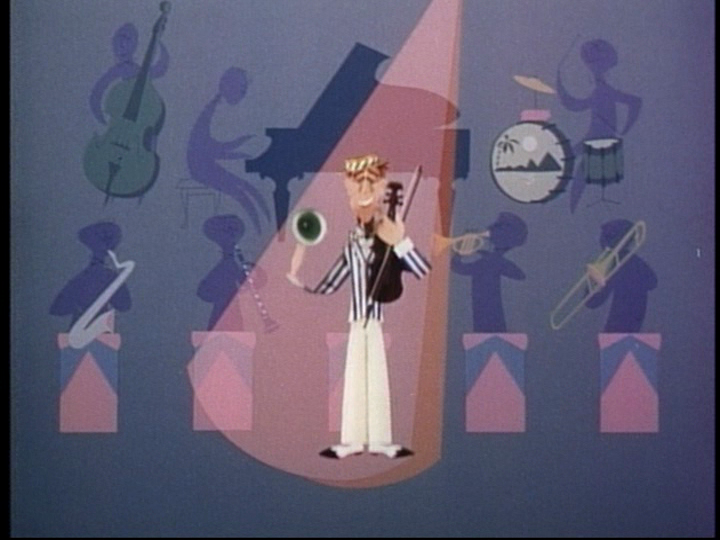
Ludwig moves to the Great Depression era of songs, and turns to a picture of a signer with a backing band

Ludwig moves to the Great Depression era of songs, and turns to a picture of a signer with a backing band

Moving to the Great Depression era, Ludwig has a bit of a panic when he talks about how he lost his money in the stock market. He bought a piano with his last nickel, and wrote the song “Although I Dropped $100,000.” The song parodies the popular songs of the time period, including “Let a Smile Be Your Umbrella” and “Stormy Weather.” Ludwig explains after this that he invented the microphone, and by doing so, invented the idea of a crooner. He wrote the love ballad “I’m Blue for You, Boo-Boo-Boo-Boo-Boo,” which has the singer imitating the crooning style of Bing Crosby. After this, Ludwig moved on to the style of Boogie Woogie, with three singers singing “The Boogie Woogie Bakery Man” which is allusion to the swing style, particularly the songs of the Andrews Sisters.

Ludwig then turns on the television to his favorite music show, The Von Drake Hour, which plays many of his hit songs. The song that starts to play is “Puppy Love is Here to Stay,” which is the beginning of the “modern era” of music (modern for the time the short was released). Soon, Ludwig turns off thetelevision and takes the audience into his hi-fi studio to play his final song, “Rock, Rumble, and Roar” which pays homage to the early rock and roll era in popular music. He forgot the record, and decides to play the song himself, which is segmented with snippets of all the earlier songs. The short ends with the house shaking and rocking along with the raucous music Ludwig is playing.

December 16

December 16, 1983 – The Mickey Mouse Cartoon Featurette Mickey’s Christmas Carol Premieres in Theaters

vlcsnap-2013-12-16-19h31m33s118

“What’s this world coming to, Cratchit? You work all your life to get money, and people want you to give it away!”

On December 16, 1983, the Mickey Mouse cartoon featurette Mickey’s Christmas Carol premiered in theaters. The 25 minute film was based on the classic Charles Dickens story A Christmas Carol, with Disney comic book staple Uncle Scrooge McDuck playing the part of Ebenezer Scrooge. Mickey portrays Bob Cratchit, Goofy plays Jacob Marley’s ghost, and Donald Duck plays Fred, among several other classic Disney characters. This was Mickey’s foray back into theaters after his last short film in 1953, The Simple Things. The idea for the film went back to the 1974 record of the same name. The film was released on a double billing with the film The Rescuers. It was eventually nominated for an Academy Award – the first Mickey Mouse short to be honored so since 1948’s Mickey and the Seal; it would lose to Sundae in New York. The film was directed by Burny Mattinson, with story by Mattinson, Tony L. Marino, Ed Gombert, Don Griffith, Alan Young, and Alan Dinehart. It stars Alan Young as Scrooge, Wayne Allwine as Mickey Mouse, Clarence Nash as Donald, Hal Smith as Goofy, Eddie Carroll as Jiminy Cricket, and Will Ryan as Willie the Giant and Pete.

The film begins on Christmas Eve in London, and Scrooge is heading back to his office, where he lectures employee Bob Cratchit for using a piece of coal in the stove. Cratchit works up the nerve to ask Scrooge for half of Christmas Day off, and Scrooge agrees, so long as his pay is docked. Scrooge goes back to his desk to count his money, but is soon interrupted by the appearance of his nephew Fred. Fred brings his uncle a wreath, but he and Cratchit are soon dismayed at Scrooge’s attitude about Christmas. Fred invites his uncle to Christmas dinner, but is soon kicked out of the office. After Fred leaves, two men arrive asking Scrooge for a donation for charity. He sends them on their way without a donation, and laments to Cratchit about how he doesn’t understand why everyone wants him to give his money away.

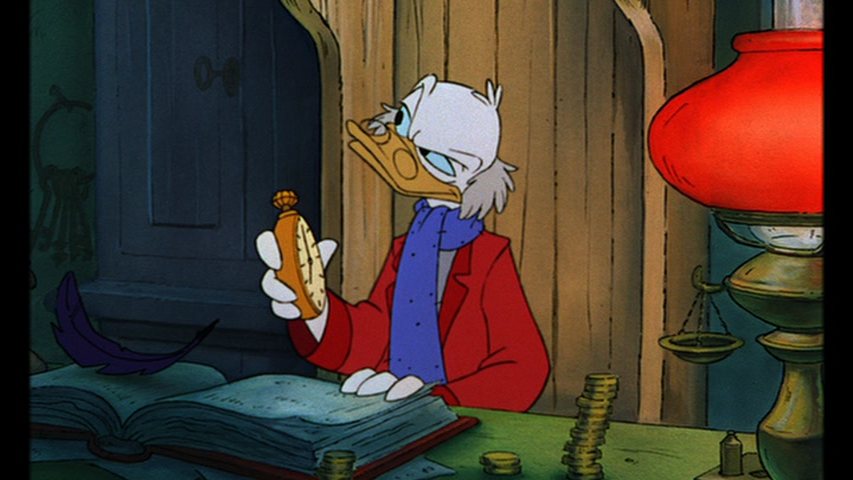
Scrooge eyes the clock, but begrudgingly lets Cratchit go home for Christmas

Scrooge eyes the clock, but begrudgingly lets Cratchit go home for Christmas

That evening, Cratchit leaves merrily to join his family for Christmas, and Scrooge heads home in the late London night. As he arrives home, his door knocker suddenly turns into the face of his old partner, Jacob Marley. Scrooge is startled, but thinks nothing of it. A shadow follows him up the stairs, and although Scrooge tries to hide, the ghost of Marley finds him and warns him of his fate – to have to carry heavy chains on his soul for all eternity, thanks to his sins. Marley tells him that three spirits will meet him through the night, should he want to avoid that fate. Scrooge heads to bed, worried about the spirits, but soon dismisses them and goes to sleep. The Ghost of Christmas Past arrives at one, and takes Scrooge back to his past, when he used to be kinder and believed in Christmas. After a dizzying flight through London, Scrooge arrives back at his old employer’s Christmas Party. Scrooge spies himself in the corner, and watches as he falls in love with Isabelle, the love of his life.

As they continue watching Scrooge’s life, they see the decline of Scrooge’s love for Isabelle, as money has become his only love. She leaves him, and Scrooge begs the spirit to take him home. When the clock strikes two, the Ghost of Christmas Present arrives, who is surrounded by the food of generosity. Scrooge argues that no one has ever offered him generosity, but the ghost shoots back that Scrooge never gave reason for anyone to show him any. The ghost takes Scrooge to the house of Bob Cratchit, where Scrooge sees his family, with the sickly Tiny Tim. Scrooge is concerned with the lack of food the Cratchits have, as well as the welfare of Tiny Tim, who may not live to see another Christmas. As Scrooge asks the spirit what happens to the boy, the spirit disappears, and all the lights around him go out.

Cratchit and his family mourn the loss of their youngest child, Tiny Tim

Cratchit and his family mourn the loss of their youngest child, Tiny Tim

The Ghost of Christmas Future arrives, with Scrooge being taken to the graveyard. Scrooge sees Cratchit mourning over his son’s grave, but when Scrooge begs for Tiny Tim’s life, he is interrupted by the laughter of two weasels, who are digging the grave for Scrooge. Scrooge is taken to his plot and sees his name on the tombstone, and is then pushed into the grave by the spirit. As the spirit laughs, Scrooge begs for his life, pleading that he will change. As he falls, he finds that he is back in his own room, arriving home on Christmas morning. Scrooge rushes outside, and starts his day by making a huge donation to the two men from yesterday. Scrooge then runs into his nephew Fred, and accepts the invitation to Christmas dinner before going shopping. He rushes over to Cratchit’s house, and pretends to be the same old Scrooge. He soon reveals his new demeanor, making Cratchit his partner and giving him a raise. The film ends with a celebration in the Cratchit house, with Scrooge acting as another father to Cratchit’s children.

December 3

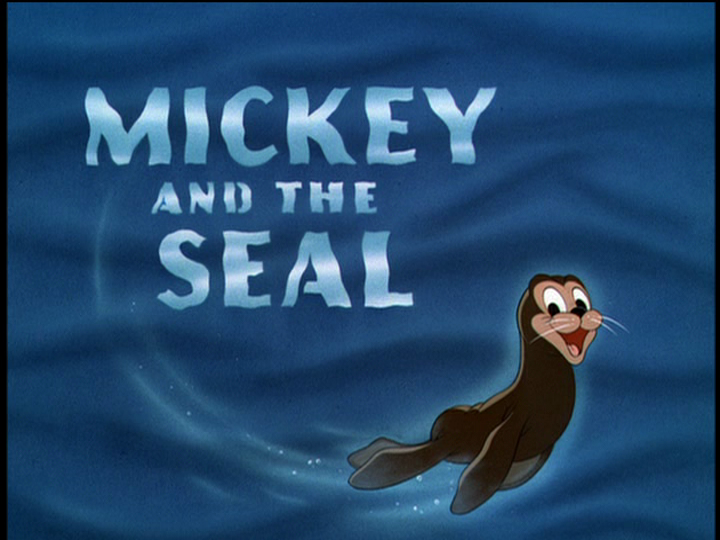
December 3, 1948 – The Mickey Mouse Short Film Mickey and the Seal is Released to Theaters

vlcsnap-2013-12-03-16h18m38s63

“Look who followed me home, Pluto!”

On December 3, 1948, the Mickey Mouse short film Mickey and the Seal was released to theaters. The short was nominated for an Academy Award, but lost to the Tom & Jerry short film The Little Orphan. The short was directed by Charles Nichols, with story by Nick George and Milt Schaffer.

The short begins in the seal park, where Mickey is feeding fish to the barking seals. He throws one into the seal pen, which is scarfed up by the smallest seal of the bunch, who performs tricks for Mickey in order to get more fish. When Mickey announces he has no more fish for the day, the baby seal decides to hide inside Mickey’s picnic basket, hoping to find more fish in Mickey’s home. Mickey takes the basket home, and is greeted by Pluto. Pluto is rather upset that there’s no food in the basket left for him, and he sulks until the basket starts to bark. The baby seal jumps out of the basket, scaring the poor dog, and Pluto tries to warn Mickey, who has started preparing a bath. Unfortunately, Mickey thinks Pluto is just messing around, and scolds him before ordering him outside.

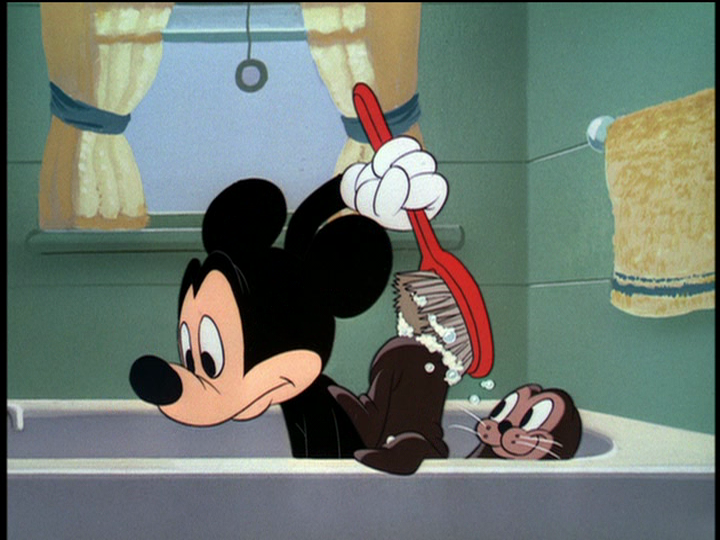
Mickey notices something is wrong when he is scrubbing something, but it's not his back

Mickey notices something is wrong when he is scrubbing something, but it’s not his back

The seal has started exploring Mickey’s home, and when he discovers the bathtub, he decides to jump right on in. Mickey then enters the tub and starts washing, unaware that the seal is in the tub. He soon notices something is up when the seal starts using his scrub brush on his head. Pluto tries to alert Mickey in the bathroom window, but Mickey just pulls down the shade. Mickey soon discovers the seal in his tub, but instead of being angry, he protects the seal from an angry Pluto. Mickey jokes that they’ll keep him for a pet, but instead decides to return him to the seal park. As Mickey and Pluto walk away, the seal explains to his friends all about his adventures in Mickey’s house. When Mickey arrives home, he is surprised to find all of the seals in his bathroom, using the tub. Pluto glares at Mickey, but all Mickey can do is smile sheepishly.

November 28

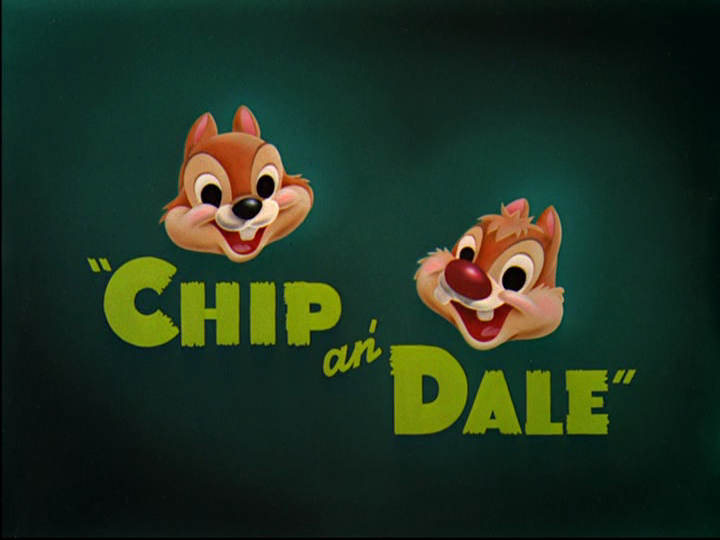
November 28, 1947 – The Donald Duck Short Film Chip an’ Dale Premieres in Theaters

vlcsnap-2013-11-28-08h22m53s6

“Doggone freezing weather. A guy never gets a chance to sleep around here.”

On November 28, 1947, the Donald Duck short film Chip an’ Dale premiered in theaters. This short is the first time the two chipmunks have been named, and also marks the first time they are Donald’s adversaries. The short was nominated for an Academy Award, but lost to Warner Brothers’ Tweetie Pie. The short was directed by Jack Hannah, with story by Dick Kinney and Bob North.

A snowstorm is raging outside, and inside his cabin, Donald is trying desperately to stay warm. He notices that the snow has come down his chimney and put out his fire. Out of firewood, he decides to go out with his axe and chop down a nearby dead tree, unaware that Chip and Dale live inside with their stores for the winter. The chipmunks watch as Donald takes off with their home, and follow him into his cabin. They sneak past him to reclaim their nuts, but are unable to grab them before Donald starts the fire. Once again, they try to sneak past him, and decide to put out the fire themselves.

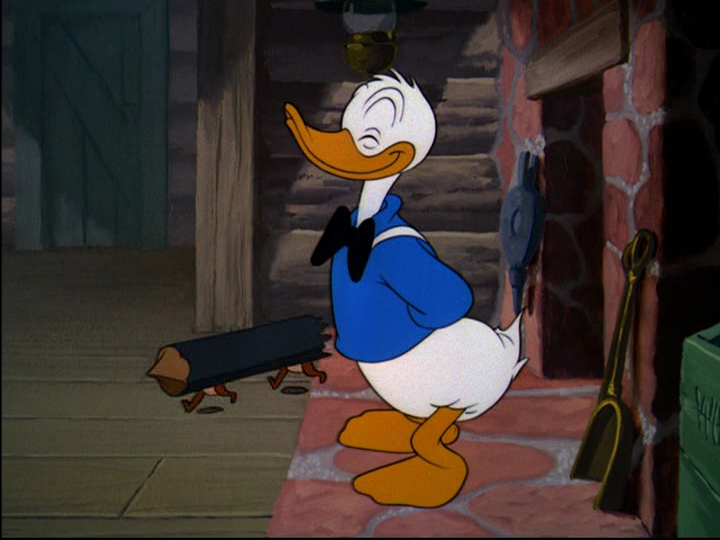
As Donald enjoys the fire he's made, he's unaware that the two chipmunks are taking away the log

As Donald enjoys the fire he’s made, he’s unaware that the two chipmunks are taking away the log

As Donald thinks he’s enjoying the fire, he suddenly notices the log walking right in front of him. He lets them walk out the door, taking the log as they go, and slams the door behind them. The chipmunks take another approach of dropping snowballs down the chimney, putting out the fire. Donald traps the two in a snowball and sends them flying down the roof before starting his fire again. Chip gets the idea of rolling a snowball down a steep hill on a clear collision course with Donald’s cabin. When Donald opens the door, the giant snowball sends him flying into his backdoor, encased in snow. The two chipmunks walk happily away with their log, but not before Dale is able to give Donald a well-placed kick in the rear.