RSS Feed

Tag Archives: 1950s

September 22

September 22, 1950 – The Pluto Short Film Camp Dog Premieres in Theaters
vlcsnap-2015-09-22-17h13m59s237

“Wow!”

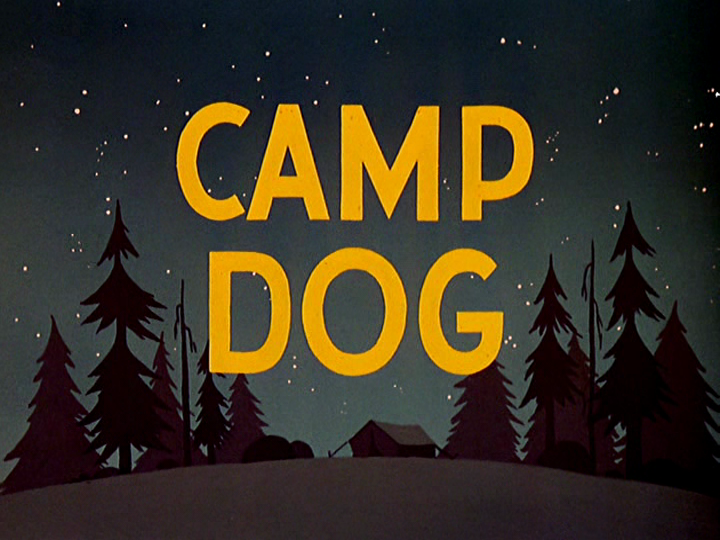
On September 22, 1950, the Pluto short film Camp Dog premiered in theaters. This is the fourth and final film that features the coyote Bent-Tail as Pluto’s nemesis, and the third with Bent-Tail’s son Junior. The short was directed by Charles Nichols, with story by Milt Schaffer and Dick Kinney.

Bent-Tail and Junior are howling at the moon, when Junior smells something delicious. The pair run down from their perch to find a camper having set up his tent, as well as hanging his food up a tree. As they try to bring the food down, Pluto manages to chase Bent-Tail away, though he misses Junior. Bent-Tail continues to get the food, while Junior sets his sights on eating Pluto. Bent-Tail, however, puts Pluto back in his tent before successfully grabbing the food, though his holding on to the rope sends him up the tall tree branch. After a series of mishaps, the two gather all of the food to make their way out, with Junior once again grabbing Pluto. After putting Pluto back, the two set off, but stop when Bent-Tail accidentally steps in a fire. Pluto wakes up after he is pulled out for a third time, but they manage to fool him before escaping. Pluto finally realizes the ruse, but finds himself trapped in the tent. After he rushes out, he finds himself falling over a cliff into the river below. As Bent-Tail and Junior sit down to eat, they are interrupted by Pluto, who decides to help himself to the meal. Hearing his owner come back from fishing, and seeing the campsite in a shambles, Pluto runs away to join the coyotes in their howling.
August 17

August 17, 1954 – The Special Short Film Willie the Operatic Whale is Released to Theaters

vlcsnap-2015-08-17-16h05m37s3

“A signing whale? Whaddya know! Imagine that! I don’t believe it! I don’t believe it!”

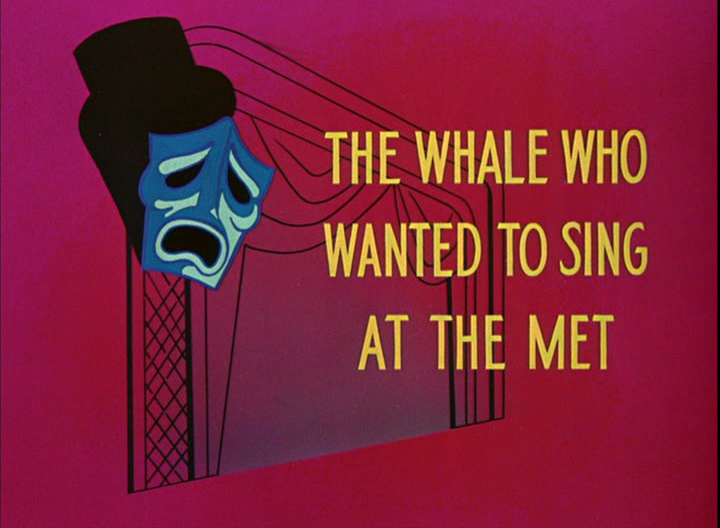
On August 17, 1954, the special short segment Willie the Operatic Whale was released to theaters. A segment from the animated feature film Make Mine Music, it was originally entitled “The Whale Who Wanted To Sing At The Met.” All the voices in the short were performed by Nelson Eddy.

The segment begins with how the story began, with a small segment in the newspaper about a mysterious voice heard at sea, which then became a front page story, then a screaming headline. Scientists are split on the issue, with one camp believing that it was impossible, while some believe it had to be possible. Then, Impresario Professor Tetti Tatti weighs in, believing that the whale must have swallowed an opera singer, and is determined to retrieve the poor victim. Whitey the seagull finds the newspaper announcing Tetti Tatti’s search for the whale, and tries to get his friend Willie the Whale to sing for Tetti Tatti. Willie is serenading the sea animals when Whitey finds him. Willie heads over to Tetti Tatti’s ship and starts serenading him with some Figaro. The sailors refuse to shoot the harpoon as they listen to Willie’s beautiful singing. Willie could also sing in three separate voices, all at the same time, and was considered a singing miracle. However, Tetti Tatti is still convinced that there are three opera singers inside Willie, and desperately grabs at the harpoon; fortunately, he is stopped by the sailors. Willie is then seen singing on the stage of the Met, singing grander and grander roles. Unfortunately, the singing at the Met was all a dream, as Tetti Tatti got his way and managed to harpoon Willie, killing him. Whitey flies around, depressed that his friend has been murdered, but is reassured by the narrator that people aren’t used to miracles, and Willie is singing in Heaven. Willie is seen singing in the clouds to a sold out show.

August 16

August 16, 1955 – The Conestoga Wagons Attraction Opens in Disneyland

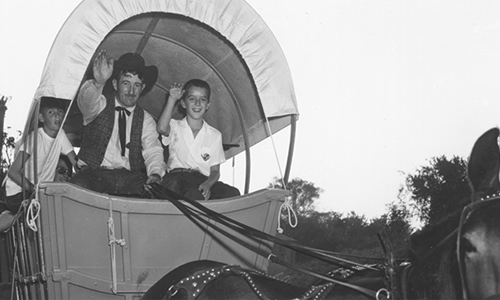
Conestoga Wagons

“It was the Conestoga, not the Covered Wagon, that developed the West.”

On August 16, 1955, the Conestoga Wagons attraction opened in Disneyland’s Frontierland. The attraction, keeping with the Western theme of the area, took guests around the Rivers of America on trails shared with stagecoaches. The wooden wagons were pulled by horses, and featured popular slogans of the era painted on the canvas tops. The attraction was closed in 1959.

July 31

July 31, 1955 – The Casey Jr. Circus Train Attraction Opens in Disneyland

Casey Junior

“All aboard for a ‘mini’ tour of the fairytale homes and villages made famous in classic Disney animated movies.”

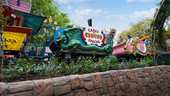
On July 31, 1955, the Fantasyland attraction Casey Jr. Circus Train opened in Disneyland. Based on the train from the animated feature film Dumbo, the attraction takes guests around the Storybook Land area, giving guests a splendid view of scenes from classic Disney animated features. The attraction, while supposed to be available on opening day of Disneyland, was delayed for two weeks due to mechanical problems. Several of the train cars were also taken from the original merry-go-round as it was refashioned as King Arthur Carousel. A version of the attraction was added to Disneyland Paris, known as Le Petit Train du Cirque.

July 22

July 22, 1955 – The Tomorrowland Attraction Rocket to the Moon Opens in Disneyland

vlcsnap-2015-07-22-19h31m33s159

“Hello. Welcome to the moon.”

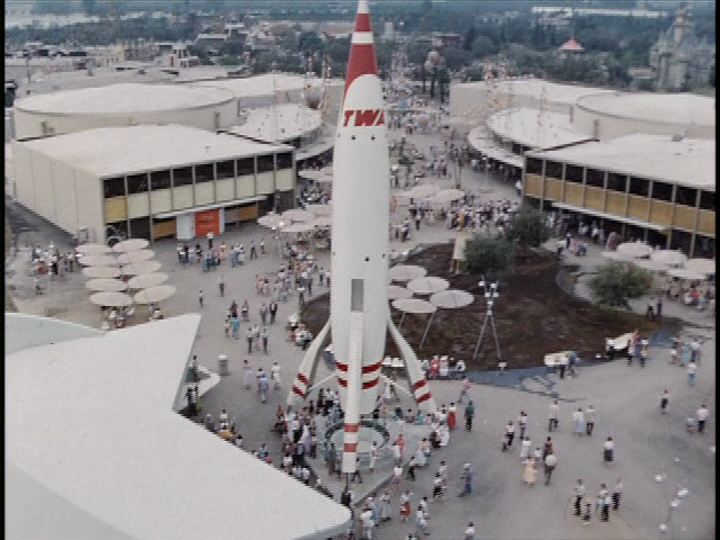
On July 22, 1955, the Tomorrowland attraction Rocket to the Moon opened in Disneyland. Originally sponsored by TWA from 1955 to 1961, the attraction was a huge draw to guests as space travel was still in its infancy. Guests would sit inside a pseudo rocket, staring at space through projections on the ceiling and the floor. When the United States finally went to the moon, the attraction began to look outdated, and was changed to Mission to Mars in 1975. However, when Tomorrowland was remodeled in 1966, the main rocket that stood as the icon for the attraction was destroyed.

July 18

July 18, 1956 – The Special Short Film Jack and Old Mac is Released to Theaters

vlcsnap-2015-07-18-19h20m25s79

“Go Mac, go Mac, go…run to the barnyard, join the fun…”

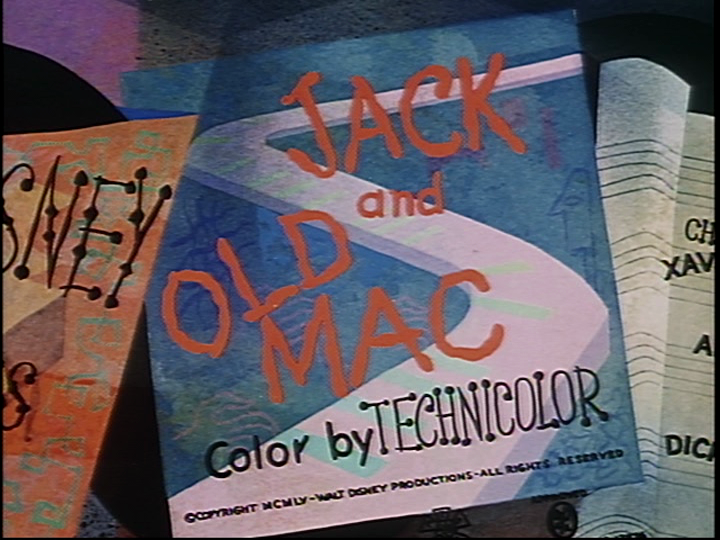
On July 18, 1956, the special short film Jack and Old Mac was released to theaters. It was directed by Bill Justice, with story by Dick Kinney and Roy Williams.

The first record, “The House that Jack Built,” takes specific words from the popular rhyme and turns them into drawings. This is then followed by an updated version of “Old McDonald Had a Farm,” turning into “Old McDonald Had a Band.” Old Mac plays the piano, while his wife chops firewood. The members of the farm accompany Old Mac, singing of the pig that plays the saxophone, the dog that plays the bass, the cow that plays the horn, and the horse that plays the drums. Old Mac then gets chickens to play the piano for him while everyone dances in the barnyard. Finally, Old Mac’s wife, having had enough of chopping firewood while her husband plays the piano, stops the party by hitting him over the head with a rolling pin.

July 16

July 16, 1954 – The Special Short Film Casey at the Bat is Released to Theaters

vlcsnap-2015-07-16-18h46m23s118

“Casey’s the guy with his eye on the ball, but mostly the ladies. Casey’s the guy who’s the idol of all – but mostly the ladies.”

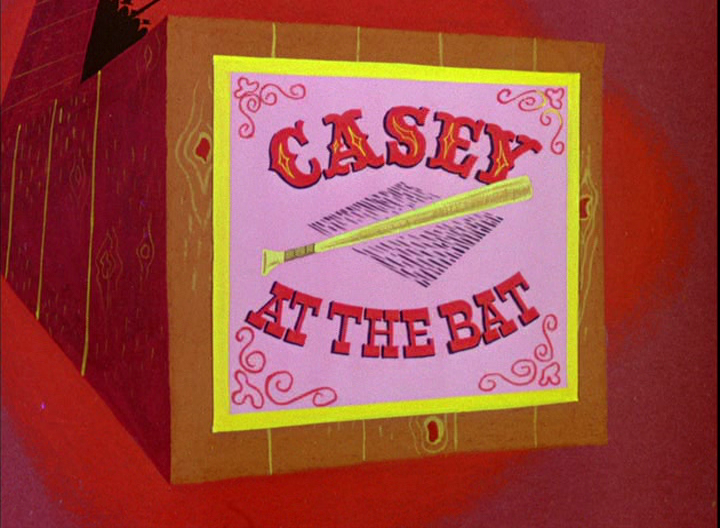
On July 16, 1954, the segment turned short film Casey at the Bat was released to theaters. Originally based on the poem by Ernest Thayer, the short was a segment in the animated package feature film Make Mine Music. It was narrated by Jerry Colona.

The time is 102, and everyone is heading to the ball game to see the game between Mudville and Burbank, particularly Casey, “the pride of them all.” The game doesn’t look good for Mudville, as they are losing by two. Each batter before Casey is bumbling, but they somehow manage to load the bases just as Casey gets up to bat to bring them home. Although distracted by the ladies, Casey leaves the crowd to once again be the hero, full of swagger and bravado. The pitcher is afraid to throw the ball, sweating profusely. When the ball arrives, Casey refuses to swing, and the crowd argues with the umpire’s call of a strike. Casey is able to calm the crowd down, and waits for his new pitch, though he ignores it again, resulting in another strike. Finally, the ball comes for a third time. Unfortunately, there is no joy in Mudville, as Casey struck out, and is left crying in the rain, trying once again to hit the ball, but has seemingly lost his ability.

July 15

July 15, 1955 – The Special Short Film The Flying Gauchito is Released to Theaters

vlcsnap-2015-07-15-19h24m36s67

“It’s a tale told by an old gaucho from Uruguay.”

On July 15, 1955, the segment turned short film The Flying Gauchito was released to theaters. It was originally a segment of the animated feature film The Three Caballeros.

The short begins in Uruguay, where a little bird came out of his nest early in the morning to see a little gauchito sneak out to go hunting. The gauchito heads up the mountain range to hunt a condor, and spots a large bird in a nest, only to find that it was actually a flying donkey. The donkey spots the gauchito and steals his hat, and the gauchito works quickly to capture him. The gauchito sets to work training the donkey before setting off to the race at the fiesta the next day. With a grand prize of 1,000 pesos, the two plan on winning the race, although they are laughed at by the crowd. The race doesn’t begin very well, with the crowd laughing at the donkey’s slow pace. Finally, gauchito reveals the donkey’s wings, and the two fly down the track as fast as can be, winning the pesos. Unfortunately, the ruse is up when the donkey flies up into the air, taking the gauchito far away with him.

July 13

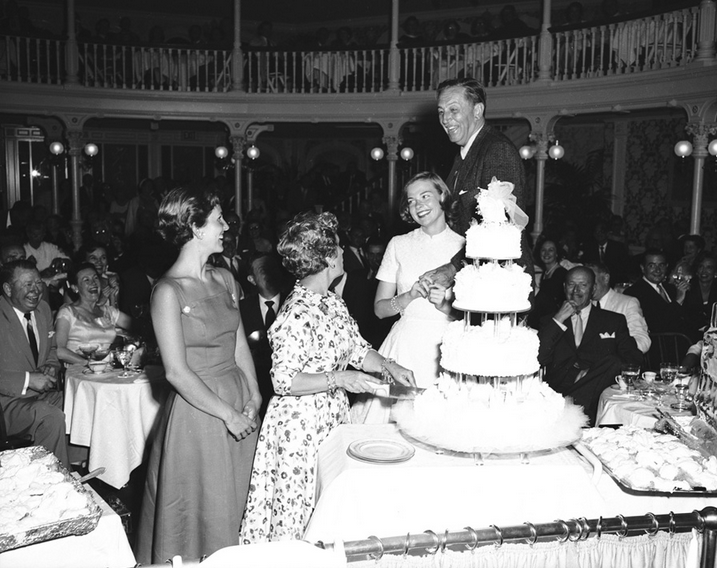
July 13, 1955 – Walt and Lillian Disney Celebrate Their 30th Anniversary at Disneyland

Walt Lillian Anniversary

“Hope you can make it – we especially want you and, by the way, no gifts please – we have everything, including a grandson!”

On July 13, 1955, Walt and Lillian Disney celebrated their 30th wedding anniversary at the yet to be opened Disneyland Park, four days before the official opening. Three hundred guests (including the likes of Spencer Tracy and Cary Grant) gathered for a “Tempus Fugit Celebration,” beginning with a tour of Main Street led by Walt, and were ferried to the Golden Horseshoe for dinner on the Mark Twain paddlewheeler. Guests there then experienced the first, if unofficial, performance of the Golden Horseshoe Revue, followed by impromptu dancing.

June 30

June 30, 1950 – The Goofy Short Film Motor Mania is Released to Theaters

vlcsnap-2015-06-30-21h37m18s29

“Truly, the average man is a creature of strange and unorthodox habits.”

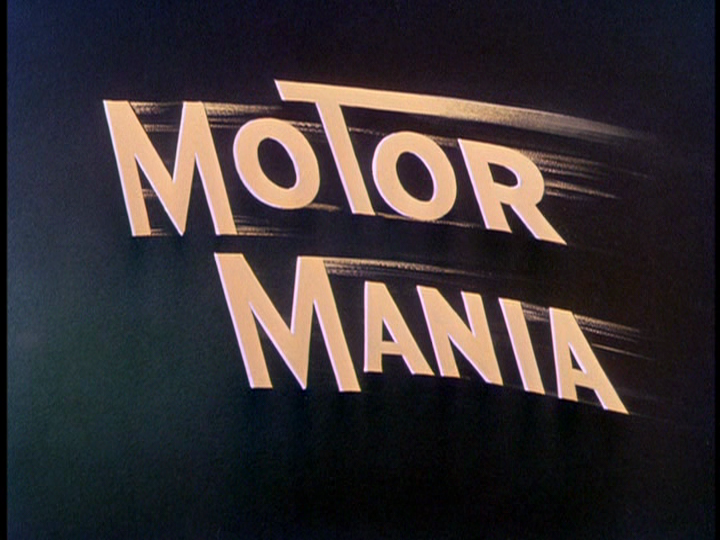
On June 30, 1950, the Goofy short film Motor Mania was released to theaters. Since its release, it has become a favorite of many a driver’s education course. The short was directed by Jack Kinney, with story by Dick Kinney and Milt Schaffer.

The short begins with a look of the average man, namely the specific average man named Mr. Walker. Walker is considered a kind, considerate man, until he gets behind the wheel of his automobile, where he becomes Mr. Wheeler instead. This Jekyll and Hyde story shows how an average man becomes a monster while driving on the highway. Wheeler holds up traffic while enjoying the sunshine, and throws a tantrum when he sits at the signal. He then competes in a road race, but ends up crashing his car into a stoplight. Wheeler continues to be a public menace, with more misfortune befalling him. When Wheeler turns back into Walker and becomes a pedestrian, he finds that many people treat him with disdain and send him flying back onto the sidewalk. Walker reads a newspaper that declares that accidents are multiplying, and once he is back in his car, he becomes Mr. Wheeler again, although he damages his car severely, needing a tow.