RSS Feed

Tag Archives: 1950s

February 22

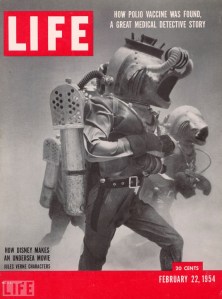
February 22, 1954 – 20,000 Leagues Under the Sea is Featured in LIFE Magazine

Disney Life

“We are delighted that Mr. Disney has seen fit to treat Jules Verne with the proper reverence in his new film, 20,000 Leagues Under the Sea.”

On February 22, 1954, LIFE Magazine featured Disney’s newest live-action adventure as a cover story. The article takes readers behind the scenes of the upcoming film, interviewing several actor-divers, cameramen, and directors, and featured a several-page picture spread of underwater work to create the film.

December 25

December 25, 1953 – The Donald Duck Short Film Canvas Back Duck is Released to Theaters

vlcsnap-2015-12-25-14h03m48s236

“Okay, boys, break it up. What’s the beef?”

On December 25, 1953, the Donald Duck short film Canvas Back Duck was released to theaters. It was directed by Jack Hannah, with story by Jack Kinney and Bill Berg.

Donald is attending a carnival with his nephews, and decides to try one of the “test your strength” machines. He hits the bell and, after his nephews cheer him on, he decides to try another one. After winning several with ease, Donald’s confidence is up, as is the nephews. What they don’t realize is that they’ve been hustled by a little boy, who tells the nephews that his uncle could beat up Donald. Donald laughs at the boy’s assertion, though he is intrigued when he sees the sign that promises $500 should he stay 3 rounds in the ring with Peewee Pete. The boys then spot the ruse – the “boy” is actually Pete’s manager, with Pete being a massive boxer. The boys try to warn Donald, but it’s no use, and all they can do is prepare for the worst. When the bell rings, Donald sets out, but once he spots Pete, he faints. Donald gets a grip and starts the fight, though his fighting consists of dodging and hiding. The boys manage to ring the bell early for the end of the first round, but when round two starts, it’s back to dodging and other trickery. The boys then give Donald a rigged boxing glove full of nails and horseshoes, but what knocks Pete out is a simple tap to his glass jaw. Donald wins the match, and leaves with nothing more than a black eye.

December 14

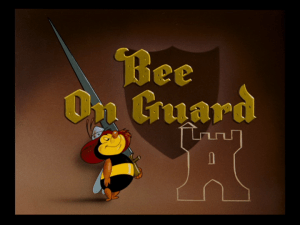
December 14, 1951 – The Donald Duck Short Film Bee on Guard is Released to Theaters

vlcsnap-2015-12-14-18h48m17s186

“How are you, buzz buzz?”

On December 14, 1951, the Donald Duck short film Bee on Guard was released to theaters. It was directed by Jack Hannah, with story by Nick George and Bill Berg.

A tall tree trunk has been turned into a castle hive for bees, and they set out to gather what they need to produce honey, leaving one bee behind to guard the castle. The bees set to work in Donald’s nearby garden, and he becomes excited about the prospect of honey. He follows them back to the hive and attempts to take the honey, but is thwarted by the lone guard. He heads home to create a giant bee costume, then attempts to trick the guard into believing he’s a part of the hive after the bees depart again. While the guard is occupied, he steals the honey from the hive and “flies” away. The rest of the bees return, and find the honey missing and the guard asleep. The guard is booted from the hive, and finds a trail of honey leading to Donald’s house. Discovering the ruse, the guard attacks Donald, and the other bees watch as the two duel. The other bees cheer when the guard wins the fight, and he is honored within the hive.

November 24

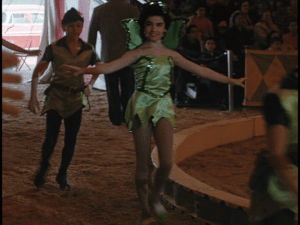
November 24, 1955 – The Mickey Mouse Club Circus Opens in Disneyland

Mickey Mouse Club Circus

“All the girls were dressed like Tinkerbell…it was pretty dangerous, but it was fun.” – Mouseketeer Mary Espinosa

On November 24, 1955, the Mickey Mouse Club Circus opened in Disneyland; the attraction is considered one of Walt’s few failures. The circus, itself a way to get some publicity for the show, featured several of the popular cast members, including Annette Funicello and Doreen Tracey. The kids would perform various circus acts, but the failure of the circus came in attendance – Disneyland had so many things to explore, and people didn’t want to attend a circus while there. The show lasted one holiday season before it was closed on January 8, 1956.

November 23

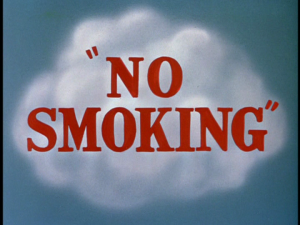
November 23, 1951 – The Goofy Short Film No Smoking is Released to Theaters

vlcsnap-2015-11-23-17h27m40s229

“Smoking became a new habit in the old world.”

On November 23, 1951, the Goofy short film No Smoking was released to theaters. It was directed by Jack Kinney, with story by Milt Schaffer and Dick Kinney.

The story begins with the history of smoking, beginning with the time of Columbus, and going through the ages. However, modern smoker George Geef has made it a rather filthy habit, with cigarette butts strewn everywhere and a cloud of smoke constantly around him. His schedule revolves around when to have his next cigarette, but Geef is also plagued by irritated eyes, coughing, and wheezing. He finally resolves to quit, only he finds it a bit tougher than he thought. He battles himself with his habit, finding temptation everywhere. He starts to go mad with the need for a smoke, but can find no relief. He finally gets a cigar, but it explodes in his face.

November 9

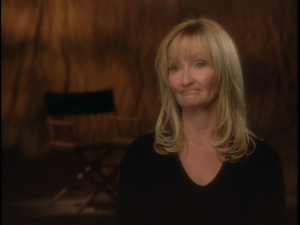
November 9, 1955 – Actress and Disney Legend Karen Dotrice is Born

vlcsnap-2015-11-09-17h08m57s45

“My first impression of [Dick van Dyke] was, ‘Wow, I get to do this for nine months? This is awesome!’”

On November 9, 1955, Karen Dotrice was born in Guernsey, off the coast of Normandy, to two Shakespearean actors. Surrounded by actors of great renown, she made her acting debut at the age of four in the Royal Shakespeare Company’s The Caucasian Chalk Circle. It was in this production where she was scouted by Disney, and soon flew across the Atlantic to the Disney Studios in Burbank, California. Her father was on tour in England as King Lear, so “Uncle Walt” as she came to call him took care of her and her family as Dotrice worked. Her first film for the studio was The Three Lives of Thomasina, along with co-star Matthew Garber, and the two were then cast in the film Mary Poppins, which brought her newfound fame around the globe. Her final film for Disney was The Gnome-Mobile, after which she went back to England to star in films and the television series Upstairs, Downstairs. She returned to the United States in the 1980s, and retired from acting in 1984 to focus on raising a family. She was awarded as a Disney Legend in 2004.

October 31

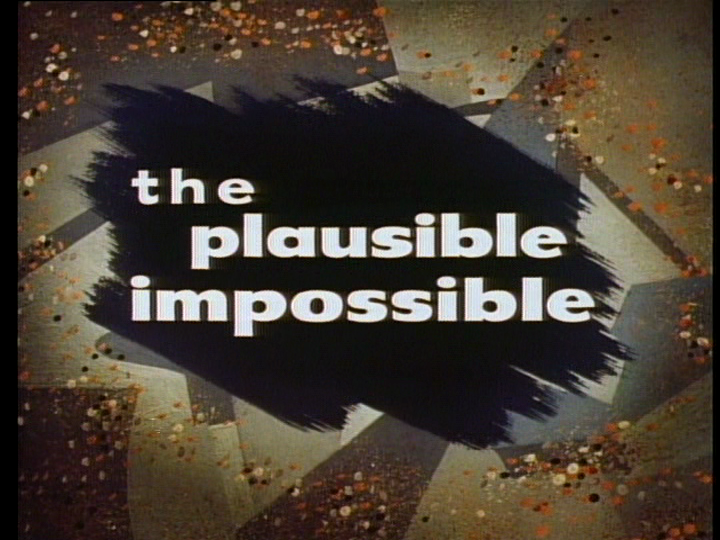
October 31, 1956 – The Disneyland Anthology Episode “The Plausible Impossible” Premieres
vlcsnap-2015-10-29-10h07m17s59

“The will illustrate the principle in animation which we call the ‘plausible impossible.’ [It] means taking something that is against the laws of nature – something impossible – and making it appear rational, and acceptable.”

On October 31, 1956, the episode of the Disneyland anthology series “The Plausible Impossible” premiered on ABC. The episode was written by Dick Huemer, with animation sequences directed by Wilfred Jackson, and live action sequences directed by William Beaudine.

The episode begins with Walt showing some drawings that were made for a scene in Snow White and the Seven Dwarfs that was never used. He then introduces the term ‘plausible impossible’ from the Disney book The Art of Animation, and explains that this was not a term the animators invented, but an animation principle that goes back centuries. The history begins with the Egyptians, with the animations of the gods, and the Chinese animating dragons. The segment from Fantasia – “The Rite of Spring” – then is shown, along with the theory that the Chinese conception of dragons may go back to the stories of the dinosaurs. The explanation then moves on to Greek mythology, before applying plausible impossible techniques to the animated cartoon. Disney then relates how impossible cartoon scenarios have some sort of basis in fact. He also introduces the concept of “correctness in sensation,” using the feeling of riding an elevator to demonstrate the squash and stretch techniques. Each “plausible impossible” concept has its roots in the physical and psychological. This then moves into giving life to inanimate objects, and introduces the Mickey Mouse short film Thru the Mirror.
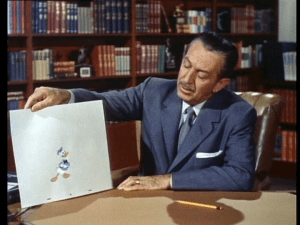
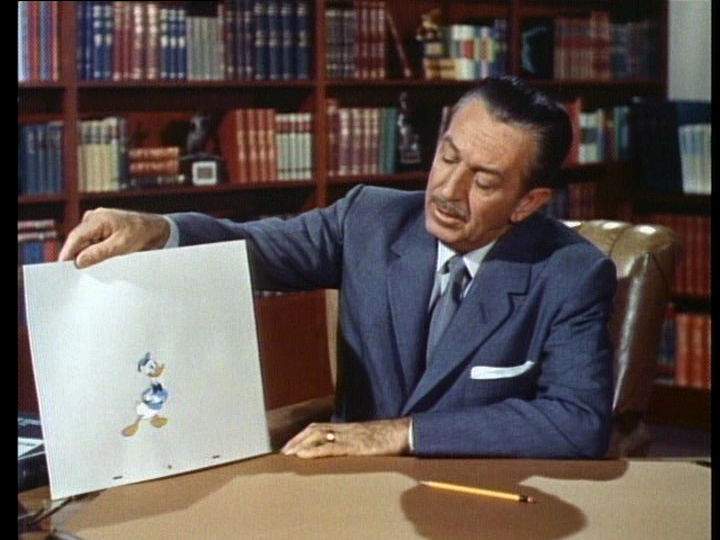
Walt introduces a recently drawn Donald, asking him to be his volunteer

Walt introduces a recently drawn Donald, asking him to be his volunteer

After the short, Walt then shows how an animated character is created, with a magic pencil drawing Donald Duck. When Walt mentions the importance of sound, Donald starts to talk, and agrees to help Walt with a demonstration. As Walt explains different sound effects, poor Donald bears the brunt of the demonstration. Donald flees the demonstration and hides on Walt’s desk, with Walt continuing the demonstration without him, though Walt manages to tempt him back with food. This then leads to the Donald Duck short film Donald’s Cousin Gus. Walt then surprises the audience with the complete showing of the unseen test animated sequence drawn for Snow White and the Seven Dwarfs after some accompanying scenes from the finished film. The final segment of this episode is about program music, which is a story put to music. Using the classic piece “Night on Bald Mountain,” Walt places it in several animated features, including “The Sorcerer’s Apprentice” from Fantasia, and a scene from Bambi. The true scene from Fantasia with the music is shown, with the music driving the story.
October 19

October 19, 1955 – The Disney Anthology Episode “The Story of the Silly Symphony” Airs

TSOTSS

“Next week, Walt Disney brings you ‘The Story of the Silly Symphony.’”

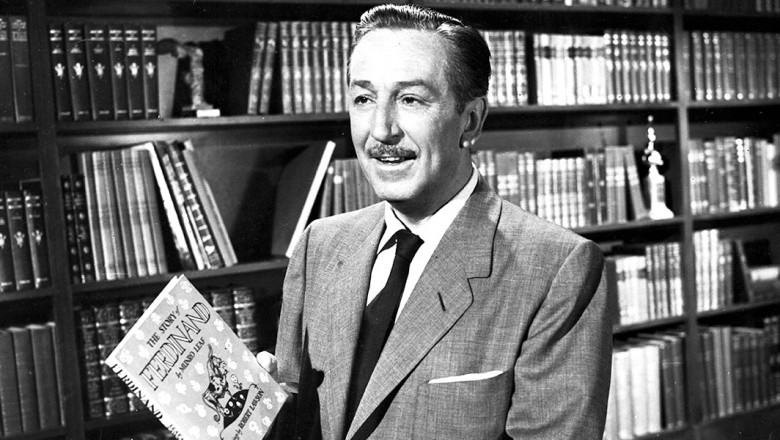
On October 19, 1955, the episode of Disneyland entitled “The Story of the Silly Symphony” aired on ABC. The episode covered some of the more popular entries in the Silly Symphony line, including The Practical Pig, Three Orphan Kittens, Little Hiawatha, and The Old Mill, as well as the special short film Ferdinand the Bull. The episode was directed by Clyde Geronimi and written by Bill Peet. It is one of a select few episodes to cover the Silly Symphony line.

October 5

October 5, 1955 – The Disneyland Hotel Opens

Disneyland Hotel

“Be surrounded in the spirit and wonder of Disneyland past and present.”

On October 5, 1955, the Disneyland Hotel opened across the street from the Disneyland Park. When the park was in development, Walt Disney wanted to build a hotel nearby, but didn’t have the funds to do so. Entrepreneur Jack Wrather, a friend of Walt’s, was convinced to build the first Disneyland Hotel, a simple motor inn with only 100 rooms. The hotel, owned under the Wrather Corporation, grew over the years, and after Walt’s death, the Disney Company decided that it was time that it owned the hotel. In 1988, after acquiring the Wrather Corporation, they not only gained complete control of the hotel, but the Queen Mary in Long Beach as well. The Disneyland Hotel is notable for its connection to the park by monorail, making it one of the most popular hotels on the Disneyland property. The hotel is also known for its selection of restaurants, the monorail-themed pool, and its three towers: Adventure, Fantasy, and Frontier.

October 2

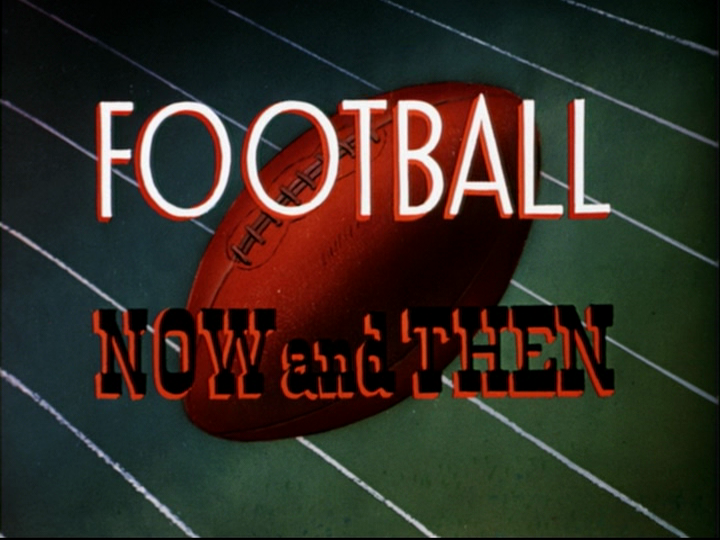
October 2, 1953 – The Special Short Film Football Now and Then is Released to Theaters

vlcsnap-2015-10-02-18h10m02s118

“Every autumn throughout the country, when the frost is on the pumpkins and the leaves begin to fall, there’s something stirring in the air: football!”

On October 2, 1953, the special short film Football Now and Then was released to theaters. It was directed by Jack Kinney, with story by Lance Nolley.

It’s the beginning of football season, and a grandfather and grandson wonder which of their respective teams would win in a match: Grandfather’s Old Time Gladiators of Yesterday, of the Modern Gridiron Heroes of Today. The Modern team has hundreds of members, while the old time team has only a few. The coin toss is done, and the modern team has their kickoff. The Old Timers manage to bulldoze their way across the field to score the first touchdown, while the modern coach is flustered at having so many members to manage and send out to the field. The Modern Team huddles together to figure out their next move, and when they get back to position – the game is interrupted by an advertisement for a dishwasher. The game continues, but the modern team doesn’t seem to be faring very well, though they finally score a touchdown. The score is tied, and at the halftime, the two teams take very different approaches to prepare for the game. The second half is full of chaos and confusion on both sides. The game is tied once again – and once again gets interrupted by the dishwasher commercial. In the end, the grandfather insists that this only proves that everyone should have that kind of dishwasher, and heads out to get one.