RSS Feed

August 18

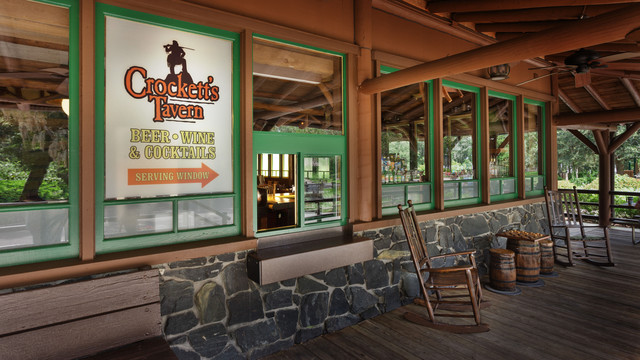
August 18, 1986 – The Quick Service Restaurant Crockett’s Tavern Opens in Walt Disney World

Crocketts Tavern

“Rustle up some drinks and eats at the walk-up window beside Pioneer Hall and enjoy ‘em in a rocking chair on the front porch…”

On August 18, 1986, the quick service restaurant Crockett’s Tavern opened in Walt Disney World’s Fort Wilderness Resort. It replaced the Campfire Snack Bar, and provides specialty appetizers, including chicken wings, Smoke House Nachos, and Uncle John’s Taters: potato skis loaded with fried peppers, onions, parmesan cheese, chive sour cream, and green onions. Specialty cocktails and alcoholic beverages are also available for adults. Unlike most quick services places within the park, Crockett’s Tavern does not accept dining plans.

August 17

August 17, 1954 – The Special Short Film Willie the Operatic Whale is Released to Theaters

vlcsnap-2015-08-17-16h05m37s3

“A signing whale? Whaddya know! Imagine that! I don’t believe it! I don’t believe it!”

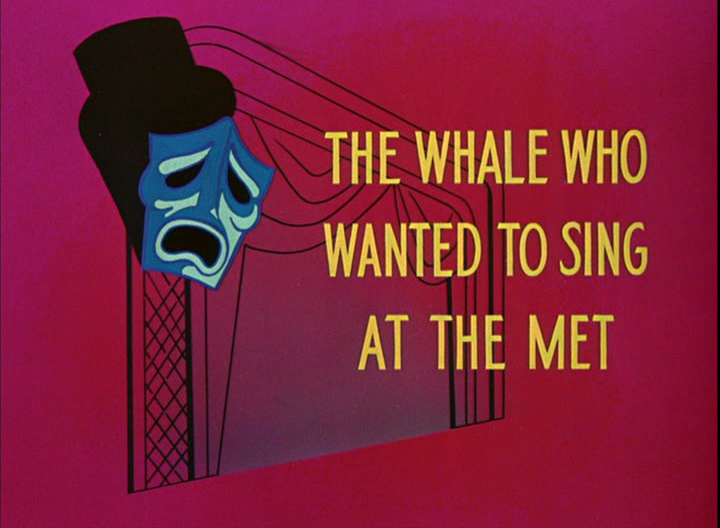
On August 17, 1954, the special short segment Willie the Operatic Whale was released to theaters. A segment from the animated feature film Make Mine Music, it was originally entitled “The Whale Who Wanted To Sing At The Met.” All the voices in the short were performed by Nelson Eddy.

The segment begins with how the story began, with a small segment in the newspaper about a mysterious voice heard at sea, which then became a front page story, then a screaming headline. Scientists are split on the issue, with one camp believing that it was impossible, while some believe it had to be possible. Then, Impresario Professor Tetti Tatti weighs in, believing that the whale must have swallowed an opera singer, and is determined to retrieve the poor victim. Whitey the seagull finds the newspaper announcing Tetti Tatti’s search for the whale, and tries to get his friend Willie the Whale to sing for Tetti Tatti. Willie is serenading the sea animals when Whitey finds him. Willie heads over to Tetti Tatti’s ship and starts serenading him with some Figaro. The sailors refuse to shoot the harpoon as they listen to Willie’s beautiful singing. Willie could also sing in three separate voices, all at the same time, and was considered a singing miracle. However, Tetti Tatti is still convinced that there are three opera singers inside Willie, and desperately grabs at the harpoon; fortunately, he is stopped by the sailors. Willie is then seen singing on the stage of the Met, singing grander and grander roles. Unfortunately, the singing at the Met was all a dream, as Tetti Tatti got his way and managed to harpoon Willie, killing him. Whitey flies around, depressed that his friend has been murdered, but is reassured by the narrator that people aren’t used to miracles, and Willie is singing in Heaven. Willie is seen singing in the clouds to a sold out show.

August 16

August 16, 1955 – The Conestoga Wagons Attraction Opens in Disneyland

Conestoga Wagons

“It was the Conestoga, not the Covered Wagon, that developed the West.”

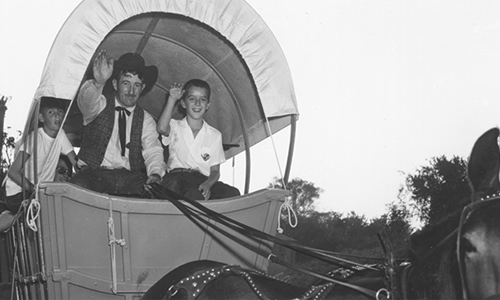
On August 16, 1955, the Conestoga Wagons attraction opened in Disneyland’s Frontierland. The attraction, keeping with the Western theme of the area, took guests around the Rivers of America on trails shared with stagecoaches. The wooden wagons were pulled by horses, and featured popular slogans of the era painted on the canvas tops. The attraction was closed in 1959.

August 15

August 15, 1917 – First Manager of Custodial Operations and Disney Legend Chuck Boyajian is Born

Chuck Boyajian

“We Keep Your Castle Shining.”

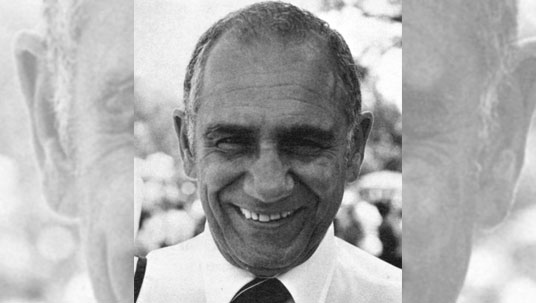
On August 15, 1917, Charles “Chuck” Boyajian was born into an Armenian family in Akron, Ohio. He served in the Navy during World War II, working as a mechanic on an aircraft carrier. After the war, he moved to California with his wife, Alice, and worked as a foreman for American Building Maintenance, which would be contracted to build a new type of amusement park for Walt Disney. Realizing that his own staff would be needed to make his dream into a reality, Walt hired Boyajian to head up the Janitorial Department. Entrusted with the intimidating task of keeping the Magic Kingdom clean, Boyajian managed to create a reputation of spotlessness and productivity that made Disneyland the cleanest theme park on earth. He trained his own “Disney Dynasty” of custodians that were proud to be considered part of the “Team that Chuck Built.” After establishing the department in Disneyland, Boyajian brought his expertise to Walt Disney World in 1971, and then to Tokyo Disneyland in 1983. After retiring in 1981, he was honored with a window on Main Street. Boyajian passed away in 2004. He was honored for his work in 2005 as a Disney Legend.

August 14

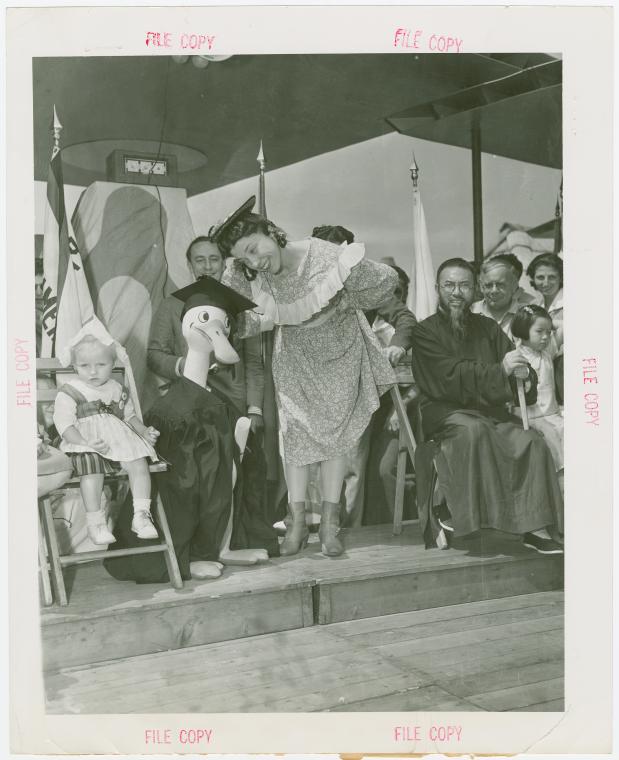
August 14, 1939 – Donald Duck Day is Celebrated at the 1939 World’s Fair

Image courtesy of the New York Public Library

Image courtesy of the New York Public Library

“Donald Duck arrives at National Biscuit Company Exhibit: presents gifts to first 500 juvenile guests and meets Judy Canova.”

On August 14, 1939, it was declared Donald Duck Day at the 1939 World’s Fair, held in New York’s Flushing Meadows-Corona Park. A three foot model of the famous duck was flown in from the Disney Studios to make an appearance beginning at noon. Donald was on hand to show his latest short film, Donald’s Penguin. Donald was also, in tribute to his popularity, awarded an honorary doctorate as the Doctor of International Friendship (D.I.F) from the Professor of American History at Yale University.

August 13

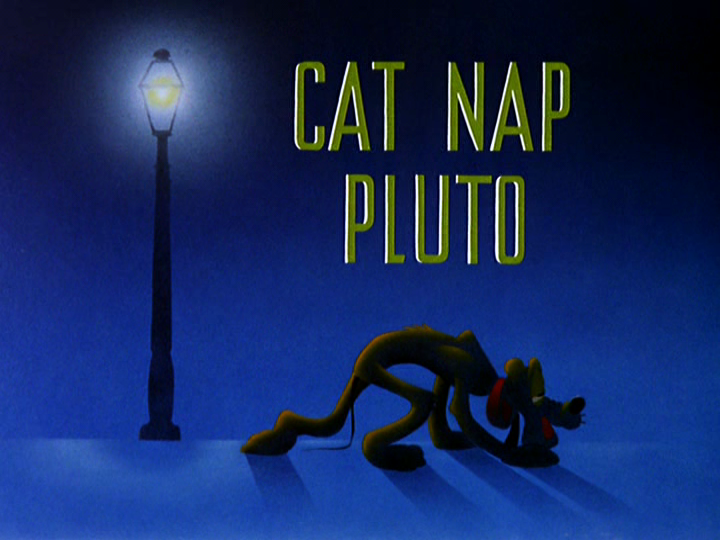
August 13, 1948 – The Pluto Short Film Cat Nap Pluto is Released to Theaters

vlcsnap-2015-08-13-18h07m37s153

On August 13, 1948, the Pluto short film Cat Nap Pluto was released to theaters. This is one of the few shorts that featured the character of Figaro from the animated feature film Pinocchio. It was directed by Charles Nichols, with story by Eric Gurney.

It’s a quiet morning in suburbia, with Figaro snoozing away on his pillow. He goes to wake his friend Pluto, only to find an empty bed. Figaro is soon distracted by the milk man, and spies an exhausted Pluto coming in through the gate. Pluto can barely keep his eyes open, and narrowly manages to get back inside before being greeted by Figaro. Pluto’s Sandman appears and puts Pluto to sleep, which doesn’t last very long when Figaro appears, wanting to play. Pluto manages to make his way under the couch, but Figaro disturbs him again. Pluto’s Sandman uses more and more sand to put him to sleep, but his efforts are thwarted by a playful Figaro. Pluto chases Figaro around the house until he is too tired to move, and falls asleep in Figaro’s bed, with Pluto’s Sandman knocking him out with a hammer. After this, Figaro is unable to wake Pluto in any way, and is soon visited by his own Sandman, who puts the cat to sleep with a hammer. The two Sandmen also put each other to sleep while Pluto and Figaro snooze away happily.

August 12

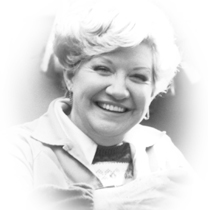
August 12, 1919 – Supervisor of the Paint Lab and Disney Legend Dodie Roberts is Born

Dodie Roberts

“I love puzzles, and mixing paint was like putting together a puzzle. It was fascinating to create colors and to get them exact.”

On August 12, 1919, Dodie Roberts was born in Plainview, Nebraska. After attending college in Delaware, Roberts moved to Southern California in 1939, and was invited to visit the burgeoning Disney Studios. In October of that year, Roberts gained employment at the Studio as a runner for the Ink and Paint Department. Soon after, she was promoted, being given the choice position of creating new colors for the staff. The work was challenging and exact, as many proprietary colors were created in the lab for use in animated features; only the Supervisor of the department was allowed to know the ingredients in the paints, as there was fear that other studios could swipe the formula. In 1972, Roberts became the Supervisor of the Paint Lab, overseeing eight staff members and more than 500 shades of color. One of her responsibilities was making sure that the right paints were selected, down to the gradations of single colors to match the lighting and mood in any particular scene. In 1984, Roberts retired after 45 years with Disney. A shade of purple was developed in her honor, named Dodie 6. She, along with fellow employee Al Jones, worked to found the Disney Golden Ears Retirement Club in the same year for former employees. In 2000, she was honored as a Disney Legend. In 2008, Roberts passed away at the age of 88.

August 11

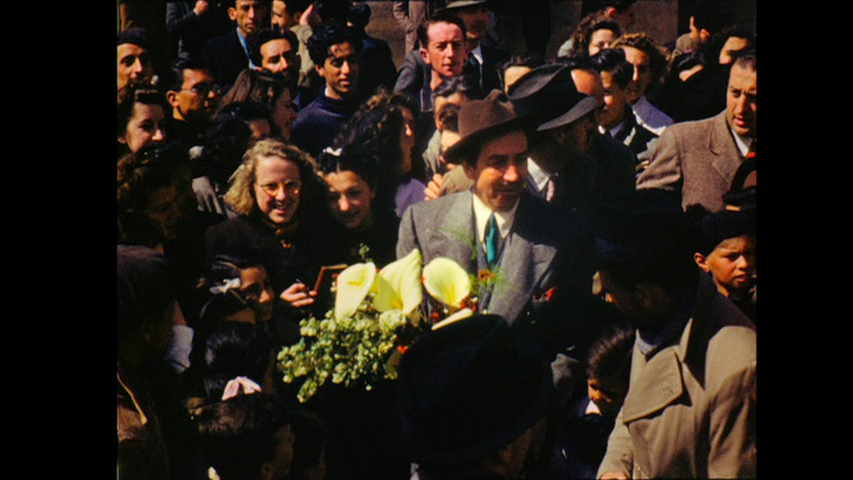
August 11, 1941 – Walt Disney and “El Grupo” Head Off on the Goodwill Trip to South America

vlcsnap-2015-08-11-18h20m17s183

“That was the purpose of the goodwill tour: to try and sell the United States to South America.”

On August 11, 1941, Walt Disney, his wife Lillian, and a group of animators (known as El Grupo) set off on a goodwill mission to South America in the onset of World War II. As Nazi influence began to spread across the globe, the United States government was concerned about the relationship between the Americas, and called upon Hollywood to set up goodwill missions between the studios as the South American countries. Walt, and a handful of carefully selected artists traveled through Brazil, Argentina, and Chile, gathering story material for what would become the animated features Saludos Amigos and The Three Caballeros. Saludos Amigos would go on to be the offer of friendship between the Americas. Members of El Grupo included Bill Cottrell, Frank Thomas, and Mary Blair.

August 10

August 10, 1994 – The Concourse Steak House Opens in Walt Disney World’s Contemporary Resort

Image courtesy of mouseplanet.cm

Image courtesy of mouseplanet.com

On August 10, 1994, the Concourse Steak House opened in the Contemporary Resort of Walt Disney World. The table service restaurant, located on the fourth floor of the resort, replaced the Concourse Grill. The restaurant gave guests a view of Mary Blair’s southwestern-themed mural, with a modern southwestern theme to match. It offered breakfast, lunch, and dinner to guests, with a reservation highly recommended due to demand. The restaurant closed on May 31, 2008.

August 9

August 9, 1946 – The Donald Duck Short Film Wet Paint is Released to Theaters
vlcsnap-2015-08-09-13h40m50s220

“Why, that dirty…”

On August 9, 1946, the Donald Duck short film Wet Paint was released to theaters. It was directed by Jack King, with story by Roy Williams.

A beautiful day finds Donald painting his car a nice red color. As he turns to get more paint, a bird flies by, accidentally catching her string on the car’s hood ornament. She flies down to retrieve it, and gets her feet stuck on the paint of the car. As she walks away, she leaves a trail of footprints behind. Donald notices and irritably paints over the prints, accidentally painting his windshield and not realizing he’s leaving his own marks. The bird watches Donald curiously, and Donald chases after it before angrily realizing that he’s left hand prints all over the new paint job. The bird gets her string caught in the car’s antenna, which hits Donald and ends up with him tied on the car. Donald gets out and throws a paintbrush fill of paint at the bird, who cleans herself off in the paint remover before shaking herself dry over the car, ruining the new paint job. She grabs a string from a hole in the front seat and flies off, but pulls out all of the stuffing in the process when Donald tries to grab the string back, giving the car a final “sheepdog” look.

Donald manages to remove the stuffing from the car, but finds the bird in the tailpipe. The bird spies another string, but Donald prevents her from taking it. The string, however, is an exposed wire, which shocks Donald and sends him bouncing among the paint cans. His tail covered in paint, he ends up giving the car a splotchy tie-dye paint job. Fed up, he chases after the bird once more, and accidentally sends the car zooming across the yard, where it crashes and loses its paint job. The bird finally takes a string from Donald’s hat, unraveling it. Angered, he chases after her with an axe and begins to chop down her tree, when she sees her nest and babies. Softened, he lets her keep the string, and the birds congregate on his head.