RSS Feed

Monthly Archives: January 2014

January 11

January 11, 1990 – The Party Gras Parade Begins in Disneyland

Disney-Parade-Pary-Gras-2

“Fun and excitement soar to new heights with the biggest, most spectacular parade we’ve ever dreamed up, Party Gras!”

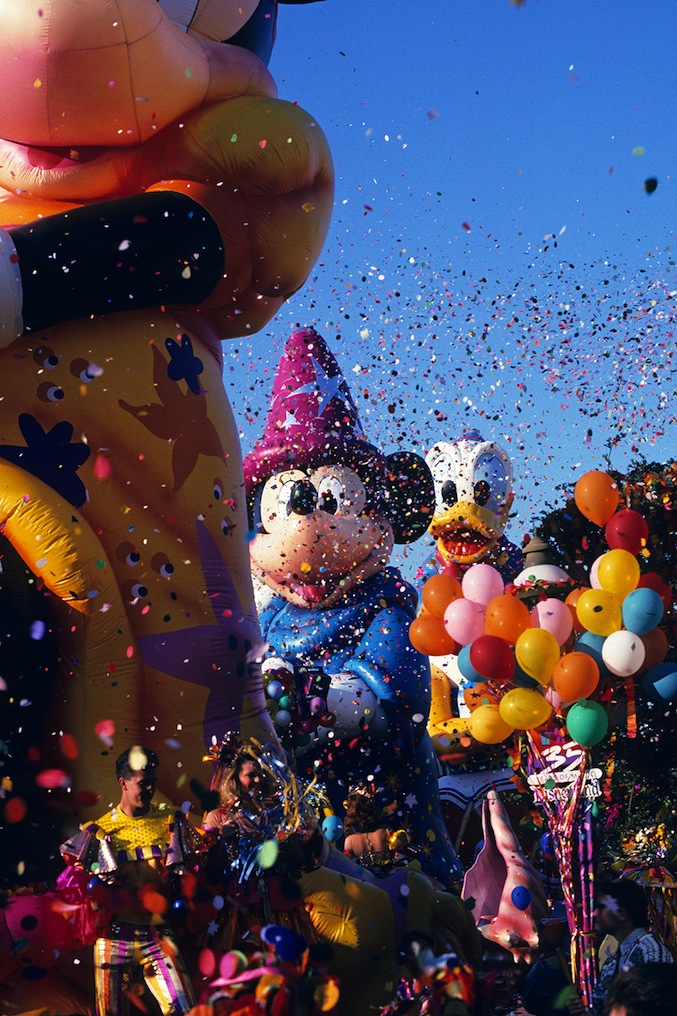
On January 11, 1990, the Party Gras Parade began its run through Disneyland’s Magic Kingdom. It was a celebration of Disneyland’s 35th anniversary, and included floats of Mickey, Minnie, Goofy, Donald, Pluto, and Roger Rabbit with giant balloons of the characters. The parade lasted until November 18, 1990, and was also featured in the Sing Along Songs video Disneyland Fun. A version of this parade was created for the Tokyo Disneyland resort, running from 1991 to 1993; another version was created for the Walt Disney World 20th anniversary celebration, called the 20th Anniversary Surprise Celebration Parade.

January 10

January 10, 2008 – The Broadway Musical The Little Mermaid Officially Begins its Run

The+Little+Mermaid++A+Broadway+Musical+littlemermaid

“I knew how it would sound under the sea on stage, but not how it would look. That was the biggest challenge, and it was so out of my hands.” – Alan Menken

On January 10, 2008, the Broadway musical version of the hit 1989 animated feature film The Little Mermaid began its run at the Lunt-Fontanne Theater. Previews had run from November 3, 2007, with a pre-Broadway run at the Ellie Caulkins Opera House of the Denver Center for the Performing Arts. Originally supposed to open on December 6, 2007, this opening was delayed due to the stagehands strike of 2007. The challenge of the musical was to keep true to the story, but also portray a world underwater. Francesca Zambello, the director, had an extensive opera background, which made her quite willing to take on this task. Alan Menken, the original songwriter for the 1989 film, was brought in to be part of the production team, with lyricist Glenn Slater working with him to write 10 new songs for the musical. The book was written by Doug Wright, who made the focus of Ariel’s journey her pursuit of living her life on her own terms. The original cast included Sierra Boggess as Ariel, Sean Palmer as Eric, Brian D’Addario and Trevor Braun alternating the role of Flounder, Norm Lewis as King Triton, Sherie Rene Scott as Ursula, Tituss Burgess as Sebastian, Tyler Maynard as Flotsam, Derrick Baskin as Jetsam, Jonathan Freeman as Grimsby, and John Treacy Egan as Chef Louis. While the audience response to the musical was positive, critics were mixed, with most being rather critical. It was nominated for two Tony Awards: Best Original Score, and Best Lighting Design of a Musical. The musical closed on August 30, 2009, after 50 previews and 685 performances. Since then, it has had an American tour, and several international productions.

January 9

January 9, 1913 – Former President of Walt Disney Productions and Disney Legend Donn Tatum is Born

don-tatum-feat

“The world will miss Donn, but we at Disney who looked to him for wisdom, guidance and balance will miss him more.” – Chairman Michael Eisner and President Frank Wells

On January 9, 1913, Donn B. Tatum was born. He grew up in Los Angeles, California, and attended Stanford University, earning a degree in political science and economics. After this, he attended Oxford University in England, earning both a Bachelors and Masters law degree. He passed the bar exam in 1938, and soon after became a partner in the law firm Lillick, Geary and McHose. After serving as counsel for RCA, NBC, and ABC, as well as helping to shape legislation for the new medium of television, Tatum became the general manager of KABC-TV and the western television director for ABC. In 1956, he was hired by Disney as the production business manager. In 1971, Tatum was named as the chief executive and board chairman after the death of Roy O. Disney, making him the first non-Disney family member to run the company. He stayed CEO until 1976, and stayed as chairman until 1980; in 1980, he handed the control of the company to Card Walker. Tatum also served on several Disney related boards, including being named as chairman of the board for CalArts, and president of the Disney Foundation. Tatum passed away on May 31, 1993, after battling cancer. He was inducted later in 1993 as a Disney Legend.

January 8

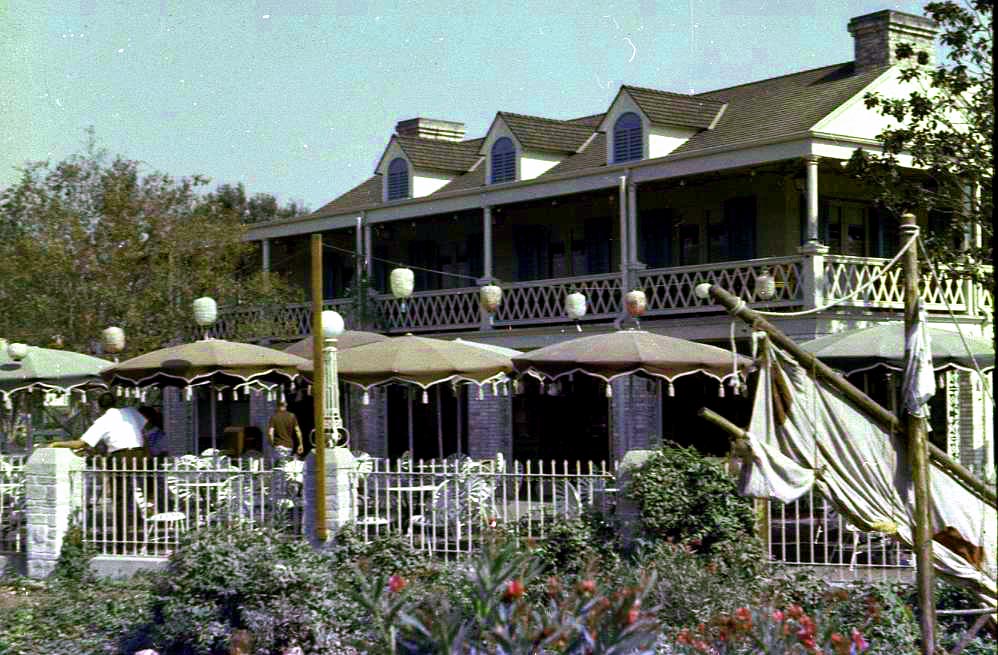
January 8, 1962 – The Popular Frontierland Restaurant Swift’s Chicken Plantation Closes

plantationhouse

“Swift’s Chicken Plantation House was Walt’s reply to the incredibly successful chicken restaurant at Knott’s Berry Farm in nearby Buena Park.” – Sam Gennawey, The Disneyland Story.

On January 8, 1962, the popular Disneyland Frontierland restaurant known as Swift’s Chicken Plantation closed. It had been open since the park’s opening on July 17, 1955, and was known for serving the best meals in the park. The restaurant was sponsored by Swift’s Meats, and served those products. It was located on the shores of the River of America. During the expansion of Frontierland and the building of New Orleans Square, the decision was made to close the restaurant and tear it down to make best use of the space.

January 7

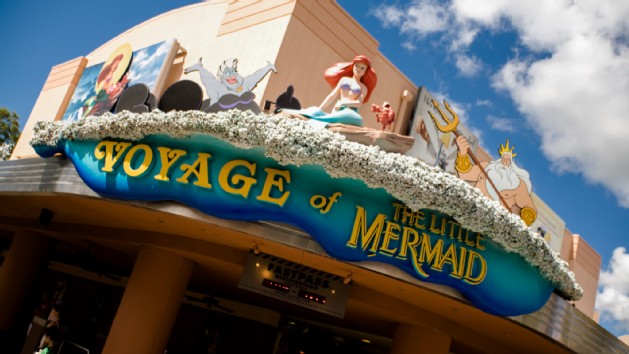
January 7, 1992 – The Attraction Voyage of the Little Mermaid Opens in Disney-MGM Studios

voyage-of-the-little-mermaid-00

“Celebrate highlights of the animated musical film, The Little Mermaid, at this 15-minute puppetry extravaganza!”

On January 7, 1992, the Voyage of the Little Mermaid attraction opened at Walt Disney World’s Disney-MGM Studios near the Animation Courtyard. It replaced the show Here Come the Muppets, and is a special multimedia show with animation, live performances, puppetry, and other special effects to give guests an immersive experience. The show is a summation of the key parts of the 1989 film The Little Mermaid, with select songs being performed by the live-action performers and puppeteers.

January 6

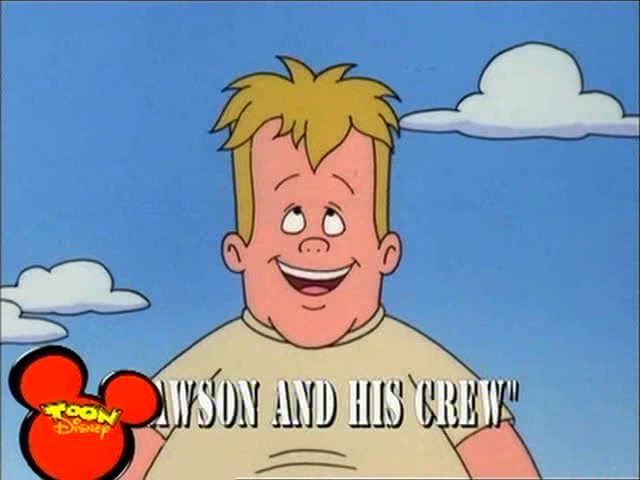
January 6, 2001 – The Recess Episode “Lawson and His Crew” Premieres

vlcsnap-2014-01-06-17h13m27s208

“A royal thanks to you, kid who always wins. A royal thanks to you, friend of smart girl.”

On January 6, 2001, the sixty-second episode of the animated series Recess premiered on ABC. The episode, a twenty minute special, was to serve at the series finale, with the fifth season only lasting nine episodes; however, the show would soon be renewed for a sixth and final season. The episode was written by Phil Walsh, and directed by Howy Parkins.

The episode begins with the gang getting medals of royal thanks from King Bob after the gang stopped the school’s plan of making the students wear school uniforms. Amid the celebrations, fifth grader Lawson vents to his friends about how he hates that TJ and the others keep getting recognition, and how he wants some of that glory. He dumps his friends to find a new gang to help him achieve his dreams of victory. Later, TJ and the gang are asked to prevent war between the second and third graders. As they head to the battleground, they are stopped by a fifth grader, who shows them that Lawson is already accomplishing peace between the two grades. Lawson approaches the dumbstruck group and declares that he’s got everything under control with his crew, consisting of Randall, Kurst, Skeens, Swinger Girl, and Menlo.

TJ discusses with his friends the opportunities for pranks while Lawson performs the good deeds

TJ discusses with his friends the opportunities for pranks while Lawson performs the good deeds

Later, as TJ and his friends are talking, they realize that having Lawson and his crew take over would be a good thing, leaving them with the opportunity to play pranks instead of saving the students. They plan an elaborate prank including a cactus, but find that Lawson’s crew had already played the prank before them. The gang suddenly realizes that they have nothing left to do on the playground. Suddenly, they are alerted that the school has outlawed chocolate milk, and decide to go out there and picket. However, Lawson has once again beaten them to the punch. Lawson and his gang are rewarded by King Bob, and the gang sadly comes to the conclusion that they have been replaced.

As they sit behind the dumpster, a little girl goes over to the gang to ask them for help, but TJ retorts with “what’s the point?” When inspired by Mikey to help the kids of the playground, TJ has a renewed spirit, but that spirit is quickly dashed when, once again, Lawson and his crew have beaten them to the punch. As the kids once again sit dejected, they start question why they did all their good deeds in the first place, figuring that they did it for the glory. Mikey then realizes that it wasn’t for the sake of glory, but because they want to share their friendship with the rest of the kids. Lawson hears from Randall that TJ and his friends are miserable, and wants to go over to gloat. When Lawson and his crew see the gang having fun instead of being down, the crew begins to argue amongst themselves. As Lawson is sent to help the kindergarteners, the crew continues to argue, leading to their inevitable breakup. Lawson is left alone, and TJ with the gang rescuing the kindergarteners and resuming their place in the recess hierarchy. Lawson then reunites with his own friends, and TJ walks off happily with his own gang.

January 5

January 5, 1935 – The Silly Symphony The Tortoise and the Hare is Released to Theaters

vlcsnap-2014-01-05-11h00m53s146

“You don’t talk tootin’, cutie. I’m the very best there is!”

On January 5, 1935, the Silly Symphony The Tortoise and the Hare was released to theaters. It was based on the Aesop fable Hare and the Tortoise. The short won the Academy Award for Best Cartoon in 1934, winning against Columbia’s Holiday Land and Universal’s Jolly Little Elves. It was released as an educational film in 1986, retitled Aesop’s Hare and the Tortoise, with an overview done by Walt Disney from an episode of Disneyland. A sequel to this short was also released in 1936, entitled Toby Tortois Returns. The short was directed by Wilfred Jackson.

The short begins on race day, with everyone turning out to see the big race between Toby Tortoise and Max Hare. Max steps out meet the cheering crowd, while Toby is greeted by laughs. Toby greets Max with a friendly “may the best man win,” with Max replying that of course he will, but promises not to beat Toby too badly. The official starts the race, and Max takes off with a shot, while Toby is still at the starting line. As Max runs by so fast that trees are pulled out from their roots, he stops when he sees Toby galloping slowly with some snails. Max decides to “take a nap” while Toby continues his pace, and when Toby sees the sleeping Hare, he tries to use the situation to his advantage. Max then gets up and speeds past Toby once again.

Max stops racing so he can chat up some girls from the local girls' school

Max stops racing so he can chat up some girls from the local girls’ school

Max stops once he sees the girls of Miss Cottontail’s Girls’ School, thinking that he has plenty of time to chat with the young ladies. The girls see Toby galloping by, and try to stop him to talk. Toby refuses to stop, as he has a race to run. As Toby continues, Max stays with the girls to off his speed skills. Suddenly, a cheer rings out, and Max realizes that he needs to hurry to catch up to Toby. Toby sees Max running full speed and picks up his pace. It’s a fight to the finish, and Toby manages to win in the end. The crowd cheers for Toby and carries them on his shoulders as the victor.

January 4

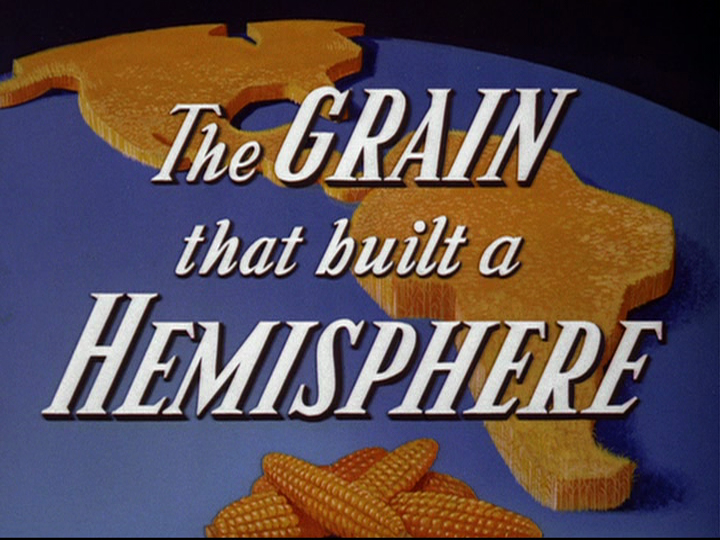
January 4, 1943 – The Educational Propaganda Short Film The Grain That Built a Hemisphere is Delivered

vlcsnap-2014-01-04-16h01m49s225

“Corn is the symbol of a spirit that links the Americas in a common bond of union and solidarity.”

On January 4, 1943, the educational short film The Grain That Built a Hemisphere was delivered to the Coordinator of Inter-American Affairs. It was nominated for an Academy Award for Best Documentary in 1943, but lost to The Battle of Midway, Kokoda Front Line!, Moscow Strikes Back, and Prelude to War. This short also includes a short segment from the 1938 Silly Symphony Farmyard Symphony. The short was directed by Bill Roberts.

The short begins with an explanation of corn, and how it possibly came to be. The earliest version of corn grew on the mountains centuries ago, but was not noticed by hunters as they searched for food. When hunters were unable to find game, they were able to find corn and use it for food; this discovery is then credited as helping begin the civilization of the Americas. The narrator then directs the attention to the Mayan civilization, which was built around the growth and worship of corn, with great temples built in dedication to the corn gods, including Yum Kaax. The Aztecs also built a civilization based on corn, with their corn goddess named Centeotl. The Incas, located in the Andes, worshipped a sun god, who provided them with all they needed to grow their corn. The crop of corn spread around South America and all the way to Canada; it was also sent over the world through the conquistadors and spread from there.

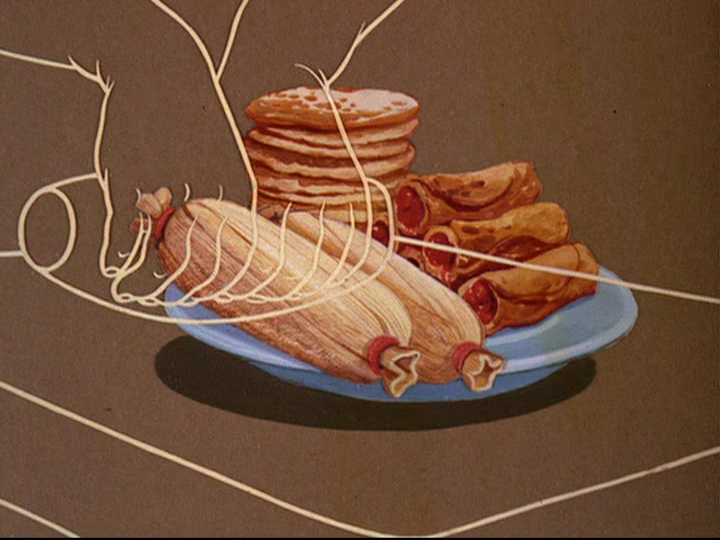
A list of foods made from corn is shown through animation

A list of foods made from corn is shown through animation

The narrator lists the various foods made from corn, including tortillas, succotash, and bourbon. Brought to present day, where it is explained that, thanks to advances in machinery, we can harvest enough corn in fifteen hours, compared to the 500 the Mayans needed. The next topic is how to inbreed corn, and the entire process is explained step by step. It produces small versions of the corn plant, but once two small unrelated inbred plants are cross-bred, that produces a stronger, larger stalk with more ears. Seventy-five percent of all corn produced in the United States goes to feed for livestock, with hogs eating the most of that percentage. After this, a scientific study of corn is presented, with an explanation of how the two parts of the corn kernel (the endosperm and the germ) are used to create oils and starches, which have a variety of uses. A hypothesis of how corn can be used to help the war effort is also presented, with the idea that corn can be used to create tough plastics, powerful fuels and explosives, tires, parachute fabrics, and more.

January 3

January 3, 1991 – The NBC Television Series Blossom Premieres
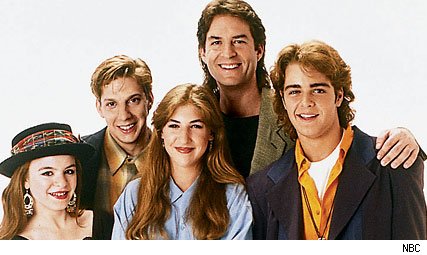
blossom-cast-427ak021810“Are you referring to the onset of puberty? A feeling of ennui, a kind of overall…bloat?”

On January 3, 1991, the sitcom Blossom premiered on NBC. Produced by Impact Zone Productions in association with Witt/Thomas Productions and Touchstone Television (the latter of which would become ABC Studios in 2007), it was distributed by Disney-ABC Domestic Television and ran for 5 seasons with 114 episodes. The pilot was released on July 5, 1990, as a television special; NBC, pleased with the ratings, ordered a full season of the show as a midseason replacement in January. The show centers around teenager Blossom Russo who, like the rest of her family, has to adjust to her parents’ divorce. Blossom’s family consists of her father Nick, a piano player; older brother Tony, a recovering alcoholic and drug addict; and older brother Joey, a stereotypical “dumb jock.” Blossom also has a best friend named Six Lemeure, who is considered part of the family. The series was created by Don Reo, and stars Mayim Bialik as Blossom, Ted Wass as Nick, Michael Stoyanov as Tony, Joey Lawrence as Joey, and Jenna von Oÿ as Six.

The first episode to premiere, “Blossom Blossoms,” begins with Blossom shopping for her first box of tampons at the grocery store, but is rather embarrassed as her crush Mitchell works at the store, and ends up too ashamed to buy them. She relays the story to her friend Six, and then admits her wish that her mother would live with her sometimes to help her through the things she’s going through. Six reassures her that everything will be okay, and gives Blossom the option of talking to her own mother. After Six leaves, Blossom goes to her kitchen and discovers her brothers working on a film for school, but is annoyed at their antics. Later that evening, she goes to the kitchen again and talks to her father, who is concerned that she’s awake at a late hour. However, she doesn’t feel like she can talk to her father about all that she’s going through, and leaves the conversation, pretending that everything worked itself out.

In a fantasy, Blossom heads to the kitchen again and is greeted by her “mother,” Phylicia Rashād. Her “mother” starts explaining the facts of life by using icing to draw on a cake. Blossom wakes up from her dream and is saddened that her mother really isn’t there, so she decides to try and call her mom, who is actually in Paris. Her mom isn’t there, and she attempts to leave a message, but finds she can’t do so. Later in the week, Nick asks his sons if they’ve noticed anything unusual about Blossom. They tell him that she seemed strange the other day, but don’t believe that there’s anything wrong. Blossom heads over to her neighbor Agnes’s house to deliver her groceries, and starts to let out her feelings that she feels abandoned by her mother. Agnes comforts her, and convinces her to talk to her father again, telling her she should work with what she’s got. Blossom gets home and gently tries to allude to Nick what’s going on. Nick goes through a range of emotions, but in the end embarrasses Blossom by announcing to her brothers that Blossom has gotten her period. Later, the family is preparing to go out for a “celebratory dinner,” which Blossom finds incredibly weird. As Nick helps her with her hair, Blossom asks if her mother will ever come home. Nick tells her that this isn’t her home anymore, but it’s okay for Blossom to miss her, but promises that he’ll be there to answer any questions she has.
January 2

January 2, 1979 – The Dumbo’s Circus Parade Begins in Walt Disney World

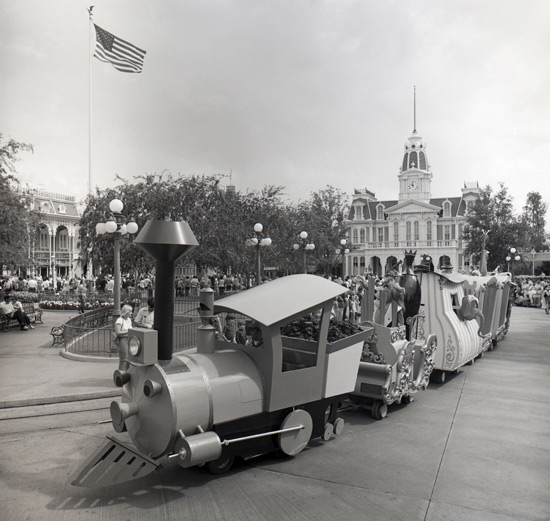
Dumbo's Circus Parade

“In 1979, Walt Disney Entertainment brought a parade inspired [by Dumbo] to life in the Magic Kingdom Park in the form of Dumbo’s Circus Parade…”

On January 2, 1979, the Walt Disney World parade Dumbo’s Circus Parade began its run through the Magic Kingdom. Based on the scene in the 1941 film Dumbo when the circus arrives to town, the parade features a float of the train Casey Jr., with various Disney characters playing the part of circus performers. Mickey Mouse played the part of the ringmaster, leading a three ring circus behind the train that featured Donald Duck as a snake charmer, and Goofy as a circus weightlifter. A barrage of clown characters followed behind this, featured on a float that acted as the clown headquarters. The parade lasted until December 21, 1979, and was replaced with the Tencennial Parade on October 1, 1981, which celebrated Walt Disney World’s tenth anniversary.