RSS Feed

Monthly Archives: May 2013

May 11

Posted on

May 11, 1913 – Composer, Arranger, and Disney Legend Salvador “Tutti” Camarata is Born

vlcsnap-2013-05-11-08h23m03s133

On May 11, 1913, Salvador “Tutti” Camarata was born in Glen Ridge, New Jersey. He studied music at Julliard, and began his career playing trumpet for the likes of Benny Goodman and Jimmy Dorsey, ­eventually becoming Dorsey’s lead trumpeter and arranger. In 1956, Camarata was hired by Walt Disney to form Disneyland Records, and work to expand the record company from its output of children’s music. Camarata brought in many of his connections in the music industry for concept albums, including Louis Armstrong and Louis Prima. Over a five-year period, Camarata supervised the recording of over 300 albums. His biggest success with the label was the idea of bringing Annette Funicello in as the first artist in residence. While looking for material for Funicello, Camarata discovered Richard and Robert Sherman, and brought them in to the label; they would eventually be the first staff songwriters of the company. He was honored as a Disney Legend in 2003 for his work with music in the company. Camarata passed away in 2005.

May 10

Posted on

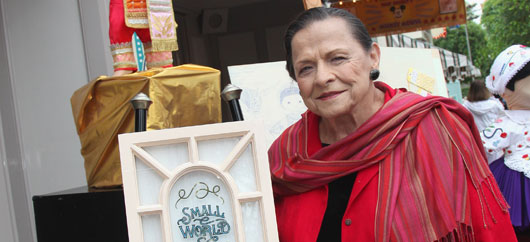
May 10, 2012 – Imagineer and Disney Legend Alice Davis is Honored with a Window on Main Street in Disneyland

051112_FS_AliceDavisWindowDedication_feat

“All things good you have to wait a while for, and after 83 years, I got my wish. For years, both [husband Marc Davis] and I have had the great pleasure of bringing great fun and joy to people…”

On May 10, 2012, Alice Davis was awarded with a window on Main Street in Disneyland, which is one of the highest honors within the Walt Disney Company. Davis known for her costume designs, beginning with designing an outfit for the live-action model for Sleeping Beauty; she is best known for her work with fellow Disney Legend Mary Blair on the “it’s a small world” attraction, and for her work on the Pirates of the Caribbean attraction in 1965. Davis was the wife of animator, member of the Nine Old Men, and Disney Legend Marc Davis, whom she married in 1956.

May 9

Posted on

May 9, 1941 – The Donald Duck Short Film A Good Time for a Dime is Released to Theaters

vlcsnap-2013-05-09-05h22m24s147

“Hurry! Hurry! Step right over here, folks, to the penny arcade, where you can have a good time for a dime! This is the place, folks, where your penny’s worth a million laughs!”

On May 9, 1941, the Donald Duck short film A Good Time for a Dime is released to theaters. One aspect of this film that reflects the time it was created is the machine playing movies in the penny arcade, which was a familiar sight in the 1940s. One machine would play a movie by a belly dancer named Little Egypt, which was the inspiration of Daisy dancing “Dance of the Seven Veils.” The short was directed by Dick Lundy.

Donald arrives at the penny arcade, and looks for a movie to watch, attracted to “Dance of the of the Seven Veils.” He begins counting veils, when the machine stops working right after the third veil. Angered, he declares he’s been robbed, but moves on to a crane machine, which has a camera as one of its prizes. Donald inserts his coin and goes after the camera, but although he is able to grab it, it slips from the crane at the last moment, leaving Donald with nothing. On his next attempt, he grabs a bottle of ink, with the crane taking off the top before dropping it down the chute, covering Donald with ink. Enough being enough, Donald decides to go for the magnet, using it to grab every other prize in the machine as he shakes it. All of the prizes fall out of the chute, except for one bottle of perfume, which the crane grabs and sprays out, making Donald sneeze hard enough to sneeze all the prizes back into the crane game.

vlcsnap-2013-05-09-05h31m44s36

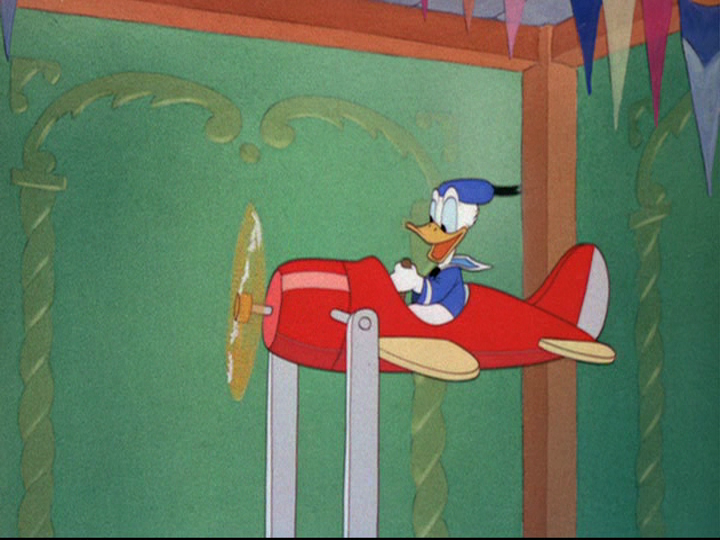
Donald enjoys his ride on the plane in the penny arcade, but his ride is about to go sour

Donald next goes to a ride called “Enjoy the Thrill of Aviation,” and begins to fly a toy plane. As he enjoys the ride, it abruptly stops, letting him know his time is up. Angered, Donald beats the plane with the control stick before it starts again. Once it does start, Donald realizes he threw the control stick away, so the plane takes off wildly, out of his control. Once it crash lands to the ground, Donald slinks away, dizzied by the experience, and leaves the penny arcade, turning green from nausea, letting out a trademark, “Aw, phooey!”

May 8

Posted on

May 8, 1997 – Playhouse Disney Begins Airing on the Disney Channel

 Playhouse_Disney_En

“Where learning is powered by imagination.”

On May 8, 1997, the television block Playhouse Disney began airing on the Disney Channel. The block, aimed at preschool-aged children, was introduced after the Disney Channel moved from basic cable to premium cable, and aired from 4 am to 2 pm Eastern Standard Time on weekdays, and 4 am to 9 am Eastern Standard Time on weekends. The shows broadcast on the channel included Bear in the Big Blue House, PB&J Otter, and Rolie Polie Olie. The channel also showed special short subjects between shows, with no commercials. On February 14, 2011, the block was rebranded as Disney Junior.

May 7

Posted on

May 7, 2000 – The Television Musical Geppetto Premieres on The Wonderful World of Disney
vlcsnap-2013-05-06-21h37m20s207

“All right, so I didn’t sleep so well. But who cares? I have a son unique in all the world. It’s not every boy who can trace his family tree to a tree.”

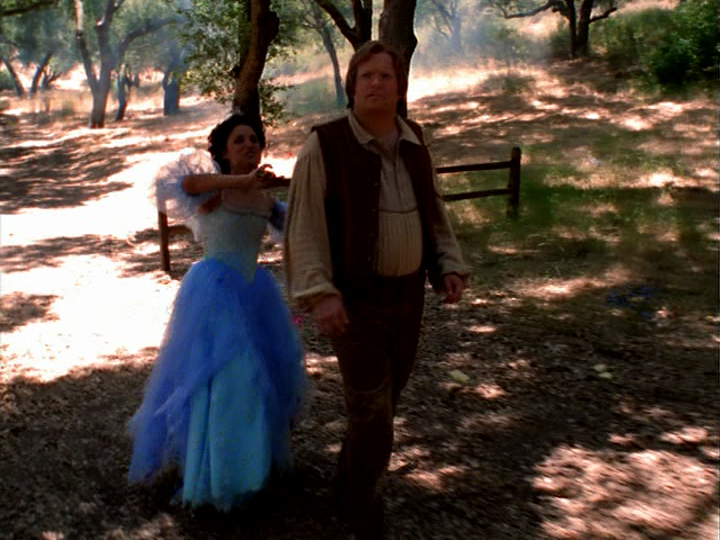
On May 7, 2000, the made-for-television musical Geppetto aired on The Wonderful World of Disney program on ABC. The story is loosely based on the 1940 film Pinocchio, reusing the characters of the Blue Fairy and Stromboli, but it adds many new aspects of the film when Geppetto searches for Pinocchio after he leaves with Stromboli’s traveling puppet show. The music for the film was written by Stephen Schwartz, save for the reuse of the 1940 song “I’ve Got No Strings”; the film was written by David I. Stern (with the original source material written by Carlo Collodi). It was directed by Tom Moore, and stars Drew Carey as Geppetto, Julia Louis-Dreyfus as the Blue Fairy, Brent Spiner as Stromboli, Rene Auberjonois as Buonragazzo, Wayne Brady as the Great Lazardo, and Seth Adkins as Pinocchio. Recording artist Usher makes a special cameo as the Ringmaster of Pleasure Island. The film was nominated for four Emmy Awards, including Outstanding Art Direction for a Miniseries, Movie, or Special.

The story is narrated by Geppetto, beginning when he finished the new toys for the season. All of the children of the village of Villagio run to the toy story in a frenzy, with their parents trying to keep up with them. The children spy the toys through the window, and when Geppetto opens the shop, they rush inside. The parents voice their complaints of trying to get their children to behave, and Geppetto, who has longed for a child of his own, voices his own sadness that “those that see children as bothers are the ones who get to be fathers.” After everyone leaves that evening, Geppetto returns to his work on his puppet, Pinocchio, wishing that the puppet were a real boy. That night, the Blue Fairy appears in Geppetto’s house, granting his wish. Geppetto is confused, then overjoyed to find that Pinocchio has come to life. As they try to go to sleep, Pinocchio keeps his father awake with many questions, which Geppetto tries to answer good-naturedly, but his patience grows thin.
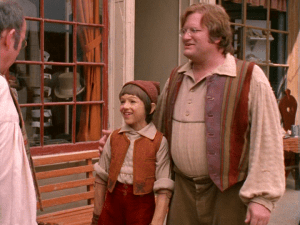
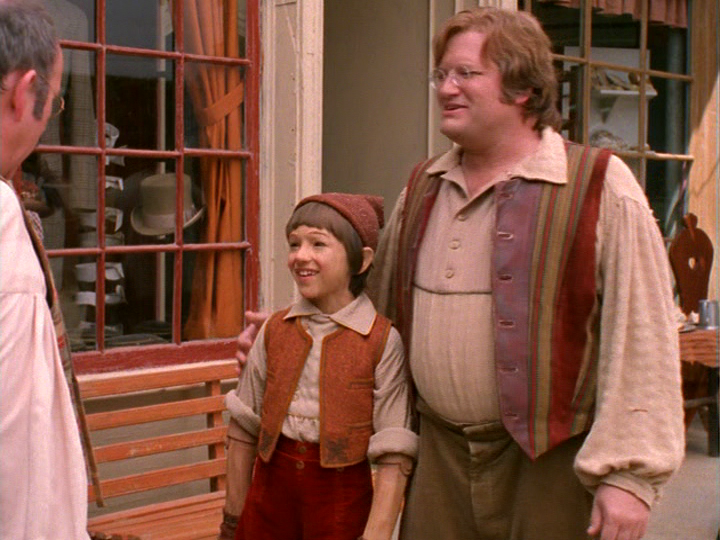
Geppetto takes Pinocchio around the town,introducing the residents to his son

Geppetto takes Pinocchio around the town,introducing the residents of Villagio

The next day, Geppetto is ready to show Pinocchio off to the town. Unfortunately, Pinocchio lets his mischief get the better of him, causing problems for several people in town. The next day doesn’t get better, as Pinocchio doesn’t listen to his father. When Geppetto gives Pinocchio a tricycle, Pinocchio ends up crashing and breaking the tryke. By the third morning, Geppetto is rather upset by Pinocchio’s willfulness. When Geppetto tries to teach Pinocchio how to be a toymaker, Pinocchio refuses to learn, wanting to be a train engineer instead. Geppetto then decides to send Pinocchio to school the next day, with the advice of acting “just like the other children.” Unfortunately, Pinocchio takes his advice quite literally, and gets into a fight with another student. Pinocchio is then asked to leave the school until he can behave, much to Geppetto’s annoyance. On the way home, they are accosted by puppeteer Stromboli, who wishes to make Pinocchio part of his show. At home, Pinocchio breaks Geppetto’s music box, and his nose begins to grow when he lies about breaking it. The two argue, and Geppetto begins to look for the Blue Fairy, calling Pinocchio a disappointment. Pinocchio overhears this, and decides to run away to join Stromboli’s traveling puppet show.

Geppetto finally finds the Blue Fairy, and tells her that her magic was defective. The Blue Fairy takes a bit of offense, but tells him that maybe it isn’t Pinocchio that is “defective,” and it takes a little bit more than just magic to solve his life. Without answers, Geppetto returns home. He finds that Pinocchio has run away, and muses that maybe it is for the best, but goes to the show to give Pinocchio his teddy bear and favorite train. When he arrives, he sees Pinocchio perform and, thinking that the boy is happy, he decides that Pinocchio has found where he belongs. What he doesn’t see, however, is how Stromboli treats Pinocchio, locking him in a cage. When Geppetto stops by Stromboli’s tent, he asks to see Pinocchio, but Stromboli tells him that Pinocchio has already left. Geppetto rushes off to find his son, and when Stromboli returns to his cage, he finds Pinocchio gone, boarding a carriage for Pleasure Island. Stromboli goes after Pinocchio, needing his cash cow.
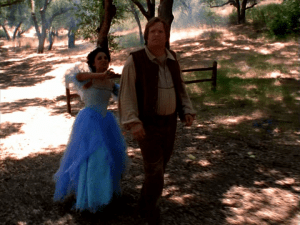
The Blue Fairy stops by, once again using magic to teach Geppetto a valuable lesson on fatherhood

The Blue Fairy stops by, once again using magic to teach Geppetto a valuable lesson on fatherhood

Geppetto searches for his son, and runs across the Blue Fairy again, who is pleased to see that Geppetto is beginning to realize that he is responsible for what he created, but Geppetto protests that it’s about Pinocchio rather than himself. As he runs away from the Blue Fairy, he comes across a magician who isn’t very good at being a magician. After looking around at the magician’s props, Geppetto remarks that Lazardo has a talent for making toys, but Lazardo tells him that he became a magician because his father was a magician, and his father before him was a magician. He wanted to be a toymaker, but he couldn’t bear to disappoint his father. Geppetto finally understands the message, and resolves to make it up to Pinocchio once he finds him. Geppetto then comes across the town of Idyllia, where an inventor named Professor Buonragazzo creates “perfect children.” Although Geppetto is at first taken by the idea of a perfect child, he realizes that he doesn’t want a child that’s perfect, he wants his son. As he leaves Idyllia, the Blue Fairy appears again, directing him to Pleasure Island, where Pinocchio is, and revealing Stromboli’s lies.

Geppetto finally arrives at Pleasure Island, where boys are encouraged to act naughty. Stromboli finds Pinocchio, but the Ringmaster has Stromboli dragged away, as adults aren’t allowed in Pleasure Island. As Geppetto searches for Pinocchio, he finds out what happens to boys at Pleasure Island – they turn into donkeys. Pinocchio begins to board the rollercoaster, but is stopped by Geppetto, as he tries to rescue his son. Pinocchio refuses to listen to Geppetto, and boards the rollercoaster. As he begins the ride, he begins to change into a donkey. Seeing this, Geppetto boards the ride to rescue him, but is too late, as Pinocchio is shipped off to the salt mines. Geppetto then races out to sea to rescue him, but is soon swallowed by Monstro, the whale. Pinocchio leaps from the boat to save him, and his selflessness causes him to change back into a puppet. The two reunite in the belly of the whale, with Geppetto wishing he could go back in time and do everything over to make things right by Pinocchio. The two come up with a plan to escape the belly of the whale, and they return to Villagio.
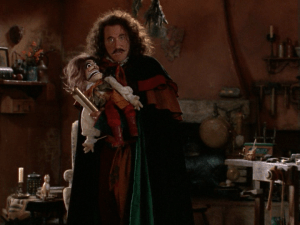
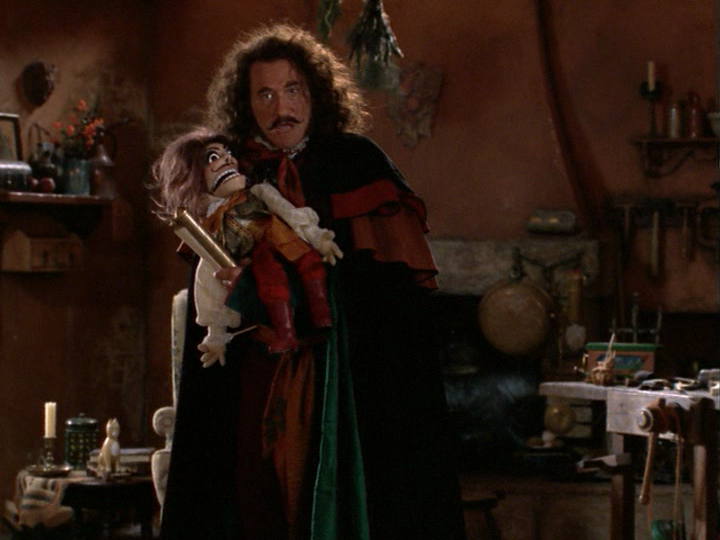
Stromboli appears in Geppetto's workshop, waiting to stake his claim to Pinocchio

Stromboli appears in Geppetto’s workshop, waiting to stake his claim to Pinocchio

Back in Villagio, Stromboli appears in Geppetto’s workshop, staking his claim to Pinocchio, as Pinocchio signed a contract to stay with Stromboli’s puppet show. Geppetto tells Stromboli he’s willing to give up everything to keep Pinocchio, including his home and all of his possessions. Stromboli refuses, as he still wants Pinocchio. He storms away with the boy, and Geppetto calls out for the Blue Fairy for help. She appears, but sadly tells him that there is little she can do now. Geppetto pleads with her, asking her to turn him into wood, or stone, or clay, as he cannot continue to live without his son. She surprises everyone by turning Pinocchio into a real boy, making Stromboli’s contract void. She tells Geppetto, “What good would it do making Pinocchio a real boy if he did not have a real father to come home to,” making Geppetto realize all that he’s learned on his journey. She leaves him with one more surprise: turning the store sign of “Geppetto’s” to “Geppetto and Son,” with a happy ending for all in Villagio.
May 6

Posted on

May 6, 1985 – The Disney Channel Show Dumbo’s Circus Premieres

DumboCircus

“Dumbo’s Circus, flying from town to town, now here’s the part that’s too good to be true: Dumbo’s Circus, Dumbo’s Circus, is coming to visit you!”

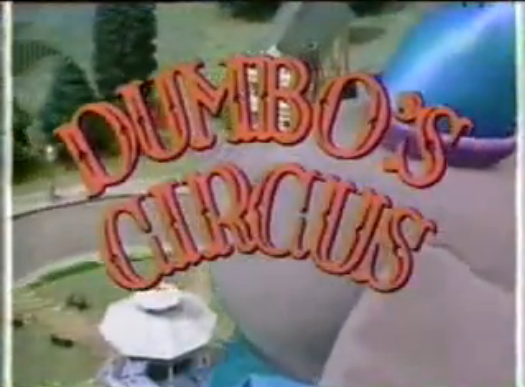
On May 6, 1985, the first episode of the combination live action-puppet Disney Channel series Dumbo’s Circus premiered. The premise of the show is that Dumbo has grown up after the events of the film, and now runs his own circus. The circus travels from town to town, flying through the air, thanks to Dumbo. Although the main character was taken from the 1941 film Dumbo, none of the other characters from the film appear in the series. The show used what was called “puppetronics,” which featured cast members in puppet suits with technology by Ken Forsse, the creator of Teddy Ruxpin. The series ran for 120 episodes, and reruns ran until February 28, 1997.

May 5

Posted on

May 5, 1929 – Singer, Actress, and Disney Legend Ilene Woods is Born

vlcsnap-2013-05-05-09h51m33s224

“I didn’t know that I would even be considered until, of course, Mr. Disney heard the recordings, and that’s when the excitement started, that’s when all the butterflies started batting around inside of my stomach, when I was called to see Mr. Disney.”

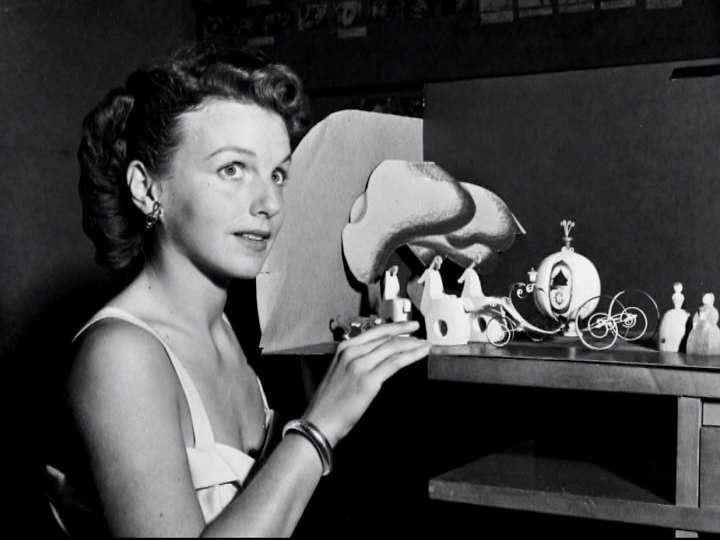
On May 5, 1929, Jacqueline Ruth “Ilene” Woods was born in Portsmouth, New Hampshire. She began acting at the age of two, and at the age of 15, she was hired to sing on “The Philco Hall of Fame” radio show, which led to her own radio show The Ilene Woods Show. During this show, she became friends with songwriters Mack David and Jerry Livingston. In 1948, David and Livingston asked Woods to record a few songs for them, which were presented to Walt Disney for inclusion in the animated feature film Cinderella. After hearing the demo recordings, Disney himself asked Woods to voice the titular character. Woods accepted, and was surprised to learn that she had won the role against almost 400 people. Woods was named as a Disney Legend in 2003. She passed away from Alzheimer’s disease on July 1, 2010.

May 4

Posted on

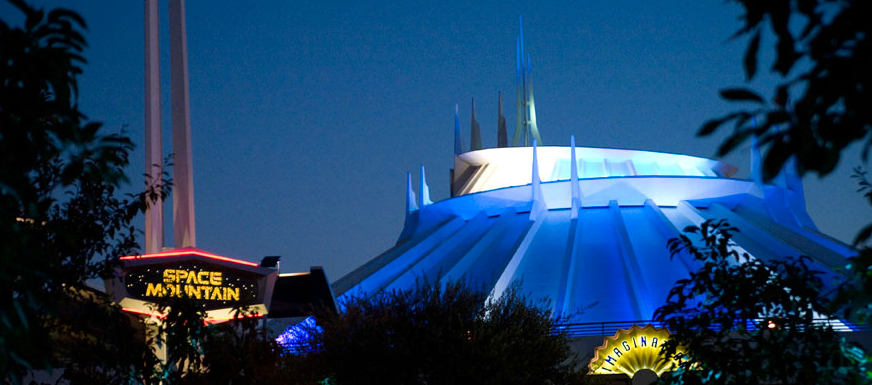
May 4, 1977 – The Tomorrowland Attraction Space Mountain Opens in Disneyland

SpaceMountain

“Rocket into the outer reaches of darkest space on this high-speed thrill ride that hurtles you into the final fun frontier!”

On May 4, 1977, the Tomorrowland attraction Space Mountain opened in Disneyland. When the parks opened, there were no real thrill attractions, and Space Mountain was created to appeal to young guests that liked thrill rides. The idea of the attraction began in 1964, when Walt Disney approached John Hench to create an indoor dark roller coaster. When Disney passed away in 1966, the idea was shelved. The original Walt Disney World attraction opened on January 15, 1975. The Disneyland version is a smaller version of the one at Walt Disney World, as space limitations prevented the creation of the dual-track layout. Disneyland’s version has been replicated at Tokyo Disneyland in 1983, and Hong Kong Disneyland in 2005. It has become one of the most popular attractions in the park.

May 3

Posted on

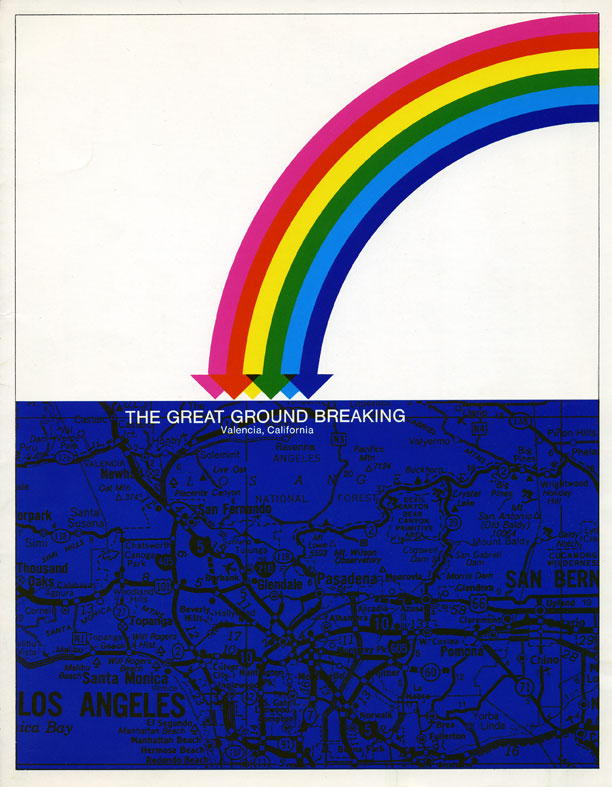
May 3, 1969 – The Groundbreaking for the California Institute of the Arts Takes Place ggba

“Friends of California Institute of the Arts, I’m sure that you can understand and share with me the joy…in welcoming this new institution to our new and growing city of Valencia.” – Thomas Lowe, President of Newall Land & Farming Company

On May 3, 1969, ground was broken for the current campus of the California Institute of the Arts in Valencia, California. The school itself has a long history with the Walt Disney Company: the relationship between Walt and the Chouinard Art Institute began in 1929, when founder Nelbert Chouinard agreed to train Disney artists on a pay-later basis. Disney discovered many promising talents at Chouinard who went on to become prominent Disney artists, including Mary Blair. After Disney’s death in 1966, a large amount of his estate went to finance the construction of the new campus. Unfortunately, after the 1969 groundbreaking, construction of the school was hindered by torrential rains, labor trouble, and the 1971 earthquake. The campus finally opened in November of 1971.

May 2

Posted on

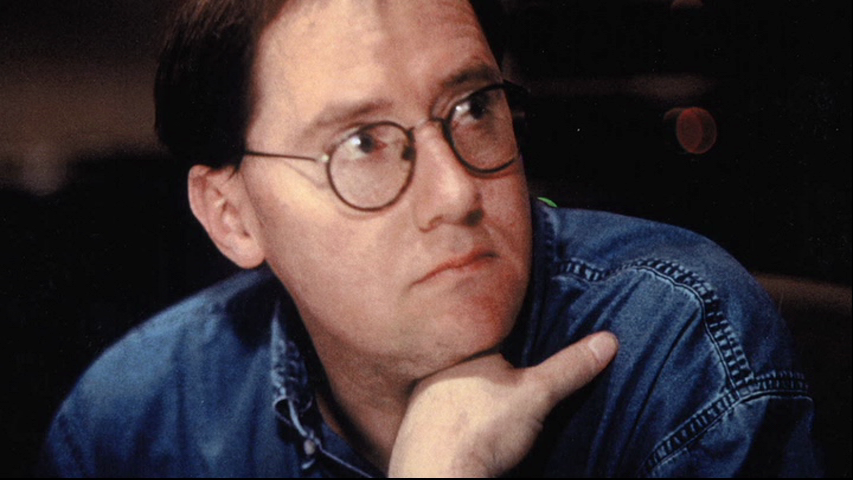
May 2, 2009 – John Lasseter is Awarded an Honorary Doctorate from Pepperdine University

vlcsnap-2012-01-11-17h20m38s189

“Never let anyone kill your dreams.”

On May 2, 2009, John Lasseter, Chief Creative Officer of Walt Disney Studios and Pixar Animation Studios, gave the commencement address at the Frank R. Seaver College of Letters, Arts, and Sciences at Pepperdine University, in Malibu, California. Lasseter was also presented an Honorary Doctorate degree for his work in the field of computer animation. Lasseter had started his education there, as it was the alma mater of his parents and siblings, but transferred to the California Institute of the Arts to pursue his dream of becoming an animator. In his speech, he encouraged the almost 500 graduates to never let anyone destroy their dreams.