RSS Feed

Tag Archives: Walt Disney

November 11

November 11, 1946 – Walt Disney Appears in Armistice Day Parade in Georgia

“Out of the past of every nation has come its folklore: simple tales handed down from generation to generation and made immortal by such names as Aesop, the brothers Grimm, and Hans Christian Anderson.”

On November 11, 1946, an Armistice Day parade was held in Atlanta, Georgia; Walt Disney made a special appearance in the parade, as he was there to promote his upcoming film Song of the South, which was to premiere the next day. Disney had worked extensively with the family of author Joel Chandler Harris, original author of the Uncle Remus Stories, since he acquired the rights in 1939, and had visited Atlanta often to get a feel for the area where the stories were set. The parade featured several floats and bands, as well as representations of the characters from the upcoming film.

September 26

September 26, 1953 – Walt and Herb Ryman Discuss Disneyland Plans

vlcsnap-2016-09-26-17h46m35s226

“Herbie, we’re going to build an amusement park.”

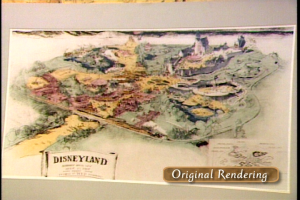
On September 26, 1953, Walt Disney called Herb Ryman to come to the Disney Studios as soon as possible. Ryman had worked for the studios in the 1940s, even as part of the South America goodwill trip, but had left to work at another studio while pursuing a career as an artist. Ryman came to the office and was told about Walt’s idea for an amusement park known as Disneyland. When Ryman voiced that he’d like to see it, Walt responded “You’re going to [draw] it.” Ryman had balked at this, especially being given the weekend to do it, as Roy was to talk to the bankers on Monday. Walt offered to stay with Ryman, and the two worked over 42 hours to create the initial rendering of what would become the Happiest Place on Earth.

September 19

September 19, 1966 – Walt Disney Holds Final Press Conference

wd_mkv

“Walt’s plan for the picturesque area, located about equidistant from Los Angeles and San Francisco, provides for year-round recreational activities by people of all ages and athletic abilities.”

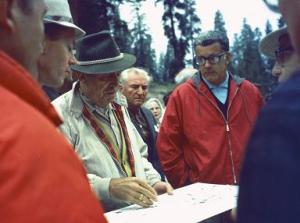
On September 19, 1966, Walt Disney held what was to eventually be his last press conference. Walt, who had not been doing well for the past few months, was announcing his plans for developing the Mineral King Valley as a ski resort. Inspired after the filming of Third Man on the Mountain, Walt had been developing the ski idea for several years. In 1965, after the United States Forest Service called for bids on the Mineral King Valley, Disney won the thirty-year lease by bidding $35 million. Walt quickly set to work to create plans for the January 1969 due date, which included fourteen ski lifts, a self-contained village, two hotels, a heliport, and many other amenities. Walt also forbade vehicles from the area, preferring that guests park at the entrance and be taken into the valley by other means. The press conference also featured California Governor Edmund G. “Pat” Brown, with Walt and Brown making their statements. Afterwards, Walt rested a moment inside the general store before taking photos Brown then heading back to Visalia. Less than three months later, Walt would pass away, and the plans for the area fell through due to opposition to the development of the property. Mineral King Valley then reverted back to the parks service in1978, when Congress annexed it back to Sequoia National Park.

August 25

August 25, 1923 – Walt Disney Writes Letter About Establishing a New Cartoon Studio

WDC

“…I am establishing a studio in Los Angeles for the purpose of producing the new and novel series of cartoons I have previously written about.”

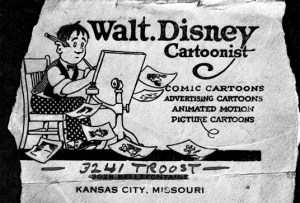
On August 25, 1923, Walt Disney sent a letter to distributor Margaret Winkler stating his intentions of establishing a new cartoon studio, particularly for the development of the series that would go on to be the Alice Comedies. Walt’s other studio, Laugh-O-gram Films, was floundering after not even being open for a year, and in serious danger of going belly-up. During this time, he was inspired by the Out of the Inkwell series of cartoons of an animated character in the world, and started developing the idea of the Alice Comedies. He had written Winkler once he had established the idea and, while she showed interest in distribution, Walt’s funds dried up after the film was only half completed. Eventually, he had no choice but to declare bankruptcy and went out West to Los Angeles. After looking around Los Angeles for directing gigs, he concluded that he would have to break into the industry with his cartoons; he then printed special stationary bearing the title of “Walt Disney, Cartoonist,” and declared his intentions in a letter to Winkler about establishing a new cartoon studio to work on the Alice Comedy “Alice’s Wonderland.” The gamble paid off, and on October 15, 1923, Winkler sent him a telegram with the offer of a contract. The Disney Studio was officially created the next day, October 16, 1923.

August 23

August 23, 2004 – The Post Office in Marceline, Missouri, is Renamed the Walt Disney Post Office

WDPO

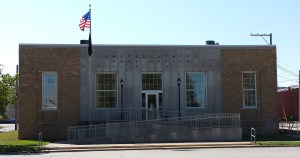
On August 23, 2004, the post office in Marceline, Missouri (known officially as Walt’s hometown) was officially renamed the Walt Disney Post Office. The proposal for the renaming had been introduced in front of the House Committee on Government Reform on April 3, 2003, and after passing through several committees, it was approved by unanimous consent by the United States Senate on October 29, 2003. This is the only federal building to bear Walt’s name. The post office also has the distinction of being the spot where, in 1968, the Walt Disney commemorative stamp was released along with a ceremony featuring many of Walt’s family and admirers.

July 6

Posted on

July 6, 1925 – The Disney Brothers Make Down Payment on Hyperion Studios

Hyperion

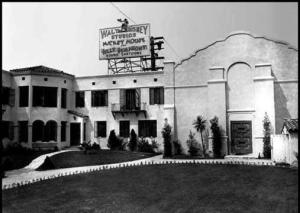
On July 6, 1925, Walt and Roy Disney made a down payment on Lot 21 at 2719 Hyperion Avenue, the area that would eventually become the early Walt Disney Studio (also known as Hyperion Studio). The down payment was $400, which is almost $5,500 in 2016 rates. A larger studio was necessary after the success of Oswald the Lucky Rabbit, as well as making sure that the brothers’ enterprise would pay off for their growing families. After a final payment of $600 in August, the brothers and their staff would move into the completed studio in January 1926 from the Kingswell Avenue location. Some of the buildings were eventually relocated when the studio moved to Burbank, but the rest were razed in 1966, leaving no trace of the studio’s humble beginnings.

June 22

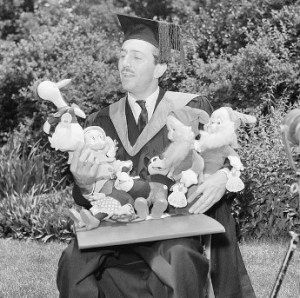
June 22, 1938 – Walt Disney Given Honorary Degree from Yale University

Walt Degree

“[Disney] has accomplished something that has defied all the efforts and experiments of the laboratories in zoology and biology; he has given impressive significance to the word anima in animated; he has given animals souls.”

On June 22, 1938, Walt Disney was awarded his second honorary degree: a Master of Arts degree from Yale University; the first degree was a Master of Science from the University of Southern California, and the third was another Master of Arts degree from Harvard University. He was given the award by Professor William Lyon Phelps, the university’s public orator. Walt had been considered for an honorary degree by Yale as early as 1935, after the overwhelming success of Mickey Mouse.

May 29

Posted on

May 29, 1959 – The Disneyland Anthology Episode “I Captured the King of the Leprechauns” Airs
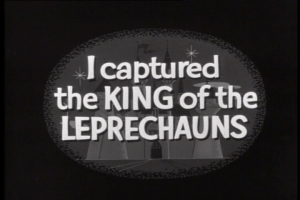
vlcsnap-2016-05-26-18h50m00s146

“And so, believing Pat O’Brien to be an honorable man, I went Irish, Irish all the way. I even crossed the ocean in an Irish Air Lines plane.”

On May 29, 1959, the Disneyland anthology episode “I Captured the King of the Leprechauns” aired. It was a promotional episode for the upcoming live-action film Darby O’Gill and the Little People, but takes guests on a fantastical journey with Walt to Ireland, who has come to learn about the myths of Ireland, as well as asking Darby O’Gill and King Brian of the Leprechauns to join his film. It is notable as the only episode of the series where Walt is in the entire episode in a starring role, rather than just as a narrator.

The episode begins with Walt in his office, explaining that he wanted to make an Irish picture, as he’s always been fascinated by tales of leprechauns. After running into some problems with production, Walt turns to his good friend, actor Pat O’Brien, who claims that Ireland’s main export is good men and women. O’Brien warns Walt about messing with the little people, and sings him a little song about them. He then advises Walt on other Irish legends, including the Banshee, and tells Walt that only a real leprechaun can play a leprechaun in Walt’s film. Walt thinks O’Brien is kidding, but O’Brien is firm that Walt must capture a leprechaun. Upon arriving in Dublin, Walt heads to a folklore library to talk to a scholar. The scholar explains more about leprechauns, including their size based on an outfit in the collection. He then tells the story about how leprechauns came to be, as they were originally angels that hid from the battle between the white and the black angels, as they were too small to do battle. After the battle ended, Gabriel banished the leprechauns from Heaven, sending them to Ireland to live. The scholar sends Walt to find a storyteller named Darby O’Gill, who will give Walt all the information he needs about King Brian, whom Walt wants for his film.
vlcsnap-2016-05-26-19h05m45s748

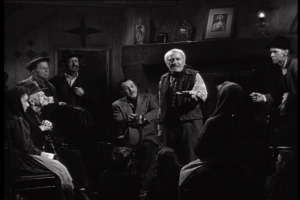
Walt listens intently as Darby O’Gill tells his stories about his interactions with the leprechauns

Walt sets off to Rathcullen, and finds O’Gill in his home that evening, telling stories about the little people. O’Gill talks about the time he met with and was tricked by King Brian, and much to the interest of Walt. Walt questions him about King Brian, and asks if O’Gill can take Walt up the fairy mountain Knocknasheega. O’Gill agrees, and that night they set out to meet the king of the leprechauns. At the top of the mountain, in the ruins, the pair wait for King Brian to appear. They are finally able to spy King Brian’s lieutenant Phadrig Oge and trap him. Phadrig Oge offers Walt a pot of gold rather than to betray his king, but Walt refuses, wanting to talk to King Brian. King Brian arrives soon after, as he is confused as to why Walt would refuse the gold. Walt asks questions to get information, which amuses King Brian and O’Gill. O’Gill then tells the story of when he was brought to King Brian’s throne room. The two bicker during the storytelling, amusing Walt, and reminisce about other times tricking each other. King Brian and O’Gill laugh at Walt’s offer to have them star in his movie, which leads into another argument. When Walt returns to America, he goes to find his friend O’Brien and tells him of his travels, including his decision to make the movie about Darby O’Gill and King Brian, including O’Gill’s close call with the banshee. O’Brien, however, doesn’t believe that Walt actually found King Brian, until Walt offers a gift from King Brian himself.
May 10

Posted on

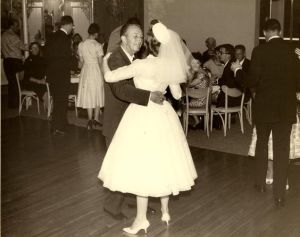
May 10, 1959 – Sharon Mae Disney Marries Robert Borgfeldt Brown

Sharon Disney Wedding

“Well, she’s your problem now, Bob.”

On May 10, 1959, Sharon Mae Disney, Walt’s youngest daughter, married Robert “Bob” Borgfeldt Brown in a small ceremony in Pacific Palisades. Sharon and Bob, a designer at architectural firm Charles Luckman, began dating after being set up on a blind date by mutual friends, and were engaged after a year and a half of dating. After the pair were married, Walt carried on the tradition of convincing his sons-in-law to join the company, and Brown did in 1963, becoming a planner in WED (now Walt Disney Imagineering).

February 8

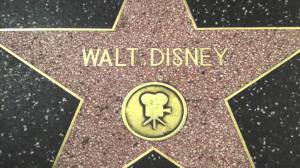
February 8, 1960 – Walt Disney Receives Two Stars on the Hollywood Walk of Fame

WDHWoF

“Disney is particularly noted for being a film producer and a popular showman, as well as an innovator in animation and theme park design.”

On February 8, 1960 Walt Disney was honored with two stars on the Hollywood Walk of Fame: one for motion pictures, and one for television. The Hollywood Chamber of Commerce honored Walt for his contributions and influence in the entertainment industry. At the time he was awarded, Disney was known for their innovative animated features and shorts, the television shows Disneyland and The Mickey Mouse Club, and, Walt’s crowning achievement, Disneyland. The Motion Picture star is located at 7021 Hollywood Boulevard, while the Television star is located at 6747 Hollywood Boulevard.