RSS Feed

Tag Archives: Short film

July 8

Posted on

July 8, 1913 – Voice Actor Bill Thompson is Born

Bill Thompson

“I’m late! I’m late! For a very important date! No time to say hello, good-bye! I’m late! I’m late! I’m late!”

On July 8, 1913, voice actor and radio star William H. Thompson was born in Terre Haute, Indiana to vaudevillian parents. His career began on the Chicago airwaves, where he worked on the variety series The Breakfast Club and on The Sinclair Weiner Minstrels. Thompson could voice a great range of characters, as seen in his work with Disney. His first notable role with the studio was in the 1951 feature animated film Alice in Wonderland, where he voiced the White Rabbit and the Dodo; this was followed with roles in Peter Pan (Smee and various pirates), and Sleeping Beauty (King Hubert). In Lady and the Tramp, Thompson was given five different parts to voice, including that of Jock, the Scottish Terrier. Thompson found even more fame at Disney voicing Ranger J. Audubon Woodlore in several short films and episodes of the Disney anthology series, and was the first actor to give a voice to comic character Scrooge McDuck in the feature Scrooge McDuck and Money. His last role was Uncle Waldo in The Aristocats; Thompson passed away suddenly at the age of 58. For his voice work, Thompson has been awarded a star on the Hollywood Walk of Fame.
July 1

Posted on

July 1, 1933 – The Mickey Mouse Short Film Mickey’s Gala Premiere is Released to Theaters

vlcsnap-2014-07-01-19h03m24s227

“Tonight’s the night of Mickey Mouse’s premiere, and every star in Hollywood will be here.”

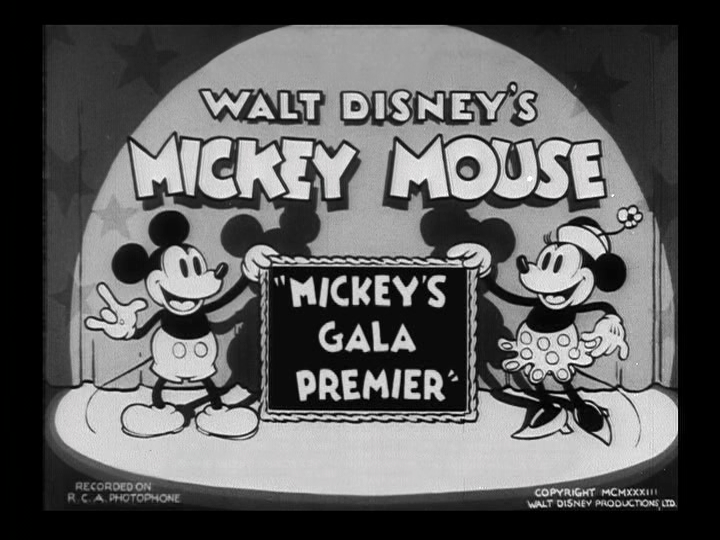
On July 1, 1933, the Mickey Mouse short film Mickey’s Gala Premiere was released to theaters. Although Disney has officially called the short Mickey’s Gala Premiere, the original title card has it called Mickey’s Gala Premier; this could be seen as a play on words. The short features caricatures of several well-known stars of the day. It was directed by Burt Gillett.

It’s a big night in Hollywood, with celebrations taking place at Grauman’s Chinese Theater, and the stars arrive quickly. First to arrive are the stars of the film Rasputin and the Empress, in their costumes: Wallace Beery, Marie Dressler, Lionel, John, and Ethel Barrymore. Laurel and Hardy trail after them, with the Marx Brothers popping out of the window of the car for a cameo. Next, Maurice Chevalier stops at the microphone and sings about Mickey’s new film, joined by Eddie Cantor and Jimmy Durante. Jean Harlow, Joan Crawford, and Constance Bennett sing in an “Andrews Sisters” style; soon after, Clark Gable, Harold Lloyd, Edward G. Robinson, and Adolphe Menjou close out the song as if a barbershop quartet. The celebrities flock to the theater, with Mae West causing Sid Grauman to nearly melt in embarrassment.

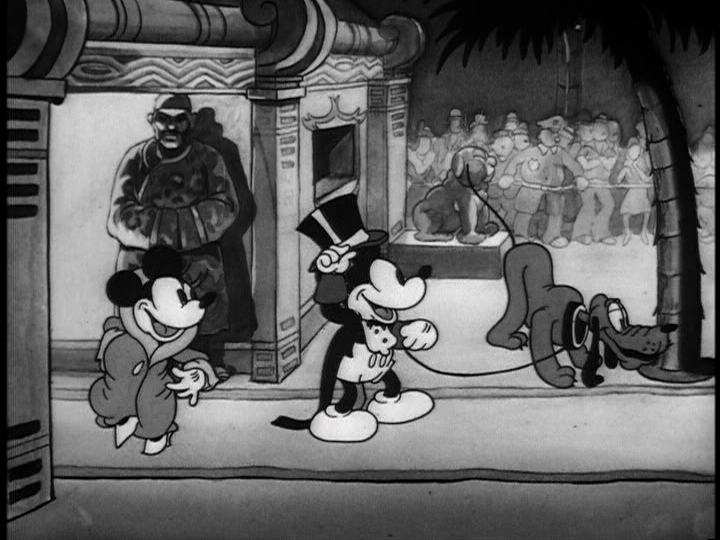
Mickey, Minnie, and Pluto arrive at their premiere, dressed to the nines

Mickey, Minnie, and Pluto arrive at their premiere, dressed to the nines

Soon, the star and his girl Minnie arrive in style, along with Pluto, Horace Horsecollar, and Clarabelle Cow. They enter the theater, and everyone is ready to see the new Mickey short, Galloping Romance. The short has Mickey playing a xylophone, and the audience sways along with the music. In the short, Pete kidnaps Minnie, and the audience laughs as Pete pins Mickey comically to the wall. They soon cheer when Mickey chases after Pete, but laugh again once Mickey’s chase grows increasingly comical, with many patrons rolling in the aisles. In the end, Mickey is able to save Minnie, while Pete meets a rather unfortunate end. Mickey is roped out onto the stage to shake hands with all the celebrities, with Greta Garbo coming up to give him a kiss. As she kisses him, Mickey wakes up to find that it’s not Greta Garbo, but Pluto, that’s been kissing him. Annoyed, Mickey pushes Pluto off the bed and tries to resume his happy dream.

June 30

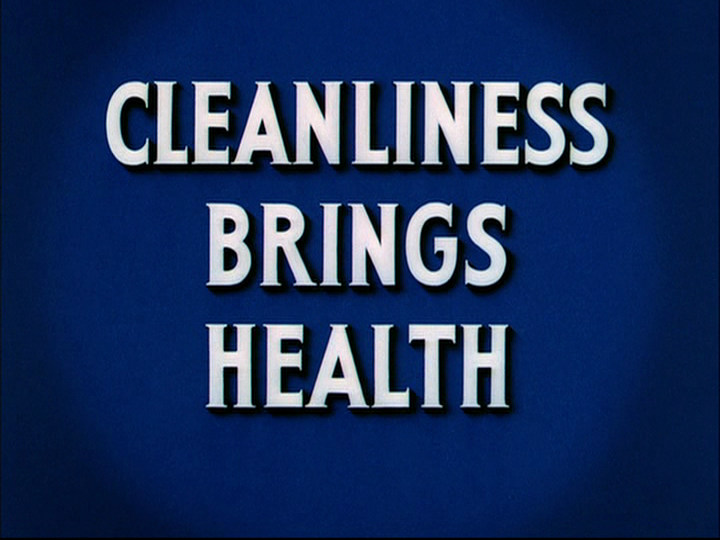
June 30, 1945 – The Educational Short Film Cleanliness Brings Health is Delivered

vlcsnap-2014-06-30-18h28m35s40

“This is the story of two families: one of them happy, one of them sad; one of them clean, the other, careless.”

On June 30, 1945, the educational short film Cleanliness Brings Health was delivered to the Coordinator of Inter-American Affairs.

The short introduces two families: one clean, happy, and healthy, the other careless, sick, and unhappy. The audience sees how the Clean family lives, and how they make sure everything is kept clean, including their dishes, food, and livestock. The father works in the corn field with his son, and all three members of the family are happy. The Careless family is seen doing several things that cause them to be constantly ill, including cooking on the floor and letting their livestock roam free. The son is seen on the ground with stomach cramps, and he goes into the corn field to relieve himself, although this causes his illness to spread through the crops and the dirt. The Clean family also has a problem with stomach cramps, but they create a simple latrine rather than use the old custom of going into the corn fields. The Clean family also washes themselves and their clothes to continue their health. Finally, the narrator reminds the audience that “cleanliness brings health and happiness.”

June 29

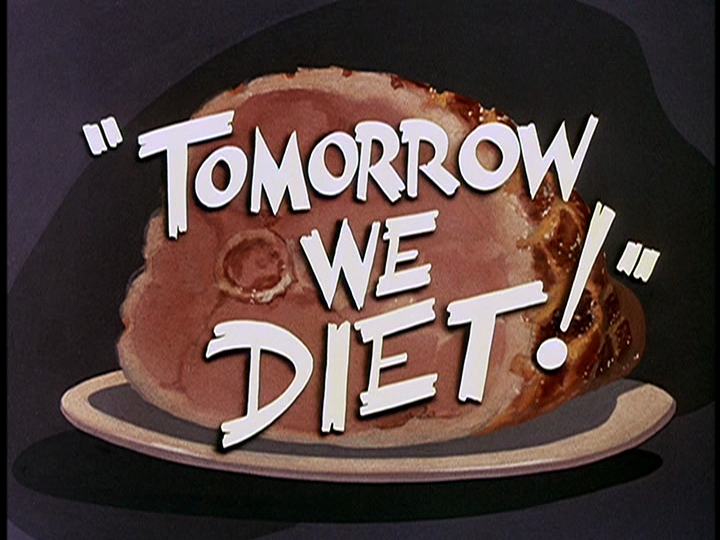
June 29, 1951 – The Goofy Short Film Tomorrow We Diet is Released to Theaters

vlcsnap-2014-06-29-18h49m23s188

“Eat, drink, and be merry, and tomorrow, we diet!”

On June 29, 1951, the Goofy short film Tomorrow We Diet was released to theaters. It was directed by Jack Kinney, with story by Milt Schaffer and Dick Kinney.

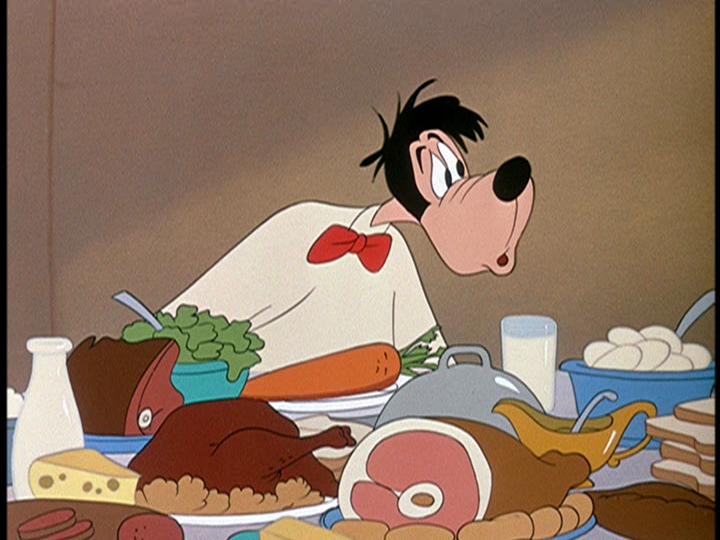
The short begins with Goofy pulling out several dishes from the refrigerator and scarfing them down all at once. After his meal, he passes by the mirror and admires his reflection. His reflection, however, has some choice words for him. Goofy argues that he’s as fit as a fiddle, but the reflection points out that he’s as fit as a bass fiddle. Although Goofy has several images of his younger, fitter days, he’s gained several pounds since then, and rips the seam of his pants as he struggles to put them on. The tailor has to take his awning to create a striped suit for Goofy, and when he enters a cab, he is heavy enough to cause the tires to pop. There are several instances of Goofy’s weight causing problems for him and those around him, including breaking two stools at the local café and crashing the elevator.

Goofy unloads the fridge of its contents, but is soon scolded by his reflection

Goofy unloads the fridge of its contents, but is soon scolded by his reflection

Goofy soon arrives home with a book called “Easy Ways to Reduce,” and the mirror taunts him to touch his toes. The moment the reflection mentions eating, however, Goofy is already digging around in the fridge. The mirror tells him what he cannot eat, leaving him with a solitary carrot. But then, Goofy decides to just leave the table altogether, but heads back to the fridge once again. His mind is obsessed with food, and his attempts at maintaining a diet are thwarted by his mind demanding he eat. His reflection compliments him on his willpower before they both go to sleep, but Goofy soon heads to the fridge in his sleep to eat. He is shocked, however, to find that all the food is gone; his reflection has taken all the food and enjoyed a good meal, proclaiming that tomorrow, they will diet.

June 27

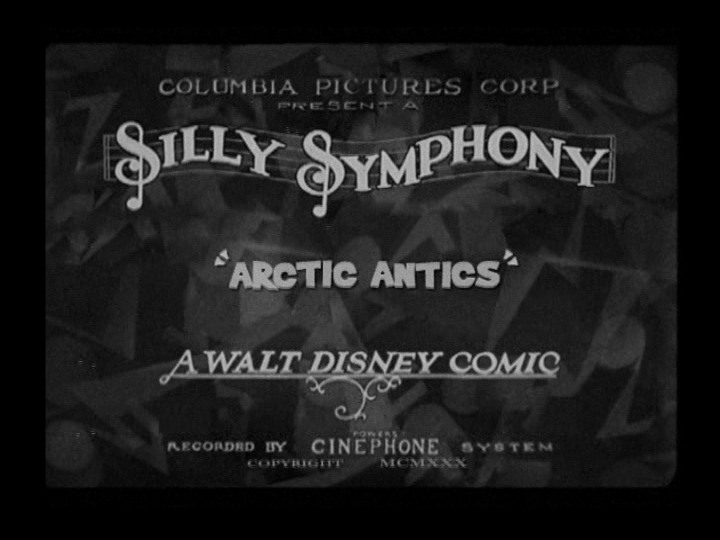
June 27, 1930 – The Silly Symphony Arctic Antics is Released to Theaters

vlcsnap-2014-06-27-19h38m07s146

On June 27, 1930, the Silly Symphony Arctic Antics was released to theaters. It was directed by Ub Iwerks.

A polar bear cub is dancing about between the back of a polar bear and sheets of ice, followed by a parade of other polar bears and seals. One polar bear cub uses its tail to drive him forward on a sheet of ice like a speedboat. A walrus is seen chasing a fish, who jumps about, teasing it. A group of seals clap as they watch a female do a balancing act and dance with a fish, while another seal uses a walrus to create music before being chased off by the walrus, who wishes to sing instead. The seals applaud the walrus’ efforts before a troop of penguins marches on the scene, waddling in unison. One small penguin falls through the ice, but manages to quickly rejoin the group before they whistle their marching tune behind a large iceberg.

June 25

June 25, 1969 – The Walt Disney Educational Materials Co. is Incorporated

DEP Logo web

“Building thinkers every day.”

On June 25, 1969, the Walt Disney Company production asset The Walt Disney Educational Materials Company was incorporated. The company went through several name changes, finally settling on Disney Educational Productions, a moniker they still use today. For over 60 years, the company has provided educators with Disney educational films and materials, with several being nominated and/or awarded with honors from several organizations. The company’s materials fall under five main categories: Disneynature, Social Studies, Language & Arts, Math & Science, and Health & Safety; a sixth category is listed with all programs containing scientist Bill Nye.

June 24

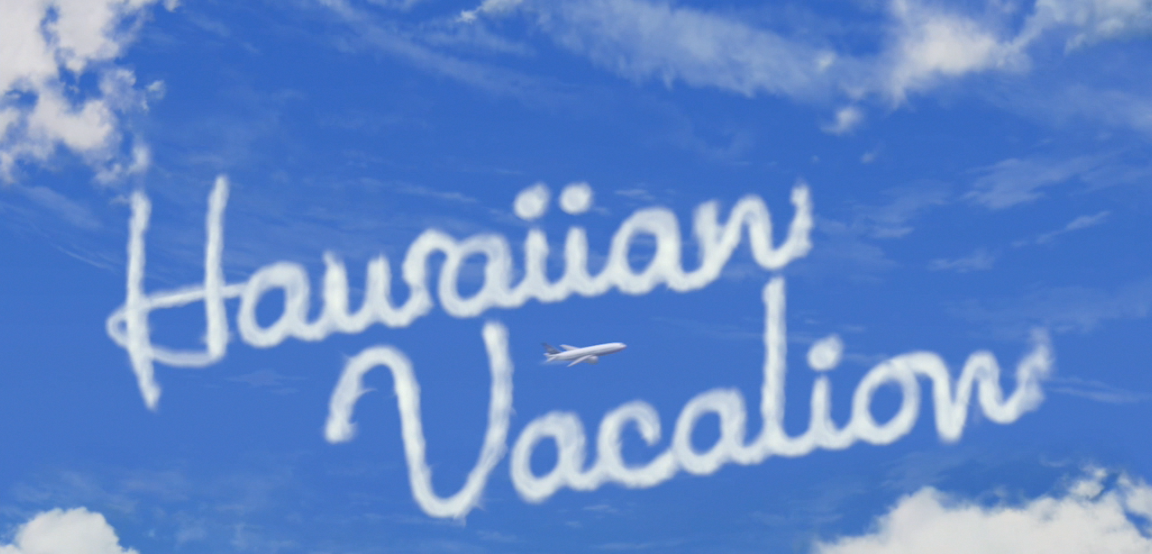
June 24, 2011 – The Pixar Short Film Hawaiian Vacation is Released to Theaters

HV_1

“Eh, I should have seen this coming.”

On June 24, 2011, the Pixar short film Hawaiian Vacation was released to theaters alongside the full-length animated feature Cars 2. The short is part of the Toy Story Toons series which includes the characters from the hit Toy Story franchise in an all-new adventure; it was filmed in CinemaScope and was released in 3D and IMAX versions. It was directed by Gary Rydstrom, and features the voice talents of Jodi Benson as Barbie, Michael Keaton as Ken, Tom Hanks as Woody, Tim Allen as Buzz Lightyear, Joan Cusack as Jessie, Don Rickles as Mr. Potato Head, Estelle Harris as Mrs. Potato Head, Wallace Shawn as Rex, and John Ratzenberger as Hamm.

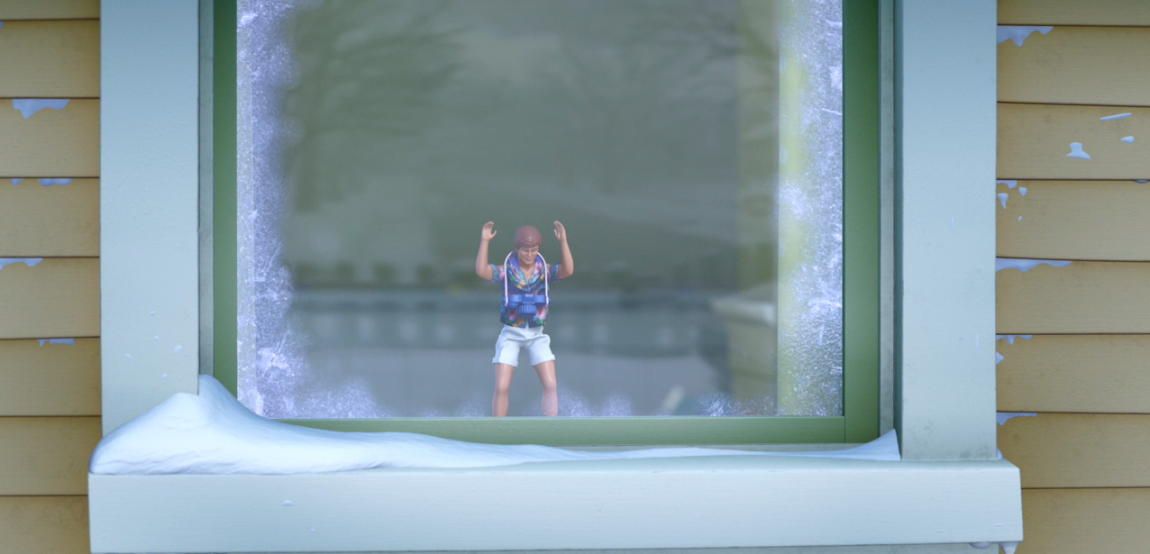
The short begins at the beginning of Bonnie’s winter break, and Woody has called a meeting with the toys to discuss what will happen when Bonnie flies off to Hawaii. Everyone lays out their vacation plans: Trixie and Rex have set up profiles for an online role playing game; Buttercup, Hamm, and Chuckles are playing cards; Mr. and Mrs. Potato Head are spending the week together (although Mr. Potato Head makes sure he can still play cards with the trio); and the aliens audition for Mr. Pricklepants’ new show. Bonnie soon arrives back in her room, grabs her suitcase, and quickly departs. Unfortunately, she left behind her backpack, where Barbie and Ken were stowed away, hoping to go to Hawaii. They actually think they’re in Hawaii, and think Woody and the gang have joined them there. When Woody breaks the news to Ken and Barbie that they’re in Bonnie’s bedroom, Ken does not take the news well.

Ken looks out the window in despair as Bonnie heads off to Hawaii without him and Barbie

Ken looks out the window in despair as Bonnie heads off to Hawaii without him and Barbie

Barbie lets the others know that Ken had spent months planning this vacation, including where they would have their very first kiss, although Ken doesn’t know that she knows. Woody is touched by Ken’s surprise for Barbie, and decides to help them have the perfect “Hawaii vacation” in Bonnie’s bedroom. Every toy plays a part in the plan (which includes the return of Spanish Buzz). When it comes time for the kiss, Woody and the gang sets up the beach for the pair, but Barbie decides to take Ken outside in the snow. The two walk off together, and fall off the deck into the snow. There’s a moment of silence before Hamm declares that he’ll go get the shovel.

June 20

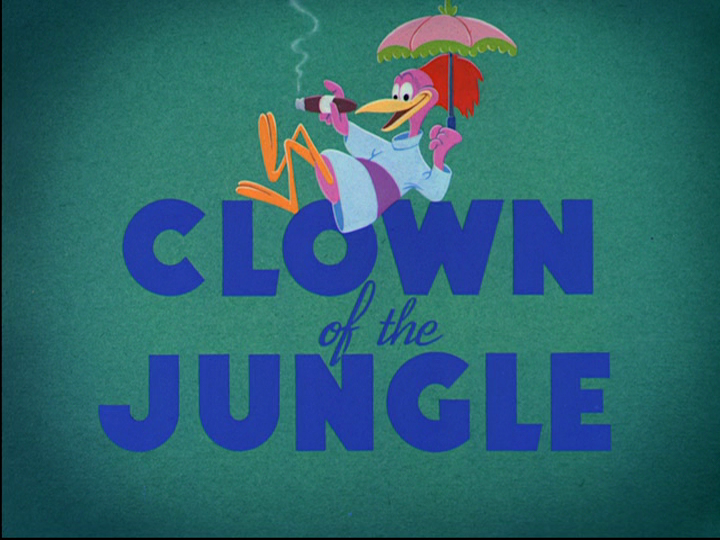
June 20, 1947 – The Donald Duck Short Film Clown of the Jungle is Released to Theaters

vlcsnap-2014-06-20-21h08m56s162

“Here in a jungle paradise, nature’s little songsters blend in unforgettable harmonies.”

On June 20, 1947, the Donald Duck short film Clown of the Jungle was released to theaters. It features the Aracuan bird, a crazy bird that was first featured in the film The Three Caballeros, tormenting Donald much as he does in this short. The Aracuan makes another appearance in the film Melody Time. Clown of the Jungle was directed by Jack Hannah, with story by Ray Patin.

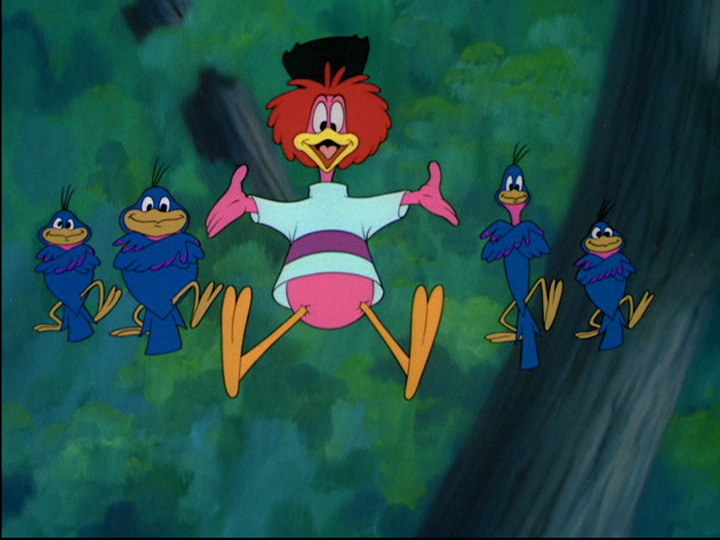
The audience is introduced to the jungle paradise of the South Americas, where the bliss is interrupted by the hyperactive Aracuan bird, known as the “slap-happy clown of the jungle.” The narrator then notices a strange sight in the jungle, and introduces Donald as a member of the Bird Lovers Photographic Expedition. Donald steps out of his tent to take pictures of birds, but the birds seem determined not to be photographed. Donald finally spies a sleeping stork and attempts to take a good picture, only to have the Aracuan step into the shot. Donald tries to send the Aracuan away, but the bird responds in a melodramatic fashion, acting as though it will commit suicide. The Aracuan is amused by Donald’s reassuring handshake, and starts “shaking hands” with everything he can get his hands on.

The Aracuan interrupts the hummingbirds song with a Russian-style dance

The Aracuan interrupts the hummingbirds song with a Russian-style dance

Donald, annoyed at the behavior, regains his enthusiasm for his expedition when he spots some hummingbirds. When he goes to take the shot, however, the Aracuan interrupts with a Russian dance. When Donald tries to attack the Aracuan, the Aracuan fights back, and Donald chases after the bird in a rage. Donald continues to be tricked by the comical Aracuan, including the Aracuan setting up a fake bird only to have Donald smacked with a hammer and blasted by a cigar. In the end, Donald sets up a machine gun and shoots the Aracuan, but is dismayed to find that he just destroyed his own tent, leaving the Aracuan unharmed. Donald then goes completely crazy, acting just like the Aracuan.

June 17

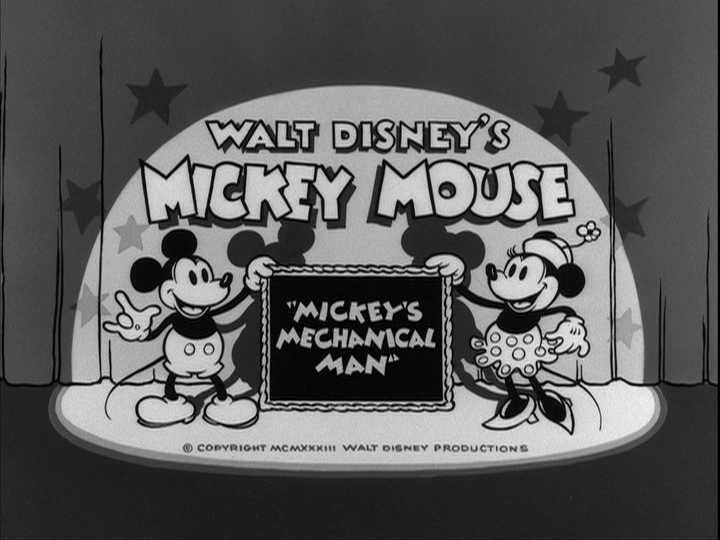
June 17, 1933 – The Mickey Mouse Short Film Mickey’s Mechanical Man is Released to Theaters

vlcsnap-2014-06-17-17h40m18s127

“One, two, come on there, step in! Three, four, with a spot on his chin! Five, six, lead with your right, seven, eight, get in there and fight!”

On June 17, 1933, the Mickey Mouse short film Mickey’s Mechanical Man was released to theaters. It was directed by Wilfred Jackson. The gorilla in the short was a character from the 1930 Mickey Mouse short film, The Gorilla Mystery.

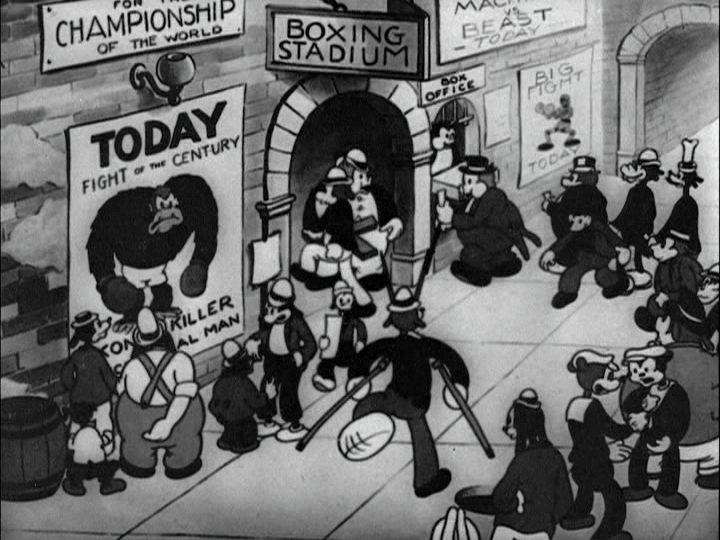
A poster is seen on the side of a barn, advertising the “Battle of the Century” between the Kongo Killer and Mickey’s Mechanical Man. Mickey is inside his own training center, having the robot named Sam punch a safe with the gorilla’s face on it while Mickey plays the piano and sings his commands. Minnie drives up to the training grounds and watches from the window. She honks her car horn, which gives Sam a strange reaction to violently punch any picture of the gorilla he sees. At one point, Sam punches a lamppost so hard that it falls on him and knocks him out. Mickey goes to check on Sam, when he hears Minnie laughing and mocking him. Mickey asks her to never honk the horn again, as it makes his robot go wild and crazy. However, she honks it again, and Sam gets up and runs wildly down the street with Mickey following him.

The town gathers for the fight of the century, although most are banking on Kongo winning

The town gathers for the fight of the century, although most are banking on Kongo winning

The crowds gather for the fight, but run inside when Sam makes his way to the arena, and proceeds to punch a poster of Kongo the Killer on a brick wall, knocking himself out in the process. Mickey drags Sam inside, with Minnie following him as the crowd laughs. Finally, the fight begins, although the crowd isn’t so sure Sam can win. In the beginning, Sam has a strong lead, but Kongo soon gets his punches in, sending Sam’s parts flying all over the place. Sam is soon knocked out, with mechanical birdies flying above his head, and Mickey begs Sam to get up. Minnie soon gets the idea to grab her horn and make it sound. When she does, Sam springs into action, fighting Kongo with all he’s got. Sam wins the fight, sending Kongo flying into the rafters, and Sam blows apart from the excitement.

June 9

Posted on

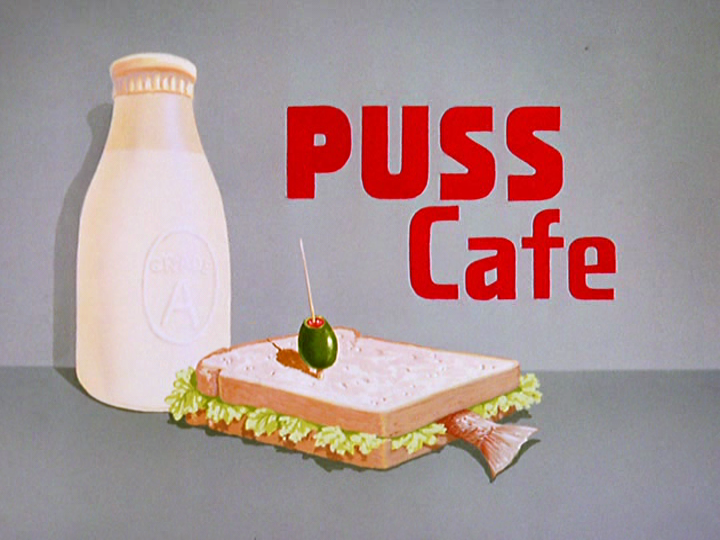
June 9, 1950 – The Pluto Short Film Puss-Café is Released to Theaters

vlcsnap-2014-06-09-18h54m35s16

On June 9, 1950, the Pluto short film Puss-Café was released to theaters. It was directed by Charles Nichols, with story by Dick Kinney and Milt Schaffer.

A cat is walking past a fence, when he smells something nice. Ignoring the “beware of dog” sign, he races across town to pick up his bigger, dimwitted feline friend, and the two hurry back to the house, where the first cat points out the three bottles of milk on the porch, the plentiful amount of birds in the birdhouse, and the fish leaping happily in the pond. The bigger cat points out that the owner of the house has a dog, but the first cat doesn’t care, as the welcome mat is laid out in front. The two head over to the milk, but as they open the bottle, Pluto wakes up from his nap in the hammock. When he spots the cats drinking the milk, he leaps after them, but they narrowly escape. With a snort, Pluto locks the door to the yard, then hops back into his hammock.

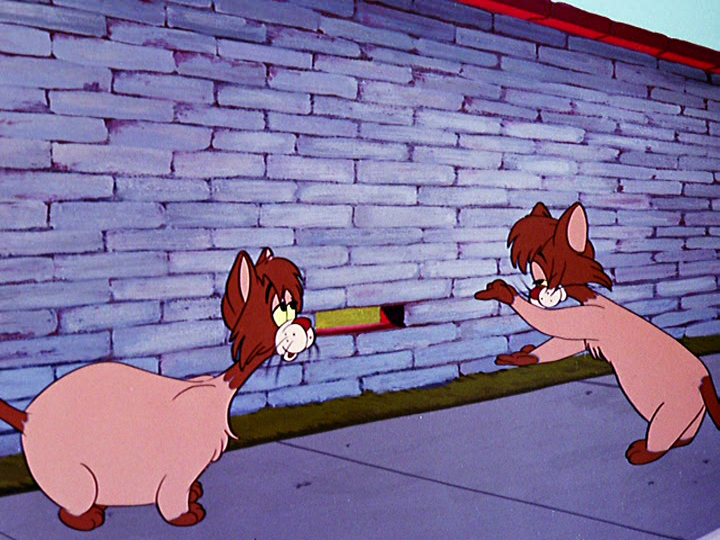
The cats break in a second time through a loose brick in the wall

The cats break in a second time through a loose brick in the wall

As Pluto is snoozing, the cats break back in through a loose brick in the wall, and quietly make their way to the birdhouse. As they get inside the birdhouse, the two begin to fight after the bigger cat accidentally grabs the smaller cat, thinking he was a bird. The two are kicked out by a bird and fall into the hammock, where Pluto begins to fight. Once again, the two are able to escape, just barely. They sneak back in a third time, this time to go after the fish, but they first catapult Pluto from the hammock across town. Pluto ends up catching the two, and they quickly run from the house. Pluto chases them to their hideout, where a third, bigger cat is waiting to beat up Pluto. Pluto flees, and the three cats go back inside their garbage can hideout.