RSS Feed

Tag Archives: Short film

September 7

September 7, 1929 – The Silly Symphony El Terrible Toreador is Released to Theaters
vlcsnap-2015-09-01-09h20m08s162

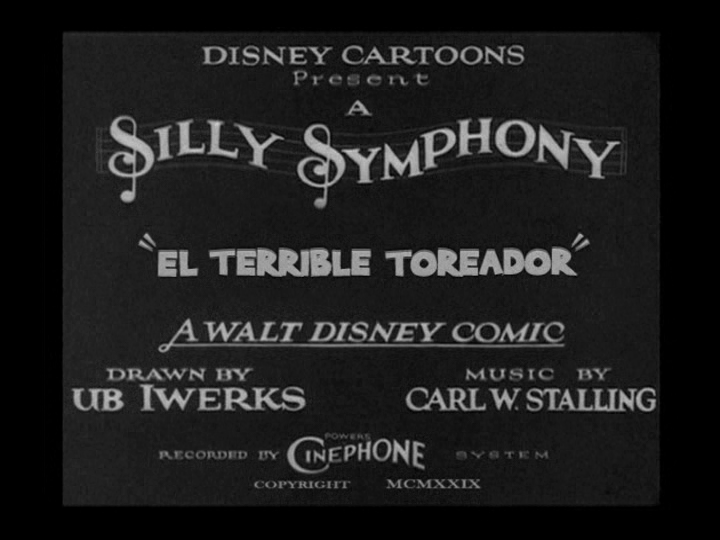
On September 7, 1929, the Silly Symphony El Terrible Toreador was released to theaters. It was directed by Walt Disney, and features music from the opera Carmen by Georges Bizet.

The short opens with people eating in a cantina, with a waitress balancing a beer on her head as she wanders the floor. One soldier falls in love at first sight upon seeing her, and she dances about after he gives her a generous tip. El Terrible Toreador enters the cantina, and the soldier grabs for the waitress, though she works on fighting off his advances. The Toreador, angered at this lack of respect for the waitress, picks a fight with the soldier. The scene then moves to the bullfighting arena, where everyone cheers for the Toreador and the bull as they start to duke it out. The fight has many silly moments between the pair, including a game of patty-cake and a skipping dance. The waitress has a bouquet of flowers for the Toreador, but the soldier pours pepper over the flowers before she throws them. The bull smells the bouquet and sneezes his teeth out, which the Toreador uses to attack the bull. The bull is angered and, after his teeth return, charges at the Toreador. The Toreador wins the fight by pulling the bull inside out.
September 2

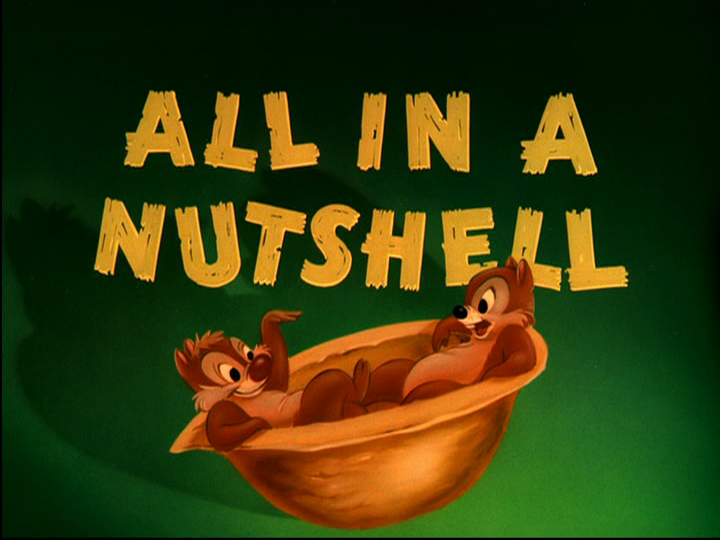
September 2, 1949 – The Donald Duck Short Film All in a Nutshell is Released

vlcsnap-2015-09-01-09h36m31s7

“Hot dog! This oughta sell like hot cakes!”

On September 2, 1949, the Donald Duck short film All in a Nutshell was released to theaters. It was directed by Jack Hannah, with story by Bill Berg and Nick George.

Donald has set up a little nut butter stand shaped like a giant walnut, and is at work creating jars when he is out of nuts. He spies Chip and Dale collecting nuts in their tree, and decides to steal their nuts. Chip and Dale fall out of the tree, confused as to where their nuts have gone, but follow the trail back to the nut stand. Dale believes the stand to be the biggest but they’ve ever seen, and he and Dale decide to carry it home, not realizing they can’t lift it. After being injured by Dale’s antics, Chip finds a large rock atop a hill and decides to use it to crash into the nut to break it open. The rock manages to roll down the hill and crack the top of the stand. Donald rushes out once he hears the noise, but soon returns back to his work. Chip and Dale open the top of the stand and find the nut butter inside, and taste test a jar. Finding it to their liking, they decide to take more jars. Dale gets distracted by the jar filling machine, and takes the place of a jar to eat more butter. Chip gets Dale back on track so they can steal more jars. Unfortunately, one of the jars breaks over Donald’s head, and he chases the two out of the stand. They soon capture him and steal the rest of the jars, but he quickly pursues them. Donald crashes into their tree, and the two send him flying out across the countryside in a makeshift cannon with a log and a beehive, with the chipmunks celebrating their victory.


August 31

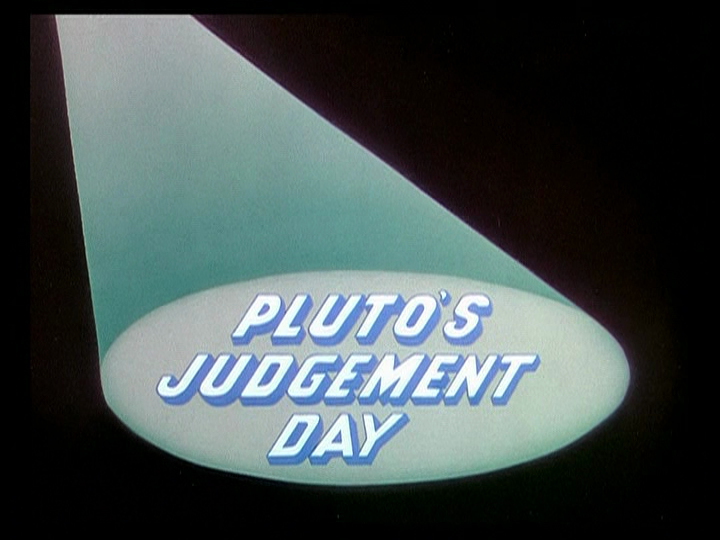
August 31, 1935 – The Mickey Mouse Short Film Pluto’s Judgement Day is Released to Theaters

vlcsnap-2015-08-31-18h50m10s162

“Always chasing cats, aren’t ya? Well, you’re gonna have plenty to answer for on your judgement day!”

On August 31, 1935, the Mickey Mouse short film Pluto’s Judgement Day was released to theaters. It was directed by Dave Hand.

The short begins with Pluto chasing a kitten around the yard until it jumps inside the house. The chase creates a huge mess, and Mickey chastises the pup. Pluto angrily lies down in front of the fire and starts to nap while Mickey cleans up the frightened kitten. Pluto then dreams that a cat has come to the door to call him out for a challenge, and Dream Pluto heads out, though Dream Mickey attempts to stop him. Pluto is led to a special cat cavern, where he is taken deep below and decried as Public Enemy No. 1. He is sentenced for his crimes against all cats, with the judge, jury, and all present all cats, with a wink to the audience that justice certainly is not on Pluto’s side. Each witness is brought in, with one crime more horrific than the next. The jury deliberates for one second before they deliver a guilty verdict for Pluto, and the cats carry him out to his punishment of being held over a fire. Pluto is woken up by a stray piece of coal from the fire, and lands in the tub, splashing Mickey and the kitten. Although initially frightened of the kitten, Mickey convinces the pair to kiss and make up.

August 28

August 28, 1929 – The Mickey Mouse Short Film Mickey’s Follies is Released to Theaters

vlcsnap-2015-08-28-11h44m35s25

“With the cows and the chickens they all sound like the Dickens when I hear my little Minnie, ‘Yoo hoo!’”

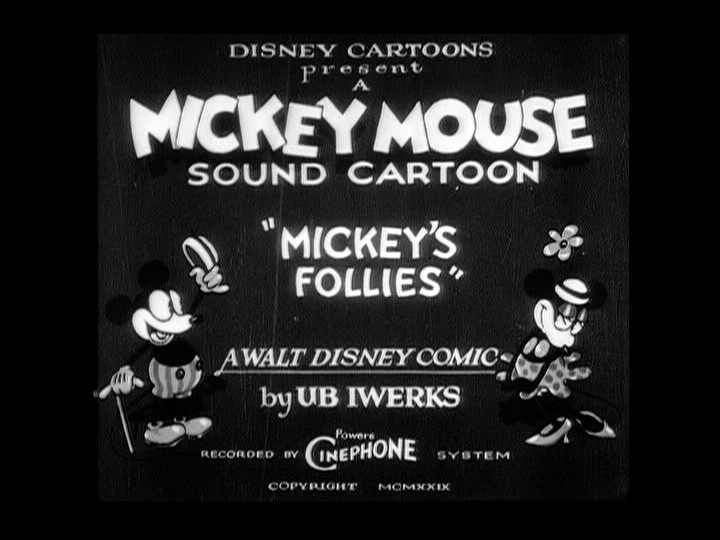
On August 28, 1929, the Mickey Mouse short film Mickey’s Follies was released to theaters. It was the first short directed by Wilfred Jackson, and also features the Mickey Mouse theme song, “Minnie’s Yoo Hoo.”

The party starts with a lively rendition of “Minnie’s Yoo Hoo,” and then leads into a group of ducks dancing merrily to “Swanee River.” The barnyard cheers wildly before the next dance, which is a rooster and a hen performing an Apache dance, with the chicken rushing off to lay an egg mid-performance. The rooster crows with pride, and everyone once again cheers. The next performance is a pig performing opera, whose bloomers keep falling down as they sing, but this performance is met with booing from the crowd. The pig is then carried away with a hook, and it is announced that Mickey will perform his theme song. His singing and dancing is then met with much adulation.

August 27

August 27, 1948 – The Donald Duck Short Film Inferior Decorator is Released to Theaters

vlcsnap-2015-08-27-14h25m41s178

“Stick around, bud. Stick around.”

On August 27, 1948, the Donald Duck short film Inferior Decorator was released to theaters. It was directed by Jack Hannah, with story by Lee Morehouse and Bob Moore.

Spike the Bee is buzzing happily amongst the flowers, when he hears a horrible singing inside the huse. He sees Donald plastering some flower wallpaper and, thinking that these are real flowers, he runs into the wall. Donald, observing Spike, plays a cruel prank on the bee, capturing him in a bucket of wallpaper paste. Spike tries to escape, and Donald cuts the paste that is attached to Spike, sending him hurtling into the ceiling. Donald sends the dizzy bee outside, but Spike angrily makes his way back in tries to sting Donald’s tail, but gets caught on the sticky wallpaper. As Donald tries to shake Spike off, he gets the wallpaper and himself stuck on the ceiling, leaving himself open for Spike’s attack. Donald is able to dodge the attack with a well-placed cork, but Spike is able to free himself and once again ready himself for a sting. Spike calls in reinforcements from his hive, and they all go sting Donald one by one.

August 22

August 22, 1947 – The Donald Duck Short Film Bootle Beetle is Released to Theaters

vlcsnap-2015-08-22-09h17m53s78

“Just think of it: the famous Professor Duck!”

On August 22, 1947, the Donald Duck short film Bootle Beetle was released to theaters. It was directed by Jack Hannah, with story by Bill Berg and Milt Banta.

The narrator opens the short with an introduction of the “Bootle Beetle,” a once plentiful bug whose numbers diminished due to their love of travel. One beetle is seen getting ready to travel, when he is stopped by an older bug. He warns the kid that so many beetles before him traveled across the stream and never came back, then starts telling him a story of when he was a younger bug, setting out for adventure. At first, the journey is enjoyable, until he comes Donald, an entomologist. Donald, who has been looking for the elusive Bootle Beetle, celebrates his good fortune, but the poor beetle manages to escape. Donald continues to chase after the beetle, and finally manages to trap it in a jar, taking it home. However, when Donald takes another look at the beetle, he thinks it has disappeared. The beetle manages another escape, and makes his way back home, determined to stay. The kid beetle is convinced to stay home, and it is revealed that Donald is still searching for the beetle all those years later.

August 17

August 17, 1954 – The Special Short Film Willie the Operatic Whale is Released to Theaters

vlcsnap-2015-08-17-16h05m37s3

“A signing whale? Whaddya know! Imagine that! I don’t believe it! I don’t believe it!”

On August 17, 1954, the special short segment Willie the Operatic Whale was released to theaters. A segment from the animated feature film Make Mine Music, it was originally entitled “The Whale Who Wanted To Sing At The Met.” All the voices in the short were performed by Nelson Eddy.

The segment begins with how the story began, with a small segment in the newspaper about a mysterious voice heard at sea, which then became a front page story, then a screaming headline. Scientists are split on the issue, with one camp believing that it was impossible, while some believe it had to be possible. Then, Impresario Professor Tetti Tatti weighs in, believing that the whale must have swallowed an opera singer, and is determined to retrieve the poor victim. Whitey the seagull finds the newspaper announcing Tetti Tatti’s search for the whale, and tries to get his friend Willie the Whale to sing for Tetti Tatti. Willie is serenading the sea animals when Whitey finds him. Willie heads over to Tetti Tatti’s ship and starts serenading him with some Figaro. The sailors refuse to shoot the harpoon as they listen to Willie’s beautiful singing. Willie could also sing in three separate voices, all at the same time, and was considered a singing miracle. However, Tetti Tatti is still convinced that there are three opera singers inside Willie, and desperately grabs at the harpoon; fortunately, he is stopped by the sailors. Willie is then seen singing on the stage of the Met, singing grander and grander roles. Unfortunately, the singing at the Met was all a dream, as Tetti Tatti got his way and managed to harpoon Willie, killing him. Whitey flies around, depressed that his friend has been murdered, but is reassured by the narrator that people aren’t used to miracles, and Willie is singing in Heaven. Willie is seen singing in the clouds to a sold out show.

August 13

August 13, 1948 – The Pluto Short Film Cat Nap Pluto is Released to Theaters

vlcsnap-2015-08-13-18h07m37s153

On August 13, 1948, the Pluto short film Cat Nap Pluto was released to theaters. This is one of the few shorts that featured the character of Figaro from the animated feature film Pinocchio. It was directed by Charles Nichols, with story by Eric Gurney.

It’s a quiet morning in suburbia, with Figaro snoozing away on his pillow. He goes to wake his friend Pluto, only to find an empty bed. Figaro is soon distracted by the milk man, and spies an exhausted Pluto coming in through the gate. Pluto can barely keep his eyes open, and narrowly manages to get back inside before being greeted by Figaro. Pluto’s Sandman appears and puts Pluto to sleep, which doesn’t last very long when Figaro appears, wanting to play. Pluto manages to make his way under the couch, but Figaro disturbs him again. Pluto’s Sandman uses more and more sand to put him to sleep, but his efforts are thwarted by a playful Figaro. Pluto chases Figaro around the house until he is too tired to move, and falls asleep in Figaro’s bed, with Pluto’s Sandman knocking him out with a hammer. After this, Figaro is unable to wake Pluto in any way, and is soon visited by his own Sandman, who puts the cat to sleep with a hammer. The two Sandmen also put each other to sleep while Pluto and Figaro snooze away happily.

August 9

August 9, 1946 – The Donald Duck Short Film Wet Paint is Released to Theaters

vlcsnap-2015-08-09-13h40m50s220

“Why, that dirty…”

On August 9, 1946, the Donald Duck short film Wet Paint was released to theaters. It was directed by Jack King, with story by Roy Williams.

A beautiful day finds Donald painting his car a nice red color. As he turns to get more paint, a bird flies by, accidentally catching her string on the car’s hood ornament. She flies down to retrieve it, and gets her feet stuck on the paint of the car. As she walks away, she leaves a trail of footprints behind. Donald notices and irritably paints over the prints, accidentally painting his windshield and not realizing he’s leaving his own marks. The bird watches Donald curiously, and Donald chases after it before angrily realizing that he’s left hand prints all over the new paint job. The bird gets her string caught in the car’s antenna, which hits Donald and ends up with him tied on the car. Donald gets out and throws a paintbrush fill of paint at the bird, who cleans herself off in the paint remover before shaking herself dry over the car, ruining the new paint job. She grabs a string from a hole in the front seat and flies off, but pulls out all of the stuffing in the process when Donald tries to grab the string back, giving the car a final “sheepdog” look.

Donald manages to remove the stuffing from the car, but finds the bird in the tailpipe. The bird spies another string, but Donald prevents her from taking it. The string, however, is an exposed wire, which shocks Donald and sends him bouncing among the paint cans. His tail covered in paint, he ends up giving the car a splotchy tie-dye paint job. Fed up, he chases after the bird once more, and accidentally sends the car zooming across the yard, where it crashes and loses its paint job. The bird finally takes a string from Donald’s hat, unraveling it. Angered, he chases after her with an axe and begins to chop down her tree, when she sees her nest and babies. Softened, he lets her keep the string, and the birds congregate on his head.

August 7

August 7, 1946 – The Special Pluto Short Film A Feather in His Collar is Delivered to the Community Chests of America

vlcsnap-2015-08-07-18h09m45s21

“That’s the spirit, Pluto! Thank you!”

On August 7, 1946, the special short film A Feather in His Collar was delivered to the Community Chests of America. During World War II, Disney characters were used frequently to encourage viewers to support the war effort, from buying war bonds to paying their taxes. This short film used Pluto to encourage people to donate to their local Community Chests.

The advertisement begins with Pluto sleeping in his doghouse when his nose is splashed with billboard paste. He sleepily looks up to see an ad asking people to give to their Community Chest. Pluto decides to open his safe and donate several of his bones, and is awarded with a red feather placed in his collar. Inspired, Pluto walks around town advertising for people to give to their Community Chest.