RSS Feed

Tag Archives: 1950s

January 14

January 14, 1955 – The Donald Duck Short Film No Hunting Premieres in Theaters
vlcsnap-2013-01-13-19h07m23s232

“But your old grandpappy up there on the wall didn’t have it so soft. No, that old boy really had to work for his vittles.”

On January 14, 1955, the Donald Duck short film No Hunting premiered in theaters. This is one of the few shorts filmed in Cinemascope, and Donald is noted for being the only classic Disney character to appear in this process. No Hunting was nominated also for an Academy Award, but lost to Speedy Gonzales from Warner Brothers’ Merrie Melodies series. It was the ninth nomination for Donald Duck’s series. The short also features a cameo of Bambi and his mother, with her remarking, “Man is in the forest. Let’s dig out.” The short was directed by Jack Hannah, with story by Dick Shaw and Bill Berg, and stars Clarence Nash as Donald and Bill Thompson as Donald’s grandfather.

Donald sits at his dining room table, staring up at a picture of his grandfather, who was a hunter. The narrator explains that while Donald has a nice spread of food in front of him, his grandfather didn’t have it so easy, having to hunt buffalo for his supper. As the narrator notes in Donald’s newspaper that hunting season begins soon, the image of Donald’s grandfather is suddenly excited and tears himself away from the portrait. He declares that he and Donald are going hunting, and his spirit takes over Donald, forcing him to go hunting.
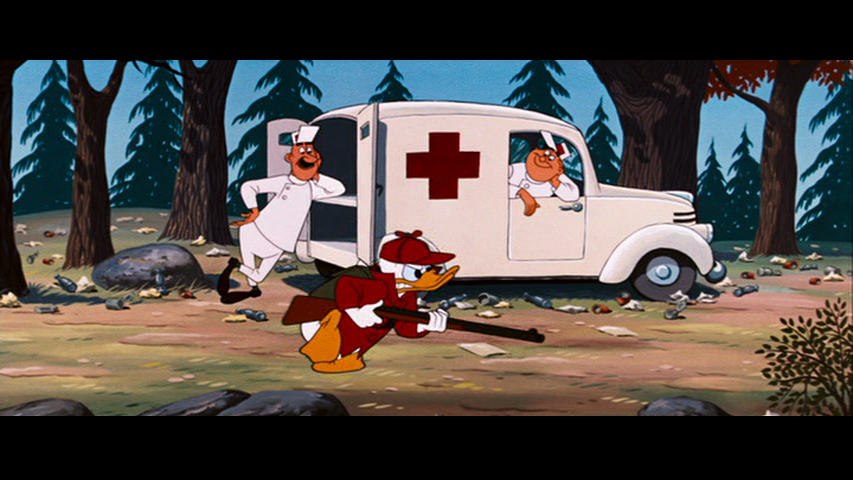
Donald stalks the hunting grounds, with medics waiting patiently, along with food vendors and other interested parties

Donald stalks the hunting grounds, with medics waiting patiently, along with food vendors and other interested parties

As Donald travels to the hunting grounds, the local residents begin preparing for the worst, including all farm animals leaving the barn and taking shelter in the root cellar. Hunters appear with expensive gear, and all wait with anticipation for hunting season to begin. At the stroke of midnight, Donald sounds his horn, and the hunters begin to shoot, turning the forest into trench warfare. Donald’s grandfather appears every so often to give him advice, including the difference between a cow (not fair game) and a deer (fair game). He tries to hide among all the chaos, and when he finally asks his grandfather what to do, the grandfather tells him to “dig out fast” before fleeing the scene. The men begin to march home, covered in bandages, and Donald’s grandfather appears once more with a cow, calling it “meat on the table.”

December 30

December 30, 1957 – The Dave Brubeck Quartet Album Dave Digs Disney is Released on LP

Image credit: amazon

Image credit: amazon

“Dave [Brubeck] was ahead of his time tapping into the Disney songbook. Look at how many artists have done the same since.” – Album Producer George Avakian

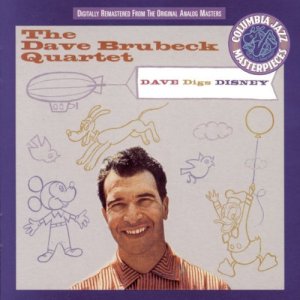
On December 30, 1957, the jazz album Dave Digs Disney by the Dave Brubeck Quartet was released on LP. Inspired by a family trip to Disneyland, pianist Dave Brubeck and alto saxophonist Paul Desmond began composing jazz variations of classic Disney tunes. The album is notable for being the first time a modern jazz group took Disney songs seriously, and one of the first times a musician devoted an entire album to interpretations of Disney classics. The album has been reissued over the years, to cassette tape, CD, and digital format.

December 16

December 16, 1952 – WED Enterprises is Founded

“Well, WED is, you might call it my backyard laboratory, my workshop away from work. It served a purpose in that some of the things I was planning, like Disneyland for example…it’s pretty hard for banking minds to go with it…so I had to go ahead on my own and develop it to a point where they could begin to comprehend what I had on my mind.” – Walt Disney

On December 16, 1952, the design and development organization WED Enterprises was founded by Walt Disney (with WED being Walt’s initials). The organization was founded to help create Disneyland. The first three Imagineers (a portmanteau of ‘Imagination’ and ‘Engineer’) working on this project, and first three employees of WED, were Harriet Burns, Fred Joerger, and Wathel Rogers, who had been working on the Disneyland project before the organization was formed. Walt would sell his interest in WED Enterprises to Walt Disney Productions in 1965, with the whole organization moving to Glendale in 1961. In 1986, the organization was renamed Walt Disney Imagineering.

November 24

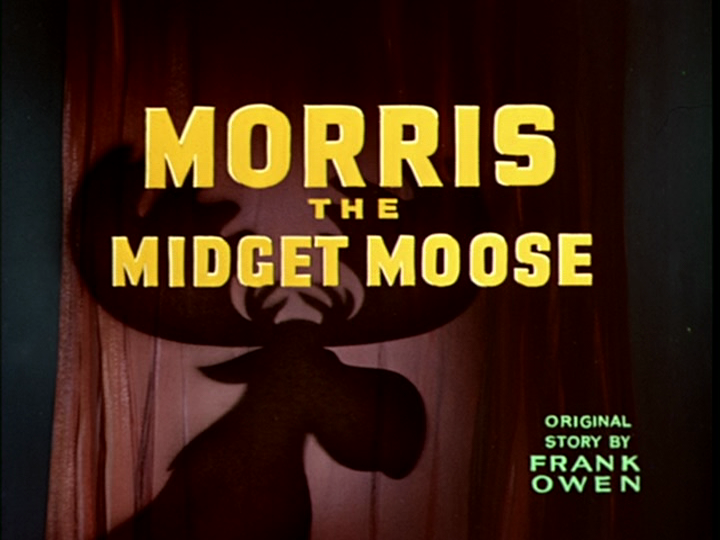
November 24, 1950 – The Special Short Film Morris the Midget Moose Premieres in Theaters

“Now, Morris was four years old and should have been full-grown. But no matter how hard he tried, he couldn’t grow an inch.”

On November 24, 1950, the special short film Morris the Midget Moose premiered in theaters. The short was based on an original story by Frank Owen. It also brings back the character of the “boodle beetle,” who was known more often than not for being an antagonist of Donald Duck. It was directed by Charles Nichols, with story by Eric Gurney and Bill de la Torre.

The short begins with two young bootle beetles fighting over a berry. Their grandfather decides to teach them a lesson through telling them a story: the story of Morris the Midget Moose. Morris was unable to grow any bigger than a puppy. He wished to play with the bigger moose, but he couldn’t keep up with them due to his size, and became the laughingstock of his tribe.

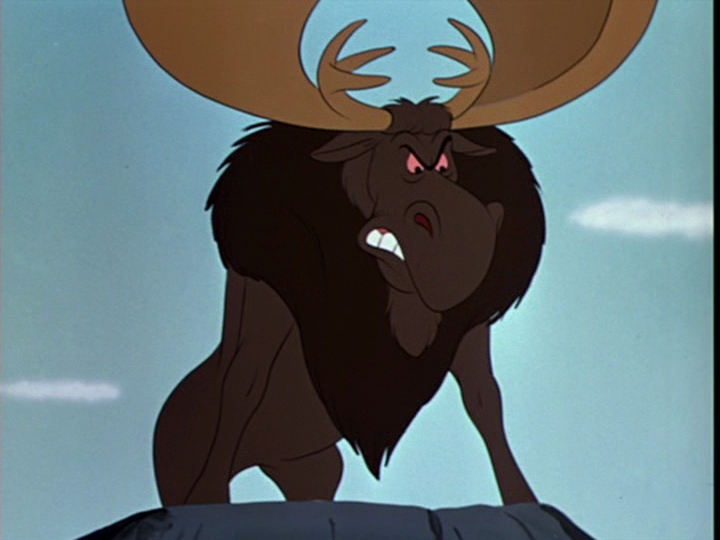
The Mighty Thunderclap, the leader of the tribe, stands ready for the day when the other moose challenge him for leadership

The day came where each moose would challenge the mighty Thunderclap, the largest moose of them all, for leadership of the tribe. All the moose lined up for the challenge, except Morris, until he realized that his antlers were as big as the others. But when it came time to battle Thunderclap, he only reduced the mighty moose to laughter. Poor Morris was devastated, and unaware that he was being watched nearby by a moose named Balsam. Balsam gets Morris’ attention and explains that he is just as sad, if not more so, than Morris, for although he was a full grown moose, his antlers never grew in. The two become the best of friends, with the two helping each other out.

One day, they realized by working together, the two appeared to be the biggest moose in the tribe. This gets Thunderclap’s attention, and there is soon a battle between Morris and Balsam versus Thunderclap. The pair is able to scare Thunderclap away, never to be heard from again, and the grandfather explains that the moral is “two heads are better than one.”

November 21

November 21, 1952 – The Mickey Mouse Short Film Pluto’s Christmas Tree is Released to Theaters

“Okay Pluto, let’s get our tree!”

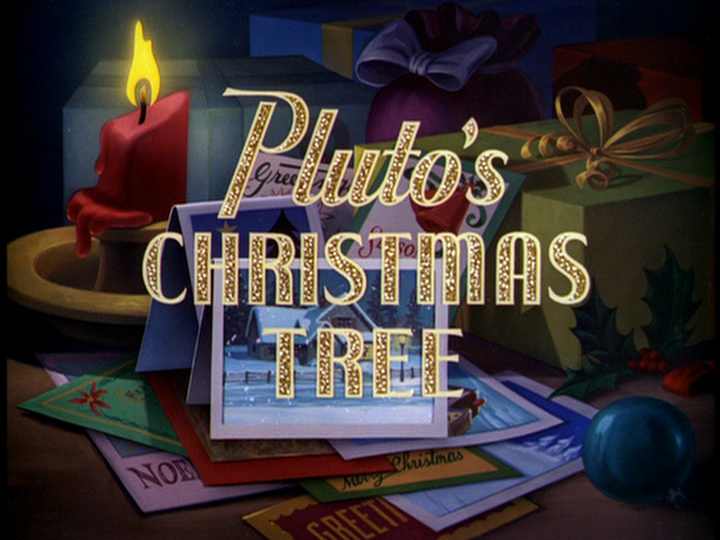
On November 21, 1952, the Mickey Mouse short film Pluto’s Christmas Tree was released to theaters. Although labeled a Mickey Mouse short, Pluto is the main character, with Chip and Dale as his antagonists. It was directed by Jack Hannah, with story by Bill Berg and Milt Schaffer.

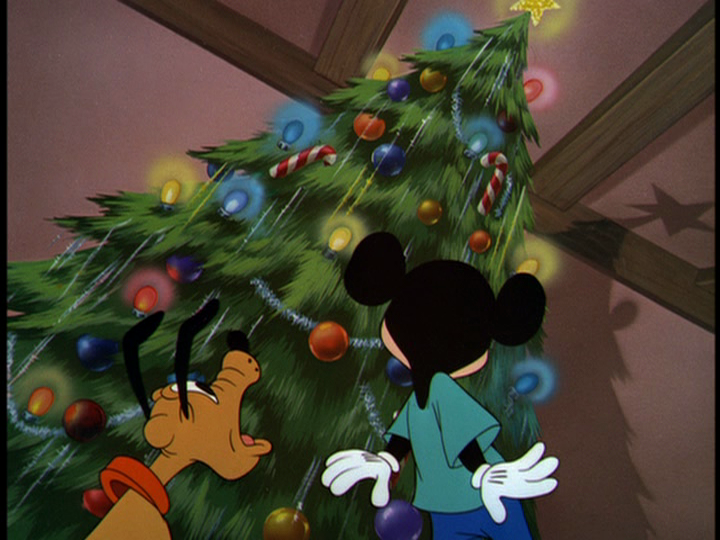
It’s a snowy day in suburbia, when Mickey and Pluto leave their house to go find the perfect Christmas tree. As Pluto sniffs around, Chip and Dale are nearby, gathering nuts. Chip throws one at Pluto, startling the dog. Pluto playfully chases after them, until they hide in a pine tree – the same one Mickey decides to chop down. Mickey and Pluto drag the tree home, and Mickey begins to decorate it. Chip and Dale, having fallen asleep on the journey home, wake up and marvel at the decorations now adorning the tree. Dale spies a candy cane and tries to grab one, but becomes more amused at his reflection in an ornament.

Pluto tries to alert Mickey to the appearance of the chipmunks, but they disappear just as Mickey turns around

After Mickey finishes decorating, Pluto notices a strange light flickering from the side of the tree. He investigates and finds Chip and Dale hiding inside, with Dale throwing ornaments to distract the dog. Pluto tries to alert Mickey to the appearance of the chipmunks, but Mickey just dismisses the dog, leaving Pluto alone again to track down the pair. When he chases Dale, Dale takes the hat and beard off of one of Mickey’s Santa candles and puts them on, trying to fool the dog. When Pluto barks, Mickey goes to light the candles; so as not to catch on fire, Dale blows the match out once it comes close. Pluto once again resumes his chase of the chipmunks, and dives into the tree. A fight that includes Mickey ensues, ending with the tree’s destruction. While initially mad at Pluto, Mickey is surprised to see the chipmunks in the tree. Mickey invites them to stay, as it is Christmas. They hear Goofy, Donald, and Minnie caroling outside, and all watch from the window.

November 11

November 11, 1953 – The Donald Duck Short Film Working for Peanuts is Released to Theaters

“I don’t know – let’s open it and see! Look, two nuts!”

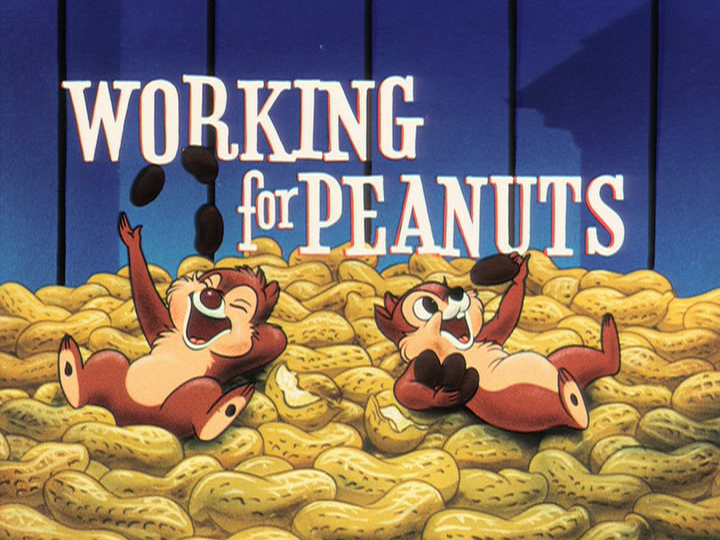
On November 11, 1953, the Donald Duck short film Working for Peanuts was released to theaters. Filmed in 3D, it was shown at Disneyland as part of an attraction called 3D Jamboree, and was later shown at Walt Disney World as part of the Magic Journeys attraction. The short was directed by Jack Hannah, with story by Nick George and Roy Williams, and stars Clarence Nash as the voice of Donald Duck.

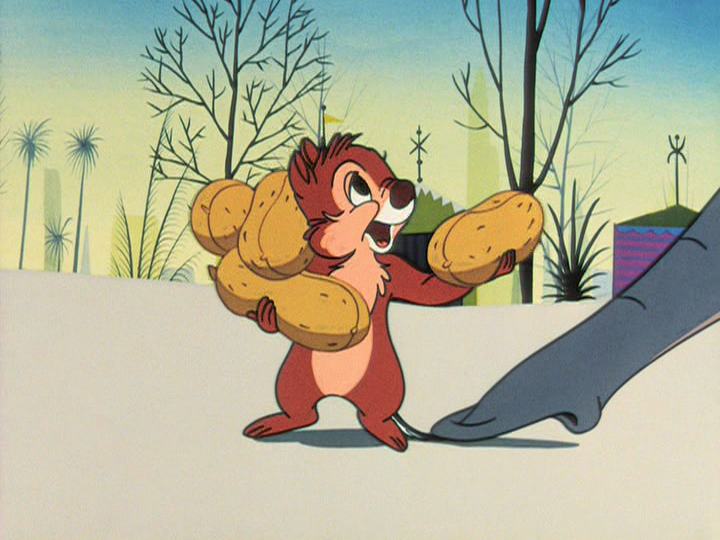
The short begins with Chip and Dale storing acorns in their tree for the winter, when Dale accidentally throws Chip a peanut instead of an acorn. They open up the shell of the nut and are surprised to see two nuts inside. They each take one, and like it so much that they run off to find more. Their search leads them to the zoo, where the crowds are throwing peanuts at the elephant named Dolores; the sight of all the nuts causes the chipmunks to drool. As Dale rushes to grab the nuts, Chip stops him, having caught sight of the caretaker, Donald Duck.

When Dale is caught stealing Dolores’ peanuts, he tries to bribe the elephant with one of the nuts

Once Donald leaves, the two get to work gathering some of Dolores’ peanuts. The elephant is alarmed at their thievery, but sets to work getting her peanuts back. The two can only watch as she uses her trunk to deplete their supply from the tree. As Chip and Dale retaliate, hitting her with a tree branch, Dolores runs to Donald for help. Donald chases after them, but knocks himself unconscious in the process. After Dolores revives Donald, he spies the pair tap dancing, “working for peanuts” as one customer puts it. The chase begins again, with the chipmunks knocking over a bucket of white paint. Seeing Dale drenched in the paint gives Chip an idea.

There’s a knock at the door of the zoo, which Donald opens to reveal a package that contains “genuine albino chipmunks.” The instructions for the creatures include to “feed only select grade A peanuts (and humor them).”  Donald is excited about the find, and gives them a special place to stay. Dolores provides them with a swimming pool, and without thinking, Dale rushes in, losing the paint from his bottom half before Chip is able to pull him from the water. However, they fool Donald and Dolores into thinking Dale is only wearing suspenders, and remain at the zoo, happy and provided with all the peanuts they could ever want.

November 6

November 6, 1956 – The Special Short Film A Cowboy Needs a Horse Premieres in Theaters

“If he wants to keep riding, riding along…”

On November 6, 1956, the special short film A Cowboy Needs a Horse premiered in theaters before the True-Life Adventure film Secrets of Life. The short’s song of the same name was written by Paul Mason Howard and Billy Mills. The short was directed by Bill Justice, with story by Dick Kinney and Roy Williams.

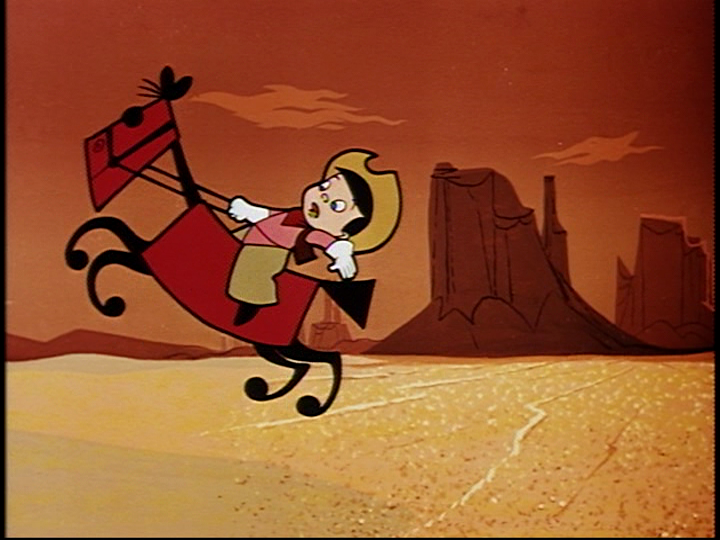
A little boy is sleeping in his bed, and dreams of being a cowboy. In his dreams, his bed turns into a horse, and the little boy magically gets a rope, a song, a hat, boots, and spurs, to become a cowboy. As he travels the desert with his horse, they are caught by an Indian tribe. He uses his pistols to fire back, until his pistols run out of bullets. Using his trusty rope, he captures the tribe, but makes peace with the chief, who offers him a peace pipe. The boy takes it and blows bubbles with it, to the chief’s delight. The chief gives the boy his headdress in gratitude.

Upon the sound of danger, the boy mounts his horse and chases after the villains in his dream

The boy suddenly hears gunshots, and looks to see some varmints trying to rob a stagecoach. He and his horse take off, just as the robber grabs the money. They give chase, and the boy and varmint roll down a hill, fighting, with the boy winning. He throws back the money, with the stagehand pointing to a reward sign for the criminal. The boy refuses the reward, happy just to help. Just as he and his horse are about to go on their way, they spy two other criminals attempting to blow up the railroad tracks. Although he is unable to remove the dynamite before it explodes, the boy throws himself on the tracks, and the train runs over him.

Work isn’t done for the boy: he hears a loud scream below, and spies a girl being tied to a cactus and being threatened by a villain. Jumping on his horse, he runs to her rescue, saving her just in time. The girl offers to kiss him, but he refuses, instead offering her a ride home instead. As the dream comes to an end, the boy relinquishes all of the things that make him a cowboy, and drifts out of his dream.

October 27

October 27, 1954 – The Television Series Disneyland Premieres on ABC

“…this year, we want you to see and share with us the experience of building this dream into a reality.”

On October 27, 1954, the first episode of the Disney anthology series Disneyland premiered on ABC. The show, named after the theme park Walt Disney was planning to build, gave audiences glimpses of the dream that would become the California theme park. The first episode was entitled “The Disneyland Story,” and was directed by Robert Florey.

When Walt Disney was in the midst of creating his theme park, he realized that the only way he could secure enough funding was to embrace the new medium of television. He struck a deal with the then-fledgling ABC network, which agreed to help provide financing if he created a weekly hour-long television show for them, with Walt as host. This show made Walt Disney a familiar figure in households nationwide, and created several staples in popular culture, including the Davy Crockett craze of the 1950s.

“The Disneyland Story” begins with an aerial view of the Walt Disney Studio in Burbank, California. There is then a behind the scenes view at what is going on at the studios, including a look at the upcoming film 20,000 Leagues Under the Sea, a live-action model stage for Sleeping Beauty, and some strange music being composed in the music department. The narrator takes us to a place called the Disneyland Plans Room, where “something unusual is going on in the studio today, something that never happened before.” Walt then takes over as host, introducing his vision of Disneyland, the four worlds of the park, and the format of the four worlds of the television show. Introducing Frontierland, he then presents a segment about the Davy Crockett serial that will soon begin filming, and introduces Fess Parker, who sings the theme song.

Going to Adventureland, Walt presents producer Ben Sharpsteen, who talks about the planned area and shows some films they’ve done of the Galapagos Islands, the Falkland Islands, Lapland, Morocco, and Portugal. Walt introduces Tomorrowland, and director and animator Ward Kimball explains the plans and ideas for the Tomorrowland segments, including designing and building the first passenger-carrying rocket. The last realm Disney introduces is Fantasyland, where “in this land, hopes and dreams are all that matter.” He then says that Uncle Remus would have called it a “laughing place,” which leads into the “laughing place” segment from Song of the South.

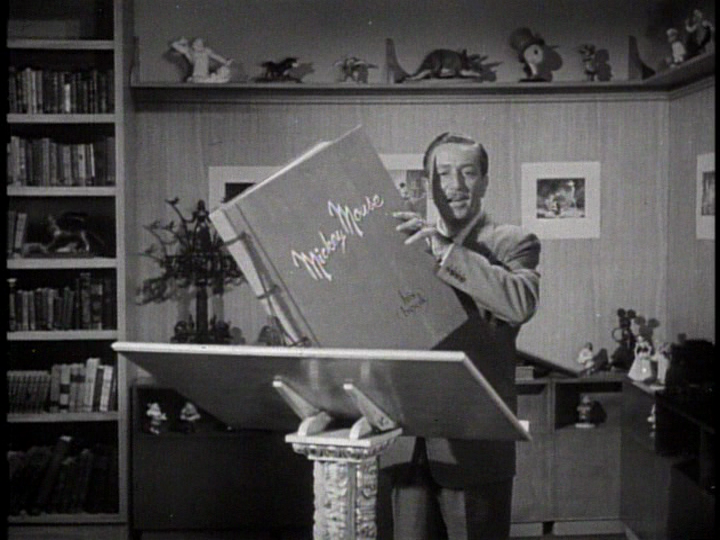
Walt Disney pulls down a book from his shelves that chronicles the life of his greatest star, Mickey Mouse

To remind everyone that “it all started with a mouse,” Walt then presents the story of Mickey Mouse, starting with his humble beginnings in the short film Plane Crazy. He introduces Mickey’s friends and fellow stars – Pluto, Goofy, and Donald – before presenting one of the most important roles in Mickey’s career: the role of the sorcerer’s apprentice in Fantasia. After exploring Mickey’s career, clips are shown of the next week’s episode, a presentation of the Disney film Alice in Wonderland.

October 10

October 10, 1952 – The Donald Duck Short Film Trick or Treat is Released

“Trick or treat, trick or treat, trick or treat, the whole night through, little scalawags with fiendish gags can make it tough on you.”

On October 10, 1952, the Donald Duck short film Trick or Treat was released to theaters. The short was directed by Jack Hannah, with story by Ralph Wright, and music by Paul Smith. It stars Clarence Nash as Donald and the nephews, and June Foray as Witch Hazel.

It’s Halloween night, and a witch is seen flying around in the night sky. She stops to observe Huey, Dewey, and Louie trick or treating, and sees when they ring Donald’s door. Instead of Donald giving them candy, he gives them firecrackers, blowing up their trick or treat bags. He then dumps a bucket of water on them. The witch, named Hazel, feels sorry for the three, and stops in front of them, offering to help get revenge on their uncle. She stops at Donald’s door and receives the same treatment, and decides to resort to some more drastic measures.

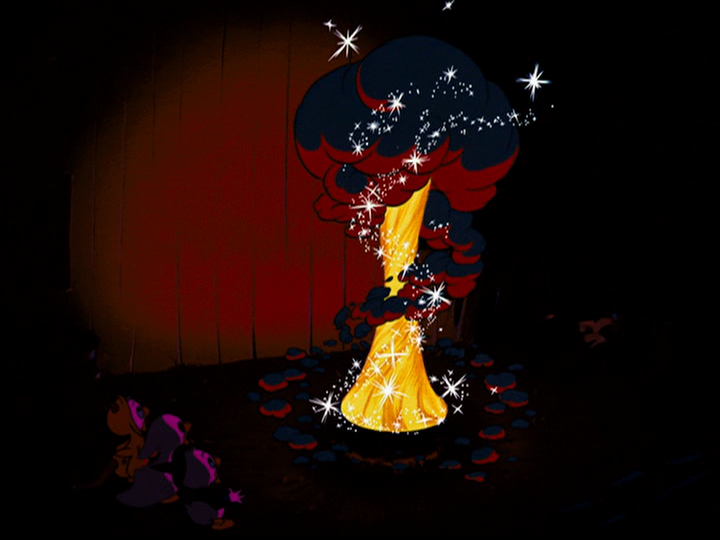
The ingredients of the potion combine, causing a massive explosion

Hazel stands in front of her cauldron, with the nephews putting in all the ingredients she needs. The nephews watch in awe as the potion explodes. Hazel takes some potion with her, and the four of them fly off to Donald’s, with Hazel spraying the potion first on a pumpkin, which comes to life and startles Donald. She then sprays a paintbrush, which begins to paint Donald’s house green. Ghosts then appear at Donald’s door, scaring him before Hazel and the boys dive into the house, using her broom to pin him against the wall and give the boys the treats.

Unfortunately, when Hazel calls Donald a pushover, Donald changes his mind, locks the treats up, and swallows the key. Hazel doesn’t give up so easily, and she casts a spell on Donald’s feet, first causing the feet to kick out the key from Donald. Donald desperately tries to hold on to the key, but Hazel is able to have it released. Although Donald grabs the key at the last second and throws it under the cupboard door, Hazel decides to have Donald’s feet kick the door down – using Donald. The last attempt is successful, and kids have all the treats they want. The nephews wave goodbye to Hazel as she flies away.

October 3

October 3, 1955 – The First Episode of The Mickey Mouse Club Premieres on ABC

“We are the Merry Mousketeers, Mouseketeers! We’ve got a lot above our ears, above our ears!”

On October 3, 1955, the first episode of The Mickey Mouse Club premiered on ABC. The series was a part of Walt Disney’s contract with ABC, which gave him the money needed to finance the building of Disneyland. The series was the second television series for Disney, and has become one of the most beloved television series ever released. The show was known for its animated opening and theme song, with Donald Duck having varying misfortunes as he struck a gong at the end. The show usually featured about 24 different Mouseketeers, with as many as 39 at one point. This series ran from 1955 to 1959.

The first episode, “Fun With Music Day,” begins with the Mickey Mouse Club Newsreel, which gives kids an idea of kids’ lives across the world. It starts in the Florida Everglades, where kids are on an airboat ride exploring the Everglades, the home of the Seminole Indians. The news then travels to Rome, where the Italians are celebrating Carnival. As they ride a merry-go-round, the kids play the song “Bibbidi-Bobbidi-Boo” from Cinderella on instruments. A world report follows, starting in London, where television star Sooty joins the Mickey Mouse Club. In Tokyo, veteran cameraman Henry Kotani brings the news of the Tokyo swim meet. Golden Oak Ranch is then shown, on location during the filming of The Adventures of Spin and Marty, then it’s going back to Burbank, where the camera shows the filming of Davy Crockett, following the cast on location to Kentucky. The camera then goes back to the Disney Studios, introducing the Mouseketeers.

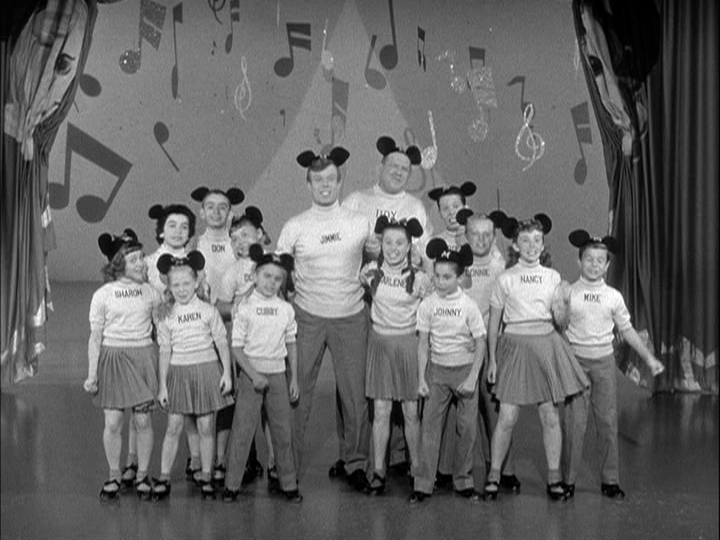
The first showing of the Mousketeers, with hosts Jimmie and Roy

After a quick commercial break, the show returns, with host Jimmie Dodd introducing a tap dance routine by Mousketeers Don, Doreen, Darlene, Bobby, Annette, Lonnie, and Nancy. They are soon joined by Sharon, Mike, Karen, Cubby, Johnny, and Jimmie. Roy jumps in at the end before they sing an introduction song and the roll call. After this, the Mouseketeers present “A Mousekartoon Special” called The Friendly Farmers. They perform a song about farmers owning some animals, while a special guest acts out the animals.

The Mouseketeers then perform “The Shoe Song” with Roy drawing as they sing. Jimmie announces the Musketeers as they come in, performing in costumes ranging from clowns, to cowboys, to ballerinas. It ends with a “wedding” between Cubby and Karen, with several shoes tied to the back of their kart. This is then followed with a serial known as “What I Want To Be,” which explores the careers of a pilot and an airline hostess, as hosted by Alvy Moore. A young girl named Pat and a young boy named Duncan are taken to see what being a hostess and a pilot is really like, with the promise that the segment will continue the next day.

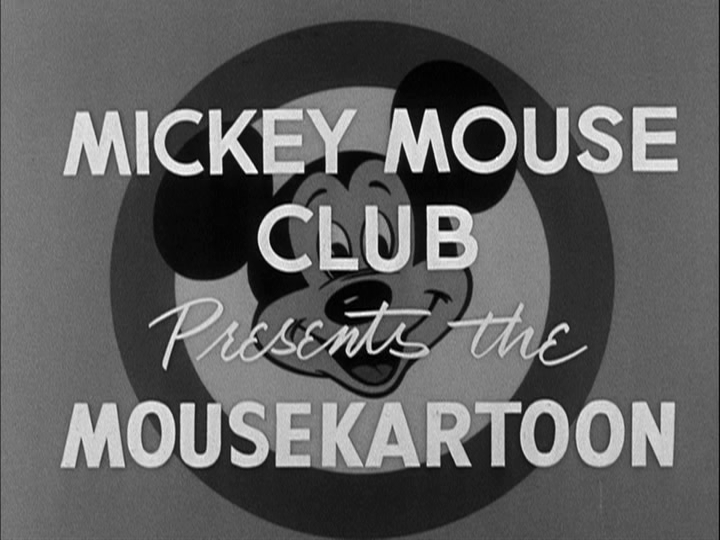
The title for the Mousekartoon, with one being shown every day

Following that is the Mousekartoon, presented by Karen. She lets the audience know that the cartoon that day is Pueblo Pluto, a short film originally released on January 14, 1949, with Jimmy MacDonald voicing Mickey. After the Mousekartoon, Jimmie steps on camera, introducing how the show will be set up from that episode forward, including the themes of the days of the week. After this, the Mouseketeers and Jimmie sing goodbye, and Mickey gives a goodbye as well.