RSS Feed

Category Archives: Uncategorized

June 4

Posted on

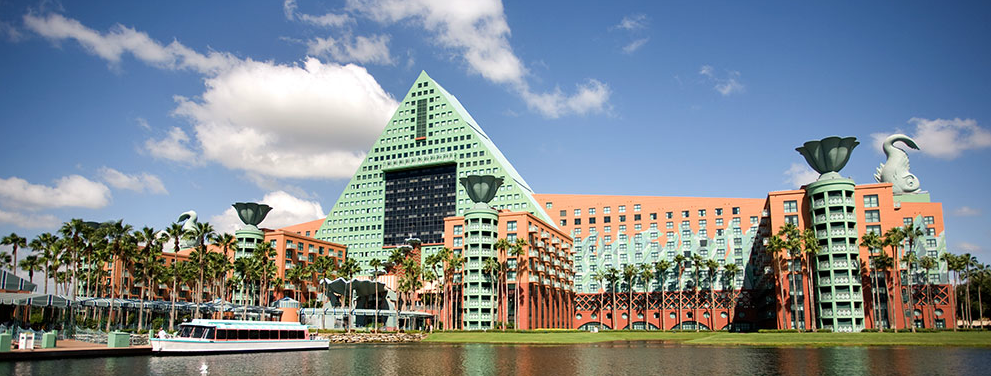
June 4, 1990 – The Walt Disney World Dolphin Resort Opens

Image Credit: Official Walt Disney World Site

“Inspired by Florida itself, the [Walt Disney World Dolphin Resort] features distinctive architectural silhouettes, punctuated by elaborate fountains and towering palm trees, on grass expanses and white sand-shored Crescent Lake.”

On June 4, 1990, the Walt Disney World Dolphin Resort opened in the Epcot area of Walt Disney World. Designed by Michael Graves, and operated by Sheraton Hotels and Resorts, the Dolphin Resort resides on the edge of Crescent Lake, across from its sister hotel, the Walt Disney World Swan Resort. Its name derives from the pair of dolphins on the rooftop, both 56-feet tall.

The resort’s rooms are luxurious, each equipped with a 32-inch flat screen television, wireless Internet access, and sophisticated décor. Although Dolphin World is considered “other select deluxe hotels” in resort type, guests are still offered complimentary transportation to and from the park, Extra Magic Hours, and on-site Disney ticket desks. There are also many activities for guests of all ages if one doesn’t want to visit the park one day, including such amenities as five different swimming pools, a Mandara Spa, and jogging trails.

June 3

Posted on

June 3, 1949 – The Donald Duck Short Winter Storage is Released to Theaters

“Oh boy, oh boy! I finally got them!”

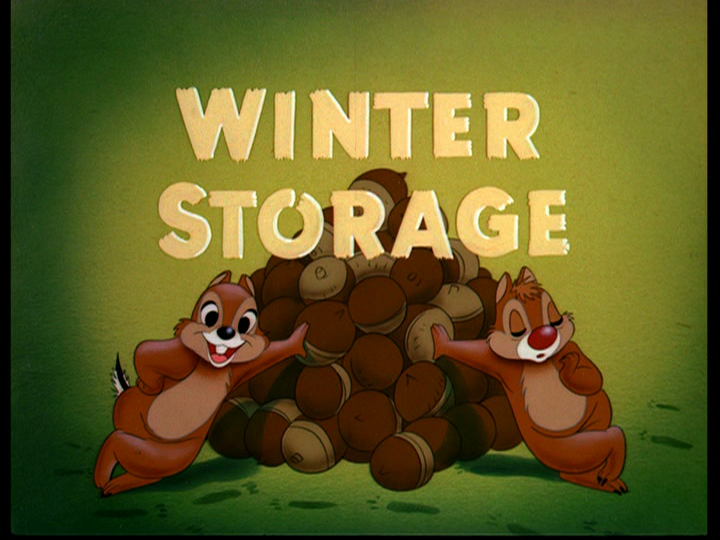
On June 3, 1949, the Donald Duck short film Winter Storage was released to theaters. It features Chip and Dale as Donald’s adversaries, their third short with Donald. It was directed by Jack Hannah, with the story by Bill Berg and Nick George, and music by Oliver Wallace. It featured Clarence Nash as the voice of Donald, and James MacDonald as the voices of Chip and Dale.

It’s autumn in the woods, and Chip is busy, storing nuts in a giant oak tree for the approaching winter. According to his calendar, it’s October 7th, and he hasn’t gotten very far with his collection. He passes by a matchbox in the tree that seems to be snoring, and opens it to find Dale fast asleep. Chip kicks the matchbox out onto the main branch, and Dale quickly sets to work picking the acorns from the tree. As Chip collects, he is suddenly thrown off stride by an acorn cap hitting his head.

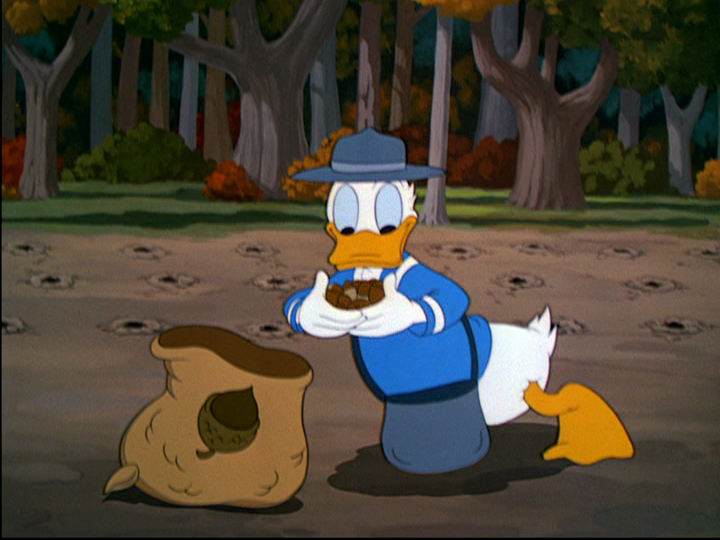
Donald with his bag of acorns to plant in the area

Chip storms out to ask Dale where the acorn went, and Dale points to the tree – every acorn is gone, save for their caps. Chip grabs Dale and pulls him to the calendar, explaining that they have to collect enough food before December 1st, otherwise it will be an awful winter. He then begins to pace, wondering what they’re going to do about their food problem. The pair hears a strange sound outside, and rush out to see Donald standing near their tree, holding a map marking an area that needs to be seeded. With him is a giant bag of acorns used for planting.

The pair becomes excited, and they rush down the tree, digging up the acorns Donald has planted, intending to them back to their food pile. Dale, being a bit slow-witted, decides to replant the acorns, following Donald’s example. When Chip finds out what Dale has done, he gives him a good hard kick before coming up with the next plan: following the acorn bag and collecting the nuts. Dale, however, pulls a loose string from the bottom of the acorn bag and lets all the nuts spill out over Chip, who is not the least bit amused.

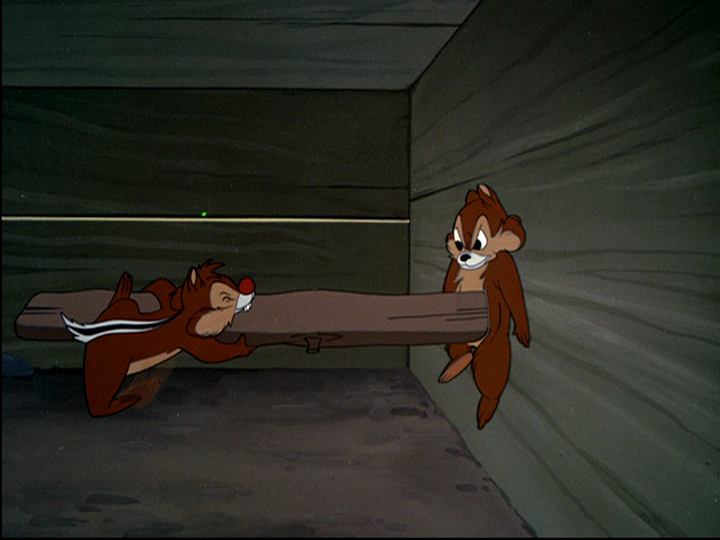
Although he has the best intentions, Dale accidentally traps both of them in the box again

Donald looks to see that his bag is entirely empty, and spots the two chipmunks creeping away with all the acorns in their own bag. He carefully follows them and sets out a trap to catch them, after taking the bag back, but Chip is able to spot the trick. However, Dale unwittingly gets Chip caught in the box, and when Chip makes a successful attempt to free himself, it’s Dale that gets both of them trapped inside.

As Donald rushes over to see his capture, the two dig into the dirt and tunnel out of the box, only to find themselves under it again when Donald has moved it. The two begin to argue, and Donald looks under the box to see his capture. He moves the box away, just observing their little quarrel, wondering if they’ll notice that they are, this time, free. The two face away from each other, silent, and Donald provokes the fight again by pulling Chip’s tail. This causes their argument to become physical, but Dale accidentally ends up punching Donald in the eye.

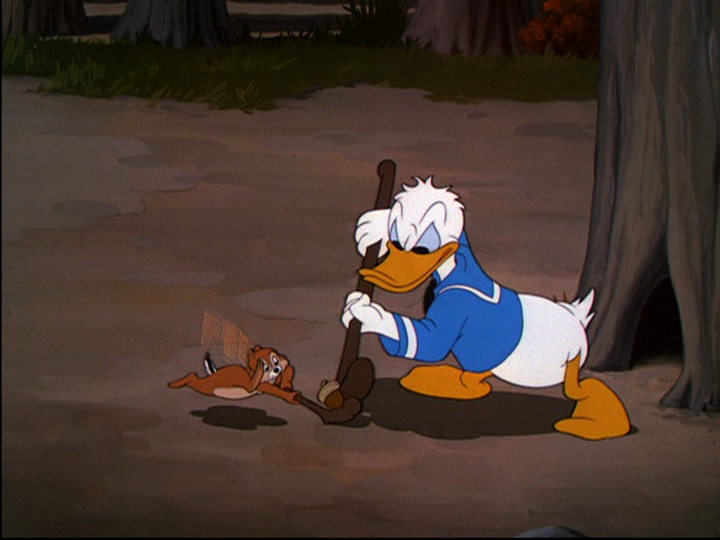
Donald begins to play a game of hockey with the pair with the stolen acorns

The two critters escape and make their way back to the tree with more acorns, and Donald hot on their tails. They begin to play a game of hockey with Donald, trying to shoot the nuts into the hole at the base of the tree. A sudden avalanche of nuts, directed by the chipmunks, approaches, and Donald has no time to prepare. The poor duck is knocked out, and seemingly driven mad, and the two chipmunks are happy they have enough food for the winter.

June 2

Posted on

June 2, 1989 – The Touchstone Film Dead Poets Society is Initially Released to Theaters
“Carpe diem. Seize the day, boys. Make your lives extraordinary.”

On June 2, 1989, the film Dead Poets Society was initially released to theaters, with a general release on June 9th. Distributed by Touchstone Pictures, it won an Academy Award for Best Screenplay for Tom Schulman, who based it on his own life at a private school in Tennessee. It was directed by Peter Weir, and stars Robin Williams as John Keating, Robert Sean Leonard as Neal Perry, Ethan Hawke as Todd Anderson, and Josh Charles as Knox Overstreet.

Set in 1959, the movie starts with the beginning of Welton Academy’s traditional opening ceremony, where several of the main characters are seen carrying in banners with the titles “Tradition,” “Excellence,” and “Discipline.” The dean brags about the school’s achievements, calling it the best preparatory school in the United States. He then introduces the new teacher of the English department, Mr. John Keating, who has been teaching in London, and is an alumnus of Welton Academy. We then catch a glimpse of a few of the boys with their parents, and Neal Perry, one of the shining stars of the academy, meets Todd Anderson, his new roommate. Todd’s brother attended Welton, and Neal remarks, “Oh, so you’re that Anderson.”
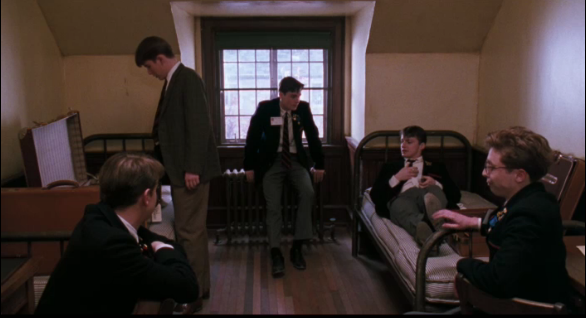
Todd meets Neal and his friends for the first time as they talk about their study group

As Neal and Todd move into their room, Neal’s friends Knox Overstreet, Charlie Dalton, and Steven Meeks appear to talk about their summer and joke about their study group, to which they reluctantly add Richard Cameron, whom they describe as a “boot-licker.” Neal mentions Todd’s brother, who was valedictorian and national merit scholar, which seems to cause Todd some embarrassment. Neal’s father enters the room, and lets Neal know that he will be dropping the school yearbook from his extracurriculars. Neal argues that he’s the assistant editor, but his father will hear none of it, letting Neal know that after Neal graduates medical school and is on his own “then you can do what you damn well please.” Until then, he is to follow only his father’s orders. Neal acquiesces, but looks hurt that he has to give up the yearbook.

The first day of school shows the boys being loaded with what appears to be more work than they can handle, from science, to Latin, to trigonometry. When the boys get into English class, Mr. Keating enters whistling the 1812 Overture, and walks out of the room, to the astonishment of the class. When he tells them to follow, they are confused, but they finally leave. Keating takes them to the main lobby, where he teaches them about the poem “O Captain! My Captain!” by Walt Whitman, and that they may call him “O Captian! My Captain!” if they feel slightly more daring. He then teaches them one of the most important lessons in the film: carpe diem. “We are food for worms, lads,” he reminds them, explaining how life is too short.
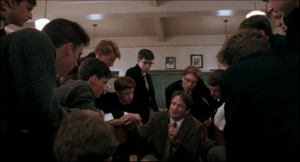
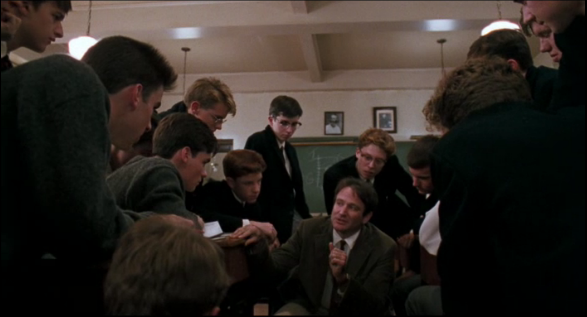
Mr. Keating pulls his class close, explaining the powerful impact language has on life

During the next English class, Neal is asked to read the introduction, and Keating tells them that he can’t stand the introduction, equating it to American Bandstand: “Well, I like Byron, I give him a 42, but I can’t dance to it.” He then asks him to rip out the entire introduction. “In my class, you will learn to think for yourselves again,” he informs them. “You will learn to savor words and language. No matter what anybody tells you, words and language can change the world.”

The boys find Keating’s yearbook, and discover that he was a member of the Dead Poets Society, leaving them to wonder what that means. They approach and ask him what it was, and Keating is a bit hesitant, as he thinks the administration might not favor it. But explains that he and his friends would sit around letting the words of poetry “drip from their mouths like honey.” Neal is inspired to begin the society again, and with the help of Keating and his old poetry book, they decide to meet. Neal asks Todd to come, but Todd is very shy and declines. But Neal persists, and finally the boys sneak out, beginning the first meeting of the Dead Poets Society.
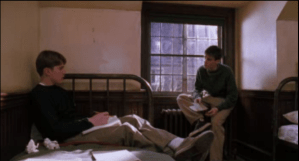
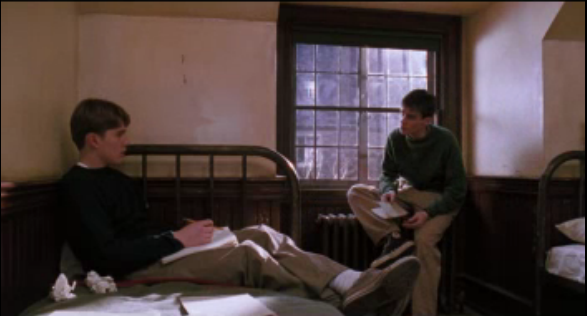
Although Neal is initially elated about discovering his passion, he becomes infuriated that the shy Todd seems to not be effected by anything Mr. Keating has to to say

The English classes continue, with Keating reading Shakespeare in humorous ways from imitating Marlon Brando and John Wayne, to having the students stand on his desk to see things in a new perspective. After class, Neal lets Todd know that he has finally decided what he wants to do with his life: he wants to become an actor. He decides to audition for a production of A Midsummer Night’s Dream, screaming “Carpe Diem!” Neal then chews Todd out for not being stirred up by anything, thinking that Todd has not been affected by anything Mr. Keating has said. Todd argues that when Neal speaks, people listen, and he’s not like Neal. But Neal won’t take that for an answer, and is determined to stir up something in Todd.

Neal then announces he got the part of Puck in A Midsummer Night’s Dream, and forges the letters of permission from his father and the dean. Todd slowly begins to discover a love of writing with Keating’s poetry assignment. Unfortunately, he was unable to come up with a poem he found acceptable to present. Keating pushes him out of his comfort zone, making him come up with a poem on the spot. Keating has finally reached him, and Todd is able to open up.
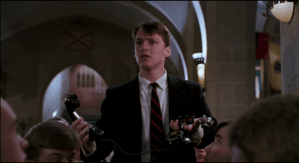
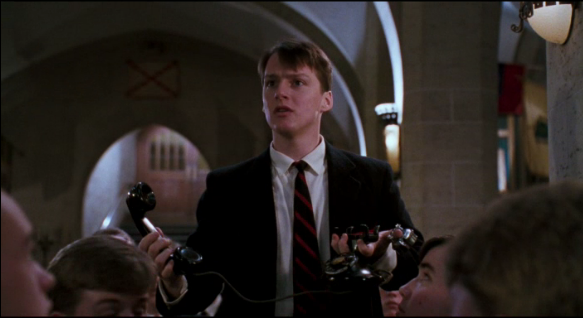
Charlie plays a prank at the assembly, pretending God has called to tell the Dean to admit women in the school

Things begin to go downhill for the Dead Poets Society, when Charlie publishes an article in the school paper in the club’s name to demand that their school go co-ed. He gets himself into trouble by pretending that God has called in the middle of an assembly, saying they should have girls at Welton. Charlie is then punished by getting paddled, but does not give up the members of the club.

Neal begins practices for the play, but comes back one night to find that his father has found out and is furious. He demands that Neal quit, although the play is the next night. “I made a great many sacrifices to get you here, Neal, and you will not let me down,” he warns his son. Neal tells him he will quit, but later that night, he goes to talk with Mr. Keating, who advises him to show his father what’s in his heart, where his passion lies, before opening night. Neal decides to stay with the play, lying to Mr. Keating, saying his father is letting him stay with the play.
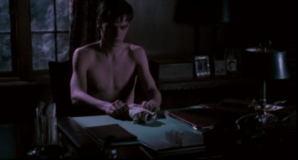
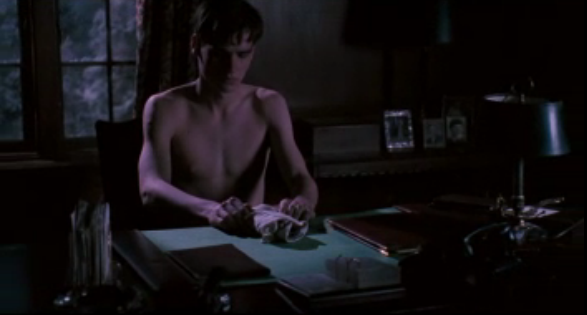
Unable to live the life his father has decided for him, and unable to have a life of his own, Neal resorts to not living at all

Neal shines in the play as Puck, and his father walks in to see the performance, and Neal’s standing ovation. Infuriated by his son’s disobedience, he pulls his Neal out of school, taking him home and informing him that he will be enrolled in military school. Unable to live the life his father has decided for him anymore, Neal takes a gun from his father’s study late that night and shoots himself.

The mood at Welton is somber as they hear the news of Neal’s death. Todd is hysterical, blaming Neal’s father. Mr. Keating is also overcome with emotion when he hears the news, sitting at Neal’s desk and crying. At the request of Neal’s family, the school conducts an investigation as to why he took his life. Charlie accuses Cameron of telling the board of directors all about the club, and Cameron doesn’t deny it, as he wants to save his own skin by putting Mr. Keating on the line. When he tells the group that they should “let Keating fry,” Charlie loses it and punches Cameron, leading to Charlie’s immediate expulsion. When Todd is questioned by the school, they say that it was Mr. Keating’s actions that led to Neal’s death. Mr. Keating is then fired by the school.
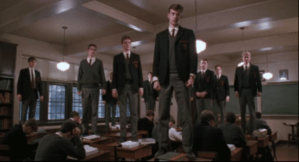
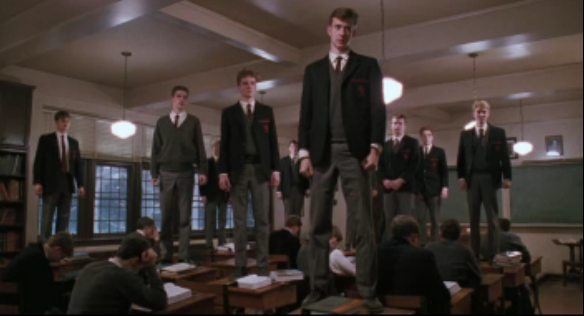
Half of the class stands on their desks, showing their admiration for Mr. Keating, their Captain

The English class is taken over by the Dean, who wants them to read the introduction that they had all ripped out. As Mr. Keating leaves the classroom after collecting his personal belongings, Todd shoots up and admits the truth to Mr. Keating, who tells Todd that he understands. Todd isn’t done, as he gets up on his desk and calls, “O Captain! My Captain!” He is then followed by most of the class, including Knox, Pitts, and Meeks. With a smile, Mr. Keating thanks them, knowing he has made a difference in their lives.
June 1

Posted on

June 1, 1989 – Typhoon Lagoon Opens at Walt Disney World

Image Credit: Official WDW Website

 “Escape to a tropical paradise where you’ll discover a storm of fun in the sun. Disney’s Typhoon Lagoon water park is the place to go for aquatic thrill-seekers of all ages.”

 On June 1, 1989, the 56-acre water park, Typhoon Lagoon, opened at Walt Disney World. It is one of two water parks at the resort, the other being Blizzard Beach. The water park includes Castaway Creek (a 2,000 foot-long inner tube ride), Gang Plank Falls (a group inner tube ride), Humunga Kowabunga (speed slide flumes), Storm Slides (body slides), Mayday Falls (tube slide flume ride), Keelhaul Falls (another tube slide flume ride, through a cave), Forgotten Grotto (a cave walkway through Mt. Mayday), and Overlook Pass (a walkway across Mt. Mayday with waterfalls).

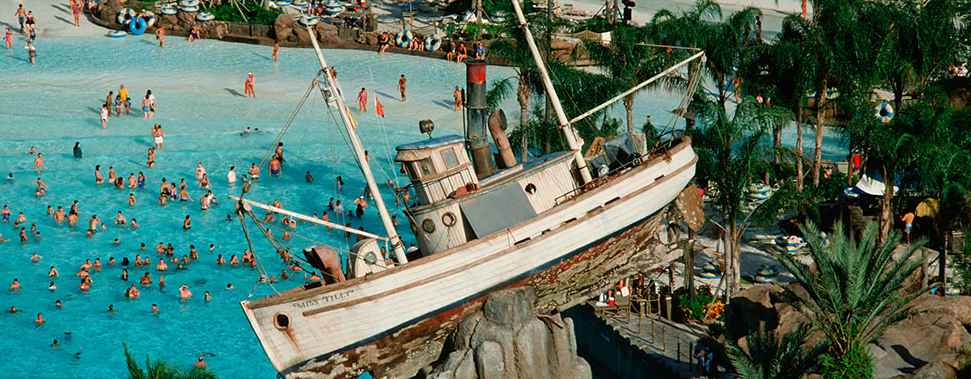
The legend of Typhoon Lagoon is that it was created by an epic storm, with boats tossed around like toys, and surfboards flying into trees. The typhoon created Mt. Mayday, complete with its many waterslides, and a tropical paradise surrounding it. It also created the park’s icon: Miss Tilly. Miss Tilly was a shrimp boat that ended up at the top of Mt. Mayday, and that’s where she stays to this day. Every half hour, a geyser at the top of the mountain blows, trying to dislodge the boat.

May 31

Posted on

May 31, 1991 – Disney Press Publishes Its First Book: 101 Dalmatians: A Counting Book

Image credit: Amazon.com

“Disney Press publishes a broad list of titles for children – from infants to tweens – that celebrate and expand the worlds of favorite Disney characters, films, and television programs.”

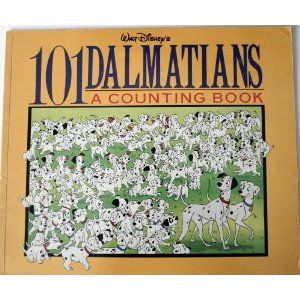
Disney Press, a department of Disney Publishing Worldwide, released its first book on May 31, 1991. It was titled 101 Dalmatians: A Counting Book. The purpose of Disney Press is to release Disney-themed children’s books, with the audience ranging from infants to tweens. The subjects cover all aspects of Disney franchises, from Disney Fairies to Disney Pixar films. Some of their featured titles include The Princess and the Frog: Tiana’s Cookbook – Recipes for Kids, Disney Bedtime Favorites, Meet the Cars, and Phineas and Ferb Laughapalooza Joke Book.

May 30

Posted on

May 30, 1936 – The Mickey Mouse Short Thru the Mirror is Released to Theaters

“Aw, skip it.” “Skip it? Okay.”

On May 30, 1936, the Mickey Mouse short film Thru the Mirror was released to theaters. Although written as Thru the Mirror on its title card, the official poster for the short has the title spelled Through the Mirror. The short was based on the story Alice Through the Looking Glass by Lewis Carroll. It was directed by Dave Hand and stars Walt Disney as the voice of Mickey.

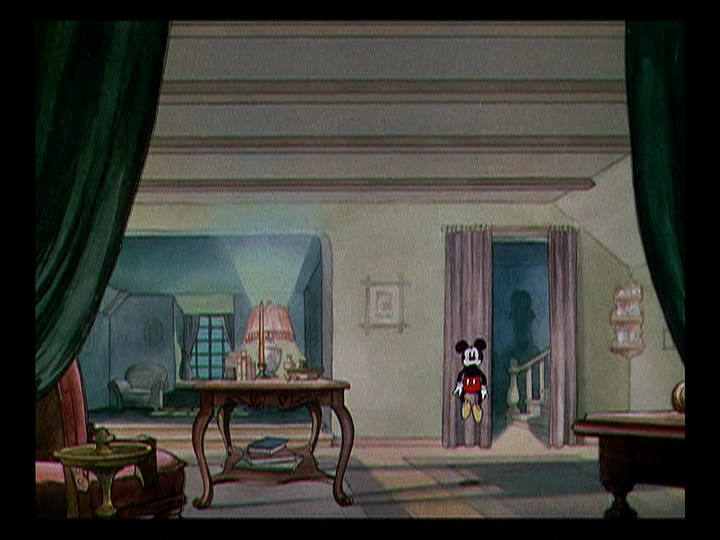
Mickey has fallen asleep reading Alice Through the Looking Glass, and his dream self gets out of bed to try to see if it’s possible for him to go through his own looking glass above his mantle. Finding that it is indeed possible, Mickey walks through the mirror, and looks in amazement at the mirror version of his own home. He jumps into his chair, startled that it is alive, and ends up stepping on the footstool, which has turned into a dog-like creature that bucks Mickey all around the room.

Just as Alice does in the story, Mickey shrinks after eating a piece of strange food

Mickey gets an even bigger shock when it seems that everything he bumps into has come to life. He spies a nutcracker cracking some walnuts, but is surprised to see that it disregards the nut and eats the shell. Mickey takes the walnut and eats it, which first causes him to grow to an alarming size before quickly shrinking to the size of a playing card.

A nearby phone begins to ring, and the phone tells Mickey it’s for him while helping him up to the desk. Their strange conversation ends with Mickey playing jump rope with the telephone cord. The radio, wishing to get involved, begins playing some upbeat music as Mickey begins to perform some tricks, before landing in an ashtray and procuring a top hat and matchstick “cane.”

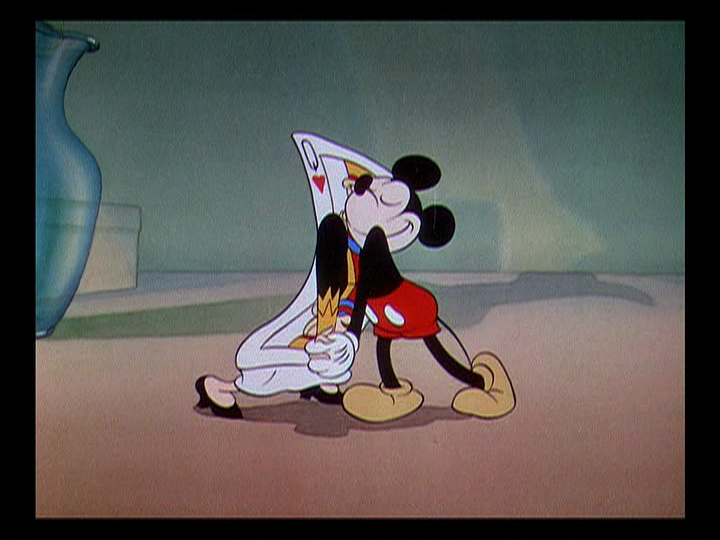
Mickey dances closely with the Queen of Hearts, which infuriates the King of Hearts

After Mickey tap dances on the top of a top hat, he is soon joined by a pair of gloves, and they begin a dance that sends Mickey flying into a deck of cards. He leads the cards into a march, which leads to them all dancing, Mickey with the Queen of Hearts. The Joker alerts the King of Hearts about Mickey’s close dancing with the Queen, and declares a duel with Mickey. Mickey grabs a nearby needle as his weapon, and begins to fight both halves of the King, sending him flying into an inkwell.

Angered by his defeat, the King calls out the cards to chase Mickey, and every single playing card in the place begins to chase the mouse. Mickey holds them off for a bit with an ink pen, but he runs out of ink and escapes through a sock. The cards take off their markings to throw at Mickey, and he gets the idea to blow them away with a nearby fan. Mickey ends up running on the top of a globe, before falling into one of the oceans, and getting thrown out by King Neptune.

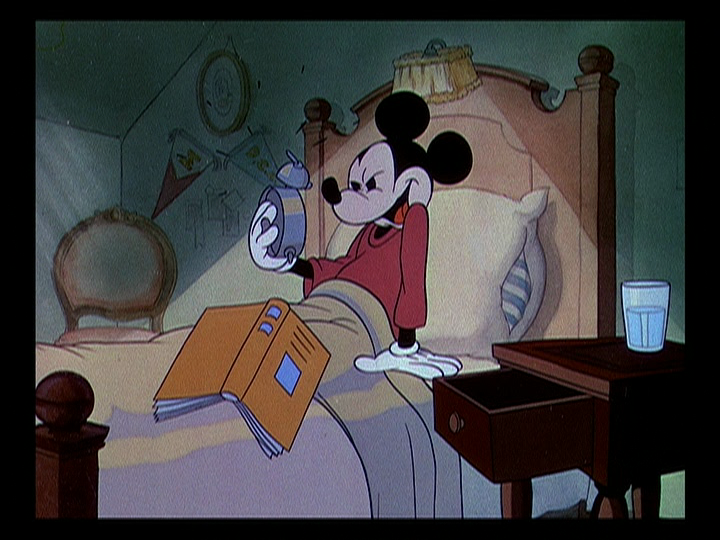
Mickey laughs when he finds he’s been thinking his alarm is his telephone in his sleepy state

Regaining his size quickly, Mickey runs back through the mirror and back into himself, who wakes up and thinks his alarm clock is his phone. He laughs and throws the clock into a drawer before rolling over and going back to sleep.

May 29

Posted on

May 29, 2009 – The Pixar Film Up is Released to Theaters

“My name is Dug. I have just met you and I love you.”

 On May 29, 2009, the Disney Pixar film Up was released to theaters. The film was Pixar’s 10th film, and the first released in 3D format. The film holds the distinction of being the first animated film shown at the Cannes Film Festival, as well as the second animated film ever nominated for the Best Picture Academy Award. The film won the Academy Award for Best Animated Feature, and Best Score. Up was directed by Pete Docter, with story by Docter, Bob Peterson, and Thomas McCarthy, and stars the vocal talents of Ed Asner (Carl Fredericksen), Christopher Plummer (Charles Muntz), Jordan Nagai (Russell), and Bob Peterson (Dug). As usual, Pixar’s lucky charm, John Ratzenberger, has a small voice role in this film.

The film tells the story of Carl Fredericksen, which begins with him as a shy boy whose hero is legendary explorer Charles Muntz. He watches a newsreel of Muntz, and is inspired to pretend he is having his own adventure when he hears a voice saying Muntz’s famous phrase: “Adventure is out there!” He enters the dilapidated house to see a girl pretending to be Charles Muntz on an adventure. Although a mishap causes Carl to break his arm, the girl, Ellie, comes to visit him, and tells him she likes him, as they bond over a love of adventure and an admiration of Muntz. This leads to a segment showing their lives together after their wedding day until Ellie’s death. Ellie’s death is hard on Carl, especially since he was never able to take her to explore Paradise Falls as they promised.

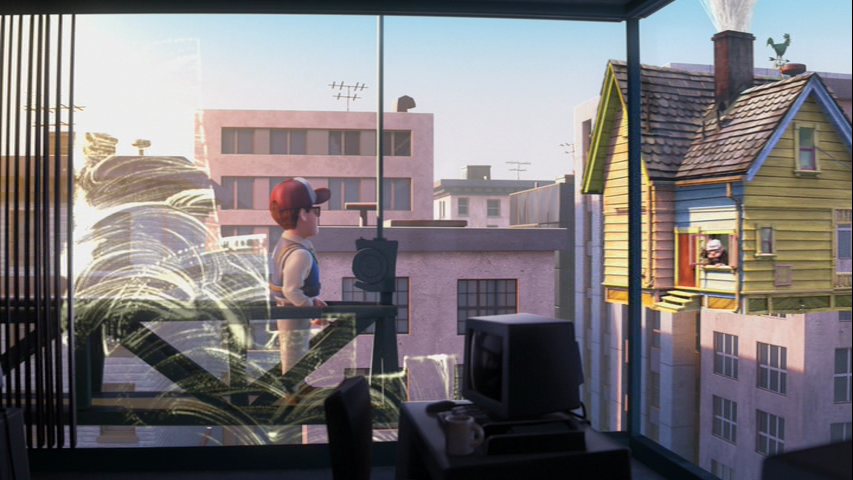
Carl greets a window-washer as his house floats through the city

A while later, all the houses around Carl’s have been torn down for urban development, but Carl refuses to sell. He also runs across a young boy named Russell, who is part of a group called the Wilderness Explorers, and wishes to get his “Assisting the Elderly Badge” by offering to help Carl “cross something,” and Carl tricks him into looking for a snipe. A mishap sends Carl to court, where is ordered to leave his house and live in a retirement home. Unable to bear with parting with his and Ellie’s home, Carl uses his skills as a balloon salesman to keep the promise of the house landing at Paradise Falls: he attaches thousands of balloons to the house, turning it into a makeshift airplane, and Carl sets sail for Paradise Falls. Unbeknownst to him, Russell was hiding under the house at the time of lift-off, and becomes Carl’s accidental co-pilot.

After surviving a severe thunderstorm, the two find themselves in Venezuela, a bit of a ways from the falls. They attach themselves to the still-buoyant house, intending to walk it over to the falls before the balloons deflate. On their way, they encounter a large bird that Russell believes to be a snipe and names it Kevin (although Kevin is a girl), and a dog named Dug, who is able to talk through the use of a device on his collar. Dug has been on a special mission to “capture the bird,” which causes no shortage of trouble between Dug, Kevin and Russell that annoys Carl to no end. There are other dogs in the jungle searching for the bird, and when they run across Carl and his gang, they take him to their master: the one and only, Charles Muntz.

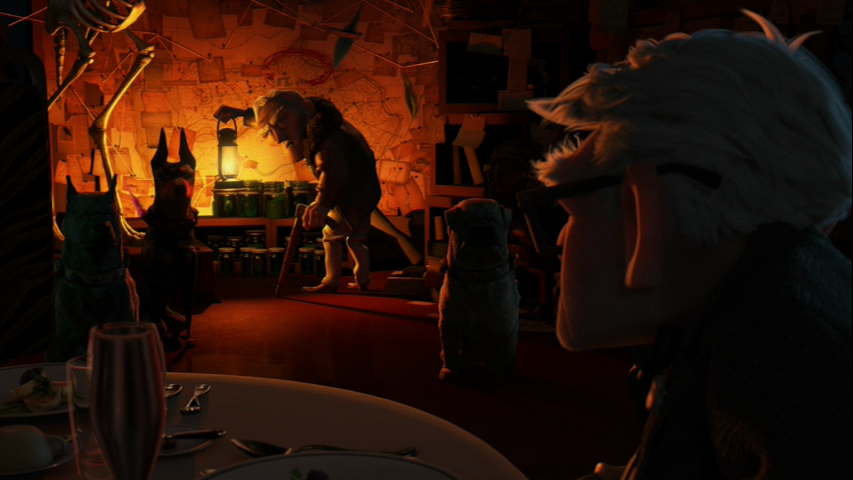
Muntz is determined to get the bird at all costs; his demeanor changes fiercely when he finds that Carl and Russell have seen the bird

Although initially elated that his hero is alive, Carl finds out that Muntz has been driven to almost madness in his search for the bird that will clear his name. Muntz shows Carl helmets of explorers he’s met and killed, convinced they were there at the falls to steal his bird. Upon finding out that Carl has the bird, he decides he will kill Carl and Russell and steal the bird. At one point, Carl has to decide to either save Kevin or save his house, and when he picks to save his house, this allows Kevin to be captured.

Carl finally gets his house to the falls, although Russell is angry that Carl broke his promise to protect the bird. As Carl sits inside the house, he discovers Ellie’s adventure book from when she was a little girl, and finds that she has filled it with memories of their life together, and message thanking him for their adventure, and now he should find a new one. Inspired by her words, Carl resolves to rescue the bird. Russell, still angry, has decided to go on his own to rescue Kevin, and Carl has to rescue him with Dug’s help. There is a fight to the finish between Carl and his childhood hero, with Muntz falling to his death, and Carl’s house falling to the ground, which Carl accepts as for the best, as “it’s just a house.”

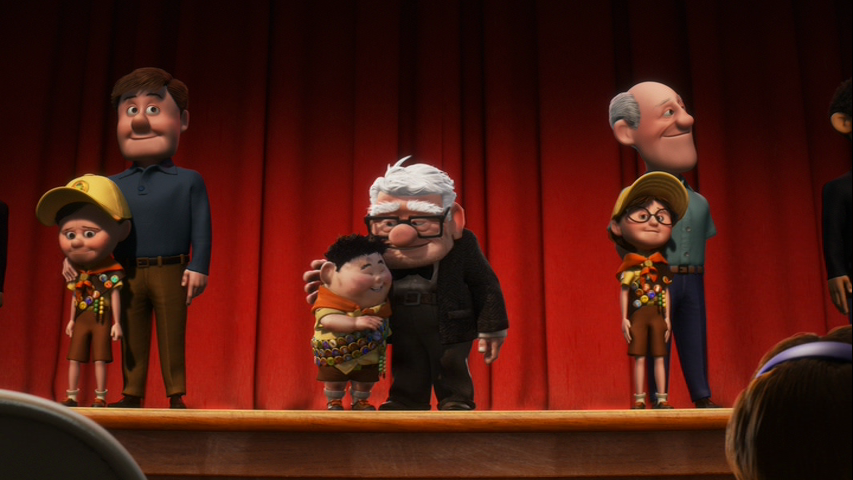
Carl stands with Russell at the boy’s Wilderness Explorers meeting, with Carl becoming Russell’s surrogate grandfather

Kevin is reunited with her chicks, and Russell and Carl head home in Muntz’s airship. At the Wilderness Explorers meeting, Carl is there to give Russell the “Assisting the Elderly Badge,” as well as a very special badge – the grape soda badge Ellie gave to Carl as a child, known as “The Ellie Badge.” After the ceremony, Carl, Russell and Dug sit on the curb at the ice cream parlor, counting cars. The house is seen again as well – landing perfectly next to the falls.

May 28

Posted on

May 28, 1928 – The Oswald the Lucky Rabbit Short Oh What a Knight is Released to Theaters

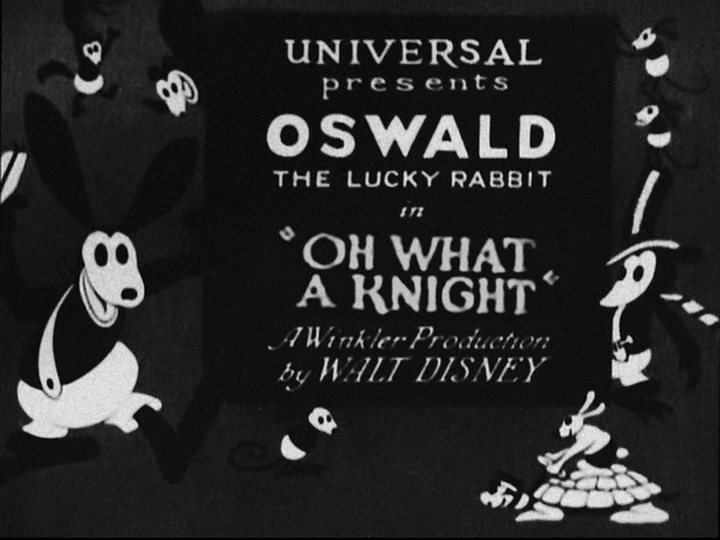
On May 28, 1928, the Oswald short film Oh What a Knight was released to theaters. The short contains some impressive shadow animation, done by Ub Iwerks, as well as some interesting gags, animated by Hugh Harman and Ham Hamilton. This short was restored by the American Film Institute, and is one of the best preserved Oswald shorts in existence today.

The audience’s first shot of Oswald is with him riding a donkey and playing an accordion rather boisterously. Unfortunately, as the donkey dances to the music, he trips, sending both rider and donkey flying down the side of a hill. The donkey hits a rock right in front of an alligator-filled moat, with Oswald ending up on shore, but the donkey diving straight into the water. The donkey narrowly manages to escape being eaten, but loses his tail in the process; as the alligator laughs at the donkey’s misfortune, the joke ends up on him, as the donkey pulls his tail out to its full length again.

Oswald and Ortensia shyly look away after a steamy kiss, while Ortensia’s father appears looking appalled, unbeknownst to the pair

Meanwhile, Oswald whistles out a tune, which catches the attention of Ortensia the Cat, who stands on the balcony and swoons, sending him a kiss. He offers to play her a song on his accordion, but it is so waterlogged that it will no longer play. With the help of his donkey, Oswald climbs up to the balcony to greet his love, only to have her try to send him away, as she warns him that the king is nearby. He gives her a kiss that makes her swoon once more, only to have the king enter, looking not too terribly pleased. As Oswald attempts another kiss, he falls off the balcony, but is able to comically make his way back so that he may rescue Ortensia.

Inside, Oswald grabs a sword, ready to fight to free Ortensia. In a daring move, Oswald hands his sword to his shadow, who continues to do battle with the king while Oswald steals a kiss from his lady fair, which gives him enough courage to go back and take his place back in the fight. Oswald continues to break from the fight to steal kisses from Ortensia, but still manages to best the king, even when his situation looks grim. After freeing Ortensia from her ball and chain, Oswald uses it as a bowling ball to knock down the king and his minions.

Ortenisa’s skirt allows the two to float to safety while sharing yet another kiss

Thinking they are finally free, Oswald opens the tower door, only to be greeted by a hungry lion. The couple flees the tower by jumping from the window. Ortensia is able to use her skirts as a parachute, and the couple kisses as they float down to safety.

May 27

Posted on

May 27, 1948 – The 10th Animated Feature, Melody Time, is Released to Theaters

“Yes, it’s Melody Time, time to hitch your wagon to a song. Cause a song’s the one and only thing that will take you over the rainbow to the land where music is king.”

On May 27, 1948, the tenth animated feature and sixth package film, Melody Time, was released to theaters. It was directed by Clyde Geronimi, Hamilton Luske, Jack Kinney, and Wilfred Jackson. The stories were written by Winston Hibler, Erdman Penner, Harry Reeves, Homer Brightman, Ken Anderson, Ted Sears, Joe Rinaldi, Bill Cottrell, Art Scott, Jesse Marsh, Bob Moore, and John Walbridge, with “Little Toot” by Hardie Gramatky, and Carl Carmer as the Folklore Consultant. Many famous performers contributed to the film, including Roy Rogers and Trigger, Dennis Day, the Andrews Sisters, Fred Waring and his Pennsylvanians, Freddy Martin, Ethel Smith, Frances Langford, and Buddy Clark as the Master of Ceremonies.

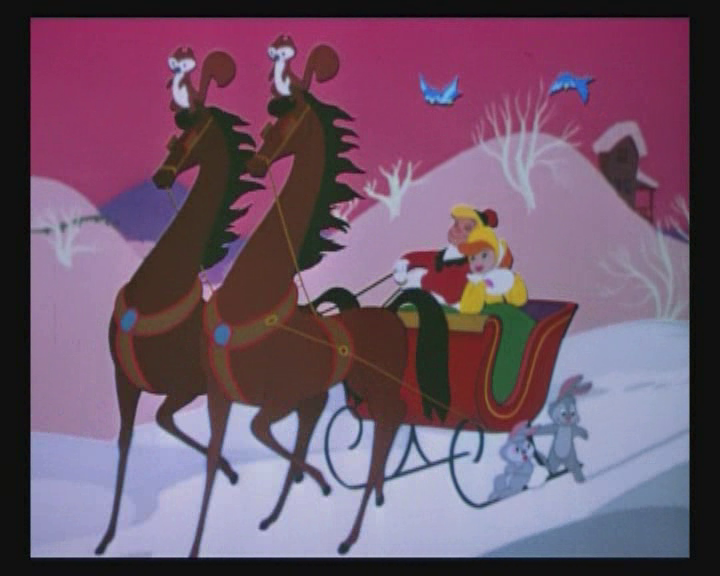
The two couples happily riding in a horse-drawn sleigh

The first segment is Once Upon a Wintertime, sung by Frances Langford. Two couples – one human, one rabbits – share an adventure on a beautiful winter day. The human couple takes a sleigh ride, and the rabbits hitch on to the cart for a ride. The couples stop near the pond to go ice skating, and both males end up upsetting their mates more than once throughout their trip. When both females end up on a dangerous patch of thin ice near a waterfall, they are saved with the help of the horses from the sleigh and a pair of squirrels, and all is well once again for the couples.

The next segment is a new take on the piece “The Flight of the Bumblebee,” known as Bumble Boogie, by Freddie Martin and his Orchestra. A frightened bumblebee is in a nightmare that involves all sorts of musical instruments, and he tries to escape as best he can while being pursued by harmonies and all sorts of strange musical creations.

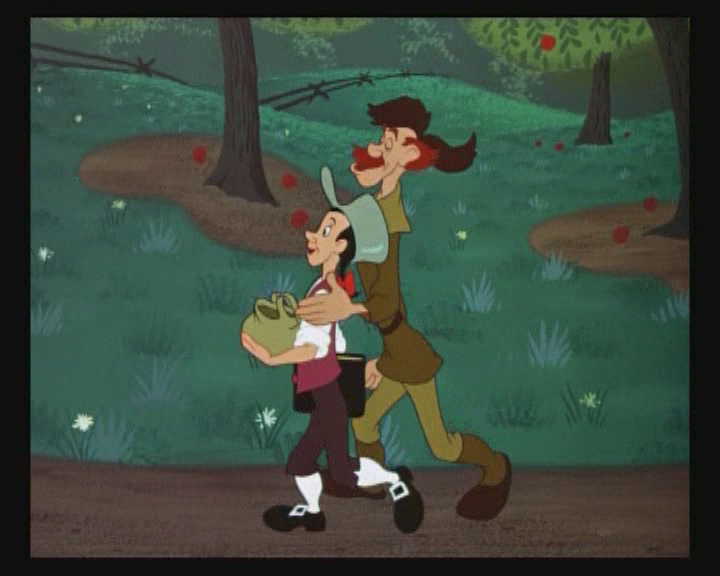
Johnny Appleseed (L) and his Angel walk down the path, with the Angel finally convincing him to go west and plant his apples.

This is followed by Dennis Day performing the tale of Johnny Appleseed, a story from “the pages of American Folklore.” Day was the narrator, Johnny, and Johnny’s Angel. This segment opens with Johnny picking apples from his apple trees, when he suddenly sees a wagon trail. Johnny feels the urge to head west, but believes himself to not be enough of a pioneer. His Angel appears, and convinces him to head west if that’s what he wants to do. Johnny decides to go west and plant his apple trees. No matter what dangers he faced, he was able to persevere, and was able to begin planting his trees wherever he found fertile soil. The settlers would honor him well for his gift of apple trees, which provided them with much needed food. Johnny continued planting for forty years, until one day, his Angel appeared to take him to Heaven, needing him to plant apple trees there.

Following that segment is Little Toot, as performed by The Andrews Sisters. Little Toot is a small tugboat who is very enthusiastic about joining the family business – unfortunately, Little Toot always finds himself in trouble, unable to behave, though he tries to be good. After nearly getting caught by a police officer, Little Toot decides to be helpful, but ends up accidentally causing trouble by turning the rudder on the boat his father is tugging and the boat crashes into the city. The police take Little Toot way out to sea as punishment, and his father is now only allowed to tow garbage. Fortunately, Little Toot is able to redeem himself by saving a ship that is in distress in a storm. Proclaimed a hero, Little Toot is able to return home.

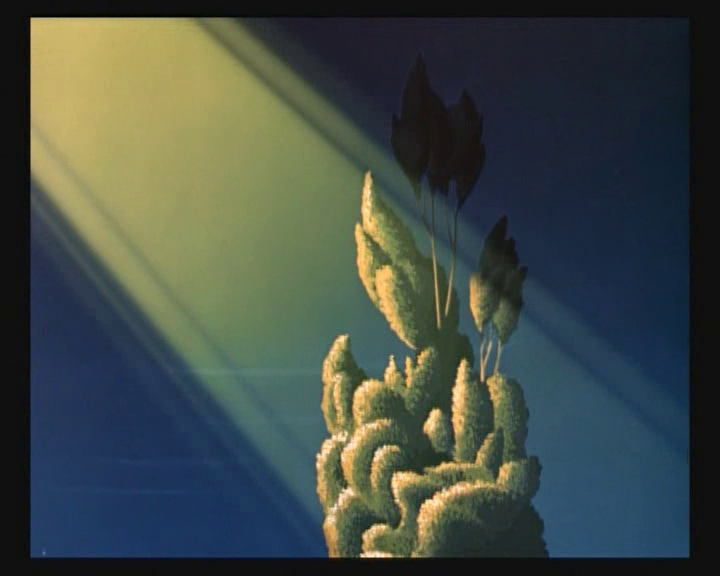
One of the beautiful illustrations used for the segment Trees.

Next is Trees, performed by Fred Waring and his Pennsylvanians, and based on the poem by Joyce Kilmer. The short is a simple homage to a tree, with a different style of animation than the rest of the film, looking like a more realistic Bambi than a regular-style Disney cartoon.

Trees is followed by the more upbeat Blame it on the Samba, performed by Ethel Smith and the Dinning Sisters, and stars Donald Duck, Jose Carioca, and the Arucuan Bird. Donald and Jose are walking in a depressing blue scene, when they stop by the Arucan Bird’s restaurant “Café de Samba.” Once the samba begins to play, the two are able to snap out of their funk and begin to dance. The short also combines live action again, where Donald and Jose dance while Ethel Smith plays the organ, and then plays the congas before breaking into her own dance to the samba. She returns to the organ by the end of the short, with everyone dancing happily.

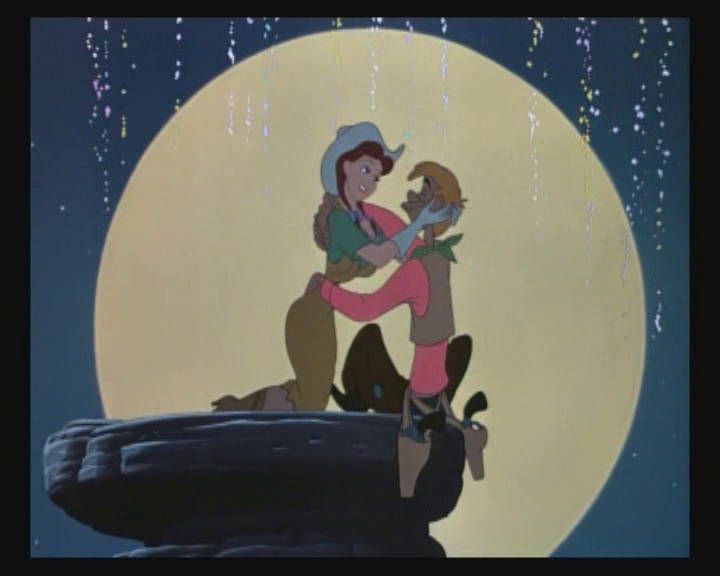
Pecos Bill and Slue-Foot Sue, proclaiming their love under a full moon

The last segment is hosted by Roy Rogers and Trigger, and also features child stars Bobby Driscoll and Luana Patten, telling one of the stories of Pecos Bill. After Bobby asks who Pecos Bill is, Roy begins to tell the story about how the bravest man of the west came to be and why the coyotes howl the way they do. Once, a wagon containing sixteen children and their parents was coming across a mean river in Texas, when a toddler popped out of the back and landed in the river. A coyote was traveling at night, and discovered the child in her den, and took to him, so Pecos Bill grew up with coyotes. One day, a pony was wandering through the desert and was saved by Bill, and this would become Bill’s best friend – Widow-Maker. Bill became the roughest, toughest cowboy in the west, with Widow-Maker by his side. Their partnership is threatened by a woman named Slue-Foot Sue, and the rest of the short tells how Widow-Maker ends their relationship, and why coyotes howl.

May 26

Posted on

May 26, 1963 – Walt Disney’s Wonderful World of Color Wins Two Emmys

On May 26, 1963, the 15th Primetime Emmy Awards were presented, hosted by Annette Funicello and Don Knotts. That night, the Disney anthology series Walt Disney’s Wonderful World of Color walked away with two awards: Outstanding Achievement in Art Direction and Scenic Design for Carrol Clark and Marvin Aubrey Davis, and Outstanding Program Achievement in the Field of Children’s Programming. These would be the 5th and 6th Emmy Awards that the Disney anthology series would receive.