RSS Feed

Tag Archives: Television

November 7

November 7, 1999 – The Television Movie Annie Premieres on The Wonderful World of Disney

Annie

“Tomorrow, tomorrow, I’ll love ya, tomorrow, you’re only a day away.”

On November 7, 1999, the television movie Annie premiered on ABC’s The Wonderful World of Disney programming block. The film was based on the popular Broadway musical of the same name, written by Thomas Meehan with music and lyrics by Charles Strouse and Martin Charnin. The movie was nominated for and won two Emmy awards for choreography and music direction. The movie also featured a cameo by the original Broadway Annie, Andrea McArdle. The film was directed by Rob Marshall, and starred Kathy Bates as Miss Hannigan, Alicia Morton as Annie, Victor Garber as Daddy Warbucks, Audra McDonald as Grace Farrell, Alan Cumming as Rooster, and Kristin Chenoweth as Lily St. Regis.

October 31

October 31, 1956 – The Disneyland Anthology Episode “The Plausible Impossible” Premieres

vlcsnap-2015-10-29-10h07m17s59

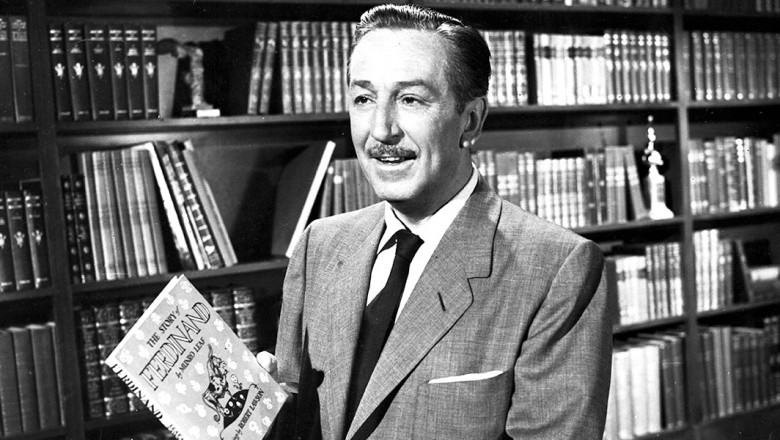
“The will illustrate the principle in animation which we call the ‘plausible impossible.’ [It] means taking something that is against the laws of nature – something impossible – and making it appear rational, and acceptable.”

On October 31, 1956, the episode of the Disneyland anthology series “The Plausible Impossible” premiered on ABC. The episode was written by Dick Huemer, with animation sequences directed by Wilfred Jackson, and live action sequences directed by William Beaudine.

The episode begins with Walt showing some drawings that were made for a scene in Snow White and the Seven Dwarfs that was never used. He then introduces the term ‘plausible impossible’ from the Disney book The Art of Animation, and explains that this was not a term the animators invented, but an animation principle that goes back centuries. The history begins with the Egyptians, with the animations of the gods, and the Chinese animating dragons. The segment from Fantasia – “The Rite of Spring” – then is shown, along with the theory that the Chinese conception of dragons may go back to the stories of the dinosaurs. The explanation then moves on to Greek mythology, before applying plausible impossible techniques to the animated cartoon. Disney then relates how impossible cartoon scenarios have some sort of basis in fact. He also introduces the concept of “correctness in sensation,” using the feeling of riding an elevator to demonstrate the squash and stretch techniques. Each “plausible impossible” concept has its roots in the physical and psychological. This then moves into giving life to inanimate objects, and introduces the Mickey Mouse short film Thru the Mirror.

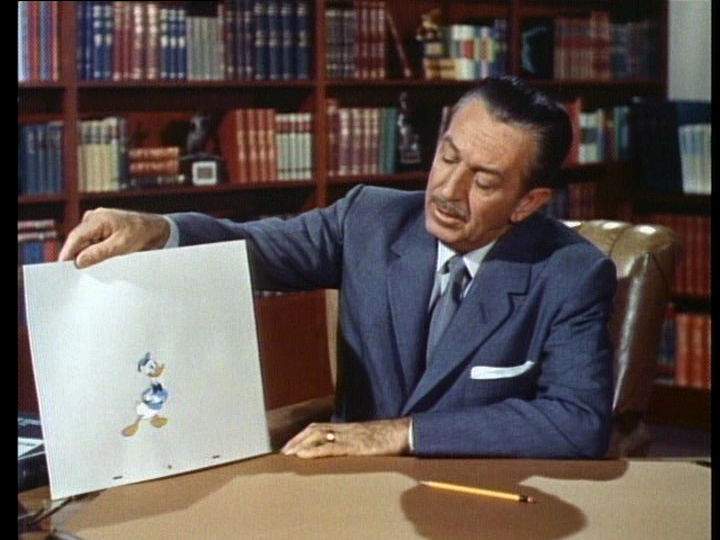
Walt introduces a recently drawn Donald, asking him to be his volunteer

Walt introduces a recently drawn Donald, asking him to be his volunteer

After the short, Walt then shows how an animated character is created, with a magic pencil drawing Donald Duck. When Walt mentions the importance of sound, Donald starts to talk, and agrees to help Walt with a demonstration. As Walt explains different sound effects, poor Donald bears the brunt of the demonstration. Donald flees the demonstration and hides on Walt’s desk, with Walt continuing the demonstration without him, though Walt manages to tempt him back with food. This then leads to the Donald Duck short film Donald’s Cousin Gus. Walt then surprises the audience with the complete showing of the unseen test animated sequence drawn for Snow White and the Seven Dwarfs after some accompanying scenes from the finished film. The final segment of this episode is about program music, which is a story put to music. Using the classic piece “Night on Bald Mountain,” Walt places it in several animated features, including “The Sorcerer’s Apprentice” from Fantasia, and a scene from Bambi. The true scene from Fantasia with the music is shown, with the music driving the story.

October 25

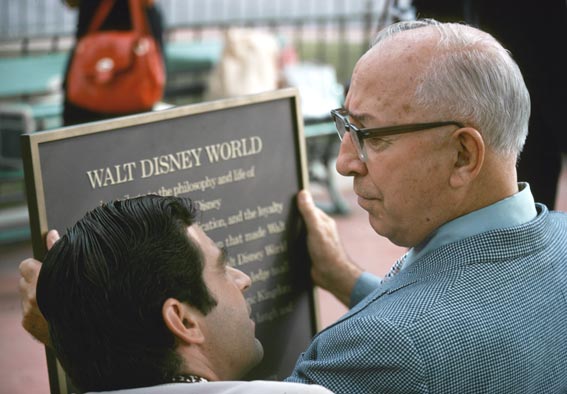
October 25, 1971 – The Official Dedication of Walt Disney World Takes Place

WDW Dedication

“May Walt Disney World bring joy and inspiration and new knowledge to all who come to this happy place.”

On October 25, 1971, the official dedication ceremonies of Walt Disney World took place in the heart of Main Street in the Magic Kingdom. The special event was filmed for an NBC special that aired on October 29, and featured a dedication speech by Walt’s brother Roy O. Disney, a marching band led by Music Man creator Meredith Wilson, and special appearances by celebrities, such as Bob Hope. This day kicked off a three-day celebration for the park, which also included a performance by the World Symphony Orchestra in front of Cinderella Castle, conducted by Arthur Fiedler.

October 19

October 19, 1955 – The Disney Anthology Episode “The Story of the Silly Symphony” Airs

TSOTSS

“Next week, Walt Disney brings you ‘The Story of the Silly Symphony.’”

On October 19, 1955, the episode of Disneyland entitled “The Story of the Silly Symphony” aired on ABC. The episode covered some of the more popular entries in the Silly Symphony line, including The Practical Pig, Three Orphan Kittens, Little Hiawatha, and The Old Mill, as well as the special short film Ferdinand the Bull. The episode was directed by Clyde Geronimi and written by Bill Peet. It is one of a select few episodes to cover the Silly Symphony line.

October 13

October 13, 2008 – The 22nd Disney Legends Ceremonies Are Held

2008 DLA

“Collectively, this group has enchanted millions, young and old around the world and it is a privilege to pay tribute to them today.”

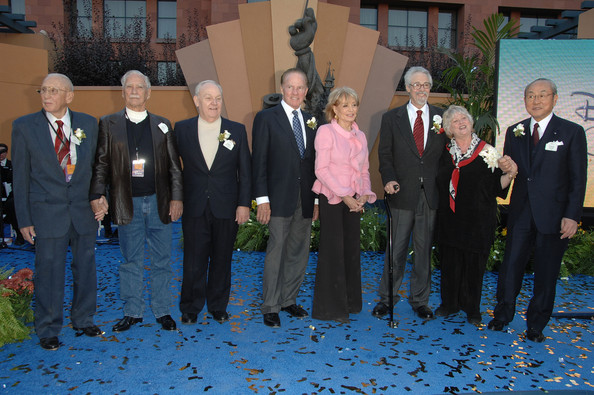
On October 13, 2008, eleven new inductees were honored at the 22nd Disney Legends ceremonies. Held in the Disney Legends Plaza in Burbank, the Legends in attendance participated in a hand-print ceremony, with their bronzed prints being hung in the plaza. The ceremony was overseen by Disney President and CEO Bob Iger, with inductees including Barbara Walters, Frank Gifford, Wayne Allwine (voice of Mickey Mouse), Russi Taylor (voice of Minnie Mouse), Bob Booth (Imagineer), Neil Gallagher (Imagineer), Toshio Kagami (Director, Chairman, and CEO of the Oriental Land Company), Burny Mattinson (animator), Walt Peregoy (animator), Dorothea Redmond (Imagineer), and Oliver Wallace (musician).

October 12

October 12, 1911 – Producer, Member of Board of Directors, and Disney Legend Bill Anderson is Born

Bill Anderson

“Family entertainment should be fun; life is melodramatic enough.”

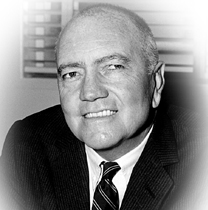
On October 12, 1911, William Hillyard Anderson was born in Smithfield, Utah. Originally wanting to be an actor, Anderson moved to Los Angeles in 1929, scoring minor radio roles while working as a regional sales manager at a subsidiary of Ford. However, with the scarcity of casting calls, he went to study pre-law at Compton Junior College and the University of Southern California while working at Firestone Rubber Company. In 1943, as studios were committed to the war effort, Anderson was hired by the Disney Studios in the production control department. He was soon chosen to oversee the reorganization of the ink and paint department, which then led into a job as the assistant to the Studio’s production manager. Anderson was then named the Studio’s production manager in 1951, and in 1956, he became the Vice President of Studio Operations. Anderson’s projects were numerous, including being the associate producer of such well-beloved classics as Old Yeller, Swiss Family Robinson, and The Apple Dumpling Gang. His producer projects in television included Zorro and The Scarecrow of Romney Marsh. He was named to the Board of Directors in 1960, and in 1966, after Walt Disney passed away, Anderson served on the board of Disney Studio producers who helped keep the studio afloat. Anderson retired in 1984, and in 1997, he passed away from a cerebral hemorrhage. In 2004, he was honored as a Disney Legend for his work in Disney production.

September 24

September 24, 1993 – The Sitcom Boy Meets World Premieres on ABC

Boy Meets World_1

“There’s no gravity in space, Mr. Matthews, therefore astronauts ‘suck up.’ Learn from them.”

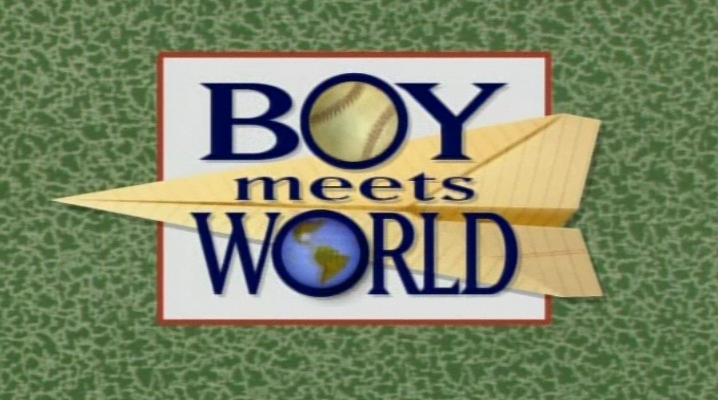
On September 24, 1993, the live-action sitcom series Boy Meets World premiered on ABC. The series centered around the life of teenager Corey Matthews, from his early days in sixth grade to his marriage to childhood sweetheart Topanga Lawrence. The series became a staple of ABC’s TGIF programming block lineup, and was nominated for several awards during its run. In 2014, a sequel series that featured several of the original characters premiered on the Disney Channel, known as Girl Meets World. The series eventually ran for 158 episodes in seven seasons. It was created by Michael Jacobs and April Kelly, and starred Ben Savage as Corey Matthews, William Daniels as Mr. Feeny, Rider Strong as Shawn Hunter, Danielle Fishel as Topanga Lawrence, Will Friedle as Eric Matthews, William Russ as Alan Matthews, Betsy Randle as Amy Matthews, and Tony Quinn as Jonathan Turner. Trina McGee-Davis would join in season five as Angela Moore, as would Matthew Lawrence as Jack Hunter. Maitland Ward would join the cast in season six as Rachel McGuire.

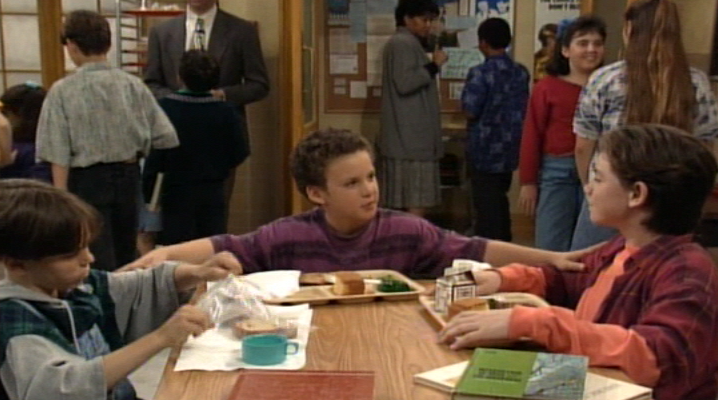
The pilot episode begins in the cafeteria, where teacher Mr. Feeny finds Corey Matthews getting a candy bar from the vending machine so early in the morning. After exchanging some barbs, Corey sits with his friend Shawn, who warns him that Mr. Feeny will make his whole sixth grade miserable. In class, they act out Romeo and Juliet, but Corey is listening to a baseball game secretly instead of paying attention. Mr. Feeny finds out and confiscates it, and tries to explain the true tragedy of the play. Corey, however, doesn’t understand, and is awarded detention for his insolence. After school, Corey’s brother Eric announces that he’s going on a date on Friday, which means that he won’t go to the baseball game with Corey. Corey is disappointed, and when he goes to tell his dad, he finds that Mr. Feeny, who happens to be his next door neighbor, has already informed his parents about Corey’s detention on Friday. When Corey complains about the game, his parents are happy that Eric is going on a date, which depresses Corey further.

Corey confides in his friends his troubles at home, and how he finds himself now an "orphan."

Corey confides in his friends his troubles at home, and how he finds himself now an “orphan.”

At school the next day, Corey tries to come up with a plan to skip detention to score tickets to the game, and announces that he is now an orphan. That night, he decides to sleep in his treehouse, which gives him a good view of Mr. Feeny’s dining room. He notices that the table is set nicely, but after a phone call, he puts away the other place setting and eats by himself. The next morning, Corey sneaks back in the house to get some clothes, and his mother asks if he still feels abandoned. She explains that “people grow up and priorities change,” and no one is the bad guy in any situation. In detention, Corey tries to talk to Mr. Feeny, but Mr. Feeny ignores him. Corey points out that love leads to nowhere, as love has turned his family against him, and love left Mr. Feeny lonely. Mr. Feeny is frustrated, thinking that Corey hasn’t learned anything from him this entire year, and tries to teach him something that afternoon. He explains that the Matthews family derives its strength from being a family, and that there is nothing higher than achieving love. He then lets a stunned Corey go. Corey heads home and runs into his dad, who is glad his son is back. That evening, Eric comes home, and relates that his date when horribly, as he didn’t know what to do. Corey says that his brother is too cool for a girl, and convinces Eric to ask the girl out again, as “love is worth it.”

September 18

September 18, 1993 – The Animated Television Series Marsupilami Premieres on CBS

Marsupilami

“Marsupilami comin’ flyin’ tree to tree, he’s so co-conutty we all go bananas singin’ ‘Houba!’”

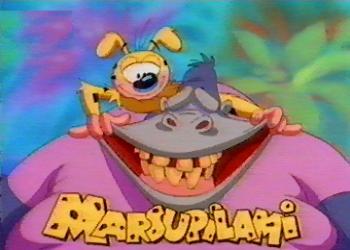
On September 18, 1993, the animated series Marsupilami premiered on CBS. The series was based on the 1950s Belgian comic, the series was first shown in the Raw Toonage CBS show in 1992 before moving to its own series the following year. Each episode featured one of three segments: Marsupilami, and either Sebastian the Crab, or Shnookums and Meat. It lasted for one season with 13 episodes. The series starred Steve Mackall as Marsupilami, Dan Castellaneta as Stuie, Steve Landesberg as Eduardo, and Jim Cummings as Maurice and Norman. Disney was sued in 1999 by Marsu Productions for breach of contract and for failing to adequately promote the character as agreed upon.

September 13

September 13, 1999 – Times Square Studios Opens in New York City

Times Square Studios

“Times Square Studios is completely outfitted with everything a professional working studio requires, with Sound Stages and High Definition Control Rooms that have broadcast shows worldwide.”

On September 13, 1999, the multi-use production facility Times Square Studios opened in New York City. The studio is mostly known as the home for the ABC morning program Good Morning America, but also is used for various ABC News and ESPN programs, including the annual New Year’s broadcast. The studio is fully equipped with two studios, a green room, dressing rooms, a radio broadcast studio, and a production control room with support facilities. The studio is also known for its glass walls to use Times Square as a live backdrop for the Good Morning America broadcast.

September 8

September 8, 2000 – The Disney Channel Original Movie The Other Me Premieres
vlcsnap-2015-09-01-09h53m52s178

“That’s so amazing. You look like me, you talk like me, but you have a computer brain!”

On September 8, 2000, the Disney Channel Original Movie The Other Me premiered. It was based on the book Me Two by Mary C. Ryan. It was written by Jeff Schechter, and directed by Manny Coto. The film starred Andrew Lawrence as Will and Twoie, Scott McCord as Victor, Joe Grifasi as Conrad, Brenden Jefferson as Chuckie, and Tyler Hynes as Scottie DeSota.

Will Browning heads to school where he is constantly mocked for his yoyo, his hair, and more. His friend Chuckie reminds him that it’s report card day, and Will is positive that his method of skating by will see him through. Fellow classmate Heather has a crush on him, but he is less than receptive. Will gets his report card, and realizes that he may not be doing as well as he thought. He gets home to find more bad news: if he doesn’t pull up his grades, he will spend his summer at Camp Spartacus, a boot camp for boys. Will realizes that he needs to do well on his science project, though he has no confidence in his abilities. He finds an ad for Ocean Pups in the back of his comic, and decides to make this his project. Meanwhile, at the Ocean Pups lab, two scientists named Victor and Conrad have been working on a hypercloning project, and succeed in cloning a mouse. Unfortunately, one of the mice accidentally escapes and, while being chased by a cat, knocks over the cloning formula, which drips through a crack in the floor onto one of the Ocean Pups kits – the very one sent to Will.
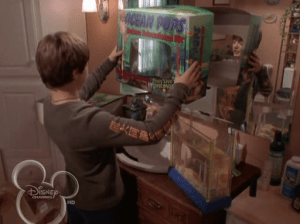
Will unloads his Ocean Pups kit, ready to begin his science project

Will unloads his Ocean Pups kit, ready to begin his science project

Will gets home from school to find his new Ocean Pups kit waiting for him, and he quickly opens it. Missing the stirrer, he decides to use his comb instead, and the kit starts to bubble. Will watches in horror as the kit overflows, and calls customer service for help. When he looks again, he finds that he has created a clone of himself. Will recalls a lesson about cloning from science class, and realizes that he’s made himself a clone. Back at the Ocean Pups factory, the customer service rep has talked to Victor and Conrad, who are now panicked that their secret is out. Will has trouble of his own in training his clone to act normal. Will realizes that his clone is a genius, but has a hard time keeping the clone’s curiosity in check. Will names the clone Twoie, and decides to have him attend school in his place. Meanwhile, Victor and Conrad have found Will’s house, and stake out the place to find what Will may have cloned. When Will heads out with his family the next day to visit Grandpa Mordecai, he asks Twoie to stay inside, but Twoie longs to be outside to explore the world around him. Will is shocked when he gets home and finds Twoie missing.

Will is able to find Twoie thanks to their special telepathic link, but accidentally insults Twoie by telling him he’s “just a clone,” though all Twoie wants is a family. Will teaches Twoie how to act like him, and sends him to school. Chuckie is confused at the change of attitude in “Will,” while the real Will stays home and lounges. Things get even weirder at school when Twoie starts dancing in the middle of the cafeteria, starting a huge dance party for the entire school. In the span of a day, Twoie raises Will’s reputation at school, fixes the relationship and becomes close friends with bully Scotty, and gets a date with Heather to the social. Victor and Conrad show up at Will’s door to “respond to his inquiry,” but Will quickly brushes them off. As Victor and Conrad talk, they reveal that the clone would only have a three week lifespan. Will and Twoie spy on the pair from Will’s window, and knowing that they’re being spied on, the two are extra cautious about not being seen together. However, Will soon becomes bored with the arrangement, and misses his life. Twoie is confused as to why Will is upset about this, as he thought staying home all day was Will’s dream. However, as Twoie leaves the house and Will watches from the window, Conrad and Victor see the pair, and realize that Will has hypercloned himself.
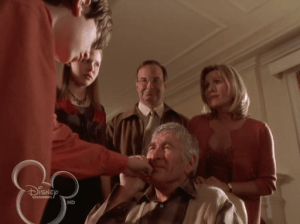
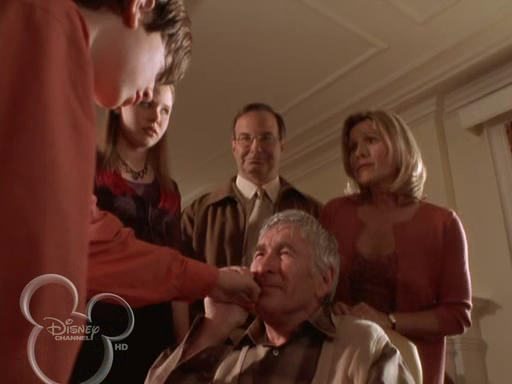
Twoie manages to connect with Grandpa Mordecai, something the family has been unable to do

Twoie manages to connect with Grandpa Mordecai, something the family has been unable to do

Will sends Twoie to visit Grandpa Mordecai, and gets Mordecai to finally come out of his stupor and interact with the family. When Twoie arrives home, Will is dismayed to find how much Twoie has changed his life, and is worried his family won’t love him once Twoie disappears and Will acts as himself again. The next day, Will decides to go to school, while Twoie stays home. Twoie tries to warn him about what’s going on at school, but Will rebuffs him. Will is shocked to find how popular he has become with the students and the teachers. When he gets home, Twoie is waiting for him, and Will is furious that everything good happens to Twoie, while Twoie is upset that no one knows about him. Twoie insists that not caring about what people think is why is he’s good at everything he does, but Will says that Twoie messed up his life. Twoie decides that he will leave for New York City, as he has no family. Will has Twoie attend the junior social in his place to act as a last farewell. Twoie heads off to his dance, but Will observes from the window that Victor and Conrad are close on his tail. Will spies on the pair and finds that they possess a potion to keep Twoie as a clone for longer than his intended lifespan. Will steals the potion and flees into the woods. Victor and Conrad then change plans: they will head to the school dance and kidnap “Will,” then torture him for information.

Twoie starts the dance party, unaware that Will has come to the school to rescue him. Will finds Chuckie and tries to explain that Chuckie’s been hanging with his clone the entire time, though Chuckie is less than convinced. Twoie has headed to the bathroom and realizes that he is sick, while Will covers for him on the dance floor, using the kids as a cover. Chuckie continues to look for Twoie, though he’s still unconvinced. Unfortunately, Will gets captured by Victor and Conrad, and Twoie is already boarding a bus to New York. However, Twoie realizes that Will is in trouble, and arrives to rescue Will. Will and Twoie team up to stop Victor and Conrad, with help from Chuckie and Scotty. Will gives Twoie the potion to give him a normal lifespan, much to the surprise of Chuckie and Scotty. The police arrive and arrest the scientists, and Will’s family shows up as well. Will explains that Twoie is his clone, and the family covers for him calling him Will’s identical cousin Gil. Back at home, Will explains the entire story, much to the confusion of his family. When Gil explains that he only wants a family, and everyone agrees to continue the ruse of Gil being an identical cousin.