RSS Feed

Tag Archives: Short film

January 16

January 16, 1930 – The Silly Symphony Summer is Released to Theaters

vlcsnap-2014-01-16-19h32m07s133

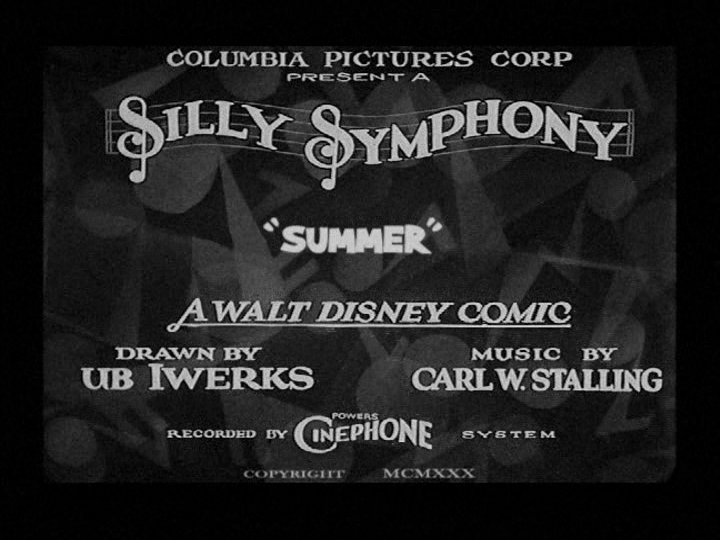
On January 16, 1930, the Silly Symphony Summer was released to theaters. It was the second of a part of a series of seasonal shorts. It was directed by Ub Iwerks.

The short begins with a caterpillar walking out of a corn cob and greeting other caterpillars in a nearby apple. The group of caterpillars then dance merrily through the garden before crawling into a flower. On that same flower, two butterflies emerge from their cocoons and dance as they fly through the air. They land on a stick figure, who scares them away before he, too, starts to dance. He falls off the branch and into the pond below, where several different bugs are celebrating the warm season through dance and song. Two dung beetles are then seen hard at work pushing their mound to their home, which continues to get stuck on several pebbles. The mound slips down a hill and crashes into a tree, which reveals a whole mess of tiny beetles, who being a special circle dance with each other. In the middle of the dance, a flower emerges from the ground, revealing four flies hidden within its petals. The four flies take off and find a spider in his web. They take the spider and the web, and begin to bounce the spider, who takes his revenge by eating the four flies and dancing merrily.

January 5

January 5, 1935 – The Silly Symphony The Tortoise and the Hare is Released to Theaters

vlcsnap-2014-01-05-11h00m53s146

“You don’t talk tootin’, cutie. I’m the very best there is!”

On January 5, 1935, the Silly Symphony The Tortoise and the Hare was released to theaters. It was based on the Aesop fable Hare and the Tortoise. The short won the Academy Award for Best Cartoon in 1934, winning against Columbia’s Holiday Land and Universal’s Jolly Little Elves. It was released as an educational film in 1986, retitled Aesop’s Hare and the Tortoise, with an overview done by Walt Disney from an episode of Disneyland. A sequel to this short was also released in 1936, entitled Toby Tortois Returns. The short was directed by Wilfred Jackson.

The short begins on race day, with everyone turning out to see the big race between Toby Tortoise and Max Hare. Max steps out meet the cheering crowd, while Toby is greeted by laughs. Toby greets Max with a friendly “may the best man win,” with Max replying that of course he will, but promises not to beat Toby too badly. The official starts the race, and Max takes off with a shot, while Toby is still at the starting line. As Max runs by so fast that trees are pulled out from their roots, he stops when he sees Toby galloping slowly with some snails. Max decides to “take a nap” while Toby continues his pace, and when Toby sees the sleeping Hare, he tries to use the situation to his advantage. Max then gets up and speeds past Toby once again.

Max stops racing so he can chat up some girls from the local girls' school

Max stops racing so he can chat up some girls from the local girls’ school

Max stops once he sees the girls of Miss Cottontail’s Girls’ School, thinking that he has plenty of time to chat with the young ladies. The girls see Toby galloping by, and try to stop him to talk. Toby refuses to stop, as he has a race to run. As Toby continues, Max stays with the girls to off his speed skills. Suddenly, a cheer rings out, and Max realizes that he needs to hurry to catch up to Toby. Toby sees Max running full speed and picks up his pace. It’s a fight to the finish, and Toby manages to win in the end. The crowd cheers for Toby and carries them on his shoulders as the victor.

January 4

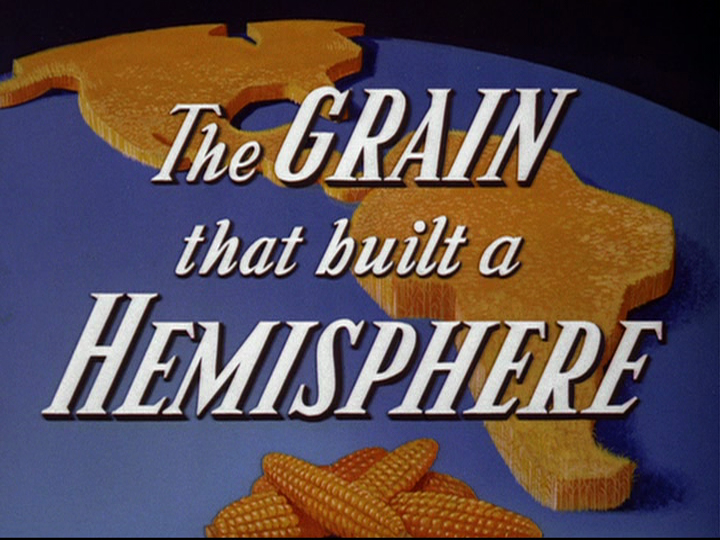
January 4, 1943 – The Educational Propaganda Short Film The Grain That Built a Hemisphere is Delivered

vlcsnap-2014-01-04-16h01m49s225

“Corn is the symbol of a spirit that links the Americas in a common bond of union and solidarity.”

On January 4, 1943, the educational short film The Grain That Built a Hemisphere was delivered to the Coordinator of Inter-American Affairs. It was nominated for an Academy Award for Best Documentary in 1943, but lost to The Battle of Midway, Kokoda Front Line!, Moscow Strikes Back, and Prelude to War. This short also includes a short segment from the 1938 Silly Symphony Farmyard Symphony. The short was directed by Bill Roberts.

The short begins with an explanation of corn, and how it possibly came to be. The earliest version of corn grew on the mountains centuries ago, but was not noticed by hunters as they searched for food. When hunters were unable to find game, they were able to find corn and use it for food; this discovery is then credited as helping begin the civilization of the Americas. The narrator then directs the attention to the Mayan civilization, which was built around the growth and worship of corn, with great temples built in dedication to the corn gods, including Yum Kaax. The Aztecs also built a civilization based on corn, with their corn goddess named Centeotl. The Incas, located in the Andes, worshipped a sun god, who provided them with all they needed to grow their corn. The crop of corn spread around South America and all the way to Canada; it was also sent over the world through the conquistadors and spread from there.

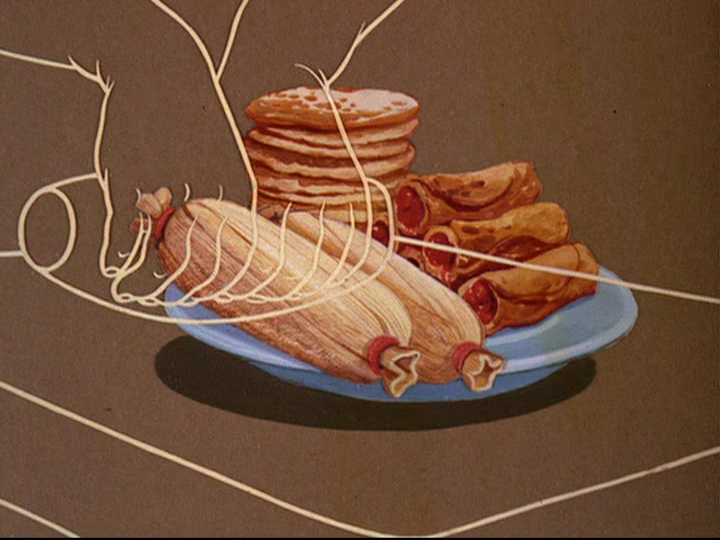
A list of foods made from corn is shown through animation

A list of foods made from corn is shown through animation

The narrator lists the various foods made from corn, including tortillas, succotash, and bourbon. Brought to present day, where it is explained that, thanks to advances in machinery, we can harvest enough corn in fifteen hours, compared to the 500 the Mayans needed. The next topic is how to inbreed corn, and the entire process is explained step by step. It produces small versions of the corn plant, but once two small unrelated inbred plants are cross-bred, that produces a stronger, larger stalk with more ears. Seventy-five percent of all corn produced in the United States goes to feed for livestock, with hogs eating the most of that percentage. After this, a scientific study of corn is presented, with an explanation of how the two parts of the corn kernel (the endosperm and the germ) are used to create oils and starches, which have a variety of uses. A hypothesis of how corn can be used to help the war effort is also presented, with the idea that corn can be used to create tough plastics, powerful fuels and explosives, tires, parachute fabrics, and more.

December 27

December 27, 1930 – The Silly Symphony Playful Pan is Released to Theaters

vlcsnap-2013-12-27-22h01m45s237

On December 27, 1930, the Silly Symphony Playful Pan was released to theaters. The short was based on the Greek mythological character Pan, the god of the wild. It was directed by Burt Gillett.

The short begins with Pan playing his pipes on a rock in a pond, with the fish dancing around to the melody. The fish follow Pan as he frolics across the pond on rocks and logs. As he lands on the other side of the bank, the flowers begin dancing to his melody. Pan gets all the flowers nearby to participate in the music-making before getting the bugs nearby to dance to the music. The trees and the clouds start dancing as well, with the clouds creating lightning from their moves. Unfortunately, one bolt of lightning cuts down a tree and accidentally starts a fire in the forest. All of the animals scurry away to avoid the flames, and several trees are destroyed by the flames. The animals work together to save each other and try and put out the flames. A raccoon finds Pan and explains the problem, and Pan hurries to find half of the forest in flames. He attempts to manipulate the fire with his pan pipe music, acting as a pied piper to lead them to the pond, where the flames are quickly put out. After relieving the forest of the fire, Pan disappears.

December 26

December 26, 1947 – The Pluto Short Film Pluto’s Blue Note is Released to Theaters

vlcsnap-2013-12-26-20h01m58s31

“’Twas a moment like this, do you remember?”

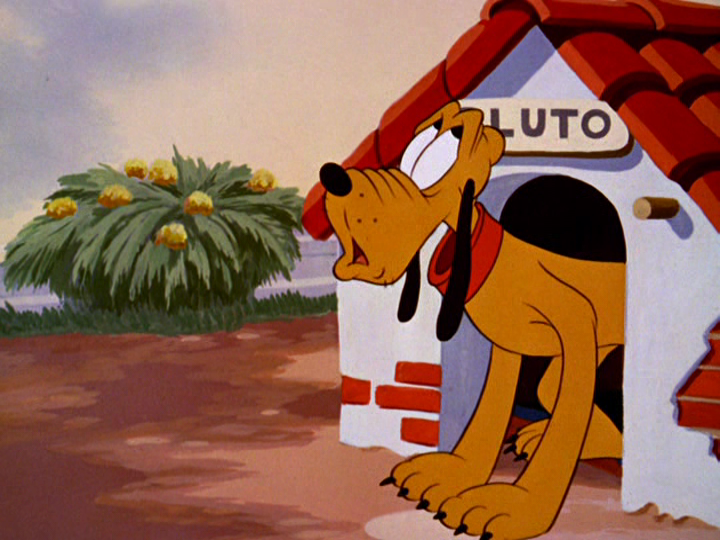
On December 26, 1947, the Pluto short film Pluto’s Blue Note was released to theaters. It features the song “You Belong to My Heart” from the 1945 animated feature film The Three Caballeros. The short was directed by Charles Nichols, with story by Milt Schaffer and Jack Huber.

The birds are singing on a lovely spring day, but are soon interrupted by the sound of Pluto trying to join them in their tweeting. However, Pluto’s singing is rather awful, as the birds point out before they fly away. Pluto then decides to sing along with a bee’s buzzing, but once again is informed that his singing is terrible. Suddenly, Pluto hears the sound of a strange tune coming from the music store across the street. Entranced by the tune, Pluto starts dancing along. When he starts singing with it, however, the store owner pulls the radio away from the howling dog. Pluto sneaks inside the store to listen to the radio, and accidentally turns on a record player, with his tail acting as the needle. When he opens his mouth, the music from the record player comes out, and Pluto is overjoyed at this development.

Pluto begins his crooning, thanks to the record player hidden in his doghouse

Pluto begins his crooning, thanks to the record player hidden in his doghouse

Pluto then gets an idea, and when the birds come back, he uses the trick to pretend that he can sing with a beautiful voice. The female dogs of the neighborhood start screaming with joy when they hear his “singing,” and Pluto hams it up for the audience. Near the end of the performance, his ruse is almost exposed when the record starts skipping, but Pluto manages to quickly fix it and finish the song, with all the female dogs fainting from his crooning. The short ends with Pluto giving a smile to the audience.

December 19

December 19, 1962 – The Special Short Film A Symposium on Popular Songs is Released to Theaters

vlcsnap-2013-12-19-19h50m01s221

“Come in and sit down and I’m going to play for you several hundred of the latest hit songs of the past 60 years, which, naturally, I wrote myself.”

On December 19, 1962, the special short film A Symposium on Popular Songs was released to theaters. The short is a mix of traditional animation and stop motion animation, relaying the history of popular music within the 20th century. The short was nominated for an Academy Award for Best Animated Short Film, but lost to The Hole by Storyboard Inc. and Brandon Films. The short was directed by Bill Justice, with story by Xavier Atencio. It stars the vocal talents of Paul Frees, Gloria Wood, Billy Storm, and Skip Farrell. The songs within the short were written by the Sherman Brothers, with musical arraignment by Camarata.

The short takes place inside Ludwig von Drake’s stately mansion, where he greets the audience at the door and brings them inside to talk about popular music. He begins with his life story at the beginning of the turn of the century where, inspired by his poverty and his ragged clothing, he created ragtime music. He then plays his hit song, “The Rutabaga Rag,” with some accompanying stop-motion animation of vegetables dancing. After this, he moves to the Roaring Twenties, where he was asked to come up with a new style of popular music to put Dixie on the map. He does so with the song “Charleston Charlie,” an allusion to popular ’20s singer Helen Kane.

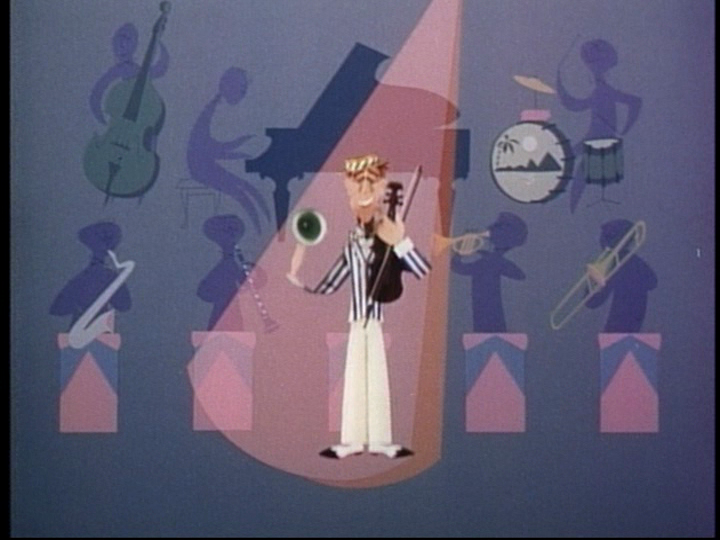
Ludwig moves to the Great Depression era of songs, and turns to a picture of a signer with a backing band

Ludwig moves to the Great Depression era of songs, and turns to a picture of a signer with a backing band

Moving to the Great Depression era, Ludwig has a bit of a panic when he talks about how he lost his money in the stock market. He bought a piano with his last nickel, and wrote the song “Although I Dropped $100,000.” The song parodies the popular songs of the time period, including “Let a Smile Be Your Umbrella” and “Stormy Weather.” Ludwig explains after this that he invented the microphone, and by doing so, invented the idea of a crooner. He wrote the love ballad “I’m Blue for You, Boo-Boo-Boo-Boo-Boo,” which has the singer imitating the crooning style of Bing Crosby. After this, Ludwig moved on to the style of Boogie Woogie, with three singers singing “The Boogie Woogie Bakery Man” which is allusion to the swing style, particularly the songs of the Andrews Sisters.

Ludwig then turns on the television to his favorite music show, The Von Drake Hour, which plays many of his hit songs. The song that starts to play is “Puppy Love is Here to Stay,” which is the beginning of the “modern era” of music (modern for the time the short was released). Soon, Ludwig turns off thetelevision and takes the audience into his hi-fi studio to play his final song, “Rock, Rumble, and Roar” which pays homage to the early rock and roll era in popular music. He forgot the record, and decides to play the song himself, which is segmented with snippets of all the earlier songs. The short ends with the house shaking and rocking along with the raucous music Ludwig is playing.

December 17

December 17, 1932 – The Mickey Mouse Short Film Mickey’s Good Deed is Released to Theaters

vlcsnap-2013-12-17-18h54m38s247

“Thank you! Merry Christmas!”

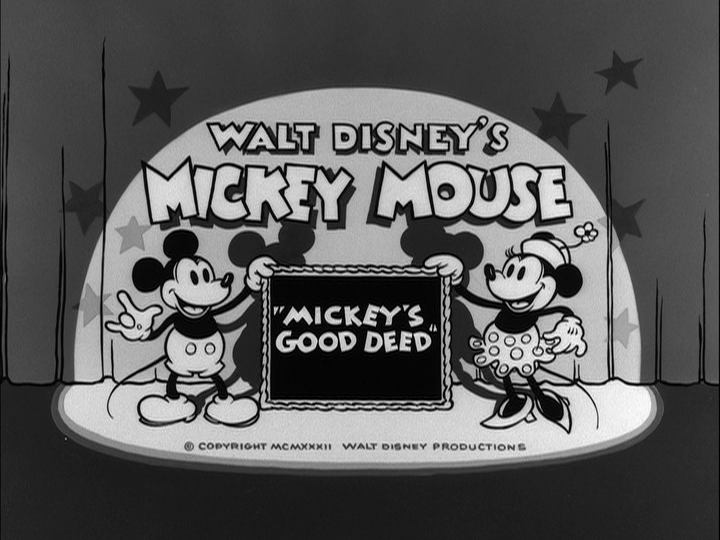
On December 17, 1932, the Mickey Mouse short film Mickey’s Good Deed was released to theaters. It was directed by Burt Gillett.

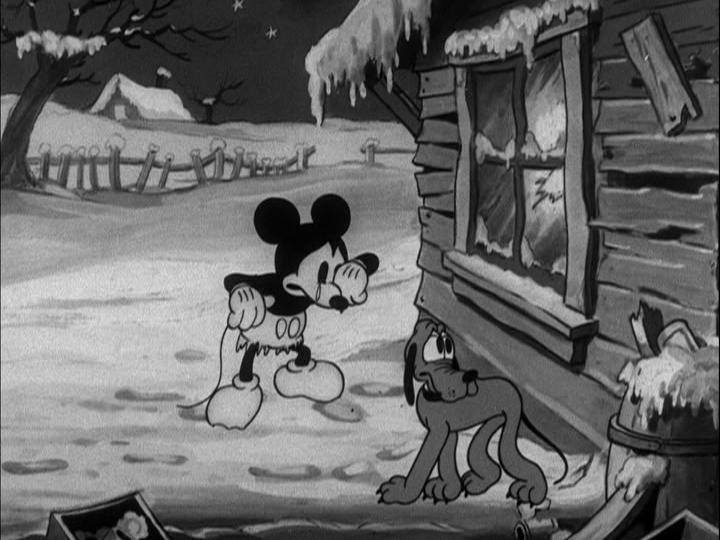
It’s a cold Christmas night, and Mickey is playing “O Come All Ye Faithful” on the cello while passersby throw him coins in his tin cup. Pluto howls along with Mickey’s playing, and the two are pleased that they have enough money to get something to eat. However, they find that people have been throwing them nuts and bolts instead of money, and are unable to buy any food. Mickey is discouraged, but cheers up quickly when he gets the idea to play outside of a rich person’s house. Inside the house, a spoiled piglet is loudly whining while his father and the butler try to entertain him. Suddenly, the piglet is distracted by Pluto’s howling outside, and demands that his father buy him the dog. The butler pursues Mickey and Pluto, but Mickey refuses to sell Pluto, as Pluto is his pal. Unfortunately, in the chase, Mickey’s cello is destroyed by a passing horse-drawn sled.

After seeing the poverty-stricken single mother and her several children, Mickey and Pluto are driven to tears

After seeing the poverty-stricken single mother and her several children, Mickey and Pluto are driven to tears

Mickey soon spies a woman crying in a dilapidated shack, and realizes that the money could help her and her several children for Christmas, and sells Pluto to the butler, provided that they give him a good home. Inside the home, the piglet starts abusing Pluto, hitting him with a hammer and chasing after him with a toy train. Meanwhile, Mickey uses the money to buy gifts for the children, and pretends to be Santa while packing their stockings. He wakes up the children as he leaves, and the children are delighted to find that Santa found them. Back at the hose, the piglet is causing even more havoc, with his father and the butler unable to stop him. The father is at his wits end, and decides to throw Pluto out. As the piglet whines, the father finally gives the piglet a long-overdue spanking. Pluto leaves the house and reunites with Mickey, and the two are pleased to find that the will have Christmas dinner, as the piglet tied a turkey to Pluto’s tail.

December 16

December 16, 1983 – The Mickey Mouse Cartoon Featurette Mickey’s Christmas Carol Premieres in Theaters
vlcsnap-2013-12-16-19h31m33s118

“What’s this world coming to, Cratchit? You work all your life to get money, and people want you to give it away!”

On December 16, 1983, the Mickey Mouse cartoon featurette Mickey’s Christmas Carol premiered in theaters. The 25 minute film was based on the classic Charles Dickens story A Christmas Carol, with Disney comic book staple Uncle Scrooge McDuck playing the part of Ebenezer Scrooge. Mickey portrays Bob Cratchit, Goofy plays Jacob Marley’s ghost, and Donald Duck plays Fred, among several other classic Disney characters. This was Mickey’s foray back into theaters after his last short film in 1953, The Simple Things. The idea for the film went back to the 1974 record of the same name. The film was released on a double billing with the film The Rescuers. It was eventually nominated for an Academy Award – the first Mickey Mouse short to be honored so since 1948’s Mickey and the Seal; it would lose to Sundae in New York. The film was directed by Burny Mattinson, with story by Mattinson, Tony L. Marino, Ed Gombert, Don Griffith, Alan Young, and Alan Dinehart. It stars Alan Young as Scrooge, Wayne Allwine as Mickey Mouse, Clarence Nash as Donald, Hal Smith as Goofy, Eddie Carroll as Jiminy Cricket, and Will Ryan as Willie the Giant and Pete.

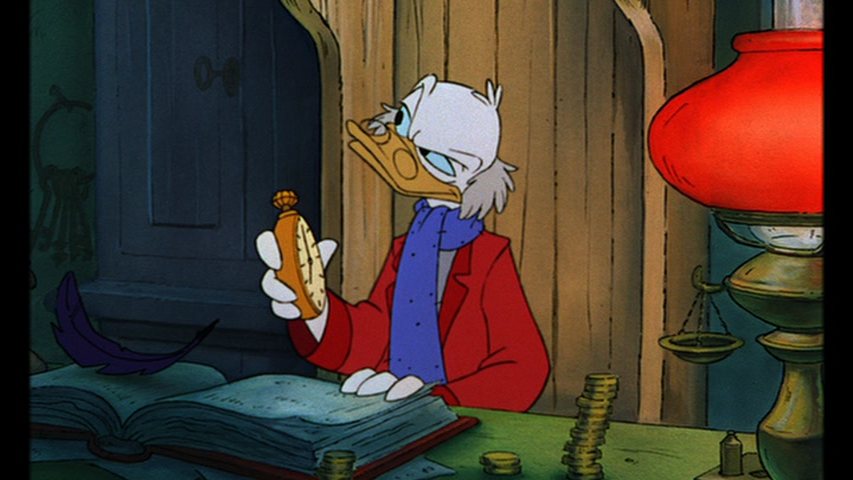
The film begins on Christmas Eve in London, and Scrooge is heading back to his office, where he lectures employee Bob Cratchit for using a piece of coal in the stove. Cratchit works up the nerve to ask Scrooge for half of Christmas Day off, and Scrooge agrees, so long as his pay is docked. Scrooge goes back to his desk to count his money, but is soon interrupted by the appearance of his nephew Fred. Fred brings his uncle a wreath, but he and Cratchit are soon dismayed at Scrooge’s attitude about Christmas. Fred invites his uncle to Christmas dinner, but is soon kicked out of the office. After Fred leaves, two men arrive asking Scrooge for a donation for charity. He sends them on their way without a donation, and laments to Cratchit about how he doesn’t understand why everyone wants him to give his money away.
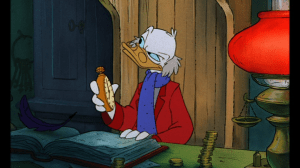
Scrooge eyes the clock, but begrudgingly lets Cratchit go home for Christmas

Scrooge eyes the clock, but begrudgingly lets Cratchit go home for Christmas

That evening, Cratchit leaves merrily to join his family for Christmas, and Scrooge heads home in the late London night. As he arrives home, his door knocker suddenly turns into the face of his old partner, Jacob Marley. Scrooge is startled, but thinks nothing of it. A shadow follows him up the stairs, and although Scrooge tries to hide, the ghost of Marley finds him and warns him of his fate – to have to carry heavy chains on his soul for all eternity, thanks to his sins. Marley tells him that three spirits will meet him through the night, should he want to avoid that fate. Scrooge heads to bed, worried about the spirits, but soon dismisses them and goes to sleep. The Ghost of Christmas Past arrives at one, and takes Scrooge back to his past, when he used to be kinder and believed in Christmas. After a dizzying flight through London, Scrooge arrives back at his old employer’s Christmas Party. Scrooge spies himself in the corner, and watches as he falls in love with Isabelle, the love of his life.

As they continue watching Scrooge’s life, they see the decline of Scrooge’s love for Isabelle, as money has become his only love. She leaves him, and Scrooge begs the spirit to take him home. When the clock strikes two, the Ghost of Christmas Present arrives, who is surrounded by the food of generosity. Scrooge argues that no one has ever offered him generosity, but the ghost shoots back that Scrooge never gave reason for anyone to show him any. The ghost takes Scrooge to the house of Bob Cratchit, where Scrooge sees his family, with the sickly Tiny Tim. Scrooge is concerned with the lack of food the Cratchits have, as well as the welfare of Tiny Tim, who may not live to see another Christmas. As Scrooge asks the spirit what happens to the boy, the spirit disappears, and all the lights around him go out.
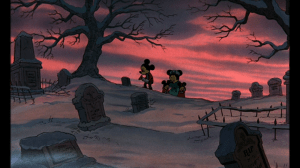
Cratchit and his family mourn the loss of their youngest child, Tiny Tim

Cratchit and his family mourn the loss of their youngest child, Tiny Tim

The Ghost of Christmas Future arrives, with Scrooge being taken to the graveyard. Scrooge sees Cratchit mourning over his son’s grave, but when Scrooge begs for Tiny Tim’s life, he is interrupted by the laughter of two weasels, who are digging the grave for Scrooge. Scrooge is taken to his plot and sees his name on the tombstone, and is then pushed into the grave by the spirit. As the spirit laughs, Scrooge begs for his life, pleading that he will change. As he falls, he finds that he is back in his own room, arriving home on Christmas morning. Scrooge rushes outside, and starts his day by making a huge donation to the two men from yesterday. Scrooge then runs into his nephew Fred, and accepts the invitation to Christmas dinner before going shopping. He rushes over to Cratchit’s house, and pretends to be the same old Scrooge. He soon reveals his new demeanor, making Cratchit his partner and giving him a raise. The film ends with a celebration in the Cratchit house, with Scrooge acting as another father to Cratchit’s children.
December 12

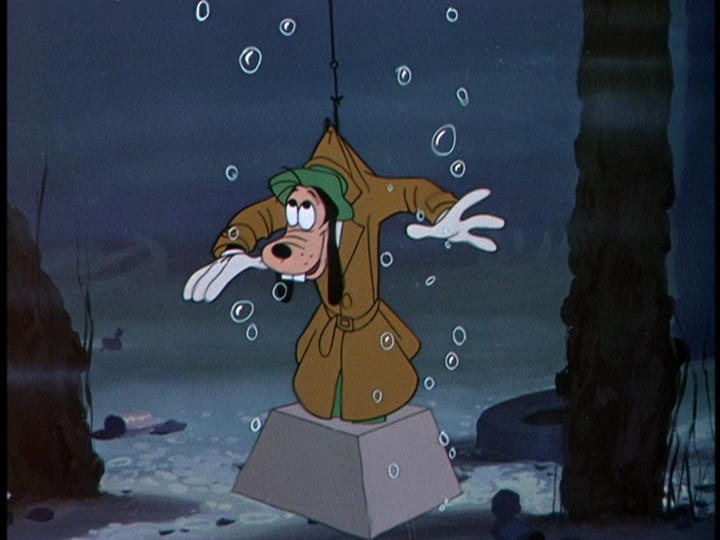
December 12, 1952 – The Goofy Short Film How to Be a Detective is Released to Theaters

vlcsnap-2013-12-12-19h56m20s101

“Every large city offers a wealth of opportunities for a good private detective. The requirements for such a job are quite simple: item number one, he needs office space.”

On December 12, 1952, the Goofy short film How to Be a Detective was released to theaters. It was directed by Jack Kinney, with story by Dick Kinney and Brice Mack.

The short begins with a city at night, with several crimes being committed in one building. One small spot at the top of the building has an “Office to Let” sign, which is soon taken away and replaced with a sign for Johnny Eyeball, Private Eye. Johnny (portrayed by Goofy), has his reading of a Mickey Mouse comic interrupted by a mysterious woman who requests him to “find Al.” She pays him $100, and the police chief appears, telling Johnny to leave the case to the police. A shady weasel approaches Johnny with a gun soon after, and threatens him. Johnny then heads to Al’s Joint, disguised as an old man, but is quickly recognized.

Johnny finds himself "sleeping with the fishes," but is soon pulled out by the police chief

Johnny finds himself “sleeping with the fishes,” but is soon pulled out by the police chief

When Johnny enters the bar, he asks the bartender for information on Al, bribing him with a dollar. The bartender drugs Johnny’s drink with “goof balls,” and Johnny soon finds himself in the bottom of the river wearing cement boots. The chief pulls Johnny out of the river and warns him again to let the police handle this case. Johnny then heads to the Chronicle’s files, but falls down an elevator shaft. He is then kicked out of the morgue, and tries to call the police. Everyone is on the Al case, and they follow a mysterious car in taxis from “Al’s Taxi,” but end up in various dangerous situations, including dodging trains and getting squished between two trucks. The chase continues for a while, which includes gunplay, when all three cars end up crashing into a hay bale. As the weasel, the woman, Johnny, and the police chief pop out of the hay, the woman takes the chief, who is the mysterious Al Muldoon they’ve all been searching for, by the ear and drags him into the nearby building of the Justice of the Peace, who happens to be the weasel. Johnny shrugs, and says simply that this case proves that crime doesn’t pay.

December 10

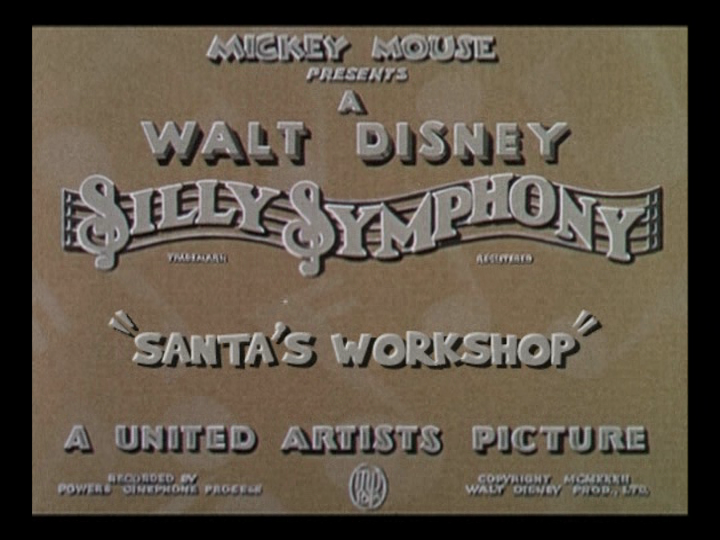
December 10, 1932 – The Silly Symphony Santa’s Workshop is Released to Theaters

vlcsnap-2013-12-10-18h24m25s57

“We’re the merry, merry men of the midnight sun, we work for Santa and have a lot of fun.”

On December 10, 1932, the Silly Symphony Santa’s Workshop was released to theaters. A sequel to this short, The Night Before Christmas, was released in 1933. There are several allusions to popular characters and often used stereotypes of the era, including a Charlie Chaplin wind-up doll. The short was directed by Wilfred Jackson.

At Santa’s Work Shop, all the elves are busy doing the final preparations for December 25th, including bringing mail and cleaning up his sled. Santa is seen reading his letters, and checking to see if the children that send the letters are on the naughty or nice list. An elf takes the letters to the factory, where dozens of elves are making the Christmas presents. An assembly line is seen working on rocking horses, while painters are seen working on blocks, dolls, and chess boards. Each toy goes to Santa for inspection, and he stamps them either with “OK” or “NG.” A marching band of tin soldiers marches through the factory, leading a parade of toys into Santa’s sack. As the sack is filled, Santa has his elves bring it out to his sled, and he bids his elves goodbye as he sets off to deliver the toys.