RSS Feed

Tag Archives: Short film

April 28

April 28, 1939 – The Donald Duck Short Film The Hockey Champ is Released to Theaters
vlcsnap-2015-04-28-20h27m40s54

“I see that a demonstration is in order…so I’ll beat the three of you all by myself.”

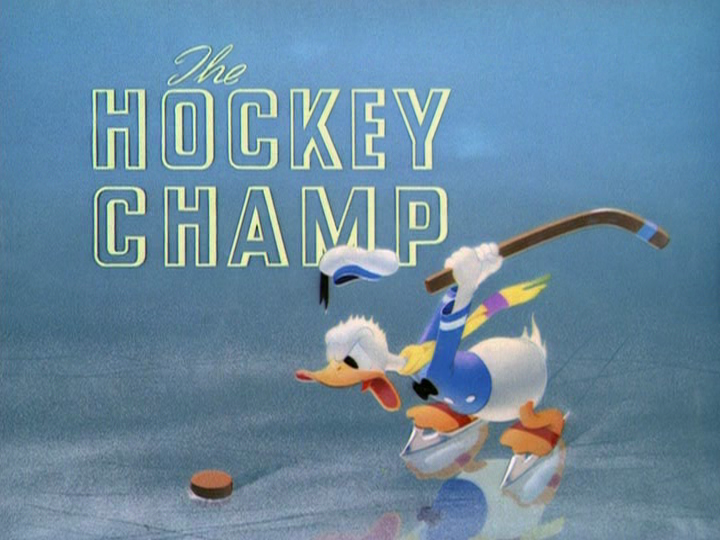
On April 28, 1939, the Donald Duck short film The Hockey Champ was released to theaters. It was directed by Jack King.

It’s a cold winter’s day, and Donald is skating gracefully on a nearby pond. He imitates figure skater Sonja Henie, when he sees his nephews playing a fast and furious game of hockey. As Donald shows his nephews his hockey trophy, the boys are unimpressed. Donald decides to play the three boys by himself, and immediately begins to show off. The boys watch as Donald continuously scores, but are less than impressed when he berates them. Donald decides to try and beat them again, this time blindfolded, but the boys get the best of him, leaving an angry Donald to chase them across the frozen pond until he crashes into a bank of ice. The boys continue to mess with their uncle as they continue the game in the snow. Donald falls into a well and manages to get stuck in a block of ice, but frees himself quickly to chase his nephews. Unfortunately, Donald accidentally swallows the puck, and the boys chase him, hitting him with his hockey sticks to get the puck in the goal. The game ends with Donald and the puck getting caught in the net, with Donald squawking angrily.

April 23

April 23, 1954 – The Special Cartoon Two for the Record Premieres in Theaters

TwofortheRecord

“Hop in the old jalop and head for the malted shop and all the cats join in.”

On April 23, 1954, the special cartoon Two for the Record premiered in theaters. The special consisted of two segments from the 1946 package film Make Mine Music: “After You’ve Gone” and “All the Cats Join In.” Both segments heavily feature the work of Benny Goodman, bandleader and jazz musician: “After You’ve Gone” features the music of the Goodman Quartet, set to a scene of dancing instruments, while “All the Cats Join In” features Benny Goodman and his orchestra accompanying a living sketch of a dance party taking place at a nearby malt shop. Although this is one of many specials featuring the segments from Make Mine Music, the film has not been theatrically reissued in its entirety.

April 17

April 17, 1957 – The Disneyland Anthology Series Episode “More About the Silly Symphonies” Airs on ABC

vlcsnap-2015-04-17-20h39m08s209

“Actually, the Silly Symphonies were started as an experiment. We used them to test and perfect the color and animation techniques we employed later in full-length feature pictures like Cinderella, Snow White, and Fantasia.”

On April 17, 1957, the episode “More About the Silly Symphonies” from the Disneyland anthology series aired on ABC. The episode is a continuation about the Silly Symphony line of short films, with the first episode, “The Story of the Silly Symphony” airing on October 19, 1955. The episode was directed by Clyde Geronimi.

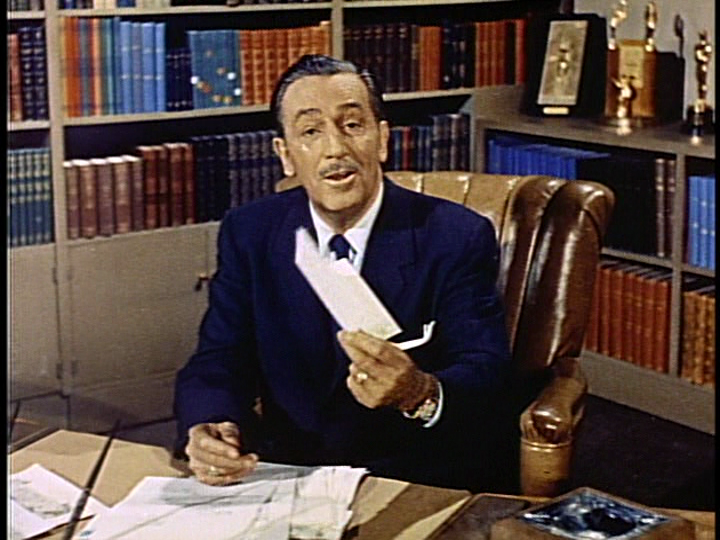
The episode begins with Walt looking through some fanmail, telling the audience that he continually gets asked questions about the Silly Symphonies. He then reads a letter about the Silly Symphony Waterbabies, which was made in 1938; the short film itself was inspired by the 1863 story of the same name by Charles Kingsley. The scene then turns into an animated retelling of Kingsley telling the story he created to his son. The short itself begins to play. This is then followed by Walt reading a letter about the short film The Grasshopper and the Ants (1934), which traces its tale back to ancient times. The history of fables then begins in Ancient China, followed by Egypt, then finishing up with Aesop, before moving in to the 1934 short film. The third short Walt covers is Chanticleer the Rooster, who was heavily featured in the Canterbury Tales by Chaucer, as well as the Middle Ages classic Reynard the Fox. The Chanticleer stories inspired the 1938 short film Farmyard Symphony, which soon begins to play. After this, Walt introduces nursery rhymes, citing them as a big source of inspiration for the Silly Symphonies. He shows the audience a tiny book called Tommy Thumb’s Pretty Song Book, which contains several well-known verses and rhymes, including Who Killed Cock Robin. Walt then goes into the supposed meaning of the verse, which was meant to have been written about the rise and fall of Sir Robert Walpole. In 1934, Disney created a Silly Symphony based on the verse, satirizing many well-known celebrities of the time. The final Silly Symphony presented is based on Eugene Field’s well known children’s verse Wynken, Blynken, and Nod (originally known as Dutch Lullaby).

April 15

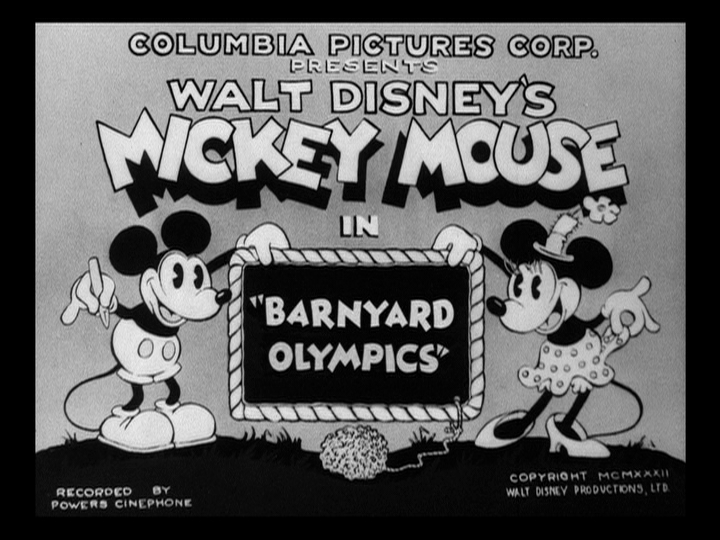
April 15, 1932 – The Mickey Mouse Short Film Barnyard Olympics is Released to Theaters

vlcsnap-2015-04-15-19h06m10s96

“Good luck Mickey, hope you win. Minnie.”

On April 15, 1932, the Mickey Mouse short film Barnyard Olympics was released in theaters, just in time to capitalize on the Olympics being held in Los Angeles, California. The short was directed by Wilfred Jackson.

The Barnyard Olympics are in full swing, with a marching band taking the field and performing. First is a boxing match, but the boxers keep punching the ref until they punch themselves out. The next event is diving, followed by wrestling. Minnie is on the front row of the audience with Clarabelle Cow, while Mickey is prepping for his event with help from Horace Horsecollar. The cross country event begins, with Mickey competing; when he sees Minnie in the audience, he waves at her, but Pete tries to get Minnie’s attention. Fortunately, Minnie only has eyes for Mickey. The race starts, but Pete sabotages Mickey. Mickey races to catch up to the rest, but keeps running into trouble as the race continues, especially with continued sabotage, but he manages to give his best effort anyway. He finally manages to catch up to the Pete, and manages to win the race with a bike on its last legs.

April 7

April 7, 1950 – The Pluto Short Film Wonder Dog Premieres in Theaters

vlcsnap-2015-04-07-19h12m16s81

On April 7, 1950, the Pluto short film Wonder Dog premiered in theaters. It was directed by Charles Nichols, with story by Bill Peed and Nick Banta. The short features Pluto’s on-again off-again girlfriend Dinah, and his nemesis Butch; the short also features circus music used in the feature film Dumbo.

Pluto is in his doghouse, dreaming of Dinah, when Dinah happens to pass by, ignoring him. Pluto tries to get her attention, but she is more interested in Prince, the Wonder Dog of the circus. Pluto slinks away, saddened by this, but gets an idea: if he were like Prince, then he would have Dinah’s affection. He then goes into a daydream of being Pluto the Wonder Dog, unaware that he is acting it out in reality, with his stunts waking up Butch. Butch laughs as Pluto continues to practice simple circus tricks, but stops laughing when he notices Pluto mocking him. When Butch chases after Pluto, Pluto is able to perform the stunts out of desperation to get way from Butch. Dinah is able to see Pluto performing, and is duly impressed. In the end, Pluto gets the affection he has so longed for from Dinah.


April 4

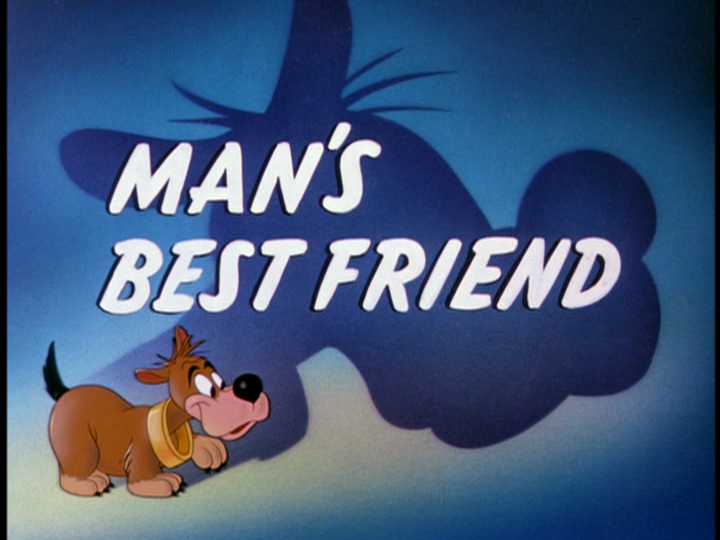
April 4, 1951 – The Goofy Short Film Man’s Best Friend is Released to Theaters

vlcsnap-2015-04-04-10h29m06s83

“Soon, the puppy becomes accustomed to his new surroundings, and makes himself at home in his master’s house.”

On April 4, 1952, the Goofy short film Man’s Best Friend was released to theaters. Another one of the Goofy “everyman” shorts, Goofy plays the part of George Geef, as seen on his mailbox. It was directed by Jack Kinney, with story by Milt Banta and Al Bertino.

A puppy is sitting in a pet shop window, hoping to attract the attention of just one passerby that would be willing to adopt him. He finds this in everyman George Geef, who is also holding a package of sausages. Geef tries to name the puppy, but the puppy refuses to move until Goofy picks a name that isn’t embarrassing or downright horrible. Settling on Bowser, the pair head home, with Geef’s nose stuck in a book about training. After settling in at Geef’s house, Bowser tears the once respectable home to shreds. Geef then attempts to train Bowser, but Goofy seems to be better at the tricks than Geef. Bowser then bites Geef’s hand after Geef gives him a treat. After a few months, Bowser has grown significantly, and is still causing mischief, which includes digging under fences, destroying his neighbors’ yards, and leaving destruction all around. When Geef gets home and settles with his evening paper, his solitude is disturbed by irate neighbors complaining about Bowser’s antics and demanding that Geef pay for the damage. When Geef heads out for the night, Bowser sleeps on the front stoop, unaware of a burglar and the ensuing shoot-out and arrest, and only wakes when Geef comes home, unfortunately chasing his master up a tree.

April 1

April 1, 1955 – The Segment Blame it on the Samba Released to Theaters as a Short Film

vlcsnap-2015-04-01-18h03m56s55

“So if three boisterous birds of a feather fall under the influence of this torrid tropical tempo, don’t blame them; blame it on the rhythm of the samba.”

On April 1, 1955, Blame it on the Samba was released to theaters as a short film. The short was originally a segment of the 10th animated feature film Melody Time, and stars classic Disney character Donald Duck, as well as José Carioca and the Aracuan Bird from The Three Caballeros. The segment also features Ethel Smith and the Dinning Sisters singing the titular song.

The segment begins with Donald and José trudging along in a blue world, when they come across the Café do Samba, run by the Aracuan Bird. He quickly gives them a table, though they are less than enthused. To cheer their spirits, the Aracuan Bird starts playing the samba, cheering them up and having them cling to the rhythm of the samba. The Aracuan then creates a special drink of the ingredients needed to create the samba and dives in, where Jose and Donad are seen dancing on the organ of Ethel Smith. When brought back to their world, the samba continues, with the rhythm having taken over everything. Pleased with his work, the Aracuan Bird puts on a top hat and pulls out a cane as the scene fades away.

March 28

March 28, 1941 – The Goofy Short Film Baggage Buster is Released to Theaters

vlcsnap-2015-03-28-19h14m38s200

“Feel better, miss?”

On March 28, 1941, the Goofy short film Baggage Buster was released to theaters. It was directed by Jack Kinney.

Goofy is busy at work at the telegram office, capturing a message about a magician’s trunk that must be on the 5:15 train. He then attempts to take the trunk to the train, but it falls away from him, leaving him holding only the handle. Goofy is surprised to see the trunk on the platform and not on the car, and when he goes to retrieve it, a black top hat pops up. Goofy decides to put the hat on, and is surprised when it not only starts moving, but releases several animals. He tries to recapture the rabbits in the hat, but the rabbits multiply before returning by their own accord, save for one that Goofy chases. Goofy ends up diving into the hat after the rabbit, and it sent out by a giant palm tree. When he finally manages to get the hat back in the trunk, the trunk levitates, taking Goofy with him. Goofy continues to have trouble with the trunk, as it seems to play tricks on him. At one point, he throws a red towel out of the trunk, which then makes a large bull appear. The bull sees Goofy wave the red towel and charges, but disappears into the towel again. When he waves the towel, a kangaroo jumps out and starts punching Goofy. The towel causes Goofy more problems than the trunk, particularly when it turns his head into a fishbowl full of water. Animals from the towel surround the depot, and suddenly he hears the sound of the 5:15 train. Goofy scrambles to get everything back in the trunk, and barely manages to get it on the train…so he thinks.

March 26

March 26, 1999 – The Mickey MouseWorks Short Film Donald’s Dynamite: Opera Box Premieres in Theaters

DonaldDynamite

“Aw, nuts!”

On March 26, 1999, the Mickey MouseWorks short film Opera Box from the Donald’s Dynamite series premiered in theaters in front of the animated feature Doug’s 1st Movie. It heavily features the piece “Coro di zingari” from Giuseppe Verdi’s opera Il trovatore. The short was directed by William Speers.

Daisy has taken Donald to the opera, although he equates going to the opera with taking a nap. Daisy asks Donald to grab her lipstick from her purse, but when he does, he finds a bomb in there instead. He tries to put out the bomb’s fuse, but to no avail. The amount of water he tries to use increases, until he finally resorts to throwing it back into Daisy’s purse and having it explode in there. Fortunately for Donald, the bomb does little damage, and pops out Daisy’s lipstick into his hand. She thanks him for the lipstick, but is less than pleased when it melts all over her hand.

March 23

March 23, 1951 – The Donald Duck Short Film Corn Chips is Released to Theaters

vlcsnap-2015-03-23-19h40m02s192

“I ougta knock your block off!”

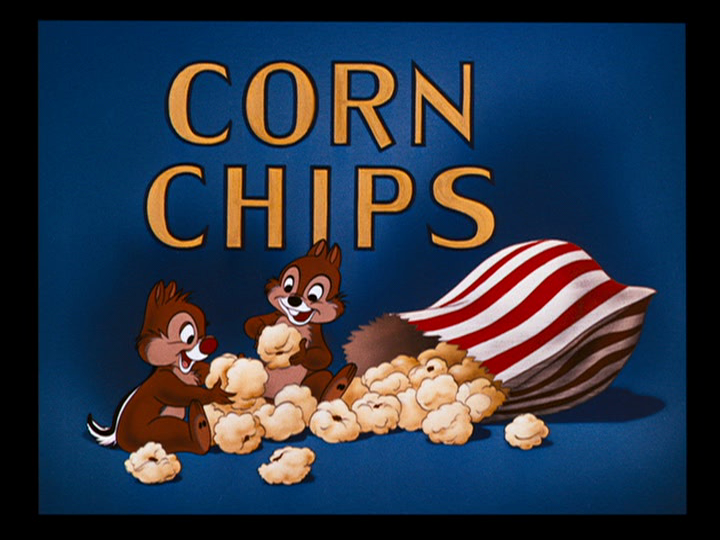
On March 25, 1951, the Donald Duck short film Corn Chips was released to theaters. It was directed by Jack Hannah, with story by Bill Berg and Nick George.

Donald is shoveling his sidewalk after a heavy snowfall, but finds that Chip and Dale are brushing their own tree sidewalk, leaving snow all over his freshly shoveled walk. Donald manages to trick the two into finishing his work, and laughs when they finally realize that they’ve been tricked. Angered, the two run to his door and watch through the key holes to see Donald making some popcorn. The pair manage to sneak into the house and knock over the box of popcorn kernels, but realize that they aren’t edible. Chip kicks some kernels into the fire, and the two are surprised when they start to pop. Donald pours the kernels into a popper, not realizing that the chipmunks have fallen in as well. Donald pops the corn over a fire, and pours the popcorn, and chipmunks into a bowl, but the chipmunks abscond with the entire bowl. Donald chases them outside and manages to steal the bowl back by hiding all the popcorn under his hat, but the pair gets it back, and Donald chases them all around his house. In the end, Donald tries to smoke them out of the tree, but the two pop the rest of the box of popcorn, leaving Donald’s clean sidewalk covered in a sea of popcorn that Donald has to shovel again.