RSS Feed

Tag Archives: Feature Film

March 6

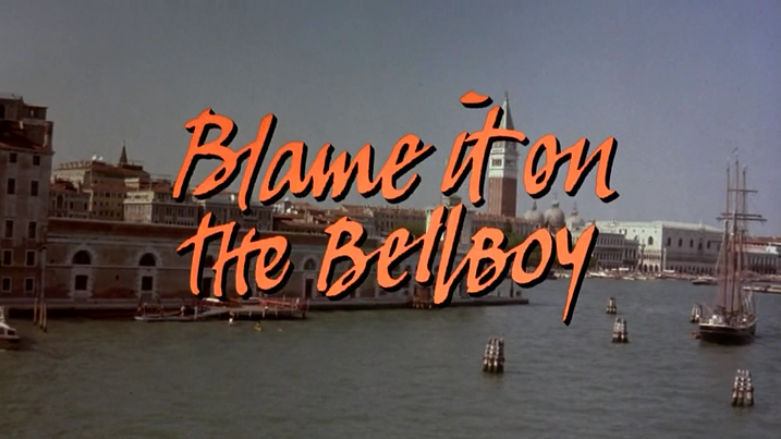
March 6, 1992 – The Live Action Feature Film Blame it on the Bellboy is Released to Theaters
BiotBB_1

“They don’t ask questions in my job.” “Well, I think it’s time you started!”

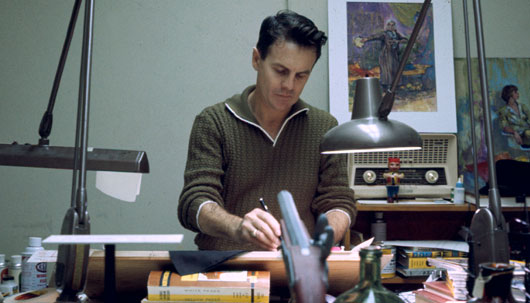
On March 6, 1992, the live-action feature film Blame it on the Bellboy was released to theaters. The film was released through Hollywood Pictures, and distributed by Buena Vista Pictures. It was critically panned on release, and was a box office flop. It was written and directed by Mark Herman, and starred Dudley Moore as Melvyn Orton, Bryan Brown as Mike Lorton, Richard Griffiths as Maurice Horton, Patsy Kensit as Caroline Wright, Penelope Wilton as Patricia Fulford, and Bronson Pinchot as the Bellboy.

Set in Venice, the film begins in a back alley under the canals, where a man is strung up and is getting beaten for information by mobsters. The mobsters then leave the man behind when they realize he doesn’t know anything other than the person who will be coming to kill the mob boss will be coming from London. Soon after, a British Airways flight soon takes off, heading to Venice with three different men on board: with one man being a very nervous flier looking to buy property named Melvyn Orton, one large man looking for a date named Maurice Horton, and a hit man looking for his next job named Mike Lorton. All three are staying at the Hotel Gabrielli, home to a very incompetent bellboy. The three men share similar last names, and as the bellboy’s grasp of English is shaky, he ends up sending the messages each needs to receive to the wrong person: Lorton receives a love letter, Orton receives the hit man’s instructions, and Horton receives the invite to meet the development property manager.
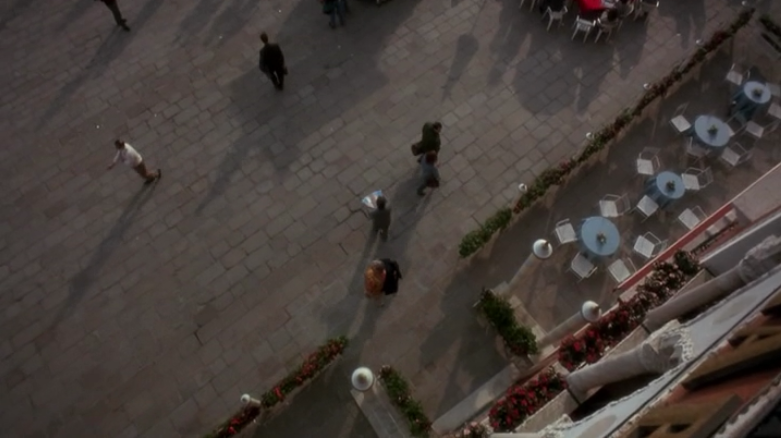
The three men set out on their missions for the day, unaware of the mix up

The three men set out on their missions for the day, unaware of the mix up

The next day, the three men head to what they believe to be their respective meetings. Horton meets Caroline Wright, who manages a property that she’s trying to sell by Wednesday. He can’t believe his good fortune, as he believes her to be the date he was set up with through an online dating service. Orton is believed to be the hit man, and is held at gunpoint by the members of the mob boss. Lorton, who believes Horton’s original date is actually his mark, attempts to shoot her, but finds he is unable to. Orton is threatened by the mob boss, who demands to know who sent him. Horton finds himself increasingly uncomfortable, Caroline is hitting on him. Lorton continues to follow his “mark,” but she believes him to be her date, and introduces himself as Patricia Fulford. Lorton and Patricia head for a stroll, and he once again attempts to take her out. The mobsters have Orton call his boss to prove that he’s who he says he is, and start to give him advice on how to stand up for himself. As he is close to getting dangerously hurt, Orton blurts out that there’s a man at the hotel with a similar last name – Horton – who must be the assassin they’re looking for.

The police fish a man out of the water, who is revealed to be the man the mobsters had killed earlier. Horton and Christine pass by in a gondola, and after he tries to make a move, she gets angry and asks to be let off on the sidewalk. Orton is taken by the mobsters to his hotel, but he manages to accidentally knock a mobster into the canal and make a break for it. Christine finally realizes what Horton’s intentions actually are, and she almost walks away, until a speedboat – the one thing she’s always wanted – passes by. Realizing her commission would pay for the boat of her dreams, she hesitates. Patricia walks with Lorton, although not willingly, as he holds her hostage. She explains the dating situation and, although he understands, will not let her go until he is able to actually make his hit. Caroline is taken back to Horton’s room, although both are unaware that Horton’s wife is there to make a surprise visit. After meeting Lorton and Orton, she is finally taken to see her husband. Horton’s wife is sure is that he’s having an affair, and Caroline, who feels cheated by the situation, decides to play the situation to her advantage, and forces him to buy the villa.
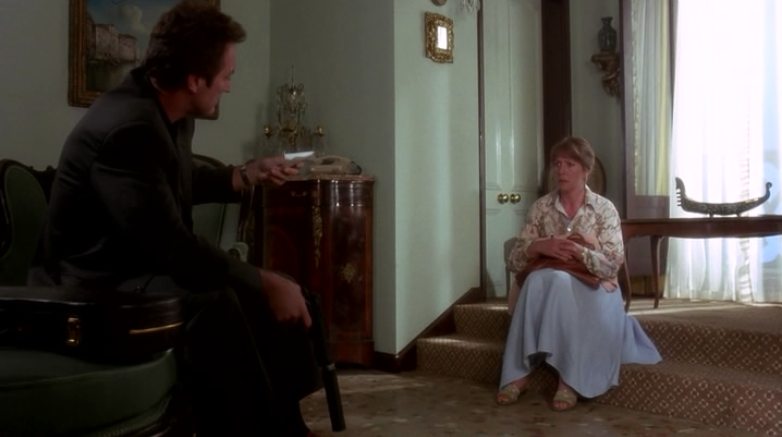
Patricia asks Lorton several questions about his line of work, including why he would want to kill her

Patricia asks Lorton several questions about his line of work, including why he would want to kill her

Patricia questions Lorton about his job and why he would want to kill her, while the mobsters, who now think Horton is their hitman, make Orton an offer he can’t refuse: if he wants to live, he will have to kill Horton. Lorton and Patricia think that Horton was the one that got Lorton’s instructions, while Orton is told to kill Horton with a bomb. Patricia helps Lorton break into Horton’s room to get the instructions, and find the invitation from Caroline; Lorton once again assumes that the target was a woman. Patricia and Lorton share a moment on the balcony of his hotel room, and he admits all of his feelings of loneliness, and his true dream of owning a flower shop. Patricia convinces him to get his money from the hit back from Horton so he can pursue his dream. The next morning, Horton waits for the money he owes Caroline, Lorton and Patricia watch Horton to get the money, and Orton waits with the mob to blow up Horton. When Horton has the briefcase, he decides to put the money in the hotel safe. Orton is given an identical briefcase to give the bellboy, as the mob switches the tags and steals the money after creating a distraction. Patricia and Lorton seem to be growing closer, as she tries to cure his loneliness with understanding. Horton gets a call from Caroline to take the money to the villa, and takes the briefcase he placed in the hotel safe.

The mob forces Orton to blow up Horton, but every time he presses the button, nothing happens, so they send Horton in a small rowboat to blow him up. Horton and Lorton scuffle over the money, and as Orton presses the button again, the briefcase continues to not detonate. However, the mobsters realize that the tags were switched twice, and the briefcase finally detonates – the briefcase on the mobster’s boat. Patricia takes Lorton’s gun to threaten Horton, but Lorton finally realizes there’s been a misunderstanding, and quickly takes the gun and Patricia away back to the hotel, where Lorton packs quickly, thinking he needs to run away as fast as he can. Lorton receives a note saying that he’s not only accomplished the mission, but killed three at the same time, and is given a generous bonus. Orton heads back to the hotel, and finds that Mr. Marshall called. He manages to make the situation better, as he convinces Marshall to buy the now-vacant property once owned by the mob boss, allowing him to keep his job. However, Orton takes the money from Marshall and decides to move to the Bahamas instead. Lorton and Patricia head back together, and he proposes to her on the way home. She accepts. Horton finally realizes he’s bought a dump of a property. And Caroline’s dream of owning a speedboat is not as wonderful as she hoped.
March 2

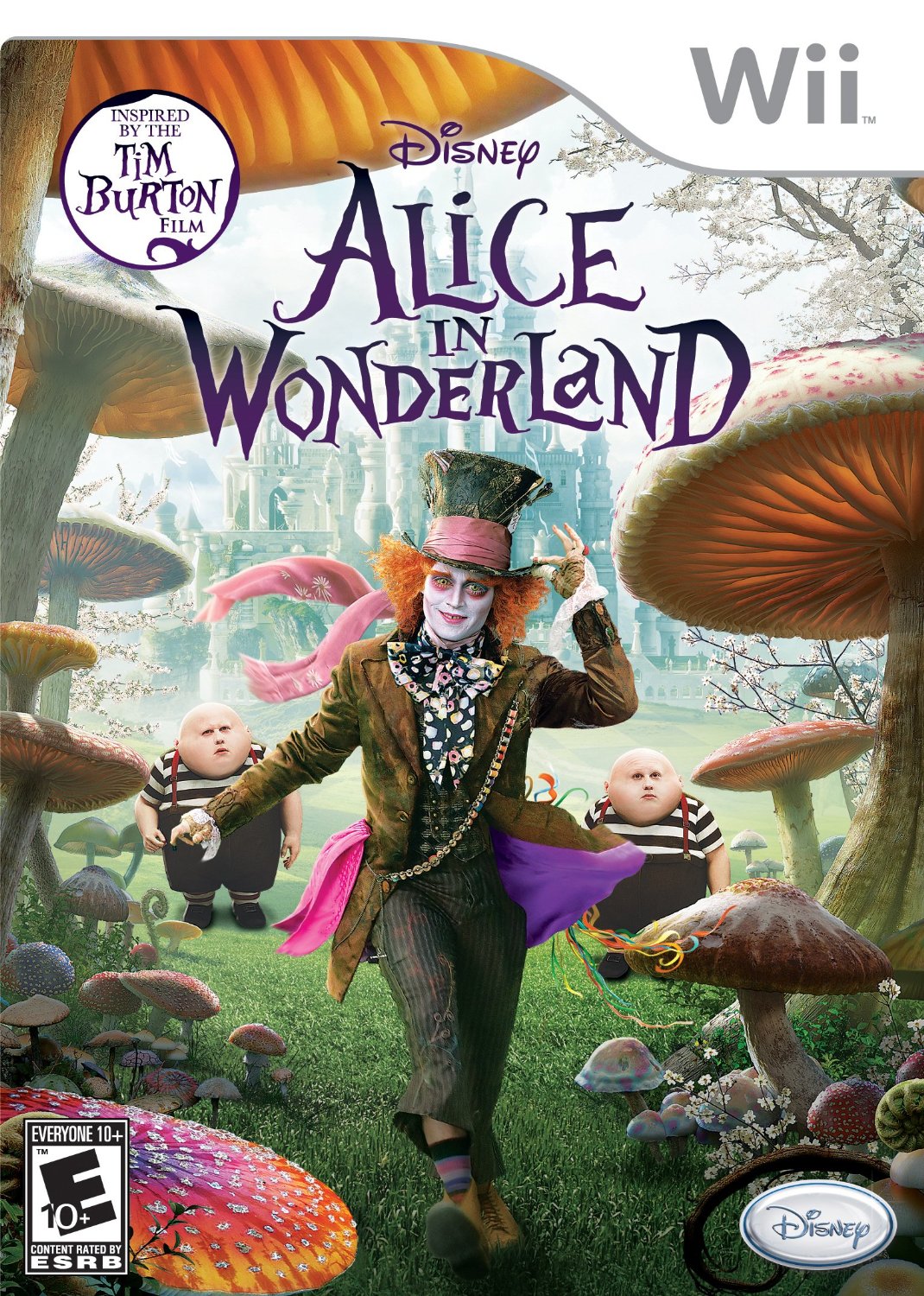
March 2, 2010 – The Action Adventure Video Game Alice in Wonderland is Released by Disney Interactive Studios

91eszf4iKkL._SL1500_

“Assist Alice in her journey through Wonderland as she makes her way toward the final battle against the Jabberwocky.”

On March 2, 2010, the single-player action adventure video game Alice in Wonderland was released by Disney Interactive Studios on the Wii, DS, and Zeebo, and PC platforms. The game was based on the live-action film of the same name, with most of the cast reprising their roles. The game has players guiding Alice in her journey through Wonderland, with characters such as the Mad Hatter and the Cheshire Cat appearing to give Alice special abilities, such as altered perception and the ability to make things invisible. Players can pick to play the Mad Hatter, the White Rabbit, the Cheshire Cat, and the Caterpillar, and must solve increasingly complex puzzles to help move Alice along. The game received mixed reviews, with most of the criticism directed at the occasional experience of not knowing what to do next.

February 17

February 17, 1995 – The Live-Action Feature Film Heavyweights Premieres in Theaters

vlcsnap-2014-02-16-13h39m18s4

“I’ve gotta ask you something, something very serious: are you ready for the best damn summer of your life?”

On February 17, 1995, the live-action feature film Heavyweights premiered in theaters. The film was part of a partnership deal Disney had with Caravan Pictures. Although the film was not a box office or critical success, it has since garnered a cult following. The film was written by Steven Brill and Judd Apatow and directed by Brill. It stars Aaron Schwartz as Gerry, Ben Stiller as Tony Perkis, Tom McGowan as Pat, Shaun Weiss as Josh, Kenan Thompson as Roy, Leah Lail as Julie, Paul Feig as Tim, and Tom Hodges as Lars.

The film begins on the last day of school, and overweight teen Gerry has a miserable time getting home: he misses his bus, gets mocked for being unable to throw a baseball over a fence, nearly gets attacked by a dog, and scares small children by drinking all of their lemonade. When he arrives home, he is greeted by his parents and a salesman named Roger Johnson in a strange sort of intervention-type meeting. Mr. Johnson is there to talk about Camp Hope, although Gerry doesn’t want to go to camp. After watching the informational video, Gerry is almost sold on the idea – until he finds that it’s a “fat camp.” Gerry refuses to go, but finds himself on the next flight to the camp. On the plane, he meets fellow camper Roy, who reassures him that Camp Hope is awesome. After getting off the plane, Gerry meets the fellow campers, as well as camp counselor Pat, and starts to realize that camp is going to awesome.

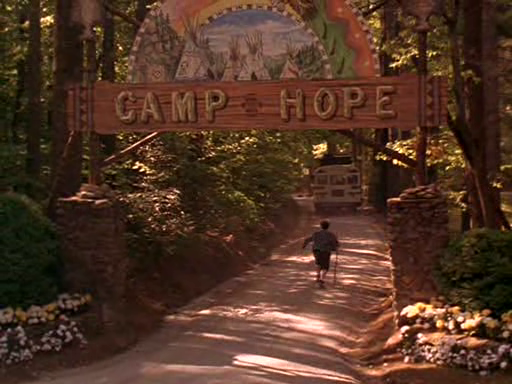
The bus arrives at Camp Hope, with everyone unaware of what danger the summer will bring

The bus arrives at Camp Hope, with everyone unaware of what danger the summer will bring

As they arrive at camp, Gerry is ready for fun and adventure, until he sees a foreboding sign at the gate of a camper shaking his head and looking morose. He soon forgets about it as he gets himself situated. He notices the other campers teasing a counselor named Tim, who Roy explains used to be fat, but has lost the weight; Tim however, has a great sense of humor about it, and nearly embarrasses himself in front of the pretty new nurse, Julie. Julie walks up to Pat and introduces herself, but Pat is nervous in front of her and makes a fool of himself. He helps Gerry take his belongings to the cabin, and tells him that he’s staying in the best cabin in the camp: Chipmunk. Inside, Roy talks to Josh, a godfather-like figure in the camp. Josh gives Gerry the nickname “Captain” thanks to the pair of wings a stewardess gave him, then shows him around the cabin, including where they keep their secret stash of junk food.

The day continues with fun activities, and concludes with a meeting with the Bushkins, the owners of the camp. However, the Bushkins have an important announcement to make: they are no longer the owners of the camp. They sadly say their goodbyes and leave as the new owner introduces himself with a flashy entrance: fitness instructor Tony Perkis. The kids aren’t exactly receptive to his arrival, and the arrival of his staff. Pat is then kicked out of the Chipmunk cabin and replaced by fitness instructor Lars, who tries to bond with the campers, but comes off rather terrifying instead. The morning is no better, as the campers wake up to a strange motivational speech from Tony. The first exercise session with Tony is an unmitigated disaster, with the campers unable to stay upright. The campers also head to their first weigh-in, and are given their weight loss goals. During swimming lessons, Lars tries to hit on Julie, but she politely rebuffs his advances.

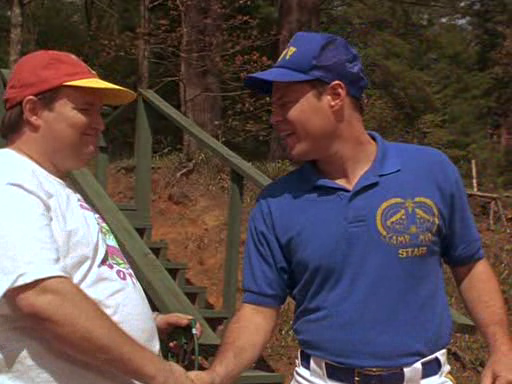
Pat greets the head of Camp MVP, and asks him to go easy on the Camp Hope kids

Pat greets the head of Camp MVP, and asks him to go easy on the Camp Hope kids

Tony then sets up a game with the nearby sports camp, Camp MVP, and Tim relays his misgivings. The game is another disaster for Camp Hope, with almost every camper being sent to the nurse. That night, Tony conducts a raid on the cabins to find the secret stashes of junk food. As Tony interrogates Gerry as to who brought the food into the camp, Josh decides to “tell the truth” and humiliates Tony. The next morning, the campers wake up to find Josh gone, and rumors run rampant about the camp, ranging with him being homeless, to being in jail, to being dead. Gerry sends a letter to his grandmother, relaying how the camp has become hell, with the dismantling of the go-carts and other fun activities, as well as the bad food. Tony arranges a dance with the nearby girl’s camp, hoping to humiliate the boys into losing weight. The dance is uncomfortable, with the boys and girls just staring at each other. Pat talks with Julie, and it seems that a romance is budding between the two. When Julie asks him to dance, he nervously responds that he can’t, and walks away. Tim, fed up with the mood of the dance, decides to take matters into his own hands and start dancing, figuring that if he starts dancing, everyone will want to join in. Pat joins in to try and impress Julie, and the boys start dancing just to have fun. The girls then decide to join in, and everyone starts mingling. However, Tony soon calls an end to the dance once he sees everyone having a good time.

Later that night, Gerry sits in one of the broken down go-carts, lamenting his summer. Pat finds him and tries to cheer him up. Gerry admits that he was really excited about the go-carts, as he wanted to be fast for the first time. Pat then pushes Gerry in the go-cart, unaware that Julie is watching him with a smile on her face. As the boys sleep that night, the door suddenly opens, and Josh reappears. Although he first tricks the campers into believing he’s had a lobotomy, he tells them that Tony kicked him out, but as his father is a lawyer, Tony had no choice to bring Josh back. When he finds that Tony took all the junk food, Josh comes up with a plan to steal the food from Tony’s cabin. As the campers raid the cabin, they can’t find the junk food, but instead find all of their letters to their families. After they narrowly escape the cabin, the boys find a fellow camper eating a hamburger in a bathroom stall. They find that there’s a secret food stash in the woods: with the right amount of money, a counselor will go buy the food and drop it in a hollow stump. A few days later, the boys have their midway point weigh-in, and Tony is angered to find that the kids have gained weight. Tony has a minor freak-out in front of the kids, and tells them that they’re heading on a twenty-mile hike the next morning.

As Gerry tries to cheer up Pat, the two come up with separate plans on how to stop Tony

As Gerry tries to cheer up Pat, the two come up with separate plans on how to stop Tony

After Tony humiliates Pat in front of the entire camp, Gerry finds him later and tries to cheer him up. Pat tells Gerry to get the boys through the hike, while Pat, Tim, and Julie will find a way back at camp to stop Tony. The hike begins, and the campers struggle to get through it. As Pat, Tim, and Julie struggle with a plan, they finally get an idea when Kenny the cameraman complains that Tony owes him a lot of money. The boys come up with their own plan to get rid of Tony, and trap him in a pit in the woods. They return to camp victorious, and keep him locked up in the shed. The kids take over the camp, and celebrate with a giant campfire party with all the junk food they can get their hands on. The next morning, however, Pat makes them realize that they really need to learn to take control of themselves before they can take control of the camp. Between fun exercises and healthy cooking classes, the kids start to have fun while becoming healthy. On Parents Day, Gerry greets his parents and shows them around the camp while Nicholas goes to give Tony his meal. Tony tricks Nicholas and gets his way out of the cage during the presentation to the parents. Meanwhile, the parents are shown a video of what has really been going on at camp. The parents are horrified, and wonder why their kids never said anything.

Tony crashes the presentation, and Gerry stands up to him. When Tony threatens Gerry, Gerry’s father punches him. However, after Tony attacks back and tries to do some impressive backflips, he knocks himself out. Tony’s father quickly arrives and takes him home, and offers to close up the camp. The kids protest, and Tony’s father offers to keep the camp open if a responsible adult will be in charge. Pat is the one put in charge, and the camp turns back into the Camp Hope it once was. It is then time for the Apache Relay, the main competition between Camp MPV and Camp Hope, and this year Camp Hope just wants to have fun with it. In the first event, the obstacle course, Camp MPV takes a strong lead, but Camp Hope is able to quickly catch up. In the second event, the Hall of Intelligence, Camp MVP falls far behind, leaving Camp Hope a chance to catch them and move ahead. Gerry prepares for the final event as the driver of the go-cart, and is sent flying through the woods as the Camp MVP player plays dirty. Although he struggles, in the end, Gerry is able to fly over the MVP cart and finish in first place, winning Camp Hope the trophy for the first time in history. Pat then kisses Julie, and the camp celebrates. Gerry then thanks Pat for the “best damn summer of [his] life.”

February 5

February 5, 2013 – Brave Wins Four Awards at the 11th Annual VES Awards

vesawards2013-553-M

“Each year, we put a spotlight on artists’ acheivements in visual effects that today more than ever define the experience of going to the cinema.” – Jeffrey A. Okun, Chair of the Visual Effects Society

On February 5, 2013, the 11th Annual Visual Effect Society (VES) Awards were held at the Beverly Hilton Hotel in Beverly Hills, California. Brave tied with Life of Pi as the most honored films of the evening, each winning four awards. Brave’s awards included Outstanding Animation in an Animated Feature Motion Picture for Mark Andrews, Steve May, Katherine Sarafian, and Bill Wise; Outstanding Animated Character in an Animated Feature Motion Picture for Travis Hathaway, Olivier Soares, Peter Sumanaseni, and Brian Tindall for the design of Merida; Outstanding Created Environment in an Animated Feature Motion Picture for Tim Best, Steve Pilcher, Inigo Quilez, and Andrew Whittock’s design of the forest; and Outstanding FX and Simulation Animation in an Animated Feature Motion Picture for Chris Chapman, Dave Hale, Michael K. O’Brien, and Bill Watral.

January 25

January 25, 1931 – Actor, Singer, and Disney Legend Dean Jones is Born

Dean Jones

“When you think of Disney, you think of Dean Jones.” – David Vogel, Former President of Walt Disney Pictures

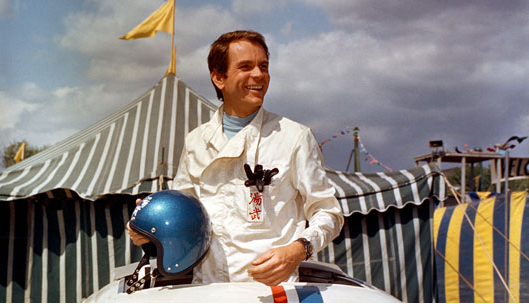
On January 25, 1931, Dean Carroll Jones was born in Decatur, Alabama. He left home at age 15 to pursue a career in music, picking up odd jobs here and there to pay the bills while singing in a club in New Orleans. During the Korean War, Jones served in the United States Navy. After a four-year stint, he ended up in San Diego, California, where he spent his free days auditioning; he eventually scored a contract with MGM, starring in mostly dramatic roles that included Tea and Sympathy and Jailhouse Rock. He made his Broadway debut in 1960 with the play There Was a Little Girl, and scored a hit with the comedy Under the Yum-Yum Tree; he reprised his role in the 1963 film version. Jones was brought to Walt Disney’s attention after starring in the NBC sitcom Ensign O’Toole, which led to being signed with the studio and starring in the 1965 film That Darn Cat! The film, notable for being Hayley Mills’ last film for the studio, was a success, and lead to Jones being cast in more films, including The Horse in the Gray Flannel Suit and The Shaggy D.A. His signature role has been as driver Jim Douglas in Disney’s Love Bug series, where he appeared in two feature films, a short-lived television series, and a made-for-television film. Jones continued to star in several Disney television specials and remakes, with one of his last projects being the remake of his first film for Disney, That Darn Cat, released in 1997. Jones was inducted into the Disney Legends in 1995. Currently, he is semi-retired and living in California.

January 20

January 20, 1971 – The Featurette Bongo is Released

vlcsnap-2014-01-20-17h45m26s195

“But mostly, this is a story about Bongo. He was a circus bear: was born in the circus, grew up in the circus, in fact, Bongo was the star of the circus.”

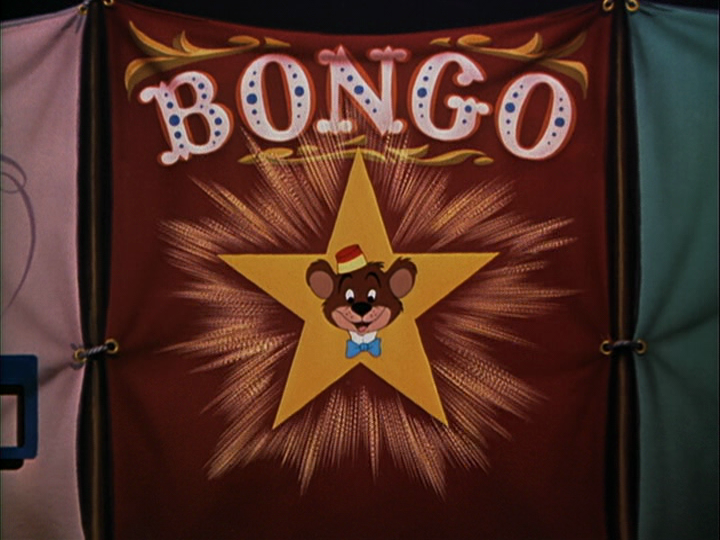
On January 20, 1971, the Bongo segment from the animated feature film Fun and Fancy Free was released as a featurette. Based on the children’s story “Little Bear Bongo” by Sinclair Lewis, first published in 1930, it was originally slated to be a complete feature film, but the production was interrupted by the onset of World War II. In the end, with Bongo and The Legend of Happy Valley (later retitled as Mickey and the Beanstalk) were turned into a package film, as neither one was considered to be sophisticated enough to stand alone as a feature film. Bongo was narrated by musical star Dinah Shore.

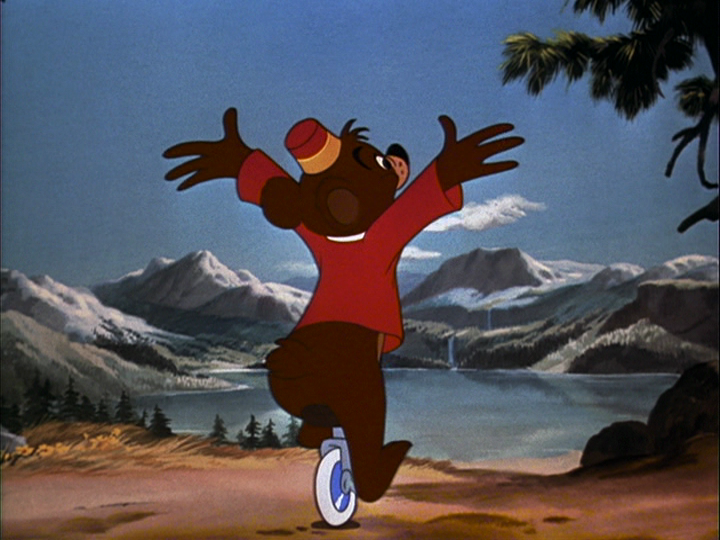
The story begins with Dinah explaining that Bongo was the star of the circus, able to do any trick that was asked of him. He performs a tightrope trick while juggling several dozen items before jumping off the tightrope and landing on a wet sponge. However, life isn’t all that glamorous for Bongo, as he is chained and sent into a cage after the performance, “tossed around like an old shoe.” He dreams of living out in the wilderness, away from the circus, trains, and his current life. But every day it’s the same, he’s called out to perform, and then sent back into his gilded cage. One day, having had enough of his life, he decides to follow the call of the wild and escapes from his cage.

Bongo can hardly believe his good fortune that he is finally free

Bongo can hardly believe his good fortune that he is finally free

Free at last, he travels the woods excitedly, stopping to smell the flowers and jumping over tree roots. He meets the other animals of the forest, who laugh at his inability to act like a bear. He doesn’t get easily discouraged, as he is just happy to be free. That night, Bongo attempts to sleep, but is disturbed by the sounds and experiences of the forest before he gets caught in a storm. In the morning, Bongo wakes up to find himself on the ledge of a cliff, is very discouraged at his situation, as he doesn’t know how to act like a bear. He worries that he made a mistake, especially when he can’t catch anything for breakfast. He soon meets a female bear named Lulubelle, and the two proceed to flirt as they frolic through the woods.

Lulubelle and Bongo quickly fall in love, gathering all the attention of the bears in the woods. However, a bear named Lumpjaw, who also has feelings for Lulubelle, soon hears news of Lulubelle’s new beau, and decides to break the happy couple up with the intent of stealing Lulubelle for himself. He starts fighting Bongo, but Lulubelle stops Lumpjaw from beating him up, and then punches Bongo herself. Bongo is heartbroken, thinking that Lulubelle no longer loves him, and when she tries to punch Bongo for a third time, Bongo ducks, and she hits Lumpjaw instead. Bongo was unaware of the bear custom that slapping is a sign of affection, and sadly walks away while everyone else celebrates the “happy” couple of Lulubelle and Lumpjaw. As he looks back at the scene of the bears, he finally understands that bears “say it with a slap,” and goes back to challenge Lumpjaw. The two duke it out, and Bongo emerges victorious, using skills he learned in the circus. Bongo is reunited with Lulubelle, and gives her an affectionate slap, which she returns in kind.

December 25

December 25, 1950 – The Christmas Special “One Hour in Wonderland” Premieres on Television

vlcsnap-2013-12-25-19h32m23s212

“We now bring you Walt Disney and his beloved characters in their world television premiere.”

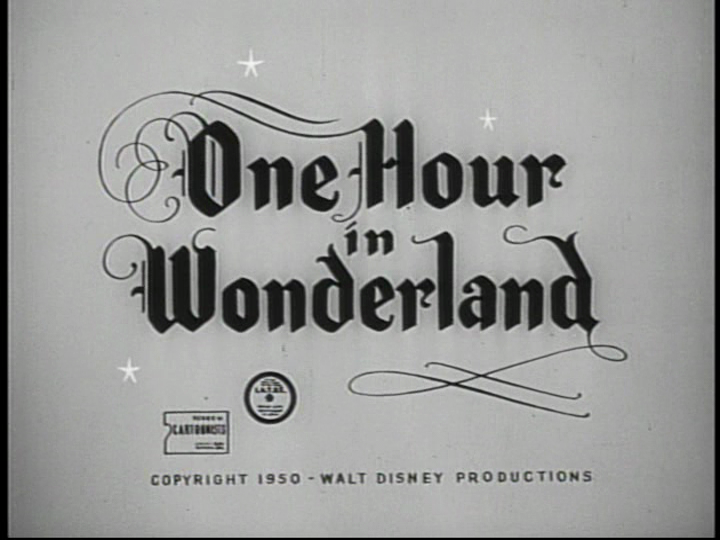
On December 25, 1950, the first Disney television show and the Christmas special “One Hour in Wonderland” premiered on television. The episode was sponsored by Coca-Cola, and was touted as the world television premiere of Walt Disney and his cast of characters. The show had several noticeable guest stars, including Edgar Bergen (with Charlie McCarthy and Mortimer Snerd). The special was presented on NBC, and was actually an advertisement for the animated feature film Alice in Wonderland.

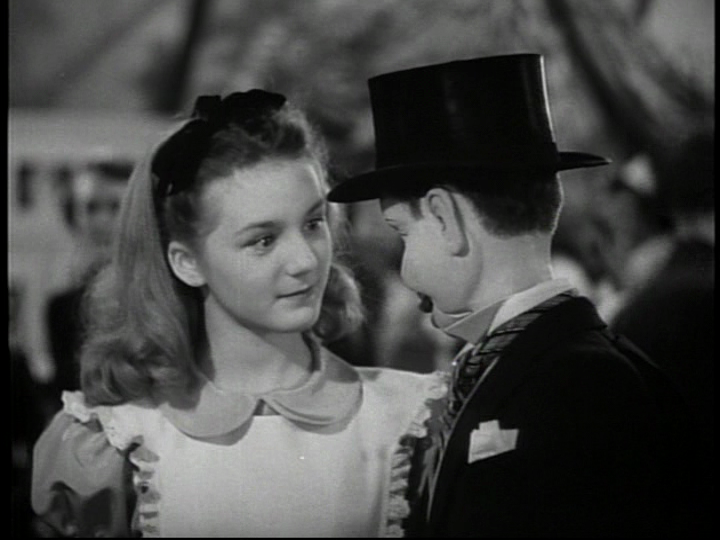
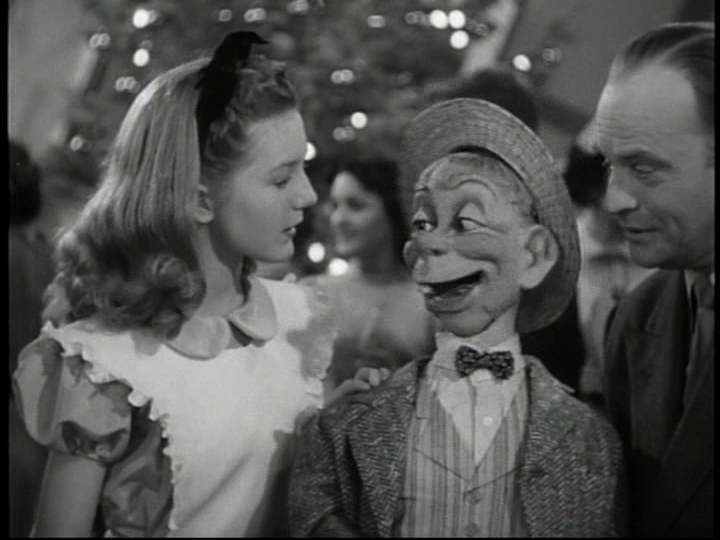
The special begins with Mortimer, Charlie, and Bergen getting ready to attend a tea party at the Walt Disney studios. On the way to the party, Bergen explains the story of Alice in Wonderland, as the voice for Alice has been asking to meet Charlie. They arrive at the studio, and find that Santa has left Walt a model train, which he is showing off to his guests. Walt introduces Kathryn Beaumont to Charlie, who is quite smitten with her on first sight.

Kathryn meets Charlie McCarthy, who is quite taken with the girl at first sight

Kathryn meets Charlie McCarthy, who is quite taken with the girl at first sight

Kathryn takes Charlie to meet Bobby Driscoll, who is surrounded by several girls asking for his autograph. Charlie is unimpressed with Bobby, even though Kathryn mentions that Bobby has won an Academy Award. As Bergen is explaining ventriloquism to the party guests, Walt asks him to sit down. As he does, he accidentally ends up sitting on Donald Duck, who loudly proclaims his pain by his squawking. Walt sends Donald downstairs, much to the disappointment of the guests. Walt then tells a story to the guests about a magic mirror, revealing that he has bought the magic mirror and unveils it to the guests. They call forth the slave of the magic mirror, who doesn’t react well to Charlie’s insults.

Walt then orders that whatever Kathryn wishes, the mirror should do. Kathryn then asks the mirror to see the “Silly Song” segment from Snow White and the Seven Dwarfs, and the mirror happily complies. After the segment, Charlie rudely asks to see a young actor known the world over, and although he speaks of himself, the mirror instead shows a scene from the Mickey Mouse short Clock Cleaners. After this, Kathryn talks to Bobby about what he wishes to see, and Bobby recalls the Uncle Remus stories from Song of the South. After showing the scene of B’rer Rabbit leaving the Briar Patch, Kathryn finds that they’ve been overworking the mirror, and everyone decides to take a break with a bottle of Coca Cola.

After others have had a chance, Kathryn asks Mortimer to request a vision from the magic mirror

After others have had a chance, Kathryn asks Mortimer to request a vision from the magic mirror

After the break, Kathryn convinces Mortimer to ask the mirror to see something, and the mirror shows the Pluto short film Bone Trouble. After this, Bergen wishes to see the Firehouse Five Plus Two, although he wishes to see them working hard as Disney animators rather than the band. Walt agrees that he wants to see this, and tells Bergen that the band members would never let the music interfere with their work. The mirror complies with Bergen’s request, and the guests are treated to an impromptu performance by the Firehouse Five Plus Two, who ignore their work to play their music as they think Walt is not watching. The men soon receive a note from Walt that they “look great,” and realize that the magic mirror is watching them. Everyone is disappointed that they are unable to see a clip from Alice in Wonderland, as the mirror cuts out before Ward Kimball can show them anything. The mirror makes excuses, as does Walt, but they finally agree to show a small snippet of the film after everyone begs. After the clip, Bergen, Charlie, and Mortimer head home, with Bergen being allowed to take home the magic mirror to keep an eye on Charlie and Mortimer.

December 20

December 20, 1924 – Imagineer, Artist, Actor, and Disney Legend Sam McKim is Born

sam-mckim-feat

“Sam’s creations at Disneyland, Walt Disney World, and other parks are many. Frontierland comes to mind as one of his major contributions. It was an honor to know Sam McKim, a man of very high character.” – Former Imagineer George McGinnis

On December 20, 1924, John Samuel McKim was born in Vancouver, British Columbia, Canada. While still young, his family moved from Canada to Seattle, Washington; they would eventually move to Los Angeles due to his father’s health issues. He and his four siblings were child actors in Hollywood, with Sam, at age 10, being the first to enter the entertainment business. He got a contract with Republic Picutres, working mostly in B-films and Westerns, appearing with such stars as Spencer Tracy and Gene Autry. McKim always had a talent for art, and in high school, he sent his drawings to the Walt Disney Studios. He was then offered a job in the traffic department as a foot in the door; instead of taking the job, he decided to apply for the United States Army with his brother David. Although the two were turned down due to the fact that they were not U.S. citizens, the two applied for citizenship the next year and successfully applied for the Army after that, effectively leaving acting behind. McKim served in the American Infantry Division in WWII, and attended the Art Center College of Design after the war was over. Directly after graduation, he was drafted into the Korean War, and attended the Chouinard Art Institute after returning from Korea.

In 1953, McKim took a job at 20th Century Fox creating story sketches for films. After a series of layoffs at Fox in 1954, McKim took a job at the Walt Disney Studios, using his art skills to create inspirational sketches for Walt Disney’s pet project, Disneyland. McKim worked on sketches for almost every aspect of the park, including Pirates of the Caribbean and the Haunted Mansion. McKim was also asked to contribute to storyboarding of several Disney films and shows, including The Gnome Mobile, Big Red, and Zorro. During the development of Walt Disney World, McKim continued his contribution to the look of the park, developing sketches for Disney-MGM Studios (now Hollywood Studios) and several Epcot attractions. What McKim is most known for, however, is being the creator of the Disneyland souvenir maps from 1958 to 1964, which has become a highly sought collector’s item. In 1992, McKim was also asked to create the map for Disneyland Paris, in commemoration of its opening. In 1996, McKim was honored as a Disney Legend for his work as an Imagineer. He passed away on July 9, 2004, at the age of 79.

December 4

December 4, 2012 – Disney Announces Distribution Deal with Netflix

disney-netflix-slice

“Disney and Netflix have shared a long and mutually beneficial relationship and this deal will bring to our subscribers, in the first pay TV window, some of the highest-quality, most imaginative family films being made today.” – Ted Sarandos, Netflix Chief Content Officer

On December 4, 2012, Disney announced a deal with the online streaming service Netflix, making them the exclusive U.S. subscription television service for Disney films, which includes the Disney catalog, but films from four of Disney’s subsidiaries: Pixar, Marvel, Disneynature, and Disney Animation. This deal was reached after Netflix’s contract with Starz expired in February, 2012. The exclusive part of the deal begins with Disney films released in 2016, although Netflix is currently streaming several Disney animated classics and direct-to-video titles. This deal did not include a DVD component. After announcing the deal to the media, Netflix shares rose 14%. It was estimated that the company would be paying over $350 million a year for the Disney catalog.

December 1

December 1, 2008 – Bolt and Wall-E Receive Nominations for the 36th Annie Awards

AnnieAwards__111205172926

Bolt was second [in nominations] with 9 nods, and WALL-E third with 8.”

On December 1, 2008, the nominations for the 36th Annie Awards were announced; Walt Disney Animation Studios’ Bolt received 9 nominations, while Pixar’s WALL-E received 8. Both films were nominated for Best Animated Feature, up against DreamWorks Animation’s Kung Fu Panda, Sherman Pictures and Lama Films’ $9.99, and Sony Pictures’ Waltz With Bashir. When the awards took place on January 30, 2009, the ceremony was not without controversy, as Kung Fu Panda shut out both Disney features from all of their categories, with much criticism directed at the organization’s balloting practices. Pixar’s WALL-E would go on to win the Academy Award for Best Animated Feature.