RSS Feed

Tag Archives: Black and white

November 28

November 28, 2011 – The Lost Oswald Short Film Hungry Hobos is Found in the UK

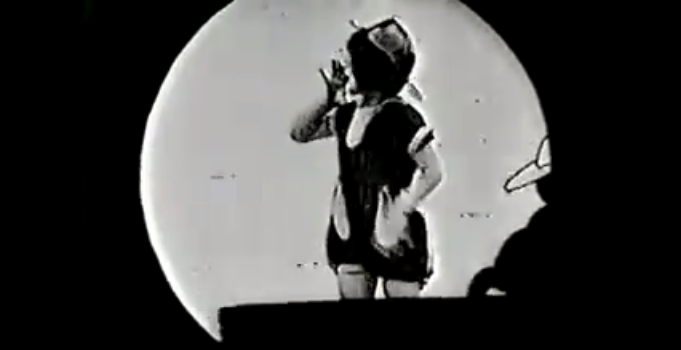
An image from a lost 1928 Walt Disney short, HUNGRY HOBOS. Photo Credit: Walt Disney Animation Studios.

“When we checked this film we couldn’t quite believe our eyes. For an archive, finding a lost masterpiece is incredible – you just don’t think it will happen to you.” – Amanda Huntley, HuntleyFilm Archives

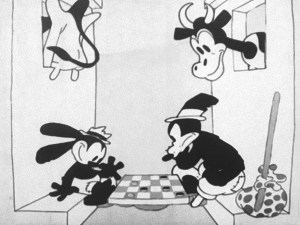
On November 28, 2011, it was announced that a copy of the lost Oswald the Lucky Rabbit short film Hungry Hobos was found in the Huntley Film Archives, an independent film archive. The film, originally released in 1928, is the last remaining copy of the short in existence. It was also announced that the film would be auctioned in Los Angeles in December, with the proceeds to further the restoration of films in the archive. The Walt Disney Company, aware of the discovery, won the short at the auction for a sum of $31,250. After a year-long restoration, the film was debuted at the 39th Annual Telluride Film Festival in Telluride, Colorado.

November 15

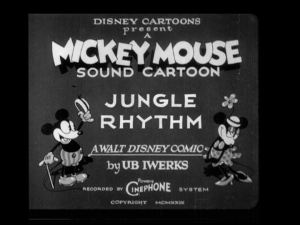
November 15, 1929 – The Mickey Mouse Short Film Jungle Rhythm is Released to Theaters

vlcsnap-2015-11-15-08h22m49s193

On November 15, 1929, the Mickey Mouse short film Jungle Rhythm was released to theaters. It was directed by Walt Disney.

Mickey is playing an accordion on the back of an elephant, and the elephant skips about to the tune. A vulture also starts dancing to the song. Mickey soon slides off the elephant to hunt the vulture, but ends up caught between an angry bear and lion. A monkey starts playing a tune with the accordion, with help from a parrot, which causes Mickey, the lion, and the bear to dance. More animals join in with the song, to much applause from the rest of the jungle, and Mickey manages to use whatever he can find to turn into an instrument, including a tree branch, a jaguar cub, and some ostriches.

November 12

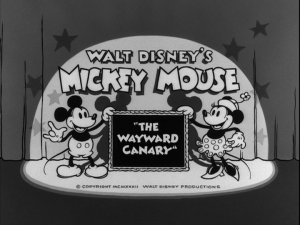
November 12, 1932 – The Mickey Mouse Short Film The Wayward Canary is Released

vlcsnap-2015-11-11-15h36m47s76

“Oh, Mickey! Isn’t he cute?”

On November 12, 1932, the Mickey Mouse short film The Wayward Canary was released to theaters. The short features cameo caricatures of Douglas Fairbanks and Mary Pickford. It was directed by Burt Gillett.

Mickey is heading to Minnie’s with a package and Pluto in tow, and he surprises her with a canary. Mickey entices the bird to sing by playing the flute, and Minnie follows along on the piano to their merry tune. As she sings, several other baby canaries fly out of the cage and start dancing and chirping to the music. They then start to wreak havoc across the house, including getting into a bottle of ink and ruining a tablecloth. As Mickey chases after the birds, he ends up destroying most things in Minnie’s house. She manages to capture most of the birds in a tea kettle, though one manages to escape and accidentally set a hot coal on Pluto’s backside. The bird continues to elude Mickey, until it lands on hungry cat that chases after it. Pluto joins the fray by chasing after the cat and saving the poor bird before it gets eaten.

November 5

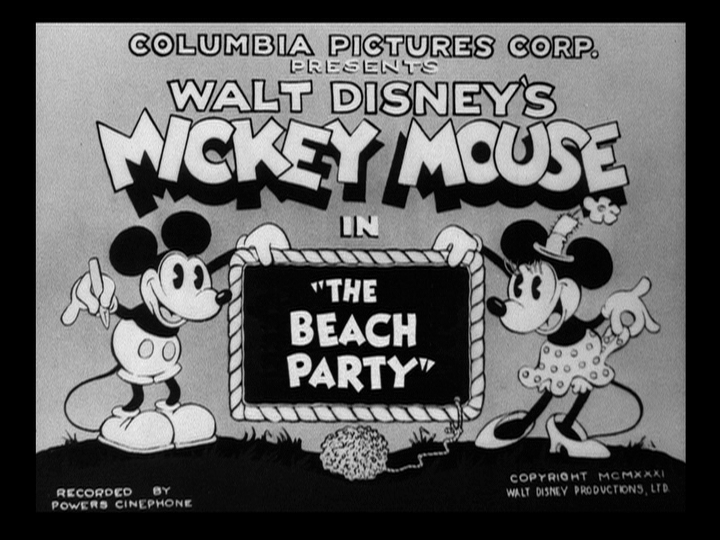
November 5, 1931 – The Mickey Mouse Short Film The Beach Party is Released to Theaters

vlcsnap-2015-11-05-17h15m43s229

On November 5, 1931, the Mickey Mouse short film The Beach Party was released to theaters. It was directed by Burt Gillett.

Horace Horsecollar and Clarabelle Cow are frolicking across the beach, followed by Pluto carrying a picnic basket and Minnie and Mickey with the beach umbrella. Pluto is used to blow up an inner tube, but lets the air deflate when he bites at a flea. When Mickey heads into the water, Pluto is not too far behind, but stops before he hits the water. The rest of the gang starts to enjoy their time in the surf, though Clarabelle manages to lose her part of her bathing suit. Pluto follows a crab on the beach, which pinches him on the tail. Minnie serves lunch, with Mickey, Horace, and Pluto running for the food. Mickey throws some sausage links for Pluto to catch and when Pluto pulls them out of the ocean, he manages to pull out an angry octopus instead, which chases Pluto across the beach and ruins the picnic. The gang fights back with the remaining food, but they manage to use an anchor to send him back into the ocean.

November 3

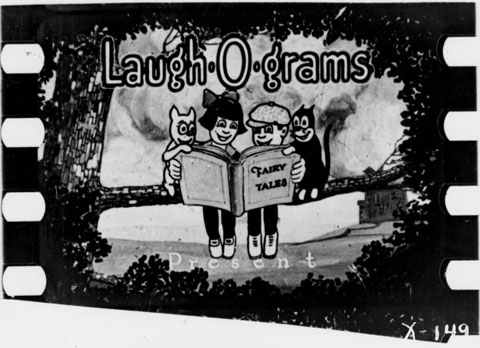
November 3, 1922 – The Laugh-o-Gram Puss in Boots is Released

LoG_PiB

“Don’t let me catch you around here again.”

On November 3, 1922, the Laugh-o-Gram Puss in Boots was released. It was based on the classic fairy-tale of the same name, but updated for a then-modern audience. It was directed by Walt Disney.

Once upon a time, a boy and his cat Puss were walking down the street, with the boy bringing his sweetheart, the princess, a bouquet of flowers. Puss, in turn, flirts with her cat. While both pairs are occupied, the king comes out and boots the boy away from his daughter. He chases the boy around the garden and warns him never to return before throwing him and Puss out. The boy walks away dejected, moaning to the Puss that the king doesn’t like him. Puss, wanting to impress her mate, asks the boy to buy her a pair of boots, but the boy refuses and heads to the cinema instead. They watch a “Rodolph Vaselino” film about a matador, which gives Puss an idea on how to win the king’s favor – but he has to buy her the flapper boots first. The king is excited about the upcoming bull fight, where the boy will be fighting to win the princess’ hand. The boy enters the arena, but runs around terrified of the bull. After catching the princess’ eye, he summons his courage and manages to fight the bull, but has to call Puss for assistance. With Puss’ help, they knock the bull out, and the king allows the boy to marry his daughter.

October 31

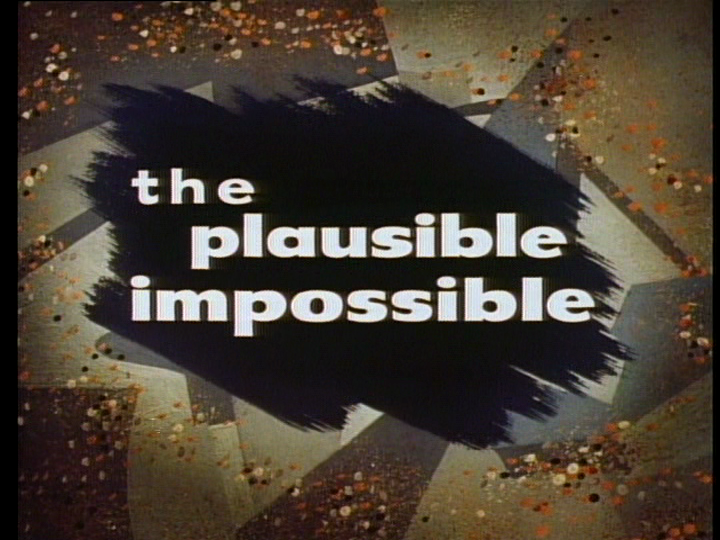
October 31, 1956 – The Disneyland Anthology Episode “The Plausible Impossible” Premieres
vlcsnap-2015-10-29-10h07m17s59

“The will illustrate the principle in animation which we call the ‘plausible impossible.’ [It] means taking something that is against the laws of nature – something impossible – and making it appear rational, and acceptable.”

On October 31, 1956, the episode of the Disneyland anthology series “The Plausible Impossible” premiered on ABC. The episode was written by Dick Huemer, with animation sequences directed by Wilfred Jackson, and live action sequences directed by William Beaudine.

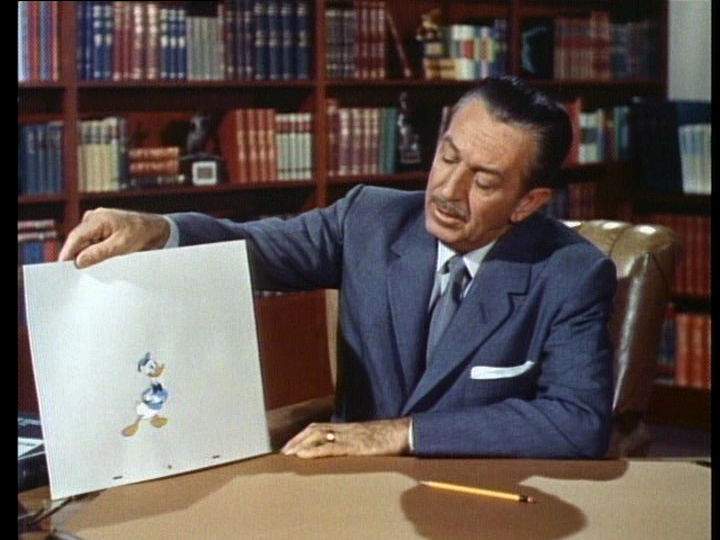
The episode begins with Walt showing some drawings that were made for a scene in Snow White and the Seven Dwarfs that was never used. He then introduces the term ‘plausible impossible’ from the Disney book The Art of Animation, and explains that this was not a term the animators invented, but an animation principle that goes back centuries. The history begins with the Egyptians, with the animations of the gods, and the Chinese animating dragons. The segment from Fantasia – “The Rite of Spring” – then is shown, along with the theory that the Chinese conception of dragons may go back to the stories of the dinosaurs. The explanation then moves on to Greek mythology, before applying plausible impossible techniques to the animated cartoon. Disney then relates how impossible cartoon scenarios have some sort of basis in fact. He also introduces the concept of “correctness in sensation,” using the feeling of riding an elevator to demonstrate the squash and stretch techniques. Each “plausible impossible” concept has its roots in the physical and psychological. This then moves into giving life to inanimate objects, and introduces the Mickey Mouse short film Thru the Mirror.
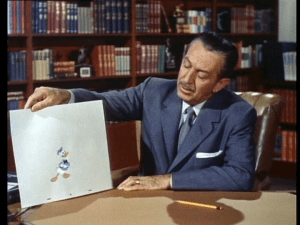
Walt introduces a recently drawn Donald, asking him to be his volunteer

Walt introduces a recently drawn Donald, asking him to be his volunteer

After the short, Walt then shows how an animated character is created, with a magic pencil drawing Donald Duck. When Walt mentions the importance of sound, Donald starts to talk, and agrees to help Walt with a demonstration. As Walt explains different sound effects, poor Donald bears the brunt of the demonstration. Donald flees the demonstration and hides on Walt’s desk, with Walt continuing the demonstration without him, though Walt manages to tempt him back with food. This then leads to the Donald Duck short film Donald’s Cousin Gus. Walt then surprises the audience with the complete showing of the unseen test animated sequence drawn for Snow White and the Seven Dwarfs after some accompanying scenes from the finished film. The final segment of this episode is about program music, which is a story put to music. Using the classic piece “Night on Bald Mountain,” Walt places it in several animated features, including “The Sorcerer’s Apprentice” from Fantasia, and a scene from Bambi. The true scene from Fantasia with the music is shown, with the music driving the story.
October 19

October 19, 1955 – The Disney Anthology Episode “The Story of the Silly Symphony” Airs

TSOTSS

“Next week, Walt Disney brings you ‘The Story of the Silly Symphony.’”

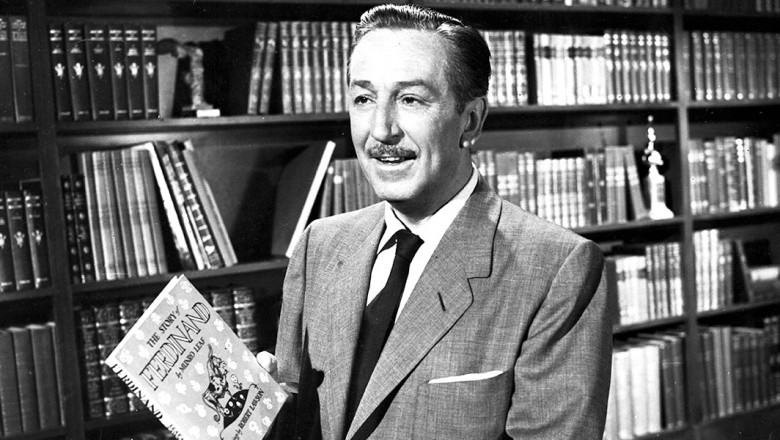
On October 19, 1955, the episode of Disneyland entitled “The Story of the Silly Symphony” aired on ABC. The episode covered some of the more popular entries in the Silly Symphony line, including The Practical Pig, Three Orphan Kittens, Little Hiawatha, and The Old Mill, as well as the special short film Ferdinand the Bull. The episode was directed by Clyde Geronimi and written by Bill Peet. It is one of a select few episodes to cover the Silly Symphony line.

October 18

October 18, 1926 – The Alice Comedy Alice the Fire Fighter is Released to Theaters

Alice the Fire Fighter

On October 18, 1926, the Alice Comedy Alice the Fire Fighter was released to theaters. It was the 35th Alice Comedy produced, and starred Margie Gay as Alice.

The fire bell sounds as a large fire ravages a hotel downtown. Inside the fire station, the fire fighters are sound asleep, until the bell quickly gets them moving in droves. Everyone sets off, while the hotel is evacuated quickly, and Alice heads to the scene as the fire chief. The crew arrives in comedic fashion to find one person stuck at the top of the hotel. They are able to rescue those that are stuck, but find another problem with putting out the fire, as the hose isn’t long enough. Julius gets exhausted trying to put out the fire by the bucketful, and there is another person stuck in the burning building. Two firefighters attempt to catch him with a trampoline, but they miss. Alice hears the cry of another woman stuck on the top floor, but she is rescued by a fire fighter that falls in love with her.

October 16

October 16, 1923 – The Walt Disney Company Officially Starts

Disney Start

“The first of this series, the title of which has been changed…is now in production and in all probability I will have this subject to you by December 15th.”

On October 16, 1923, the Walt Disney Company was officially started after Walt and Roy Disney signed a distribution contract with film distributor Margaret Winkler. The deal was for six Alice Comedies, priced at about $1,500 each (about $21,000 in 2015), plus six further comedies at $1,800 each (about $25,000 in 2015), as well as the option for two more series. Winkler, who had been interested in the Alice Comedies since seeing the then-unfinished short film Alice’s Wonderland, requested that the little girl in the short (Virginia Davis) be in the upcoming films; Walt was able to convince Davis’ parents to move the family to California from Kansas City. The signing of the contract has been named as the official start of the Disney we know and love today.

October 15

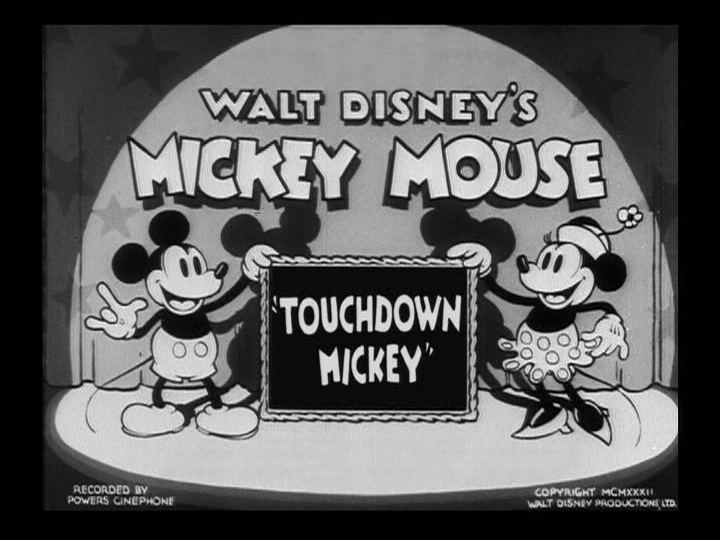
October 15, 1932 – The Mickey Mouse Short Film Touchdown Mickey is Released to Theaters

vlcsnap-2015-10-15-18h15m50s190

“Mickey made a touchdown! Oh, what a game, what a game!”

On October 15, 1932, the Mickey Mouse short film Touchdown Mickey was released to theaters. It was directed by Wilfred Jackson.

It’s a tough football game between Mickey’s Manglers and the Alley Cats, but Mickey manages to scramble across the field to score a touchdown with three minutes left in play. Mickey’s team is down by one touchdown, and the crowd is going wild for the action. Goofy is the radio announcer, though a bit unintelligible. The game stars up again, and the Alley Cats take the ball close to the goal posts, though it is so revealed that they are not above cheating. Luckily, one of Mickey’s players gets the ball and passes it off to Mickey, who manages to score again, thanks to the help of an unwitting Pluto. When the Manglers kick-off, Mickey stays attached to the ball, and makes a break for the goal. He ends up with his head stuck in a cleat, and runs the wrong way, but is quickly directed back the correct way. Though he manages to get far downt he field with help from his teammate, he soon loses the ball again, and nearly gets knocked out. The last few seconds are intense, but the Manglers are able to pull off a strong finish, with Mickey taking the ball from the hands of the Alley Cats after a series of mishaps, and take it in for the final touchdown. Mickey is hailed as a hero, and gives Minnie a kiss as he is carried on the crowd’s shoulders.