RSS Feed

Tag Archives: Academy Award winning

February 24

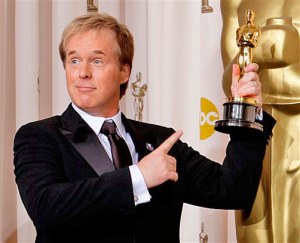
February 24, 2008 – Ratatouille Wins Academy Award for Best Animated Feature

bb_r_aa

“…I also want to thank my junior high guidance counselor…where he asked me ‘What do you want to do with your life?’ And I said, ‘I wanna make movies!’ And he said, ‘What else do you want to do with your life?’” – Director Brad Bird

On February 24, 2008, the 80th Academy Awards were held at the Kodak Theater in Los Angeles, California. Though receiving five nominations, Pixar’s animated feature film Ratatouille walked away with one: Best Animated Feature. This award gives Pixar its third Academy Award in this category. The film won against Marjane Satrapi and Vincent Paronnaud’s Persepolis and Ash Brannon and Chris Buck’s Surf’s Up.

February 22

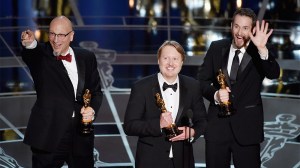
February 22, 2015 – Big Hero 6 Wins Academy Award for Best Animated Feature

bh6-oscar

“We would really like to thank the Academy for honoring our film…this has been an amazing year for animated films, and we are privileged to be in your company.” – Don Hall, Co-Director for Big Hero 6

On February 22, 2015, the 87th Academy Awards were held at the Dolby Theatre in Los Angeles, California. Walt Disney Animation Studios walked away with the Academy Award for Best Animated Feature for the movie Big Hero 6, giving the studio its second Academy Award in this category after the previous year’s win for Frozen. The film was the winner against such films as The Boxtrolls, How to Train Your Dragon 2, Song of the Sea, and The Tale of the Princess Kaguya.

November 10

November 10, 1953 – The Special Short Film Toot, Whistle, Plunk and Boom is Released to Theaters
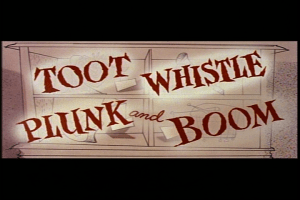
vlcsnap-2016-11-10-18h30m10s327

“The study of musical instruments is the subject for today.”

On November 10, 1953, the special short film Toot, Whistle, Plunk and Boom premiered in theaters. The short would go on to win the Academy Award for Best Short Film. The art is also notable for being the work of Eyvind Earle, who would go on to create the stylized look for Sleeping Beauty. Toot, Whistle, Plunk and Boom was directed by Charles Nichols and Ward Kimball, with story by Dick Huemer.

The short begins with Professor Owl running to his class to teach them about musical instruments. He explains that the music comes from a “toot, and a whistle, and a plunk, and a boom,” no matter from where the music comes. He then goes back to the dawn of history to where the music started. Starting with the “toot,” he moves from the caveman to Ancient Egypt, to the Romans, where they created a curved horn. The next aspect is the “whistle,” which began with a tube of grass, which then led to the creation of the clarinet and the saxophone. This is then followed with a look at the “plunk” of a bow, and the creation of what would eventually become a harp, and the violin. There are several variations of string instruments shown, unfortunately with all of them snapping a string. The last caveman shows the “boom” of how percussion instruments were born. The short ends at the symphony, where the cavemen have joined the orchestra.
April 10

April 10, 1972 – Bedknobs and Broomsticks Wins Academy Award for Special Visual Effects

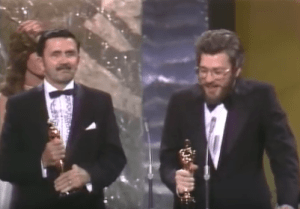
B&BAA

“Treguna, Mekoides, Trecorum Satis Dee.”

On April 10, 1972, the 44th Academy Awards were held at the Dorothy Chandler Pavilion in Los Angeles, California. Nominated for five Academy Awards, the live-action feature Bedknobs and Broomsticks managed to go home with one for Best Visual Effects, beating out the film When Dinosaurs Ruled the Earth by Hammer Films, distributed by Warner Brothers. One of the effects used included the sodium screen vapor process (originally developed by Ub Iwerks), which was used mostly for the flying bed scenes and involved a three-strip Technicolor camera that removed the sodium light by use of a prism. The sodium process has since been replaced by green screens and blue screens, as well as compositing via computers.

March 30

March 30, 1955 – 20,000 Leagues Under the Sea Wins Two Academy Awards

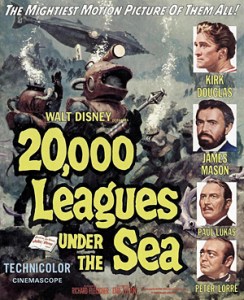
20000 Leagues

“Got a whale of a tale to tell you, lads, a whale of a tale or two…”

On March 30, 1955, the 27th Academy Awards were held at the RKO Pantages Theatre in Hollywood, California, as well as the NBC Century Theatre in New York City. Nominated for three awards, the live-action feature film 20,000 Leagues Under the Sea manages to walk away with two: Best Art Direction – Color (awarded to John Meehan and Emile Kuri), and Best Special Effects (awarded to John Hench and Joshua Meador). Walt himself managed to win an Academy Award for the Best Documentary Feature for the True-Life Adventure The Vanishing Prairie.

March 29

March 29, 1951 – The True-Life Adventure In Beaver Valley Wins an Academy Award

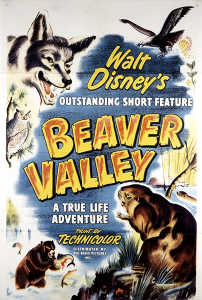
Beaver Valley

“The close call with the coyote has failed to shake our young beaver’s stubborn resolve.”

On March 29, 1951, the 23rd Academy Awards were held at the RKO Pantages Theatre in Hollywood, California. The True-Life Adventure In Beaver Valley (also known as simply Beaver Valley), scored Walt Disney Productions the Academy Award for Best Short Subject (Two-Reel), Disney’s only win this ceremony. It was the second of five eventual wins for the studio in this category. The featurette focused on a beaver as he lived his life in a pond area, and his interactions with other kinds of animals, including a moose, deer, and raccoons. The featurette would also go on to win the Golden Bear for documentaries at the 1st Berlin International Film Festival.

March 26

March 26, 1907 – Composer and Disney Legend Leigh Harline is Born

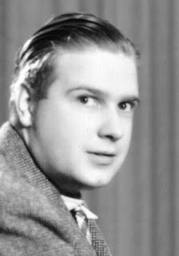
Leigh Harline

“[Harline’s songs] seemed like symphonic writing by a good classical composer.” – Director Wilfred Jackson

On March 26, 1907, Leigh Harline was born to a large family in Salt Lake City. After majoring in music at the University of Utah, he moved to California in 1928 to work as a composer, conductor, arranger, instrumentalist, singer, and announcer for various radio stations. He joined the Disney Studios in 1932, and quickly set to work writing music for the Silly Symphony series. After acknowledging the innovative ways of using music to tell the story, Walt Disney gave Harline the plum role of scoring the studio’s first full-length animated feature film, Snow White and the Seven Dwarfs, alongside fellow Disney Legend Frank Churchill. Harline and Churchill’s work on the film scored them an Oscar nomination for Best Music and Score. Afterwards, he was asked to work on Pinocchio, which scored him two Oscars: Best Music and Original Score, and Best Song for the classic “When You Wish Upon a Star.” He left in 1941 to work at several other studios as a freelance composer, and racked up eight additional Oscar nominations throughout his career. In the 1960s, Harline added television scoring to his repertoire, scoring for several popular series, such as Daniel Boone, featuring another Disney Legend, Fess Parker. On December 10, 1969, Harline passed away in Long Beach, California. For his work on early Disney shorts, and for creating one of the most iconic songs from the studio, he was inducted as a Disney Legend in 2001.

March 25

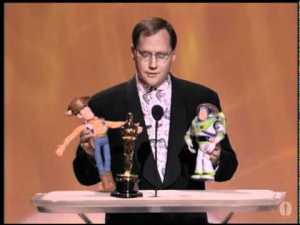
March 25, 1996 – John Lasseter is Awarded a Special Academy Award for Toy Story

John Lasseter Award

“Now we take you to the world of computer animation, where director John Lasseter has proved that a boy with a hard drive can go a long way.” – Presenter Robin Williams

On March 25, 1996, the 68th Academy Awards were held in the Dorothy Chandler Pavilion in Los Angeles, California. At this ceremony, John Lasseter was awarded a special Academy Award for the creation of the first fully computer-animated feature film, Toy Story, calling its creation a milestone in the achievement of motion pictures. The film had been a long time in the making, going back to Lasseter’s aspirations after starting at Disney decades earlier. Lasseter showed up on stage to receive the award, bringing with him a Woody and a Buzz Lightyear toy. Lasseter thanked the Academy for its longtime support of student filmmakers, as well as everyone at Pixar and Disney for their support and effort into making the film.

March 23

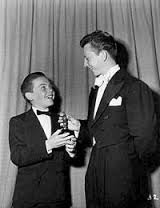
March 23, 1950 – Bobby Driscoll Wins the Academy Juvenile Award

Bobby Driscoll Award

“[The award] goes to the little boy whose performance in The Window and So Dear to My Heart enchanted movie-goers and critics alike, Bobby Driscoll.” – Presenter Donald O’Connor

On March 23, 1950, the 22nd Academy Awards were held at the Royal Pantages Theater in Hollywood, California. For his work in the Disney film So Dear to My Heart, as well as the RKO film The Window, Bobby Driscoll was awarded with the Academy Juvenile Award as the best juvenile actor of 1949. So Dear to My Heart was Driscoll’s second film for the Disney Studios, and he had received several positive reviews for his role as Jeremiah Kincaid. He was the ninth recipient of the award, joining actors such as Mickey Rooney and Shirley Temple.

March 19

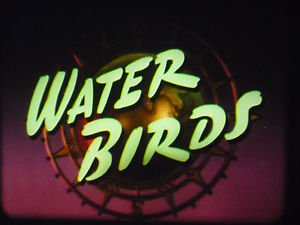
March 19, 1953 – The True-Life Adventure Short Film Water Birds Wins the Academy Award for Best Live Action Short Film, Two-Reel

Water Birds

“In any case, Walt fought his way through all the Oscars in his living room to our stage tonight.”

On March 19, 1953, the 25th Academy Awards were held at the RKO Pantages Theater in Hollywood, California, as well as the NBC International Theater in New York City. It was the first Academy Awards ceremony to be broadcast on television, as well as held on two coasts simultaneously. The short film documentary Water Birds from Disney’s True-Life Adventures series was nominated for, and won, the Academy Award for Best Live Action Short Film, Two-Reel. The short won against the films Bridge of Time, Devil Take Us, and Thar She Blows! This awards ceremony was also special for the added Disney fact that Walt was asked to present the award for the musical categories.