RSS Feed

Tag Archives: 1950s

October 11

October 11, 1955 –The First Ticket Books are Offered at Disneyland

https://i0.wp.com/www.yesterland.com/images-background/ticketbook.jpeg

“This ticket book is your passport to many wonderful adventures in the Happiest Place on Earth.”

On October 11, 1955, the first ticket books were offered at Disneyland. The books had a set of tickets labeled from A to C, and cost $2.50. D tickets were added to the book in 1956, and E tickets – for the most popular rides in the park – were added in 1959. A tickets were for the least popular rides, and the popularity rating for each attraction went up with the ticket. The tickets were phased out in the late 1970s, due to other theme parks implementing a “unlimited use” policy of attractions after paying the initial admission fee. Although not in use today, the term “E Ticket” is still used by cast members and guest alike to describe the most popular attractions in the park. Tokyo Disneyland also used a version of the ticket books until 2001, until they too were phased out.

September 11

September 11, 1957 – The Disney Anthology Episode “The Fourth Anniversary Show” Premieres
vlcsnap-2014-09-11-18h59m34s10

“I remember how his fingers flew over the keys of our battered, old piano, how his face glistened with perspiration as he concentrated on the music, and all the time I could see pictures; I could see his lovely fantasy coming to life on the screen.”

On September 11, 1957, the Disney Anthology episode “The Fourth Anniversary Show” premiered on ABC. Celebrating four years on the air, the episode shows some upcoming projects for the studios, and a stylized flashback sequence. The show also features proposed scenes for a film called The Rainbow Road to Oz, which would have been an adaptation of one of Frank L. Baum’s Oz stories, which Disney owned the rights to; this film was never made. The episode was directed by Sidney Miller and Hamilton S. Luske. It starred the Mouseketeers, Fess Parker, Jerome Courtland, Guy Williams, and Walt Disney as himself and as the voice of Mickey Mouse.

The episode begins with Walt attempting to play “Peter and the Wolf” on the piano. He reflects on how the piano in front of him played an important part in one of the many adventures at the studio, when Sergei Prokofiev came to the studio to work with the animators on a segment. The audience is then taken back in time to a storyboarding meeting in 1938, when the studio was hard at work on Fantasia and Pinocchio. Walt gets a call from Rudy Polk, VP of a talent agency, who tells him that an important composer wants to talk to Walt, and that Prokofiev had Disney in mind when he wrote Peter and the Wolf. Walt agrees, and they work together in a small little studio, although Prokofiev spoke very little English, and Walt spoke no Russian. Polk explains the piece to Walt while Prokofiev plays, and Walt listens intently. Unfortunately, although Walt wanted to work on the story, WWII put a wrench in any non-military stories and films. After the war, they went back to “Peter and the Wolf,” which was one of the first post-war projects. The short subject film is then presented.

Walt is kidnapped by the Mouseketeers and given a surprise anniversary party

Walt is kidnapped by the Mouseketeers and given a surprise anniversary party

After the short, Walt is about to go into an introduction of more classical music in Disney films, when Mouseketeer Cubby shows up at his office door. Walt introduces him, but tells him that they will talk later. He tries to go back to his introduction, but turns to find Cubby still at the door. Walt explains that he’s talking to the Disneyland audience, but Cubby interprets this as an okay to enter, and tells the other Mouseketeers that Walt’s “just sitting on the desk talking.” The Mouseketeers enter and start jabbering away, when Walt tells them to hold on for a second. He then introduces them: Annette, Bobby, Darlene, Karen, and of course, Cubby. They drag him to the Mouseketeer stage, where they surprise him with a party celebrating the anniversary of the Disneyland show. They put on a special show for him about everything they’d seen on the Disneyland television show, and ask him what’s in store for the next year. He answers that there’s more Donald and Goofy adventures, more global adventures, and a new character – Andy Burnett – explained by Fess Parker, with scenes from the new miniseries starring Jerome Courtland. Courtland then serenades the Mousketeers with a new song from the series called “Ladies in the Sky.”

After this, Walt gives a brief overview of what’s next, although Moochie keeps asking about Zorro. He then explains that Zorro will no longer be on Disneyland, but will be its own series. When Moochie asks if Zorro was real, Walt explains that Zorro was a mythical feature, but it soon interrupted by Zorro himself, and soon has a sword fight with a shadowy figure. Zorro, of course, wins, and makes the sign of the Z before he disappears. Walt then decides to leave, and the kids give him a present: a shooting script of the film The Rainbow Road to Oz. The Mousketeers volunteer to take over all the preparations for the film, and who off the characters in their story. They show a scene where the character of the Patchwork Girl (played by Doreen) meets the Scarecrow (played by Bobby) for the first time. Another segment plays, with Darleen singing a song called the “Oz-Can Hop.” Walt agrees to make the film, and then the Mousketeers present another song with a large anniversary cake. Mickey then makes a surprise appearance at the end, noting that the Mousketeers are a great bunch of kids, with which Walt agrees.


August 31

August 31, 1951 – The Goofy Short Film Get Rich Quick is Released to Theaters

vlcsnap-2014-08-31-19h26m42s123

“Eh, put up or shut up!”

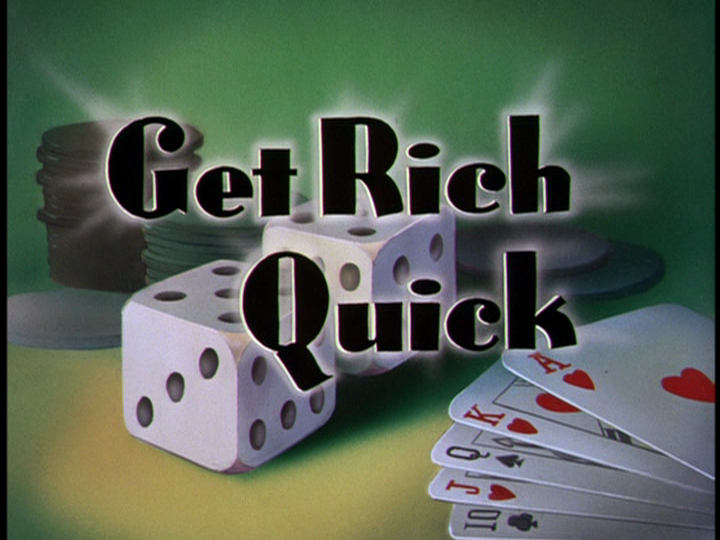
On August 31, 1951, the Goofy short film Get Rich Quick was released to theaters. This short was released as part of Goofy’s “everyman” series. It was directed by Jack Kinney, with story by Milt Schaffer and Dick Kinney.

The short begins with the introduction of George Geef, who never passes up a chance to gamble away his money, whether on a football pool, chain letter, pyramid club, and more. He was considered a soft touch and a pushover when it came to betting, but never seemed to win. He never gets too discouraged, as he feels his victory is just around the corner. He plays a dice game in a back alley, and wins a barrel full of cash, which he soon invests at the race track, losing everything. He then heads to a poker game in a smoky room, where all players are wearing their poker faces. The game gets too tense for Geef, but he ends up winning a huge jackpot. He cashes out and soon heads home, where he has another gamble: waking his wife after arriving home in the early hours of the morning. His wife starts lecturing him for coming home so late, but when she sees the pile of money he’s won, she quickly forgives him before taking every penny away from him. He ends with a simple saying: “Easy come, easy go.”

July 22

July 22, 1955 – Disneyland’s Candy Palace Opens on Main Street

candy_palace

“…many of the Disneyland ‘homemade’ candies have their own fanbase.”

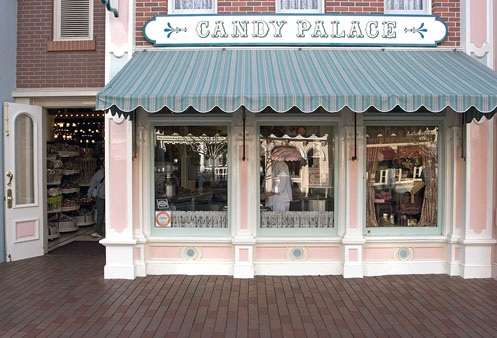
On July 22, 1955, the Disneyland candy shop Candy Palace opened on Main Street. The store is home to several exclusive treats, particularly around Christmas, when the candy makers make their own candy canes. The main draw of the shop is the large front window that gives guests a look at the confectioners creating sweet treats the likes of caramel turtles, decorative gourmet caramel apples, and peanut brittle. Overall, about 63 different treats are made year-round in the candy kitchen. Walt Disney World has a similar store called the Main Street Confectionery; Disneyland Paris’ version is known as the Boardwalk Candy Palace.

July 21

July 21, 1950 – The Pluto Short Film Pests of the West is Released to Theaters

vlcsnap-2014-07-21-17h01m30s2

On July 21, 1950, the Pluto short film Pests of the West was released to theaters. It is considered a sequel to the 1949 short Sheep Dog, featuring the duo of Bent-Tail the coyote and his son. It was directed by Charles Nichols, with story by Dick Kinney and Milt Schaffer.

Bent-Tail is seen howling on top of some rocks, when he spies a nearby farm. He and his son quickly race to the farm, and imagine the chickens they’re going to steal. As they sneak onto the farm, they pass by Pluto’s doghouse, where he is dozing peacefully. His dozing is disturbed slightly, however, when his nose catches the scent of the coyotes. Meanwhile, Bent-Tail and his son reach the hen house, and quickly make a plan for the son to go in and steal a hen. He attempts to steal the largest hen inside when he gets sleepy, and decides to nap in an empty nest. Bent-Tail looks inside to see what’s keeping his son, and is angered to see his son sleeping on the job. He rushes inside and throws his son out so he can do the job himself. The squawking of the hens wakes Pluto, and he son chases the wily coyotes across the farm. They end up hiding in Pluto’s doghouse, and when Pluto goes back to his nap, he is unaware that the coyotes are in hiding. Unfortunately, Pluto does find them, and chases Bent-Tail across the farm once again. Bent-Tail uses plenty of tricks to sneak away, but Pluto manages to catch him in the end. Bent-Tail’s son manages to sneak away with a hen in its nest, and it becomes a strange game between the coyotes and Pluto to “get the hen.” Pluto manages a sneaky trade of the hen for the son, and Bent-Tail runs off with the nest, thinking that he got the best of Pluto. The little coyote, however, holds up an egg, which Bent-Tail smashes over his son’s head, although his son can’t understand why his father is so upset.

July 17

July 17, 1955 – The Carnation Ice Cream Parlor Opens on Disneyland’s Main Street

DL_Carnation_back

“Greetings from Carnation in Disneyland!”

On July 17, 1955, the Carnation Ice Cream Parlor opened on Disneyland’s Main Street U.S.A. It is one of the only restaurants remaining from Disneyland’s opening day. In 1977, an outdoor dining area was added to the restaurant, and in 1997, the restaurant was expanded and turned into the Carnation Café, serving American-style cuisine for breakfast, lunch, and dinner.

July 10

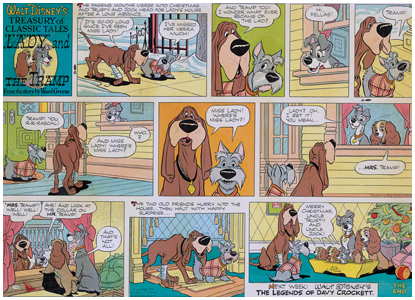
July 10, 1955 – The Character Scamp Appears in the Disney Comic Strip

Scamp

“Merry Christmas Uncle Trusty and Uncle Jock!”

On July 10, 1955, the character Scamp appeared in the Disney comic strip series Disney’s Treasury of Classic Tales, which was used to promote upcoming Disney films. The strip on this day was promoting the film Lady and the Tramp, with Scamp appearing in the final panel as one of Lady and Tramp’s puppies. Although not named in the film nor this strip, the character was given a name in October of that year, when he began appearing in his own daily strip which ran until 1988.

June 29

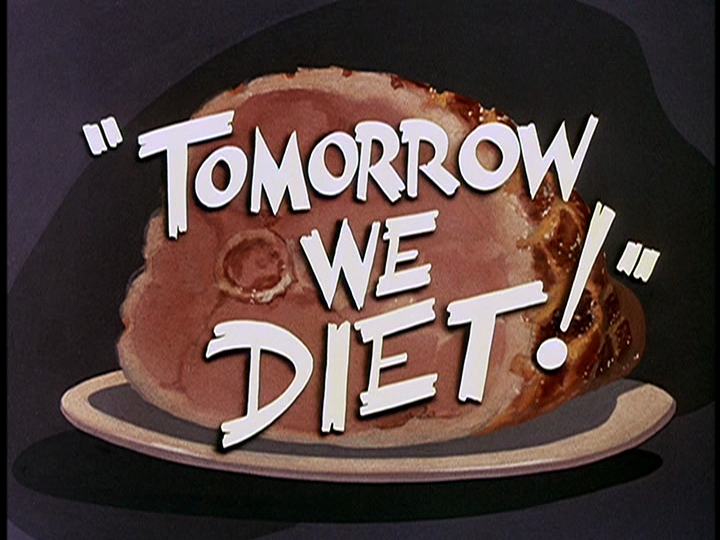
June 29, 1951 – The Goofy Short Film Tomorrow We Diet is Released to Theaters

vlcsnap-2014-06-29-18h49m23s188

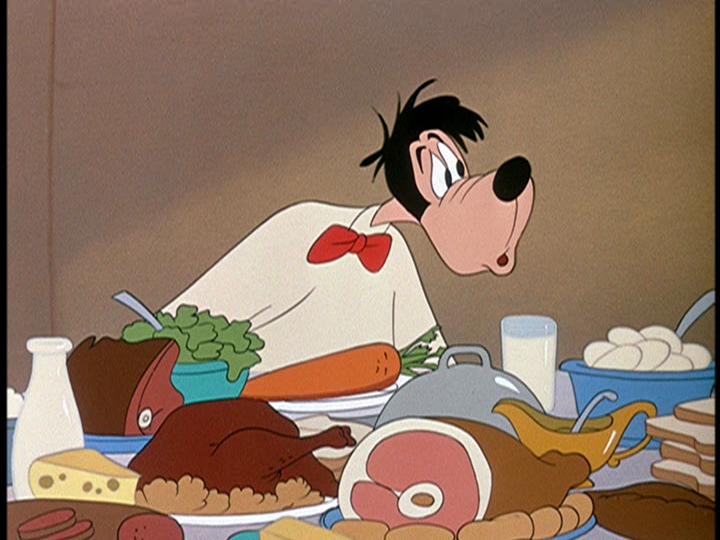
“Eat, drink, and be merry, and tomorrow, we diet!”

On June 29, 1951, the Goofy short film Tomorrow We Diet was released to theaters. It was directed by Jack Kinney, with story by Milt Schaffer and Dick Kinney.

The short begins with Goofy pulling out several dishes from the refrigerator and scarfing them down all at once. After his meal, he passes by the mirror and admires his reflection. His reflection, however, has some choice words for him. Goofy argues that he’s as fit as a fiddle, but the reflection points out that he’s as fit as a bass fiddle. Although Goofy has several images of his younger, fitter days, he’s gained several pounds since then, and rips the seam of his pants as he struggles to put them on. The tailor has to take his awning to create a striped suit for Goofy, and when he enters a cab, he is heavy enough to cause the tires to pop. There are several instances of Goofy’s weight causing problems for him and those around him, including breaking two stools at the local café and crashing the elevator.

Goofy unloads the fridge of its contents, but is soon scolded by his reflection

Goofy unloads the fridge of its contents, but is soon scolded by his reflection

Goofy soon arrives home with a book called “Easy Ways to Reduce,” and the mirror taunts him to touch his toes. The moment the reflection mentions eating, however, Goofy is already digging around in the fridge. The mirror tells him what he cannot eat, leaving him with a solitary carrot. But then, Goofy decides to just leave the table altogether, but heads back to the fridge once again. His mind is obsessed with food, and his attempts at maintaining a diet are thwarted by his mind demanding he eat. His reflection compliments him on his willpower before they both go to sleep, but Goofy soon heads to the fridge in his sleep to eat. He is shocked, however, to find that all the food is gone; his reflection has taken all the food and enjoyed a good meal, proclaiming that tomorrow, they will diet.

June 16

June 16, 1957 – The Short-Lived Disneyland Area Holidayland Opens

vlcsnap-2014-06-16-20h11m25s159

“I had the honor, or dishonor, of being the only manager of a land at Disneyland that failed.” – Disney Legend and Disneyland Opening Day Manager Milt Albright

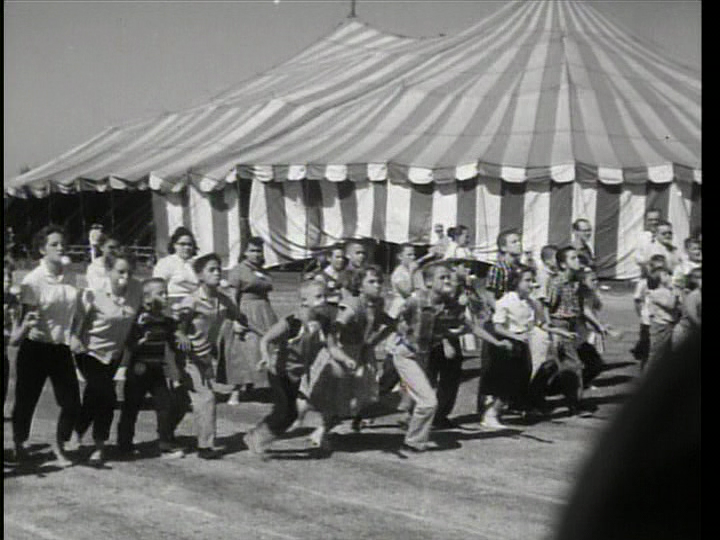
On June 16, 1957, the short-lived area of Disneyland known as Holidayland opened. Walt wanted to make use of the tent that once housed the Mickey Mouse Circus, and decided to create an area for corporate events, including picnics. Guests could then enter the main park through a special entrance. The area had very little appeal, as it lacked any Disney “flavor,” and had several other problems. The area closed in 1961, and is now occupied by New Orleans Square.

June 14

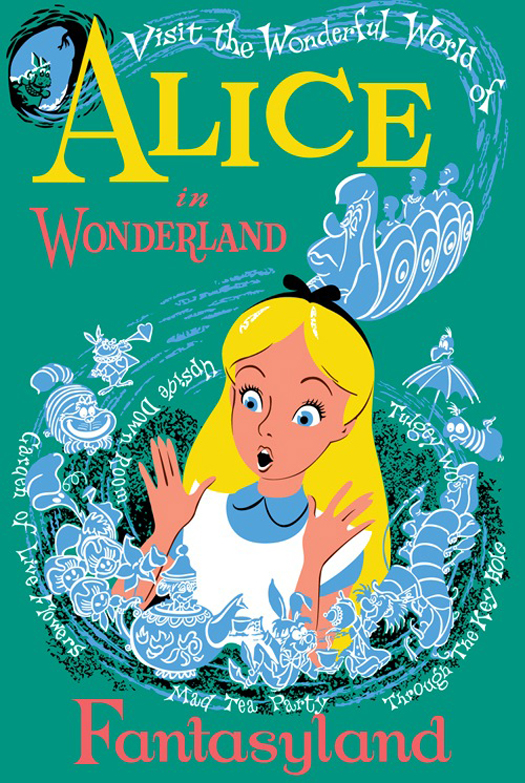
June 14, 1958 – The Fantasyland Attraction Alice in Wonderland Opens in Disneyland

alice poster

“Can you escape in time for a very ‘unbirthday party’ where you’re the guest of honor?”

On June 14, 1958, the Fantasyland attraction Alice in Wonderland opened in Disneyland. Based on the 1951 animated feature, the attraction is a dark ride, with parts of the ride illuminated using ultraviolet light and special paint. Guests board caterpillar-shaped boats and head into “Wonderland,” viewing several iconic scenes from the film, and meeting the beloved characters. The attraction was closed on September 6, 1982, for a major remodel, which included a re-recording of the voice of Alice by original actress Kathryn Beaumont. As of the date of this entry, the ride has been closed again for another remodel. This is one of the few attractions that exists only in Disneyland.