RSS Feed

Tag Archives: 1940s

September 10

September 10, 1948 – The pluto Short Film Pluto’s Fledgling is Released to Theaters
vlcsnap-2015-09-10-19h43m52s72

On September 10, 1948, the Pluto short film Pluto’s Fledgling was released to theaters. It was directed by Charles Nichols, with story by Milt Shaffer and Eric Gurney.

It’s a beautiful spring day, and several birds are practicing their flying. A baby bird wishes to practice as well, but when they jump from their nest, they tumble to the ground, landing in Pluto’s water bowl. Pluto is awakened from his nap to find the baby bird drowning and quickly saves it. Pluto then locates its nest and becomes determined to return it. Pluto gets it back to its nest, but the bird is actually annoyed by the gesture. The baby bird once again attempts to fly, this time landing on Pluto’s nose. The baby bird tearfully explains that it wants to fly, and Pluto volunteers to assist it. The bird grabs on to Pluto’s tail and Pluto runs, with the bird practicing its flapping. After tripping over a deflated inner tube, Pluto gets the idea to create a catapult, but the plan almost backfires when the bird gets out of the inner tube and grabs on to Pluto’s tail again. The pair are released into orbit, and Pluto barks at the bird to flap its wings. The bird is flying on its own, but poor Pluto once again crash lands into his doghouse. The bird cheerfully thanks Pluto, while Pluto gives him a wink.
September 2

September 2, 1949 – The Donald Duck Short Film All in a Nutshell is Released

vlcsnap-2015-09-01-09h36m31s7

“Hot dog! This oughta sell like hot cakes!”

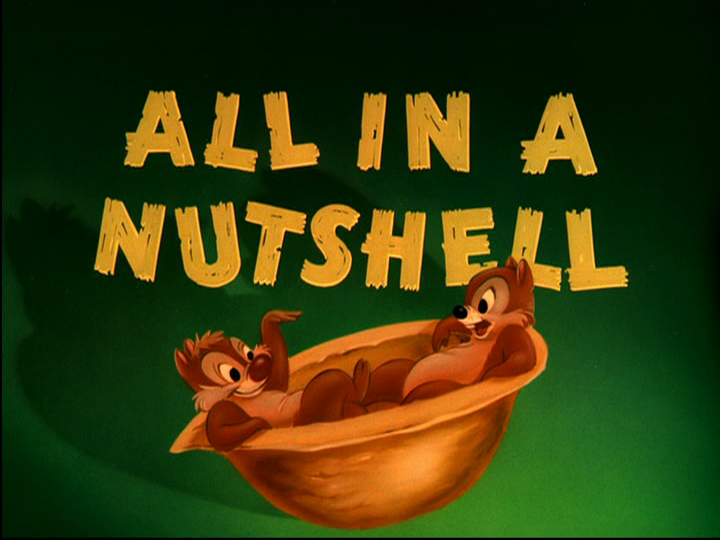
On September 2, 1949, the Donald Duck short film All in a Nutshell was released to theaters. It was directed by Jack Hannah, with story by Bill Berg and Nick George.

Donald has set up a little nut butter stand shaped like a giant walnut, and is at work creating jars when he is out of nuts. He spies Chip and Dale collecting nuts in their tree, and decides to steal their nuts. Chip and Dale fall out of the tree, confused as to where their nuts have gone, but follow the trail back to the nut stand. Dale believes the stand to be the biggest but they’ve ever seen, and he and Dale decide to carry it home, not realizing they can’t lift it. After being injured by Dale’s antics, Chip finds a large rock atop a hill and decides to use it to crash into the nut to break it open. The rock manages to roll down the hill and crack the top of the stand. Donald rushes out once he hears the noise, but soon returns back to his work. Chip and Dale open the top of the stand and find the nut butter inside, and taste test a jar. Finding it to their liking, they decide to take more jars. Dale gets distracted by the jar filling machine, and takes the place of a jar to eat more butter. Chip gets Dale back on track so they can steal more jars. Unfortunately, one of the jars breaks over Donald’s head, and he chases the two out of the stand. They soon capture him and steal the rest of the jars, but he quickly pursues them. Donald crashes into their tree, and the two send him flying out across the countryside in a makeshift cannon with a log and a beehive, with the chipmunks celebrating their victory.


August 27

August 27, 1948 – The Donald Duck Short Film Inferior Decorator is Released to Theaters

vlcsnap-2015-08-27-14h25m41s178

“Stick around, bud. Stick around.”

On August 27, 1948, the Donald Duck short film Inferior Decorator was released to theaters. It was directed by Jack Hannah, with story by Lee Morehouse and Bob Moore.

Spike the Bee is buzzing happily amongst the flowers, when he hears a horrible singing inside the huse. He sees Donald plastering some flower wallpaper and, thinking that these are real flowers, he runs into the wall. Donald, observing Spike, plays a cruel prank on the bee, capturing him in a bucket of wallpaper paste. Spike tries to escape, and Donald cuts the paste that is attached to Spike, sending him hurtling into the ceiling. Donald sends the dizzy bee outside, but Spike angrily makes his way back in tries to sting Donald’s tail, but gets caught on the sticky wallpaper. As Donald tries to shake Spike off, he gets the wallpaper and himself stuck on the ceiling, leaving himself open for Spike’s attack. Donald is able to dodge the attack with a well-placed cork, but Spike is able to free himself and once again ready himself for a sting. Spike calls in reinforcements from his hive, and they all go sting Donald one by one.

August 22

August 22, 1947 – The Donald Duck Short Film Bootle Beetle is Released to Theaters

vlcsnap-2015-08-22-09h17m53s78

“Just think of it: the famous Professor Duck!”

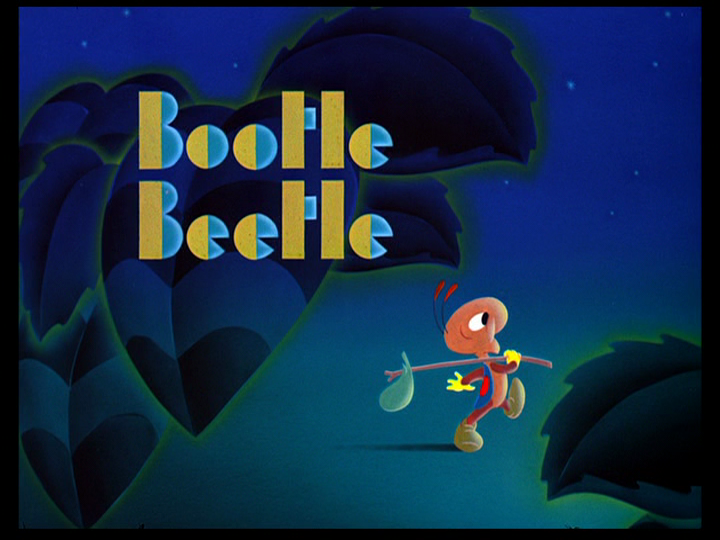
On August 22, 1947, the Donald Duck short film Bootle Beetle was released to theaters. It was directed by Jack Hannah, with story by Bill Berg and Milt Banta.

The narrator opens the short with an introduction of the “Bootle Beetle,” a once plentiful bug whose numbers diminished due to their love of travel. One beetle is seen getting ready to travel, when he is stopped by an older bug. He warns the kid that so many beetles before him traveled across the stream and never came back, then starts telling him a story of when he was a younger bug, setting out for adventure. At first, the journey is enjoyable, until he comes Donald, an entomologist. Donald, who has been looking for the elusive Bootle Beetle, celebrates his good fortune, but the poor beetle manages to escape. Donald continues to chase after the beetle, and finally manages to trap it in a jar, taking it home. However, when Donald takes another look at the beetle, he thinks it has disappeared. The beetle manages another escape, and makes his way back home, determined to stay. The kid beetle is convinced to stay home, and it is revealed that Donald is still searching for the beetle all those years later.

August 13

August 13, 1948 – The Pluto Short Film Cat Nap Pluto is Released to Theaters

vlcsnap-2015-08-13-18h07m37s153

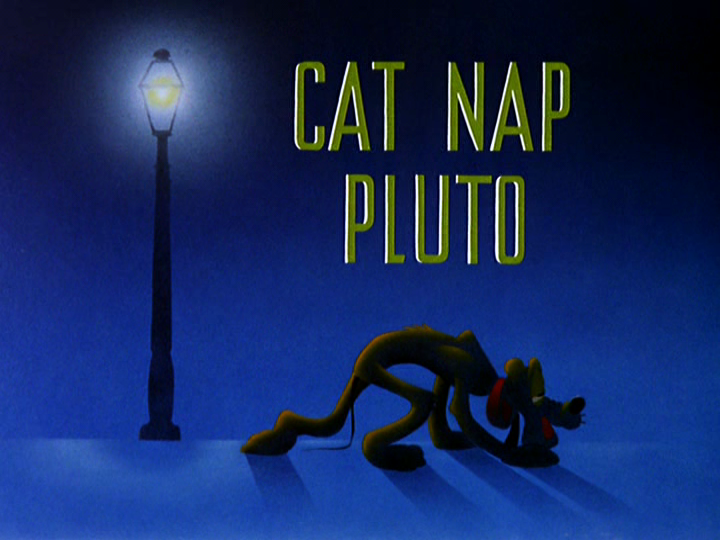
On August 13, 1948, the Pluto short film Cat Nap Pluto was released to theaters. This is one of the few shorts that featured the character of Figaro from the animated feature film Pinocchio. It was directed by Charles Nichols, with story by Eric Gurney.

It’s a quiet morning in suburbia, with Figaro snoozing away on his pillow. He goes to wake his friend Pluto, only to find an empty bed. Figaro is soon distracted by the milk man, and spies an exhausted Pluto coming in through the gate. Pluto can barely keep his eyes open, and narrowly manages to get back inside before being greeted by Figaro. Pluto’s Sandman appears and puts Pluto to sleep, which doesn’t last very long when Figaro appears, wanting to play. Pluto manages to make his way under the couch, but Figaro disturbs him again. Pluto’s Sandman uses more and more sand to put him to sleep, but his efforts are thwarted by a playful Figaro. Pluto chases Figaro around the house until he is too tired to move, and falls asleep in Figaro’s bed, with Pluto’s Sandman knocking him out with a hammer. After this, Figaro is unable to wake Pluto in any way, and is soon visited by his own Sandman, who puts the cat to sleep with a hammer. The two Sandmen also put each other to sleep while Pluto and Figaro snooze away happily.

August 11

August 11, 1941 – Walt Disney and “El Grupo” Head Off on the Goodwill Trip to South America

vlcsnap-2015-08-11-18h20m17s183

“That was the purpose of the goodwill tour: to try and sell the United States to South America.”

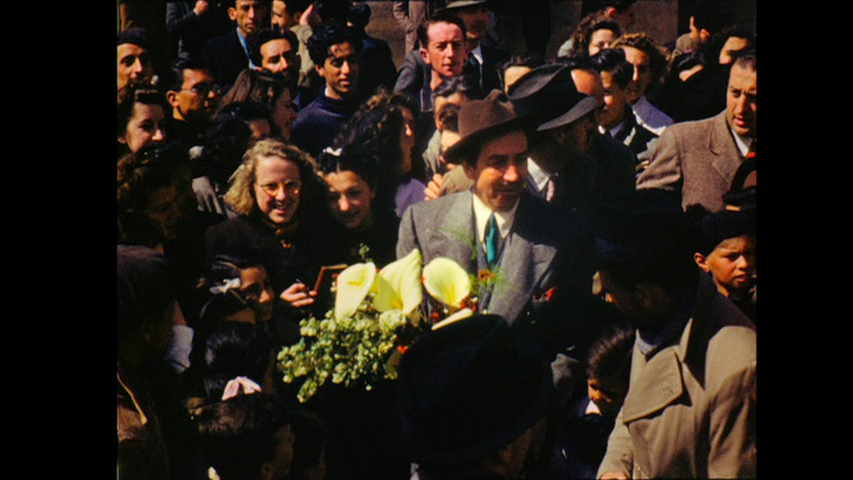
On August 11, 1941, Walt Disney, his wife Lillian, and a group of animators (known as El Grupo) set off on a goodwill mission to South America in the onset of World War II. As Nazi influence began to spread across the globe, the United States government was concerned about the relationship between the Americas, and called upon Hollywood to set up goodwill missions between the studios as the South American countries. Walt, and a handful of carefully selected artists traveled through Brazil, Argentina, and Chile, gathering story material for what would become the animated features Saludos Amigos and The Three Caballeros. Saludos Amigos would go on to be the offer of friendship between the Americas. Members of El Grupo included Bill Cottrell, Frank Thomas, and Mary Blair.

August 9

August 9, 1946 – The Donald Duck Short Film Wet Paint is Released to Theaters

vlcsnap-2015-08-09-13h40m50s220

“Why, that dirty…”

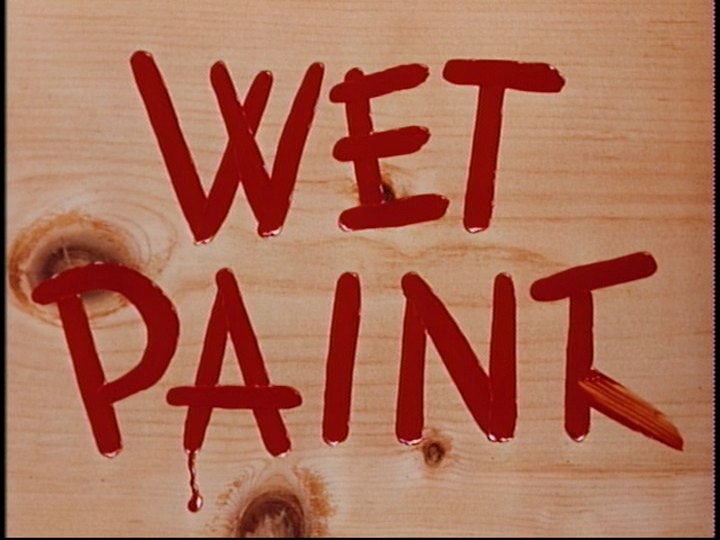
On August 9, 1946, the Donald Duck short film Wet Paint was released to theaters. It was directed by Jack King, with story by Roy Williams.

A beautiful day finds Donald painting his car a nice red color. As he turns to get more paint, a bird flies by, accidentally catching her string on the car’s hood ornament. She flies down to retrieve it, and gets her feet stuck on the paint of the car. As she walks away, she leaves a trail of footprints behind. Donald notices and irritably paints over the prints, accidentally painting his windshield and not realizing he’s leaving his own marks. The bird watches Donald curiously, and Donald chases after it before angrily realizing that he’s left hand prints all over the new paint job. The bird gets her string caught in the car’s antenna, which hits Donald and ends up with him tied on the car. Donald gets out and throws a paintbrush fill of paint at the bird, who cleans herself off in the paint remover before shaking herself dry over the car, ruining the new paint job. She grabs a string from a hole in the front seat and flies off, but pulls out all of the stuffing in the process when Donald tries to grab the string back, giving the car a final “sheepdog” look.

Donald manages to remove the stuffing from the car, but finds the bird in the tailpipe. The bird spies another string, but Donald prevents her from taking it. The string, however, is an exposed wire, which shocks Donald and sends him bouncing among the paint cans. His tail covered in paint, he ends up giving the car a splotchy tie-dye paint job. Fed up, he chases after the bird once more, and accidentally sends the car zooming across the yard, where it crashes and loses its paint job. The bird finally takes a string from Donald’s hat, unraveling it. Angered, he chases after her with an axe and begins to chop down her tree, when she sees her nest and babies. Softened, he lets her keep the string, and the birds congregate on his head.

August 7

August 7, 1946 – The Special Pluto Short Film A Feather in His Collar is Delivered to the Community Chests of America

vlcsnap-2015-08-07-18h09m45s21

“That’s the spirit, Pluto! Thank you!”

On August 7, 1946, the special short film A Feather in His Collar was delivered to the Community Chests of America. During World War II, Disney characters were used frequently to encourage viewers to support the war effort, from buying war bonds to paying their taxes. This short film used Pluto to encourage people to donate to their local Community Chests.

The advertisement begins with Pluto sleeping in his doghouse when his nose is splashed with billboard paste. He sleepily looks up to see an ad asking people to give to their Community Chest. Pluto decides to open his safe and donate several of his bones, and is awarded with a red feather placed in his collar. Inspired, Pluto walks around town advertising for people to give to their Community Chest.

August 4

August 4, 1941 – A Letter of Agreement is Signed Between Disney and the National Film Board of Canada

Disney+WWII

“I am convinced that certainly, in the technical film, the animated way is the best from the teacher’s point of view.” – John Grierson, Head of the National Film Board of Canada

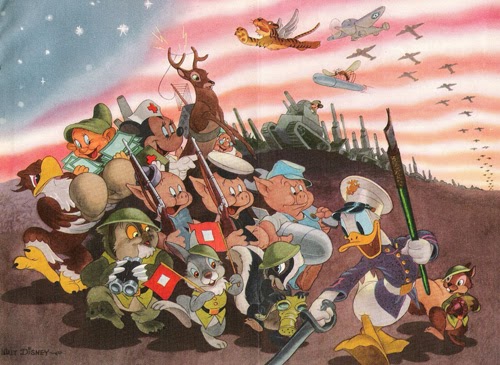
On August 4, 1941, a Letter of Agreement between Walt Disney Studios and the National Film Board of Canada was signed. Walt had met with John Grierson, the head of the board, who had realized that there were several limitations in creating technical training films with live-action. Grierson was impressed with the work that the studio had done for Lockheed Martin, which was the short training film Four Methods of Flush Riveting. The studio was hired to make four animated short films to sell war bonds, with the studio reusing animation to meet tight deadlines. The four shorts included The Thrifty Pig, 7 Wise Dwarfs, Donald’s Decision, and All Together. Also included in the agreement was a training film called Stop That Tank!, which taught Canadian soldiers how to use an antitank rifle. Disney Animators were also called on for promotional material, including the design of the cover of a war savings stamp folder.

July 9

Posted on

July 9, 1948 – The Pluto Short Film Pluto’s Purchase is Released to Theaters

vlcsnap-2015-07-09-16h57m38s214

“Now, here’s the money, and hurry home!”

On July 9, 1948, the Pluto short film Pluto’s Purchase was released to theaters. It was directed by Charles Nichols, with story by Eric Gurney and Bill de la Torre.

Pluto is snoring in the living room, when Mickey calls out for him. Mickey has a job for Pluto: to go to the butcher shop. Pluto excitedly sets off on his task, passing by enemy Butch on the way. When Butch sees where Pluto is going, he follows him, and makes sure that Pluto purchases the biggest sausage. He then slinks back to his fence, where he waits to trip Pluto up and steal the sausage. Unfortunately, Pluto just walks over Butch’s paw. He continues to try and snatch the sausage from Pluto, but Pluto unknowingly outwits him. Butch then attempts to use fleas to distract Pluto from his task, and Butch replaces the sausage with an iron block. Pluto finally spots Butch with the sausage, and attempts to take it back. A battle of strength and wits begins between the two, but Pluto manages to grab the sausage and make a break for it and trap Butch in the sewer. Butch manages to make his way out and chases Pluto across town, ending back at Mickey’s house. Mickey then tells Pluto that it’s a birthday present for a friend of his, which to Pluto means his sweetheart, Dinah. Unfortunately for Pluto, the “friend” Mickey means is Butch, who heads home with the sausage happily while Pluto sulks.