RSS Feed

April 5

April 5, 1965 – Mary Poppins Wins Five Academy Awards

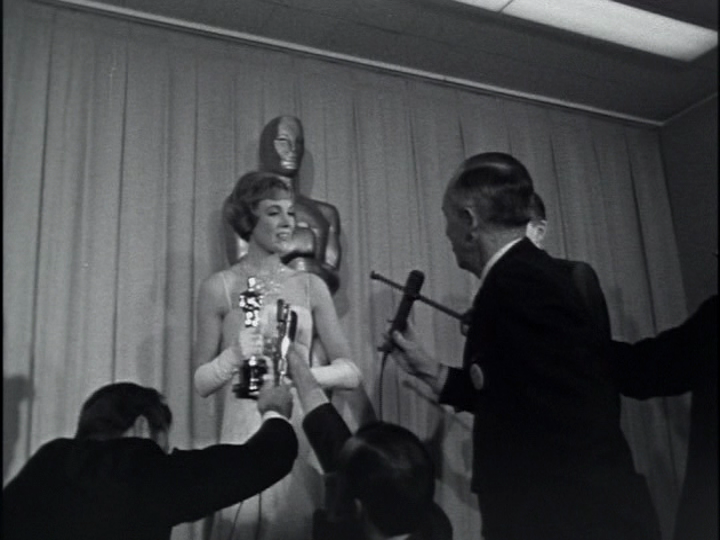
Julie Andrews after winning the Academy Award for Best Actress

“The press had made such a big deal out of it, and although I knew why I didn’t do My Fair Lady…and sure, I was sad about it, but I completely understood why I wasn’t chosen to do it…” – Julie Andrews

The 37th Academy Awards were held in Santa Monica, California on April 5, 1965. Of the 13 nominations it received – the most of that awards year – Disney’s Mary Poppins won five: Best Film Editing, Original Music Score, Best Song for “Chim Chim Cheree,” Best Visual Effects, and Best Actress for Julie Andrews.

Julie Andrews had been passed over for the lead in My Fair Lady at Warner Brothers. Time Magazine, outraged, wrote: “Someone, somewhere, made the decision to include Andrews out of the [film]. There is an evil and rampantly lunatic force at loose in the world and it must be destroyed.” Producer Jack Warner responded with, “No one in the sticks has ever heard from her,” and cast Audrey Hepburn as the lead role. Andrews remarked later that had she done My Fair Lady, she never would have been able to do Mary Poppins.

April 4

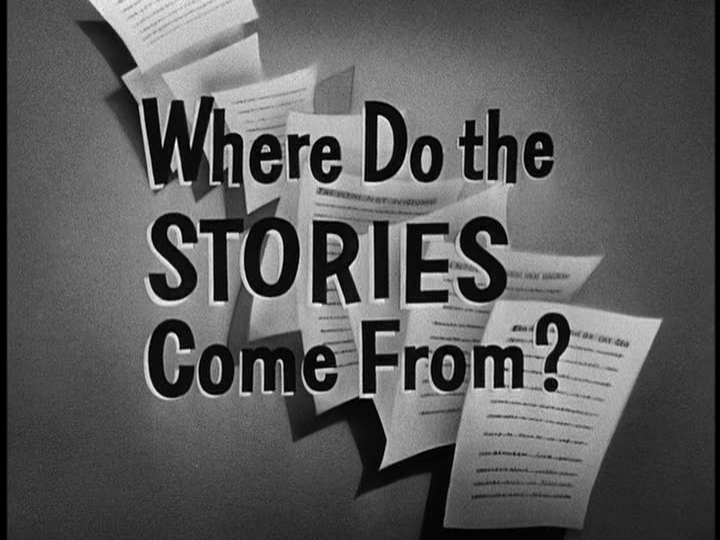
April 4, 1956 – Where Do the Stories Come From? Premieres on Television

“Potential story ideas exist all around us.” – Walt Disney

On April 4, 1956, the Disneyland episode Where Do the Stories Come From? premiered on ABC. Directed by Jack Hannah, the episode attempts to explain the most often-asked question of the members of the Disney studios: where do they get their story ideas?

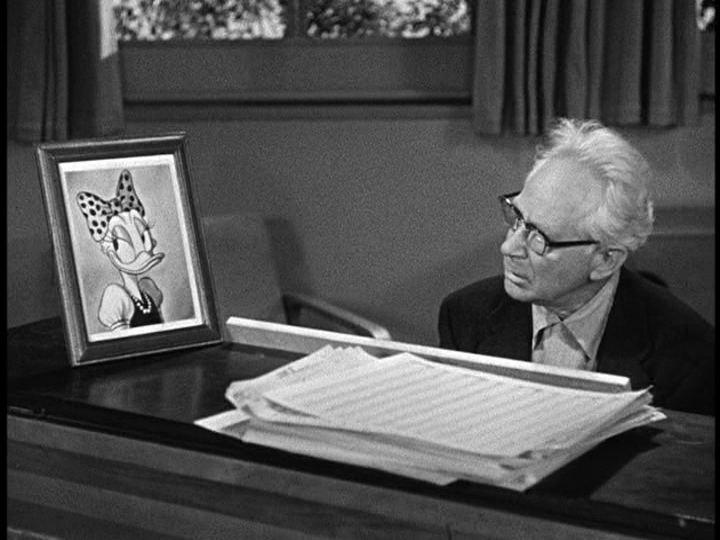
Composer Oliver Wallace studies a picture of Daisy, trying to find inspiration for a song about her

The episode opens with Walt Disney saying that the question of “Where do the stories come from?” is one that is asked a lot, and this episode will try to explain it the best he can. He tells the audience that story ideas can come from books, or are inspired by a song. The first example he gives of the latter is the song that had to be written for Daisy Duck; “she had to have a song,” since everyone else had one. The assignment for Daisy’s song was given to studio composer, Oliver Wallace. He thinks of words that rhyme with Daisy, and comes up with “crazy,” which gives him the title, “Crazy Over Daisy.” Soon, Wallace is composing an entire melody, and not long after, two men are seen listening to a record of the completed song. It then became the inspiration for a short film called Crazy Over Daisy, set in the early 1900s, which is shown next.

For the next example Disney brings up a short that was based on the True-Life Adventure series, where any interesting footage of animals could inspire the story artists to come up with a short film. “In viewing the thousands of feet of true-life adventure film that comes into the studio, we sometimes come across an animal that is a natural foil for one of our cartoon characters,” Disney explains, as he introduces the short R’Coon Dog.  Thinking a raccoon would be a match for Mickey Mouse and Pluto, the animators consult Pluto about his part in the film. Pluto is seen in the projection room, watching the footage of raccoons, and then is seen in the story room, where the animators are seen drawing the raccoon character.  Pluto takes the drawing a bit too seriously and tears it up with his teeth. The audience then sees R’Coon Dog.

The next example Disney presents draws on the experiences of the artists during World War II, when they had to get their physicals. The animators thought “it would be fun to put Donald Duck in the same ordeal,” and they show a compilation of some of the Donald Duck wartime shorts, including Donald Gets Drafted, and Fall Out Fall In.

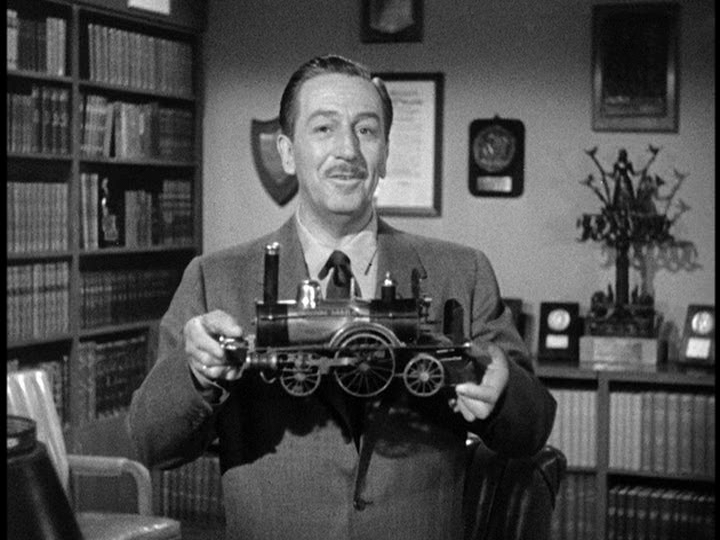
Walt Disney presents the hobby of many at the Disney Studio: model railroads

Disney then presents his own hobby of model railroads, as well as two animators who “haven’t escaped the bug” of the hobby, as Disney puts it: Ollie Johnston and Ward Kimball of the Nine Old Men. The audience sees home movies of Ollie and Ward with their model railroads.  Every detail is built to scale on Ollie’s model, and Ward has a full-size model in his own backyard. Not to be outdone by his two animators, Disney shows off his own model railroad, named the Lilly Belle, and some of the home movies of creating the track in Disney’s backyard. “The hardest part of the job was convincing my wife that the flower beds had to go,” Disney jokes. The hobby shared by these three men led to the creation of a Donald Duck short, Out of Scale.

April 3

April 3, 1994 – Frank Wells, Former President of The Walt Disney Company, Dies in a Helicopter Accident

“It was Easter Sunday, 1994, and a single event in Nevada’s Ruby Mountains would set in motion an unimaginable chain of events.” – Don Hahn

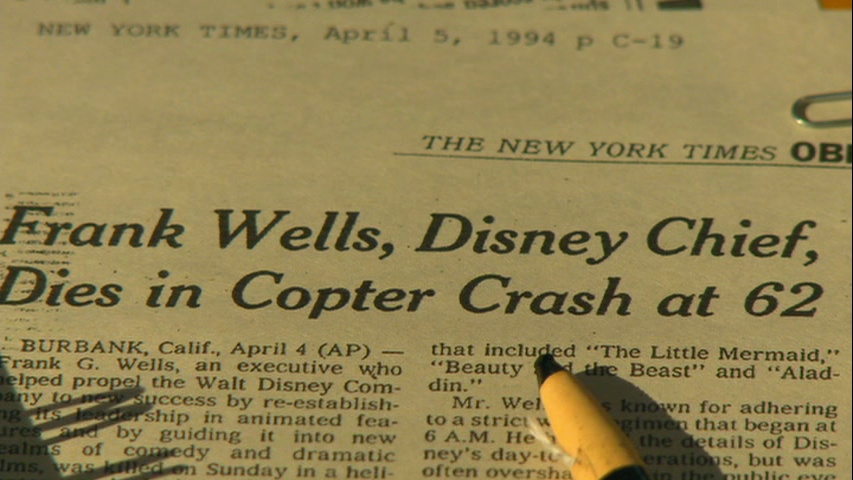
On April 3, 1994, the President of the Walt Disney Company, Frank Wells, while attempting to return from a ski trip, died in a helicopter crash in the Ruby Mountains of Nevada. It was the only helicopter crash in the company’s history at that point. Wells’ death brought a shadow over the company. Peter Schneider said, “Frank was the peacemaker amongst all these tremendous egos, and when Frank died, there was no one to talk to.” With Wells’ death, the already fragile atmosphere of the Disney Studios began to crumble, especially with Jeffrey Katzenberg lobbying for Wells’ job. Michael Eisner and Roy Disney did not wish to give the job to Katzenberg, and were angry about the amount of publicity Katzenberg seemed to get when promoting a film, instead of the film getting the attention. Wells truly brought life back into the company with Eisner, helping bring about the Disney renaissance. The Lion King, which was in production when Wells died, was dedicated to his memory.

Wells was a classmate of Roy Disney’s in college, and had convinced Disney to make Michael Eisner the chairman of Disney Studios in the 1980s. Disney remarked that the relationship between Eisner and Wells reminded him of his dad and Walt, and brought both on as the heads of the studio. Don Hahn remarked on their partnership, “Michael was kind of the sane one. Frank, he did bold and crazy things like swimming oceans, climbing the great summits of the world, and calling at 3 a.m. to ask what Goofy’s original name was.” Wells kept himself humble while he worked at the top, and was known for being the peacemaker between Eisner, Disney, and Katzenberg. At the memorial service, Michael Eisner said of Wells, “While we all…grieve [Frank’s death], we all share the joy of having known Frank. That is why we are here today, to remember…and to celebrate, to pay tribute to one man who had magic and to share the magic with him through his whole creative life.”

April 2

April 2, 1993 – The Adventures of Huck Finn is Released to Theaters
“Oh, sure, there’s a few stretches here and there, but then I never met anybody who didn’t lie a little when the situation suited him.”

On April 2, 1993, the movie The Adventures of Huck Finn was released to theaters. Based on the best-selling and controversial book by Mark Twain, the film was adapted and directed by Stephen Sommers, and stars Elijah Wood as Huck, Courtney B. Vance as Jim, Robbie Coltrane as The Duke, and Jason Robards as The King. Although the film is good family fare, it does cut out major plot points of the book, including scenes where Tom Sawyer is supposed to appear.

The movie opens with our main character, Huck Finn, getting punched in the face. A fight has ensued between the Huck and another student on the bank of the river, with the other students watching and cheering. After taking a few punches, Huck begins to fight back, giving the other boy a nosebleed. Just as Huck is about to lay the final blow, he notices a strange footprint in the sand. Believing it to belong to his father, he runs alongside the bank of the river and enters the cabin of a slave name Jim, who is able to tell the future. “Pap’s back,” Huck says, and asks Jim to tell him his future, and how long his father plans on staying. Jim’s advice to Huck overall is to run away for a while, and Huck decides that he needs to disappear, permanently.
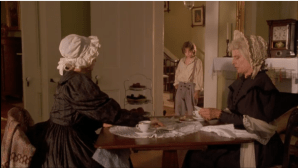
Huck is caught sneaking back in the house by the Widow Douglass (L) and Miss Watson (R)

Huck returns to the home of the Widow Douglas and Miss Watson, who have taken Huck in and raised him to be a gentleman. After being subjected to the “torture” of being dressed up, Huck sneaks out to play with his friends. When he returns, he finds his father waiting for him back in his room. His father kidnaps him from the widow’s house, and takes him to a small cabin up the river. His father has found out that Huck was left $600 in his mother’s will, and decides that Huck has to die so he can collect the money. A chase ensues, with the drunken man trying to kill Huck with a knife, but when Huck grabs his father’s shotgun, the two remain at a stalemate until morning. When Huck’s father heads to town for supplies, Huck decides to leave once and for all, faking his own death with the help of a wild boar he killed.

Huck decides to head to Jacksons Island, but is alarmed to find Jim there. Jim tells Huck that everyone thinks Huck has been killed by a robber. He also tells Huck that he has become a runaway slave, as a slave trader has offered $800 for him and he was going to be sold by Miss Watson, his owner. Jim has decided to travel to the free states to earn money for his family. Huck, with no other options, decides to help Jim. The first thing Huck does is travel to a house and steal food from a kindly woman, who informs him that everyone thinks Jim has killed Huck and run away. Huck and Jim skedaddle down the Mississippi river to Cairo. Upon finding a wanted poster with Jim’s picture on it, the two decide it will be safest to travel only at night.
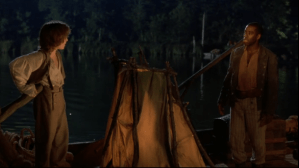
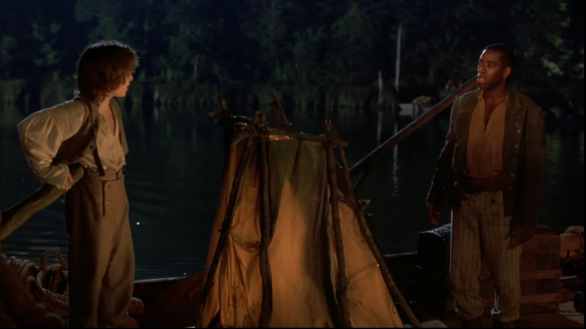
Jim tries to explain how wrong slavery is to Huck, but Huck doesn't understand, as it goes against everything he knows

The two find an abandoned ship on the rocks one stormy night, and decide to use it as shelter. As Huck goes down into the ship, he stumbles upon a robbery taking place, just as Jim discovers the corpse of Huck’s father. Huck gets caught as the ship begins to take on water, but manages to escape just in time with Jim. They discover the thieves’ boat on the river and take it. The next morning, Jim asks Huck if he would still help him escape to Cairo, even if his father was dead, but when Huck replies that he would head back home, Jim keeps the news of Huck’s father’s death a secret. Later that night, Jim excitedly declares that he is close to freedom and earning money to buy his wife and children. He adds that if his family won’t be sold to him, he’ll just steal them. Huck is alarmed by this talk, but Jim argues that it’s his family. “Selling people and using them for slaves ain’t right, Huck,” Jim explains, but Huck argues that it’s the way it is and has always been.  Jim tries to explain that all men should be free, but Huck clings to the old ways, and decides that he needs to turn Jim in.

Jim catches on to Huck’s plan, although Huck believes he’s doing the right thing, and going to hell if he helps to set Jim free. While Huck paddles away to get “help,” Jim decides to leave Huck and set out on his own. Fortunately for Jim, Huck changes his mind and lies about who is on the boat, with Jim watching with pride, and rejoins the boy. Later that night, the raft is destroyed by a riverboat, and Huck and Jim get separated. Huck is found and brought into the Grangerford house, where the women of the house clean him up. Huck sees that they found Jim and have him chained up as their new slave. The son of the Grangerford house explains to Huck that they have a feud with the Shepherdson house, and Huck finds himself involved. Although Jim wishes to continue to Cairo, Huck is reluctant, as he wants to stay with the Grangerfords. After seeing the welts on Jim’s back from the overseer’s whip, Huck feels remorse about stopping Jim’s journey, and decides that the two should set off again. Unfortunately, the feud has reached a boiling point, and Huck arrives in time to see his friend Billy, one of the last Grangerfords, get gunned down. Jim finds Huck grieving over Billy’s body, and they set off again.
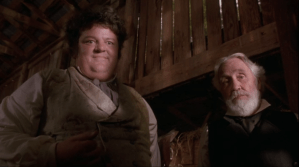
The Duke (L) and The King, threatening Huck as the con begins to unravel

The two discover they’d passed Cairo by forty miles, and decide to catch a steamboat to take them back upriver. They then find themselves entertaining two con men, known as The Duke and The King. The two see the wanted poster for Jim, and blackmail Huck and Jim into waiting on them hand and foot. The two then stage a con to collect on the will of a man, which disgusts Huck and Jim.  The con men are planning on going “all the way” with this con, stealing everything from the women of the house. Another man in the village, Dr. Robinson, has his suspicions about the conmen, but the family is too involved in conmen’s lie to listen to him. Huck decides to find Jim and leave. Unfortunately, the two men had turned Jim in for the reward. Huck decides to help him escape, until Jim finally tells the truth about Huck’s father. Jim is sorry at Huck’s reaction, and resigns himself to his fate.

As the con grows, Huck finds that he cannot participate any longer. He decides to steal the gold from the men and escape, with the intention of writing a letter to the lady of the house, Mary Jane, to let he know where he hid the treasure. He ends up stuffing the gold in the coffin, and the next day, he informs Mary Jane of the fraudulent brothers. Huck comes up with a plan to make things right, and begins to set the plan in motion. The con is uncovered when the real brothers come into town to claim their inheritance. The mob decides to dig up the grave to see who is telling the truth about being related to the late Peter Wilkes. Huck uses this moment to steal the sheriff’s keys and help Jim escape, and the two make their way to the steamboat.
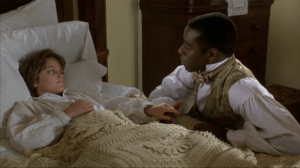
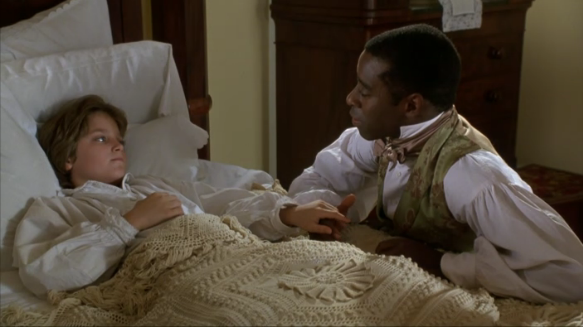
Huck recovers in bed while Jim tells him that he is now a free man

Unfortunately, as the two head toward the steamboat, the mob begins to shoot at Huck and Jim, and Huck is hit in the back with a bullet. They near the steamboat, but Huck can’t run any further with his injury. Huck urges Jim to run, but Jim gives up his chance for freedom to save Huck. Jim is taken by the mob and is set to be lynched, while Huck lies on the ground, helpless. Just as all seems lost, Mary Jane arrives on the scene, demanding that Jim and Huck be let go. Huck’s injury is treated, and he wakes up in the Wilkes house, seeing Widow Douglass by his side. Jim shows up, letting Huck know that he and his family have become free, due to the stipulations in Miss Watson’s will. Although Huck is happy, isn’t thrilled to be taken back to be civilized again. In the final scenes of the film, Huckleberry takes off to the call of the steamboat.
April 1

April 1, 1995 – The Walt Disney World Water Park, Blizzard Beach, Opens

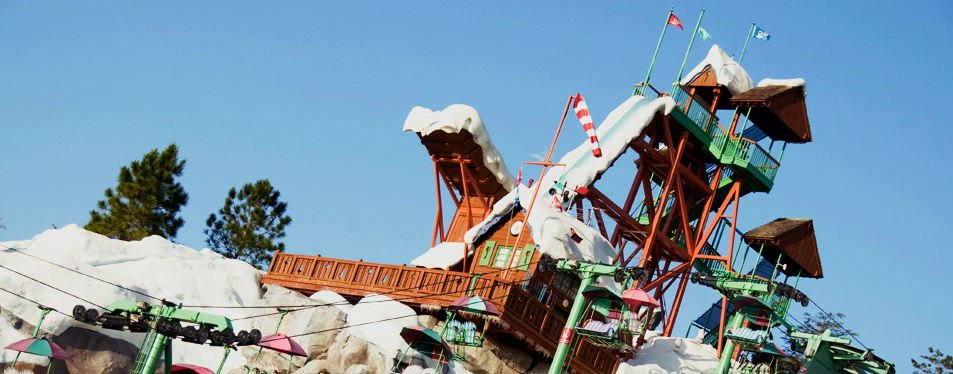
Summit Plummet - image from the Walt Disney World webpage

On April 1, 1995, Walt Disney World opened the second of its two water parks, Blizzard Beach. The park is sixty-six acres, and features several attractions, including one of the world’s tallest, fastest free-falling waterslide.

The story of how Blizzard Beach came to be is another page in the Disney Legend: There was a freak snowstorm that covered Florida, causing a ski slope to pop up. Unfortunately, the weather went back to being hot, the snow melted, leaving everyone with the question: what to do with the resort now? While everyone was pondering, an alligator saw an opportunity, and slid down the ski-slope with a loud, “Yahoo!” The ski slope was then turned into a water park unlike any in the world.

Included in the park are the attractions Shush Gusher, Teamboat Springs, Toboggan Racer, Snow Stormers, Runoff Rapids, Tike’s Peak, Melt-Away Bay, and Cross Country Creek. Summit Plummet, probably the most spectacular ride, is 120-feet high, with a twelve-story jump. The riders travel at speeds of up to 60 miles per hour.

March 31

March 31, 1944 – The Donald Duck Short Film, Donald Duck and the Gorilla, is Released to Theaters.

“Where’s Uncle Donald?”

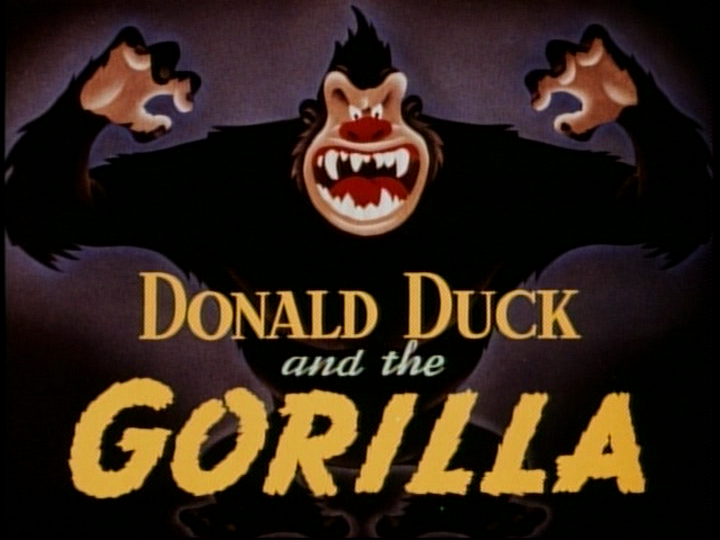
On March 31, 1944, the Donald Duck short film, Donald Duck and the Gorilla, was released to theaters. The short was directed by Jack King, with Clarence Nash voicing Donald Duck and the nephews Huey, Dewey, and Louie. As with many of the early Donald Duck shorts featuring the nephews, it was hard to tell which one was which, as the colors for their outfits were used interchangeably. This would be remedied with the show Ducktales, in which the nephews played lead roles and the stories were vastly more complicated.

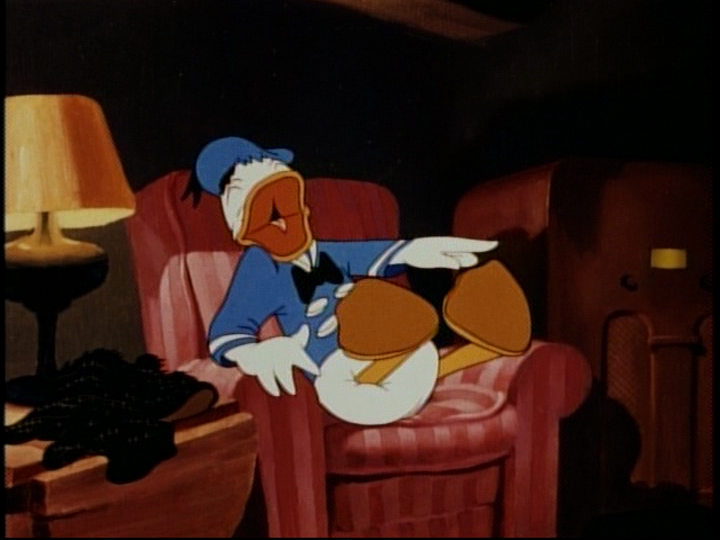
Donald laughs at the nephews' fear of the killer gorilla, Ajax

But back to Donald Duck and the Gorilla: It’s a stormy night, and Donald is sitting around the radio with his nephews Huey, Dewey, and Louie. The announcer informs the audience that the terrible gorilla, Ajax, has escaped from the city zoo. The nephews cling to each other in fear, while Donald laughs. He then notices a pair of gloves next to him that resemble gorilla hands, and gets the fiendish idea to scare the boys. He turns out the light, and the boys, frightened, call out for their uncle. When the boys turn on the light again, Donald is gone from the chair.

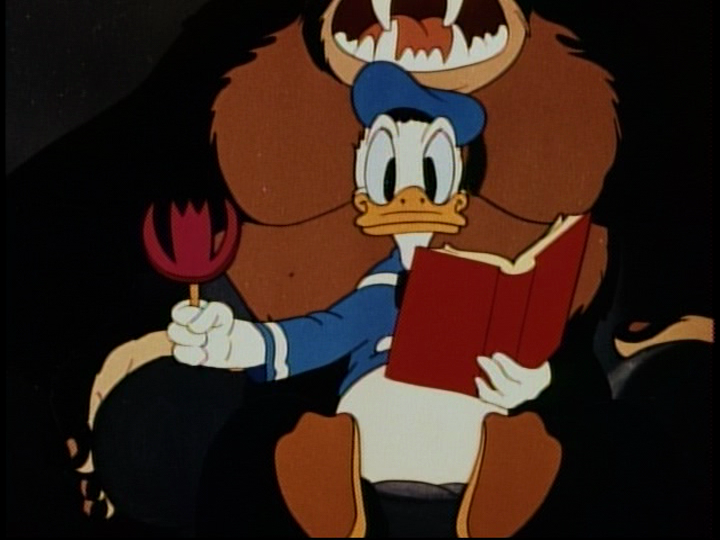
Still holding on each other, the boys are unaware of two large, hairy hands coming around the corners of the couch until the hands almost grab them. The boys scream and take off into the other room, slamming the door shut. Peering out through the keyhole, they see their Uncle Donald laughing hysterically at their flight. Angered by their uncle’s prank and bent on revenge, the three find a gorilla costume and begin to creep into the room where their uncle is getting ready to relax. Donald grabs a book and sits down in his chair to read, unaware that it is now occupied by a “gorilla.” Donald continues to be oblivious to the guest in his chair, even when the guest covers the duck’s mouth when he yawns.

Donald finally gets the hint that something may be off about the chair he's sitting in...

Donald finally gets the hint when he takes out a giant lollipop, and sets it aside for a moment while reading. The nephews take a big bite out of the lollipop with the costume’s teeth. When Donald picks up the lollipop again, he is  alarmed to see the teeth marks in the candy. He finally notices the “gorilla” in the room and bolts out of there as fast as he can, leaving the nephews to laugh at their success.

Unbeknown to both parties, the real Ajax is standing at the window, watching the scene unfold. With a menacing smile, he tears open the window and growls at the boys.  They run into their angry uncle hiding in an umbrella stand, and decide to run off in another direction, only to meet up with Ajax again. They run into separate rooms, with Donald following close behind. When Donald enters the hallway, he sees Ajax and, thinking it’s his nephews, starts pulling at the gorilla’s head, only to find that he was pulling on the head of the real gorilla.

Donald sees a terrifying image when he tries to intimidate Ajax

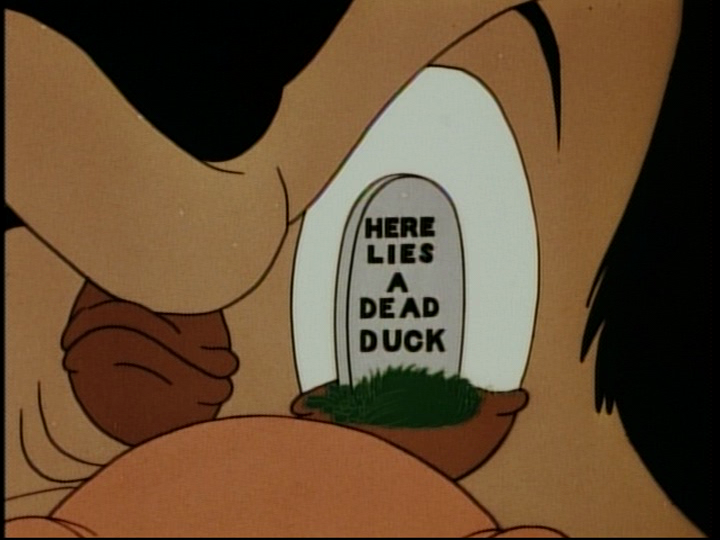
Just as things are looking bleak for the duck, the radio announcer informs all listeners that one can tame all wild animals by looking them straight in the eye. Donald attempts to do so, only to see a tombstone in the gorilla’s eye staring back at him. Donald uses the umbrella to escape Ajax’s clutches, and rejoins his nephews to hunt down and rid themselves of their unwelcome guest. As they sneak around, there are many comical instances with the nephews’ clumsiness with the candle, including pouring wax all over Donald’s tail. Donald snatches the candle from the boys and shoves them into another room, not noticing that he has placed the flame right under the doorknob, which burns his hand.

Donald continues his search, and falls into the gorilla’s trap, but is able to escape – barely. The chase continues through the house, leaving destruction in its wake. Unfortunately, Donald is trapped by the hungry gorilla, and just as it seems that all hope is lost, the radio announcer gives another timely message: the gorilla can be subdued with tear gas. Hearing this, the nephews find some and throw the grenade in just in time. Seeing the gorilla begin to cry, Donald laughs at him, but ends up a victim of the tear gas as well. The two sit together, crying in each other’s arms.

March 30

March 30, 1992 – The Walt Disney Feature Animation Department Wins the Academy Award for the Development of CAPS

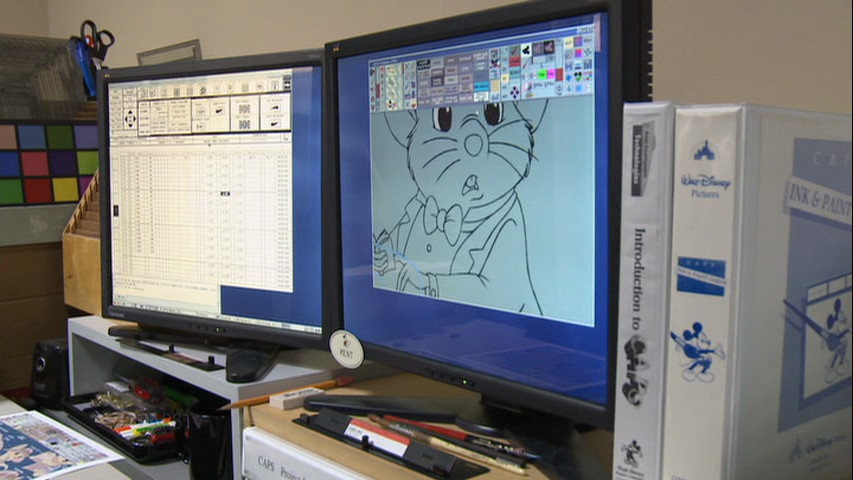
The CAPS System at work

“[CAPS] gives us not only the opportunity to do some really good art, but it also gives us the opportunity to really begin to explore what these computers and graphics things can do for us in kind of shorter pieces where we can get really a little crazy. And I’m looking forward to all of us getting a little crazy.”- Roy Disney

During the 64th Academy Awards ceremony in Los Angeles on March 30, 1992, nine men—Randy Cartwright, David B. Coons, Lem Davis, Thomas Hahn, James Houston, Mark Kimball, Peter Nye, Michael Shantzis, and David F. Wolf—shared an Oscar for a technical innovation developed jointly by the Walt Disney Feature Animation Department and Pixar Studios. Known as CAPS, or Computer Animation Production System, this innovation computerized the ink and paint process of animated films. CAPS allowed the artists to assemble the separate pieces of animation, from the background to the special effects, onto the final film directly. CAPS was first used in an animated feature in the final scene of The Little Mermaid, and was fully used in The Rescuers Down Under.

“One of the technology guys, Lem Davis, thought we could use computers to paint the characters in our films and digitally assemble all the artwork,” Don Hahn said about the CAPS project.

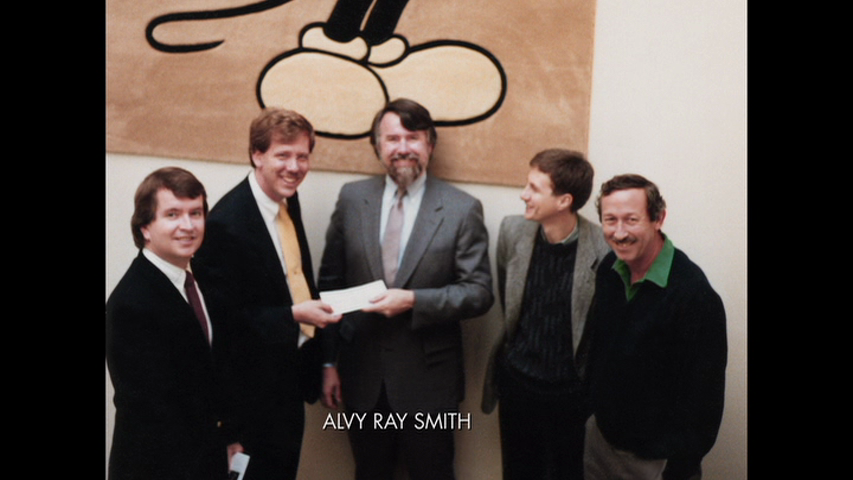
The main negotiators in the CAPS Project

Roy Disney, excited about the opportunity CAPS could give the company, asked Frank Wells, President of the Walt Disney Company, for $10 million to spend on the CAPS program, even though the risk was great, and there was no guarantee of return on the investment. The Disney check went to Alvy Ray Smith, the co-founder of Pixar, the best company to work with when bridging the gap between hand-drawn animation and computer technology. Pixar and Disney employees on the project worked around the clock on the program, with mounting deadlines and quotas. Although The Rescuers Down Under was not a huge success, CAPS received widespread critical acclaim on Beauty and the Beast.

“It was just the basis of what was to come in terms of the 3-D animation process. It was the engine that drove everything else forward,” former chairman Peter Schneider has said about the use of CAPS.

March 29

March 29, 1993 – Aladdin Wins The Academy Award for Best Original Score and Best Original Song, “A Whole New World.”

“With ‘A Whole New World,’ that’s where my whole style took a move into a new place, working with Tim [Rice]. That was also where I gained some confidence that there can be new chapters in my life.” – Alan Menken

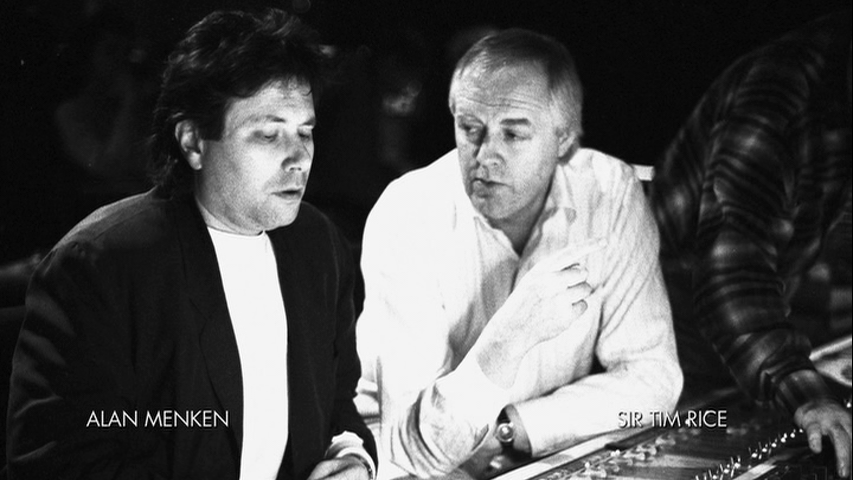
The 65th Academy Awards were held on March 29, 1993, in Los Angeles, California. The Disney Studios struck gold again in the categories of Best Original Score and Best Original Song, winning for the animated blockbuster, Aladdin. Alan Menken won for his score for the film, competing against Jerry Goldsmith’s Basic Instinct, John Barry’s Chaplin, Richard Robbins’ Howards End, and Mark Isham’s A River Runs Through It. The song “A Whole New World,” with music by Alan Menken and lyrics by Sir Tim Rice, won for Best Original Song, competing against “I Have Nothing” and “Run to You” from The Bodyguard, “Beautiful Maria of My Soul” from The Mambo Kings, and “Friend Like Me,” also from Aladdin.

Aladdin was the idea of the lyricist Howard Ashman, and was one of his last projects before he died in 1991. Unfortunately, many of the elements in the movie were not working in the opinion of the higher ups (including Jeffery Katzenberg), so many of the songs written by Ashman and Menken were cut; fortunately, “Friend Like Me” is one of the songs that not only stayed intact, but was nominated for Best Original Song. Menken feared that once Ashman was gone, his career would be over. It was suggested that he work with lyricist Tim Rice, and the two dove right in, working on the marketplace song (“One Jump Ahead”), and a song for the magic carpet ride (“A Whole New World”). “A Whole New World” was performed by Lea Salonga and Brad Kane in the film, with a pop version released as a single, performed by Peabo Bryson and Regina Belle. The song was an immense hit, peaking at #1 on the Billboard Hot 100 chart.

March 28

March 28, 1936 – The Silly Symphony, Elmer Elephant, is Released to Theaters

“Elmer’s got a funny nose, looks just like a rubber hose!”

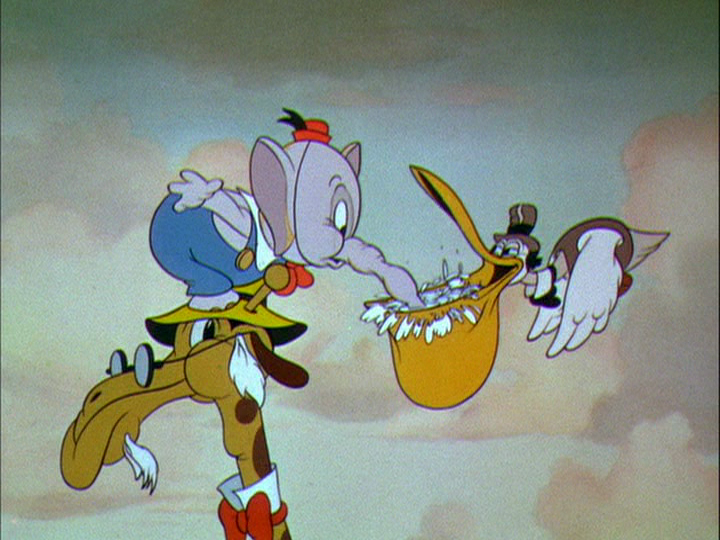
On March 28, 1936, the Silly Symphony, Elmer Elephant, was released to theaters. Directed by Wilfred Jackson, the short film tells the story of an elephant named Elmer, who is cruelly teased about his appearance, particularly his nose, but is able to use his nose to save the day from a runaway fire. Elmer would go on to be a popular merchandising character, and even had his own short-running Silly Symphony comic.

As the story opens, Elmer is seen skipping through the jungle, holding a bouquet of flowers, which he adds to as he passes by a flower bush. He knocks on the door to Tillie Tiger’s house, where the song “Happy Birthday” is heard being sung to Tillie. Elmer peeks in and sees the kids skipping in a circle around Tillie, and then they implore her to blow out the candles on her birthday cake. She agrees, but is unable to extinguish the birthday candles. Sweetly, she asks Joey the Hippo to do it for her, and he agrees.

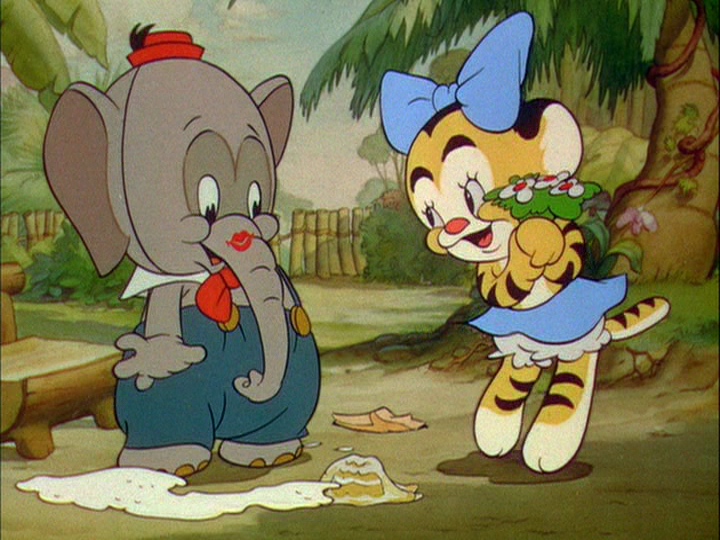
Elmer and Tillie, with Tillie fawning over the flowers he brought for her

Just as Joey is preparing to let out massive breath of air, Elmer appears on the other side of the table, and is rewarded with Tillie’s cake in his face, as Joey left the candles on the plate, still burning brightly. While the kids laugh, Tillie pulls out a napkin and cleans away the cake from Elmer’s face. Tillie spots the flowers in Elmer’s hand, and begins to coo over them, calling them “the nicest present of all.” She gives him a kiss on the nose, which causes him to react comically.

Some of the boys get together and begin to whisper as Tillie scuttles up to her tree house, telling everyone to have a good time and that she will be right back. As Elmer sits down to wait, the boys appear, holding various long objects as “noses” and pretending they have big, floppy ears. Poor Elmer is so embarrassed that he tries to tuck away his nose. The boys bully him, pulling on his nose and sending him flying down a hill and back into the jungle, when all the party guests appear and begin to sing their taunts to him.

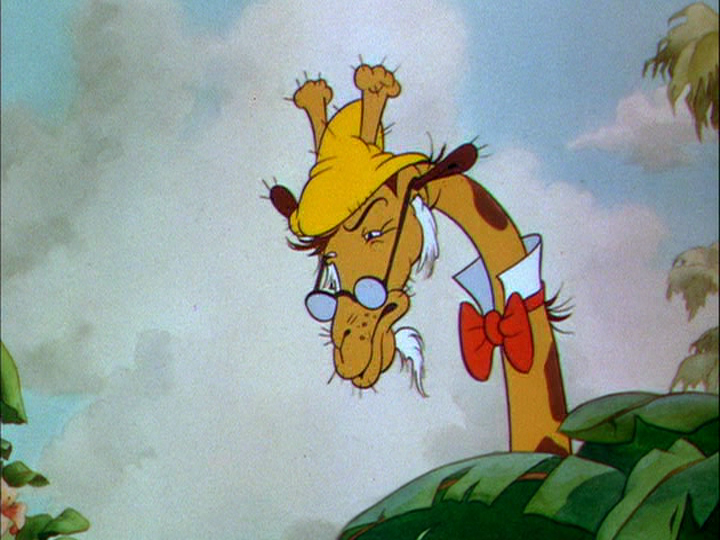
The kindly Old Giraffe, giving Elmer some well-needed advice

Elmer walks away from the party, very upset, when he runs into an elderly giraffe, who asks him what’s the matter. When Elmer explains, the giraffe tells him that “They used to make fun of me too, son, but I don’t care.” He then points out the pelicans nearby in an attempt to make Elmer feel better about his nose.

Just then, sirens are heard in the distance, with the crazy fire truck heading straight for Tillie’s. Tillie is seen trying to beat away the flames with a broom, yelling at her guests to help her get down from the tree house. The boys pull out a blanket for her to jump into, but the flames pull her back and they jump into the outstretched blanket, turning it to ashes. The fire team finally arrives at Tillie’s place, but can’t stop the flames from chasing them down the ladder. The flames trap Tillie up a pole, where she screams for help.

The Old Giraffe, Elmer, and the pelicans use their perceived flaws to work together and save the day

Having observed all of this from the Old Giraffe’s head, Elmer slides down his neck and begins to run at breakneck speed to save Tillie. The Old Giraffe follows, along with the pelicans, and they all work together to put out the flames: the Old Giraffe holds Elmer up to the top of the tree house, the pelicans provide the water, and Elmer uses his nose as a hose. Although the flames are stubborn, Elmer uses some fancy moves to extinguish the flames.

Stuck on her precarious perch, where four little flames are taking apart the pole one splinter at a time, Tillie calls out for Elmer. Elmer comes to her rescue, extinguishing the flames and grabbing the pole Tillie’s holding onto before it completely breaks apart. Tillie calls Elmer her hero, and the two share a kiss, with Elmer using his nose to pull her closer, and one of his ears to keep the moment a bit more private.

March 27

March 27, 1995 – The Lion King is Awarded Two Academy Awards: Best Original Score and Best Song for “Can You Feel the Love Tonight”

Image credit: imdb

 “There’s a rhyme and reason to the wild outdoors, when the heart of this star-crossed voyager beats in time with yours…”

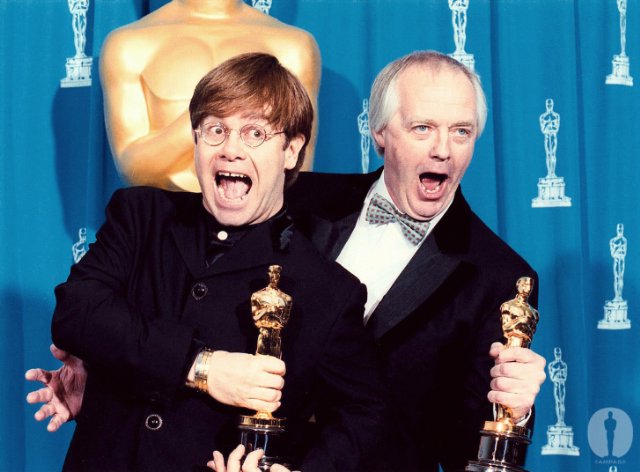
The 67th Academy Awards were held on March 27, 1995, in Los Angeles, California. The Disney Studios continued their good fortune in the categories of Best Original Score and Best Original Song, winning for the animated blockbuster, The Lion King. Hans Zimmer won the award for Best Score, beating out Alan Silvestri’s score for Forrest Gump, Elliot Goldenthal’s Interview with the Vampire, and Thomas Newman’s Little Women and The Shawshank Redemption. Sirs Elton John and Tim Rice won for the song “Can You Feel the Love Tonight,” competing against “Look What Love Has Done” from Junior and “Make Up Your Mind” from The Paper, as well as “Circle of Life” and “Hakuna Matata” from The Lion King.

The version of “Can You Feel the Love Tonight” that exists in the film and the pop version sung by Sir Elton John over the end credits are vastly different lyrically. The song was originally going to be a comic song sung by Timon and Pumbaa (Nathan Lane and Ernie Sabella). After that idea was scrapped, the song was going to be cut from the film, but John insisted that it remain, following the new format of Disney songs beginning when the characters run out of words and can only use song to describe how they feel. The pop version became a hit, peaking at #4 on the Billboard Hot 100 Chart, and is one of the most recognizable Disney songs ever written.