RSS Feed

April 15

April 15, 1917 – Birth of Actor Hans Conried

Hans Conried as Captain Hook

“Hans Conried was inspired casting, you have to say, as Captain Hook. He was a consummate actor and had been one of the busiest and best radio actors throughout the ’30s and ’40s, so he was well schooled in how to act a part vocally.” – Leonard Maltin

Born on April 15, 1917, in Baltimore, Maryland, Hans Conried would go on to be one of the most recognizable vocal actors in Hollywood, with his most famous role, outside of the Disney Studio work, as the voice of Snidely Whiplash in the Rocky and Bullwinkle cartoon series. He studied acting at Columbia University, and after working in radio, he moved into films in 1939. Conried’s first role for the Disney Studios was in 1951, for The Walt Disney Christmas Show, in which he played the Slave in the Magic Mirror.

His recognizable and distinctive radio voice landed him one of his most well-known roles: the dual role of Captain Hook and Mr. Darling in the 1953 film adaptation of Peter Pan. Not only did he bring the vocal chops to the role, but he also acted out the role in a live-action version of the film meant for the animators to observe. After this role, Conried would go on to provide the voice of Thomas Jefferson in the 1953 short Ben and Me. Conried was also hired by the studio to appear on screen in the third installment of the Davy Crockett series, Davy Crockett at the Alamo, as the gambler Thimblerig who takes Davy and George Russel to Texas. Conried would also appear in The Cat from Outer Space as Dr. Heffel and as Professor Whatley in The Shaggy D.A. Conried passed away on January 5, 1982, and left behind a diverse collection of work. Although he has not been named as a Disney Legend, Conried’s recognizable talent through his role as Captain Hook makes him an important part of Disney History.

April 14

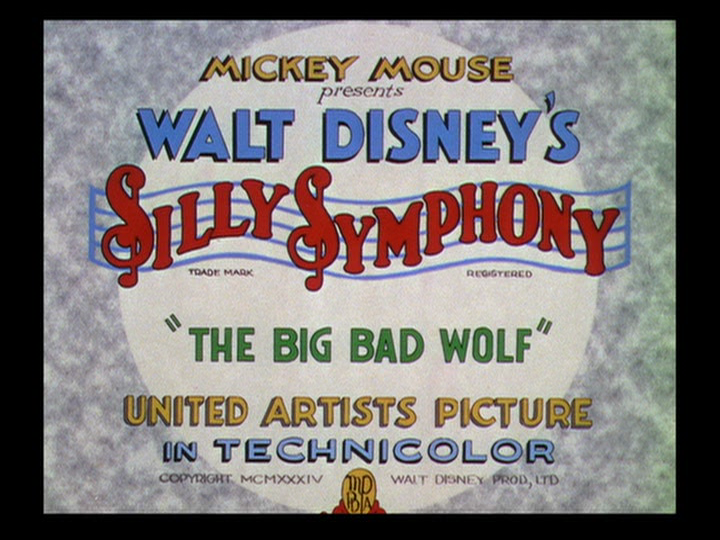
April 14, 1934 – The Silly Symphony, The Big Bad Wolf, is Released to Theaters

“There’s danger in them woods. Beware! The big Bad Wolf is lurking there!”

On April 14, 1934, the Silly Symphony, The Big Bad Wolf, was released to theaters. Capitalizing on the popularity of The Three Little Pigs Silly Symphony, it marks the return of the Three Little Pigs and the Big Bad Wolf, but the short was not nearly as successful as its parent Silly Symphony, and is today still considered inferior to the original, despite some clever gags. It was directed by Burt Gillett, and stars the vocals of Billy Bletcher as the Big Bad Wolf, Pinto Colvig as the Practical Pig, Dorothy Compton as the Fifer Pig, and Mary Moder as the Fiddler Pig.

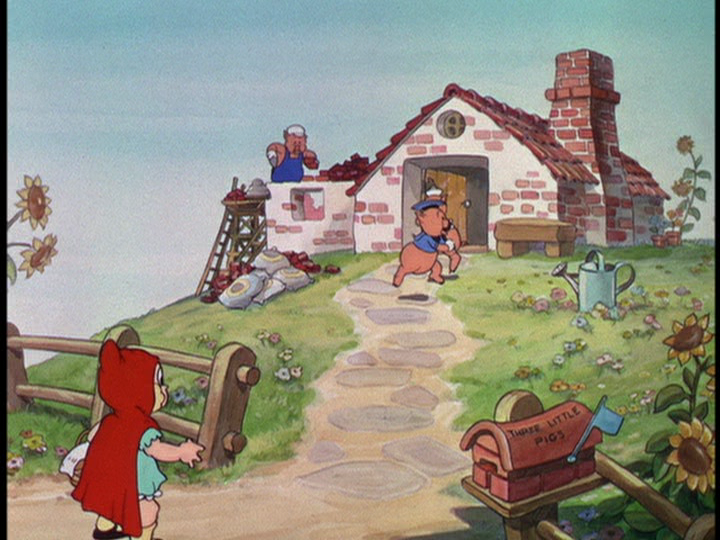
Little Red passes by the brick house of the Three Little Pigs

Little Red Riding Hood is skipping down the path to her grandmother’s house, and passes by the Three Little Pigs’ house, with the Practical Pig hard at work on an addition to the brick house, while his two brothers play their instruments and dance. The brothers greet Little Red Riding Hood, and when she explains that she is on her way to Grandma’s house, the two pigs tell her to take a shortcut through the woods. The Practical Pig, alarmed at their advice, tells her not to go through the woods, because the Big Bad Wolf is lurking there.

The two brothers begin to laugh at the Practical Pig’s advice, calling the wolf a sissy and offering to go along with Little Red to protect her before singing “Who’s Afraid of the Big Bad Wolf?” The Practical Pig just shakes his head at their folly, but continues to work on the house. Just as the three begin their journey on the short cut, the Big Bad Wolf is seen sneaking through the forest, disguised as a bush. He spies the three skipping merrily down the path, and leaves his disguise to climb up a tree and set his new plan in motion.

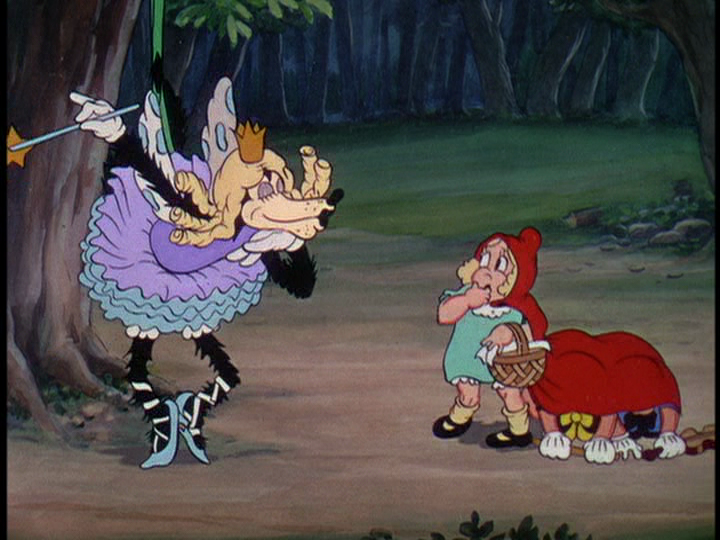
"Goldilocks, the Fairy Queen" lands in front of a frightened trio

The three are stopped suddenly by a “fairy” falling from the sky (the wolf in disguise), and the two pigs hide underneath the shivering Red’s cloak. The “fairy” introduces herself as Goldilocks, the fairy queen, and begins flying around, telling them that they’re safe with her. Unfortunately, the suspenders the Wolf used to help him fly are attached to a broken branch, which splits and lands on his head, knocking off his disguise. Alarmed, the three take off running but are separated, with the Wolf hot on Little Red’s tail. Fortunately for her, he gets stuck between two trees, giving her a chance to get away. The Wolf isn’t angry for long, for he comes up with another plan.

Using another shortcut, the Wolf reaches Grandma’s before Little Red, and peers through the window to see Grandma in bed, knitting. When she hears a knock at the door, she tells the visitor to come inside, and the Wolf enters, laughing menacingly. Grandma leaps out of bed and locks herself in the closet, with the Wolf trying to open the doors. Outside, Little Red is seen speeding through the front gate, stopping at the door to calm herself down before she enters what she thinks is the safety of Grandma’s house. Alerted by the knocking at the door, the Wolf quickly stops trying to get Grandma, and focuses his attention on getting the girl. He quickly disguises himself in Grandma’s robe and bonnet and slips into bed before calling Little Red in. Little Red notices what big eyes Grandma has, and what a big nose Grandma has (to which the Wolf looks at the audience and asks, “How am I doing?”). When Little Red points out the big mouth Grandma has, the Wolf strikes, chasing her around the room.

The two pigs watch the Wolf howling with pain back into the woods

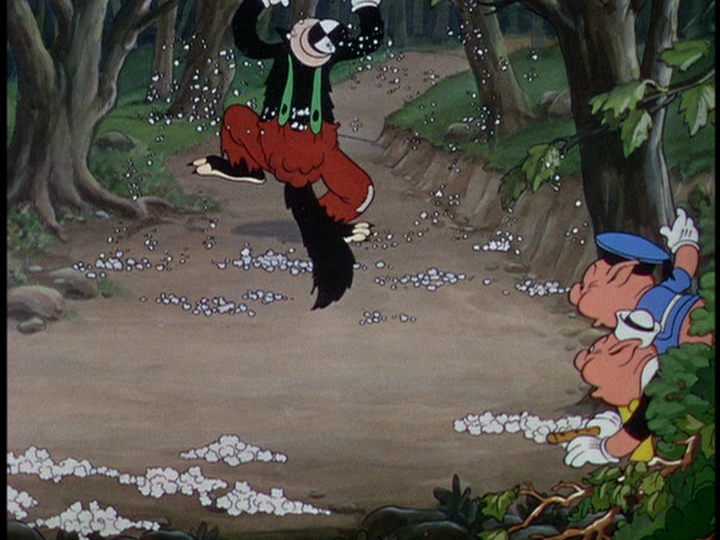
Meanwhile, the two pigs have made it back home and alerted their brother about Little Red’s predicament. The Practical Pig runs to his collection of “Wolf Exterminators” and begins to load them into his bag before setting off for Grandma’s, leaving the two pigs cowering in the doorway. As the Wolf continues to chase Little Red, Grandma uses an umbrella to scoop the girl up and pull her into the closet for safety, with the Wolf once again trying to open the doors. The Practical Pig arrives just in time, and sneaks in while the Wolf isn’t noticing, and begins to place popcorn kernels down the Wolf’s pants, and then grabs some hot coals from the fire. Placing the shovel with coals in with the kernels, the Wolf cries out in pain and leaps through the ceiling of the house, and runs back into the woods, with the popcorn kernels popping wildly.

The two other pigs show up just in time to see the Wolf running away, and shake hands in happiness that the Wolf has been bested again. Inside Grandma’s house, Little Red and the Practical Pig are playing the piano while Grandma knits, with the two other pigs dancing and singing “Who’s Afraid of The Big Bad Wolf?” once more.

April 13

April 13, 1935 – The Mickey Mouse Short, Mickey’s Kangaroo, is Released to Theaters
“The nerve of that grasshopper! Busting up my house!”

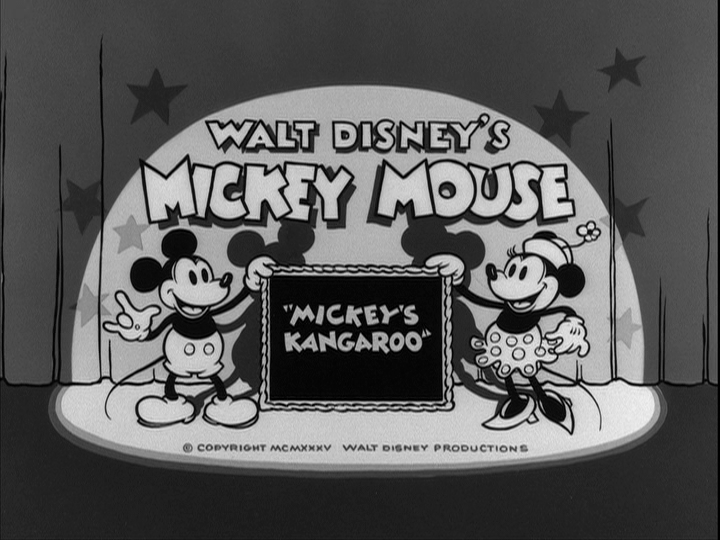
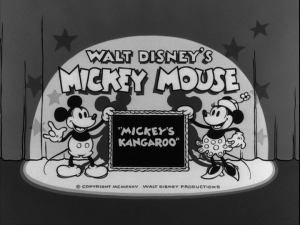
On April 13, 1935, the Mickey Mouse short film, Mickey’s Kangaroo, was released. It was the last black-and-white Disney cartoon; the first Mickey Mouse color short had been released in February, but the studio released a few more black-and-white shorts before it realized that they had to be in color to continue Mickey’s popularity. The short was directed by David Hand, with Walt Disney providing the voice of Mickey Mouse. The short is also unusual for the fact that Pluto speaks to the audience, or at least lets the audience listen in on his thoughts.
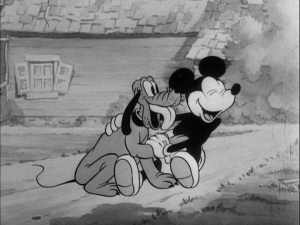
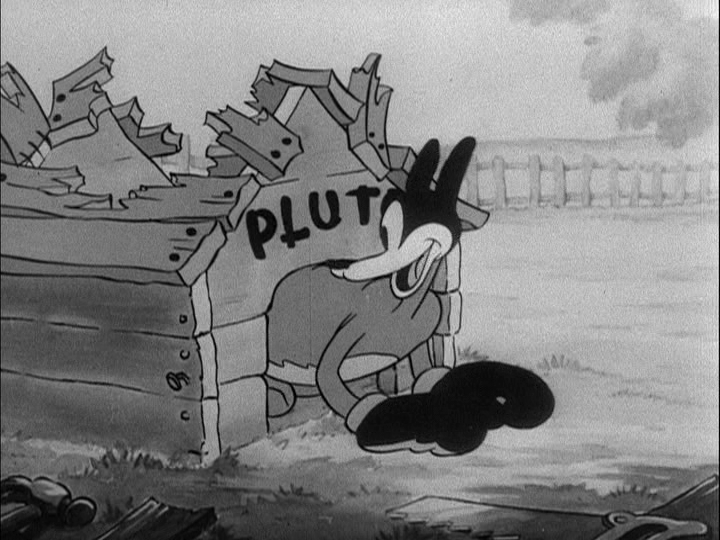
Pluto lets Mickey know how happy he is with the new doghouse

Mickey is seen painting Pluto’s name on a newly built doghouse, and Pluto barks excitedly, jumping around and leaping on Mickey, showering him with kisses. Suddenly, a whistle breaks up their happy moment as the mailman arrives with a large, unusually shaped package for Mickey. Mickey looks at the tag and sees that it’s from Australia. Curious, he decides to open it.

As Mickey tries to open the package, it hops away, and Mickey lands on his face. Pluto follows the bouncing crate, sniffing it until it jumps on his nose. Unfortunately for Pluto, after he frees his nose, the box jumps on his tail, and he lets out a loud howl of pain. The crate jumps around wildly, chasing Pluto around the yard and into the woodshed, where the crate bursts open, revealing a rather large kangaroo.
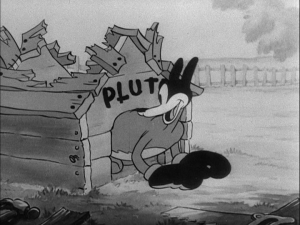
The kangaroo in the remains of Pluto's new doghouse

Mickey is excited upon seeing his new pal, shaking her hand. He runs to get his boxing gloves to spar with the kangaroo, and the kangaroo decides to make Pluto’s home her own. Pluto turns to the audience, snarling, and begins to vent before turning to see the kangaroo and the damage she’s done to the doghouse. Seeing Pluto’s name on the front, the kangaroo licks the letters off, infuriating Pluto. He runs full speed, only to meet with the kangaroo’s fist, and is thrown into a basket of clothespins.

Pluto tries again to attack, but is sucker-punched again –this time by the joey in the mother’s pouch. Pluto is confused at what had just happened, and when he sniffs at the pouch, he’s met with a harder blow to the head, sending him running to the chicken pen, howling all the way.
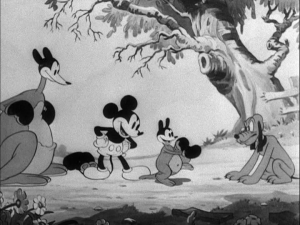
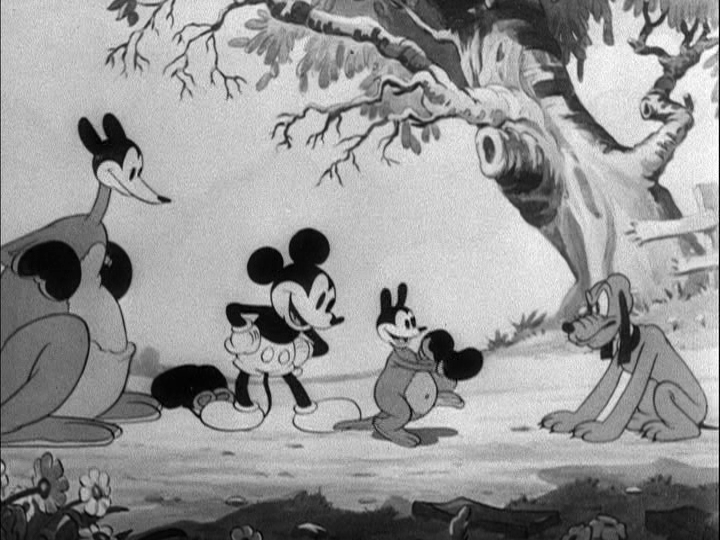
One kangaroo for Mickey, one joey for Pluto

Mickey runs out with his boxing gloves, and pulls out the joey, showing Pluto. The joey spars playfully with Mickey as Pluto carefully crawls back to meet the kangaroos and Mickey. Mickey then tells him, “One for you (the joey), and one for me (the mother).” Pluto is not amused at this situation, or that Mickey finds the joey cute. Mickey takes the mother to the gymnasium he has set up in the old barn, leaving Pluto and the joey behind.

Pluto again talks to the audience, telling them of his scheme to get rid of the joey first. He then begins to creep toward the water bowl, but is scared easily when the joey hiccups. Meanwhile, Mickey is sparring with the mother in the gym, and begins punching and teasing her, while she looks confused. Finally understanding, she lays one on him, with Mickey remarking, “Oh boy! What a wallop!” Although the kangaroo is easily winning, Mickey thinks it’s all in good fun and enjoys himself.
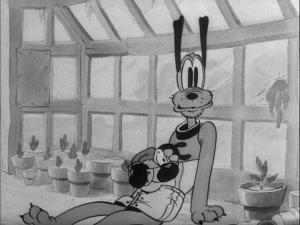
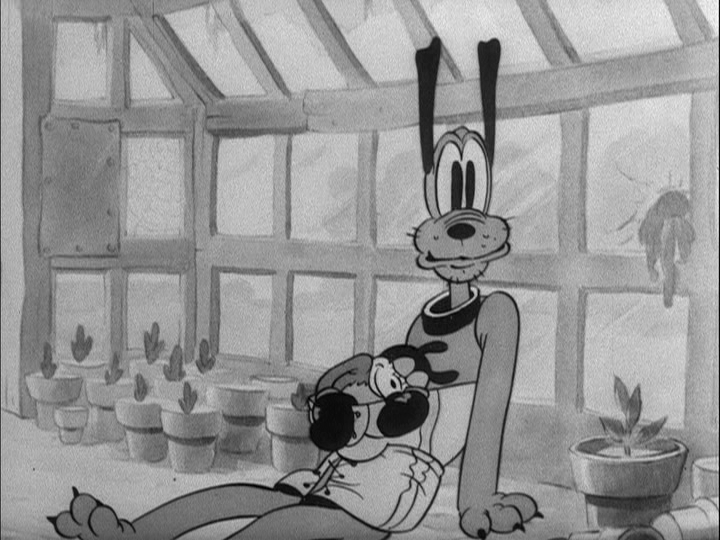
Pluto finally feels affection for the joey

Outside, Pluto is trying to go ahead with his plan to get rid of the joey, but with no success, as it outsmarts his every move just by jumping. After a particularly bad attempt, Pluto ends up in a scrap heap, with springs attached to his feet. Although he is able to jump, he isn’t able to do it well, and crash lands into a corset on the laundry line, and then falls through the ceiling of the greenhouse, where the joey finds him out cold. The joey then curls inside the corset, as if it were a pouch, and goes to sleep. Although angry when revived, Pluto is touched by the affections of the joey, and cuddles with him.

The moment is broken when they hear strange noises coming from the gymnasium, and the two rush to see the kangaroo giving Mickey a thorough walloping. With one particular hit, Mickey is sent flying into a hay baler, and when he comes out, trapped in a hay bale, he still wishes to fight. A bit later, the mother is seen reading the sports section in front of a roaring fire, with the joey and Pluto snug in her pouch, becoming one happy family.

April 12

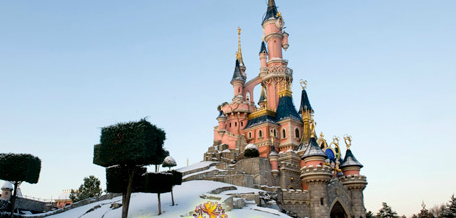
April 12, 1992 – Euro Disneyland Opens

Image credit: Disneyland Paris Official Website

“In a Magical Kingdom not so far away – somewhere between a place where you wish upon a star and dreams come true – Disney heroes and heroines live in fairytales that are, happily, never ending.”

On April 12, 1992, Euro Disneyland opened in Marne-la-Vallée, France, approximately 20 miles from the center of Paris. Renamed “Disneyland Paris” in 1994, the park is the second Disney park created outside of the United States, the first being Tokyo Disneyland, but is the first to be owned and operated by Disney.

Inspired by success of Tokyo Disneyland, plans for a European Disney park started in the 1980s, and were narrowed down to two areas: one near Barcelona, Spain, and one near Paris, France. Michael Eisner and Frank Wells finally made the decision to go with the area near France, due to its easily accessible location and its fairytale-like landscape. After years of construction, the park was completed, and has been deemed as the most beautiful of all Disney parks by many who cite the latest technology and architecture at the time used in creating the park. Disneyland Paris has the same layout as Disneyland, except the change of name from Tomorrowland to Discoveryland. The park itself consists of two parks—Disneyland Park and Walt Disney Studios Park—as well as an entertainment area called Disney Village. The complex also contains seven Disney-themed hotels.

The park does not come without controversy. Although almost 11 million visitors visited the park its inaugural year, the park lost money, due to both the economic conditions at the time and the interest payments on construction debts. Prominent French figures opposed the park’s construction, and French labor unions held protests. In 1994, the park went through a financial reorganization (including a new name), and in 1995, the park saw its first profit. It is now France’s and Europe’s most visited themed attraction.

April 11

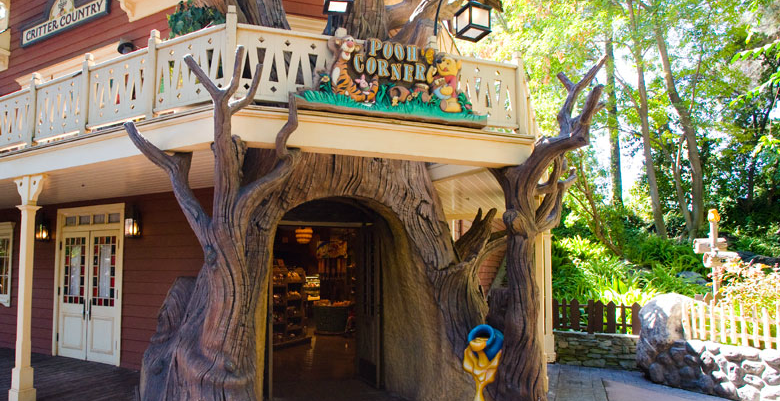
April 11, 1993 – Pooh Corner opens in Disneyland’s Critter Country

Image credit: Disneyland official website

On April 11, 1993, the souvenir store Pooh Corner opened in Critter Country, thanks to the popularity of the Winnie the Pooh series. Pooh Corner allows guests to purchase all sorts of Winnie the Pooh merchandise. The store also includes a bakery called Pooh’s Hunny Spot, where guests can buy sweets and baked goods.

Pooh’s Corner is divided into three sections, the bakery being the most famous of the three, and the biggest draw. It’s located next to the Many Adventures of Winnie the Pooh attraction, past Splash Mountain, tucked away in a far corner of Disneyland.

April 10

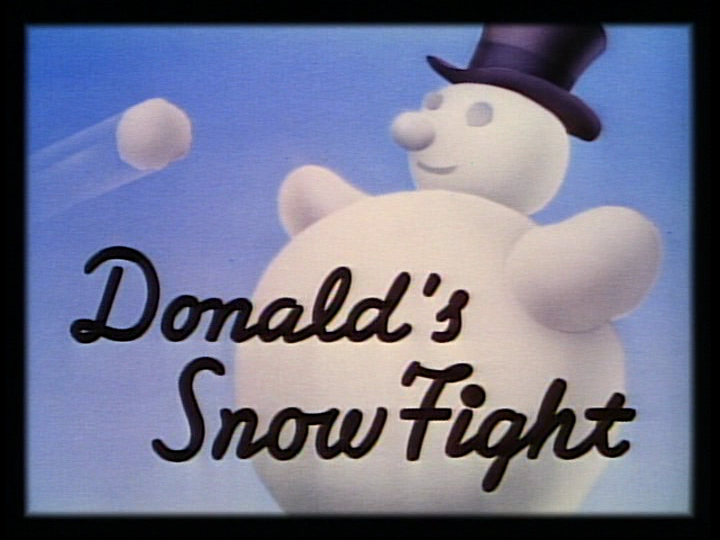
April 10, 1942 – The Donald Duck Short Film, Donald’s Snow Fight, is Released to Theaters

“Snow, oh boy! I’m crazy about snow!”

On April 10, 1942, the Donald Duck short film, Donald’s Snow Fight, was released to theaters. Directed by Jack King, it stars Clarence Nash as the voice of Donald and the nephews. There are many clever gags in this short, including a couple that is seen kissing underneath a mound of snow, which is swept away when Donald rushes by.

It’s a wintery day in suburbia, and Donald Duck is excited that there’s snow on the ground. He peeks outside to see how much there is, his beak turning blue in the process. Seeing the ice build up on the tip of his beak does not deter him from running to grab his overcoat.

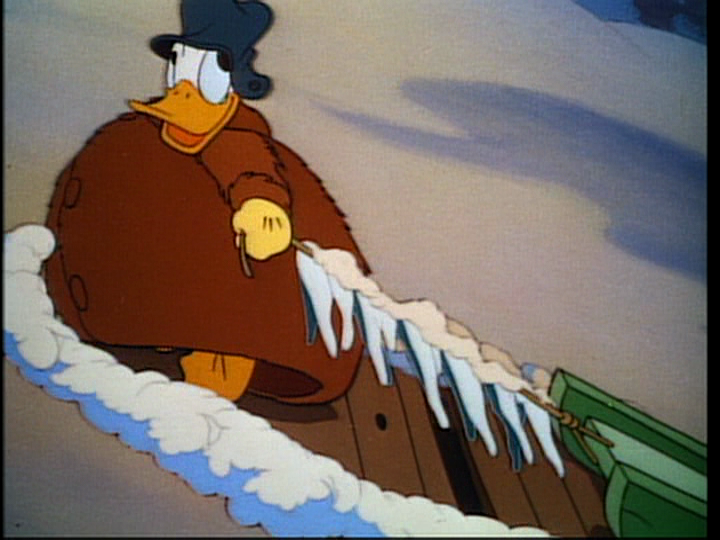
Donald merrily on his way to go sledding

Bundled up and ready for a snow day, Donald treks up a hill with his sled, singing “Jingle Bells” while jingling the icicles on his sled rope. When he reaches the top of the hill, he notices his nephews building a snowman right in the sled path. Donald decides this is the perfect moment to “have some fun,” and dive bombs into the nephews’ creation, sending snow flying everywhere. Donald cracks up with laughter and rolls around in the snow, and the nephews quickly come up with a plan for revenge.

Their first idea is to disguise a rock with another snowman, one that looks like Donald. They cry for Donald’s attention, and the duck takes the bait, flying full speed toward the “snowman.” Donald hits the rock so hard that all of the fur is shaken off his fur coat. Not to be beaten by his nephews, he chases them across the snow, only to be cut off by the nephews escaping into their elaborate snow fort, with the springs of the door bouncing Donald back into a tree where the built-up snow and icicles trap him.

Captain Donald plays a bowling game while his nephews play the part of the pins

Inside, the nephews think they’ve won, but Donald swears revenge. The next scene shows that Donald has built his own fort that looks like a boat on the ice-covered pond, and he declares war on the nephews. He shoots snowballs at the three with elaborate trick shots, covering them with snow and making them appear to be bowling pins. Donald then grabs a large ball of snow and, throwing it like a bowling ball, throws a strike. Not satisfied, Donald grabs another large mound of snow shaped like a bullet and starts dunking it into a bucket of water, turning it into a deadly ice bullet. He fires it over to the nephews’ fort, splitting their flagpole into three sections, which ends up knocking into the nephews.

“Do you surrender?” Donald asks, but the nephews refuse. They gather all the materials they have, including mousetraps and rope, and plant the mousetraps into snow sculptures shaped like rockets. They place all the rockets into a basket and let it fly from a catapult, and Donald is trapped by the mousetraps. They continue their attack with more snow cannons, even though Donald calls it “unconstitutional.”

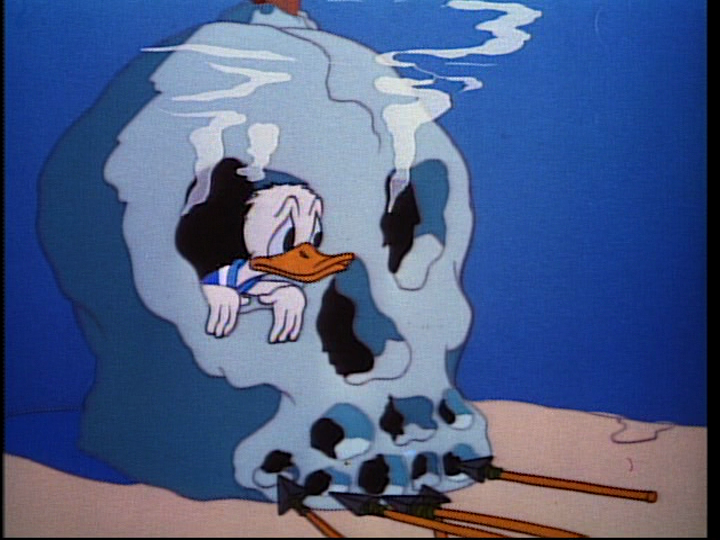
The first set of coals and arrows spell the end for Donald Duck

Not done with their uncle yet, the nephews gather hot coals and fire them attached to arrows, melting part of Donald’s boat. The largest arrow causes the whole boat to melt, with poor Donald stuck on the top. He falls through a hole in the ice and is seen frozen at the top of the splash of water, and the nephews are seen performing a victory war dance around the ice.

April 9

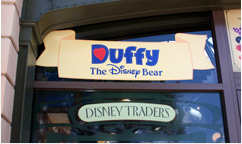
April 9, 1987 – The Disney Traders Shop Opens in Epcot

Image courtesy of the Disney Parks website

On April 9, 1987, the Disney Traders shop opened in the World Showcase Plaza in Epcot. The store sells many different Disney souvenirs, including those with the Epcot logo, trading pins, and merchandise featuring Duffy the Disney Bear. The store is located at the entrance of the World Showplace.

Disney Traders has become the Duffy the Disney Bear headquarters. Duffy was created in 2002 as a limited-time toy, but shot off in popularity when he was introduced in Tokyo DisneySea. He was then brought back to the American parks, and is seen as a meet-and-greet character at the Disney Traders store.

April 8

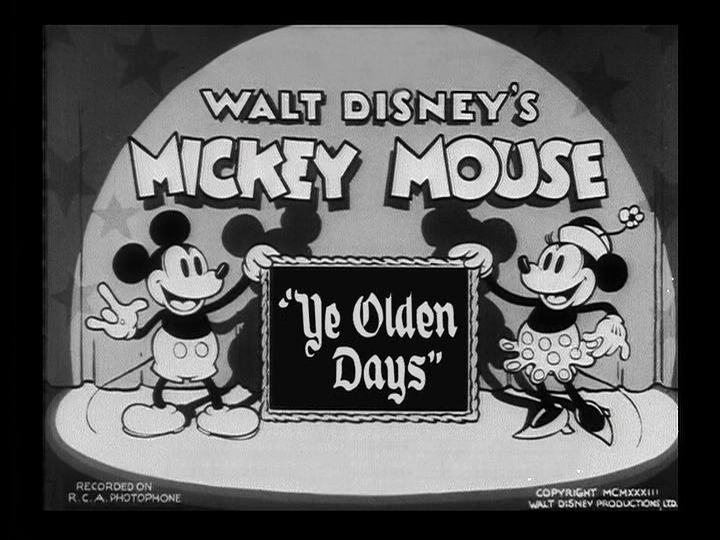
April 8, 1933 – The Mickey Mouse Short, Ye Olden Days, Premieres in Theaters

“I know you’ll learn to love me.”

On April 8, 1933, the Mickey Mouse short film, Ye Olden Days, premiered in theaters. It was directed by Burt Gillett, and starred Walt Disney as Mickey Mouse, Marcellite Garner as Minnie Mouse, and Pinto Colvig as Dippy Dawg. This is one of the few instances where the character of Dippy Dawg is referred to by that name. He grew to be an international star in his own right, but with a different moniker: Goofy.

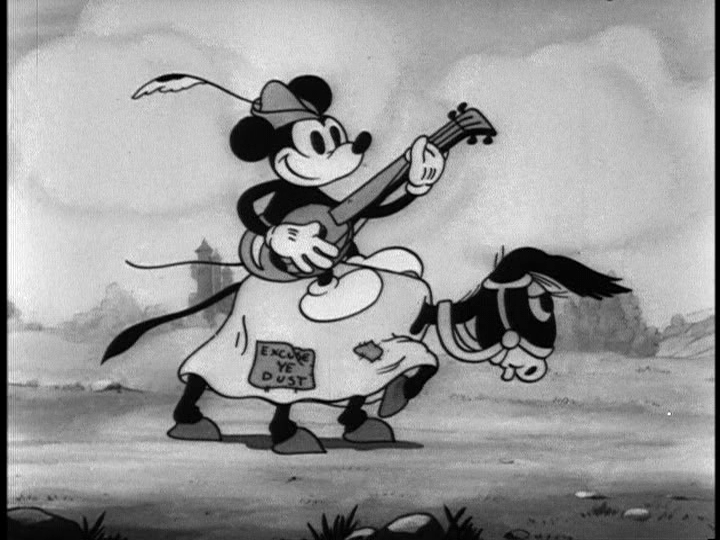
Mickey as The Wandering Minstrel, traveling from far away

The short opens with a cast list, with Mickey playing “Ye Wandering Minstrel,” Minnie as “Ye Princess,” and Dippy Dawg as “Ye Prince.” The name of the person playing “Ye Old King” is covered up by the end roll of parchment. We then see Mickey, riding on the back of a very tired-looking donkey, holding a lute and signing a song, introducing himself as a wandering minstrel from afar.

Inside the castle, all the members of the court are raising their glasses and cheering for the king. The king informs his subjects that his daughter, the Princess of Lalapazoo, will marry the Prince of Pupupadoo. Trumpets sound, and at the doorway stands Dippy Dawg, who gives his famous laugh. Minnie appears at the other doorway after the trumpets similarly announce her arrival.

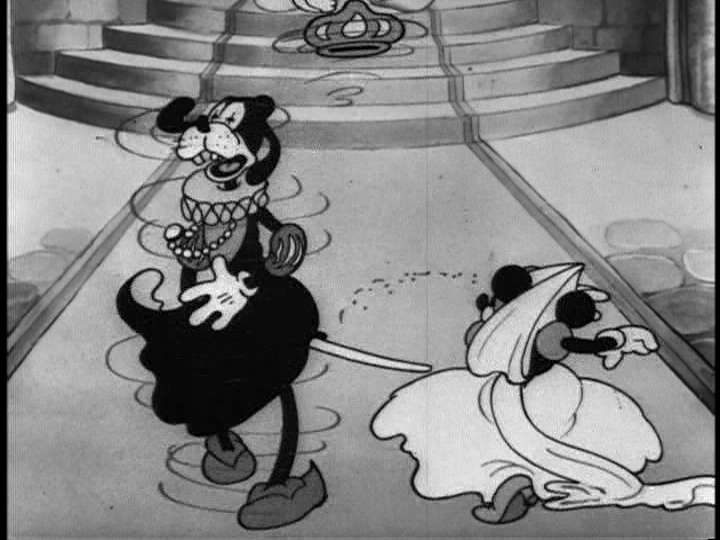
Minnie emphatically slaps Dippy Dawg across the face, refusing to marry him

Mickey arrives at the castle, in time to see the wedding between the Prince and the Princess. The king demands that Minnie marry the prince, and Dippy Dawg grabs one of Minnie’s hands and begins kissing up and down her arm. She swears she will not marry the prince, and slaps him three times. The king, angered by his daughter’s behavior, sends her to be locked in the attic.

Seeing all this, Mickey decides to rescue the princess from her fate. He spots the tower where Minnie and her handmaiden (who appears to be played by Clarabelle Cow) are locked away. Inside the tower, Minnie and Clarabelle begin to cry at their fate, until interrupted by a song at the window. Mickey sings to her:

“Cheer up, oh lovely princess

For you’ll be rescued soon

I’ll take thee away

So ye won’t have to stay

And marry that silly baboon.”

Impressed, Minnie  sends Mickey a flower from her hat with a kiss, and he jumps up from a tree branch to the window. He tells her that he’ll save her.

The king spies Mickey and Minnie trying escape through the window

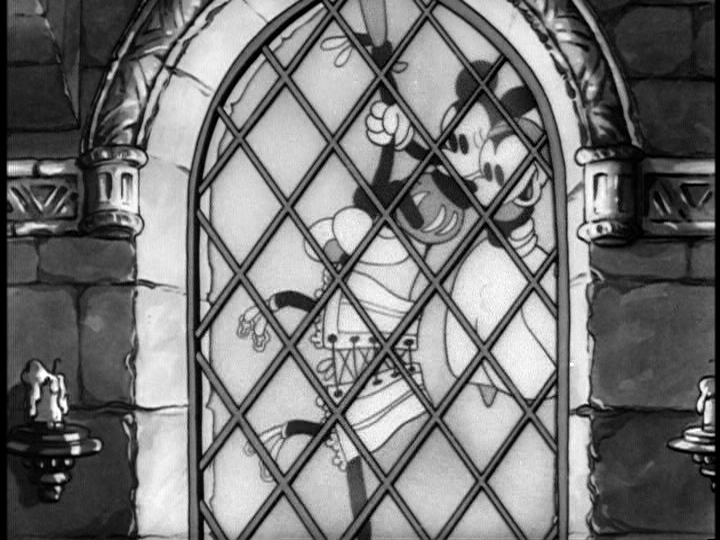
The king continues the festivities, which includes a giant feast that everyone happily prepares and eats. Mickey and Minnie, however, using the handmaiden’s clothes as a crudely constructed rope, begin to rappel down the side of the tower. They are spotted by the king after the clips on the corset begin to tap against the window, and Mickey and Minnie are captured. Infuriated, the king orders Mickey’s head chopped off. As it looks like the end for Mickey, Minnie steps in front and declares her love for the minstrel. She suggests that there be a duel between Mickey and the prince instead.

Excited by this, the king agrees, and everyone busily prepares for the duel. With a loud clang, the duel begins. As Micky and the prince speed toward each other, both are thrown off their horses. Dippy Dawg chases Mickey around the room with his lance, but the mouse finds cunning ways to stay one step in front of him. Finally, Mickey chases the prince out the window, and is held by the crowd in victory, where he and Minnie share a kiss.

April 7

April 7, 1995 – The Documentary, Frank and Ollie, is Shown at the Cleveland Film Festival

“Seemed like you seldom heard Frank’s name without Ollie’s along with it, or Ollie’s without Frank’s name. It was Frank and Ollie.”

On April 7, 1995, the documentary film, Frank and Ollie, was shown at the Cleveland Film Festival. Written and directed by Frank’s son, Theodore Thomas, it tells the story of Frank Thomas and Ollie Johnston, two members of the elite group of animators at the Disney Studios known as the Nine Old Men.

The documentary is a touching tribute to the friendship of the two, which began at Stanford University in the art department. Through their long tenure at the Walt Disney Studios, the two not only helped pioneer the field of animation, but also used what they learned to help teach other artists, including Brad Bird, who gave them a cameo in The Incredibles. Frank and Ollie goes through their history with the company, from the success of Snow White and the Seven Dwarfs, the studio’s change during World War II, the unexpected death of Walt Disney, and their work on The Jungle Book. The film also shows their daily lives in California, where the two friends were also next-door neighbors.

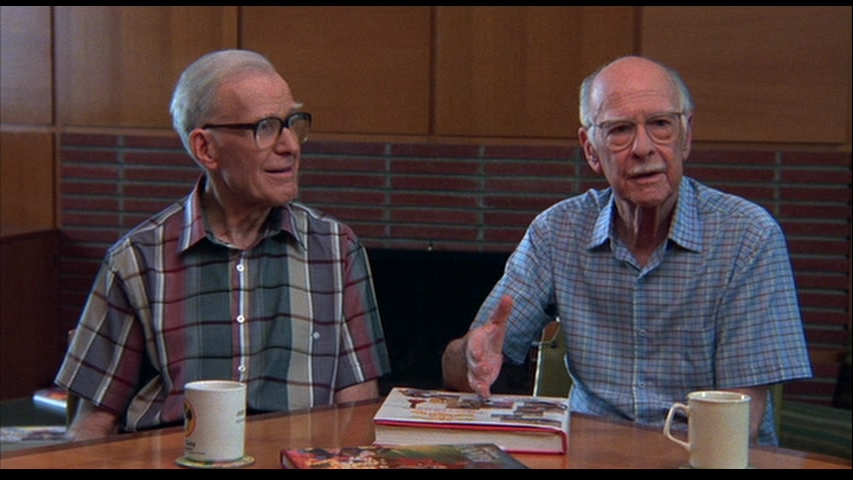
Frank Thomas (L) and Ollie Johnston, sitting down and discussing their memories at the studio

Frank and Ollie premiered at the Sundance Film Festival on January 22, 1995, and then was shown at the Cleveland Film Festival, with a full release to theaters on October 20, 1995, so that the film could be considered for an Academy Award. The documentary received very good reviews upon release, and captures a rare history of life inside the Disney Studios.

April 6

April 6, 1931 – The Mickey Mouse Short Film, The Castaway, is Released to Theaters

“Bananas! Am I hungry! Oh boy!”

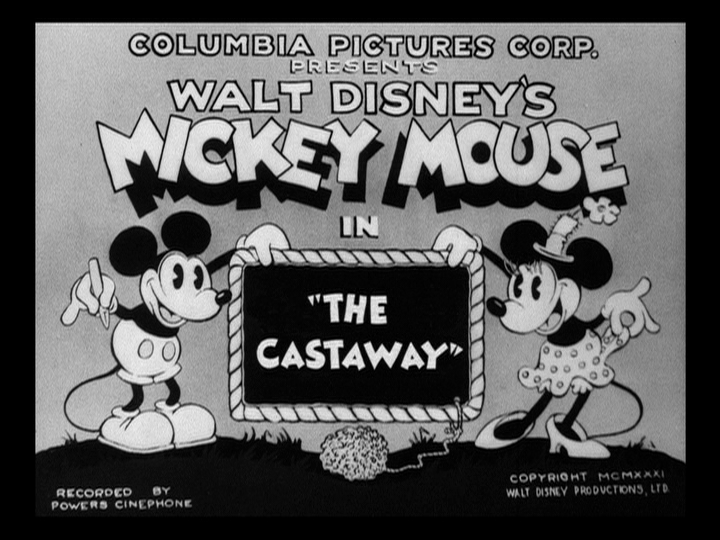
On April 6, 1931, the new Mickey Mouse short film, The Castaway, was released to theaters. It was directed by Wilfred Jackson, with Walt Disney as Mickey. It’s one of the few shorts that uses the Mickey Mouse Club theme song, “Minnie’s Yoo-Hoo,” as the title and end music.

Mickey is stunned as his "sail" begins to perform a dance

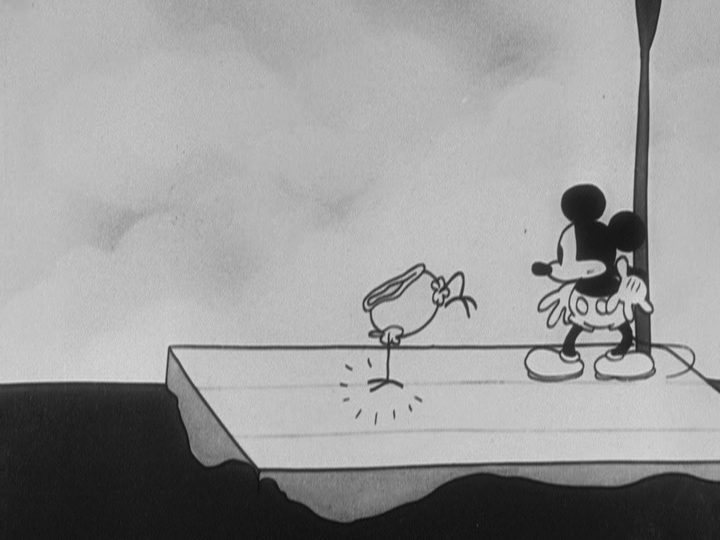
The short opens with poor Mickey adrift at sea, the waves crashing wildly around him. Seagulls fly through the legs of his “sail” (a pair of bloomers), until one gets stuck and brings the sail to the boat, and Mickey watches the odd sight of dancing bloomers as the seagull tries to escape. As it flies away, Mickey spots land and tricks a swordfish into pushing his boat to shore.

Immediately after landing, Mickey spots food: he crashlanded into a banana tree. He shakes the tree, and then uses a stick to help him bring down the bananas, but the stick acts like a boomerang and sends Mickey flying into the tree, which, fortunately, brings the bananas to the ground. As Mickey tries to eat them, however, he accidentally knocks a spider from its web, and nearly into Mickey’s mouth. The mouse screams at the arachnid, and seemingly forgets about the bananas as he runs to the shoreline.

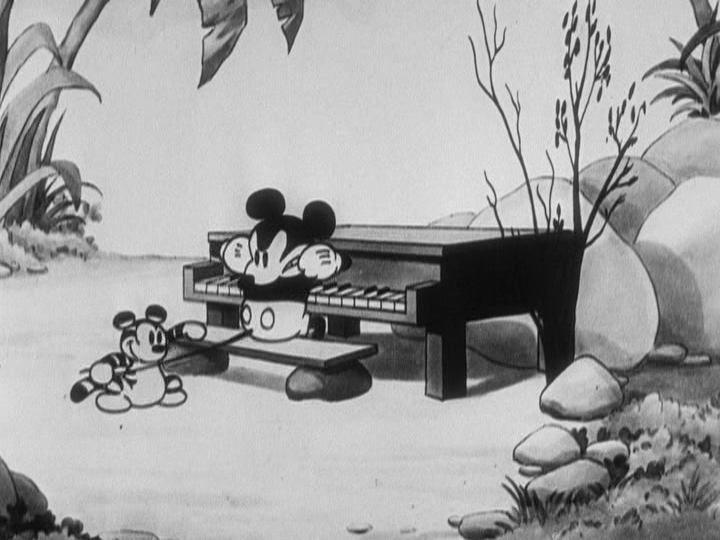
The cub continues to annoy Mickey as Mickey tries to keep playing the piano

Seeing a crate, Mickey tries to retrieve it before the tide comes in, but the tide ends up washing Mickey and the crate further inland. The crate breaks open on a rock, revealing a very soggy piano. Mickey empties the piano of the excess water, sits down, and begins to play, accompanied by three nearby seals. A tiger cub also hears the music and comes out to help Mickey play, but Mickey knocks the cub aside. The cub then tries to use Mickey’s tail as an instrument, but Mickey won’t have it and places the cub in a nearby tree.

The music also gets the attention of a gorilla nearby, and Mickey lets the gorilla play the piano with its feet. Unfortunately, the gorilla gets a little too rough with the piano, and Mickey tries to stop the animal from completely destroying it, with no success. As Mickey grabs a rock to throw at the gorilla, it turns around, and Mickey pretends to perform a few tricks with it before showing it a nervous smile.

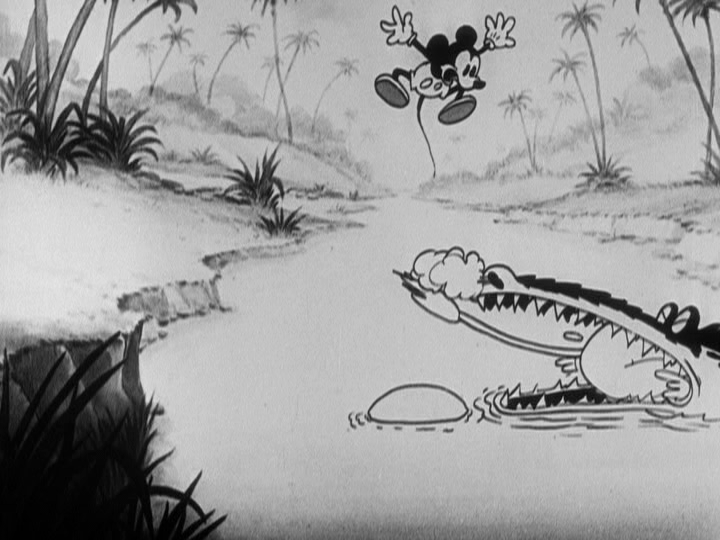
Mickey leaps into the air, as the lion leaps into the open mouth of the alligator

Mickey drops the rock onto the back of a sleeping lion, who begins to chase the frightened mouse. After jumping into a river and laughing at the roaring lion on the riverbank, Mickey thinks he’s home free, not spotting the alligator ready to eat him right behind his back. Stuck between the two dangers, Mickey leaps into the air as the lion leaps to attack. The lion ends up getting swallowed by the alligator, and Mickey cheers. The rock he’s standing on moves, however, and he finds himself riding downstream on the back of a tortoise. Mickey gives a friendly salute to the audience, and waves as he drifts away.