RSS Feed

Monthly Archives: April 2012

April 10

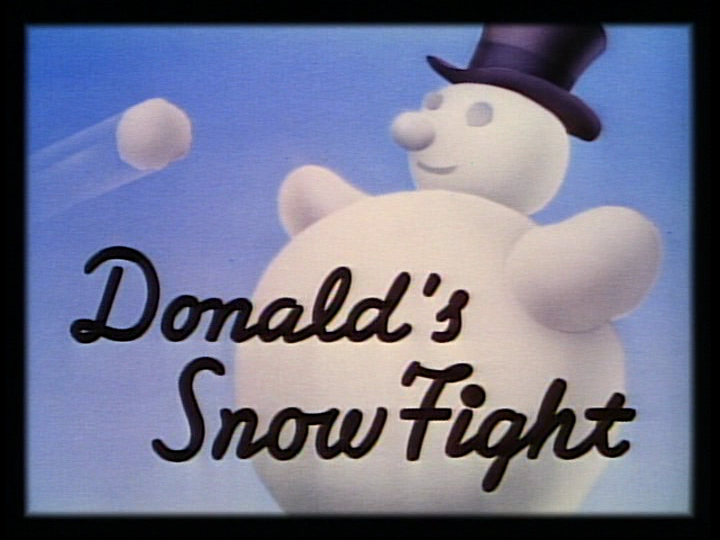
April 10, 1942 – The Donald Duck Short Film, Donald’s Snow Fight, is Released to Theaters

“Snow, oh boy! I’m crazy about snow!”

On April 10, 1942, the Donald Duck short film, Donald’s Snow Fight, was released to theaters. Directed by Jack King, it stars Clarence Nash as the voice of Donald and the nephews. There are many clever gags in this short, including a couple that is seen kissing underneath a mound of snow, which is swept away when Donald rushes by.

It’s a wintery day in suburbia, and Donald Duck is excited that there’s snow on the ground. He peeks outside to see how much there is, his beak turning blue in the process. Seeing the ice build up on the tip of his beak does not deter him from running to grab his overcoat.

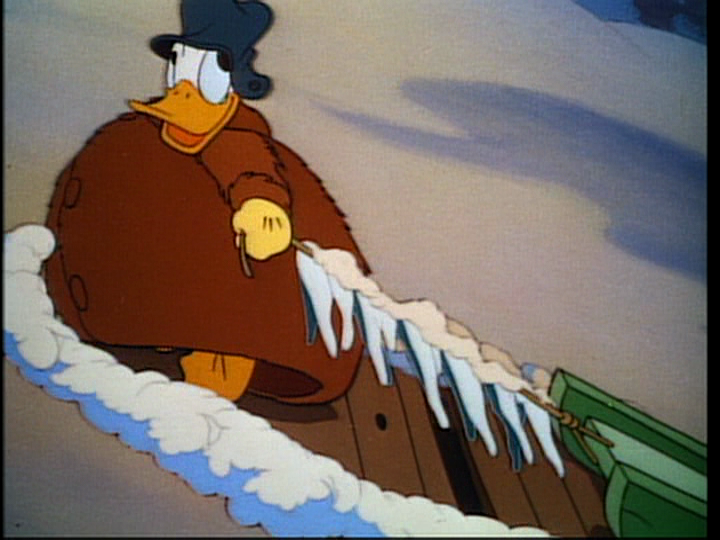
Donald merrily on his way to go sledding

Bundled up and ready for a snow day, Donald treks up a hill with his sled, singing “Jingle Bells” while jingling the icicles on his sled rope. When he reaches the top of the hill, he notices his nephews building a snowman right in the sled path. Donald decides this is the perfect moment to “have some fun,” and dive bombs into the nephews’ creation, sending snow flying everywhere. Donald cracks up with laughter and rolls around in the snow, and the nephews quickly come up with a plan for revenge.

Their first idea is to disguise a rock with another snowman, one that looks like Donald. They cry for Donald’s attention, and the duck takes the bait, flying full speed toward the “snowman.” Donald hits the rock so hard that all of the fur is shaken off his fur coat. Not to be beaten by his nephews, he chases them across the snow, only to be cut off by the nephews escaping into their elaborate snow fort, with the springs of the door bouncing Donald back into a tree where the built-up snow and icicles trap him.

Captain Donald plays a bowling game while his nephews play the part of the pins

Inside, the nephews think they’ve won, but Donald swears revenge. The next scene shows that Donald has built his own fort that looks like a boat on the ice-covered pond, and he declares war on the nephews. He shoots snowballs at the three with elaborate trick shots, covering them with snow and making them appear to be bowling pins. Donald then grabs a large ball of snow and, throwing it like a bowling ball, throws a strike. Not satisfied, Donald grabs another large mound of snow shaped like a bullet and starts dunking it into a bucket of water, turning it into a deadly ice bullet. He fires it over to the nephews’ fort, splitting their flagpole into three sections, which ends up knocking into the nephews.

“Do you surrender?” Donald asks, but the nephews refuse. They gather all the materials they have, including mousetraps and rope, and plant the mousetraps into snow sculptures shaped like rockets. They place all the rockets into a basket and let it fly from a catapult, and Donald is trapped by the mousetraps. They continue their attack with more snow cannons, even though Donald calls it “unconstitutional.”

The first set of coals and arrows spell the end for Donald Duck

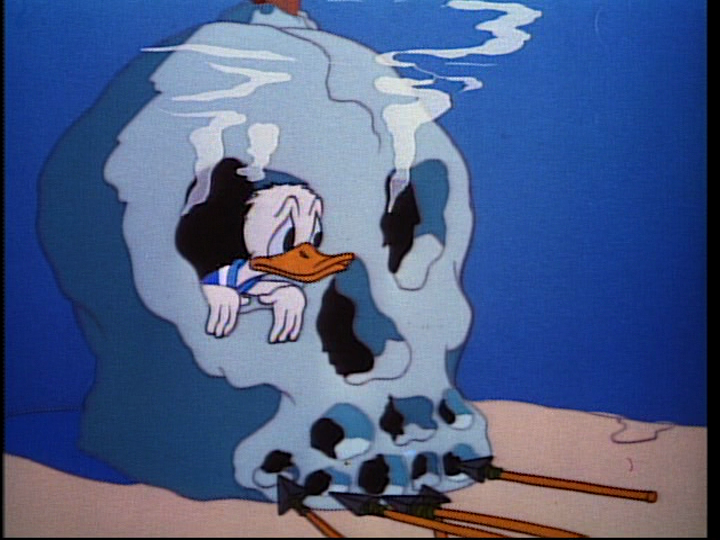
Not done with their uncle yet, the nephews gather hot coals and fire them attached to arrows, melting part of Donald’s boat. The largest arrow causes the whole boat to melt, with poor Donald stuck on the top. He falls through a hole in the ice and is seen frozen at the top of the splash of water, and the nephews are seen performing a victory war dance around the ice.

April 9

April 9, 1987 – The Disney Traders Shop Opens in Epcot

Image courtesy of the Disney Parks website

On April 9, 1987, the Disney Traders shop opened in the World Showcase Plaza in Epcot. The store sells many different Disney souvenirs, including those with the Epcot logo, trading pins, and merchandise featuring Duffy the Disney Bear. The store is located at the entrance of the World Showplace.

Disney Traders has become the Duffy the Disney Bear headquarters. Duffy was created in 2002 as a limited-time toy, but shot off in popularity when he was introduced in Tokyo DisneySea. He was then brought back to the American parks, and is seen as a meet-and-greet character at the Disney Traders store.

April 8

April 8, 1933 – The Mickey Mouse Short, Ye Olden Days, Premieres in Theaters

“I know you’ll learn to love me.”

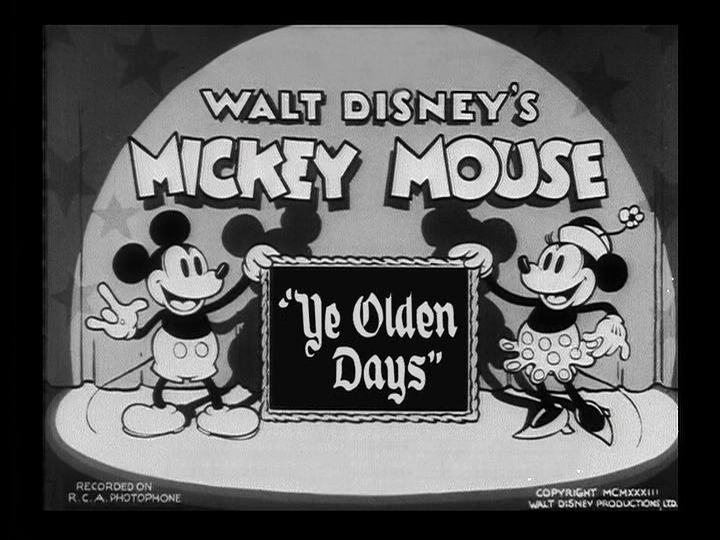
On April 8, 1933, the Mickey Mouse short film, Ye Olden Days, premiered in theaters. It was directed by Burt Gillett, and starred Walt Disney as Mickey Mouse, Marcellite Garner as Minnie Mouse, and Pinto Colvig as Dippy Dawg. This is one of the few instances where the character of Dippy Dawg is referred to by that name. He grew to be an international star in his own right, but with a different moniker: Goofy.

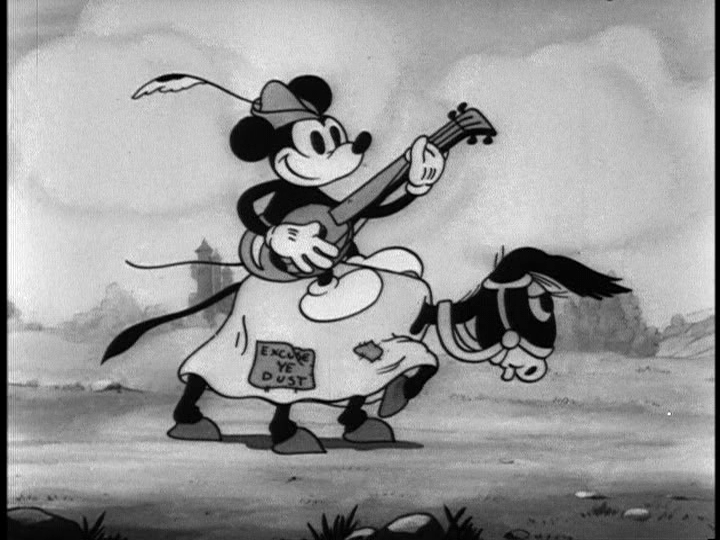
Mickey as The Wandering Minstrel, traveling from far away

The short opens with a cast list, with Mickey playing “Ye Wandering Minstrel,” Minnie as “Ye Princess,” and Dippy Dawg as “Ye Prince.” The name of the person playing “Ye Old King” is covered up by the end roll of parchment. We then see Mickey, riding on the back of a very tired-looking donkey, holding a lute and signing a song, introducing himself as a wandering minstrel from afar.

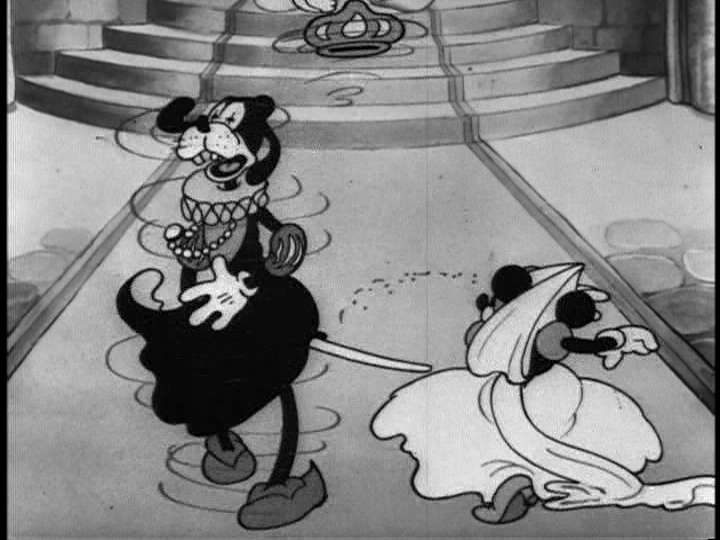
Inside the castle, all the members of the court are raising their glasses and cheering for the king. The king informs his subjects that his daughter, the Princess of Lalapazoo, will marry the Prince of Pupupadoo. Trumpets sound, and at the doorway stands Dippy Dawg, who gives his famous laugh. Minnie appears at the other doorway after the trumpets similarly announce her arrival.

Minnie emphatically slaps Dippy Dawg across the face, refusing to marry him

Mickey arrives at the castle, in time to see the wedding between the Prince and the Princess. The king demands that Minnie marry the prince, and Dippy Dawg grabs one of Minnie’s hands and begins kissing up and down her arm. She swears she will not marry the prince, and slaps him three times. The king, angered by his daughter’s behavior, sends her to be locked in the attic.

Seeing all this, Mickey decides to rescue the princess from her fate. He spots the tower where Minnie and her handmaiden (who appears to be played by Clarabelle Cow) are locked away. Inside the tower, Minnie and Clarabelle begin to cry at their fate, until interrupted by a song at the window. Mickey sings to her:

“Cheer up, oh lovely princess

For you’ll be rescued soon

I’ll take thee away

So ye won’t have to stay

And marry that silly baboon.”

Impressed, Minnie  sends Mickey a flower from her hat with a kiss, and he jumps up from a tree branch to the window. He tells her that he’ll save her.

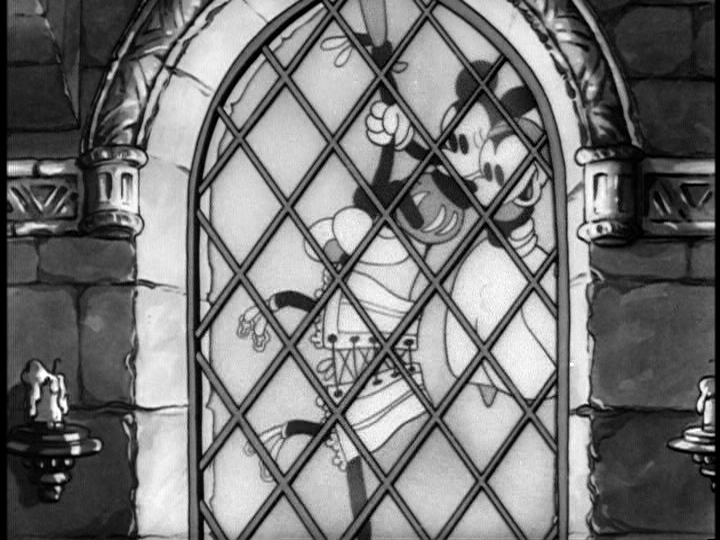
The king spies Mickey and Minnie trying escape through the window

The king continues the festivities, which includes a giant feast that everyone happily prepares and eats. Mickey and Minnie, however, using the handmaiden’s clothes as a crudely constructed rope, begin to rappel down the side of the tower. They are spotted by the king after the clips on the corset begin to tap against the window, and Mickey and Minnie are captured. Infuriated, the king orders Mickey’s head chopped off. As it looks like the end for Mickey, Minnie steps in front and declares her love for the minstrel. She suggests that there be a duel between Mickey and the prince instead.

Excited by this, the king agrees, and everyone busily prepares for the duel. With a loud clang, the duel begins. As Micky and the prince speed toward each other, both are thrown off their horses. Dippy Dawg chases Mickey around the room with his lance, but the mouse finds cunning ways to stay one step in front of him. Finally, Mickey chases the prince out the window, and is held by the crowd in victory, where he and Minnie share a kiss.

April 7

April 7, 1995 – The Documentary, Frank and Ollie, is Shown at the Cleveland Film Festival

“Seemed like you seldom heard Frank’s name without Ollie’s along with it, or Ollie’s without Frank’s name. It was Frank and Ollie.”

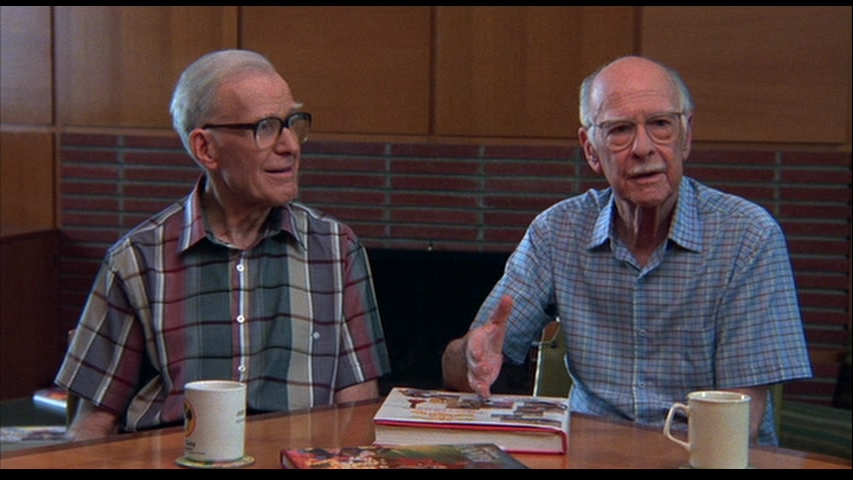
On April 7, 1995, the documentary film, Frank and Ollie, was shown at the Cleveland Film Festival. Written and directed by Frank’s son, Theodore Thomas, it tells the story of Frank Thomas and Ollie Johnston, two members of the elite group of animators at the Disney Studios known as the Nine Old Men.

The documentary is a touching tribute to the friendship of the two, which began at Stanford University in the art department. Through their long tenure at the Walt Disney Studios, the two not only helped pioneer the field of animation, but also used what they learned to help teach other artists, including Brad Bird, who gave them a cameo in The Incredibles. Frank and Ollie goes through their history with the company, from the success of Snow White and the Seven Dwarfs, the studio’s change during World War II, the unexpected death of Walt Disney, and their work on The Jungle Book. The film also shows their daily lives in California, where the two friends were also next-door neighbors.

Frank Thomas (L) and Ollie Johnston, sitting down and discussing their memories at the studio

Frank and Ollie premiered at the Sundance Film Festival on January 22, 1995, and then was shown at the Cleveland Film Festival, with a full release to theaters on October 20, 1995, so that the film could be considered for an Academy Award. The documentary received very good reviews upon release, and captures a rare history of life inside the Disney Studios.

April 6

April 6, 1931 – The Mickey Mouse Short Film, The Castaway, is Released to Theaters

“Bananas! Am I hungry! Oh boy!”

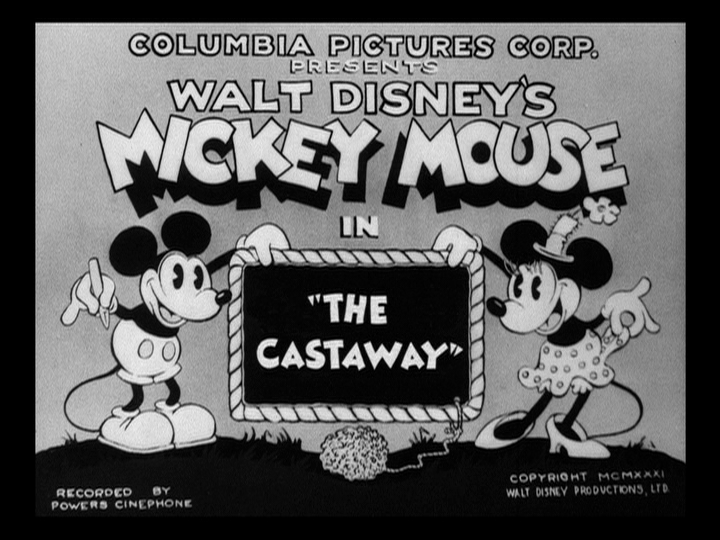
On April 6, 1931, the new Mickey Mouse short film, The Castaway, was released to theaters. It was directed by Wilfred Jackson, with Walt Disney as Mickey. It’s one of the few shorts that uses the Mickey Mouse Club theme song, “Minnie’s Yoo-Hoo,” as the title and end music.

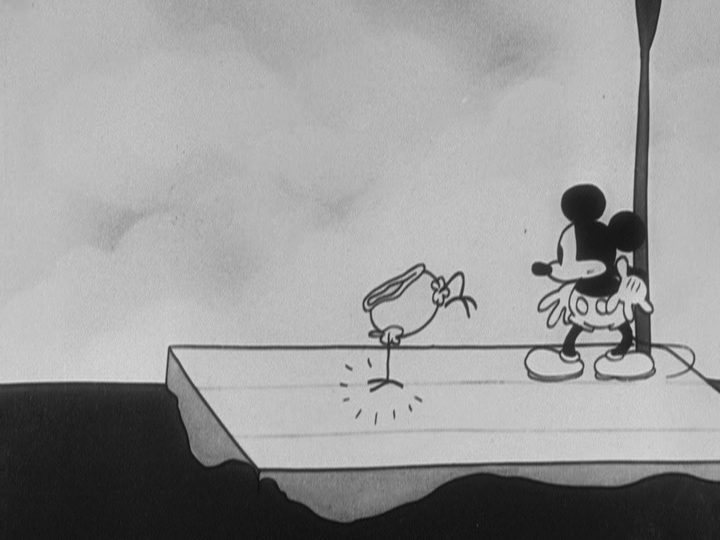
Mickey is stunned as his "sail" begins to perform a dance

The short opens with poor Mickey adrift at sea, the waves crashing wildly around him. Seagulls fly through the legs of his “sail” (a pair of bloomers), until one gets stuck and brings the sail to the boat, and Mickey watches the odd sight of dancing bloomers as the seagull tries to escape. As it flies away, Mickey spots land and tricks a swordfish into pushing his boat to shore.

Immediately after landing, Mickey spots food: he crashlanded into a banana tree. He shakes the tree, and then uses a stick to help him bring down the bananas, but the stick acts like a boomerang and sends Mickey flying into the tree, which, fortunately, brings the bananas to the ground. As Mickey tries to eat them, however, he accidentally knocks a spider from its web, and nearly into Mickey’s mouth. The mouse screams at the arachnid, and seemingly forgets about the bananas as he runs to the shoreline.

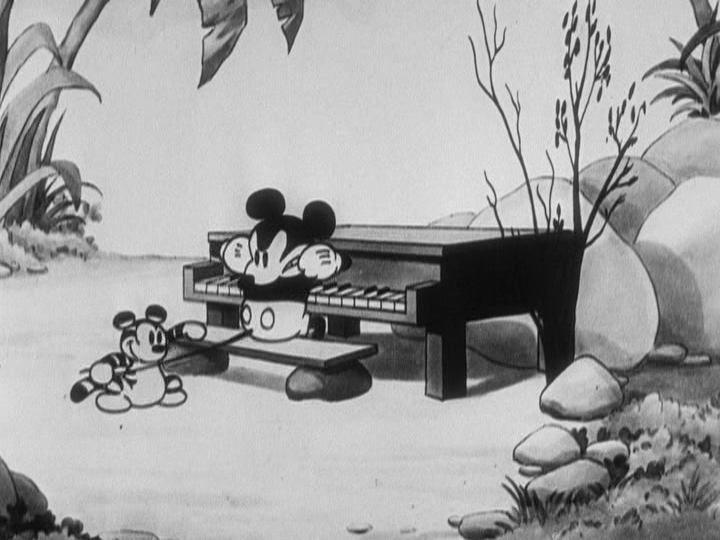
The cub continues to annoy Mickey as Mickey tries to keep playing the piano

Seeing a crate, Mickey tries to retrieve it before the tide comes in, but the tide ends up washing Mickey and the crate further inland. The crate breaks open on a rock, revealing a very soggy piano. Mickey empties the piano of the excess water, sits down, and begins to play, accompanied by three nearby seals. A tiger cub also hears the music and comes out to help Mickey play, but Mickey knocks the cub aside. The cub then tries to use Mickey’s tail as an instrument, but Mickey won’t have it and places the cub in a nearby tree.

The music also gets the attention of a gorilla nearby, and Mickey lets the gorilla play the piano with its feet. Unfortunately, the gorilla gets a little too rough with the piano, and Mickey tries to stop the animal from completely destroying it, with no success. As Mickey grabs a rock to throw at the gorilla, it turns around, and Mickey pretends to perform a few tricks with it before showing it a nervous smile.

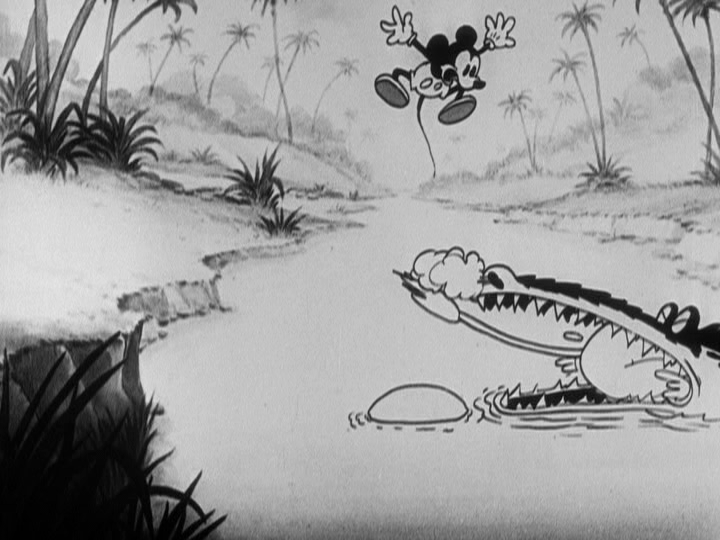
Mickey leaps into the air, as the lion leaps into the open mouth of the alligator

Mickey drops the rock onto the back of a sleeping lion, who begins to chase the frightened mouse. After jumping into a river and laughing at the roaring lion on the riverbank, Mickey thinks he’s home free, not spotting the alligator ready to eat him right behind his back. Stuck between the two dangers, Mickey leaps into the air as the lion leaps to attack. The lion ends up getting swallowed by the alligator, and Mickey cheers. The rock he’s standing on moves, however, and he finds himself riding downstream on the back of a tortoise. Mickey gives a friendly salute to the audience, and waves as he drifts away.

April 5

April 5, 1965 – Mary Poppins Wins Five Academy Awards

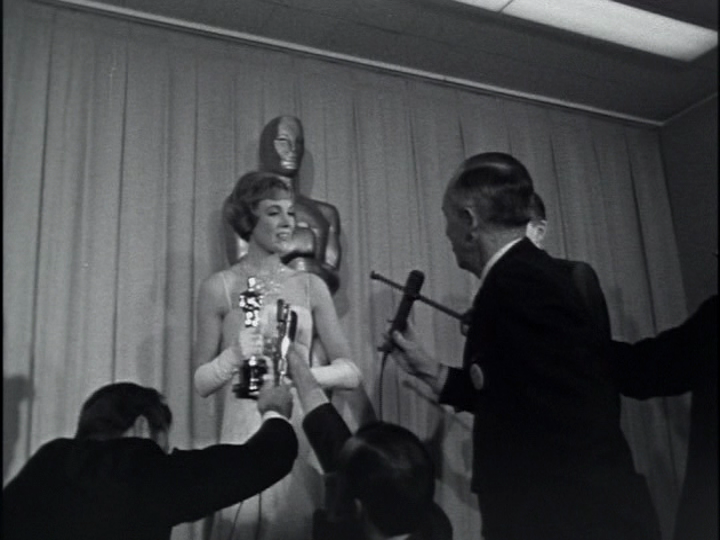
Julie Andrews after winning the Academy Award for Best Actress

“The press had made such a big deal out of it, and although I knew why I didn’t do My Fair Lady…and sure, I was sad about it, but I completely understood why I wasn’t chosen to do it…” – Julie Andrews

The 37th Academy Awards were held in Santa Monica, California on April 5, 1965. Of the 13 nominations it received – the most of that awards year – Disney’s Mary Poppins won five: Best Film Editing, Original Music Score, Best Song for “Chim Chim Cheree,” Best Visual Effects, and Best Actress for Julie Andrews.

Julie Andrews had been passed over for the lead in My Fair Lady at Warner Brothers. Time Magazine, outraged, wrote: “Someone, somewhere, made the decision to include Andrews out of the [film]. There is an evil and rampantly lunatic force at loose in the world and it must be destroyed.” Producer Jack Warner responded with, “No one in the sticks has ever heard from her,” and cast Audrey Hepburn as the lead role. Andrews remarked later that had she done My Fair Lady, she never would have been able to do Mary Poppins.

April 4

April 4, 1956 – Where Do the Stories Come From? Premieres on Television

“Potential story ideas exist all around us.” – Walt Disney

On April 4, 1956, the Disneyland episode Where Do the Stories Come From? premiered on ABC. Directed by Jack Hannah, the episode attempts to explain the most often-asked question of the members of the Disney studios: where do they get their story ideas?

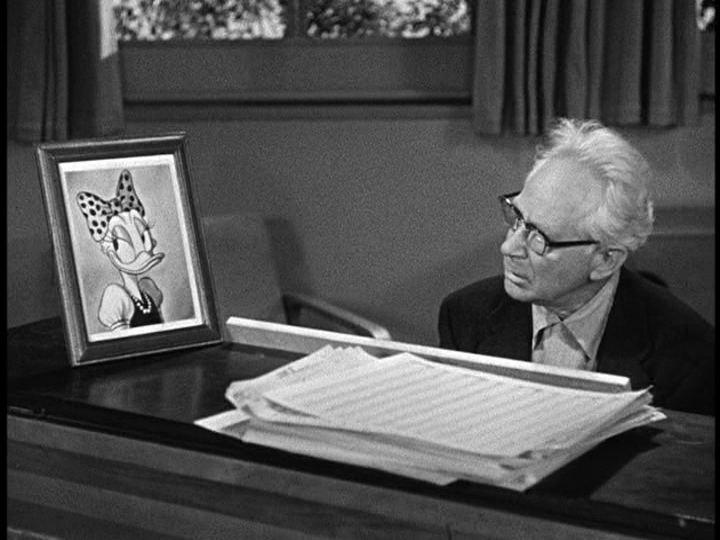
Composer Oliver Wallace studies a picture of Daisy, trying to find inspiration for a song about her

The episode opens with Walt Disney saying that the question of “Where do the stories come from?” is one that is asked a lot, and this episode will try to explain it the best he can. He tells the audience that story ideas can come from books, or are inspired by a song. The first example he gives of the latter is the song that had to be written for Daisy Duck; “she had to have a song,” since everyone else had one. The assignment for Daisy’s song was given to studio composer, Oliver Wallace. He thinks of words that rhyme with Daisy, and comes up with “crazy,” which gives him the title, “Crazy Over Daisy.” Soon, Wallace is composing an entire melody, and not long after, two men are seen listening to a record of the completed song. It then became the inspiration for a short film called Crazy Over Daisy, set in the early 1900s, which is shown next.

For the next example Disney brings up a short that was based on the True-Life Adventure series, where any interesting footage of animals could inspire the story artists to come up with a short film. “In viewing the thousands of feet of true-life adventure film that comes into the studio, we sometimes come across an animal that is a natural foil for one of our cartoon characters,” Disney explains, as he introduces the short R’Coon Dog.  Thinking a raccoon would be a match for Mickey Mouse and Pluto, the animators consult Pluto about his part in the film. Pluto is seen in the projection room, watching the footage of raccoons, and then is seen in the story room, where the animators are seen drawing the raccoon character.  Pluto takes the drawing a bit too seriously and tears it up with his teeth. The audience then sees R’Coon Dog.

The next example Disney presents draws on the experiences of the artists during World War II, when they had to get their physicals. The animators thought “it would be fun to put Donald Duck in the same ordeal,” and they show a compilation of some of the Donald Duck wartime shorts, including Donald Gets Drafted, and Fall Out Fall In.

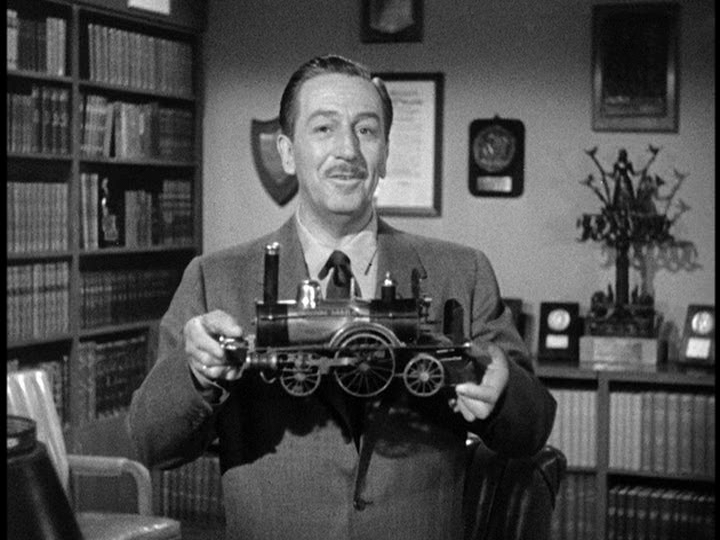
Walt Disney presents the hobby of many at the Disney Studio: model railroads

Disney then presents his own hobby of model railroads, as well as two animators who “haven’t escaped the bug” of the hobby, as Disney puts it: Ollie Johnston and Ward Kimball of the Nine Old Men. The audience sees home movies of Ollie and Ward with their model railroads.  Every detail is built to scale on Ollie’s model, and Ward has a full-size model in his own backyard. Not to be outdone by his two animators, Disney shows off his own model railroad, named the Lilly Belle, and some of the home movies of creating the track in Disney’s backyard. “The hardest part of the job was convincing my wife that the flower beds had to go,” Disney jokes. The hobby shared by these three men led to the creation of a Donald Duck short, Out of Scale.

April 3

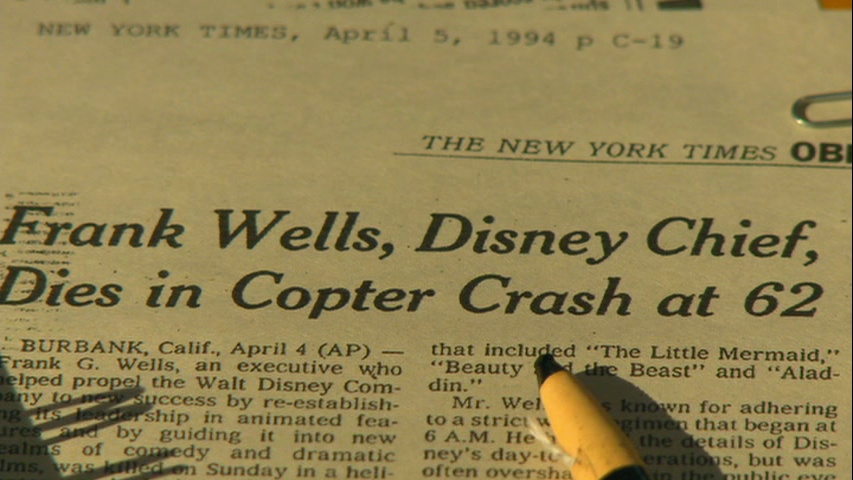
April 3, 1994 – Frank Wells, Former President of The Walt Disney Company, Dies in a Helicopter Accident

“It was Easter Sunday, 1994, and a single event in Nevada’s Ruby Mountains would set in motion an unimaginable chain of events.” – Don Hahn

On April 3, 1994, the President of the Walt Disney Company, Frank Wells, while attempting to return from a ski trip, died in a helicopter crash in the Ruby Mountains of Nevada. It was the only helicopter crash in the company’s history at that point. Wells’ death brought a shadow over the company. Peter Schneider said, “Frank was the peacemaker amongst all these tremendous egos, and when Frank died, there was no one to talk to.” With Wells’ death, the already fragile atmosphere of the Disney Studios began to crumble, especially with Jeffrey Katzenberg lobbying for Wells’ job. Michael Eisner and Roy Disney did not wish to give the job to Katzenberg, and were angry about the amount of publicity Katzenberg seemed to get when promoting a film, instead of the film getting the attention. Wells truly brought life back into the company with Eisner, helping bring about the Disney renaissance. The Lion King, which was in production when Wells died, was dedicated to his memory.

Wells was a classmate of Roy Disney’s in college, and had convinced Disney to make Michael Eisner the chairman of Disney Studios in the 1980s. Disney remarked that the relationship between Eisner and Wells reminded him of his dad and Walt, and brought both on as the heads of the studio. Don Hahn remarked on their partnership, “Michael was kind of the sane one. Frank, he did bold and crazy things like swimming oceans, climbing the great summits of the world, and calling at 3 a.m. to ask what Goofy’s original name was.” Wells kept himself humble while he worked at the top, and was known for being the peacemaker between Eisner, Disney, and Katzenberg. At the memorial service, Michael Eisner said of Wells, “While we all…grieve [Frank’s death], we all share the joy of having known Frank. That is why we are here today, to remember…and to celebrate, to pay tribute to one man who had magic and to share the magic with him through his whole creative life.”

April 2

April 2, 1993 – The Adventures of Huck Finn is Released to Theaters
“Oh, sure, there’s a few stretches here and there, but then I never met anybody who didn’t lie a little when the situation suited him.”

On April 2, 1993, the movie The Adventures of Huck Finn was released to theaters. Based on the best-selling and controversial book by Mark Twain, the film was adapted and directed by Stephen Sommers, and stars Elijah Wood as Huck, Courtney B. Vance as Jim, Robbie Coltrane as The Duke, and Jason Robards as The King. Although the film is good family fare, it does cut out major plot points of the book, including scenes where Tom Sawyer is supposed to appear.

The movie opens with our main character, Huck Finn, getting punched in the face. A fight has ensued between the Huck and another student on the bank of the river, with the other students watching and cheering. After taking a few punches, Huck begins to fight back, giving the other boy a nosebleed. Just as Huck is about to lay the final blow, he notices a strange footprint in the sand. Believing it to belong to his father, he runs alongside the bank of the river and enters the cabin of a slave name Jim, who is able to tell the future. “Pap’s back,” Huck says, and asks Jim to tell him his future, and how long his father plans on staying. Jim’s advice to Huck overall is to run away for a while, and Huck decides that he needs to disappear, permanently.
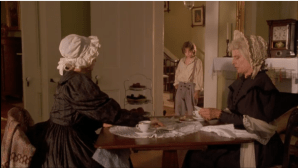
Huck is caught sneaking back in the house by the Widow Douglass (L) and Miss Watson (R)

Huck returns to the home of the Widow Douglas and Miss Watson, who have taken Huck in and raised him to be a gentleman. After being subjected to the “torture” of being dressed up, Huck sneaks out to play with his friends. When he returns, he finds his father waiting for him back in his room. His father kidnaps him from the widow’s house, and takes him to a small cabin up the river. His father has found out that Huck was left $600 in his mother’s will, and decides that Huck has to die so he can collect the money. A chase ensues, with the drunken man trying to kill Huck with a knife, but when Huck grabs his father’s shotgun, the two remain at a stalemate until morning. When Huck’s father heads to town for supplies, Huck decides to leave once and for all, faking his own death with the help of a wild boar he killed.

Huck decides to head to Jacksons Island, but is alarmed to find Jim there. Jim tells Huck that everyone thinks Huck has been killed by a robber. He also tells Huck that he has become a runaway slave, as a slave trader has offered $800 for him and he was going to be sold by Miss Watson, his owner. Jim has decided to travel to the free states to earn money for his family. Huck, with no other options, decides to help Jim. The first thing Huck does is travel to a house and steal food from a kindly woman, who informs him that everyone thinks Jim has killed Huck and run away. Huck and Jim skedaddle down the Mississippi river to Cairo. Upon finding a wanted poster with Jim’s picture on it, the two decide it will be safest to travel only at night.
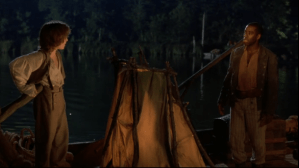
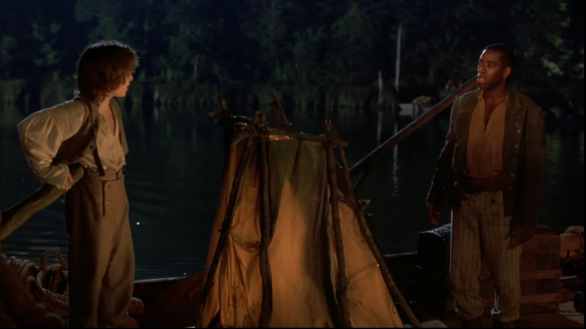
Jim tries to explain how wrong slavery is to Huck, but Huck doesn't understand, as it goes against everything he knows

The two find an abandoned ship on the rocks one stormy night, and decide to use it as shelter. As Huck goes down into the ship, he stumbles upon a robbery taking place, just as Jim discovers the corpse of Huck’s father. Huck gets caught as the ship begins to take on water, but manages to escape just in time with Jim. They discover the thieves’ boat on the river and take it. The next morning, Jim asks Huck if he would still help him escape to Cairo, even if his father was dead, but when Huck replies that he would head back home, Jim keeps the news of Huck’s father’s death a secret. Later that night, Jim excitedly declares that he is close to freedom and earning money to buy his wife and children. He adds that if his family won’t be sold to him, he’ll just steal them. Huck is alarmed by this talk, but Jim argues that it’s his family. “Selling people and using them for slaves ain’t right, Huck,” Jim explains, but Huck argues that it’s the way it is and has always been.  Jim tries to explain that all men should be free, but Huck clings to the old ways, and decides that he needs to turn Jim in.

Jim catches on to Huck’s plan, although Huck believes he’s doing the right thing, and going to hell if he helps to set Jim free. While Huck paddles away to get “help,” Jim decides to leave Huck and set out on his own. Fortunately for Jim, Huck changes his mind and lies about who is on the boat, with Jim watching with pride, and rejoins the boy. Later that night, the raft is destroyed by a riverboat, and Huck and Jim get separated. Huck is found and brought into the Grangerford house, where the women of the house clean him up. Huck sees that they found Jim and have him chained up as their new slave. The son of the Grangerford house explains to Huck that they have a feud with the Shepherdson house, and Huck finds himself involved. Although Jim wishes to continue to Cairo, Huck is reluctant, as he wants to stay with the Grangerfords. After seeing the welts on Jim’s back from the overseer’s whip, Huck feels remorse about stopping Jim’s journey, and decides that the two should set off again. Unfortunately, the feud has reached a boiling point, and Huck arrives in time to see his friend Billy, one of the last Grangerfords, get gunned down. Jim finds Huck grieving over Billy’s body, and they set off again.
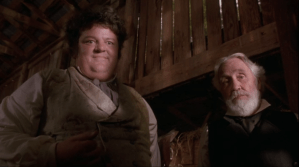
The Duke (L) and The King, threatening Huck as the con begins to unravel

The two discover they’d passed Cairo by forty miles, and decide to catch a steamboat to take them back upriver. They then find themselves entertaining two con men, known as The Duke and The King. The two see the wanted poster for Jim, and blackmail Huck and Jim into waiting on them hand and foot. The two then stage a con to collect on the will of a man, which disgusts Huck and Jim.  The con men are planning on going “all the way” with this con, stealing everything from the women of the house. Another man in the village, Dr. Robinson, has his suspicions about the conmen, but the family is too involved in conmen’s lie to listen to him. Huck decides to find Jim and leave. Unfortunately, the two men had turned Jim in for the reward. Huck decides to help him escape, until Jim finally tells the truth about Huck’s father. Jim is sorry at Huck’s reaction, and resigns himself to his fate.

As the con grows, Huck finds that he cannot participate any longer. He decides to steal the gold from the men and escape, with the intention of writing a letter to the lady of the house, Mary Jane, to let he know where he hid the treasure. He ends up stuffing the gold in the coffin, and the next day, he informs Mary Jane of the fraudulent brothers. Huck comes up with a plan to make things right, and begins to set the plan in motion. The con is uncovered when the real brothers come into town to claim their inheritance. The mob decides to dig up the grave to see who is telling the truth about being related to the late Peter Wilkes. Huck uses this moment to steal the sheriff’s keys and help Jim escape, and the two make their way to the steamboat.
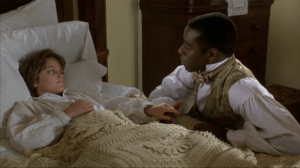
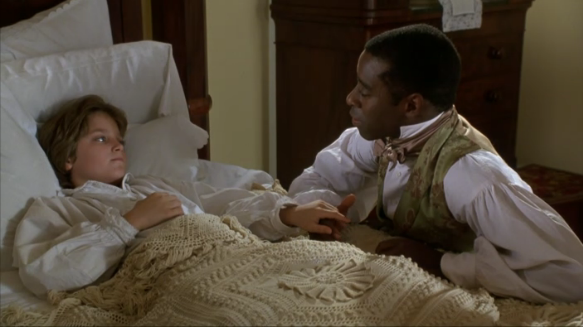
Huck recovers in bed while Jim tells him that he is now a free man

Unfortunately, as the two head toward the steamboat, the mob begins to shoot at Huck and Jim, and Huck is hit in the back with a bullet. They near the steamboat, but Huck can’t run any further with his injury. Huck urges Jim to run, but Jim gives up his chance for freedom to save Huck. Jim is taken by the mob and is set to be lynched, while Huck lies on the ground, helpless. Just as all seems lost, Mary Jane arrives on the scene, demanding that Jim and Huck be let go. Huck’s injury is treated, and he wakes up in the Wilkes house, seeing Widow Douglass by his side. Jim shows up, letting Huck know that he and his family have become free, due to the stipulations in Miss Watson’s will. Although Huck is happy, isn’t thrilled to be taken back to be civilized again. In the final scenes of the film, Huckleberry takes off to the call of the steamboat.
April 1

April 1, 1995 – The Walt Disney World Water Park, Blizzard Beach, Opens

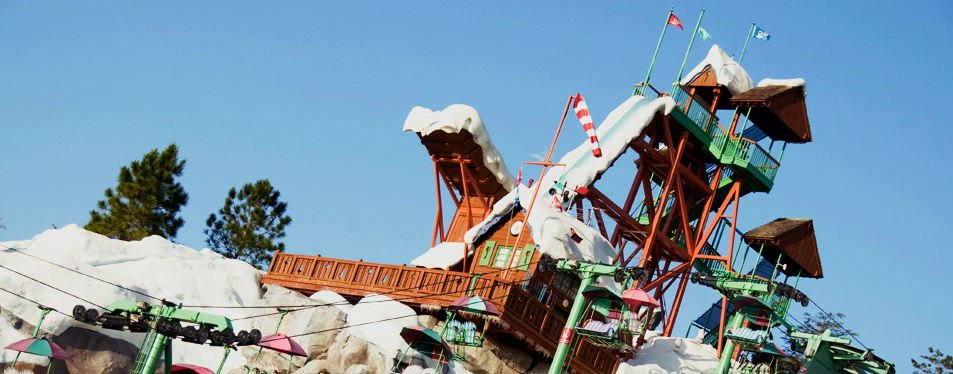
Summit Plummet - image from the Walt Disney World webpage

On April 1, 1995, Walt Disney World opened the second of its two water parks, Blizzard Beach. The park is sixty-six acres, and features several attractions, including one of the world’s tallest, fastest free-falling waterslide.

The story of how Blizzard Beach came to be is another page in the Disney Legend: There was a freak snowstorm that covered Florida, causing a ski slope to pop up. Unfortunately, the weather went back to being hot, the snow melted, leaving everyone with the question: what to do with the resort now? While everyone was pondering, an alligator saw an opportunity, and slid down the ski-slope with a loud, “Yahoo!” The ski slope was then turned into a water park unlike any in the world.

Included in the park are the attractions Shush Gusher, Teamboat Springs, Toboggan Racer, Snow Stormers, Runoff Rapids, Tike’s Peak, Melt-Away Bay, and Cross Country Creek. Summit Plummet, probably the most spectacular ride, is 120-feet high, with a twelve-story jump. The riders travel at speeds of up to 60 miles per hour.