RSS Feed

Tag Archives: Technique

July 1

Posted on

July 1, 1966 – The Primeval World Attraction Opens on the Disneyland Railroad

PrimevalWorld

“…travel back in time back to the fantastic Primeval World – land of the dinosaurs.”

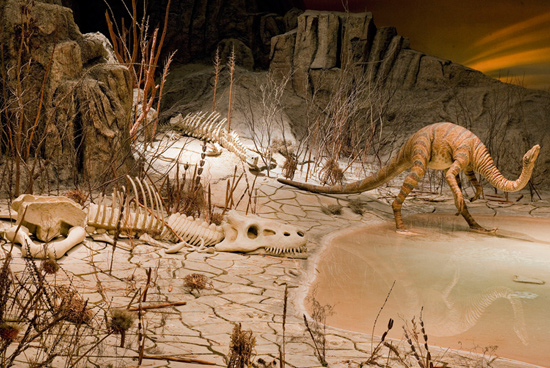
On July 1, 1966, the diorama on the Santa Fe and Disneyland Railroad Primeval World opened in Disneyland. The original attraction was featured at the 1964 New York World’s Fair, as part of Ford’s Magic Skyway. The attraction appears to have been inspired in part by the “Rite of Spring” segment from the 1940 animated feature Fantasia. Using Audio-Animatronics, several dinosaurs are brought to life in a misty swamp area, including an Apatosaurus, a Pteranodon, a Tyrannosaurus, and a Stegosaurus. As more is learned about dinosaurs (such as the renaming of the Brontosaurus to the Apatosaurus), it has created several inaccuracies in the attraction, including the fact that the Stegosaurus and the Tyrannosaurus did not exist in the same time period. A version of the attraction has been created for the Western River Railroad in Tokyo Disneyland, appearing just before the arrival at Adventureland Station.

June 18

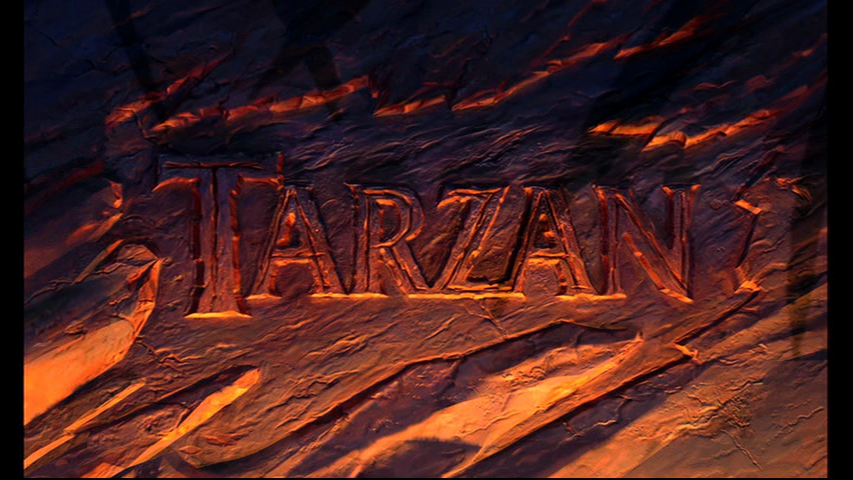
June 18, 1999 – The 37th Animated Feature Film Tarzan is Generally Released
vlcsnap-2013-06-18-05h23m51s252

“Somewhere, something is calling for you. Two worlds: one family.”

On June 18, 1999, Disney’s 37th Animated Feature Film Tarzan was released generally to theaters. The film was based on Tarzan of the Apes by Edgar Rice Burroughs. Glen Keane, animator for adult Tarzan, designed the character after watching his son perform skateboarding stunts and by watching extreme sports, giving the character a feel of “surfing” through the jungle. For the jungle, a new 3D painting and rendering technique was created for film, called Deep Canvas. This technique allows animators to create a computer animated background that still has the feel of a traditional painted background; it was awarded a special Academy Award in 2003. The songs for the film were written and performed by singer-songwriter Phil Collins, with score by Mark Mancina. Collins’ song “You’ll Be in My Heart” won the Academy Award and Golden Globe for best Original Song. The film overall was a critical and financial success, and was the last film of the Disney Renaissance to have a box office impact. The screenplay was written by Tab Murphy, Bob Tzudiker, and Noni White, and was directed by Chris Buck and Kevin Lima. It stars Tony Goldwyn as Tarzan, Minnie Driver as Jane, Glenn Close as Kala, Lance Henriksen as Kerchak, Brian Blessed as Clayton, Nigel Hawthorne as Professor Porter, Rosie O’Donnell as Terk, and Wayne Knight as Tantor.

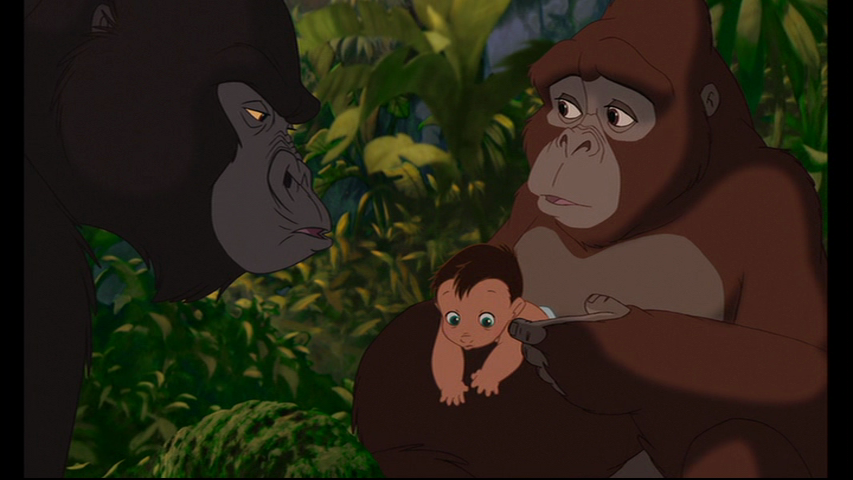
There’s been a shipwreck, but a couple and their young child have been able to make it out alive. They look to the jungle as a place of safety in their small boat, and sail towards it. In the jungle, a gorilla couple is also enjoying family time with their baby. The scenes switch between the two families as they work on creating homes for themselves. One night, the baby gorilla wakes up and goes after a frog to play with it, unaware that the leopardess Sabor is nearby and on the prowl. The baby is unable to escape, and is viciously attacked and killed by Sabor. As the gorillas migrate, the mother, Kala, sadly trails behind, until she hears the sound of a baby cry, and takes off in its direction. She comes across the tree house that the human family has built, and opens the door to find that Sabor has killed the parents inside. She hears the baby cry from its crib, and finds that he has not been harmed. Kala takes to the child, and adopts him as her own. However, she soon discovers that Sabor never left the house, and runs to escape, the baby still in her hands. Sabor chases the baby after Kala accidentally drops him into netting nearby, but they manage to escape, and Kala brings the baby back to her herd.
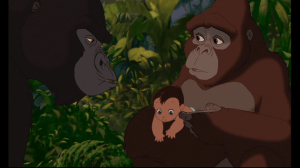
Kala tells Kerchak her intentions of adopting the baby as her own, but he refuses to accept the child

Kala tells Kerchak her intentions of adopting the baby as her own, but he refuses to accept the child

When Kala joins the herd, she declares that she will be the baby’s mother, although her mate Kerchak refuses to accept him. He begrudgingly accepts that Kala will raise him, but tells her that he will never acknowledge him as his son. Kala decides to call the baby Tarzan. The years pass, and Tarzan has grown into a willful child, who still has a hard time fitting in with the herd. Although he is friends with another gorilla named Terk, the other children want nothing to do with what they call the “hairless wonder.” The kids play a prank on him, telling him he can play with them if he retrieves a hair from an elephant and, desperate to fit in, goes to get one, but nearly ends up stomped to death by the elephants. He accidentally starts a stampede that breaks through where the gorillas are nesting, incurring the wrath of Kerchak. Saddened that Kerchak believes that Tarzan will never fit in with the herd, he runs away. Kala finds him later, and tells him that they are family, as their hearts are exactly the same. With renewed vigor, Tarzan is determined to prove his worth to the family.

After adapting to everything in the jungle, Tarzan grows into a strong man, able to hold his own against anything. One day, Tarzan senses something nearby, and narrowly escapes when Sabor breaks through. Kerchak tries to defend the family against Sabor, and Tarzan assists him by taking on the leopardess. In the end, Tarzan manages to kill Sabor, and the whole herd cheers. It looks like Kerchak is about to accept Tarzan as a member of the herd, when a strange sound pierces through the jungle. Kerchak informs everyone they need to move, but Tarzan goes off to explore the strange sound. He comes across a trio of people, and studies them carefully: a trigger-happy guide named Mr. Clayton, Professor Porter, and his daughter, Jane. Jane takes a moment to draw a baby baboon, but is soon chased by the baby’s entire herd. Tarzan soon jumps in to save her. She is rather frightened by Tarzan, but soon discovers that he is rather gentle and nothing to fear. He introduces himself, and starts mimicking her, quickly picking up English. He then helps take her back to her camp.
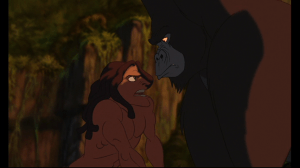
Tarzan and Kerchak clash over the idea of whether the humans are dangerous or not

Tarzan and Kerchak clash over the idea of whether the humans are dangerous or not

Terk, elephant friend Tantor, and other members of the herd go looking for Tarzan, and come across the camp set up by the Professor and Clayton. The group starts trashing the camp, but are soon chased away by an angry Kerchak. The Professor and Clayton return to the camp after Tarzan leaves with the frightened herd, and Jane relays the story of how Tarzan saved her to her companions. Back at the nest, Kerchak decrees that no one is to go near the strangers, and gets into an argument with Tarzan, as Tarzan does not believe Jane to be dangerous. Tarzan is furious, wondering why Kala never told him that there were creatures that looked like him. Jane tells her father about Tarzan, and Tarzan soon returns to the camp to see her. Jane then decides to teach Tarzan about the world outside of the jungle, while Clayton wishes to use Tarzan to find the gorillas. Tarzan and Jane grow closer, and Jane asks if Tarzan will take them to the gorillas, but he refuses, as he wishes to obey Kerchak. Unfortunately, the ship soon arrives to take the professor and Jane back to England, and Jane asks Tarzan to come with her. Tarzan says he can’t, and asks her to stay. Clayton then takes advantage of Tarzan’s feelings for Jane, and has Tarzan take them to see the gorillas, as Clayton says Jane will wish to stay if she sees them.

Terk and Tantor keep Kerchak occupied as Tarzan takes Jane to the camp. Unfortunately, Kerchak arrives to find the group there, and attacks Clayton. Tarzan saves them from Kerchak, but also alienates himself from the family in the process. Kala finally reveals the truth about Tarzan’s parents, and leaves him to make up his mind about if he should stay in the jungle or go with Jane. In the end, Tarzan decides to go back to England with Jane, much to the sorrow of Kala. As the humans head to the ship, Clayton reveals his true intentions of capturing all of the gorillas, with Jane and the professor trapped in cages to prevent them from stopping Clayon’s plan. Terk and Tantor, hearing Tarzan’s cry for help, set out to rescue their friend. In the jungle, Kerchak and the herd sense danger, and as he tries to protect the herd, he is soon captured. As the herd is trapped in cages and tied down by ropes, Tarzan appears in the mist, bringing with him a whole herd of jungle animals to free the herd. Kerchak asks in surprise that Tarzan came back, and Tarzan tells him that he came home. As Clayton tries to shoot Tarzan, Kerchak takes the bullet. Angered, Tarzan fights Clayton, destroying his gun. As Clayton tries to attack Tarzan with his knife, he is caught in the vines, and dies by hanging as a vine stays wrapped around his neck. Tarzan returns to the herd to fine Kerchak dying. Kerchak finally accepts Tarzan as his son, and asks that Tarzan take care of the family from then on.
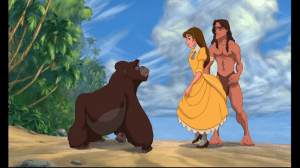
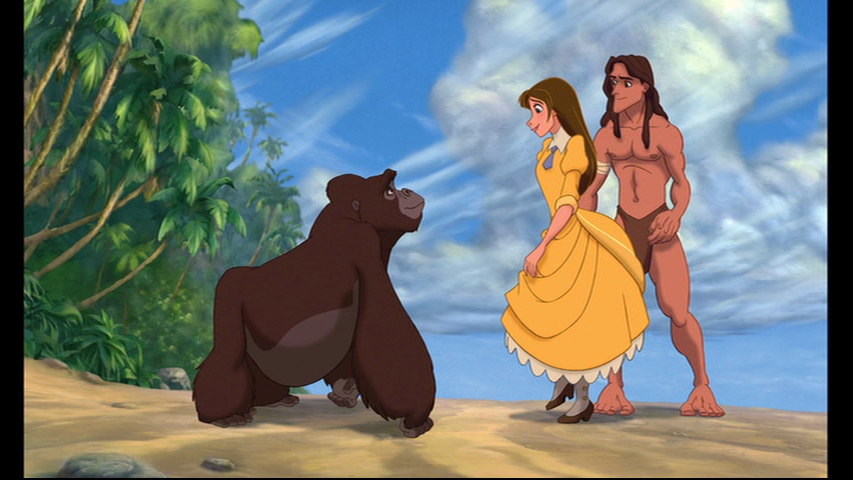
Jane, deciding to stay, is welcomed into the family

Jane, deciding to stay, is welcomed into the family

Jane still has to return to England, and the two say goodbye on the beach. Jane is heartbroken with having to leave Tarzan behind, and her father tells her that she needs to stay. Realizing that with Tarzan is where she belongs, she returns to the beach and embraces Tarzan. The Professor decides he wishes to stay as well, and the two effectively join the family.
May 11

Posted on

May 11, 1913 – Composer, Arranger, and Disney Legend Salvador “Tutti” Camarata is Born

vlcsnap-2013-05-11-08h23m03s133

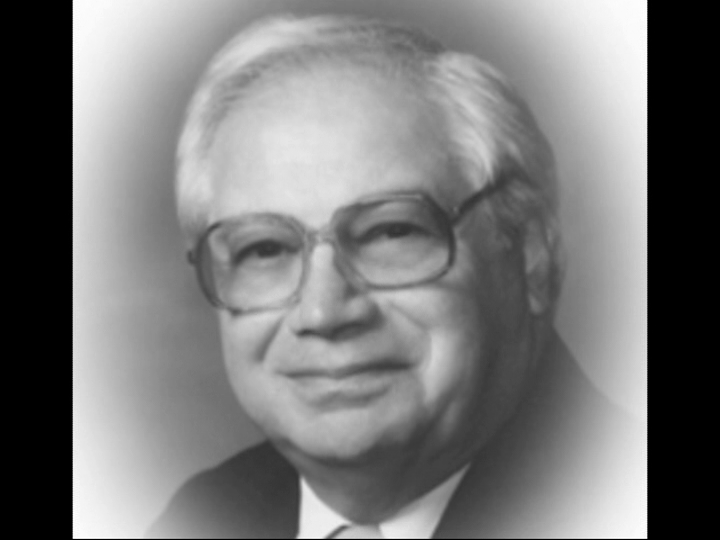
On May 11, 1913, Salvador “Tutti” Camarata was born in Glen Ridge, New Jersey. He studied music at Julliard, and began his career playing trumpet for the likes of Benny Goodman and Jimmy Dorsey, ­eventually becoming Dorsey’s lead trumpeter and arranger. In 1956, Camarata was hired by Walt Disney to form Disneyland Records, and work to expand the record company from its output of children’s music. Camarata brought in many of his connections in the music industry for concept albums, including Louis Armstrong and Louis Prima. Over a five-year period, Camarata supervised the recording of over 300 albums. His biggest success with the label was the idea of bringing Annette Funicello in as the first artist in residence. While looking for material for Funicello, Camarata discovered Richard and Robert Sherman, and brought them in to the label; they would eventually be the first staff songwriters of the company. He was honored as a Disney Legend in 2003 for his work with music in the company. Camarata passed away in 2005.

April 4

April 4, 1960 – Ub Iwerks Wins a Technical Achievement Award

vlcsnap-2013-04-03-21h40m50s240

“To Ub Iwerks of Walt Disney Prods. for the design of an improved optical printer for special effects and matte shots.”

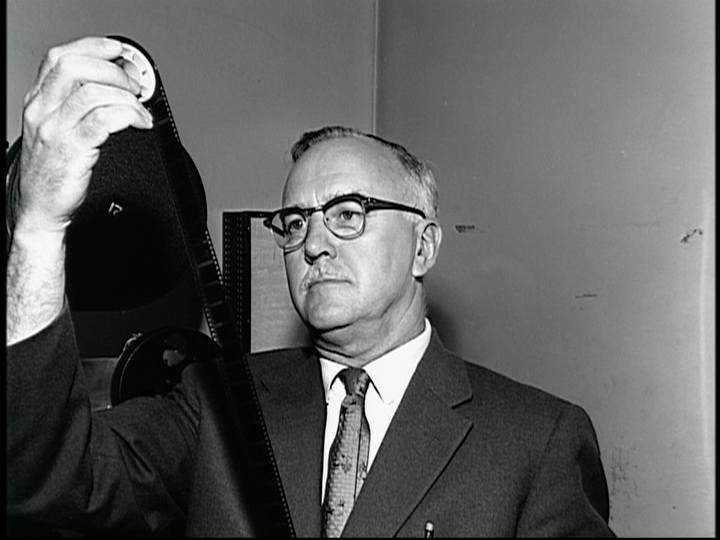
On April 4, 1960, the 32nd Academy Awards were held at the RKO Pantages Theater in Hollywood, Califomia. Having rejoined the Disney Studios in 1940 in a technical capacity, Ub Iwerks was awarded a Class III Technical Achievement Award for the design of an improved optical printer for special effects. This printer would be adapted for the creation of the sodium traveling matte process in 1956. This traveling matte process helped revolutionize the combination of live-action and animation, using a three-strip Technicolor camera and specially designed prism, and won Ub another Technical Achievement Award at the 37th Academy Awards in 1965.

January 14

January 14, 1955 – The Donald Duck Short Film No Hunting Premieres in Theaters

vlcsnap-2013-01-13-19h07m23s232

“But your old grandpappy up there on the wall didn’t have it so soft. No, that old boy really had to work for his vittles.”

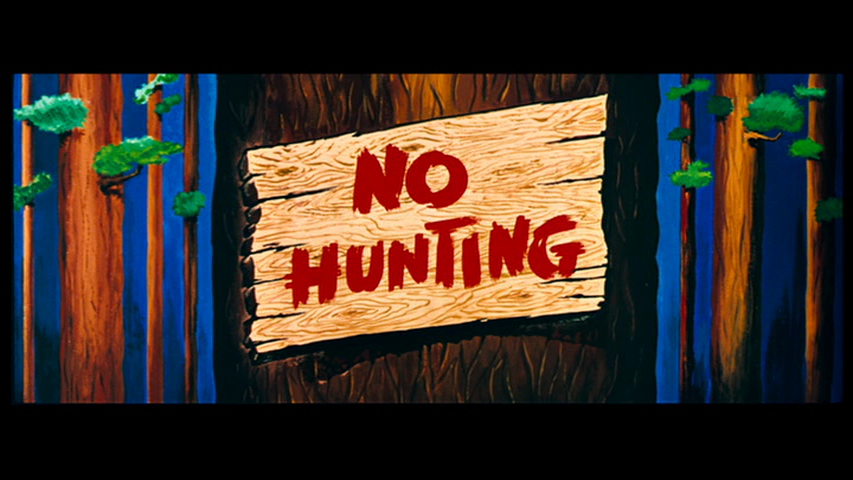
On January 14, 1955, the Donald Duck short film No Hunting premiered in theaters. This is one of the few shorts filmed in Cinemascope, and Donald is noted for being the only classic Disney character to appear in this process. No Hunting was nominated also for an Academy Award, but lost to Speedy Gonzales from Warner Brothers’ Merrie Melodies series. It was the ninth nomination for Donald Duck’s series. The short also features a cameo of Bambi and his mother, with her remarking, “Man is in the forest. Let’s dig out.” The short was directed by Jack Hannah, with story by Dick Shaw and Bill Berg, and stars Clarence Nash as Donald and Bill Thompson as Donald’s grandfather.

Donald sits at his dining room table, staring up at a picture of his grandfather, who was a hunter. The narrator explains that while Donald has a nice spread of food in front of him, his grandfather didn’t have it so easy, having to hunt buffalo for his supper. As the narrator notes in Donald’s newspaper that hunting season begins soon, the image of Donald’s grandfather is suddenly excited and tears himself away from the portrait. He declares that he and Donald are going hunting, and his spirit takes over Donald, forcing him to go hunting.

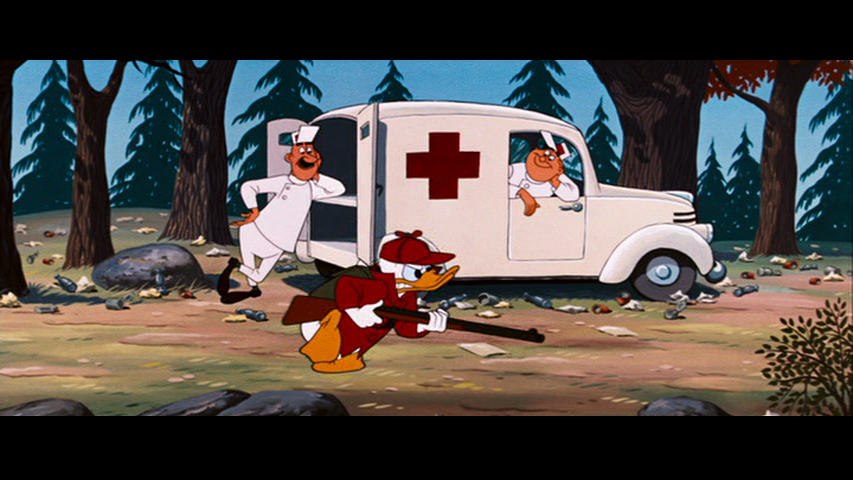
Donald stalks the hunting grounds, with medics waiting patiently, along with food vendors and other interested parties

Donald stalks the hunting grounds, with medics waiting patiently, along with food vendors and other interested parties

As Donald travels to the hunting grounds, the local residents begin preparing for the worst, including all farm animals leaving the barn and taking shelter in the root cellar. Hunters appear with expensive gear, and all wait with anticipation for hunting season to begin. At the stroke of midnight, Donald sounds his horn, and the hunters begin to shoot, turning the forest into trench warfare. Donald’s grandfather appears every so often to give him advice, including the difference between a cow (not fair game) and a deer (fair game). He tries to hide among all the chaos, and when he finally asks his grandfather what to do, the grandfather tells him to “dig out fast” before fleeing the scene. The men begin to march home, covered in bandages, and Donald’s grandfather appears once more with a cow, calling it “meat on the table.”

November 5

November 5, 1937 – The Silly Symphony The Old Mill is Released to Theaters

On November 5, 1937, the Silly Symphony The Old Mill was released to theaters. The short film is notable for being the first film to use the multi-plane camera, which helped create a new three-dimensional look to the Disney films. The film won an Academy Award for Best Cartoon; Disney also took home a special Scientific and Technical Class II plaque for the design and application of the camera.

An old mill stands abandoned at the side of a pond at sunset, while all the animals around head to their nests for the day. A pair of bluebirds have made a nest in the old cogs, waiting for their eggs to hatch. Many animals have made the mill their home, from mice, to owls and bats. Out in the pond, frogs peek out from their lily pads and begin to croak, until they are interrupted by the sound of crickets. Fireflies also appear in the night, with one of the frogs anxious to eat one. As he does, his stomach glows from the firefly.

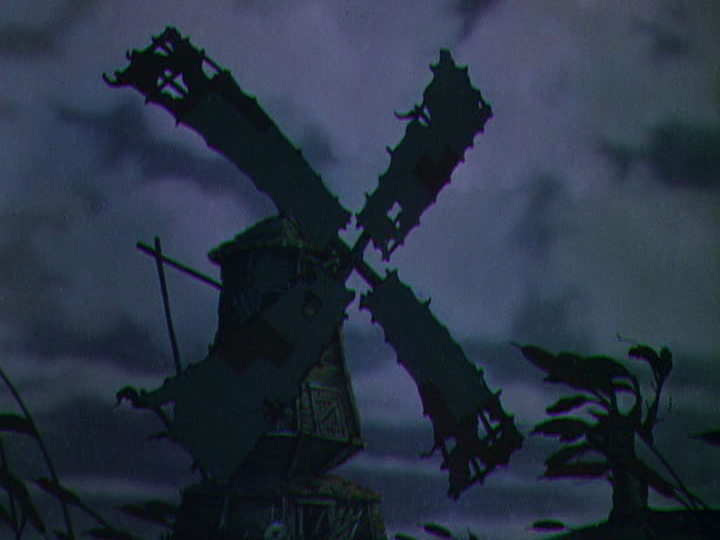
The windmill begins to spin again as storm clouds gather and the wind picks up ferociously

Suddenly, the wind begins to howl, and the windmill starts to turn. The bluebird who made her home in the cogs can’t bear to leave her eggs – luckily, the cog she is sitting under is missing, and she and the eggs ride through unharmed. The storm grows stronger, with the rain dripping through the leaky roof and open windows. A pair of doves sit together, weathering the storm on an open ledge. A group of mice shiver after the lightning strikes. Parts of the mill begin to fall apart. Without warning, the mill is struck by lightning, shifting it from its base.

The storm settles, and the bats return to the mill as dawn approaches. The bluebirds’ eggs have hatched, and mother and father return with food. As life returns to normal, the animals begin their day once again in the abandoned mill on the side of the peaceful pond.

November 3

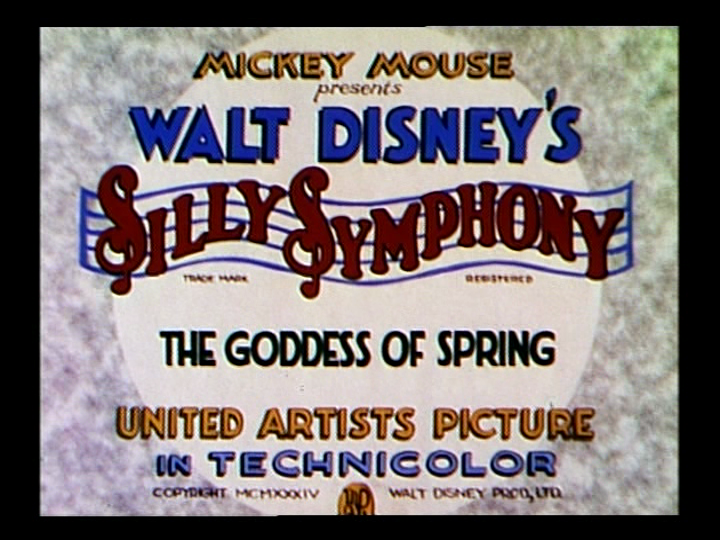
November 3, 1934 – The Silly Symphony The Goddess of Spring is Released to Theaters

“There once was a time in the long, long ago, when there was joy and laughter everywhere.”

On November 3, 1934, the Silly Symphony The Goddess of Spring was released to theaters. It is known as one of the earliest attempts of human animation for the Disney animators, as they were preparing for the feature film Snow White and the Seven Dwarfs. The short was directed by Wilfred Jackson.

The short opens in a forest on a beautiful spring day, with all the animals frolicking in the sunshine along with several woodland elves. The Goddess of Spring herself, Persephone, also dances by before sitting on her throne of cornucopias. The flowers dance a ballet at her feet before turning themselves into a wreath and resting on her head.

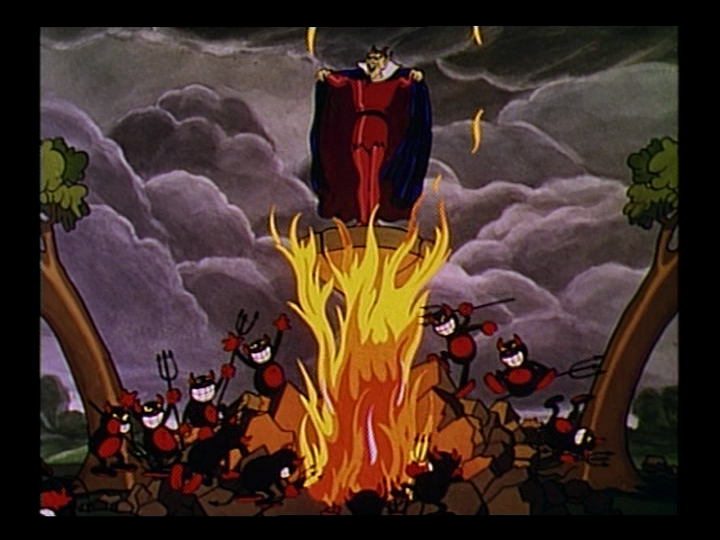
Out of the blue, the Devil bursts out of the ground, coming to claim the goddess as his bride

Suddenly, the skies grow dark, and the Devil bursts out of the ground on top of a column of flame, coming to claim Persephone as his queen. She refuses, but he grabs her and takes her to the underworld. All of Hell is celebrating the Devil’s “marriage,” but Persephone appears visibly miserable. On the surface, it is perpetually winter, with all of the woodland creatures mourning the loss of the goddess.

The Devil tries to tempt Persephone to stop crying with all the treasures of the world, and is angered that she will not stop being sad. He tells her that he will do anything she says, so long as she smiles. She asks to return to her world above, as everything above will die if she doesn’t. He acquiesces on one condition: she must spend half of every year with him below. She agrees to his terms, and is released. Everyone of the surface is overjoyed to see her, especially when she melts the snow and makes the world spring again.

October 8

October 8, 1999 – The Documentary The Hand Behind the Mouse: The Ub Iwerks Story Premieres in Los Angeles, California

“When you talk to people about the history of animation, you say, ‘Oh, and then Ub Iwerks…’ they go ‘Uh, Oob?…What kind of a name is that?’…it’s the name if the guy who first drew Mickey Mouse.” – John Lasseter

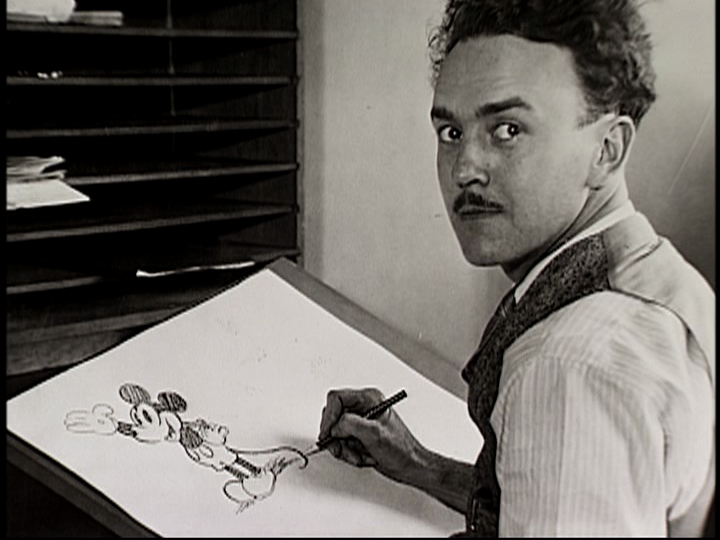
On October 8, 1999, The Hand Behind the Mouse: The Ub Iwerks Story premiered in Los Angeles, California. Narrated by Kelsey Grammar, the documentary tells the oft untold story of one of the creators of Mickey Mouse: Ub Iwerks. It was directed and written by his granddaughter Leslie Iwerks, The documentary begins with how to the two worked to make Mickey Mouse, with Iwerks working overnight to create the character’s design.

The documentary takes us through Ub’s life story, beginning in Kansas City, Missouri, and his meeting with a young man named Walter Disney. The two became fast friends, and attempted to start their own business, but it wouldn’t last. Over the years, the two would work together many times, until they finally hit success with the Alice Comedies and Oswald, the Lucky Rabbit, with Ub animating most of the cartoons. After losing their character and co-workers to Charles Mintz, the two created their new character in secret: Mickey Mouse. The success of Mickey Mouse surprised them, as did the success of the Silly Symphonies. The film also explores the breaking of the Disney Iwerks partnership, when Ub left to strike out on his own creatively, with his successes and failures, as well as the new inventions he created to add more life to his animations. Iwerks would return to Disney in 1940, this time in a technical capacity, and would be well known for his achievements in special effects.


July 30

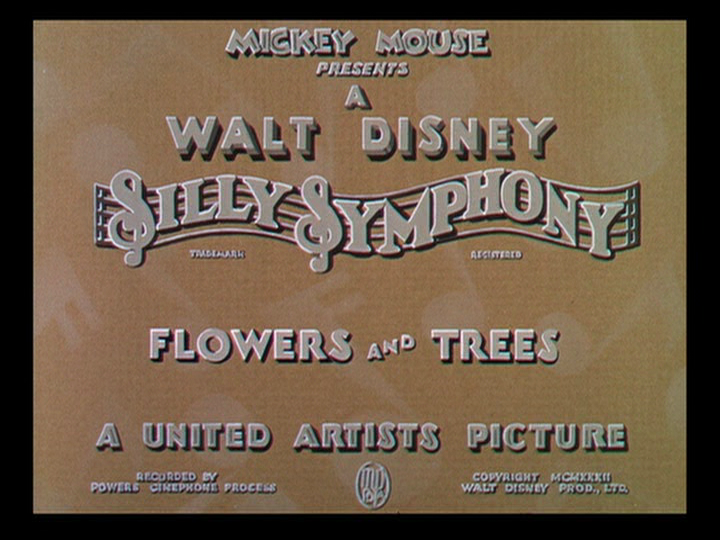
July 30, 1932 – The Academy Award Winning Silly Symphony Flowers and Trees is Released to Theaters

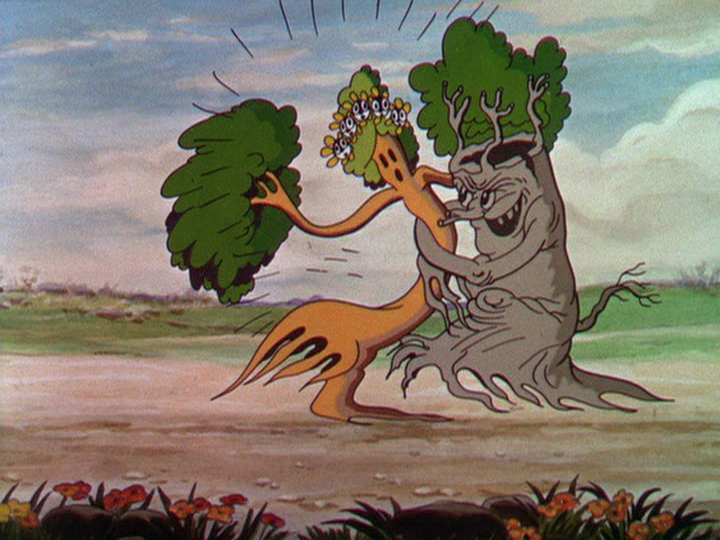
On July 30, 1932, the groundbreaking Silly Symphony Flowers and Trees was released to theaters. The short was directed by Burt Gillett, and became a landmark in Disney animation. Originally conceived in black and white, the short was scrapped at great cost to the studio to be redone in the new Technicolor process. Walt Disney signed an exclusive deal with Technicolor that gave him alone the rights of the process for two years, and after this short, all of the Disney shorts would be released in color. This process helped enhance the quality of Disney’s films, and Flowers and Trees would be awarded an Academy Award for Best Cartoon; at the same ceremony, Walt would be awarded a special Academy Award for the creation of Mickey Mouse.

One spring morning, the trees and flowers wake to the sound of a bird’s chirping, stretching in the morning light. One pair of trees in particular is enjoying the day, while an old stump scares the bird that tries to wake him. One tree begins to play a harp for his love, a beautiful young tree, who dances gracefully to the music while flowers dance around her. The flowers then bring her closer to her love and dance around them before making a heart shaped wreath on the ground. The male tree places it around the female’s head.

The female tree is captured by the stump, and she struggles in vain to escape

She continues to dance, unaware she is being pursued by the jealous, cranky old stump. He grabs her for his own, and the young male tree saves her before beginning a sword fight with the stump. The old stump is defeated, and decides to set the young male tree on fire. The male tries to stomp out the blaze, but to no avail. The plants that can run begin to flee, while others try to help put out the flames. The stump watches will glee as he sees the young couple being engulfed in flames, but soon finds himself victim of the blaze as well.

The flames being to grow in intensity, and the birds flock together to create a hole in the clouds that causes rain to fall and put out the fire. What’s left of the stump is found on the road, a victim of his own plan to destroy the couple, with his vultures swarming around the remains. After the storm clears, the male tree, proposes to the female, and the flowers sound the wedding bells.

May 24

Posted on

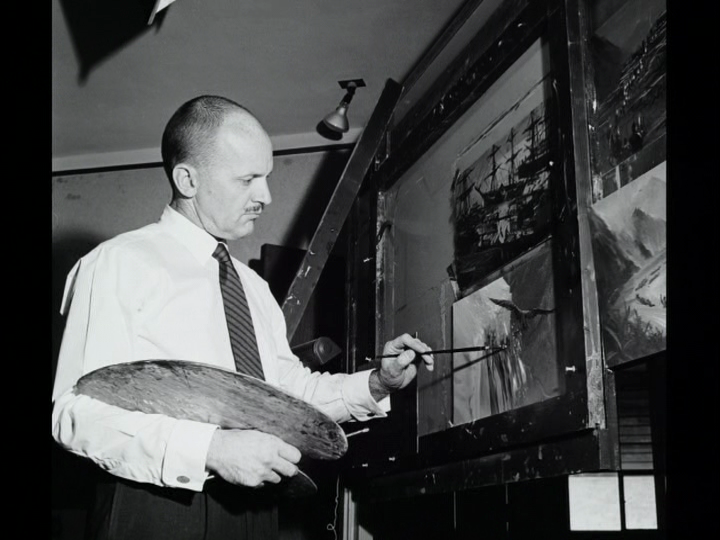
May 24, 1913 – Birth of Disney Legend and Matte Painter Peter Ellenshaw

“[Ellenshaw’s] a pretty unique man. He had a sense of style and fantasy to his paintings that was extraordinary. If you were to look at a Peter Ellenshaw painting from Mary Poppins, it has an impressionistic quality to it.”

Peter Ellenshaw, best known as the matte painter on Mary Poppins, was born in London in 1913 and raised in Essex. His father died in World War I, and Ellenshaw left school at the age of 14 to support his family, but he kept up his passion for drawing. After meeting and being offered a job by matte painter Walter Percy Day, Ellenshaw worked as a painter on such films as The Thief of Baghdad, The Red Shoes, and Spartacus.

When Walt Disney set to work on making live-action films in England, he personally chose Ellenshaw to create the scenes of England during the days of Treasure Island. Disney then brought Ellenshaw to work on the production of 20,000 Leagues Under the Sea, which led to his best-known work of the background paintings in Mary Poppins, for which he won an Academy Award for Best Visual Effects.

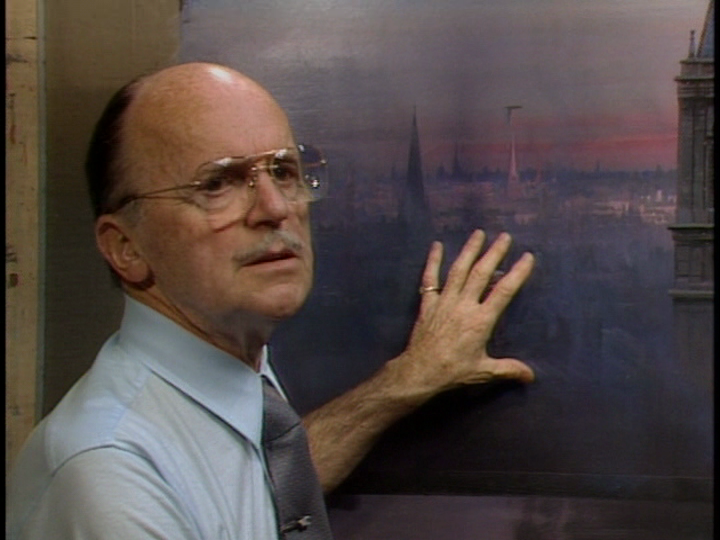
Ellenshaw explaining the special effects behind one of his matte paintings for Mary Poppins

Ellenshaw continued to contribute to Disney films as a matte artist, including Pollyanna and Swiss Family Robinson; in addition to his matte art, Ellenshaw contributed to the photographic effects on Darby O’Gill and the Little People, worked as a production designer on Island at the Top of the World and The Black Hole, and was the art director of Bedknobs and Broomsticks. Ellenshaw retired after his work on The Black Hole in 1979; however, he contributed to the matte paintings in the 1990 film Dick Tracy. He was named a Disney Legend in 2003, and passed away in 2007.