RSS Feed

Tag Archives: Special

January 7

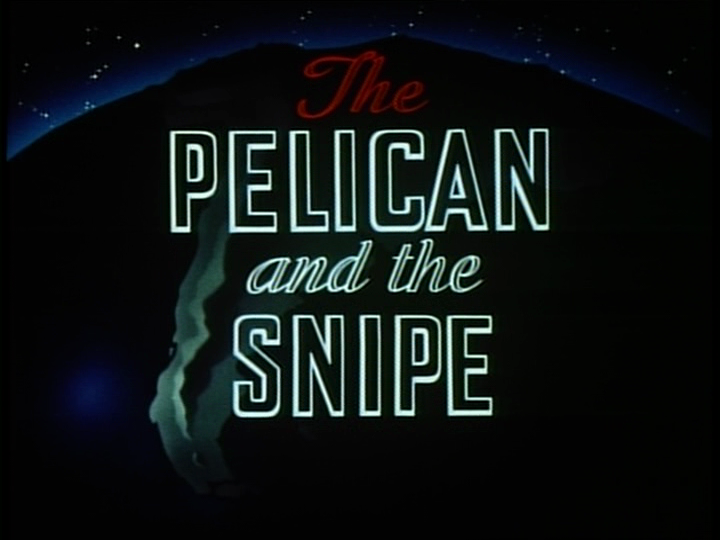
January 7, 1944 – The Special Wartime Short Film The Pelican and the Snipe is Released to Theaters
vlcsnap-2015-01-04-16h11m08s32

“Whenever Monte dreams he’s a dive bomber, it’s little Vidi’s job to pull him out of dives.”

On January 7, 1944, the special short film The Pelican and the Snipe was released to theaters. The short was meant to be included as a segment in The Three Caballeros, but was released as a short film instead. It was directed by Hamilton Luske, and narrated by Sterling Holloway.

The short takes place in Montevideo, Uruguay, at a small lighthouse. Monte the Pelican and Vidi the Snipe have a job watching from the top of the lighthouse, but Monte has a major problem – he flies in his sleep. Vidi is tasked to watch over Monte while he sleeps. Poor tired Vidi falls asleep at one point, and that’s when Monte, dreaming that he’s a dive bomber, dives off the side of the lighthouse. Vidi quickly chases after him, preventing Monte from crashing into several large jagged rocks, flying into a shark’s mouth, and other spectacular scrapes. Night after night, Vidi watches over Monte, with Monte never knowing a thing. In the morning, Monte is annoyed when he finds Vidi so exhausted and sleeping. Poor Vidi can’t sleep during the day, however, thanks to the planes performing maneuvers around the lighthouse.

Vidi's plan to keep Monte in place backfires, and Vidi is taken on a ride

Vidi’s plan to keep Monte in place backfires, and Vidi is taken on an exhausting ride

The next night, Vidi thinks he’s found a solution by tying one of Monte’s legs to one of his. However, all this does is pull Vidi along for the ride when Monte takes off for his sleep-flight adventure. Vidi manages to use the rope to keep Monte out of trouble, but poor Vidi is still exhausted. He comes up with one idea after another, but none of them seem to work, save for connecting Monte to an anchor. Unfortunately, Monte pulls the anchor off when he take flight, and lands in the ocean. Thinking that Vidi has just been playing pranks on him, Monte plans on getting even. Vidi tries to explain, but Monte doesn’t give him a chance to talk, and banishes a heartbroken Vidi from the lighthouse. That night, Monte’s problem resurfaces, and he starts soaring around with the air force, and gets his tail hit by one of the propellers. This jolts him awake, and then it finally dawns on him that he’d been flying in his sleep, and Vidi was only trying to protect him from harm. He then notices Vidi fast asleep on the target for bombing practice, and rushes to save the poor snipe from getting blown to smithereens. In the end, the two find a good solution – they tie Monte’s leg to the lighthouse, letting him circle around the lighthouse in his sleep to his heart’s content.
December 8

December 8, 2009 – The Animated Christmas Special Prep & Landing Premieres on ABC

P&L_1

“The operation has its challenges, but we’re always prepared.”

On December 8, 2009, the animated Christmas special Prep & Landing premiered on ABC. It was based on a story idea by director Chris Williams, who would go on to direct Bolt. The short met positive reviews, and ended up winning an Emmy Award for Outstanding Animated Program. The short was written and directed by Kevin Deters and Stevie Wermers-Skelton. It starred Dave Foley as Wayne, Derek Richardson as Lanny, Sarah Chalke as Magee, and W. Morgan Sheppard as Santa.

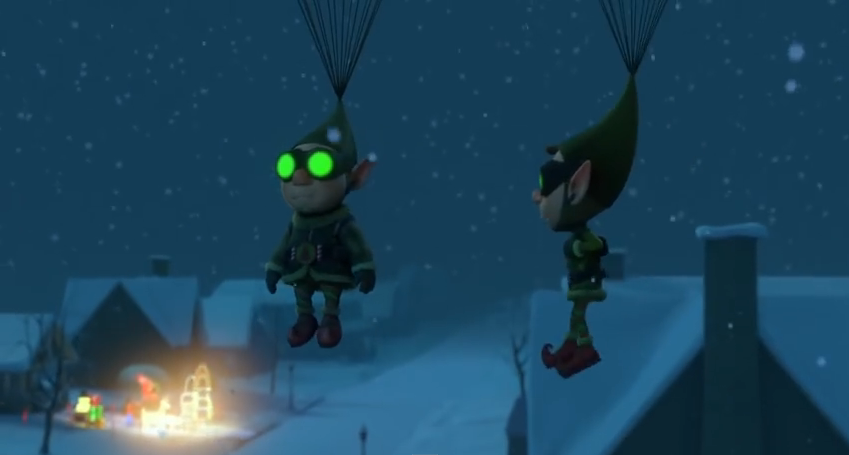
The story begins on Christmas Eve, where two elves are preparing a living room for Christmas day festivities, using special night-vision googles and other technical devices to ensure everything is perfect for when Santa arrives. The elves, named Wayne and Peterson, are part of the Prep and Landing team. Wayne has been doing this for a long, long time, and he’s ready for a change: a promotion to Director of Naughty List Intelligence, to be exact. Unfortunately, he didn’t get the promotion, but his old partner got it. He tries to put on a brave face when told the news, but he is actually rather hurt that his partner got noticed over him. Wayne then gets a new partner named Lanny, whose cheerful disposition is not exactly comforting to Wayne. As the pair head out to start Prep and Landing work, they meet Thrasher, cousin to reindeer Dasher, and Thrasher threatens Lanny, as he prefers to be thought of as a myth.

P&L_2

Lanny and Wayne head out to their job, with Wayne barely making any moves in doing his work

The elves are let out over their first stop, and as Wayne doesn’t wish to do his job anymore, he convinces Lanny to do the job himself while he lounges in the living room. Poor Lanny continues to make one mistake after another, and Wayne doesn’t notice that the kid in the house has woken up. The kid takes Wayne’s picture, and all Wayne can do is stare. Meanwhile, back at the North Pole, Santa has just left the building, ready to deliver presents all over the world. In the house, the boy named Timmy, grabs Wayne and asks questions until Lanny is able to stun Timmy and put him to sleep. Wayne decides they should just head out, but Lanny points out that protocol says that all children need to be “snug in their beds.” As they carry Timmy back to his room, Lanny asks Wayne if something’s wrong. Wayne answers that he’s been working Prep and Landing for 227 years, and he can’t find the joy in it anymore. When Wayne continues to act sour, Lanny sadly admits that he thought Wayne was the Prep and Landing guy, but Wayne is just a lump of coal. Things get worse when Magee, the North Pole Christmas Eve Command Center Coordinator, finds out that the pair aren’t ready for Santa’s arrival, and initiates plan “Figgy Pudding,” eliciting a gasp from others in the NPCECC. This means that Timmy’s house is skipped for Christmas.

When Wayne finds out that Timmy is being skipped, he realizes that it’s all his fault, and is even more upset when Timmy thanks Wayne in his sleep. Wishing to make it right, Wayne is patched through to Santa, and convinces Santa to turn back around. He and Lanny then head to the roof to set up the roof, but they lose their landing lights. They head to a nearby neighbor’s light display, and rig it to mark the way for Santa. The two manage to work together to create a safe landing for Santa, saving Christmas. The next day, Wayne goes to visit Santa to apologize for what had happened. Santa then gives Wayne a present to see how well Timmy is doing on Christmas. As he leaves Santa’s office, he tells Lanny that he was granted a promotion to Director of the Nice List, but turned it down to stay in Prep and Landing with Lanny.

December 1

December 1, 2004 – Disney’s PhotoPass Service Debuts at Walt Disney World

PP

“Capture your magical experiences – and get everyone in the picture – all throughout your Disney vacation.”

On December 1, 2004, the PhotoPass service debuted throughout Walt Disney World’s parks. The service aims to give guests the opportunity to get great family shots in the park through the use of a PhotoPass card. Given to a PhotoPass photographer, the card is scanned after the photo is taken, and guests can order their favorite pictures after they have gone home and entered the card’s code on the PhotoPass website after establishing an account. Photos can be taken by PhotoPass photographers at park entrances, iconic structures, and at character meet-and-greets. The service has since been linked to Disney’s MyMagic+ account, and is available at Disneyland and the New York World of Disney store.

November 16

November 16, 1990 – The Animated Featurette The Prince and the Pauper is Released to Theaters

vlcsnap-2014-11-16-18h24m50s40

“You needn’t worry about that. To govern, you need to say only one of two things: ‘That’s a splendid idea, I’m glad I thought of it,’ and ‘Guards, seize him!’”

On November 16, 1990, the animated featurette The Prince and the Pauper was released to theaters alongside The Rescuers Down Under. It was based on the classic novel of the same name by Mark Twain. It was directed by George Scribner, with screenplay by Gerrit Graham, Samuel Graham, and Chris Hubbell. It features the voices of Wayne Allwine as Mickey and the Prince, Bill Farmer as Goofy, Arthur Burghardt as Captain Pete, and Tony Anselmo as Donald.

The story begins in England, where times are hard after the good King fell ill and his Captain of the Guard terrorized the people in the King’s name. Mickey Mouse is seen selling kindling in the snow, while Goofy tries to sell snow cones. Mickey cheers Goofy and Pluto up with a song about the life they’ll live one day, just like a king. The Captain passes by with his carriage of drunk soldiers, and Pluto follow after them, spying some food. The door to the castle closes before Mickey can retrieve Pluto, and when he tries to get Pluto back, the guard mistakes Mickey for the Prince and quickly ushers him inside. Inside the castle, the Prince is having his lessons, but yearns to play outside in the snow, and plays pranks on his assistant Donald. The Prince spies the Captain hurting Mickey and Pluto, and orders that Mickey be brought to him at once; the Captain then throws Pluto outside.

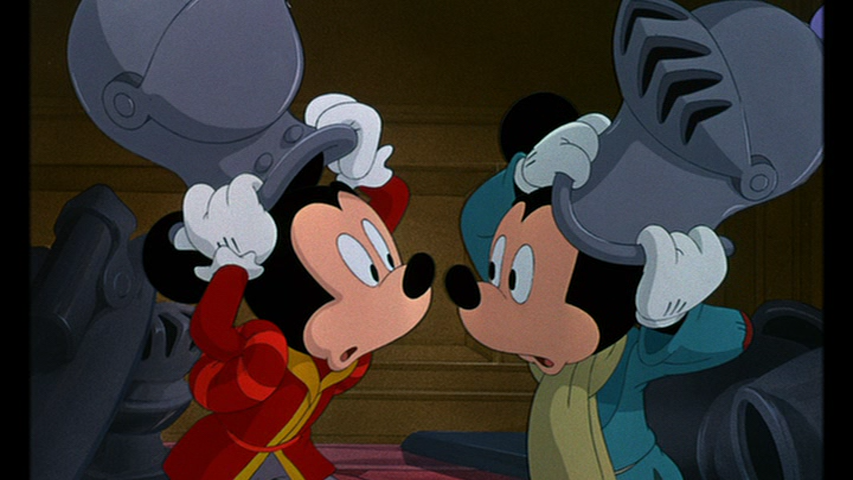
Mickey and the Prince have their first meeting, and are surprised at their similarities

Mickey and the Prince have their first meeting, and are surprised at their similarities

After Mickey accidentally knocks down some suits of armor, he and the Prince come face-to-face, and are shocked at how they look so much alike. The Prince thanks Mickey for “saving his life” of boredom, and asks Mickey to switch lives with him. Mickey is reluctant, but the Prince promises to be back as quickly as possible, and takes a special ring with him to prove he is the Prince, in case he should get into any trouble. As the Prince passes by the Captain, the Captain treats him horribly, giving the Prince the first taste of the cruelty his people have endured. He runs into Pluto outside, but Pluto soon realizes that it isn’t Mickey. Mickey soon meets Goofy, but Goofy doesn’t seem to be fazed by ‘Mickey’s’ strange behavior. The two begin the charade with mixed results.

The Prince sees the guards acting cruelly in the King’s name, and demands that they leave the people alone, but all they do is mock him. The Prince decides to reveal his identity to give the food back to the people, but when the guards find him, they decide to arrest him instead. The Prince is able to give them the slip, thanks to the “help” of Goofy, and the Captain is less than pleased when he hears what happens. Unfortunately for Mickey, the King is close to death, and wishes to see his son. Mickey goes in to see the King, and hears the man’s dying wish: rule the land from his heart, justly and wisely. Not knowing what else to do, Mickey promises to do so as the King dies. After he leaves the room, the Captain captures Mickey, and threatens to hurt Pluto if Mickey doesn’t follow his commands. The Prince hears the news as he stays with Goofy, and is heartbroken. He decides to head back to the castle to right the wrongs he’s seen. However, he is captured by the Captain and the guards before he can head back to the palace.

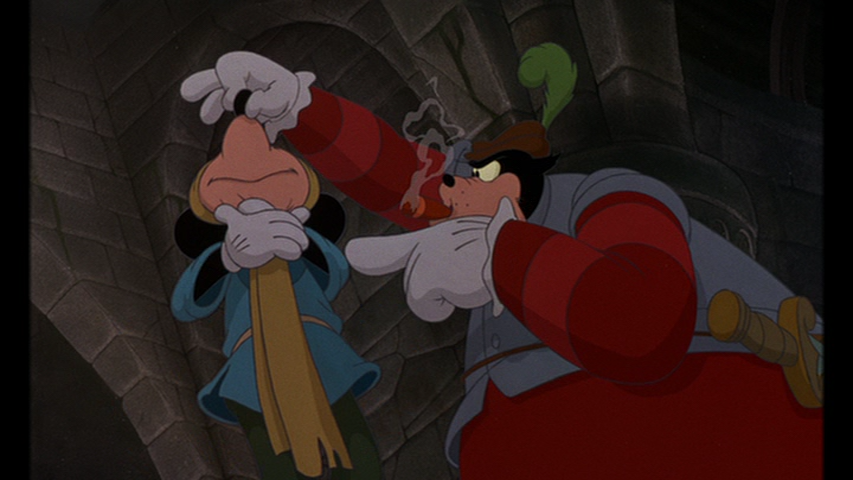
The Captain plans to keep the Prince locked in the dungeon while Mickey takes the crown

The Captain plans to keep the Prince locked in the dungeon while Mickey takes the crown

The Captain throws the Prince into the dungeon with Donald right before the coronation, and the plan that he will take over once Mickey is crowned. Mickey, however, does not want to enter the ceretmony, but is “convinced” by Pete holding up Pluto. While the Prince waits, the executioner appears, although it’s Goofy in disguise, and he helps break them out. They manage to outrun the guards, and make it to the coronation just in the nick of time. The Prince does battle with the Captain, with Pluto, Goofy, and Donald helping to fight the guards off. The Captain and his guards end up thrown out a window, and the Prince is crowned the King of England, much to the joy of the subjects. Mickey, Goofy, and Pluto are made the companions of the Prince, and rules with justice and compassion for all.

November 10

November 10, 1953 – The Special Short Film Ben & Me Premieres in Theaters

vlcsnap-2014-11-10-16h30m30s89

“Information! Ben, when the sun’s up, it’s up! Why read about it?”

On November 10, 1953, the special short film Ben & Me premiered in theaters. It was adapted from a 1939 children’s book of the same name by Robert Lawson, and was released alongside the True-Life Adventure The Living Desert. It was nominated for an Academy Award at the 26th Academy Awards as best two-reel short film, but lost to Disney’s other nomination, Bear Country. The story was adapted by Bill Peet, Winston Hibler, Del Connell, and Ted Sears, and was directed by Hamilton Luske. It features the vocal talents of Sterling Holloway as Amos, Carlie Ruggles as Ben Franklin, and Hans Conried as Thomas Jefferson.

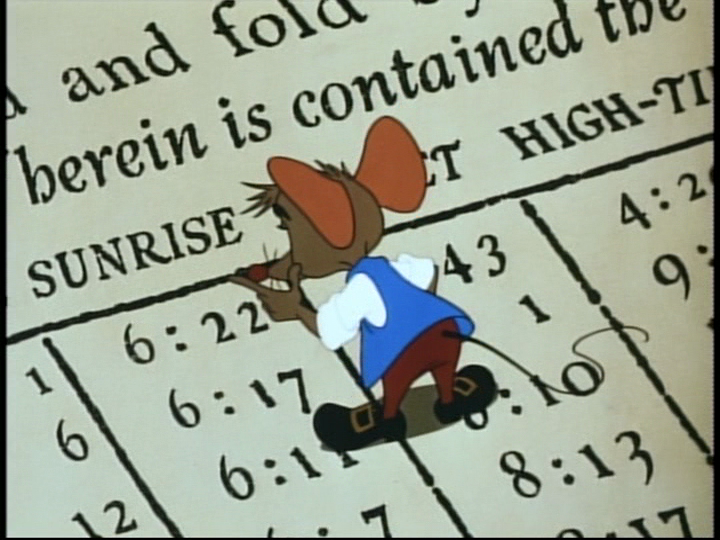
The short begins with a group of schoolchildren being taken to the statue of Benjamin Franklin to hear of all the amazing things he did. At the same time, a group of schoolmice are taken to the statue of a mouse on top of Ben’s head, who actually is the one who had all the great ideas for which Ben is credited. The tour guide for the mice holds up a book of Amos’ memoirs, and the story begins with Amos’ meager upbringing as a church mouse. He decides to leave his parents and 26 brothers and sisters to seek his fortune, and sets out into the winter storm. He tries to look for work, but is unable to find anything due to his being a mouse. By nightfall, he takes refuge in a run-down store run by a Benjamin Franklin, printer and bookbinder. He comes across Ben, who sneezes hard enough to break his glasses. Ben is also being chased by debt collectors, and is given 24 hours to come up with the money, or else. Amos gives Ben the idea of creating a stove in the middle of the room, so he can provide the room with more heat. While Ben works on the stove, Amos creates a pair of bifocals for Ben to wear from his two broken pairs of glasses.

Amos pours over Ben's paper, and is disappointed in what he reads

Amos pours over Ben’s paper, and is disappointed in what he reads

Amos then takes a look at Poor Richard’s Almanack, Ben’s paper, and renames it the Pennsylvania Gazette. He then heads out to find out the news from the local taverns and streets, and the two set to work to create the new newspaper. The Gazette is a hit, and Ben is able to pay off his debts. Amos continues to assist Ben by staying in his hat, ready to offer advice at the ready. The years flow by, and Amos assists with Ben’s letters while Ben works on his experiments, including static electricity. Ben’s experiments take a toll on Amos (as he uses these experiments to pull pranks on Amos), and Amos decides to leave. He only agrees to stay when Ben promises not to play any more pranks, although Ben is lying during the promise. Later, Ben takes up kite-flying, and Amos is attached to the kite so he can have a “bird’s eye view” on the town for his reporting. Unfortunately, Amos doesn’t see that Ben is using the kite for an experiment on electricity, and gets shocked by lightning multiple times. Ben tries to pull Amos down, but it’s too late, and Amos is swept away with the wind. Angry by Ben’s broken promise, Amos decides to leave forever, returning to his family in the church.

The years continue to go, with revolution heating up within the colonies. Ben is chosen to go speak as an envoy to the king, but he returns with a heavy heart, as the king will not listen to the colonists. Ben tries to convince them that there can’t be a war, but he’s unsure of any other way. Amos wants to go back and help Ben, but his pride prevents him. In the summer of 1776, Ben goes Amos’ church residence and begs Amos for his help again. Amos agrees on his own terms, and draws up an agreement for Ben to sign. Amos arrives at Ben’s the next morning with the agreement, and as Ben begins to read it, Thomas Jefferson arrives. Jefferson is in trouble, as he had problems with the beginning of the Declaration of Independence. Amos demands that Ben read his contract now, and when Ben relents and reads is aloud, Jefferson is inspired and uses the words from the contract for the Declaration.

July 15

July 15, 2011 – The Animated Short Film The Ballad of Nessie Premieres in Theaters

vlcsnap-2014-07-15-19h12m00s202

“In the bonny blue highlands where the bagpipes play lives a creature called Nessie, but it wasn’t always this way.”

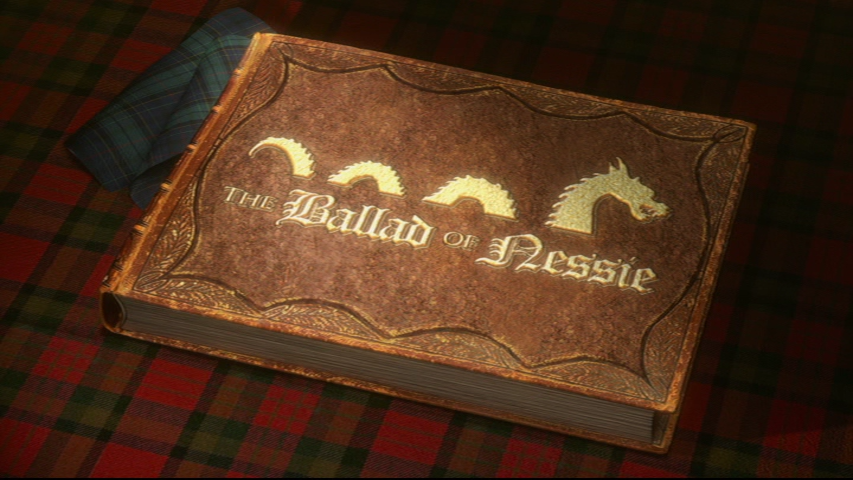
On July 15, the animated short film The Ballad of Nessie was released to theaters alongside the animated feature film Winnie the Pooh. The short features a tribute to famed animator Glen Keane, which is the name of the glen where Nessie once lived. It was written by Regina Conroy, Stevie Wermers-Skelton, and Kevin Deters, and directed by Wermers-Skelton and Deters. The short was narrated by Billy Connolly. It was nominated for an Annie Award for Best Short Subject, but lost to Minkyu Lee’s Adam and Dog.

The narrator introduces the audience to Nessie, a shy creature who used to live on the moors of Glen Keane. Although considered a monster, she had “no bark and no bite,” and lived with her best friend, a rubber duck named McQuack. One day, a developer named Tycoon MacFroogle arrives. He wishes to turn the moor into a mini golf course, which he quickly does, driving Nessie out of her home. A nearby seagull tells her to keep a stiff upper lip, and she decides to pack her things and find a new pond to live. She searches high and low, but can’t find anything suitable, and is always told not to cry. Finally, tired of fining nothing, she lets all her tears out, crying a literal flood of tears for weeks. After she finished crying, she noticed that she cried a great lake, and leaps out for joy, having found her new home. The narrator points out the important lesson: don’t be afraid to cry, as “sometimes it’s through our tears we find a better way.” Nessie is still in Loch Ness, and still playing hide and seek with McQuack. Meanwhile, MacFroogle is seen weeping in despair, as Nessie’s tears have completely destroyed his mini-golf park.

July 8

Posted on

July 8, 1913 – Voice Actor Bill Thompson is Born

Bill Thompson

“I’m late! I’m late! For a very important date! No time to say hello, good-bye! I’m late! I’m late! I’m late!”

On July 8, 1913, voice actor and radio star William H. Thompson was born in Terre Haute, Indiana to vaudevillian parents. His career began on the Chicago airwaves, where he worked on the variety series The Breakfast Club and on The Sinclair Weiner Minstrels. Thompson could voice a great range of characters, as seen in his work with Disney. His first notable role with the studio was in the 1951 feature animated film Alice in Wonderland, where he voiced the White Rabbit and the Dodo; this was followed with roles in Peter Pan (Smee and various pirates), and Sleeping Beauty (King Hubert). In Lady and the Tramp, Thompson was given five different parts to voice, including that of Jock, the Scottish Terrier. Thompson found even more fame at Disney voicing Ranger J. Audubon Woodlore in several short films and episodes of the Disney anthology series, and was the first actor to give a voice to comic character Scrooge McDuck in the feature Scrooge McDuck and Money. His last role was Uncle Waldo in The Aristocats; Thompson passed away suddenly at the age of 58. For his voice work, Thompson has been awarded a star on the Hollywood Walk of Fame.

May 29

Posted on

May 29, 2009 – The Pixar Short Film Partly Cloudy is Released to Theaters

vlcsnap-2014-05-29-19h16m43s180

On May 29, 2009, the Pixar short film Partly Cloudy was released to theaters in front of the feature film Up. It was written and directed by Peter Sohn, with music by Michael Giacchino, and featuring the voices of Tony Fucile and Lori Richardson.

The storks are flying across the sky, delivering babies to expectant mothers everywhere before returning to the clouds. It is revealed that babies are made by clouds, then are given to the storks to deliver. While all the other clouds make puppies and human babies, one little black cloud named Gus is given the task of making somewhat dangerous babies, including a baby alligator, much to the chagrin of Gus’ loyal stork, Peck. Peck puts up with the dangerous creatures, ranging from headbutting rams, to porcupines, to sharks. Gus is concerned with Peck’s appearance, as the stork keeps losing feathers from the stress of his job, and is worried that Peck will leave him for a nicer cloud. As Peck sees Gus hold out the baby shark, Peck flies away, leaving Gus alone and throwing a tantrum. Dismayed, the little black cloud begins to cry, but stops when he sees Peck arrive with a package: the cloud Peck went to provided the stork with protective gear to keep him safe during deliveries. Unfortunately, Gus’ next creation is an electric eel, but Peck keeps up a positive attitude, once again loyal to Gus.

May 28

Posted on

May 28, 1953 – The Special Short Film Adventures in Music: Melody is Released to Theaters

vlcsnap-2014-05-28-19h24m12s42

“Today’s lesson will be about something we really can’t do without.”

On May 28, 1953, the special short film Adventures in Music: Melody was released to theaters. This was to be the first in a series featuring the character Professor Owl teaching his students about principles of music, but only one other short was made (Toot, Whistle, Plunk, and Boom); the character would become best known for beginning the Disney Sing-A-Long videos. Melody was also the first cartoon filmed in 3D, and was shown in Disneyland’s Fantasyland Theater as a part of the 3D Jamboree, an attraction that remained fairly popular at the park, although 3D films didn’t really catch on in regular theaters. The short was directed by C. August Nichols and Ward Kimball, with story by Dick Huemer.

All the young birds gather at the school birdhouse, where Professor Owl is waiting to take attendance. He then declares that the lesson for the day will be “melody,” much to the enjoyment of the students. He directs them to the melody of nature, including the bird, the cricket, and the willow tree. He also says that there are only two creatures on earth that can sing: birds, and humans. Using a chart, Professor Owl points out the melodies in each stage of a person’s life. He changes the topic soon after to inspiration, with Suzy Sparrow drawing inspiration from love. Penelope Pinfeather sings her song, inspired by the ocean. Another student sings about trains, while another one sings about cowboys. The Canary Sisters sing a song about motherhood, before the class sings a song all about their inspirations. In conclusion, Professor Owl points out that “beautiful symphonies are often created from simple melodies,” and the short ends with an experimental look at music, featuring the beginning piece, “The Bird and the Cricket and the Willow Tree.”

May 13

Posted on

May 13, 2006 – The Special Short Film The Little Matchgirl is Shown at the Eugene Film Festival

vlcsnap-2014-05-13-18h09m37s193

On May 13, 2006, the special short film The Little Matchgirl was screened at the Eugene Film Festival in Eugene, Oregon. It was then followed with a run in Los Angeles starting August 23 to qualify for an Academy Award, and then was released on the Platinum Edition of The Little Mermaid. The short has no dialogue, but features Alexander Borodin’s “String Quartet No. 2 in D Major.” The story was also changed to be set in Russia, rather than its original Denmark. It was directed and adapted by Roger Allers, and based on the story by writer Hans Christian Andersen. It was nominated for an Academy Award, but lost to Torill Kove’s The Danish Poet.

The short opens on a snowy day in Russia, and a little girl watches happily as people ice skate on the river. She is knocked over by a horse as she starts to walk away, and quickly gathers the matches that have fallen to the ground. The girl wears no shoes, only some fabric wrapped around her feet, leaving her toes bare. The girl walks around the marketplace, trying to sell her matches, but is ignored by the villagers. She watches as a family steps out of a store with presents for Christmas, and they ride off together in a sleigh. As the lamps are lit for the night, and everyone heads home, the girl walks to a small nook, where she tries to keep warm. Seeing her unsold matches, she is tempted to use one to stay warm, but resists. In the end, she lights a match, and sees a vision of a stove. After her match goes out, she lights another one, and sees the vision of a Christmas feast, complete with turkey. With four matches remaining, she lights another one, and this time sees herself in a horse-drawn sleigh, gliding across the snow covered plains to a warm and inviting house, where her grandmother lives. Wanting to see her grandmother again, she lights the remaining matches, and runs into her arms. She then sees a giant Christmas tree with presents all around. The next morning, the little girl’s soul is taken to Heaven by her grandmother, with her body remaining in the small crevice, the burnt out matches surrounding her. A shooting star travels across the sky, a symbol for a soul taken to Heaven.