RSS Feed

Tag Archives: Short film

November 17

November 17, 1934 – The Mickey Mouse Short Film The Dognapper is Released to Theaters

vlcsnap-2014-11-17-18h12m43s207

“Careful boys, he’s got blood in his eyes and shoots to kill!”

On November 17, 1934, the Mickey Mouse short film The Dognapper was released to theaters. It was directed by Dave Hand.

The short opens with a newspaper declaring that Minnie’s prize pooch Fifi has been stolen by Peg Leg Pete. An announcement goes out to Officers Mickey and Donald, and while Donald is scared of the description of Pete, they soon decide to pursue him when they see him racing down the road. However, their motorcycle is less than ideal, and poor Donald almost gets left behind. There’s a shootout on the road as they follow Pete. Pete destroys the bridge, but the boys are able to drive on the rails and keep up the chase. Pete headst o his hideout at the Glutz Sawmill, and while Mickey and Donald are able to find their way in, Pete has already chained up Fifi and has his machine gun at the ready. Mickey quickly finds him, but is knocked into a barrel by Donald. Donald orders him to put his hands up, but Pete pulls out a bigger gun on Donald, and sends Donald flying into the wall. Mickey, with the help of Fifi, manages to capture Pete, but Donald once again stops Mickey from capturing the villain. However, the two are finally able to thwart him using the tools available in the sawmill, until Pete starts the saw, nearly chopping the pair in two. The saw breaks and is sent flying after Pete at a wild speed, and he runs wildly around the mill, but is sent flying when the saw attaches to his foot. Donald and Mickey use a girdle to capture Pete and return home with Fifi as heroes.

November 14

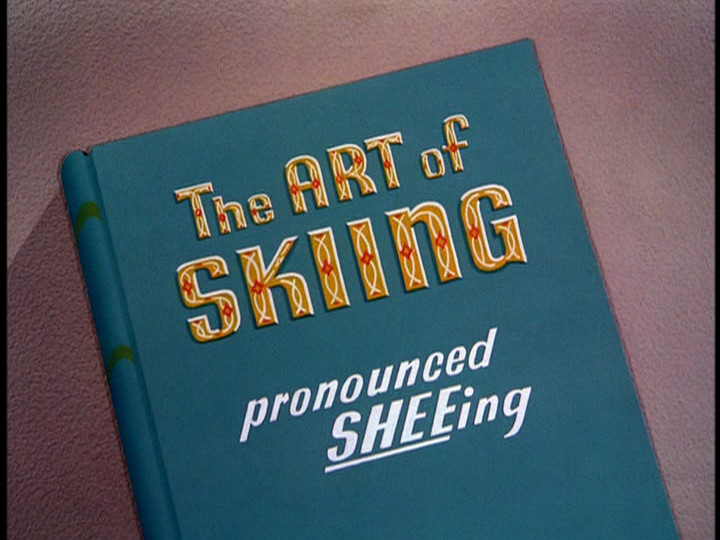
November 14, 1941 – The Goofy Short Film The Art of Skiing Premieres in Theaters

vlcsnap-2014-11-14-18h44m16s60

“Skiing is fast becoming the most popular of all winter sports. And small wonder, for there is no finer conquest than that of a mountain clad in its glorious winter mantle of glittering white.”

On November 14, 1941, the Goofy short film The Art of Skiing premiered in theaters. It was directed by Jack Kinney.

The short begins at the Sugar Bowl Lodge, with Goofy fast asleep inside, clad in several blankets and jackets to keep him warm, as his breath turns to ice. His alarm goes off and he slowly wakes up, removing several hot water bottles. As the narrator explains the skier’s proper attire, Goofy slowly gets dressed, and goes straight back to sleep. The narrator wakes him up again, and he dons a sweater and hat before setting off on his skiing adventure, forgetting his trousers. He tries to pull them on over his skis, but of course he has some difficulty. Finally, he is ready to ski, and he ungracefully gets off the lift. He tries to follow the narrator’s instructions, but ends up in a tangled mess. He heads on his first ski, only to go backwards down the hill and finds himself dangling from a cliff, his head caught inside one of his skis. Goofy then tries to climb up a hill and ends up climbing up too far before falling and creating patterns in the snow. When Goofy attempts to do a jump turn, he is separated from his skis and ends up crossing paths with them several times before they bury him in the snow. He attempts to slalom down a hill and crashes into a tree, then slams into the side of a cliff. He finally tries the ski jump, although his skis end up flying faster than he does, and he tries to reclaim them midair, using them like wings. Eventually he crashes into his room in the ski lodge, falling right back to sleep.

November 12

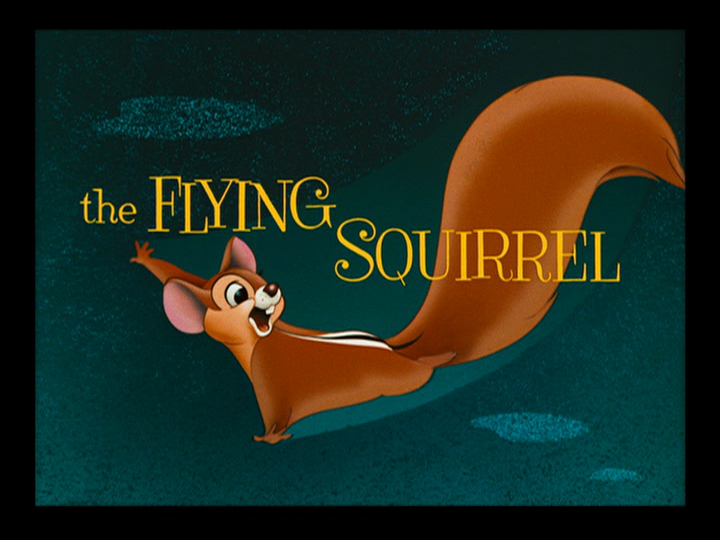
November 12, 1954 – The Donald Duck Short Film The Flying Squirrel is Released to Theaters

vlcsnap-2014-11-12-18h02m29s176

“I’ll get that peanut back!”

On November 12, 1954, the Donald Duck short film The Flying Squirrel was released to theaters. It was directed by Jack Hannah, with story by Nick George and Roy Williams.

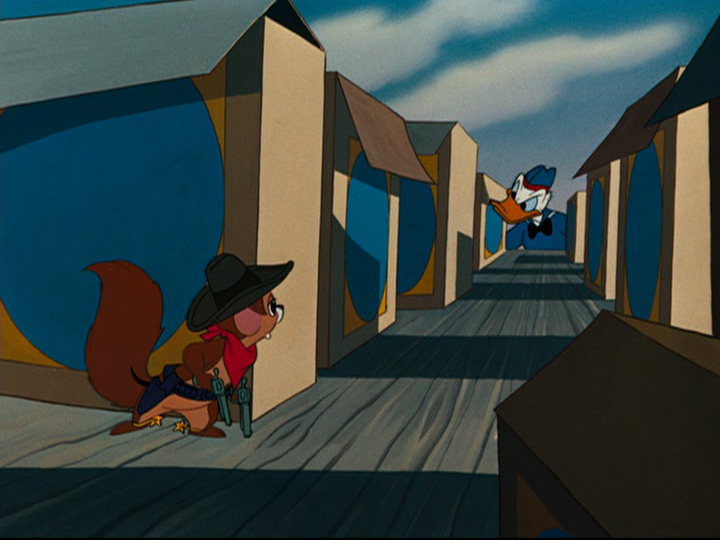
A flying squirrel is picking acorns from a free and flying home to his nest, when he sees Donald selling peanuts in the park. He stops by to grab a few, but is scared off by Donald. Donald, however, asks the squirrel to help hang up his sign in the nearby tree, offering the squirrel a peanut. Unfortunately, the peanut Donald gave him was rotten, and when he goes to complain, Donald folds him up like a paper airplane and throws him far away. The squirrel ends up in a fountain, even more determined to get a peanut, and is able to rope one with a piece of string. Doanld catches him once again, however, and throws him using a slingshot. The squirrel ends up amongst a box of Quacker Jaxs, the snack with a prize in every package, and uses the prizes to create a costume for himself.

Donald searches for the flying squirrel as he hides among the snack boxes

Donald searches for the flying squirrel as he hides among the snack boxes

Donald hears something from the table nearby, and looks over to find the flying squirrel dressed up as a sheriff. Donald grabs another pair of toy guns from a Quacker Jax box and pretends to shoot the squirrel; while the squirrel plays dead, Donald reaches in to grab him, only to find his fingers handcuffed. The squirrel retrieves his peanut from Donald’s pocket and runs away. Donald finally frees himself and, in an effort to get his peanut back, grabs a giant peanut costume and hides at the base of a tree. The squirrel takes one look at the giant peanut and discards his, which Donald eagerly snatches up. Donald doesn’t notice, however, that his giant peanut disguise has been wrapped in a rope by the squirrel, who pulls the peanut up to roast it over the flame in Donald’s cart. Donald leaps out of the rope and heads to the pond to cool off; once the disguise is revealed, the squirrel beats him over the head with a branch, retrieving the peanut while Donald is out of it. An all-out war ensues over the peanut, with both using any weapon at their disposal. In the end, Donald’s cart is destroyed, and the squirrel successfully gets the peanut.

November 10

November 10, 1953 – The Special Short Film Ben & Me Premieres in Theaters
vlcsnap-2014-11-10-16h30m30s89

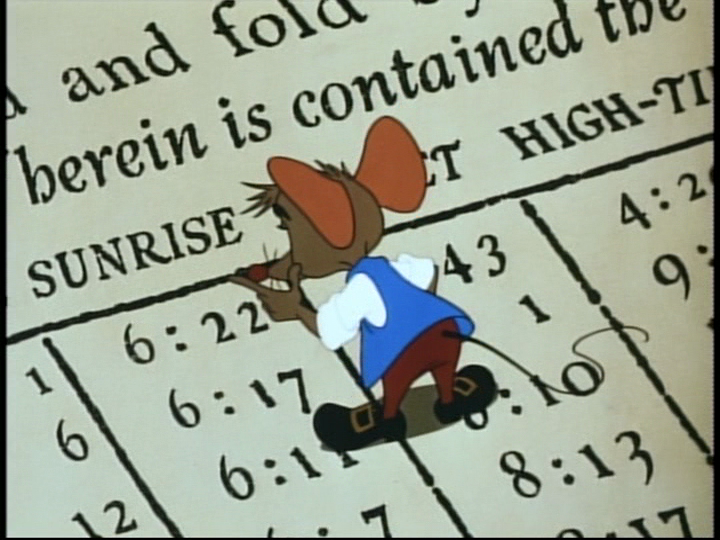
“Information! Ben, when the sun’s up, it’s up! Why read about it?”

On November 10, 1953, the special short film Ben & Me premiered in theaters. It was adapted from a 1939 children’s book of the same name by Robert Lawson, and was released alongside the True-Life Adventure The Living Desert. It was nominated for an Academy Award at the 26th Academy Awards as best two-reel short film, but lost to Disney’s other nomination, Bear Country. The story was adapted by Bill Peet, Winston Hibler, Del Connell, and Ted Sears, and was directed by Hamilton Luske. It features the vocal talents of Sterling Holloway as Amos, Carlie Ruggles as Ben Franklin, and Hans Conried as Thomas Jefferson.

The short begins with a group of schoolchildren being taken to the statue of Benjamin Franklin to hear of all the amazing things he did. At the same time, a group of schoolmice are taken to the statue of a mouse on top of Ben’s head, who actually is the one who had all the great ideas for which Ben is credited. The tour guide for the mice holds up a book of Amos’ memoirs, and the story begins with Amos’ meager upbringing as a church mouse. He decides to leave his parents and 26 brothers and sisters to seek his fortune, and sets out into the winter storm. He tries to look for work, but is unable to find anything due to his being a mouse. By nightfall, he takes refuge in a run-down store run by a Benjamin Franklin, printer and bookbinder. He comes across Ben, who sneezes hard enough to break his glasses. Ben is also being chased by debt collectors, and is given 24 hours to come up with the money, or else. Amos gives Ben the idea of creating a stove in the middle of the room, so he can provide the room with more heat. While Ben works on the stove, Amos creates a pair of bifocals for Ben to wear from his two broken pairs of glasses.
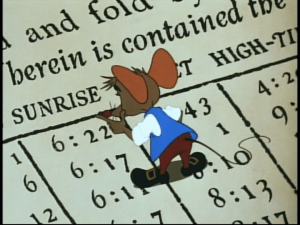
Amos pours over Ben's paper, and is disappointed in what he reads

Amos pours over Ben’s paper, and is disappointed in what he reads

Amos then takes a look at Poor Richard’s Almanack, Ben’s paper, and renames it the Pennsylvania Gazette. He then heads out to find out the news from the local taverns and streets, and the two set to work to create the new newspaper. The Gazette is a hit, and Ben is able to pay off his debts. Amos continues to assist Ben by staying in his hat, ready to offer advice at the ready. The years flow by, and Amos assists with Ben’s letters while Ben works on his experiments, including static electricity. Ben’s experiments take a toll on Amos (as he uses these experiments to pull pranks on Amos), and Amos decides to leave. He only agrees to stay when Ben promises not to play any more pranks, although Ben is lying during the promise. Later, Ben takes up kite-flying, and Amos is attached to the kite so he can have a “bird’s eye view” on the town for his reporting. Unfortunately, Amos doesn’t see that Ben is using the kite for an experiment on electricity, and gets shocked by lightning multiple times. Ben tries to pull Amos down, but it’s too late, and Amos is swept away with the wind. Angry by Ben’s broken promise, Amos decides to leave forever, returning to his family in the church.

The years continue to go, with revolution heating up within the colonies. Ben is chosen to go speak as an envoy to the king, but he returns with a heavy heart, as the king will not listen to the colonists. Ben tries to convince them that there can’t be a war, but he’s unsure of any other way. Amos wants to go back and help Ben, but his pride prevents him. In the summer of 1776, Ben goes Amos’ church residence and begs Amos for his help again. Amos agrees on his own terms, and draws up an agreement for Ben to sign. Amos arrives at Ben’s the next morning with the agreement, and as Ben begins to read it, Thomas Jefferson arrives. Jefferson is in trouble, as he had problems with the beginning of the Declaration of Independence. Amos demands that Ben read his contract now, and when Ben relents and reads is aloud, Jefferson is inspired and uses the words from the contract for the Declaration.
November 7

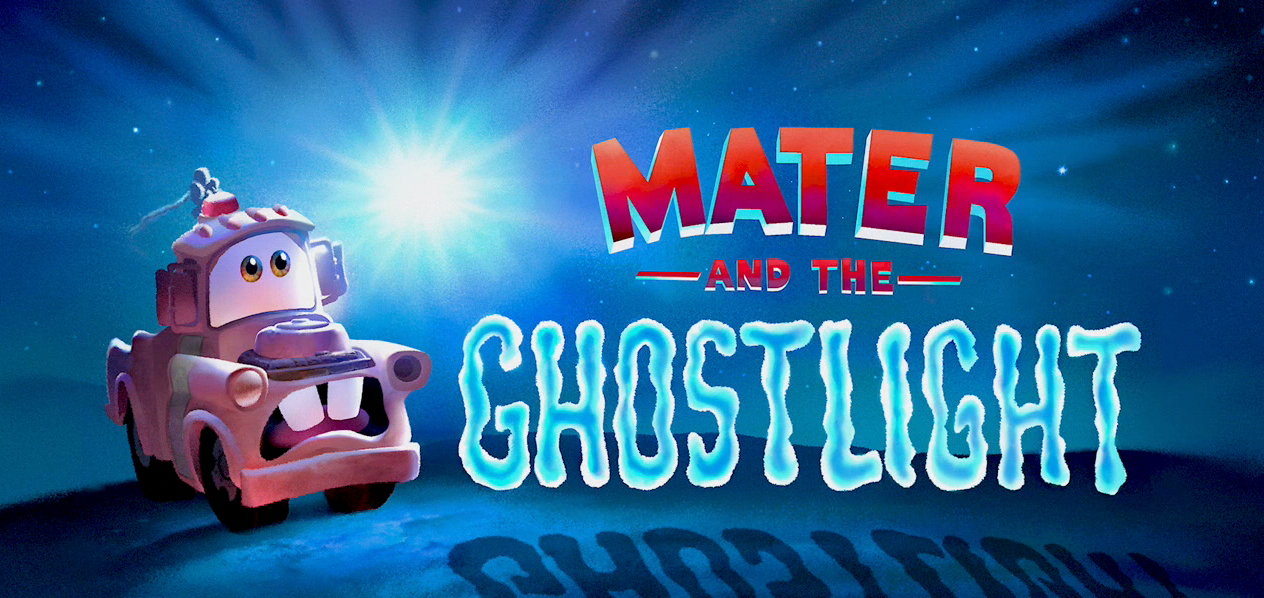
November 7, 2006 – The Pixar Short Film Mater and the Ghostlight is Released

MatG_1

“Nah, don’t be too scared buddy, it ain’t real.”

On November 7, 2006, the Pixar short film Mater and the Ghostlight was released on the DVD release of Cars. It was directed by John Lasseter and Dan Scanlon, with story by Lasseter, Scanlon, and Joe Ranft. It starred Larry the Cable Guy as Mater, Owen Wilson as Lightning McQueen, and Michael Wallis as Sheriff.

It’s evening in Radiator Springs, and Mater starts playing tricks on all of the residents. After they all gather at Flo’s V-8 Cafe, Mater pulls another prank on McQueen, calling himself the Ghostlight, when garners him a stern warning from the Sheriff. When McQueen asks what the Ghostlight is, the Sheriff goes into the wretched tale, ending with a warning: what the Ghostlight hates the most is the sound of clanking metal. The cars all look around as something starts clanking, and realize that Mater is shaking from fear. After the story is over, the cars all rush home, save for Mater, who is left all alone. Mater heads home in the dark, shaking and trying to remain calm. As he heads into his home for the night, he sees a bright orange light heading towards him, and he pleas for his life as he drives backwards. He soon realizes that the light is just a lightning bug, and gives out a sigh of relief. Suddenly, a large blue light appears behind him, and Mater runs for his life as the Ghostlight trails behind him. After he flees, McQueen and Guido appear, silently congratulating each other on a prank well done. Mater is too terrified to realize that the “Ghostlight” is just a lantern with a blue bulb. Hours later, Mater returns completely worn out, and finally realizes that the Ghostlight isn’t real. However, the cars tell him there’s something else to be afraid of, the “Screaming Banshee,” before driving away as fast as they can, once again leaving Mater alone in the dark, frightened.

November 6

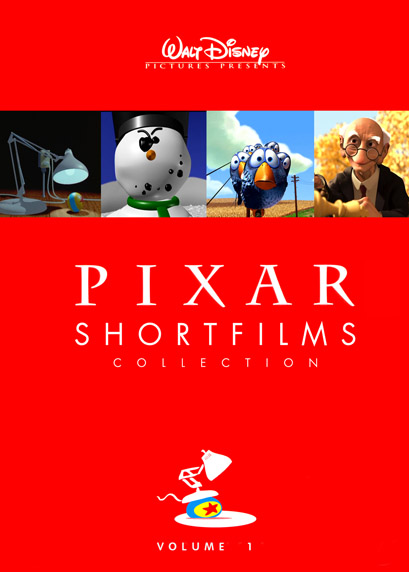
November 6, 2007 – The Pixar Short Films Collection is Released on DVD

Pixar_Shorts

“13 Sensational Pixar Shorts Together For The First Time!”

On November 6, 2007, the Pixar Short Films Collection was released on DVD. The collection contains short films created by Pixar Animation Studios, dating back to their premiere short film The Adventures of Andre & Wally B., released in 1984 at the SIGGRAPH Conference, and ending with 2006’s Lifted, originally released alongside Ratatouille. The collection also features a short documentary called The Pixar Shorts: A Short History, and several shorts featuring the Pixar lamp that were created for the show Sesame Street. A second collection of shorts was released on DVD and Blu-Ray on November 13, 2012.

November 4

November 4, 1938 – The Donald Duck Short Film Donald’s Golf Game is Released to Theaters

vlcsnap-2014-11-04-19h24m38s56

“Ah, what a perfect day for a perfect game of golf.”

On November 4, 1938, the Donald Duck short film Donald’s Golf Game was released to theaters. It was directed by Jack King.

Donald is gleefully walking onto the course, with his nephews carrying his rather heavy golf bag. The boys set up his tee, and Donald takes a swing, only to be interrupted by a bird chirping. He yells at the bird, and gets back to swing, when the boys interrupt him by loudly blowing their noses. Donald angrily makes his way over, but they protest that they have colds. Donald retaliates by shutting their beaks with clothespins. Unfortnautely, just as Donald gets ready to once again hit the ball, the nephews sneeze their clothespins off, hitting him on the back of the head and getting one attached to his tail. He angrily breaks his club at the boys’ antics, not noticing that they packed in his bag a box of “Goofy Golf Clubs” that play 1,000 tricks. They take a club to give to Donald, and as Donald prepares to hit the ball, he doesn’t realize that the club turned into a net, scooping up the ball instead of sending it on a long drive. They hand him another club, which becomes an umbrella that takes Donald up into the sky and produces its own rain.

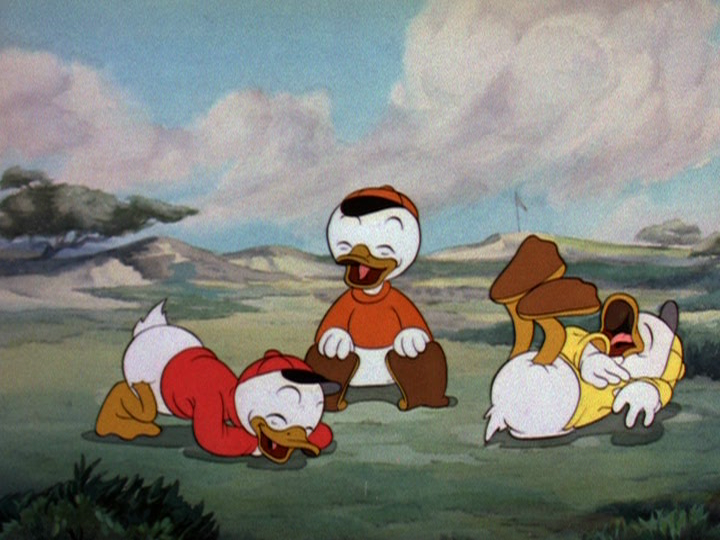
The nephews laugh themselves silly over the pranks they pull on their Uncle Donald

The nephews laugh themselves silly over the pranks they pull on their Uncle Donald

The nephews are beside themselves with laughter, but vamoose when they see Donald making his way over. As they hide from their uncle, they spot a grasshopper, which they hide in a golf ball. When Donald isn’t looking, they replace his ball with the trick ball. As Donald continues his game, the ball jumps away from him, and Donald angrily tries to bat it with his club. When the ball jumps out into the water, the boys provide him an inner tube so he can go after it, and pull the plug when Donald is out far enough. Even so, Donald tries to play his ball through the water, sending it flying to the hole. He chases after it on land and finally finds the grasshopper in the ball, setting it free. He lands on his face on the green, and the nephews decide to play their own hybrid game of golf and pool, sending balls flying into the pocket after torturing Donald in various ways. Angered, he takes another trick club and throws it at the boys, which turns into a boomerang and flies right back into Donald, sending him flying face-first into a hole.

November 2

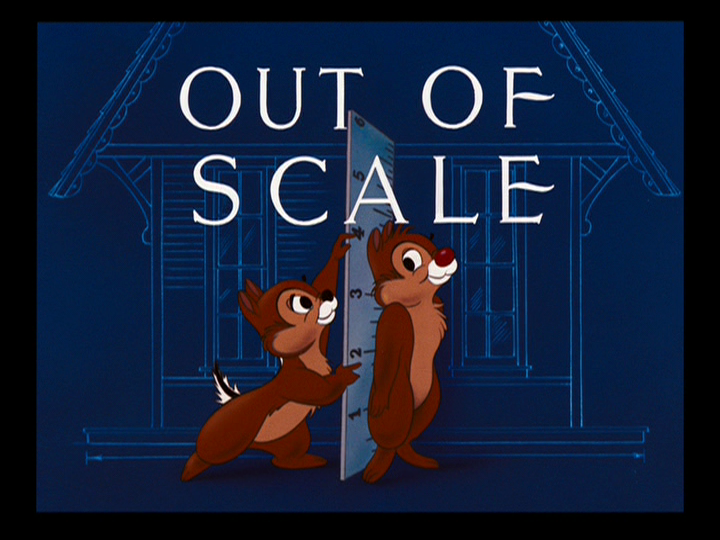
November 2, 1951 – The Donald Duck Short Film Out of Scale is Released to Theaters

vlcsnap-2014-11-02-17h40m22s183

“This tree is out of scale!”

On November 2, 1951, the Donald Duck short film Out of Scale was released to theaters. It was directed by Jack Hannah, with story by Bill Berg and Nick George.

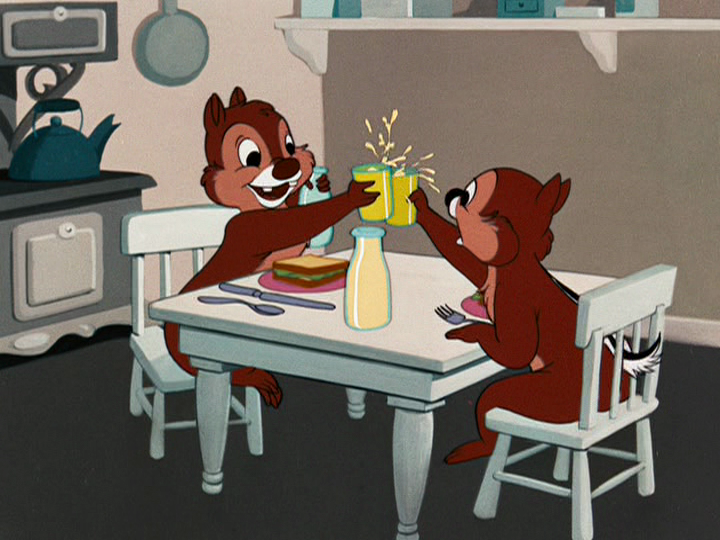
A train is speeding around the tracks, rattling the road, when Donald pulls on the breaks as it arrives to Canyonville…and reveals to the audience that it is just a backyard model train. Donald cools down the engine before setting off again, creating a little farm in one corner of his yard. He comes across a tree in his yard, and decides that, as it does not fit the scale of his backyard railroad, he will need to get rid of it. He is unaware, however, that it is the home of Chip and Dale. Donald notices the pair in his yard and chases them away, but they spot Donald driving away with their tree, and force his train to stop. They try to take their tree back, but Donald attacks them with oil, chasing then through his model town. They end up in a model house, which they take to quickly. Donald decides that, since they are the perfect scale, they can stay in the house.

Chip and Dale settle into their new home in Donald's model town

Chip and Dale settle into their new home in Donald’s model town

Chip and Dale enjoy their new home, and Donald seems content to let them stay, but his devilish nature take hold, and he decides to have fun with them, pretending it’s hazardous weather outside. Chip sends Dale out to close the gate, making him bundle up for the snow, but when he gets outside, Donald is shining a heat lamp over the house, and Dale angrily takes off the extra layers to head back inside. He sees the snow outside and heads out again in layers, although he roasts again when Donald pulls out the heat lamp. Chip follows Dale out and sees Donald’s prank, and pulls out the plug from the lamp. They decide to take off with Donald’s train while he’s distracted, sending their tree flying off the track. The tree lands on the track, and the chipmunks punch a hole straight through the base of the trunk. Donald finally catches up with them, but the chipmunks have a plan to keep Donald from getting angry and keeping their tree: placing a sign on the tree, calling it a Giant Redwood, and keeping the tunnel at the base. Peace is restored in Donald’s yard.

November 1

November 1, 1940 – The Mickey Mouse Short Film Mr. Mouse Takes a Trip is Released to Theaters

vlcsnap-2014-11-01-19h02m06s81

“All alone, without your dog.”

On November 1, 1940, the Mickey Mouse short film Mr. Mouse Takes a Trip was released to theaters. It was directed by Clyde Geronimi.

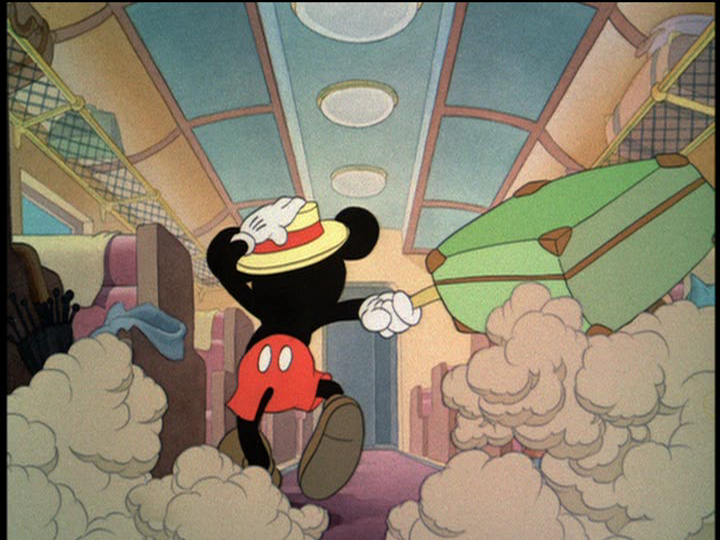
It’s vacation time for Mickey, and he stands at the Burbank train station with Pluto, and both are nearly swept away as the train arrives. However, the moment they board, they are kicked off by Conductor Pete, who informs them that no dogs are allowed. A few minutes later, Mickey gets ready to board again, hiding Pluto in his suitcase. However, Pluto is much too heavy for Mickey to carry, and he runs off with just the handle. Mickey runs back to grab the suitcase and barely manages to make the train. As Mickey sits in his seat, he carefully unfolds Pluto from the suitcase, but has to quickly place him back in as Pete comes around to check tickets. Mickey hands Pete his tickets, shaking from nervousness. Pete takes Mickey’s suitcase and throws it in the top compartment, causing Pluto to bark angrily. Mickey tries to cover it up, but Pete is suspicious. Pete makes the sound of a cat, and the ruse is revealed.

As Pete discovers Pluto hidden in the suitcase, Mickey takes Pluto and runs as fast as he can away from the situation

As Pete discovers Pluto hidden in the suitcase, Mickey takes Pluto and runs as fast as he can away from the situation

Mickey flees the scene with Pluto, and Pete follows in hot pursuit. Thinking he’s found them, he grabs someone in a compartment, and ends up with the frightened woman beating him with her corset. He falls into another compartment – where Mickey and Pluto are actually hiding – and apologizes for his behavior before he realizes that he’s been tricked again. He tries to tear them apart as the train goes through a tunnel, but is unaware that he’s fighting only a mattress in the dark. He spots someone (Mickey and Pluto again) in a conductor’s coat and asks if they’ve seen Mickey and Pluto, and Mickey points him in the other direction. Realizing he’s the conductor, Pete chases after the pair once more. Pete accidentally attacks the woman from before, giving Mickey and Pluto enough time to don another disguise. However, he is able to see through their disguise again, and Pluto gets caught in a mail stand outside. As Mickey runs after him, the two end up off the train, with Pete throwing their luggage out after them. Mickey looks around and is amazed to find that the pair landed in Pomona – just where they wanted to go.

October 31

October 31, 1936 – The Silly Symphony The Country Cousin is Released to Theaters

vlcsnap-2014-10-31-18h56m14s139

“Come to the city and live in splendor with me.”

October 31, 1936, the Silly Symphony The Country Cousin was released to theaters. It would go on to win an Academy Award for Best Animated Short Film at the 9th Academy Awards. The short was directed by Wilfred Jackson.

The short begins with Abner Countrymouse receiving an invitation from his cousin Monty Citymouse, asking him to live in the city. Abner, taking Monty up on his offer, walks the railroad tracks and arrives at Monty’s place, with Monty quickly – but quietly – showing him around. Right away, Abner nearly gets caught in a mousetrap, but Monty saves him before showing him a spread of the finest foods laid out. Abner enthusiastically eats away, but Monty has to continue shushing the poor country bumpkin. After eating a spoonful of hot mustard, Abner rushes around and drinks some champagne to cool down his mouth, getting painfully drunk in the process and hiccupping. He tries to pull himself together, much to the annoyance of Monty, but ends up losing his umbrella in some toast points and knocking the entire stack down. Abner then ends up in a drunken fight with his reflection in a gelatin mold; although he decides to walk away from the fight, he slips on some butter on a plate and spins wildly around, breaking pieces of china as he spins out of control and taking his cousin with him. The two luckily do not garner the attention of the house cat, who is sleeping soundly, until Abner, with his drunken bravado, decides to kick the cat. Monty flees the scene, while Abner runs outside and ends up on the dangerous streets. After dodging feet and cars, Abner decides city life isn’t worth it for him, and he runs back to his country home.