RSS Feed

Tag Archives: Short film

February 11

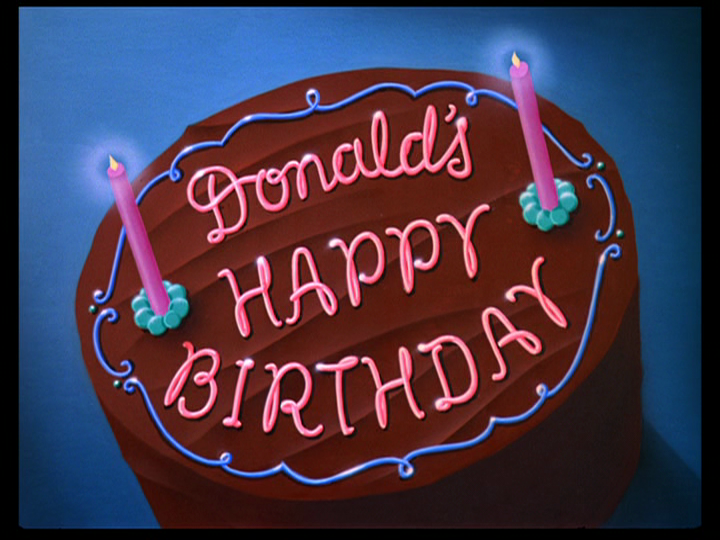
February 11, 1949 – The Donald Duck Short Film Donald’s Happy Birthday is Released to Theaters
vlcsnap-2015-02-11-18h17m55s66

“Take my advice, do as I say, save a little money for a rainy day.”

On February 11, 1949, the Donald Duck short film Donald’s Happy Birthday was released to theaters. It was directed by Jack Hannah, with story by Nick George and Bill Berg.

It’s March 13th – Donald’s birthday – and the nephews are squirreled away in their treehouse, trying to figure out what to get their uncle. Finally, they agree on getting Donald a box of cigars, only to realize they don’t have any money. They then decide to do all the yard work, hoping that Donald will give them some money, and end up waking him from his nap in their zeal to clean up his garden. Donald is shocked to see his nephews working, and the boys present him with a bill for $2.98 – the amount for the cigars. The boys are excited and are ready to leave the house, but Donald demands that they put the money in a bank. As Donald heads back to his nap, the nephews sneak in to take the bank, unaware that Donald was awake the entire time.
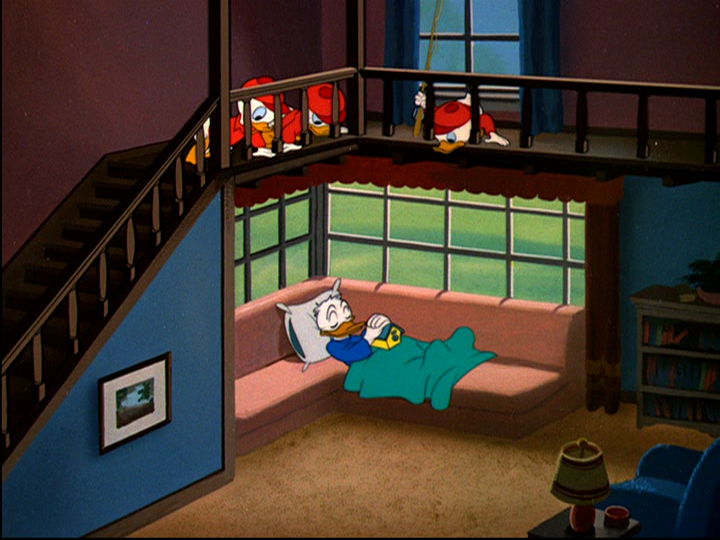
The boys go to extreme lengths to get their money for Donald's present

The boys go to extreme lengths to get their money for Donald’s present

The boys head back to the treehouse, and Donald spies on them, suspicious. He sneaks inside and catches them in the act of taking money from the bank, and chews them out before taking the bank back inside. The nephews refuse to give up, and decide to try and take it using a fishing rod to lift it out of Donald’s grasp. They manage to get the money after bungling the job, and Donald spies the boys walking out of the cigar store. He catches them in the act, and decides to teach them a lesson about the dangers of smoking by making them smoke the cigars. Unfortunately, after Donald has cleared out the box, he finds the birthday card from the boys. Donald has totally forgotten it’s his birthday, and is so embarrassed at his antics that he shrinks down in shame and jumps out a hole in the treehouse floor.
February 10

February 10, 2014 – The Stop-Motion Animated Short Film Blank: A Vinylmation Love Story is Released Through Google Play

BVL_3

“When you are born blank in a painted world, love can give you color.”

On February 10, 2014, the stop-motion short film Blank: A Vinylmation Love Story was released through Google Play, after a release at the El Capitan Theater on February 3. It was directed by Greg Shewchuk, Paul Foyder, Michael Ambs, Whitfield Scheidegger, and Regina Roy.

The short begins with the character Blank being released into the painted world, and soon spotting Bow, a similarly blank Vinyl. Bow gives Blank a bow tie, and the two watch the sunrise together, with Blank giving Bow a flower. The mood quickly changes when a strange creature arrives and takes Blank Minnie away on a train. Not wanting to lose his love, Blank Mickey hops on the top of the train as it rolls along, and sets off on an adventure to find her, making unlikely friendships, traveling through the woods at night, and doing whatever it takes to find her.

February 9

February 9, 1914 – Animator, Imagineer, and Disney Legend Bill Justice is Born

bill-justice

“[Bill Justice] was a great animator, particularly on the short subject. He was as good as they came.” – Disney Legend X Atencio

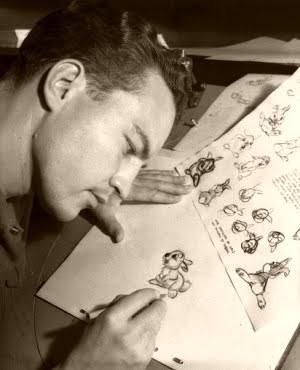
On February 9, 1914, William Barnard Justice was born in Dayton, Ohio. After studying at the John Herron Art Institute, he headed to California and joined the Disney Studios in 1937, working as an animator. His many credits during his early years include Saludos Amigos, Victory Through Air Power, and The Three Caballeros. In the 1950s, he was given a chance to explore more experimental types of animation, creating several memorable shorts with fellow Disney Legend X Atencio and artist T. Hee using the stop-motion technique that include A Symposium On Popular Songs, and Noah’s Ark, which were nominated for Academy Awards. He also helped with the stop-motion technique on live action films The Parent Trap and Mary Poppins. In his career as an animator, Justice had 57 short films and 19 animated feature film credits to his name. In 1965, Walt Disney asked Justice to work with Walt Disney Imagineering, and his talents were used on popular attractions Pirates of the Caribbean, The Haunted Mansion, and The Hall of Presidents. Justice was also asked to help design parades, and created the sketches for what would become the Main Street Electrical Parade. In 1972, Justice retired from Disney after a 42-year career. He continued to be a presence around Disney fans, appearing at Disneyana conventions and writing a book called Justice for Disney about his experiences at the studio. In 1996, he was honored as a Disney Legend. He passed away in 2011 at the age of 97.

February 5

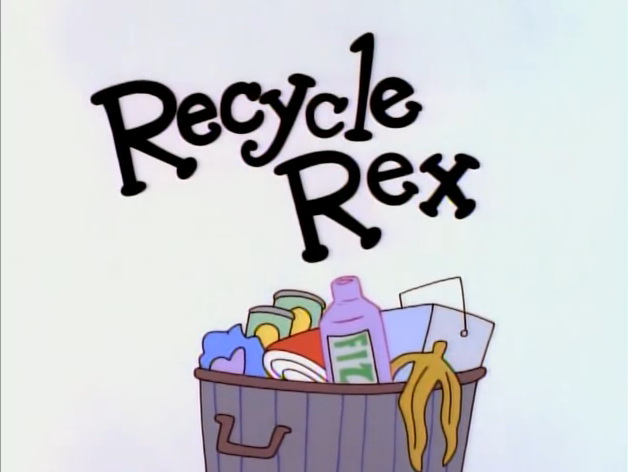
February 5, 1993 – The Educational Short Film Recycle Rex is Released in California

RR_1

“Everybody throws out too much stuff! We’re running out of places to put it.”

On February 5, 1993, the educational short film Recycle Rex was released in California, with a general release on February 26. It was a joint production between the California Department of Conservation and the Keep California Beautiful Youth Recycling Education Campaign, along with Walt Disney Educational Productions as the producer. The film won several awards, including a Certificate of Creative Excellence at the U.S. International Film & Video Festival. It was created and designed by David Cutler, written by Irene Mecchi, and directed by Howard E. Baker.

The short begins with some examples of dinosaurs not recycling before showing the newspaper headline: “Field of Dreams to Become Landfill.” At the Field of Dreams, Rex is excited about how the kids can use the field, unaware of its future plans. His friends are also excited, until someone driving the Trash-o-Matic arrives to dump trash all over the field. Rex asks the driver to stop dumping the trash, and although the driver wants to, he can’t, as there’s nowhere else to put the garbage. When the kids volunteer to take the trash back to the “awful wasteful creatures who threw it away,” they are soon ashamed to find that they are those horrible creatures. The trash guy offers them a solution: get rid of their garbage without throwing it away, and the field will remain theirs. Rex asks Tucker to look up the solution in his Book of Everything, and the book tells them to “Close the Loop,” which confuses the kids more. Their friend Bunsen finds a solution to reuse their broken and discarded items to create something new, and the kids take it to town to recycle. While in town, Rex’s friends become hungry and decide to enter a department store, but Rex tries to keep them on track with getting rid of their garbage, not adding to it. Unfortunately, hunger wins out, and the kids run inside. The kids inside realize they have more garbage than ever, and are unsure what to do. Meanwhile, the Stomper Twins try to dump their cans off the End of the World Cliff, but are guided away but a daisy named Rose, as there isn’t much left in the world and they need to recycle. Finally, Rex finds the Recycling Center, and brings his friends with him with a song. The short ends with the kids finally getting their field.


January 23

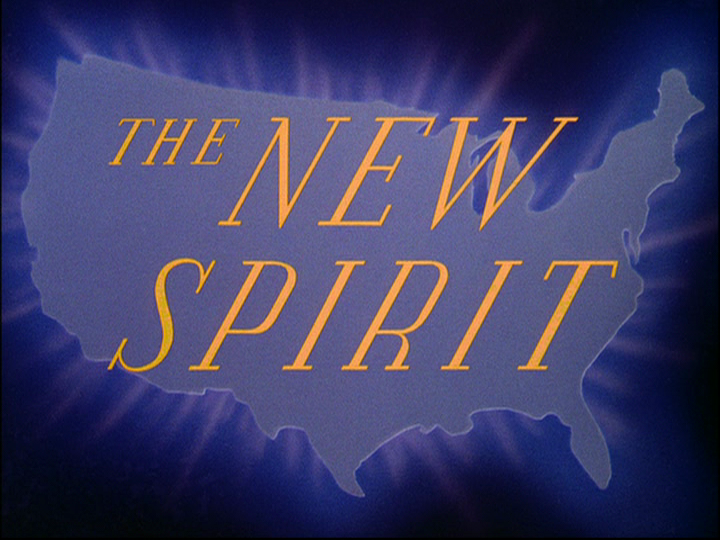
January 23, 1942 – The Donald Duck Wartime Propaganda Short Film The New Spirit is Delivered

vlcsnap-2015-01-23-18h14m36s227

“Oh boy! Taxes to beat the Axis!”

On January 23, 1942, the Donald Duck wartime propaganda film The New Spirit was delivered to the Treasury Department under the support of the War Activities Committee. It was directed by Wilfred Jackson and Ben Sharpsteen. This was the first propaganda film for the US Government by the studio since the country’s entry into World War II, and the Treasury Department hoped that Disney could provide a start of the new Revenue Act of 1942 and apply the funds directly to the war effort. The Department paid $40000 for the film, asking for a very short time frame to have the film ready no later than February 15. Although there was concern about using Donald Duck for the short film, Walt had argued that using Donald was similar to MGM using Clark Gable, and Department Secretary Morgenthau agreed. Donald was seen as a cathartic character for most Americans, and his anger and patriotism resonated with a public still reeling from Pearl Harbor.

While Morgenthau was excited about the film, Congress voted to eliminate the $80,000 appropriation the Treasury had submitted to pay for the film and its marketing, as many anti-Roosevelt members thought it was a waste of money and nearly marked Walt as a war profiteer. Fortunately for the studio, The New Spirit resonated with audiences, and was hailed by the media as “an excellent bit of persuasion,” as written by the Chicago Herald-American. A survey was conducted, and 37% of those that had seen the short said it had an effect on how willing they were to pay their taxes, with further members of the audience praising the film and criticizing Congress for its failure to pay the Studio. The New Spirit was also nominated for an Academy Award for Best Documentary at the 15th Academy Awards.

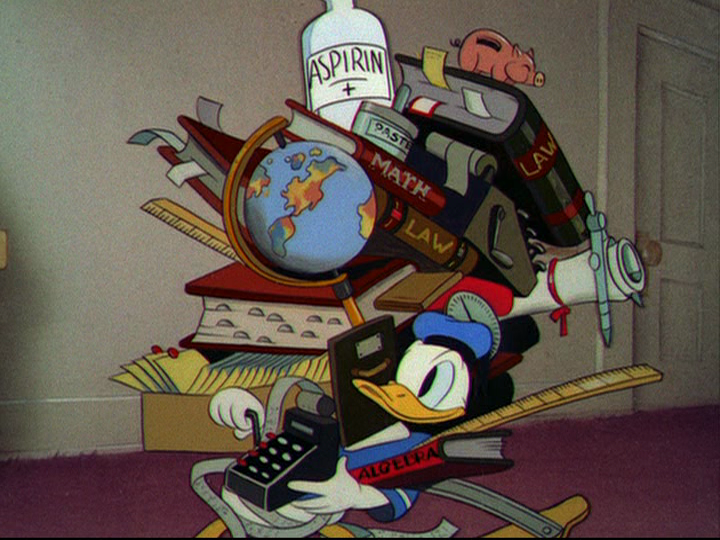
Donald is ready and willing to do whatever it takes to win the war

Donald is ready and willing to do whatever it takes to win the war

The song “Yankee Doodle Spirit” is playing on the radio, with Donald dancing to its patriotic rhythm. As he listens to the radio program, Donald quickly readies himself for the threat of war. The radio announcer declares that there is something Donald can do for the war effort, and Donald states he will do anything. When Donald hears that the best thing he can do is pay his income tax, at first he is dismayed. The announcer goes on to say that his income tax is vital to the war effort, as the taxes pay for supplies for the troops to beat the Axis Powers. A new simplified form is presented, which is really all that Donald will need, along with a pen, ink, and a blotter. Donald fills out the form, and finds that he owes $13 for his taxes. He is so excited to pay his taxes that he races across the country to Washington DC to pay them in person. The announcer continues with what the taxes will be used for: factories that will make the ammunition and weapons for the soldiers, planes, and battleships.

January 19

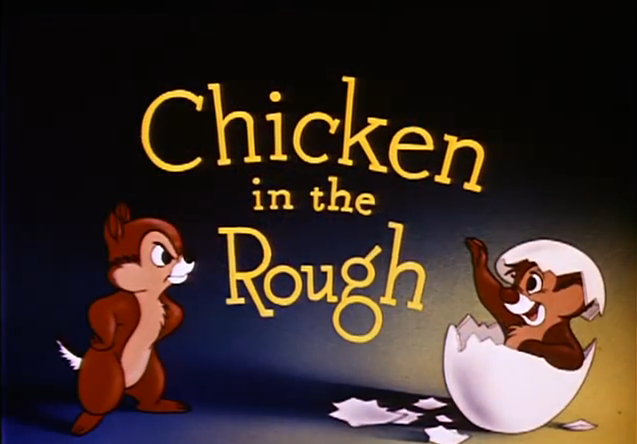
January 19, 1951 – The Chip ‘n’ Dale Short Film Chicken in the Rough is Released to Theaters

CitR_1

“Hey, hurry up and come with me – I found something terrific!”

On January 19, 1951, the Chip ‘n’ Dale short film Chicken in the Rough was released to theaters. This was the first short in the short-lived series featuring just the classic duo. It was directed by Jack Hannah, with story by Nick George and Bill Berg.

The short begins on an early morning at a farm, where Chip and Dale quickly are busy collecting acorns. A rooster looks inside the hen house, waking up the sleeping chickens before tending to his hen, whose eggs still aren’t hatching. Poor papa rooster walks around nervously, before being accidentally pelted with acorns when Dale trips in the tree. Chip and Dale hurry to the ground to retrieve their acorns, when Dale ends up inside the hen house. Spotting the eggs, he thinks that walnuts are hidden inside, and goes to fetch Dale. Chip tells him that they’re nothing but eggs and hurries back to his acorns, leaving Dale to pout as he sits on top of an egg. As soon as Dale perches on the egg, the egg hatches, and the chick inside takes to Dale, with Dale taking the chick as his own. Chip has Dale take the chick back, but the chick won’t leave Dale. Dale hides inside the pieces of the egg shell, hoping the chick will imitate him, but the chick sneaks away just as the hen returns and nests. Finding it too hot inside the egg, Dale tries to make his way out, with the hen thinking one of her eggs is hatching. She calls out for the rooster and sprints outside, giving Dale only a few moments to hide back inside the egg. Dale manages to sneak outside in the egg shell, but the ruse is soon up, and Dale has to pretend to be a chick. The rooster tries to force Dale to eat a worm, and both Dale and the worm hide together. Dale convinces the worm to pretend it’s being eaten, but the rooster is too smart for the pair. As the hen rescues Dale from the rooster, Dale realizes that he’s completely trapped, and Chip laughs at him from a tall perch.

January 16

January 16, 1932 – The Silly Symphony The Bird Store is Released to Theaters

vlcsnap-2015-01-16-19h17m08s173

On January 16, 1932, the Silly Symphony The Bird Store was released to theaters. It was directed by Wilfred Jackson. Caricatures of the Marx Brothers are also found in this short film

The short begins with the birds in the store all chirping at once, but slowly turning into a beautiful melody by two canaries. Other birds are seen singing in their own ways, including two sets of doves that find their mates flirting with others. A parrot chases a flea to a typewriter, and flicks it away, but scares itself in the process and runs into the phone. Outside the window of the shop, a hungry cat licks its lips, watching as a baby canary is taught how to sign by its parents. While celebrating, the baby falls out into a bag of seed, and does not see the cat enter the shop and attack. All the birds in the shop notice the attack, and in an attempt to save the baby, they all spring into action, using a blowtorch to trap the cat in a cage. They then send his cage flying so he lands in the city dog pound after reuniting the baby with its parents.

January 14

January 14, 1949 – The Pluto Short Film Pueblo Pluto is Released to Theaters

vlcsnap-2015-01-14-19h31m47s254

“What’s the matter, old boy? Didn’t you get any souvenirs?”

On January 14, 1949, the Pluto short film Pueblo Pluto was released to theaters. It was directed by Charles Nichols, with story by Eric Gurney and Milt Schaffer.

Out in the desert, Mickey and Pluto speed up to a small tourist town to check out some souvenirs. Mickey spots some buffalo bones, and decides to get one for Pluto before going shopping. Pluto enjoys his bone, until he spots a puppy also trying to enjoy the bone as well. Pluto chases the puppy away, but the puppy decides to steal the bone by using his tail through the floorboards. Pluto chases after the bone, but loses it to the puppy, who then hides among some clay pots. The puppy manages to roll away, but Pluto refuses to lose, and continues to chase the puppy through the desert, until the puppy squeezes into a cactus patch. All Pluto can do is bark from the top of a rock formation, until it breaks from his jumping, sending him into the center of the patch and retrieving his bone. Unfortunately, Pluto has no safe way of getting out, until the puppy comes along to help him. The puppy manages to snake his way out, and uses a rolling clay pot to break a hole through the cactus patch, allowing Pluto to safely get out. Grateful, Pluto shares his bone with the puppy, and takes him home as a souvenir.

January 13

January 13, 2012 – The Special Short Film Tangled Ever After is Released to Theaters

TEA_4

“Oh, come on! They still can’t get my nose right!!”

On January 13, 2012, the special short film Tangled Ever After was released to theaters as the short before the 3D version of Beauty and the Beast. The short is a continuation after the final events of the animated feature film Tangled. It was written and directed by Nathan Greno and Byron Howard, and stars Mandy Moore as Rapunzel, Zachary Levi as Flynn, Alan Dale as the Priest, and Kari Wahlgren as the Queen.

The short is set on Rapunzel and Flynn’s wedding day, and everyone in the entire kingdom is excited about the day’s events. Hook-Hand Thug is playing the organ at the ceremony, while Maximus is the ring bearer and Pascal is the flower chameleon. Rapunzel appears to walk down the aisle, and everyone is awed by how beautiful she looks. As Pascal and Maximus watch, one of the flowers from Pascal’s basket falls, and Maximus accidentally breathes it in. The flower causes him to sneeze, and the sneeze sends the rings flying off the pillow and rolling out the side door of the church. When asked for the rings, the kingdom falls apart into chaos – but only in the pair’s imaginations. To save the wedding, the two sneak out and chase after the rings around the kingdom. The pair separate after the rings fly in different directions, with Pascal ending up with his tongue stuck to an ice sculpture in his pursuit, and Maximus being flown past the windows of a church thanks to a catapult effect from a wagon.

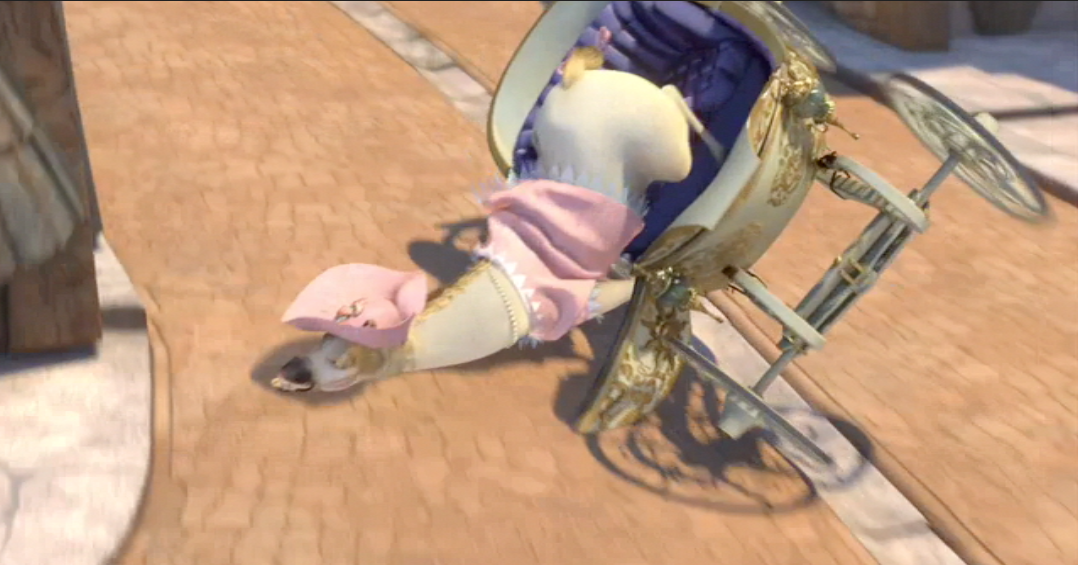
Maximus is able to retrieve his ring after several mishaps, but has more misfortune in store

Maximus is able to retrieve his ring after several mishaps, but has more misfortune in store

Pascal runs into a bigger problem when his ring ends up attached to a floating lantern, which ends up amongst hundreds of other lanterns. Maximus chases after his ring in a carriage, and while he is able to grab it with his teeth, he is knocked out by several commemorative frying pans. The lanterns are released early, but Pascal is able to find the ring, only to find himself thousands of feet up in the air. In the end, after several chaotic events, the pair are able to retrieve the rings and end up back at the church just in time to the shock of the guests as the pair looks a complete mess, covered in tar and strange clothing. Although they save the wedding, the troubles are far from over for the pair, as they accidentally push the wedding cake out the same side door.

January 11

January 11, 1942 – The Wartime Donald Duck Short Film Donald’s Decision is Delivered

vlcsnap-2015-01-06-08h14m30s19

“Enlist in our army of regular war savers today!”

On January 11, 1942, the Donald Duck and educational wartime short film Donald’s Decision was delivered to the National Film Board of Canada. The short reuses animation from two previous Donald shorts: 1938’s Donald’s Better Self, and 1938’s Self Control.

Donald is listening to a radio program urging him to buy war savings certificates, and Donald readily agrees – to do it tomorrow. Donald’s angelic side appears and demands that Donald do it now, as there is no time to waste, and Donald reluctantly follows him. The flag on his mailbox swings around to symbolize the Nazi swastika, announcing the arrival of his devilish side, who tries to convince Donald that the money would be better spent on himself, which would help the Axis powers. Donald is soon caught in a tug of war between the angelic and devilish side. The devilish side traps the angelic side and throws him in the nearby lake, but the angelic side fires back, defeating the devilish side. Donald finally agrees to take his money to the post office to buy war bonds. This is then followed by an animated plea to the citizens of Canada to buy war savings certificates.