RSS Feed

Tag Archives: Popularity

July 5

Posted on

July 5, 2012 – The Treasures of the Walt Disney Archives Exhibit Opens at the Ronald Reagan Presidential Library
treasures-of-the-walt-disney-archives

“We are deeply honored to share this exhibit with the Ronald Reagan Presidential Library and the countless visitors who can now explore and appreciate the legacies of both extraordinary men.” – Bob Iger, Chairman and CEO of the Walt Disney Company

On July 5, 2012, the Treasures of the Walt Disney Archives exhibit opened at the Ronald Reagan Presidential Library in Simi Valley, California. Presented by D23, it is the largest Disney Archives exhibit in the world, comprising of more than 500 artifacts, with some being presented to the public for the first time. The collection ranges from the earliest days of the Oswald the Lucky Rabbit shorts, to the latest films from Disney’s acquisition of Marvel Comics. A section was also dedicated to the friendship between Reagan and Walt Disney, including letters of correspondence, as well as a letter from Reagan to the Postmaster General requesting the creation of a special Walt Disney stamp. On hand for the opening day ceremony for this exhibit were Bob Iger; Nancy Reagan, widow of former president Ronald Reagan; David Ferriero, Archivist of the United States; Fredrick J. Ryan, Chairman of the Board of Trustees for the Ronald Reagan Presidential Foundation; and Mickey and Minnie Mouse. A special performance was done by the Voices of Liberty, an acapella group that performs at the American Adventure in Walt Disney World’s Epcot.
June 28

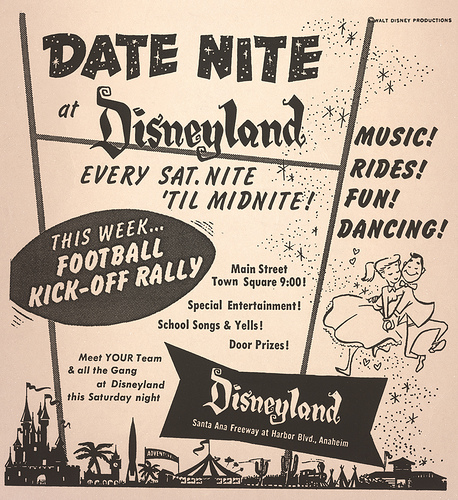
June 28, 1957 – The First Date Nite in Disneyland Event is Held

Date Nite

“Let’s dance at Disneyland! Date Nites are late nights at Disneyland!”

On June 28, 1957, the first Date Nite in Disneyland event was held in the Carnation Plaza Gardens. The park’s hours were extended until 1 AM on Fridays and Saturdays during the summer season, and couples would come in to dance the night away with some of the best names in entertainment. Several bands were invited to play in sections of the park, including The Elliott Brothers, who headlined at the Plaza Gardens. The Golden Horseshoe Saloon was also featured as a venue for dancing, as was the Space Bar in Tomorrowland. In 1958, an album by the Elliot Brothers called “Date Night at Disneyland,” which featured recordings of the band playing popular songs of the time that would have been played during the event, including a track called “Let’s Dance at Disneyland.”

June 22

June 22, 2004 – Six Disney Songs are Listed on AFI’s 100 Years…100 Songs List

 100years_songs

“When you wish upon a star, your dreams come true.”

On June 22, 2004, the American Film Institute released their list of the top 100 songs in American cinema in a documentary special on CBS, known as 100 Years…100 Songs. Of the 400 nominees, six Disney songs were included in the final list, ranging from Disney’s early years to the Disney Renaissance period. The highest ranking song was “When You Wish Upon a Star” from Pinocchio, ranking at number 7. “Some Day My Prince Will Come” from Snow White and the Seven Dwarfs ranked at number 19, “Supercalifragilisticexpialidocious” from Mary Poppins ranked at number 36, “Zip-a-Dee-Doo-Dah” from Song of the South ranked at number 47, “Beauty and the Beast” ranked at number 62, and “Hakuna Matata” from The Lion King ranked at number 99.

June 17

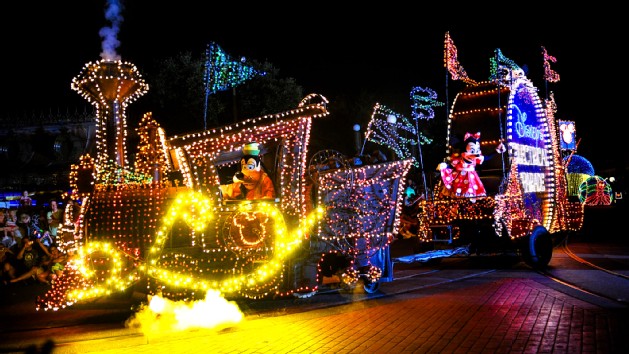
June 17, 1972 – The Main Street Electrical Parade Begins its Run in Disneyland

main-street-electrical-parade-00

“Ladies and gentlemen, boys and girls, Disneyland proudly presents our spectacular festival pageant of nighttime magic and imagination, in thousands of sparkling lights, and electro-syntho-magnetic musical sounds: the Main Street Electrical Parade!”

On June 17, 1972, the Main Street Electrical Parade began its run in Disneyland. Originally a summer parade, the lights were dimmed throughout the park as a half a million tiny lights on floats traveled from “it’s a small world” down Main Street to the Town Square. Synthesizer music was used for the parade, with the music a variation of a piece called the “Baroque Hoedown,” with well-known Disney songs woven throughout. The parade was replaced in 1975 with the America on Parade celebrating America’s bicentennial, but returned in 1977 with an new version; an “Honor America” float was then added to the parade in 1979. The parade ended its run in Disneyland on November 25, 1996, with huge crowds lining the street to wish it farewell. In 1999, the floats were sent to Walt Disney World in Florida for their version of the parade, but were sent back in 2001, as Disneyland began the parade again through Disney’s California Adventure under the new name Disney’s Electrical Parade. This newer version of the parade ended its run on April 18, 2010, and was once again sent to Walt Disney World, where it currently still runs.

June 10

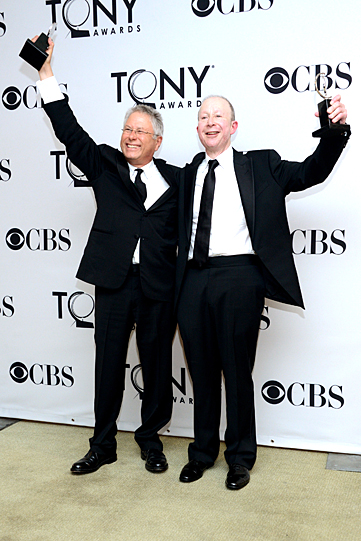
June 10, 2012 – The Musical Newsies Wins Two Tony Awards

MenkenTony

“Well, it’s been such an incredible, improbable journey for Newsies…Jack, we’re kings of New York.” – Alan Menken

On June 10, 2012, the 66th Tony Awards were held at the Beacon Theater in New York City. The Disney Theatrical Productions musical Newsies: The Musical, having been nominated for eight Tony Awards, walked away with two: Best Choreography for Christopher Gattelli, and Best Original Score for Alan Menken and Jack Feldman. Although nominated for Best Musical, it would lose to the musical Once. In his acceptance speech, Alan Menken thanked the “generations of kids who adopted this movie and insisted that it be brought to the stage.”

June 3

Posted on

June 3, 2011 – Star Tours: The Adventures Continue Attraction Opens in Disneyland

StarToursAdventureContinues

“You never know where the Force might take you. With multiple storylines and locations, many different Star Tours adventures await you. Riding once is not enough!”

On June 3, 2011, the Disneyland Park attraction Star Tours: The Adventures Continue opened. It is an updated version of the original Star Tours attraction, with the Disneyland version opening a few weeks after the Walt Disney World version, which reopened on May 20, 2011. The attraction’s timeline takes place before the events of the original Star Tours attraction, between the events of the films Revenge of the Sith and A New Hope. The updated attraction was announced in 2005, and the Star Tours attraction was closed in 2010 for the total renovation. The Disneyland attraction’s exterior is modeled like a Tomorrowland space port, and has guests in the role of space travelers. C-3PO acts as the (unfortunate) pilot in this version, who gets inadvertently trapped in the cockpit of the ship as it takes off. During the “voyage,” a guest is randomly chosen as a Rebel spy, and the mission of the voyage is to deliver the spy to safety. In total, there are 54 different possible ride experiences, which includes two opening segments, three primary destination segments, three hologram message segments, and three ending destinations.

June 1

Posted on

June 1, 1995 – The Disneyland Paris Attraction Space Mountain: De la Terre à la Lune Opens

Logo_disney-SpaceMountain

“Feel the g-force as you dodge screaming meteorites and black holes – and then go back and do it again!”

On June 1, 1995, the Disneyland Paris attraction Space Mountain: De la Terre à la Lune (translated as “From the Earth to the Moon”) opened in Discoveryland. The attraction is actually a variation of the popular Disneyland attraction Space Mountain, and was built to create interest around the then struggling park. It is the fastest of all versions of Space Mountain, and cost $89.7 million to create. The theme was inspired by author Jules Verne’s 1865 novel From the Earth to the Moon, and was the first roller coaster to have a synchronized audio track, known as the Synchronized On-Board Audio Track (SOBAT). The attraction’s queue area was designed for a Victorian feel, in keeping with the Verne story. In 2005, the attraction was redesigned, and was renamed Space Mountain: Mission 2.

May 31

Posted on

May 31, 2008 – The Attraction Toy Story Midway Mania! Opens in Walt Disney World’s Hollywood Studios

toy-story-mania-00

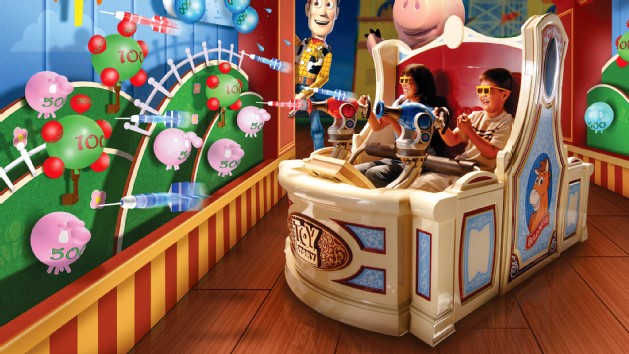
“Ride and shoot moving targets at this midway-style, 4D shootin’ game starring your favorite Toy Story characters.”

On May 31, 2008, the 4-D attraction Toy Story Midway Mania! opened in Walt Disney World’s Hollywood Studios. Inspired by the Toy Story franchise, guests board spinning vehicles while wearing 3-D glasses, and enter Andy’s room to play five carnival midway games. It is one of the most technologically advanced and expensive attractions created for the park, costing about $80 million. The host of the attraction is an Audio-Animatronic Mr. Potato Head, decked out as 1920s barker, who tells jokes and identifies people in the audience to talk to. The five games of skill are: Hamm & Eggs (shooting down barnyard animals and hardboiled eggs), Rex & Trixie’s Dino Darts (launching darts and popping balloons), Green Army Men Shoot Camp (baseball toss at plates), Buzz Lightyear’s Flying Tossers (a ring toss on the Little Green Men), and Woody’s Rootin’ Tootin’ Shootin’ Gallery (suction-cup darts shot at mine0cart targets). Each game has an Easter egg that triggers gameplay changes or additional targets.

May 28

Posted on

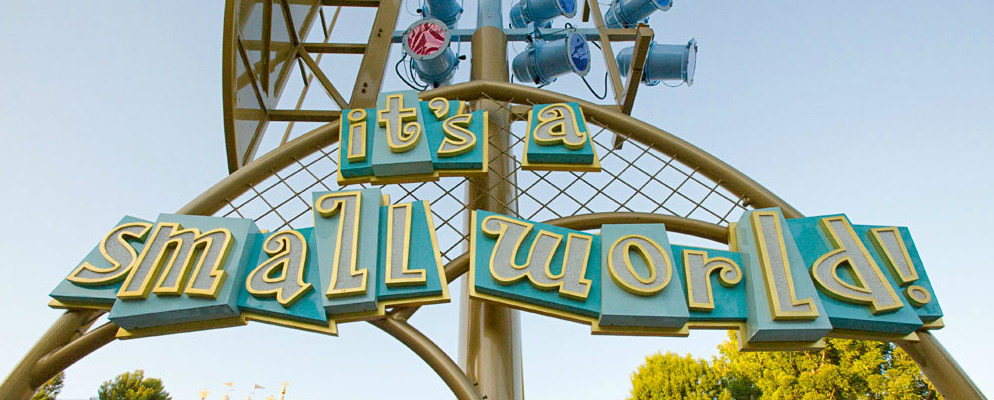
May 28, 1966 – The Fantasyland Attraction it’s a small world Opens in Disneyland

SmallWorld

“There’s so much that we share that it’s time we’re aware it’s a small world after all.”

On May 28, 1966, the Fantasyland Attraction it’s a small world opened in Disneyland. It was originally designed for the 1964-1965 World’s Fair in New York, and was moved to Disneyland once the fair had closed. The attraction’s design was a group effort, with Disney Legends Mary Blair creating the quirky design and color scheme, Marc Davis creating the character designs, Alice Davis designing the costumes for the dolls, Rolly Crump designing the exterior façade with a 30-foot clock, and Blaine Gibson designing and sculpting the dolls. The songwriting team of the Sherman brothers wrote the song for the attraction, which was a simple tune that could be easily sung in different languages, and has become one of the most recognizable Disney songs. There are 297 Audio-Animatronic dolls and 256 Audio-Animatronic toys in the attraction. The exterior has been redesigned over the years; it was first designed as an all-white attraction with a gold and silver trim, but was then repainted pink and white with pastel accents, matching the façade from the Disneyland Paris version of the attraction.

May 27

Posted on

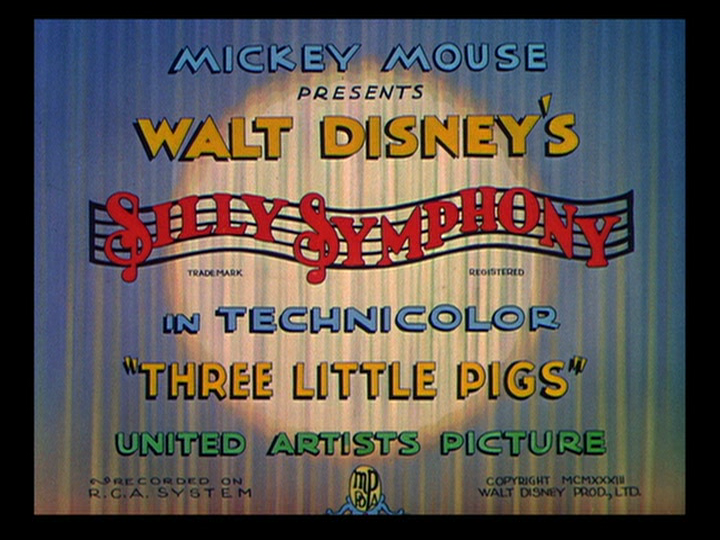
May 27, 1933 – The Silly Symphony The Three Little Pigs is Released to Theaters

vlcsnap-2013-05-27-06h01m34s96

“You can play and laugh and fiddle, don’t think you can make me sore, I’ll be safe and you’ll be sorry when the wolf comes to your door!”

On May 27, 1933, the Silly Symphony The Three Little Pigs was released to theaters. The short was based on the fable of the same name, and became a breakout hit of 1933, with Depression-weary audiences embracing the song “Who’s Afraid of the Big Bad Wolf?” as the anthem of the time, with the wolf representing the Depression and their troubles. The short was also a milestone in animation at the studio in the areas of characterization, score, and song. In most theaters, the short would be placed in top billing, lasting long after the accompanying feature had come and gone; one New York theater manager put beards on the pigs faces in their display, and had the beards “grow” the longer the run was extended. The original version of the short had the Wolf disguised as a Jewish peddler, but has since been removed. It is important to note that ethnic and racial stereotype humor were incredibly common in this time period, and many Jewish producers would incorporate these stereotypes themselves. Three Little Pigs went on to win the Academy Award for Best Cartoon. The short was directed by Burt Gillett.

Fiddler, Fifer, and Practical Pig are making their houses, with Fiddler and Fifer not taking their task too seriously. Practical Pig, however, is mostly concerned with keeping the wolf away, and builds his house of bricks. When his brothers come by to taunt him for working all day, he warns them that he will be safe when the wolf comes, but the two laugh it off, teasing Practical for being afraid of the Wolf. As the pigs dance and sing, the Wolf comes by, scaring the two back into their homes. He goes Fifer’s straw home first, and blows it clear away. Fifer runs to Fiddler’s stick home, and the two hide inside. The wolf then pretends to walk away, and the two begin to sing their song again.

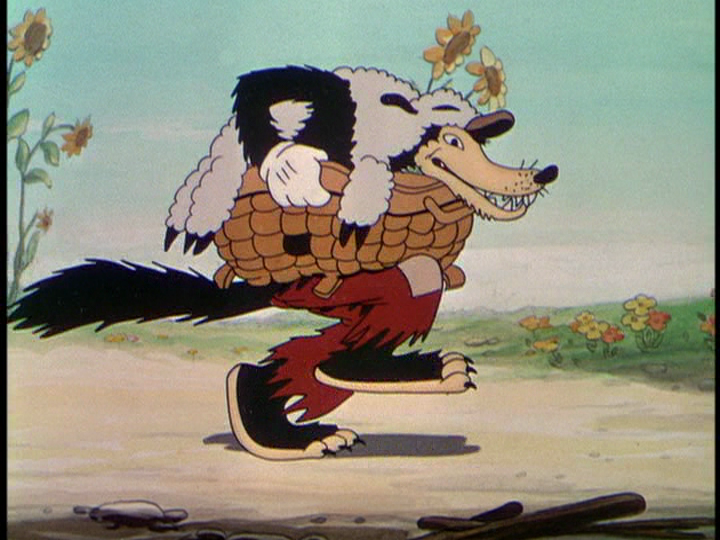
The Wolf tries to use a disguise to trick the pigs into letting him in

The Wolf tries to use a disguise to trick the pigs into letting him in

The wolf appears at the door, pretending to be a lost little sheep that needs help, but the two see right through his disguise. Angered, he blows the house down, and the two flee as fast as they can to Practical’s house. He lectures the two of their folly, but tells them he’s glad they’re safe. The Wolf then arrives as a brush salesman, but Practical Pig doesn’t fall for it. The Wolf then attempts to blow the house down, but is unable to do so. He finally decides to come down the chimney and seize the pigs, unaware that Practical Pig has a large boiling cauldron waiting below filled with turpentine. The wolf falls in and is sent shooting up again from the pain, and scurries down the road, howling. All three pigs end the short singing merrily.