RSS Feed

Tag Archives: Disneyland

October 31

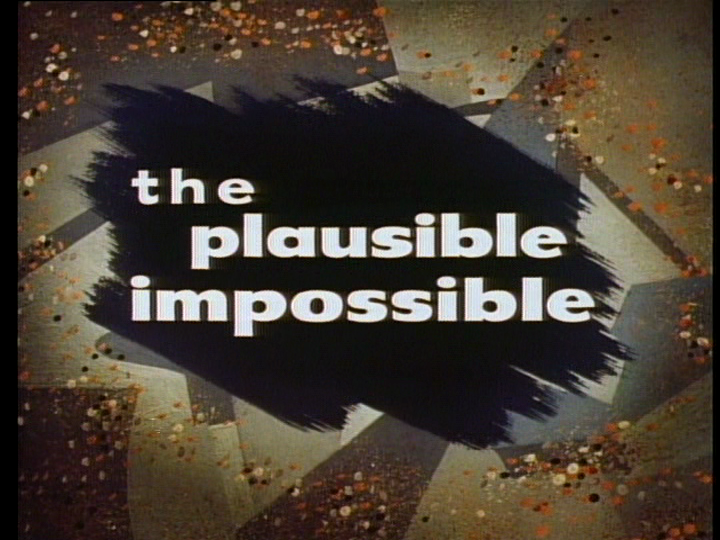
October 31, 1956 – The Disneyland Anthology Episode “The Plausible Impossible” Premieres
vlcsnap-2015-10-29-10h07m17s59

“The will illustrate the principle in animation which we call the ‘plausible impossible.’ [It] means taking something that is against the laws of nature – something impossible – and making it appear rational, and acceptable.”

On October 31, 1956, the episode of the Disneyland anthology series “The Plausible Impossible” premiered on ABC. The episode was written by Dick Huemer, with animation sequences directed by Wilfred Jackson, and live action sequences directed by William Beaudine.

The episode begins with Walt showing some drawings that were made for a scene in Snow White and the Seven Dwarfs that was never used. He then introduces the term ‘plausible impossible’ from the Disney book The Art of Animation, and explains that this was not a term the animators invented, but an animation principle that goes back centuries. The history begins with the Egyptians, with the animations of the gods, and the Chinese animating dragons. The segment from Fantasia – “The Rite of Spring” – then is shown, along with the theory that the Chinese conception of dragons may go back to the stories of the dinosaurs. The explanation then moves on to Greek mythology, before applying plausible impossible techniques to the animated cartoon. Disney then relates how impossible cartoon scenarios have some sort of basis in fact. He also introduces the concept of “correctness in sensation,” using the feeling of riding an elevator to demonstrate the squash and stretch techniques. Each “plausible impossible” concept has its roots in the physical and psychological. This then moves into giving life to inanimate objects, and introduces the Mickey Mouse short film Thru the Mirror.
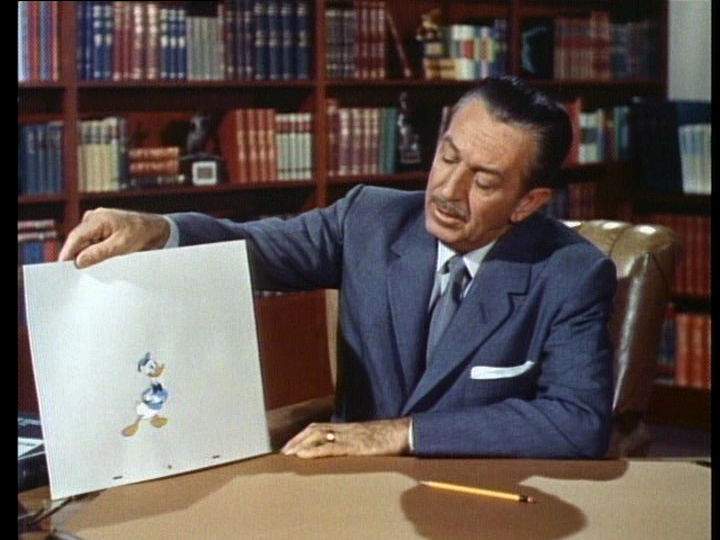
Walt introduces a recently drawn Donald, asking him to be his volunteer

Walt introduces a recently drawn Donald, asking him to be his volunteer

After the short, Walt then shows how an animated character is created, with a magic pencil drawing Donald Duck. When Walt mentions the importance of sound, Donald starts to talk, and agrees to help Walt with a demonstration. As Walt explains different sound effects, poor Donald bears the brunt of the demonstration. Donald flees the demonstration and hides on Walt’s desk, with Walt continuing the demonstration without him, though Walt manages to tempt him back with food. This then leads to the Donald Duck short film Donald’s Cousin Gus. Walt then surprises the audience with the complete showing of the unseen test animated sequence drawn for Snow White and the Seven Dwarfs after some accompanying scenes from the finished film. The final segment of this episode is about program music, which is a story put to music. Using the classic piece “Night on Bald Mountain,” Walt places it in several animated features, including “The Sorcerer’s Apprentice” from Fantasia, and a scene from Bambi. The true scene from Fantasia with the music is shown, with the music driving the story.
October 19

October 19, 1955 – The Disney Anthology Episode “The Story of the Silly Symphony” Airs

TSOTSS

“Next week, Walt Disney brings you ‘The Story of the Silly Symphony.’”

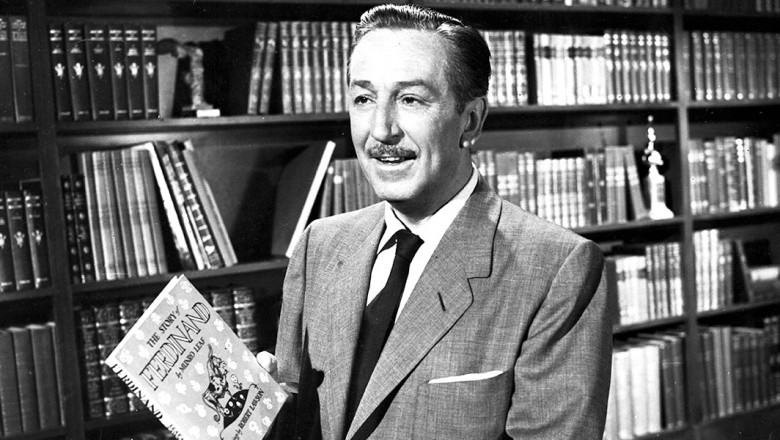
On October 19, 1955, the episode of Disneyland entitled “The Story of the Silly Symphony” aired on ABC. The episode covered some of the more popular entries in the Silly Symphony line, including The Practical Pig, Three Orphan Kittens, Little Hiawatha, and The Old Mill, as well as the special short film Ferdinand the Bull. The episode was directed by Clyde Geronimi and written by Bill Peet. It is one of a select few episodes to cover the Silly Symphony line.

April 17

April 17, 1957 – The Disneyland Anthology Series Episode “More About the Silly Symphonies” Airs on ABC

vlcsnap-2015-04-17-20h39m08s209

“Actually, the Silly Symphonies were started as an experiment. We used them to test and perfect the color and animation techniques we employed later in full-length feature pictures like Cinderella, Snow White, and Fantasia.”

On April 17, 1957, the episode “More About the Silly Symphonies” from the Disneyland anthology series aired on ABC. The episode is a continuation about the Silly Symphony line of short films, with the first episode, “The Story of the Silly Symphony” airing on October 19, 1955. The episode was directed by Clyde Geronimi.

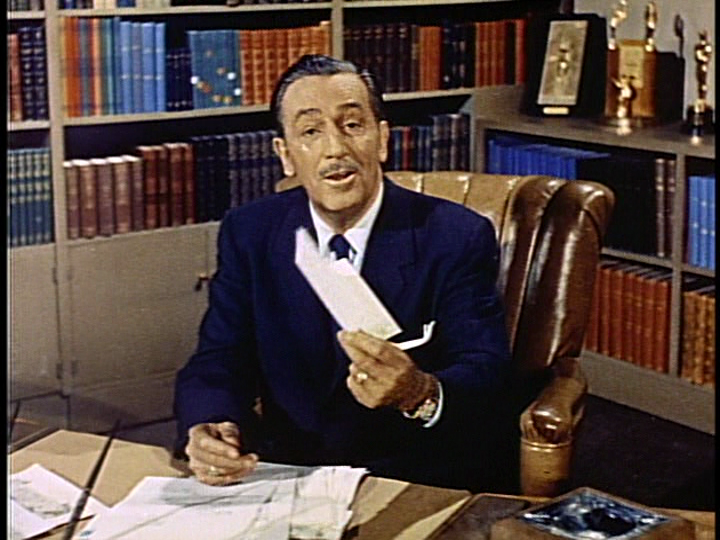
The episode begins with Walt looking through some fanmail, telling the audience that he continually gets asked questions about the Silly Symphonies. He then reads a letter about the Silly Symphony Waterbabies, which was made in 1938; the short film itself was inspired by the 1863 story of the same name by Charles Kingsley. The scene then turns into an animated retelling of Kingsley telling the story he created to his son. The short itself begins to play. This is then followed by Walt reading a letter about the short film The Grasshopper and the Ants (1934), which traces its tale back to ancient times. The history of fables then begins in Ancient China, followed by Egypt, then finishing up with Aesop, before moving in to the 1934 short film. The third short Walt covers is Chanticleer the Rooster, who was heavily featured in the Canterbury Tales by Chaucer, as well as the Middle Ages classic Reynard the Fox. The Chanticleer stories inspired the 1938 short film Farmyard Symphony, which soon begins to play. After this, Walt introduces nursery rhymes, citing them as a big source of inspiration for the Silly Symphonies. He shows the audience a tiny book called Tommy Thumb’s Pretty Song Book, which contains several well-known verses and rhymes, including Who Killed Cock Robin. Walt then goes into the supposed meaning of the verse, which was meant to have been written about the rise and fall of Sir Robert Walpole. In 1934, Disney created a Silly Symphony based on the verse, satirizing many well-known celebrities of the time. The final Silly Symphony presented is based on Eugene Field’s well known children’s verse Wynken, Blynken, and Nod (originally known as Dutch Lullaby).

January 9

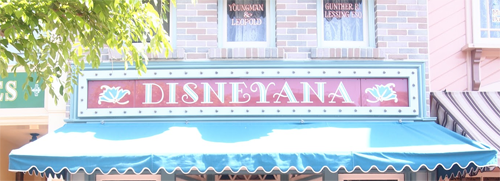
January 9, 1976 – The Disneyana Shop Opens on Disneyland’s Main Street

Disneyana

“For collectors and the curious alike.”

On January 9, 1976, the Disneyana Shop opened on Main Street of Disneyland. The store featured rare and valuable pieces of Disneyana; after a few years, however, it became increasingly difficult to find pieces to sell. With this and other problems, the shop decided to change tactics and sell only limited edition pieces and collectables. The store has moved several times since its opening: once on May 30, 1986 to across the street to where the former jewelry shop resided, also on April 14, 2013, to replace the Disney Gallery location. Disneyana shops have been opened in other Disney Parks, with Walt Disney World’s opening in 1983 (and closing in 1996), and Disneyland Paris’ opening in 1992.

December 18

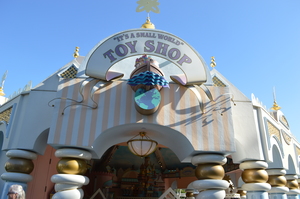
December 18, 1992 – The It’s a Small World Toy Shop Opens in Disneyland’s Fantasyland

Small World Toy Shop

“Come visit the best store for good girls and boys!”

On December 18, 1992, the It’s A Small World Toy Shoppe opened in Disneyland’s Fantasyland, just outside the exit for the attraction of the same name. The store was originally sponsored by Mattel, and features products from the company, including Hot Wheels and Disney Princess dolls.

December 4

December 4, 1957 – The Disneyland Anthology Episode “Mars and Beyond” Airs

vlcsnap-2014-12-04-16h08m50s13

“In this exciting age when everyone seems to be talking about the future possibilities of space travel, there’s much speculation on what we will discover when we visit other worlds.”

On December 4, 1957, the Disneyland Anthology episode “Mars and Beyond” aired on television. The episode features several well-known technical advisors, including Dr. Ernst Stuhlinger, Dr. E. C. Silpher, and Dr. Wernher von Braun, as they explore the possibilities should man travel to Mars. The episode was later released a featurette in theaters on December 26, 1957, and portions of the film were reedited into a short film called Cosmic Capers, released in England in 1979. The short features several different styles of animation, ranging from the humorous to the more serious. The voices in the animated sequence are all done by Disney veteran Paul Frees. This episode was directed by Ward Kimball, with story by Kimball, William Bosche, John Dunn, Charles Downs, and Con Pederson.

The episode begins with a robot named Garco introducing Walt to the television audience. Walt poses the question of what we will find when we start traveling to other planets. It then goes into the story of man, with each passing age speculating and wondering about their existence and the nature of the world around them. It then explains the process of man’s thoughts and knowledge of the stars movement around the world, leading into a dark world of superstition and stupidity. In the time of the Renaissance, Copernicus came along to prove mathematically that the sun was the center of the universe, not the Earth as was believed. Galileo then proved that the planets were not just specks of light, but spheres just like the Earth. Soon after, people start speculating what life is like on other planets. One of the first to describe the supposed inhabitants of other planets was Bernard de Fontanelle, a Romantic poet. In the 19th century, many people chose Mars as the planet most likely to have inhabitants, as they believed they saw specks of light and interpreted them to be signals to Earth. Several books are written about people meeting Martians, each more fantastical than the previous. At the time of this episode, an eager public is more than willing to read stories about life on other planets, usually with the same formula.

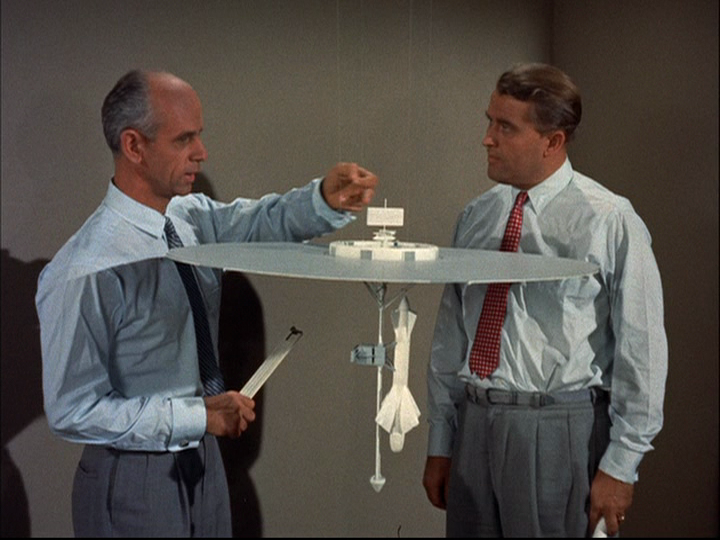
The episode explores possible space travel, with assistance from two well-known scientists

The episode explores possible space travel, with assistance from two well-known scientists

The story then goes to the discussion about other universes, with the Milky Way being one of billions. To give the example about how evolution may be occurring across other planets, the audience is lead into the story of the creation of our own universe, beginning with the Big Bang. The planets are also compared to Earth, and how man would die on each planet, save for the golden zone of Venus, Mars, and the Earth, where it would be possible for man to live. If man were to journey to Mars, life might just be possible, providing that the right resources are provided to sustain life. Mars has always captured the interest of astronomers, and the episode explores the history of the interest of Mars, with the study of the planets’ surface. Dr. E. C. Slipher, a senior astronomer who had worked at the Lowell Observatory in Arizona for over fifty years, is interviewed about potential life on Mars. He explains the facts that astronomers accept, including the size of Mars being half the size of Earth. He introduces a spectrograph, which can help interpret the atmosphere of Mars, and a thermocouple, which can interpret the temperature of Mars. However, photographic evidence of the canals on Mars cannot be obtained due to the Earth’s atmosphere blurring the photo. Although a small amount of information that has been collected, it isn’t enough for astronomers to draw any definite conclusions about Mars, including the conclusion about life on Mars. However, many scientist speculate what life would be like should there be any slight changes to the conditions on the planet. The final part of the program focuses on the possibility of travel to Mars from Earth. Dr. Ernst Stuhlinger and Dr. Wernher von Braun have been working together to create a special atomic type of spaceship that would be able to travel outside the gravitational pull of Earth without using a ton of chemical fuel, with the parts of the spaceship assembled in space after being brought up by conventional rockets. A small atomic reactor will continue to provide heat to power a turbogenerator. A plan is explained for the trip to Mars, which will take a little over 13 months to accomplish, and six ships will be used for the entire expedition.

November 23

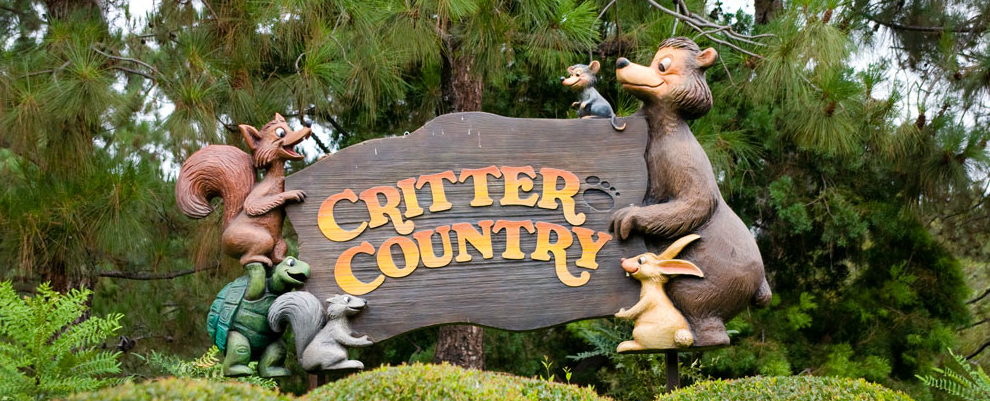
November 23, 1988 – Critter Country Opens in Disneyland

CritterCountry

“…a cast of backwoods critters, including geese, frogs, raccoons, possums, bees, and alligators offer up their own slice of southern hospitality during your adventure.”

On November 23, 1988, the area Critter Country opened in Disneyland. The area is one of eight lands within the park, and was originally known as Bear Country (opening in 1972), named for the area’s most popular attraction Country Bear Jamboree. When Splash Mountain was being built in 1988, the name of the land was changed to reflect the overall number of critters inhabiting in the new attraction and the several existing ones. The land also includes The Many Adventures of Winnie the Pooh and Davy Crockett’s Explorer Canoes; it also lends itself as a great viewing area for Fantasmic!, which is held in the neighboring land Frontierland. The Hungry Bear Restaurant in Critter Country provides a special dessert package, giving guests a dessert sampler and a Fastpass ticket for Fantasmic! in a specialty viewing area.

December 7

December 7, 1955 – The Disneyland Episode “The Goofy Success Story” Premieres

vlcsnap-2013-12-07-19h17m19s28

“He’s always been a modest, unassuming fellow, one who’s never let fame go to his head. So this program belongs to him.” – Walt Disney

On December 7, 1955, the Disneyland episode titled “The Goofy Success Story” premiered on ABC. The episode featured a fictionalized account of Goofy’s rise to stardom. Although his original name was “Dippy Dawg,” the name spelled out on his contract changes the spelling of “Dawg” to “Dog.” The episode was directed by Jack Kinney and Wolfgang Reitherman, and was written by Jack Kinney.

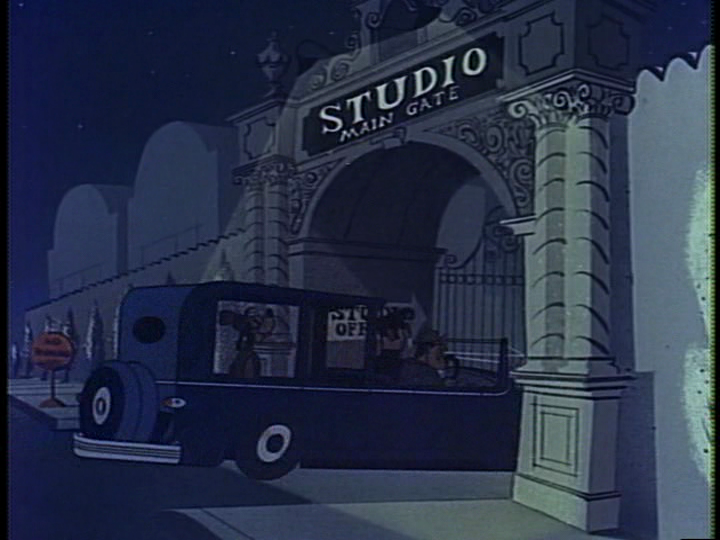
The episode begins with Walt introducing the special tribute to Goofy, who praises the character and leads into the animated story. The scene then opens on a theater, with curtains that pull back to reveal Goofy’s face, before revealing more and more curtains. Finally, the narrator takes the audience to Hollywood, where crowds are bustling about and talent scouts are everywhere, looking for the next big star. Goofy then is seen walking down the street, and has just enough money to buy a meal, but decides to spend his money on a Mickey Mouse film instead. As he sits in the theater and watches the short (the 1934 short film Shanghaied), his unique and loud laugh alerts the talent scouts.

Goofy is soon whisked away to the studio with his "million dollar laugh"

Goofy is soon whisked away to the studio with his “million dollar laugh”

The talent scouts take him away to his first gig, which would eventually become the 1936 short film Moving Day. After the short ends, he is taken to the studio executive’s office to sign an iron-clad contract for $50 a week for 48 years, which he happily accepts. When he signs as Dippy Dog (his original name), the executives are unhappy with his name and decide to change it. The head executive comes up with the name “Goofy,” and Goofy happily accepts. He is paid his first paycheck, and left with nothing but a debt of $8. The executive then shows Goofy an actor’s progress chart, highlighting the rise and inevitable fall of an actor in a poetic fashion. Soon, Goofy is taken to his next picture, the 1937 short film Moose Hunters.

Goofy is soon seen on several magazine covers, and the audience is then taken to his mansion, the Hacienda Goofy. They view him in his bed, surrounded by several television cameras, which takes away all of his privacy, not that he seems to mind as he goes about his daily routine. After his morning swim, he then heads to the studio to film a new short, the 1950 short How to Ride a Horse, although it is seen that he annoys the horse before the short begins (which explains the horse’s distaste for Goofy during the short). After this, awards time has arrived in Hollywood, and Goofy readies himself to get an award, although he is dismayed to find that he has not won a single trophy, losing even to Pluto. He is soon seen alone in the theater, and leaves, depressed, walking out into the stormy streets, recalling his rise to stardom. He finds himself at the shore, and, thinking his life is over, hears the siren voice of the sea. However, he is interrupted by a telegram that provides him with the chance of a lifetime – the 1950 short film Motor Mania. The episode ends with Goofy finally winning his award.

August 16

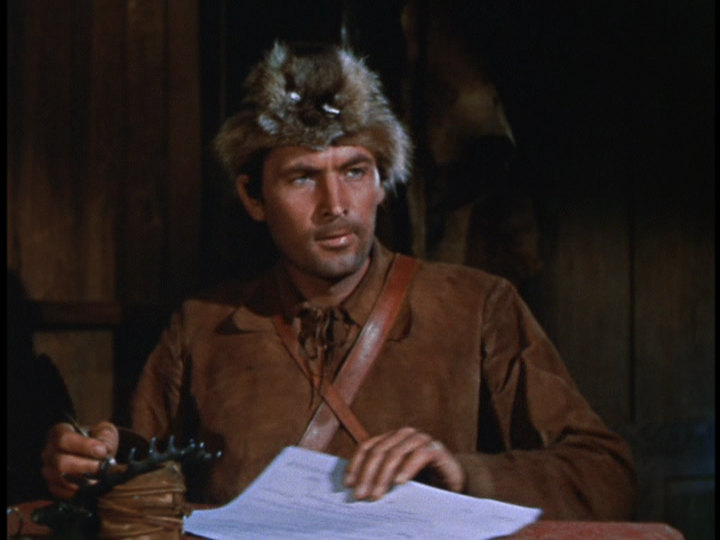
August 16, 1924 – Actor and Disney Legend Fess Parker is Born

vlcsnap-2012-01-24-19h09m47s164

“I’ve had the friendship and the interest of so many people and in such a broad way because Disney is not just a popular product in America, it’s a popular product in the world. And so to be a part of something of that nature and to share that with the individuals that created it…it’s been a wonderful experience.”

On August 16, 1924, Fess Elisha Parker, Jr. was born in Fort Worth, Texas. During WWII, Parker found problems enlisting due to his size, as he was too tall to be a pilot, and too big to be a radioman gunner; he finally found a fit as a radio operator in the Marine Corps. After the war ended, he attended Hardin-Simmons University on the GI Bill, and transferred to the University of Texas, graduating with a degree in history. He discovered a love of acting in college, and, with one year left on his GI Bill, he studied theater at the University of Southern California. Parker became a contract player with Warner Brothers in the early ’50s, and appeared in a science fiction film Them! It was this film that would change his life, as Walt Disney was watching the film to find an actor to play Davy Crockett. Although originally watching for James Arness, Disney was impressed with Parker’s acting, and Parker was soon asked to stop by the studios. The Davy Crockett serial proved to be explosively popular, and Parker then became a contract player for the studio, appearing in films The Great Locomotive Chase; Westward Ho, the Wagons!; Old Yeller; and The Light in the Forest. Outside of Disney, Parker also found fame in the television series Daniel Boone, shot by 20th Century Fox. Parker retired from acting in the 1970s, and dedicated his life afterwards to the Fess Parker Winery in Los Olivos, California. In 1991, Parker was named as a Disney Legend. He passed away of natural causes on March 18, 2010.

March 26

March 26, 1955 – “The Ballad of Davy Crockett” Hits Number 1 on the Billboard Hit Parade Ballad

“Born on a mountaintop in Tennessee, greenest state in the land of the free, raised in the woods so’s he knew every tree, killed him a bear when he was only three. Davy, Davy Crockett, King of the Wild Frontier.”

On March 26, 1955, the theme song of the “Davy Crockett” serial “The Ballad of Davy Crockett” hit number one on the Billboard Hit Parade, and remained on the chart at the top position for sixteen weeks. The single was written by George Bruns and Tom Blackburn, and was recorded by Bill Hayes. Although it was soon recorded two other times, once by Davy Crockett actor Fess Parker and the other time by Tennessee Ernie Ford, Hayes’ version of the song was the most popular. The song, one of the most popular songs every from a Disney production, has been covered many times since then, although not with nearly as much success as the first recording.