RSS Feed

Tag Archives: Actor

December 29

December 29, 1995 – The Hollywood Pictures Film Mr. Holland’s Opus Has A Limited Release
vlcsnap-2012-12-29-11h21m37s57

“Mrs. Jacobs, you tell them that I am teaching music, and that I will use anything from Beethoven to Billie Holiday to rock and roll if I think it’ll help me teach a student to love music.”

On December 29, 1995, the Hollywood Pictures film Mr. Holland’s Opus was released in Los Angeles, to be considered for Academy Award consideration. The film tells the story of Glen Holland over his thirty years of teaching music. The film was shot on location in Portland, Oregon, specifically at Grant High School; the drama teacher at the school brought in many current and former students to be extras in the film. Richard Dreyfuss, playing the lead role of Glen Holland, was nominated for a Best Actor Academy Award. The film was written by Patrick Sheane Duncan and directed by Stephen Herek, with music by Michael Kamen. The film stars Richard Dreyfuss as Glen Holland, Glenne Headly as Iris, Jay Thomas as Bill Meister, Olympia Dukakis as Principal Helen Jacobs, and William H. Macy as Gene Wolters.

In 1965, young Glen Holland is seen at the piano composing, hearing the grand sounds of an orchestra in his head and filling the room; he then pretends he is conducing the piece. The next morning, his wife Iris wakes him up for his new job as the music teacher at the newly named John F. Kennedy High School. He has a rather tense meeting with the assistant principle Gene Wolters, then runs into the principal Helen Jacobs as he wanders around the school, lost. After hearing her instructions, he feels a bit overwhelmed, even more so when his first class doesn’t go well, and the orchestra members don’t know how to play. Fortunately, he makes friends with Bill Meister, the P.E. teacher. Holland admits to Meister that he took the teaching job so he could have free time to compose, with Meister telling him that “he can’t remember the last time that was free.”
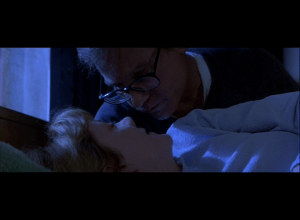
Although stunned when Iris announces her pregnancy, Holland is able to reassure her that he is excited to become a father

Although stunned when Iris announces her pregnancy, Holland is able to reassure her that he is excited to become a father

Holland continues teaching the orchestra, noticing one clarinet player, Gertrude Lang, having problems playing correctly. He asks her to stay behind, and tells her that they’ll find some extra time to help her improve. Holland still spends his nights composing, but his teaching still puts his kids to sleep. After one particularly disastrous test and a run-in with the principal, he realizes he needs a new approach ­to teaching. After a private session with Gertrude, he hears her crying, and she admits to him that she’s terrible, and just wants to be good at something. She leaves her clarinet behind and flees the room. As he starts venting his frustrations to Iris, she admits to him that she’s pregnant, and is upset that all he can say is, “Wow.” He assures her that he is excited to have a baby, and is inspired to reach to the students through rock ‘n’ roll music. As things begin to look up for Holland, Gertrude returns, telling him that she’s giving up the clarinet. He convinces her to try again, only to have fun with it this time. He finally reaches her, and she plays the clarinet solo at graduation.

To help supplement his income, Holland teaches driver’s education during the summer. One day, Holland speeds to the hospital with his students in the car, getting there just in time to meet his newborn son, whom he and Iris name Coltrain, or Cole for short. Unfortunately, Holland is soon in trouble for teaching rock ‘n’ roll in his class. Vice Principal Wolters is angry that Holland isn’t forced to stop the rock ‘n’ roll curriculum but is pleased that Holland has then been assigned to teach the marching band. Holland’s friend Meister helps Holland with running the marching band, if Holland helps student athlete Louis Russ get a passing grade in orchestra. Russ is assigned to the drums, but needs some extra help in learning how to keep a beat. The marching band marches in a local parade, playing “Louie Louie.” This parade also brings some bad news to Holland: as he doesn’t react to a fire truck siren, they learn that their son Cole is deaf.
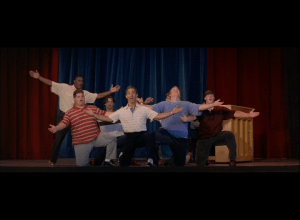
Meister helps save the show by using the football team as background dancers, with comical results

Meister helps save the show by using the football team as background dancers, with comical results

The decades roll by, with Holland keeping a distance between himself and his family, deeply hurt that he is unable to teach the joy of music to his own son. Iris is frustrated and angry that she can’t communicate with her own son, and even more upset that Holland doesn’t seem to want to be close with Cole. Graduation arrives at the high school, with Principal Jacobs letting Holland know that she’s retiring, and confides that she’s always considered him her favorite teacher at the school. The decades continue to roll by, until it’s 1980. Wolters, now the principal of the school, is on a mission to cut anything that is artistically inclined. It’s only thanks to Meister that the school musical is saved, with the football team being brought in to dance in the show. He drifts even further away from his family, being tempted to run away to New York City with student Rowena Morgan, not necessarily because he is attracted to her, but more to the idea of writing great music in New York. Ultimately, he decides not to go, but helps Rowena find a place to stay in the city.

Holland is affected by John Lennon’s death, and has another fight with Cole, as he believes Cole wouldn’t know who Lennon is, and Cole believes his father thinks he’s stupid. Realizing that his son is capable of understanding music, Holland tries to find new ways for the deaf students at Cole’s school to “hear” the music, particularly music without words. At a concert for the deaf students, Holland performs a song by John Lennon, dedicating it to his son. In 1995, Holland is still teaching at the high school, and is asked to Wolter’s office. Wolter has finally gotten his way of cutting the arts programs, with Holland being let go. Although he fights this, Holland still loses. He realizes that, at the age of 60, he doesn’t have any other options, and it is too late for him to finish his composition and get it published. As he sits in the empty music room, believing that no one will miss him once he is gone, he hears a car horn outside his window. Holland looks to see Iris and Cole, who help him pack up. They surprise him, however, by taking him to the auditorium, where many of Holland’s former students have gathered to say goodbye to their beloved teacher. The students then perform, with Holland conducting, the symphony he has spent the past 30 years writing.
December 13

December 13, 1925 – Actor and Disney Legend Dick Van Dyke is Born

vlcsnap-2012-12-13-04h39m32s158

“Well, I thought [Walt Disney] hired me because I was such a great singer and dancer. As it turns out, he had heard me in an interview talking about what was happening to family entertainment. I was decrying the fact that it seemed like no holds were barred anymore in entertainment. … He knew about the “Van Dyke Show,” about our little sitcom, but that’s why he called me in, because I said something he agreed with. And I got the part.”

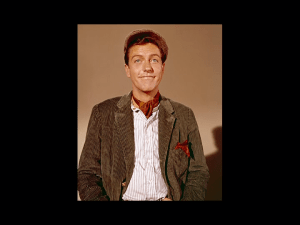
On December 13, 1925, Richard Wayne Van Dyke was born in West Plans, Missouri, but grew up in Danville, Illinois. At an early age, Van Dyke was inspired to become a comedian after watching the Laurel and Hardy comedies. During World War II, he served in the Army Air Corps as a radio announcer; he used those skills as a radio DJ in Danville, Illinois. He and his friend Phil Erickson created a pantomime act known as “The Merry Mutes,” that performed in nightclubs across the country. While appearing in Atlanta, Georgia, in the early ’50s, the two did their act on television. In 1959, Van Dyke won his first Broadway role in The Boys Get The Girls. The following year, he landed the lead role in Bye Bye Birdie as Albert Peterson. He not only won a Tony Award for his performance, but he also went on to perform the role in the film version of the musical.

In the 1960s, Van Dyke became well known for his comedic performances in the popular Dick Van Dyke Show. The show brought him to the attention of Walt Disney, who asked Van Dyke to play the role of Bert in the live-action film Mary Poppins. Van Dyke also asked for the role of the chairman of the bank; he played the roles to acclaim, although his British accent has been criticized as one of the worst accents in film history. Nevertheless, the film was a smash hit, making Van Dyke even more of a household name. Also for Disney, Van Dyke starred in Lt. Robin Crusoe, U.S.N and Never A Dull Moment, and guest starred in ABC’s The Golden Girls. He was honored as a Disney Legend in 1998.

December 10

December 10, 1941 – Actor and Disney Legend Tommy Kirk is Born

vlcsnap-2012-12-09-22h22m26s68

“[Walt Disney] was with Hedda Hopper, the legendary columnist. He put his arm around me, and he said, ‘This is my good-luck piece here,’ to Hedda Hopper. I never forgot that. That’s the nicest compliment he ever gave me.”

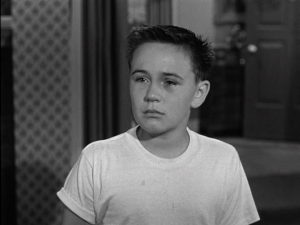
On December 10, 1941, Thomas Lee “Tommy” Kirk was born in Louisville, Kentucky. While he was still very young, his family moved to Los Angeles, California. In 1954, he followed his older brother to an audition at the Pasadena Playhouse, and ended up being cast in the production of Eugene O’Neill’s Ah, Wilderness! He was soon signed to a talent agency, and began working on television, which brought him to the attention of Walt Disney. Walt cast Kirk as Joe Hardy in the Mickey Mouse Club’s Hardy Boys serial opposite Tim Considine, another well-known Disney player.

Although Kirk found popularity in the Hardy Boys, his star role was Travis Coates in the 1957 film Old Yeller. Thanks to the immense popularity of the film, Kirk was cast in roles of the all-American teenager, frequently teaming with Kevin Corcoran as his younger brother. Kirk had continued success with The Shaggy Dog, Swiss Family Robinson, The Absent-Minded Professor, Bon Voyage, and Son of Flubber. The last films Kirk did for Disney were the popular Merlin Jones films, opposite Annette Funicello. In 1963, Disney decided not to renew his contract, and his career stalled in adulthood. He left show business after battling several personal problems, and started his own carpet-cleaning business in the San Fernando Valley. He was inducted as a Disney Legend in 2006.

November 10

November 10, 1999 – The 1999 Disney Legends Ceremony Takes Place

Image Credit: Disney Insider

“The Walt Disney Company honors those special few who best embody the Company’s unique creative spirit, personified by its founder, as Disney Legends.”

On November 10, 1999, the Disney Legends ceremony took place, honoring nine people who have made a significant contribution to the Disney Company. Among those honored were Tim Allen (Toy Story, The Santa Clause series), Mary Costa (voice of Aurora in Sleeping Beauty), Al Konetzni (character merchandise), Dick Nunis (attractions), and Charlie Ridgway (attractions). Receiving the honor posthumously were Norm Ferguson (animator), Bill Garity (film technique), Yale Gracey (animation and imagineering), and Hamilton Luske (animation).

October 7

October 7, 1919 – Actress and Disney Legend Betty Taylor is Born

“Betty’s role as leading lady in Disneyland’s Golden Horseshoe Revue helped turn it into the longest-running stage show in entertainment history.” – George Kalogridis, Disneyland Resort President

On October 7, 1919, actress Betty Taylor was born in Seattle, Washington, and begin taking dance lessons at an early age. At age 18, she led her own band known as Betty and Her Beaus. She then performed on a western radio show called “Sons of the Pioneers,” and went on to perform in Las Vegas with Frank Sinatra. In 1956, before hitting the road again, Taylor heard of auditions being held in the new Disneyland theme park, and won the role of Slue Foot Sue in the Golden Horseshoe Revue. The show became immensely popular, with the troupe appearing in an episode of “Walt Disney’s Wonderful World of Color.” Taylor retired from the show in 1987, but continued to appear in special events. She passed away on June 4, 2011, one day after her Golden Horseshoe Revue partner Wally Boag died. She was inducted into the Disney Legends in 1995.

October 1

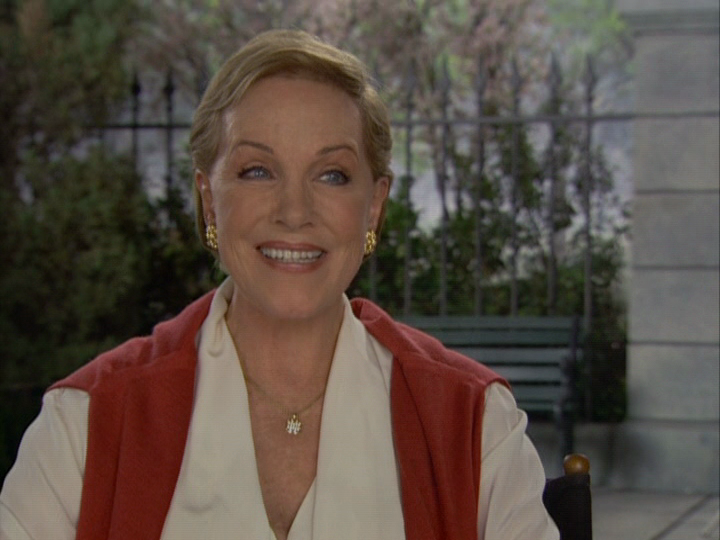
October 1, 1935 – Actress, Singer, and Disney Legend Julie Andrews is Born

“I know that I am blessed and unbelievably lucky to be asked to do [Mary Poppins], at a time in my life when the next break was just a big question mark and suddenly, there was Mary Poppins and Walt.”

On October 1, 1935, actress and singer Julie Andrews (born Julia Elizabeth Wells) was born in Walton-on-Thames, England. During World War II, Andrews’ mother and father separated, with Andrews’ mother joining Ted Andrews in entertaining the troops through the Entertainments National Service Association; they soon married, and Julie was sent to live with her mother and step-father. Julie took private voice lessons with Madame Lilian Stiles-Allen, working on her amazing vocals, which ranged five octaves. At age 12, Andrews sang at the London Hippodrome, which soon led to many other opportunities on the sate, including Cinderella and The Boy Friend, as well as one of her most well-known roles as Eliza Doolittle in My Fair Lady.

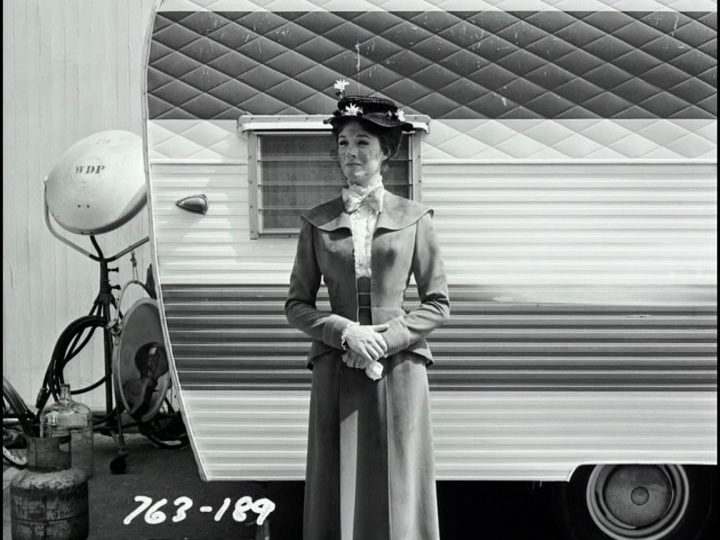
Walt Disney was in the audience one night while Andrews performed as Queen Guinevere in the Broadway production of Camelot. After the performance, he went backstage and offered her the lead role in his new feature film, Mary Poppins. She agreed tentatively, as there was a chance that she would be in the film version of My Fair Lady; when the role of Eliza went to Audrey Hepburn, Andrews began the work on Mary Poppins. The film was a success, and made Andrews a star, with her winning an Academy Award and a Golden Globe for her performance. She starred in several high-profile films after this, including The Sound Of Music, which garnered her another Golden Globe, and a nomination for another Academy Award.

Andrews is best known for playing the title character in Disney’s Mary Poppins, a role that won her the Academy Award for Best Leading Actress

In 1991, Andrews was named a Disney Legend. In 2001, Andrews returned to Disney films by playing the role of Queen Clarisse Marie Renaldi in their adaptation of the Meg Cabot series The Princess Diaries, as well as the sequel The Princess Diaries II. In 2005, Andrews was named the Official Ambassador of Disneyland’s 50th Anniversary, promoting the celebration and the park with several events.

September 27

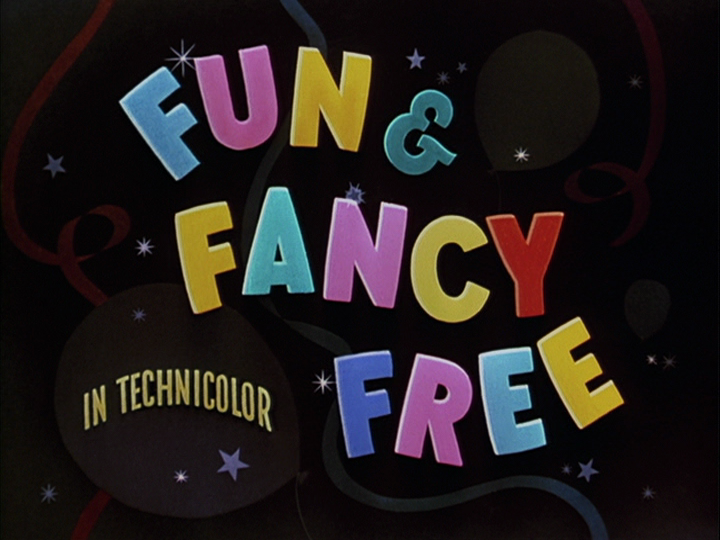
September 27, 1947 – The Ninth Animated Feature Film, Fun and Fancy Free, is Released to Theaters

“So if you’d really like to be happy-go-lucky just like me, drown your frowns my friend and you will see, you’ll see, that you’ll be full of fun and fancy-free.”

On September 27, 1947, the ninth animated feature film, Fun and Fancy Free, was released to theaters. It was the second package film released by Disney, comprised of two stories: Bongo (written originally by Sinclair Lewis), and Mickey and the Beanstalk, a retelling of the classic tale Jack and the Beanstalk. The two were originally meant to be full-length features of their own. Although Mickey was in the feature film Fantasia, this was the first time Goofy and Donald were also used to carry a feature film. As the story was tightened, many scenes were dropped, including the scene where Mickey receives the magic beans for his cow from none other than Minnie Mouse, playing the queen. The two stories were stopped in development when the country entered World War II. The live action segments were directed by William Morgan, with the animation sequences directed by Jack Kinney, Bill Roberts, and Hamilton Luske. The film included the talents of Anita Gordon, Cliff Edwards, Billy Gilbert, The Kings Men, the Dinning Sisters, and the Starlighters, as well as Edgar Bergen (ventriloquist for Charlie McCarthy and Mortimer Snerd) and Luana Patten. This film also marks the last time Walt Disney voiced the character of Mickey Mouse, as he would have sound effects man Jimmy MacDonald take over the role.

The movie begins with the voice of Jiminy Cricket ringing out, singing about being happy-go-lucky, and begins to sing and dance around a library, expressing his sadness about the whole world worrying about so many things. “But why get so excited,” he asks. “What’s going to be is going to be.” Unfortunately, he runs into a cat that chases him out of the library. He finds himself in a girl’s room, coming across what he calls a “deadpan doll and a droopy bear.” To cheer them up, he puts on a record about the story of Bongo, a musical story sung by Dinah Shore.

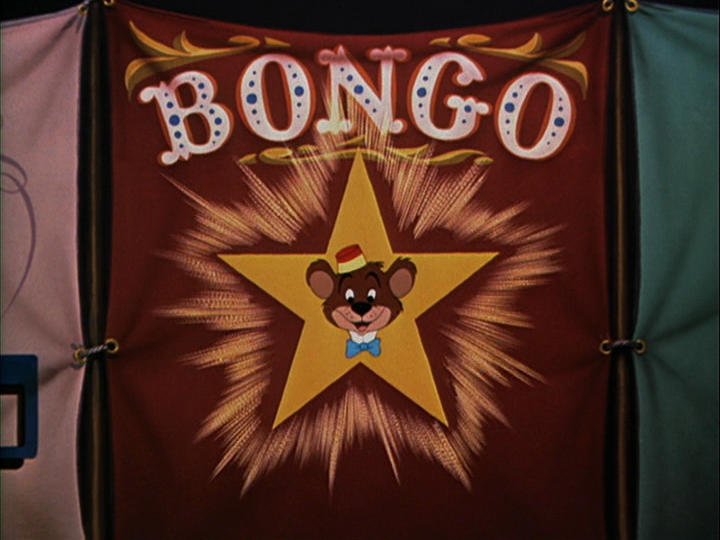
The story of Bongo begins with his days in the circus, where he was the star

Bongo is a circus bear: “he was born in the circus, grew up in the circus; in fact, Bongo was the star of the circus.” Bongo was seen as being able to do it all, with the circus tent packed with fans that wanted to see him perform the greatest of stunts. But although Bongo appeared thrilled with what he was doing, he was a prisoner of the circus, kept in a cage. He spent his nights dreaming of a place where he was free from the circus life. One fateful day, he decides to answer the call of the wild, and escapes from the circus train. Finally free, he explores the woods where he landed, smelling the flowers and leaping over tree roots. Unfortunately, Bongo doesn’t know how to survive in the woods, but he’s still elated to be out in nature. He soon makes friends with the animals of the forest, and they walk around, exploring their surroundings.

Unfortunately, life in the woods is not as pleasant as Bongo thought, as at first he is unable to get to sleep, then finds himself caught in a storm. He becomes discouraged that his dream life wasn’t the way he thought it would be, and even more discouraged that he can’t even catch food like a real bear would. As he tries to catch a fish, he hears the giggle of a young female bear named Lulubelle, and begins to follow her as she flirts with him. The two quickly fall in love, but there is one problem: Lumpjaw, the roughest, toughest, meanest bear in the woods, who wants Lulubelle all to himself. After some mixup, Lulubelle ends up in Lumpjaw’s arms, with Bongo being left heartbroken, as he didn’t understand the way of bears (bears express their love by slapping). Lulubelle sneaks away from the bears to find Bongo, and a fight ensues between Bongo and Lumpjaw, with Bongo using his circus skills to win. Lulubelle and Bongo live happily ever after in love.

Jiminy decides to attend a party hosted by Edgar Bergen (C), with his puppets Charlie McCarthy and Mortimer Snerd, with Luana Patten as the guest

After the story ends, Jiminy comes across a party invitation for Luana Patten at Edgar Bergen’s house across the way, and decides to attend himself. Bergen is entertaining Luana, Mortimer Snerd, and Charlie McCarthy, and decides to tell the group a story: Mickey and the Beanstalk. He has Luana create a picture in his mind of Happy Valley, where Mickey, Goofy, and Donald live. Happy Valley was a prosperous place, with a magic singing harp residing in its castle, casting a spell of joy over the entire valley. One day, a mysterious shadow appears in Happy Valley, and steals the harp from the castle. Once the harp is stolen, the valley loses its joy and prosperity. The audience is taken inside the cottage of Mickey, Goofy, and Donald, sharing a pitiful meal. Unable to take it anymore, Donald loses his cool, going mad with hunger and desperation. He takes the axe from the wall and decides to kill their beloved cow.

The next day, Mickey decides to take their cow to market, with Goofy and Donald hopeful that they will be able to afford food. When Mickey comes home, however, he informs them that he sold the cow for magic beans. Donald loses his cool again, throwing the beans away. Once the moon hits the spot where the beans fell, however, a giant beanstalk begins to grow, destroying their house in the process and sending the trio sky high. When morning comes, the three are amazed to see a castle in the sky, and decide to explore. After surviving an attack a giant dragonfly, the three reach the castle steps and climb inside. They discover that the banquet table is covered in food, and don’t hesitate to eat the best meal they’ve had in ages. They also discover the harp being held hostage in a treasure box nearby, and she warns them about the giant, as he has the ability to turn himself into anything he wishes.

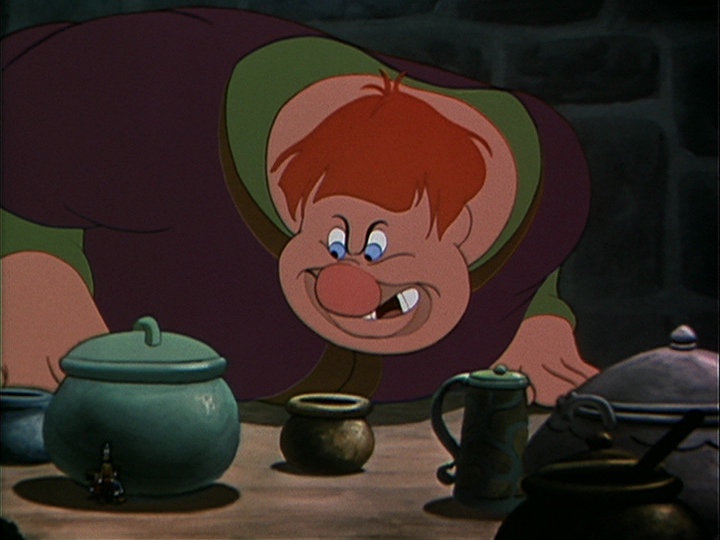
The giant suddenly appears, and looks around the table for the trio

Suddenly, the giant appears, singing a simple song about himself and adding the words, “Fe Fi Fo Fum.” He smells the scent of the trio and searches for them, but gets distracted by the food on the table and begins to eat. He catches Mickey, but with Mickey’s quick thinking, he’s able to escape, tricking the giant into changing into a fly. However, the giant would rather change into a pink bunny rabbit, and when he spies the trio with a flyswatter, he catches them and throws them into the treasure box, keeping the harp out for her to sing him to sleep. With the harp’s help, Mickey is able to free his friends and escape with the harp. The giant wakes up as they begin their escape and chases after the three. When the trio makes it to the bottom of the beanstalk, they grab a saw and begin to chop the beanstalk down, sending the giant tumbling down to earth. Happy Valley is returned to its peaceful and prosperous state.

As Bergen finishes telling the story, he notices that Mortimer begins to cry over the death of the giant. Bergen tries to explain that the giant never existed, and is succeeding until the roof of his house lifts, and the giant appears, asking the group if they’ve seen a mouse. Bergen faints, and the giant leaves, exploring Hollywood for signs of Mickey (and taking the Brown Derby restaurant with him as a new hat).

September 24

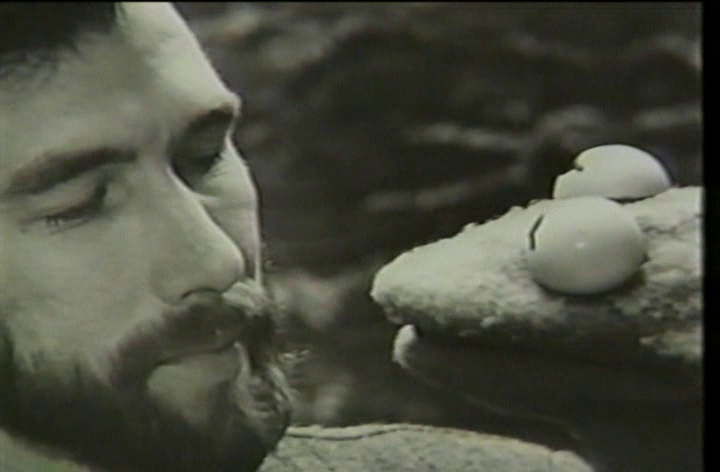
September 24, 1936 – Creator of the Muppets and Disney Legend Jim Henson is Born

“One of the things Jim did, in that amazing career, was to really remake puppetry…and nobody had ever made that same transition with puppet theater.”- Jerry Juhl, Muppet head writer

On September 24, 1936, James Maury Henson was born in Greenville, Mississippi. In the late ’40s, the Henson family moved to Hyattsville, Maryland, and Henson later attended school at the University of Maryland. While attending college, he began working on a five-minute puppet show called Sam and Friends. “The magic of what television was is what first made me want to work in television, and puppetry was just a way of getting a job on a television station…television was in its early days,” Henson said about working in television at the time, “so I made a couple of puppets and auditioned, and got a job, and that’s kind of how it all started.” One of the characters on Sam and Friends would be the prototype for Henson’s most famous character, Kermit the Frog. The show had a huge following in the D.C. Metro area, and around this time, Henson began working with Jane Nebel, the woman who would eventually become his wife.

The success of Sam and Friends led to appearances of Henson’s Muppets on talk and variety shows, including The Jack Parr Show and The Ed Sullivan Show. The Muppets were also used for a variety of commercials, including a popular set of commercials for Wilkins Coffee in Washington D.C. In 1963, the Hensons moved to New York and set up Muppets, Inc., and Henson hired Jerry Juhl as a writer, and Frank Oz as a puppeteer. Oz would go on to create a close friendship and partnership with Henson, as seen in the pairings of Bert and Ernie, and Kermit and Fozzie. At this time, Henson created the character of Rowlf, an anthropomorphic dog that played the piano and appeared on The Jimmy Dean Show. “The exposure of Rowlf was pretty significant, I think,” Oz said. “It was the first real country-wide acceptance of one of Jim’s characters.”

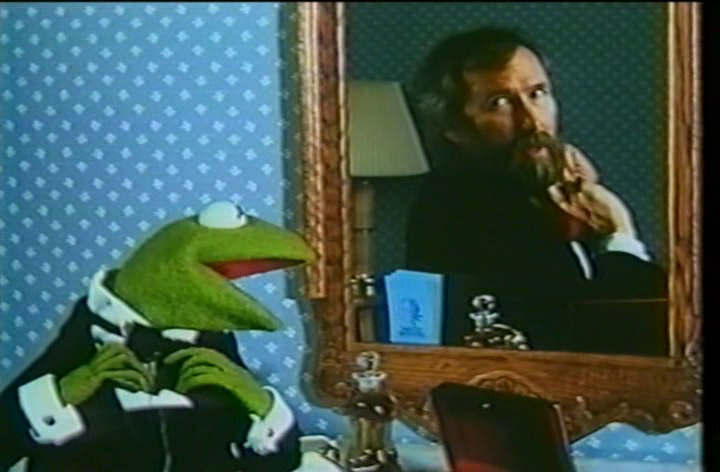
Henson and his alter-ego, Kermit

In 1969, Henson was asked by the team at the Children’s Television Workshop to work on a children’s program for public television. This would turn into the wildly successful show Sesame Street. Its success allowed Henson to get out of creating commercials. While working on Sesame Street, Henson and his team continued to develop sketches for adults, as the company did not want to be typecast as a creator of only children’s entertainment. One of the projects developed was a weekly show that was rejected by American networks, who only saw it as more children’s television. Henson convinced British media impresario Lew Grade to finance the venture, and The Muppet Show aired its first episode on September 13, 1976. The show introduced the characters of Miss Piggy, Gonzo, and Fozzie Bear, and gave Kermit the role of the host. Kermit has been seen as Henson’s alter-ego, much as Mickey Mouse has been seen as the alter-ego of Walt Disney.

In 1979, Henson made his foray into feature films with The Muppet Movie, which was a success both critically and financially. The film was followed with The Great Muppet Caper. After the success of the latter film, The Muppet Show was brought to an end so Henson could focus on more feature films, which included The Dark Crystal, The Muppets Take Manhattan, and Labyrinth. In 1989, Henson entered into negotiations with the Walt Disney Company to handle the business side of the Muppets while he spent more time on the creative side. Several projects were completed at this time, including a television special, The Muppets at Walt Disney World, and a Walt Disney World attraction called Jim Henson’s Muppet*Vision 3D (a still present and popular attraction) [See August 28th entry for more information]. Unfortunately, Henson died before the deal was completed (a new deal would be reached in 2004).

On May 16, 1990, Henson passed away at the age of 53. He was awarded as a Disney Legend in 2011.

August 27

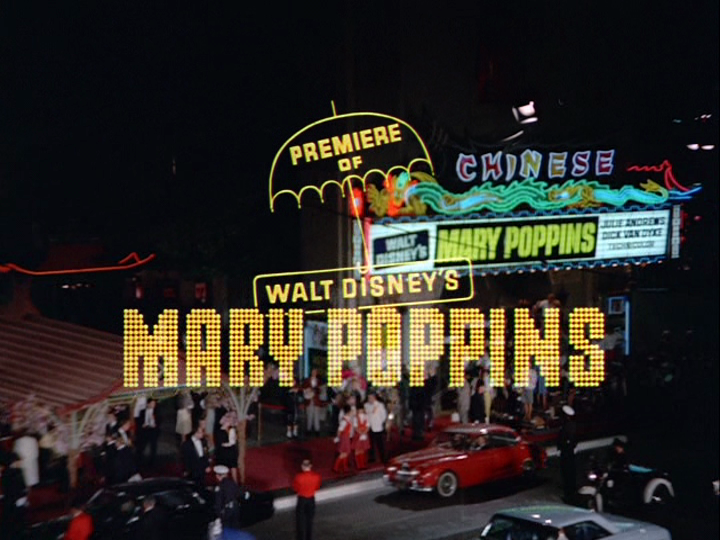
August 27, 1964 – The Live-Action and Animated Film Mary Poppins Premieres at Grauman’s Chinese Theater

“We’re looking forward to this [film], because it’s a fine combination when you can get Walt Disney and Julie Andrews and Dick Van Dyke together. I think it should be a lot of fun.” – Actor James Franciscus.

On August 27, 1964, the film Mary Poppins had its Hollywood premiere at Grauman’s Chinese Theater in Los Angeles, California. The premiere was broadcast live on Los Angeles television, with a separate radio broadcast of the festivities. The premiere guests were interviewed at the two separate stations. Guests included Maureen O’Hara, James Franciscus, Celeste Holm, Walter Slezack, the cast of the Dick Van Dyke Show, Agnes Moorehead, Annette Funicello and her fiancé Jack Gilardi, Roddy McDowall, Suzanne Pleshette, Carol Lynley, Buddy Ebsen, Kathryn Grayson, Ann Miller, and Brian Keith, among others. Members of the cast and crew of the film also attended, including director Robert Stevenson, who gave a tribute to CalArts (which had opened a mere three years prior), Reta Shaw (the cook, Mrs. Brill), and co-writer and co-producer Bill Walsh.

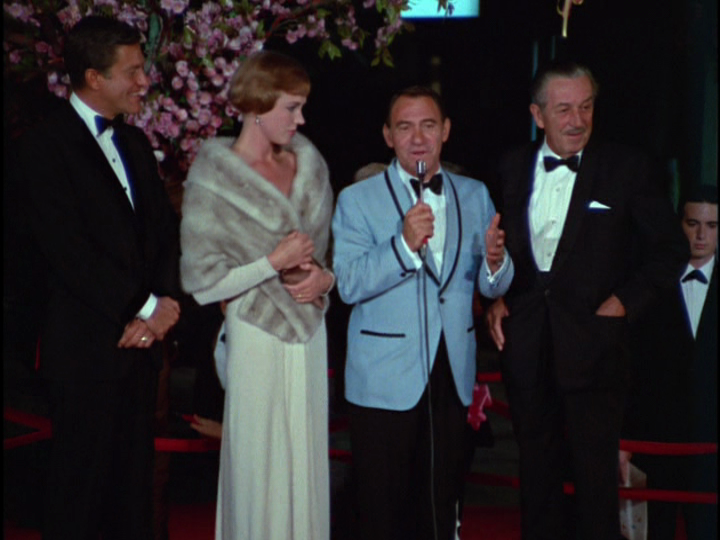
The festivities included characters dressed as familiar Disney characters, such as Goofy, the Big Bad Wolf, and the Seven Dwarves. Costumed characters of the penguins, as well as a band of pearlies, were also part of the entertainment, with the penguins dancing with Dick Van Dyke on his arrival. When asked about the film, Van Dyke said, “It’s my third motion picture, but the best one I’ve ever been in, the best one I ever will be in, if I live to be 150 years old. To me, this is the greatest family classic of all time…I’m so proud to be in this picture, I can’t stand it.” Van Dyke, along with Julie Andrews and Walt Disney, were interviewed together near the end of the broadcast, with all three proud of the film and looking forward to premiere.

Dick Van Dyke (L), Julie Andrews, and Walt Disney being interviewed right before the premiere of the film

After the premiere, Technicolor hosted a party for the guests at the parking lot next door to the theater. A radio broadcast was also provided, with every guest interviewed raving about the film, calling it a classic, and stating that the premiere was very reminiscent of the Hollywood premieres of old. Andrews and Van Dyke were proclaimed to be the greatest two new stars of the time.

July 6

Posted on

July 6, 1938 –Actress Luana Patten is Born

On July 6, 1938, Luana Patten was born in Long Beach, California. A model since the age of 3, Patten was picked from hundreds of girls to star in the film Song of the South as Ginny, alongside Bobby Driscoll as Johnny. She would go on to become the first actress to sign a long-term contract with Disney, starring in several films with Driscoll, including Melody Time and So Dear to my Heart. In fact, she and Driscoll were the first long-term contract players at the studio. She also starred in the film Fun and Fancy Free with Edgar Bergen, Charlie McCarthy, and Mortimer Snerd. After taking a brief break to finish high school, Patten returned to the studio for a couple of films, her last role being Nora White in the 1966 film Follow Me, Boys. After leaving the studio, Patten continued to act until 1970, when she retired from the industry. She passed away at the age of 57 in 1996 from respiratory failure.