RSS Feed

Tag Archives: Academy Award winning

March 4

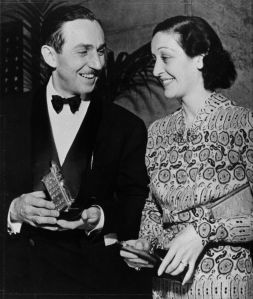
March 4, 1937 – The Silly Symphony The Country Cousin Wins Best Animated Short Film at the Academy Awards

WaltDisney_Oscar

On March 4, 1937, the 9th Academy Awards were held at the Biltmore Hotel in Los Angeles, California. Disney’s Silly Symphony The Country Cousin walked away as the winner for Best Animated Short Film, beating out the likes of Harman-Ising’s The Old Mill Pond and Fleischer Studios Popeye the Sailor Meets Sinbad the Sailor. This was Disney’s fifth win in this category, having dominated since the category’s conception in 1932.

March 2

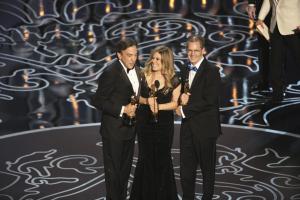
March 2, 2014 – Frozen Wins Disney’s First Best Animated Feature Academy Award

Frozen Award

“Happy Oscars to you! Let’s do Frozen 2!”

On March 2, 2014, the 86th Academy Awards were held at the Dolby Theater in Los Angeles, California. The animated feature film Frozen won two Academy Awards: one for Best Original Song for “Let it Go” by Kristen Anderson-Lopez and Robert Lopez, and one for Best Animated Feature. This was Disney Animation Studio’s first win in the category since it was established in 2001. Frozen won against The Croods, Despicable Me 2, Ernest & Celestine, and The Wind Rises.

February 29

February 29, 2004 – Finding Nemo Wins Best Animated Feature Academy Award

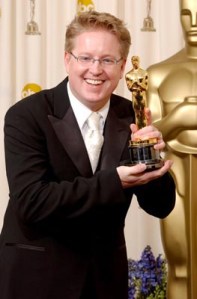
Andrew Stanton, winner for Best Animated Feature for "Finding Nemo" The 76th Annual Academy Awards - Deadline Photo Room The Kodak Theater Hollywood, California United States February 29, 2004 Photo by Jeff Vespa/WireImage.com To license this image (2318862), contact WireImage: +1 212-686-8900 (tel) +1 212-686-8901 (fax) st@wireimage.com (e-mail) www.wireimage.com (web site)

Finding Nemo would have never been possible if it wasn’t for the extraordinary filmmaking environment created at Pixar Animation Studios by John Lasseter, Ed Catmull, and Steve Jobs.” – Director Andrew Stanton

On February 29, 2004, the 76th Academy Awards were held at the Kodak Theater in Los Angeles, California. Nominated for four different awards, Pixar’s fifth animated feature scored a win for Best Animated Feature, beating out Disney’s Brother Bear and the French animated feature Les Triplettes de Belleville. This was director Andrew Stanton’s first Academy Award for his work at Pixar. Finding Nemo’s other nominations included Best Original Score for Thomas Newman, Best Sound Editing for Gary Rydstrom and Michael Silvers, and Best Original Screenplay for Andrew Stanton, Bob Peterson, and David Reynolds.

February 27

February 27, 2011 – Toy Story 3 Wins Two Academy Awards

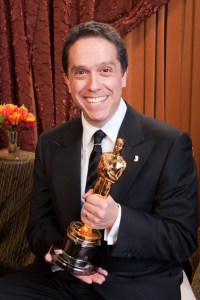
Oscar®-winning producer Lee Unkrich, winner for Best Animated Feature Film of the Year for work on “Toy Story 3," poses backstage during the live ABC Television Network broadcast of the 83rd Annual Academy Awards® from the Kodak Theatre in Hollywood, CA Sunday, February 27, 2011.

“I can’t believe I’m actually saying this, but thank you to the Academy.” – Director Lee Unkrich

On February 27, 2011, the 83rd Academy Awards were held at the Kodak Theatre in Los Angeles, California. Pixar’s eleventh animated feature film Toy Story 3 was nominated in five categories, including Best Picture, making it the third animated feature in history to do so, and the second Pixar animated feature to be nominated in this category. The film would go on to win two awards: Best Animated Feature, beating out How to Train Your Dragon, and The Illusionist; and Best Original Song for Randy Newman’s “We Belong Together.”

February 26

February 26, 2012 – The Muppets’ “Man or Muppet” Wins Best Original Song Academy Award

bret-mckenzie

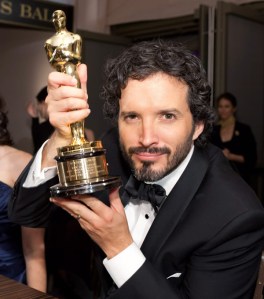
“I grew up in New Zealand watching the Muppets on TV; never dreamed I’d get to work with them.” – Writer Bret McKenzie

On February 26, 2012, the 84th Academy Awards were held at the Hollywood and Highland Center Theater in Hollywood, Los Angeles, California. The song “Man or Muppet” from the 2011 live-action film The Muppets scored the win for Best Original Song, beating out the other nominee “Real in Rio” from the animated feature Rio. The song is the third Muppet song nominated for an Academy Award, with “Rainbow Connection” and “The First Time It Happens” being the other two; “Man or Muppet” is the first of these songs to win the Academy Award, and is the twelfth Best Original Song for the Disney Studios. The song was written by Bret McKenzie, known as half of the duo The Flying Conchords.

February 7

February 7, 2009 – Ed Catmull is Awarded the Gordon E. Sawyer Award

EdCatmull

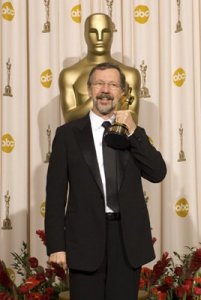
“…for his lifetime of technical contributions and leadership in the field of computer graphics for the motion picture industry.”

On February 7, 2009, President of the Pixar Animation and Walt Disney Animation Studios was honored with the Gordon E. Sawyer Award at the Scientific and Technical Awards Presentation for the Academy of Motion Picture Arts and Sciences. The award, first presented in 1981, is presented to those whose technological advances have helped the industry. Catmull was instrumental in creating the fundamentals of what would become computer animation, with his film A Computer Animated Hand being hailed as groundbreaking. He would go on to found three computer graphics research centers at New York Institute of Technology, Lucasfilm Ltd., and Pixar. Catmull had previously received two Scientific and Engineering Awards for his work in the film industry, winning as part of a team for RenderMan software in 1992 and part of a team for Digital Image Compositing in 1995.

February 4

February 4, 1999 – Pixar Announces PixarVision

Pixar

“[David DiFrancesco] recently led our team of scientists in developing PixarVision, which uses solid state lasers to record on multiple film formats with more quality and speed than ever before.” – Ed Catmull

On February 4, 1999, Pixar Animation Studios announced the creation of PixarVision, a new proprietary laser recording system that converts computer animation data onto motion picture film stock. The process was tested on the studio’s second animated feature A Bug’s Life, and was announced to be used on all Pixar animated features, starting with Toy Story 2. The process itself replaces the cathode ray tubes used to create the images that expose the filmstock with laser beams that are carefully controlled. The new process boasts higher quality color reproduction, sharper images, and faster recording. PixarVision, headed up by David DiFrancesco, was awarded by the Academy of Motion Pictures Arts and Sciences with a Scientific and Technical Academy Award on February 27, 1999.

October 1

October 1, 1911 – Conductor, Orchestrator, and Disney Legend Irwin Kostal is Born
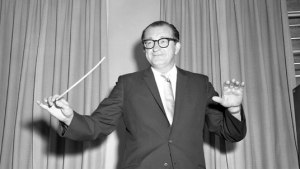
Irwin Kostal

“Believe it or not, we do have the liberty of changing details, even orchestration, here and there. We also can play a little with the beat, making stresses coincide even more accurately with what we see on the screen.”

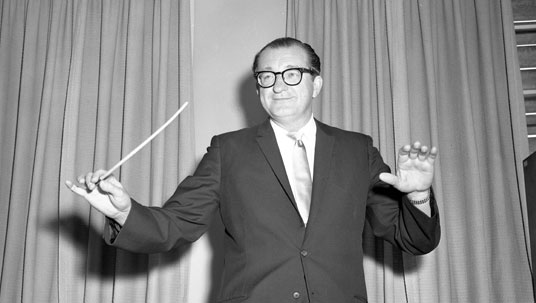
On October 1, 1911, Irwin Kostal was born in Chicago, Illinois. He demonstrated great musical prowess at an early age, and decided not to go to college in favor of studying scores at his local library; he felt he could learn more by himself than not find what he wanted in school. His first paying job was for the NBC radio program Design for Listening, as a staff arranger. He moved to New York where he worked on several shows, including Your Show of Shows, The Gary Moore Show, and later The Julie Andrews Show where he would receive an Emmy nomination. In the 1960s, Kostal found fame on Broadway, working on such shows as West Side Story and A Funny Thing Happened on the Way to the Forum. His work on West Side Story brought him to Hollywood to work on the film version of the show, which in turn led him to work on the classic Disney film Mary Poppins. For Disney, Kostal would score several projects, including Bedknobs and Broomsticks, Mickey’s Christmas Carol, and the re-recording for Fantasia in 1982. In his career, he was awarded with two Academy Awards: one for West Side of Story, and one for The Sound of Music. Kostal passed away in 1994 at the age of 83. In 2004, he was named a Disney Legend for his work on composing and orchestrating for Disney.
September 19

September 19, 1989 – Snow White and the Seven Dwarfs is Inducted in the National Film Registry

NationalFilmRegistry

“The National Film Registry selects 25 films each year showcasing the range and diversity of American film heritage to increase awareness for its preservation.”

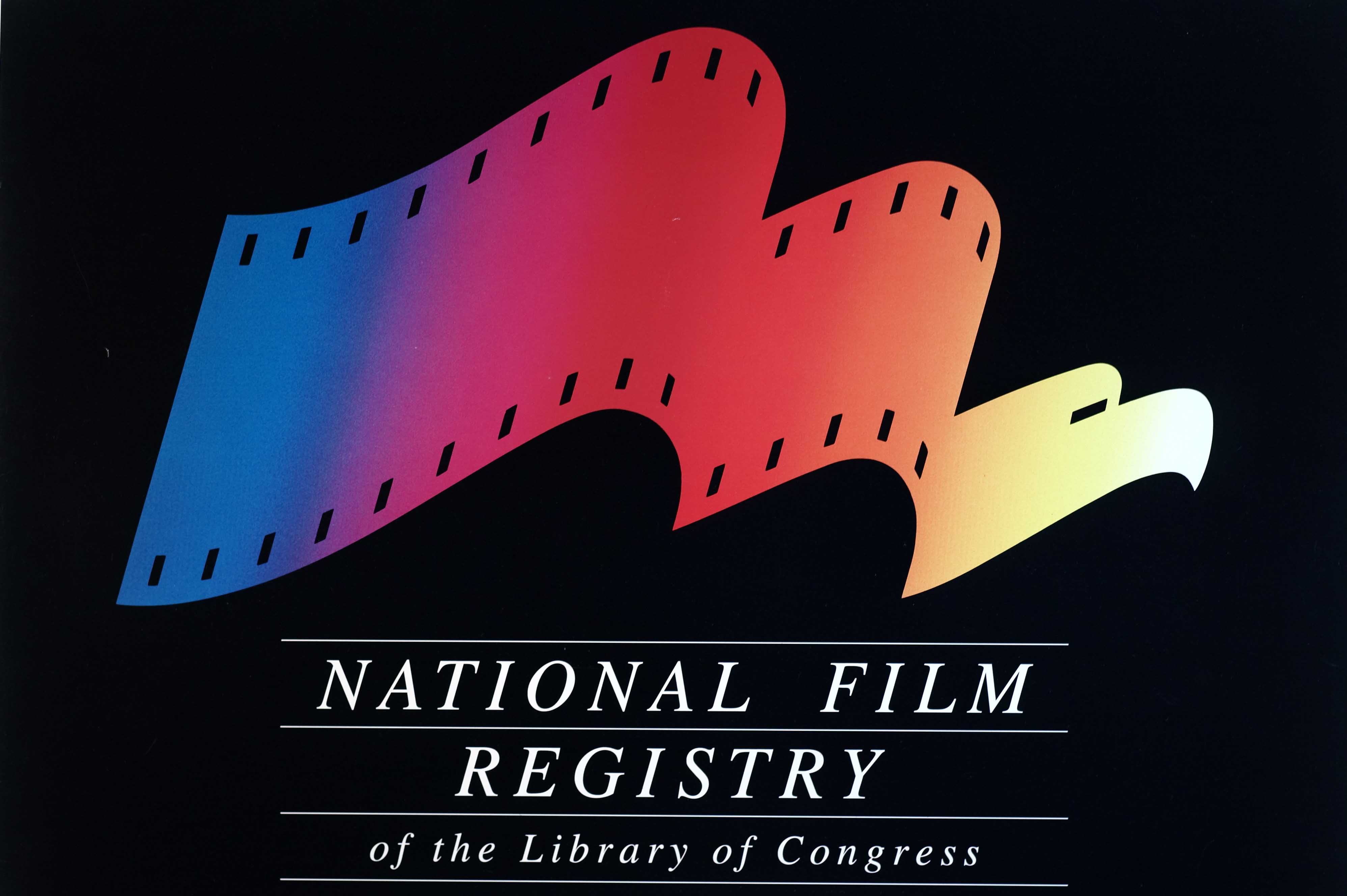
On September 19, 1989, the first 25 films to be inducted in the Library of Congress’ National Film Registry. The Registry, established the previous year thanks to the National Film Preservation Act, works to conserve works that establish America’s film heritage. The public nominated up to 1,000 films for inclusion, with Snow White and the Seven Dwarfs being the only animated narrative feature on the list. Several Disney and Pixar films have followed suit, including Fantasia in 1990, Pinocchio in 1994, Beauty and the Beast in 2002, Toy Story in 2005, and Bambi in 2011.

September 17

September 17, 1917 – Visual Effects Coordinator and Disney Legend Bob Broughton is Born

Bob Broughton

“If it looked like we doctored up a scene, we were a failure. Our effects weren’t supposed to be obvious.”

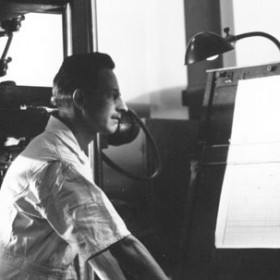
On September 17, 1917, Robert Broughton was born in Berkeley, California. A man of many talents, Broughton studied chemistry, physics, math, and optics at the University of California at Los Angeles. He joined the Disney Studios in 1937 in the mailroom, and quickly found his way to the camera department where his first major assignment was to shoot the test camera for Snow White and the Seven Dwarfs; his job ensured that the animated scenes flowed smoothly before the final production shot. Broughton was then moved to the multiplane camera, becoming one of only two operators for the complex machine. After moving to the special photographic effects department and assisting with the “Night on Bald Mountain” segment, Broughton found himself promoted to camera department supervisor. His work with the studio was interrupted by World War II, where he served in the Army as a cameraman for the Office of Strategic Services. His skills were used on an Oscar Award winning film about the Battle of Midway, and after the war, he returned to Disney to assist fellow Disney Legend Ub Iwerks. Broughton’s technical wizardry created magical effects for several animated and live-action films, and even for the Disney Anthology series. He continued to work on films until his retirement in 1982, and remained involved with the company through the Golden Ears Retirement Club for fifteen years. He was honored for his work in Disney film in 2001. In 2009, Broughton passed away at the age of 91.