RSS Feed

Tag Archives: 1990s

October 2

October 2, 1992 – The Live Action Film The Mighty Ducks is Released to Theaters
“Here’s the long and short of it: I hate hockey and I don’t like kids.”

On October 2, 1992, the live action film The Mighty Ducks was released to theaters. It is the first film in The Mighty Ducks trilogy, and was followed by D2: The Mighty Ducks and D3: The Mighty Ducks. It was written by Steven Brill, and directed by Stephen Herek. The film stars Emilio Estevez as Gordon Bombay, Joss Ackland as Hans, Lane Smith as Coach Riley, and Joshua Jackson as Charlie.

The film begins with a flashback of the main character, Gordon Bombay, when he was the star player of his pee-wee hockey team in 1979. He misses the goal that costs his team the game; as his coach looks at him with obvious disappointment, Gordon falls sadly to his knees on the ice. We then switch back to present day Minneapolis, where Gordon is a hotshot lawyer, always out for the win regardless of any ethics. One night, he is pulled over by an officer for driving drunk, and is later sentenced to community service coaching pee-wee hockey, much to his annoyance, as well as a forced leave of absence by his boss, Mr. Ducksworth.
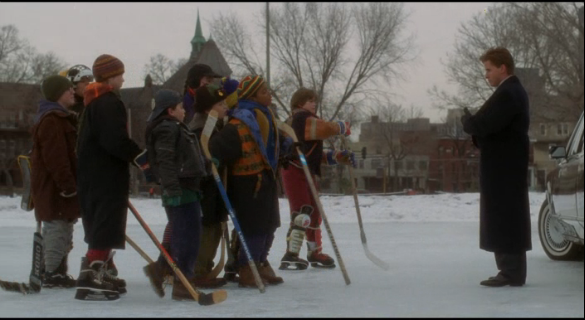
At the first meeting between Bombay and the kids, they believe him to be dangerous, and he has little patience for their antics

The first meeting of the District 5 team and Bombay does not go well, as the kids admit that they “really suck,” and Bombay has little patience for kids and clashes with the parents. He attends their first game, which is unfortunately against his old pee-wee team, the Hawks. He runs into his old coach, Coach Riley, who still instills in the kids that winning is everything, and still is disappointed about the team’s loss in 1979. The first game is an embarrassment, with District 5 losing 17 to 0. As Bombay walks out on the team, he sees a familiar face at the doors, and is shocked to see that it is his old friend and mentor Hans. He runs after him, but is unable to find Hans in the parking lot. Bombay then switches his training to having the kids take falls and pretend they’ve been injured by the other team. Charlie, one of the players, refuses to play dirty hockey.

Not knowing what to do anymore, Bombay finds Hans at his sports shop, and asks for advice. Bombay is reminded that he gave up hockey after that disastrous game, with his father having died four months prior, and his passion for the game having disappeared. Hans helps him rekindle his love for hockey, and asks him to teach the kids how to fly. After being inspired by Hans, Bombay goes to Charlie’s house to apologize to Charlie and his mother for his behavior before, and then goes to his boss and asks for the firm to sponsor the team. The team then is named the Ducks, after the boss. Charlie soon begins to bond with Bombay, and the team continues to add new members and improve their skills.
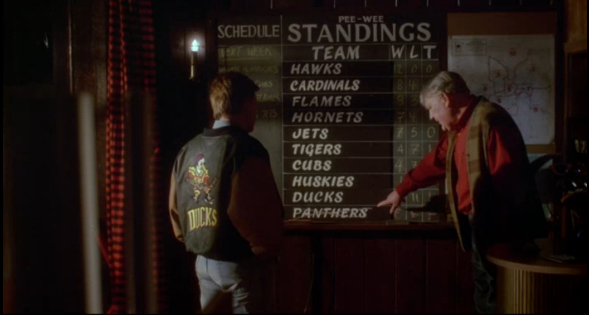
After their tie game, Hans explains to Bombay that the Ducks still have a chance of getting into the playoffs and facing the Hawks

The team manages to tie their next game, and Hans lets Bombay know that the Ducks may be able to make the playoffs. When Bombay voices his concern about the possibility of facing the Hawks, Hans tells him that the district lines were redrawn the previous year, and that the Hawks’ star player, Adam Banks, is supposed to play with the Ducks. Coach Riley is furious with Bombay, accusing him of backstabbing. Bombay, however, feels that he’s playing by the rules. The Ducks hear Bombay call them losers (although he was being sarcastic), and with the discovery that he was once a Hawk, most of them decide they don’t want to play for him anymore. Bombay doubts he can stay the coach if the team doesn’t trust him and Adam Banks, which upsets Charlie greatly.

Bombay encounters more problems when he finds that his boss is an old friend of Adam Banks’ father and, with Coach Riley, the three demand that Bombay drop his protest. He refuses, and loses his job. At school, the kids have a fight over the fate of the team, which subsequently reunites them, and Bombay, when he comes by to talk to them. Adam decides to join the team, but the team still doesn’t trust him, as they still consider him a Hawk. However, with his help, they win the game and make it to the playoffs. They eventually make it to the final match versus the Hawks. Bombay, however, is still haunted by the 1979 game and Coach Riley’s disappointment in him.
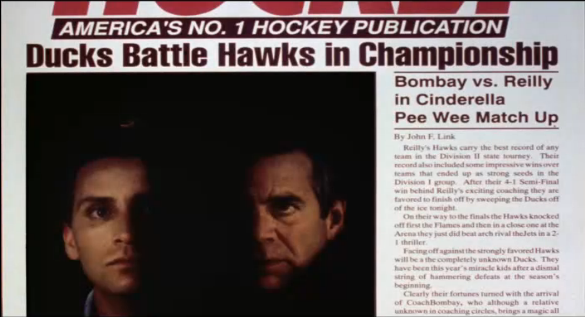
The match is considered an intense one, with Bombay against Riley, Adam Banks against his former team, and the Hawks defending their title against the Ducks

The game is intense from the get-go, with Banks’ former teammates trying to keep him down on the ice. The Hawks score first, and continue to score on the Ducks, leading the first period 3 to 0. At one point, Coach Riley stops Banks’ former friends, telling them to “drop him like a bad habit.” One friend looks alarmed, but the other agrees to do so. As Banks rushes with the puck, the one friend pushes Banks down, sending him flying headfirst into the goal. While Banks is able to score, he has hit his head so hard he is knocked unconscious. He is sent to the hospital, and the Ducks are more determined than ever to win. At the end of the third period, the Ducks are able to tie it up, and are given a penalty shot, sending the game into overtime. Charlie is picked to take the shot, with Bombay reassuring him that even if he misses, everything will be all right. Charlie makes the goal, and the Ducks win the state championship.

In the end, Bombay goes off to try out for the minor leagues, saying goodbye to the team as they cheer him at the bus station. He promises he’ll be back before the next season, as they have a title to defend.
September 16

September 16, 1995 – The Animated Series Timon and Pumbaa Premieres in Syndication

Image credit: wikipedia

“Wait a minute! Which is probably the amount of time we have left to live.”

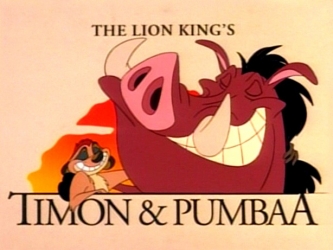
On September 16, 1995, the Disney animated series Timon and Pumbaa premiered in syndication. It was one of the last Disney animated series to be shown on CBS through the cross-promotion deal between the two companies. Based on the hit 1994 film The Lion King, the series deals with the misadventures of Timon the meerkat and Pumbaa the warthog, with their adventures sometimes taking them across the globe. Ernie Sabella reprised his role as Pumbaa, but Nathan Lane was unable to reprise his role as Timon, and the role taken over by Kevin Schon and Quinton Flynn (to a lesser extent). The series ran for 85 episodes over 5 seasons, and is currently shown on Disney’s Disney Junior channel on cable television. The series was nominated for ten, and won three, Daytime Emmy Awards: Outstanding Individual Achievement in Animation, Outstanding Sound Mixing, and Outstanding Performer in an Animated Program.

September 15

September 15, 1998 – A Bug’s Life Soundtrack is Released Through Walt Disney Records

“He just knew that he’d come through, it’s the time of your life, so live it well.”

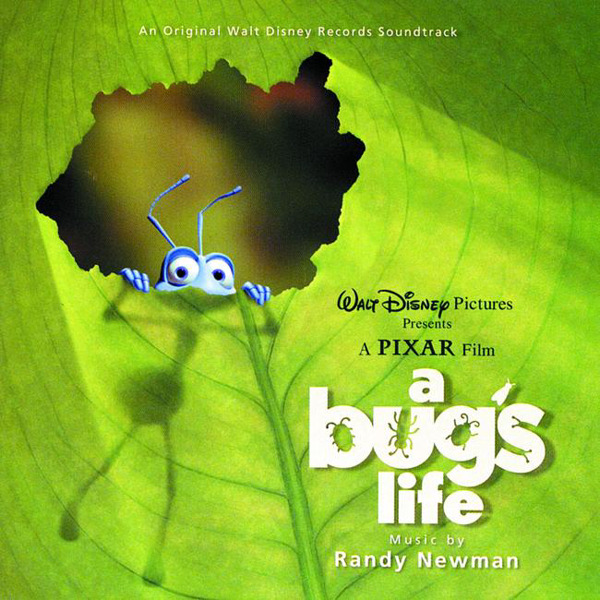
On September 15, 1998, the soundtrack for the Pixar film A Bug’s Life was released on Walt Disney Records. The soundtrack was composed by Randy Newman, who has done several soundtracks for Pixar, including Toy Story. The first track of the album is the song “The Time of Your Life,” written and performed by Newman, and meant as the theme song for the film. The soundtrack won a Grammy Award in 2000 for Best Score Soundtrack for Visual Media, beating out the scores for Shakespeare in Love (Stephen Warbeck), Star Wars Episode I: The Phantom Menace (John Williams), Le Violon Rouge (John Corigliano), and La Vita è Bella (Nicola Piovani).

September 10

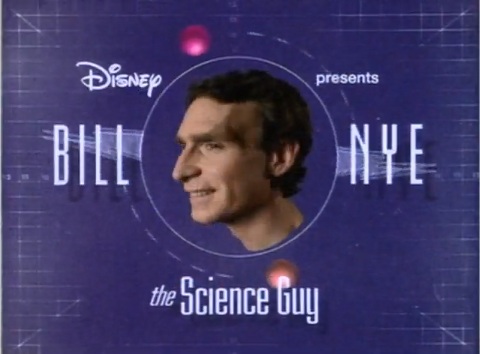
September 10, 1993 – The Television Series Bill Nye the Science Guy Premieres

Image credit: wikipedia

“Bill Nye the Science Guy: brought to you by air. Without air, you ain’t flying.”

On September 10, 1993, the educational show Bill Nye the Science Guy premiered on PBS. The show was hosted by noted scientist Bill Nye, and was produced by Disney Educational Productions, with distribution by Disney-ABC Domestic Television. The show would present a topic, which Nye would explain with visuals in his lab. For instance, the first episode, Flight, explained to the audience how air pressure makes things fly. Most episodes would feature a parody of a pop song, with the song’s lyrics summarizing the lesson learned in the episode. The show was very popular among children, and ran until June 1998, winning several Emmy Awards, including one for Outstanding Children’s Series in 1999 and 2000.

August 31

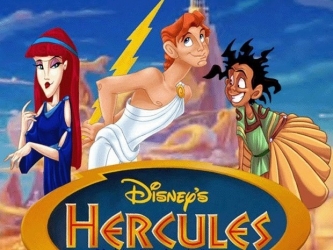
August 31, 1998 – The Disney Channel Original Series Hercules: The Animated Series Premieres in Syndication

Image credit: Disneywiki

“Now the boy’s in school, he’s in training.”

On August 31, 1998, the Disney Channel Original Series Hercules: The Animated Series premiered with its first episode, “Hercules and the Apollo Mission.” The series was based on the 1997 film Hercules, and tells the story of a teenaged Hercules attending school. Most of the cast members from the original film reprised their roles in the series, with new characters Cassandra (Sandra Bernhard) and Icarus (French Stewart) playing the parts of Hercules’ school friends. Tate Donovan voiced Hercules, James Woods voiced Hades, and Robert Costanzo voiced Philoctetes. The show’s timeline makes it a midquel, with the events neither preceding nor following the timeline of the film. However, as many of the events of the series contradict events from the film, the show is not considered canon. It aired for 65 episodes, and finished its run on March 1, 1999.

The first episode, “Hercules and the Apollo Mission,” finds Hercules and his friends participating in an intern week at their school. Hercules is the only student not happy with his job, as he has to work at a fast food restaurant. He asks his father, Zeus, for help getting a better job, and Zeus grants him the job of driving Apollo’s chariot across the sky. Unfortunately, Pain and Panic are on hand to carry out Hades’ scheme to bring down Hercules, which includes unchaining the sun from the chariot. Hercules and Icarus must work together to bring the sun back into the sky before Hades is crowned the new king of Olympus.

August 29

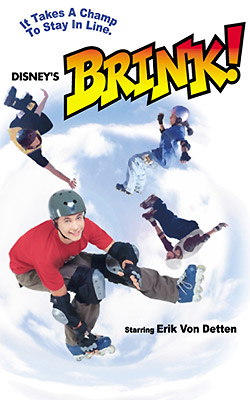
August 29, 1998 – The Disney Channel Original Movie Brink! Premieres

Image credit: wikipedia

“We skate for fun. We’re soul skaters.”

On August 29, 1998, the Disney Channel Original Movie Brink! premiered. The film is considered a loose, modern adaptation of the 1962 made-for-television Disney film Hans Brinker or The Silver Skates, although the backdrop is inline skating in California rather than ice skating in Holland. The film was directed by Greg Beeman, produced by Bernadette Caulfield, and written by Jeff Schechter. It starred Erik von Detten as Brink, Sam Horrigan as Val, and Christina Vidal as Gabriella.

Andy Brinker, known by others as “Brink,” and his friends Peter, Jordy, and Gabriella, call themselves “Soul Skaters” – those who skate for fun rather than make a profit. Their free-skating attitude clashes with a sponsored team known as the X-Bladz, led by their classmate Val. Although it goes against what Brink believes, he decides to join the X-Bladz once he finds his family is in financial difficulty, hoping to earn enough money to help. His friends don’t realize what Brink has done, but when they do, they feel betrayed, and challenge the X-Bladz to a downhill race.

The X-Bladz win, thanks to Val cheating and causing Gabriella to fall and wind up seriously hurt. The Soul Skaters disown Brink, calling him a sell-out. After seeing his son work so hard to help his family, including working at a dog-grooming store called “Pup’N Suds,” Brink’s father decides to help his son and the Soul Skaters prepare for a local competition and revenge against the X-Bladz. The Soul Skaters accept Brink back in, and end up sponsored by the dog-grooming store. At the competition, it comes down to Brink and Val, with Val again trying to cheat. Brink wins, and Val is kicked out of the X-Bladz for cheating. Although Brink is offered the chance to become the captain of the X-Bladz, he turns it down to go back to his friends and their attitude of skating for fun, not profit.

August 14

August 14, 1995 – Michael Ovitz is Named President of the Walt Disney Company

“Mr. Ovitz described the meeting [with Michael Eisner] as ‘an interesting way to start my career at the Walt Disney Company.’”-David Teather, in The Guardian on October 27, 2004

On August 14, 1995, Michael Ovitz was named the new president of the Walt Disney Company by Disney chairman Michael Eisner. After co-founding the Creative Arts Agency in 1975, Ovitz resigned his position there in 1995 to accept the Disney position. However, he grew frustrated with the role as the second-in-command to Eisner, along with the scrutiny from the media, and announced his resignation on December 27, 1996, which became effective on January 31, 1997. His severance package included $38 million in cash and about $131 million in stock. He was succeeded by Robert Iger.

August 11

August 11, 1995 – The Mickey Mouse Short Runaway Brain is Released to Theaters

“What am I going to do, Pluto?! You need moolah to hula!”

 On August 11, 1995, the Mickey Mouse short Runaway Brain was released alongside the live-action feature film A Kid in King Arthur’s Court. The short was based on an idea by Tim Hauser, and directed by Chris Bailey. Mickey Mouse is voiced by Wayne Allwine, Minnie is voiced by Russi Taylor, Pluto is voiced by Bill Farmer, Dr. Frankenollie is voiced by Kelsey Grammer, and Julius is voiced by Jim Cummings. There are two Disney Easter eggs within this short: the name of the doctor is an homage to the animators Frank Thomas and Ollie Johnston, and Zazu from The Lion King makes a cameo appearance.

It’s a stormy day in suburbia, and Mickey is playing video games in his house when Minnie arrives. She tells him how excited she is about that night, but when he seems more interested in the game he’s playing, she accuses him of forgetting their anniversary. Seeing he has forgotten, Minnie turns away angrily, but Mickey brings her a newspaper, saying he hasn’t forgotten at all. As he tries to show her the ad for miniature golf, she spies the ad below it for a trip to Hawaii, and believes Mickey is taking her there. Mickey sees the price of $999.99 for the trip and has sticker shock, but can’t tell Minnie they aren’t going.

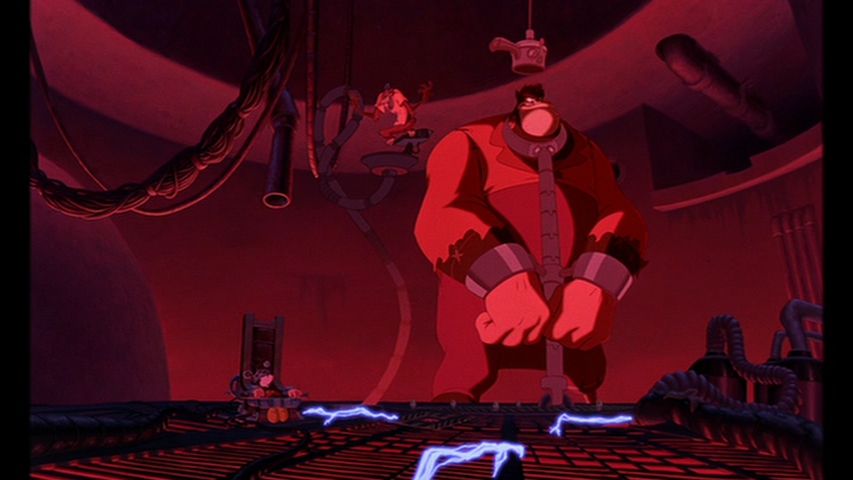
The doctor sets to work switching Mickey’s brain with that of his creation, Julius

As Mickey panics, Pluto brings him the want ads, where Mickey finds an ad that promises “$999.99 for a mindless day’s work” by a Dr. Frankenollie. Mickey quickly grabs his coat and sets off to the job. As he arrives, he is sucked into the doctor’s secret lab and bound in a chair. The doctor greets him, trying to convince Mickey it will be an adventure, and hires him on the spot. The doctor then introduces his Frankenstein-like creation, named Julius, who he calls Mickey’s “co-worker.” The work involved requires the doctor taking Mickey’s brain and switching it with Julius. Although Mickey resists, he can’t get out of the chair, and sits helpless.

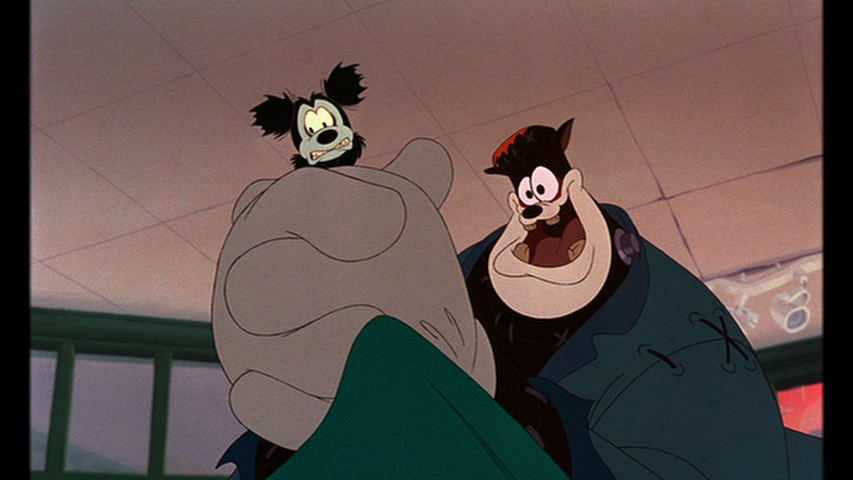
The experiment results in an explosion, and as the smoke clears, Mickey discovers that his brain is in Julius’ body. As he tries to tell the doctor that he’s changed his mind, the doctor turns into ash, having died in the explosion. Julius appears, now in Mickey’s body, looking like a rabid animal. Mickey tries to stop him, but when Julius looks in Mickey’s wallet and sees a picture of Minnie, he is immediately smitten, and runs off to find her. He spots her entering a store to buy a bathing suit for Hawaii, and follows her in.

A triumphant Mickey (in Julius’ body) captures Julius before he attacks Minnie

As Julius is about to grab Minnie, Mickey breaks into the store and grabs him, warning Minnie that Julius is a monster. Minnie, however, unaware of the switch, screams, thinking Mickey is the monster. She grabs Julius and begins to run, but Mickey catches up with them and grabs her, trying to protect her. Mickey is finally able to convince her that he is Mickey, just in Julius’ body, and after he puts her at a safe place, he begins to fight with Julius. The two land on power lines, which forces their brains to switch back. Unfortunately, Julius still is smitten with Minnie, and tries to take her hostage after he throws Mickey off the side of the building.

Mickey suddenly appears with a vacuum, using a window washer’s cart to appear at the roof again, and attacks Julius. He captures the monster with a rope, and after tying it to the moving arm of a nearby billboard, Julius is trapped like a yo-yo, going up and down with the movements of the arm. In the final scene, Mickey and Minnie are sailing off to their anniversary celebration to Hawaii in an inner tube pulled by Julius, who keeps swimming toward Minnie’s picture suspended in front of him on a fishing rod.

July 31

July 31, 1995 – The Walt Disney Company and Capital Cities/ABC Announce Their $19 Billion Merger

Image Credit: Wikipedia

“I feel more comfortable with the two companies together.” – Michael Eisner, former CEO of The Walt Disney Company

On July 31, 1995, The Walt Disney Company and Capital Cities/American Broadcasting Company announced plans for a $19 billion merger, which was completed on February 9, 1996. The deal meant that Disney would acquire 9 VHF (Very High Frequency) and 1 UHF (Ultra High Frequency) television stations; 11 AM and 10 FM radio stations; a percentage of ESPN, The History Channel, A&E Network, and Lifetime Television; and a publishing group consisting on 85 trade journals, 18 shopping guides, 2 consumer magazines, 21 weeklies, and 7 daily newspapers – however, most of this publishing group would eventually be sold. With this merger, the broadcasting name of Capital Cities/ABC was renamed ABC, Inc., but the network still uses the name American Broadcasting Companies. Interestingly enough, the president of ABC at the time, Robert Iger, is now the CEO of The Walt Disney Company.

The partnership between ABC and Disney goes back to 1954, when Walt Disney agreed to a regular network television show if they would help invest in the Disneyland project. ABC agreed, providing a $500,000 investment up front, and $4.5 million in loans, making ABC a 1/3 owner of Disneyland. Disney remained on the ABC network until 1961, after buying out ABC’s share of Disneyland. After the merger in 1996, many successful shows appeared on the network, from the Saturday morning cartoon block “One Saturday Morning,” to the smash game show Who Wants to Be a Millionaire?, to dramas The Practice and Alias. The network still continues to find success with recent hits that include Lost, Desperate Housewives, Once Upon a Time, Castle, and Revenge.

July 29

July 29, 1999 – The Rock ‘n’ Roller Coaster Starring Aerosmith Attraction Opens at Disney’s Hollywood Studios

Image Credit: Official Walt Disney World Website

“…how’s everyone going to get to the big bash? The solution: a super-stretch limousine that races across 3,400-feet of roller coaster tracks past Southern California landmarks and slices through the toughest of traffic on the LA freeways.”

On July 29, 1999, the Rock ‘n’ Roller Coaster Starring Aerosmith attraction opened at Disney’s Hollywood Studios at Walt Disney World. It is located at the end of Sunset Boulevard, next to the Twilight Zone Tower of Terror. Known as an “extreme” roller coaster, the ride goes from 0 to 60 in 2.8 seconds. The story that goes with the ride is that Aerosmith is finishing up a practice session, and is running late for their big concert across town. The Rock ‘n’ Roller Coaster, known as their super-stretch limo, will take them there, with guests along for the ride. The attraction has been sponsored by Hanes since 2008.

Guests ride through several areas of “California highway,” ranging from Interstate 5 to U.S. Route 101, all to a soundtrack of Aerosmith songs, some rewritten to accommodate the ride. Each car on the ride plays different songs; Aerosmith worked with the Disney Imagineers to create a soundtrack for each car. To play the soundtrack, each car has a special onboard audio system that includes a 125 speaker, 24 sub-woofer, and 32,000 watts.