RSS Feed

Tag Archives: 1950s

January 19

January 19, 1951 – The Chip ‘n’ Dale Short Film Chicken in the Rough is Released to Theaters
CitR_1

“Hey, hurry up and come with me – I found something terrific!”

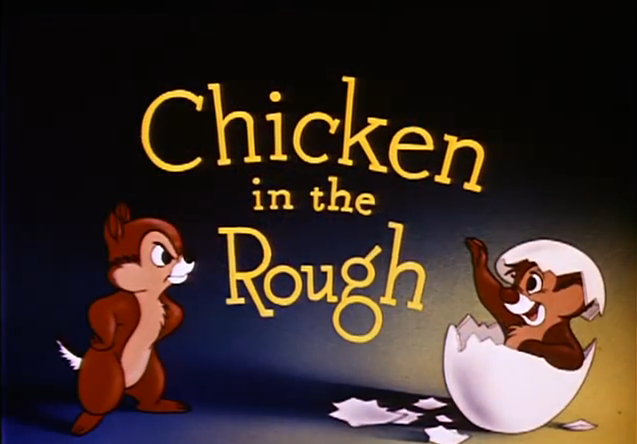
On January 19, 1951, the Chip ‘n’ Dale short film Chicken in the Rough was released to theaters. This was the first short in the short-lived series featuring just the classic duo. It was directed by Jack Hannah, with story by Nick George and Bill Berg.

The short begins on an early morning at a farm, where Chip and Dale quickly are busy collecting acorns. A rooster looks inside the hen house, waking up the sleeping chickens before tending to his hen, whose eggs still aren’t hatching. Poor papa rooster walks around nervously, before being accidentally pelted with acorns when Dale trips in the tree. Chip and Dale hurry to the ground to retrieve their acorns, when Dale ends up inside the hen house. Spotting the eggs, he thinks that walnuts are hidden inside, and goes to fetch Dale. Chip tells him that they’re nothing but eggs and hurries back to his acorns, leaving Dale to pout as he sits on top of an egg. As soon as Dale perches on the egg, the egg hatches, and the chick inside takes to Dale, with Dale taking the chick as his own. Chip has Dale take the chick back, but the chick won’t leave Dale. Dale hides inside the pieces of the egg shell, hoping the chick will imitate him, but the chick sneaks away just as the hen returns and nests. Finding it too hot inside the egg, Dale tries to make his way out, with the hen thinking one of her eggs is hatching. She calls out for the rooster and sprints outside, giving Dale only a few moments to hide back inside the egg. Dale manages to sneak outside in the egg shell, but the ruse is soon up, and Dale has to pretend to be a chick. The rooster tries to force Dale to eat a worm, and both Dale and the worm hide together. Dale convinces the worm to pretend it’s being eaten, but the rooster is too smart for the pair. As the hen rescues Dale from the rooster, Dale realizes that he’s completely trapped, and Chip laughs at him from a tall perch.
January 4

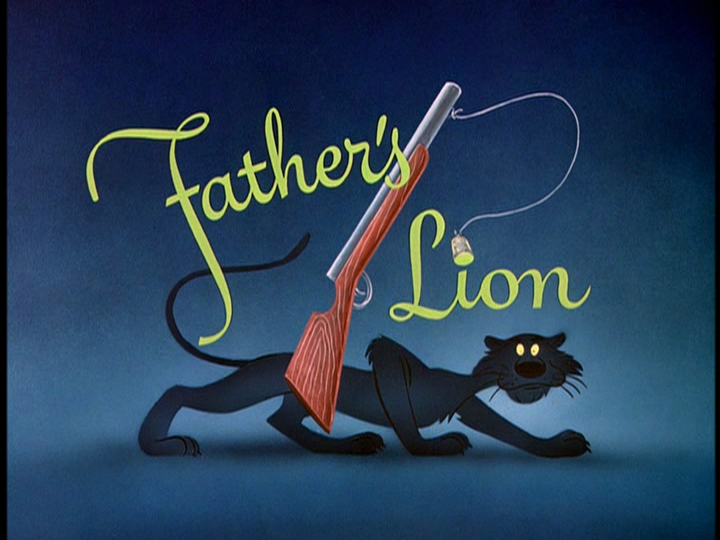
January 4, 1952 – The Goofy Short Film Father’s Lion is Released to Theaters

vlcsnap-2015-01-04-15h18m07s218

“Here is the home of Mr. G. G. Geef, daring adventurer, famous explorer, great athlete, pioneer woodsman, Indian fighter, trapper, and soldier of fortune!…in the eyes of his son, that is.”

On January 4, 1952, the Goofy short film Father’s Lion was released to theaters. This is one of Goofy’s “everyday man” shorts, where he is playing character George Geef. It was directed by Jack Kinney, with story by Dick Kinney and Milt Schaffer.

The sun rises over the quiet suburban house of George Geef and his family, with George taking his kid on a camping trip. Junior is really excited to hear the tall tales George tells, believing them to be reality. When their back tire goes flat, George decides to park the car and climb the trail to the campsite. A mountain lion is trying to rest in the woods, but is disturbed by the gunshots from George’s shotgun as George is shooting at some empty cans. Junior notices a mountain lion in the nearby tree, and George grabs the lion by the tail and beats him up, unaware that he has actually attacked a real mountain lion. The lion is angered by George’s attack and tries to bite George, although Junior saves his father with his pop gun. The lion continues to try and attack George, but is unwittingly beaten by smoke and flapjacks. As they go to sleep, the lion sees this as his chance, but is interrupted by Junior’s requests. Having had enough, the lion attacks the group, and narrowly misses getting shot by George’s shotgun. The lion chases George around the campsite, but once again is thwarted by Junior’s popgun. George decides to get out of dodge, although he starts telling another tall tale as they head back to suburbia.

December 25

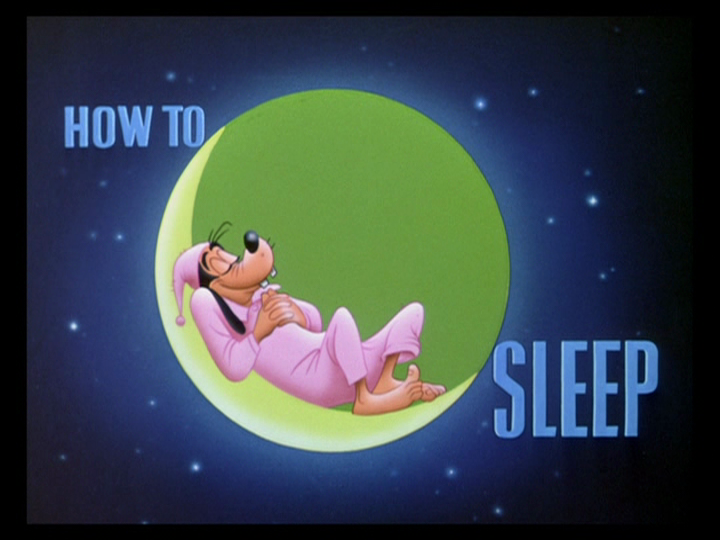
December 25, 1953 – The Goofy Short Film How to Sleep is Released to Theaters

vlcsnap-2014-12-25-21h36m29s21

“Since the beginning of time, man has always had the problem of sleeping.”

On December 25, 1953, the Goofy short film How to Sleep was released to theaters. It was directed by Jack Kinney, with story by Milt Schaffer and Nick George.

The short begins with the history of sleep – or, rather, the lack of it. For present day, they observe various ways people try to go to sleep, from being walked to being rocked. More and more people seem to have difficulty trying to sleep due to the demands of their day. The short then goes into various methods to help people sleep, including hot milk and opening a window. As Goofy tries to count sheep, this only makes his situation much worse. He then has to go see a scientist to help him find the best way to sleep using a variety of electronic devices all at the same time. Unfortunately, his dreams continue to keep him awake. In conclusion, the only way science has determined to put Goofy to sleep is to use a giant mallet over the head, effectively knocking him out.

December 23

December 23, 1954 – The Donald Duck Short Film Grand Canyonscope is Released to Theaters

vlcsnap-2014-12-23-18h04m19s202

“If we all threw rocks into the canyon, pretty soon we wouldn’t have a canyon, would we?”

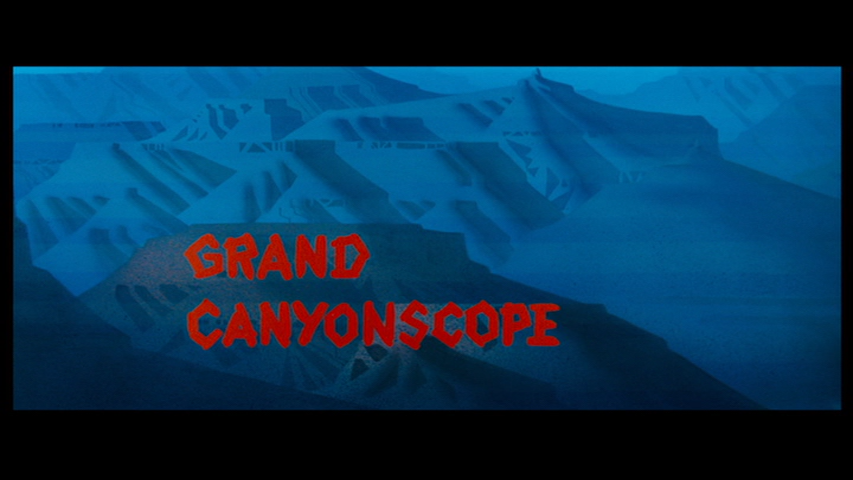
On December 23, 1954, the Donald Duck short film Grand Canyonscope was released to theaters. Donald is the only classic character of the main Disney characters to appear in Cinemascope with this short film; this film also appeared months before Lady and the Tramp, the studio’s first widescreen release. It was directed by C. August Nichols, with story by Milt Schaffer and Nick George.

Donald is on vacation at the Grand Canyon, with Ranger J. Audubon Woodlore serving as the tour guide for the national monument. Donald gets in trouble almost immediately when he attempts to throw a rock from the viewing ledge. Donald then attempts to help a sand painter, but is once again thwarted by Woodlore. No matter what Donald attempts to do, Woodlore is always there to stop the trouble. Finally, the group goes on a burro ride down the canyon, with Donald taking several pictures. The camera’s flash blinds Donald’s burro, and takes Donald on a rather loopy ride around the canyon before Donald falls from his ride. Woodlore catches Donald, then lectures him about leaving his burro behind. The two go and search for the burro, when Woodlore, thinking that he’s found it, accidentally pulls out a mountain lion. The lion, angered at being woken up, chases after Donald and Woodlore while the other tourists just watch. Woodlore continues to lecture the pair while the chase continues and destroys the entire canyon. Angered by Donald and the lion’s actions, Woodlore lays down the law: “When a natural object is marred or defaced, it must be restored to its original state.” After this, he throws the pair some shovels, as they must now dig to create a new Grand Canyon.

December 4

December 4, 1957 – The Disneyland Anthology Episode “Mars and Beyond” Airs

vlcsnap-2014-12-04-16h08m50s13

“In this exciting age when everyone seems to be talking about the future possibilities of space travel, there’s much speculation on what we will discover when we visit other worlds.”

On December 4, 1957, the Disneyland Anthology episode “Mars and Beyond” aired on television. The episode features several well-known technical advisors, including Dr. Ernst Stuhlinger, Dr. E. C. Silpher, and Dr. Wernher von Braun, as they explore the possibilities should man travel to Mars. The episode was later released a featurette in theaters on December 26, 1957, and portions of the film were reedited into a short film called Cosmic Capers, released in England in 1979. The short features several different styles of animation, ranging from the humorous to the more serious. The voices in the animated sequence are all done by Disney veteran Paul Frees. This episode was directed by Ward Kimball, with story by Kimball, William Bosche, John Dunn, Charles Downs, and Con Pederson.

The episode begins with a robot named Garco introducing Walt to the television audience. Walt poses the question of what we will find when we start traveling to other planets. It then goes into the story of man, with each passing age speculating and wondering about their existence and the nature of the world around them. It then explains the process of man’s thoughts and knowledge of the stars movement around the world, leading into a dark world of superstition and stupidity. In the time of the Renaissance, Copernicus came along to prove mathematically that the sun was the center of the universe, not the Earth as was believed. Galileo then proved that the planets were not just specks of light, but spheres just like the Earth. Soon after, people start speculating what life is like on other planets. One of the first to describe the supposed inhabitants of other planets was Bernard de Fontanelle, a Romantic poet. In the 19th century, many people chose Mars as the planet most likely to have inhabitants, as they believed they saw specks of light and interpreted them to be signals to Earth. Several books are written about people meeting Martians, each more fantastical than the previous. At the time of this episode, an eager public is more than willing to read stories about life on other planets, usually with the same formula.

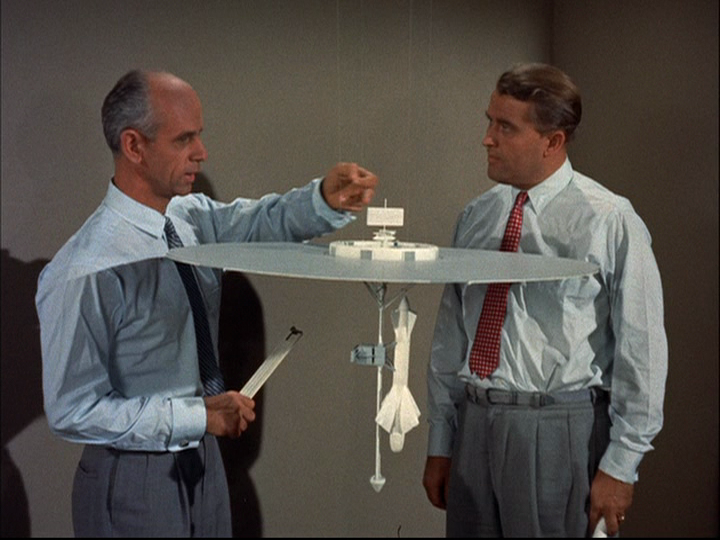
The episode explores possible space travel, with assistance from two well-known scientists

The episode explores possible space travel, with assistance from two well-known scientists

The story then goes to the discussion about other universes, with the Milky Way being one of billions. To give the example about how evolution may be occurring across other planets, the audience is lead into the story of the creation of our own universe, beginning with the Big Bang. The planets are also compared to Earth, and how man would die on each planet, save for the golden zone of Venus, Mars, and the Earth, where it would be possible for man to live. If man were to journey to Mars, life might just be possible, providing that the right resources are provided to sustain life. Mars has always captured the interest of astronomers, and the episode explores the history of the interest of Mars, with the study of the planets’ surface. Dr. E. C. Slipher, a senior astronomer who had worked at the Lowell Observatory in Arizona for over fifty years, is interviewed about potential life on Mars. He explains the facts that astronomers accept, including the size of Mars being half the size of Earth. He introduces a spectrograph, which can help interpret the atmosphere of Mars, and a thermocouple, which can interpret the temperature of Mars. However, photographic evidence of the canals on Mars cannot be obtained due to the Earth’s atmosphere blurring the photo. Although a small amount of information that has been collected, it isn’t enough for astronomers to draw any definite conclusions about Mars, including the conclusion about life on Mars. However, many scientist speculate what life would be like should there be any slight changes to the conditions on the planet. The final part of the program focuses on the possibility of travel to Mars from Earth. Dr. Ernst Stuhlinger and Dr. Wernher von Braun have been working together to create a special atomic type of spaceship that would be able to travel outside the gravitational pull of Earth without using a ton of chemical fuel, with the parts of the spaceship assembled in space after being brought up by conventional rockets. A small atomic reactor will continue to provide heat to power a turbogenerator. A plan is explained for the trip to Mars, which will take a little over 13 months to accomplish, and six ships will be used for the entire expedition.

November 12

November 12, 1954 – The Donald Duck Short Film The Flying Squirrel is Released to Theaters

vlcsnap-2014-11-12-18h02m29s176

“I’ll get that peanut back!”

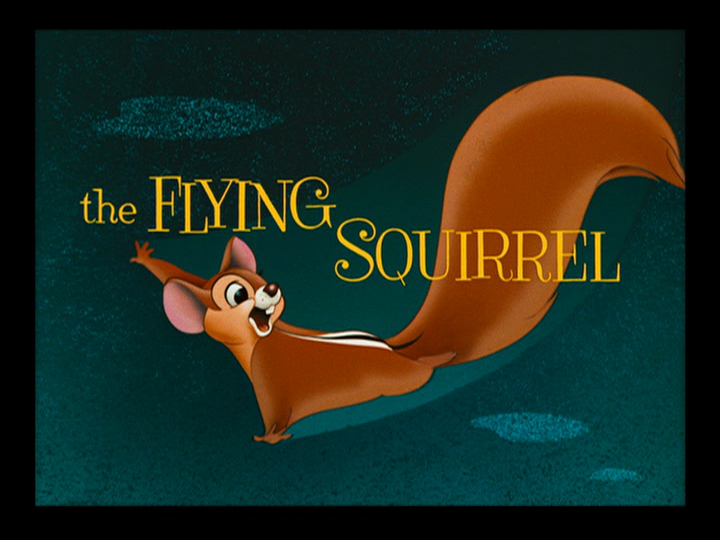
On November 12, 1954, the Donald Duck short film The Flying Squirrel was released to theaters. It was directed by Jack Hannah, with story by Nick George and Roy Williams.

A flying squirrel is picking acorns from a free and flying home to his nest, when he sees Donald selling peanuts in the park. He stops by to grab a few, but is scared off by Donald. Donald, however, asks the squirrel to help hang up his sign in the nearby tree, offering the squirrel a peanut. Unfortunately, the peanut Donald gave him was rotten, and when he goes to complain, Donald folds him up like a paper airplane and throws him far away. The squirrel ends up in a fountain, even more determined to get a peanut, and is able to rope one with a piece of string. Doanld catches him once again, however, and throws him using a slingshot. The squirrel ends up amongst a box of Quacker Jaxs, the snack with a prize in every package, and uses the prizes to create a costume for himself.

Donald searches for the flying squirrel as he hides among the snack boxes

Donald searches for the flying squirrel as he hides among the snack boxes

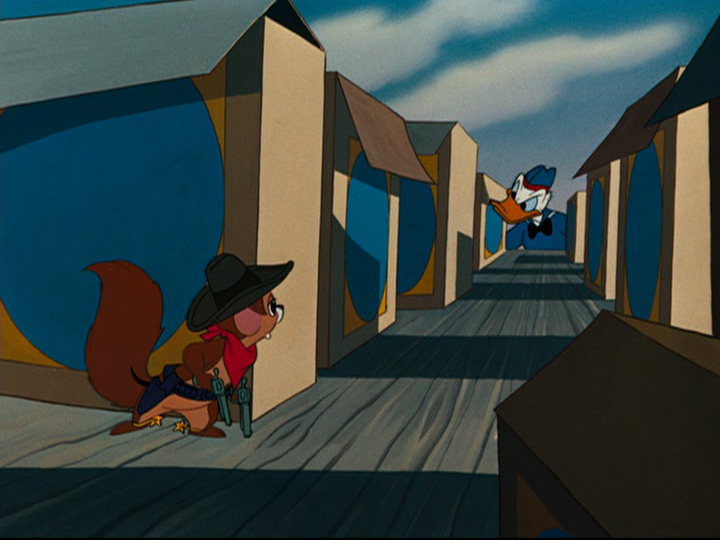
Donald hears something from the table nearby, and looks over to find the flying squirrel dressed up as a sheriff. Donald grabs another pair of toy guns from a Quacker Jax box and pretends to shoot the squirrel; while the squirrel plays dead, Donald reaches in to grab him, only to find his fingers handcuffed. The squirrel retrieves his peanut from Donald’s pocket and runs away. Donald finally frees himself and, in an effort to get his peanut back, grabs a giant peanut costume and hides at the base of a tree. The squirrel takes one look at the giant peanut and discards his, which Donald eagerly snatches up. Donald doesn’t notice, however, that his giant peanut disguise has been wrapped in a rope by the squirrel, who pulls the peanut up to roast it over the flame in Donald’s cart. Donald leaps out of the rope and heads to the pond to cool off; once the disguise is revealed, the squirrel beats him over the head with a branch, retrieving the peanut while Donald is out of it. An all-out war ensues over the peanut, with both using any weapon at their disposal. In the end, Donald’s cart is destroyed, and the squirrel successfully gets the peanut.

November 10

November 10, 1953 – The Special Short Film Ben & Me Premieres in Theaters

vlcsnap-2014-11-10-16h30m30s89

“Information! Ben, when the sun’s up, it’s up! Why read about it?”

On November 10, 1953, the special short film Ben & Me premiered in theaters. It was adapted from a 1939 children’s book of the same name by Robert Lawson, and was released alongside the True-Life Adventure The Living Desert. It was nominated for an Academy Award at the 26th Academy Awards as best two-reel short film, but lost to Disney’s other nomination, Bear Country. The story was adapted by Bill Peet, Winston Hibler, Del Connell, and Ted Sears, and was directed by Hamilton Luske. It features the vocal talents of Sterling Holloway as Amos, Carlie Ruggles as Ben Franklin, and Hans Conried as Thomas Jefferson.

The short begins with a group of schoolchildren being taken to the statue of Benjamin Franklin to hear of all the amazing things he did. At the same time, a group of schoolmice are taken to the statue of a mouse on top of Ben’s head, who actually is the one who had all the great ideas for which Ben is credited. The tour guide for the mice holds up a book of Amos’ memoirs, and the story begins with Amos’ meager upbringing as a church mouse. He decides to leave his parents and 26 brothers and sisters to seek his fortune, and sets out into the winter storm. He tries to look for work, but is unable to find anything due to his being a mouse. By nightfall, he takes refuge in a run-down store run by a Benjamin Franklin, printer and bookbinder. He comes across Ben, who sneezes hard enough to break his glasses. Ben is also being chased by debt collectors, and is given 24 hours to come up with the money, or else. Amos gives Ben the idea of creating a stove in the middle of the room, so he can provide the room with more heat. While Ben works on the stove, Amos creates a pair of bifocals for Ben to wear from his two broken pairs of glasses.

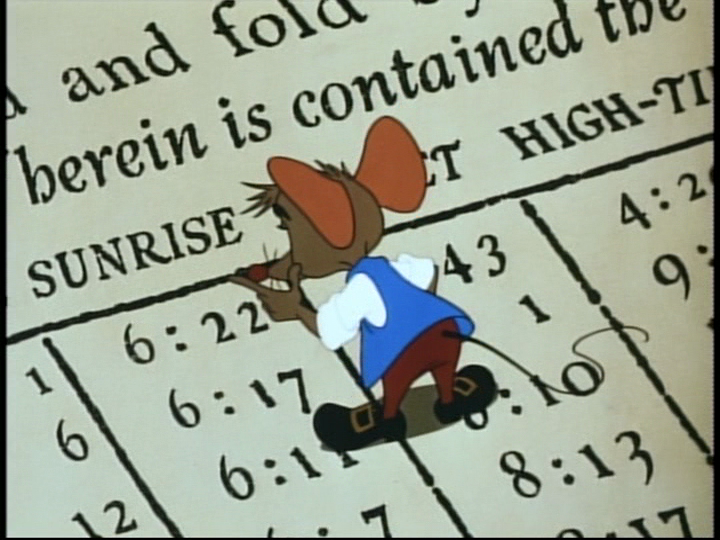
Amos pours over Ben's paper, and is disappointed in what he reads

Amos pours over Ben’s paper, and is disappointed in what he reads

Amos then takes a look at Poor Richard’s Almanack, Ben’s paper, and renames it the Pennsylvania Gazette. He then heads out to find out the news from the local taverns and streets, and the two set to work to create the new newspaper. The Gazette is a hit, and Ben is able to pay off his debts. Amos continues to assist Ben by staying in his hat, ready to offer advice at the ready. The years flow by, and Amos assists with Ben’s letters while Ben works on his experiments, including static electricity. Ben’s experiments take a toll on Amos (as he uses these experiments to pull pranks on Amos), and Amos decides to leave. He only agrees to stay when Ben promises not to play any more pranks, although Ben is lying during the promise. Later, Ben takes up kite-flying, and Amos is attached to the kite so he can have a “bird’s eye view” on the town for his reporting. Unfortunately, Amos doesn’t see that Ben is using the kite for an experiment on electricity, and gets shocked by lightning multiple times. Ben tries to pull Amos down, but it’s too late, and Amos is swept away with the wind. Angry by Ben’s broken promise, Amos decides to leave forever, returning to his family in the church.

The years continue to go, with revolution heating up within the colonies. Ben is chosen to go speak as an envoy to the king, but he returns with a heavy heart, as the king will not listen to the colonists. Ben tries to convince them that there can’t be a war, but he’s unsure of any other way. Amos wants to go back and help Ben, but his pride prevents him. In the summer of 1776, Ben goes Amos’ church residence and begs Amos for his help again. Amos agrees on his own terms, and draws up an agreement for Ben to sign. Amos arrives at Ben’s the next morning with the agreement, and as Ben begins to read it, Thomas Jefferson arrives. Jefferson is in trouble, as he had problems with the beginning of the Declaration of Independence. Amos demands that Ben read his contract now, and when Ben relents and reads is aloud, Jefferson is inspired and uses the words from the contract for the Declaration.

November 2

November 2, 1951 – The Donald Duck Short Film Out of Scale is Released to Theaters

vlcsnap-2014-11-02-17h40m22s183

“This tree is out of scale!”

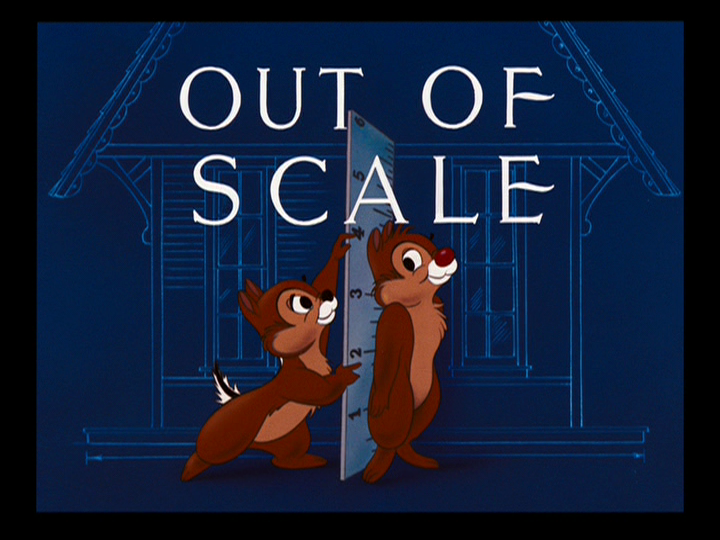
On November 2, 1951, the Donald Duck short film Out of Scale was released to theaters. It was directed by Jack Hannah, with story by Bill Berg and Nick George.

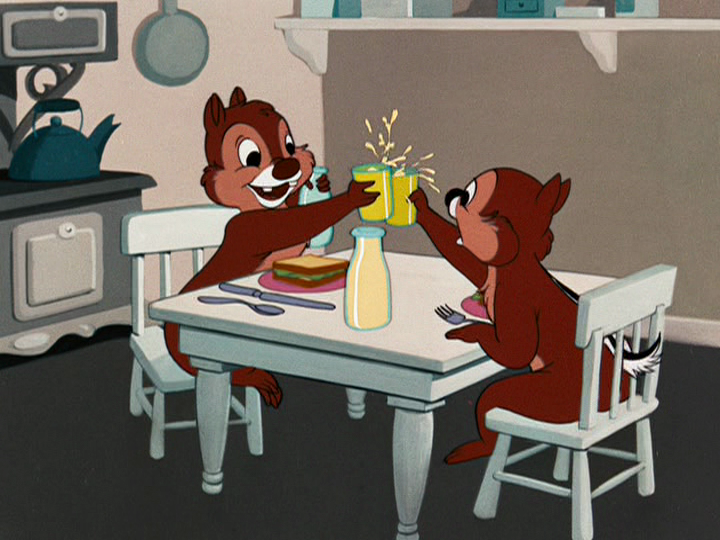
A train is speeding around the tracks, rattling the road, when Donald pulls on the breaks as it arrives to Canyonville…and reveals to the audience that it is just a backyard model train. Donald cools down the engine before setting off again, creating a little farm in one corner of his yard. He comes across a tree in his yard, and decides that, as it does not fit the scale of his backyard railroad, he will need to get rid of it. He is unaware, however, that it is the home of Chip and Dale. Donald notices the pair in his yard and chases them away, but they spot Donald driving away with their tree, and force his train to stop. They try to take their tree back, but Donald attacks them with oil, chasing then through his model town. They end up in a model house, which they take to quickly. Donald decides that, since they are the perfect scale, they can stay in the house.

Chip and Dale settle into their new home in Donald's model town

Chip and Dale settle into their new home in Donald’s model town

Chip and Dale enjoy their new home, and Donald seems content to let them stay, but his devilish nature take hold, and he decides to have fun with them, pretending it’s hazardous weather outside. Chip sends Dale out to close the gate, making him bundle up for the snow, but when he gets outside, Donald is shining a heat lamp over the house, and Dale angrily takes off the extra layers to head back inside. He sees the snow outside and heads out again in layers, although he roasts again when Donald pulls out the heat lamp. Chip follows Dale out and sees Donald’s prank, and pulls out the plug from the lamp. They decide to take off with Donald’s train while he’s distracted, sending their tree flying off the track. The tree lands on the track, and the chipmunks punch a hole straight through the base of the trunk. Donald finally catches up with them, but the chipmunks have a plan to keep Donald from getting angry and keeping their tree: placing a sign on the tree, calling it a Giant Redwood, and keeping the tunnel at the base. Peace is restored in Donald’s yard.

October 21

October 21, 1951 – The Goofy Short Film Fathers Are People is Released to Theaters

vlcsnap-2014-10-21-18h56m24s67

“The new father should start immediately sharing the responsibility for the child’s upbringing.”

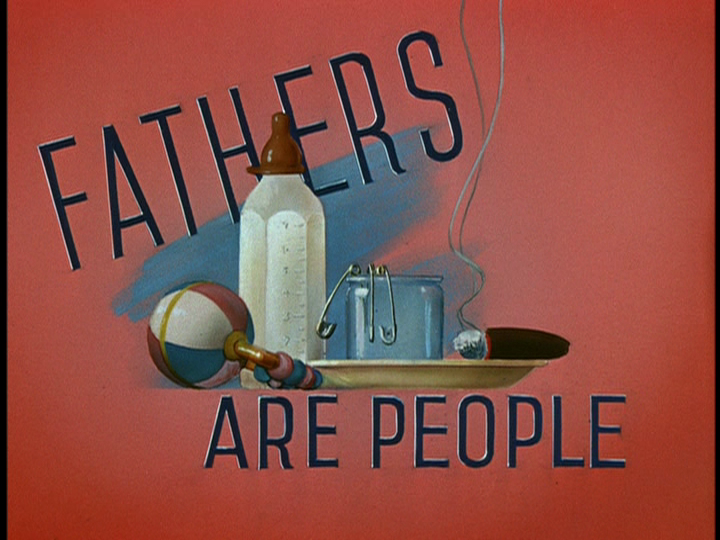
On October 21, 1951, the Goofy short film Fathers Are People was released to theaters. This was one of several shorts where Goofy is portrayed as everyman George Geef. There is also a Hidden Mickey in this short, found on Junior’s bed. The short was directed by Jack Kinney, with story by Dick Kinney and Milt Schaffer.

The short begins with George entering the waiting room in the hospital with a box of cigars, proudly announcing that he is a father. Soon after, he is seen performing chores around his house, hanging up diapers, collecting milk bottles, preparing bottles for his son, and trying his best to help his wife. In the middle of the night, George goes to feed Junior, and ends up making himself a cocktail before turning off the light. The next morning, it’s time to take the family to Grandmother’s, forgetting one important thing: the baby. A picture diary shows the milestones in Junior’s life, including his first tooth, first step, and first word. One Sunday morning, Junior is seen getting in a fight with a neighborhood kid, with George and the other father fighting over which kid is in the wrong, although the kids just begin to play again. George tries to play with his father, but this “play” wears George out, as Junior is rather rough. George tries to sit and read the paper, although Junior pesters his father, wanting him to play. Junior also disobeys his father, and George tries to use reverse psychology, but to no avail. In the end, George falls on a roller skate, and decides that he’s had enough, and is going to give Junior a paddling. However, Junior is able to weasel out of it by acting cute. George decides that kids aren’t that bad, and wishes he had a million of them. When his wife asks how a tiny sweater she knitted looks, George panics, but relaxes when he realizes that he and his wife may only have the one child after all.

October 13

October 13, 1950 – The Donald Duck Short Film Bee at the Beach is Released to Theaters

vlcsnap-2014-10-13-18h35m09s225

“No no, not that!”

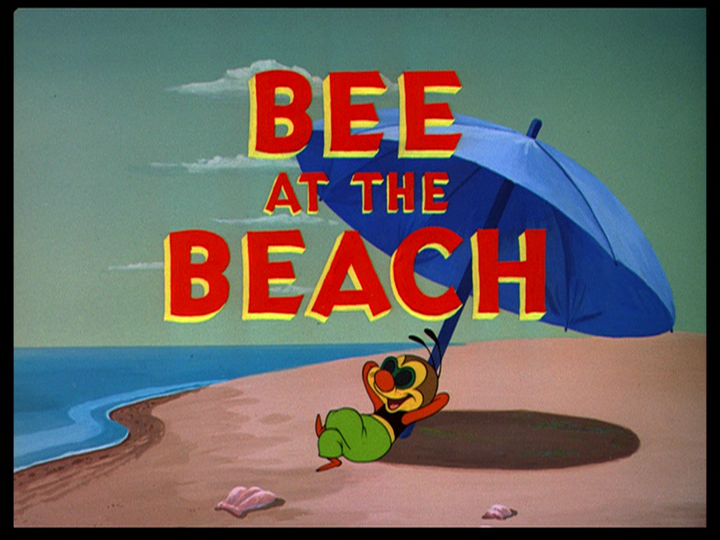
On October 13, 1950, the Donald Duck short film Bee at the Beach was released to theaters. It was directed by Jack Hannah, with story by Nick George and Bill Berg.

It’s a busy day at the beach, and Spike the Bee is looking for a place to lay out. Finally spying an empty spot, he dives in, only to be beaten to the spot by Donald. However, he tries to make the best of what he can claim, until Donald continues to interrupt him, including step on his on his way to the ocean. Frustrated, he heads over to get Donald’s attention, and kicks sand in the duck’s face. Donald retaliates by blowing him away and using his stinger to open his soda; Spike in turn decides to poke holes in Donald’s straw. Donald eventually traps Spike in his soda, and decides to go use his new super duper raft in the ocean. Spike realizes that if he sets off enough carbonation, he can escape, and decides to use his stinger to pop a giant hole in Donald’s raft. Donald is able to avoid the direct hit, but Spike is able to let the air out, sending Donald out into the ocean into an area full of sharks. Although Donald manages to inflate the raft, Spike once again appears, threatening to punch a hole in the raft. Donald begs for his life, and Spike taunts him by poking several holes, which Donald quickly plugs with his fingers and toes, then takes a feather from Donald’s tail and uses it to lure the sharks. Donald manages to avoid getting his tail bitten off, but can’t avoid the sharks for too long, and he soon finds himself using an umbrella to try and fly away, much to Spike’s amusement.