RSS Feed

Tag Archives: 1930s

April 15

April 15, 1932 – The Mickey Mouse Short Film Barnyard Olympics is Released to Theaters
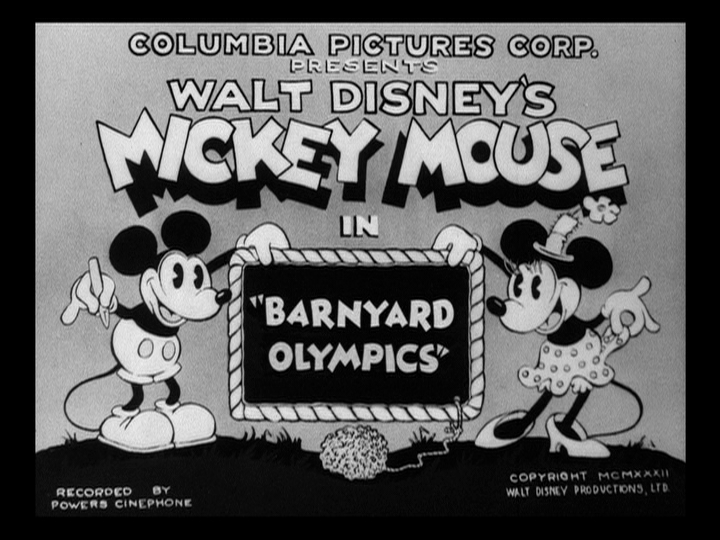
vlcsnap-2015-04-15-19h06m10s96

“Good luck Mickey, hope you win. Minnie.”

On April 15, 1932, the Mickey Mouse short film Barnyard Olympics was released in theaters, just in time to capitalize on the Olympics being held in Los Angeles, California. The short was directed by Wilfred Jackson.

The Barnyard Olympics are in full swing, with a marching band taking the field and performing. First is a boxing match, but the boxers keep punching the ref until they punch themselves out. The next event is diving, followed by wrestling. Minnie is on the front row of the audience with Clarabelle Cow, while Mickey is prepping for his event with help from Horace Horsecollar. The cross country event begins, with Mickey competing; when he sees Minnie in the audience, he waves at her, but Pete tries to get Minnie’s attention. Fortunately, Minnie only has eyes for Mickey. The race starts, but Pete sabotages Mickey. Mickey races to catch up to the rest, but keeps running into trouble as the race continues, especially with continued sabotage, but he manages to give his best effort anyway. He finally manages to catch up to the Pete, and manages to win the race with a bike on its last legs.

April 9

April 9, 1938 – Snow White and Dopey Appear on the Cover of Liberty Magazine

“Walt isn’t a bit surprised. He’s known all along bow marvelously he could, in his own way, make that story.”

On April 9, 1938, Liberty Magazine published an issue with a cover story about the success of the animated feature film Snow White and the Seven Dwarfs, four months after the film’s release. The cover featured an illustration of Snow White kissing Dopey on the head as he heads off to work, mimicking one of the iconic scenes of the film. The article itself, titled “The Story Behind Snow White’s $10,000,000 Surprise Party,” touches on the modesty of Walt Disney, as well as his unwavering belief in the film’s success. There are also some interesting facts about the challenges bringing the film to the silver screen, as the British Board of Film Censors “declared the film was harmful for children,” and speculation on how Dopey was the driving force for the success of the film, as Dopey “proceeded to steal the show and come to life.”

March 17

March 17, 1931 – The Mickey Mouse Short Film Traffic Troubles is Released to Theaters

vlcsnap-2015-03-17-16h49m01s38

“He’s gone!”

On March 17, 1931, the Mickey Mouse short film Traffic Troubles was released to theaters. It was directed by Burt Gillett.

Mickey is a taxi driver on a busy street, and doesn’t seem to do well with all the other cars around. When he stops to pick up a fare, he ends up stopping traffic, alerting a police officer, who berates him and won’t let him finish a sentence. Mickey is finally able to shuffle away in his taxi, but runs into trouble again when a small car refuses to let him pass. Mickey finally uses a trick to get past the tiny car, but the tiny car manages to get ahead again, especially after passing through several muddy patches. Mickey’s taxi has a problem on a road full of potholes, and his fare is less than happy, although each pothole causes the charge rate to jump. Mickey loses his fare without realizing it when he is bumped from the car, and Mickey looks horrified when he arrives to find the fare missing. Minnie is running down the street to her accordion lesson, and Mickey offers to give her a ride when she is running late. The Mickey whistles with Minnie playing her music on the way there, but the ride stops being joyful when Mickey’s car gets a flat tire. Mickey has to improvise with a pig when blowing up the tire, but over-inflates the tire and is sent flying while riding the pig. Meanwhile, a traveling huckster arrives with some snake oil and gives it to Mickey’s car, which causes it to go haywire with Minnie trapped inside. The car lands on top of a cow, which runs away out of shock, taking Mickey, Minnie, and the taxi through a barn and crashing into the side of a tower. Luckily, Mickey and Minnie can have a good laugh in the end.

March 16

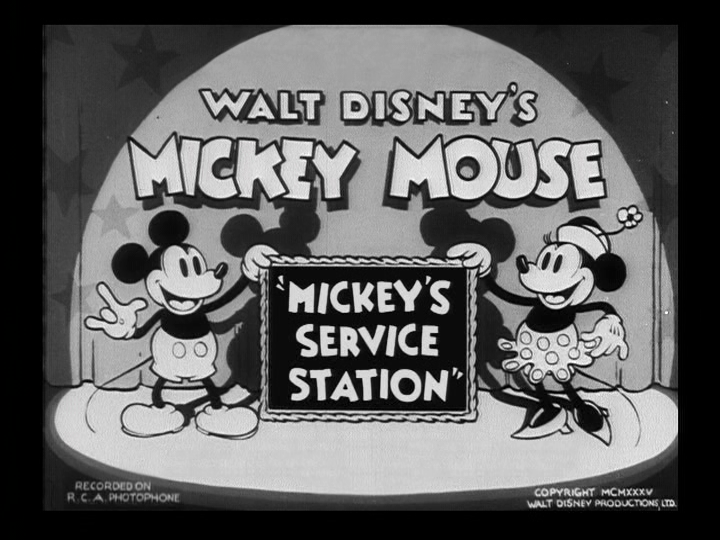
March 16, 1935 – The Mickey Mouse Short Film Mickey’s Service Station Premieres in Theaters

vlcsnap-2015-03-16-17h38m43s252

“You break ‘em, we fix ‘em!”

On March 16, 1935, the Mickey Mouse short film Mickey’s Service Station premiered in theaters. It was directed by Ben Sharpsteen.

Mickey, Donald, and Goofy are hard a work fixing up an old jalopy when Pete shows up at their service station demanding for their service. He calls their attention to a squeaking sound, and warns them that they have only ten minutes to fix the problem, or there will be serious consequences. The boys are frightened enough to begin work, but no matter where they look, the squeaking noise seems to be all over, mocking them. Donald and Goofy tear the car apart, while Mickey has trouble with a tire. Mickey finally locates a cricket within Pete’s tire, but the boys smash the car to bits when trying to smash the cricket with a hammer. Realizing that there’s no time left, and the car is not in good shape, they rush to try and fix the car as best they can, but Mickey still has problems with the one tire. They are finally able to get the car semi-fixed, but when Pete returns and starts it up, the car manages to give Pete a fight before falling apart completely, with the engine chasing Pete away from the service station.


March 10

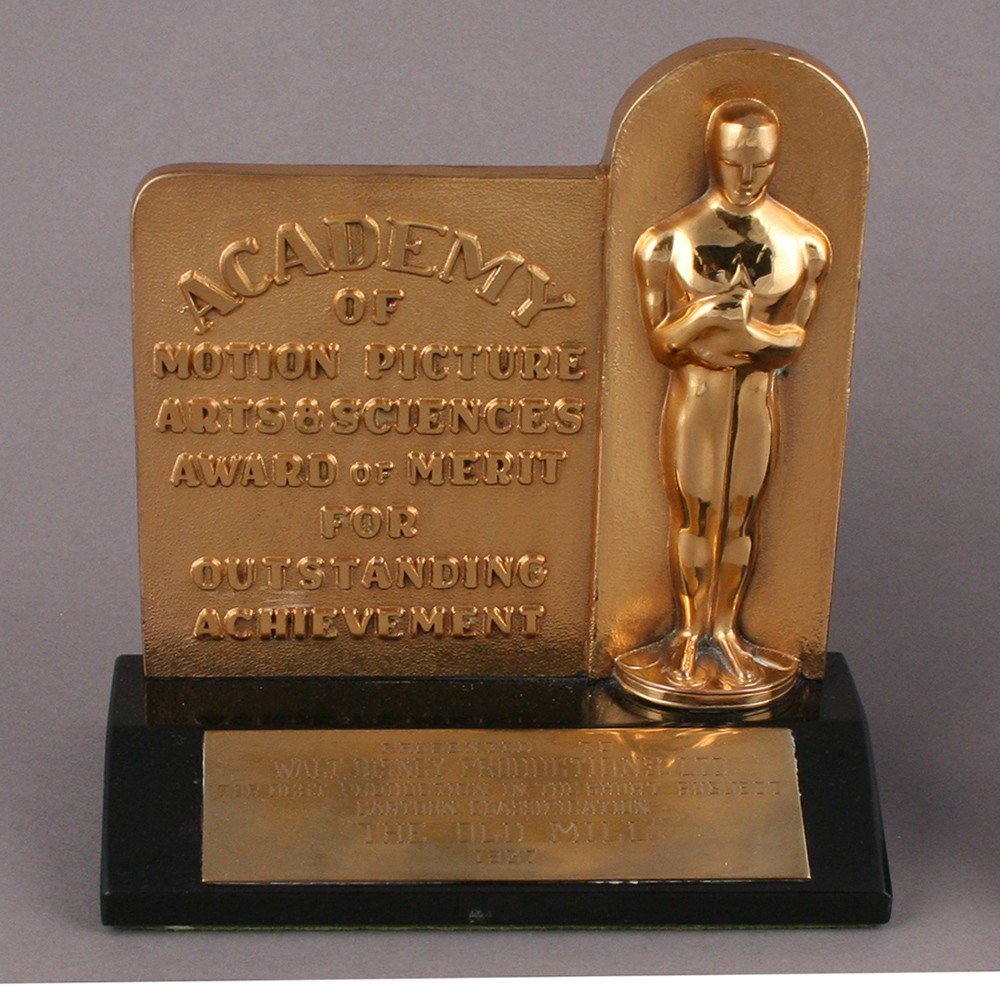
March 10, 1938 – Disney Wins Two Academy Awards for The Old Mill and the Multiplane Camera

Special Academy Award_1938

On March 10, 1938, the 10th Academy Awards were held at the Biltmore Hotel in Los Angeles, California. Disney’s groundbreaking short film The Old Mill, which was the first use of the multiplane camera and features realistic depictions of nature, won the Academy Award for Best Short Film, beating Paramount’s Color Classic Educated Fish and Columbia’s The Little Match Girl. The use of the multiplane on this short served as a testing ground for work on the feature film Snow White and the Seven Dwarfs. Creators of the multiplane camera were further honored at this ceremony by winning a special Academy Scientific and Technical Award

March 3

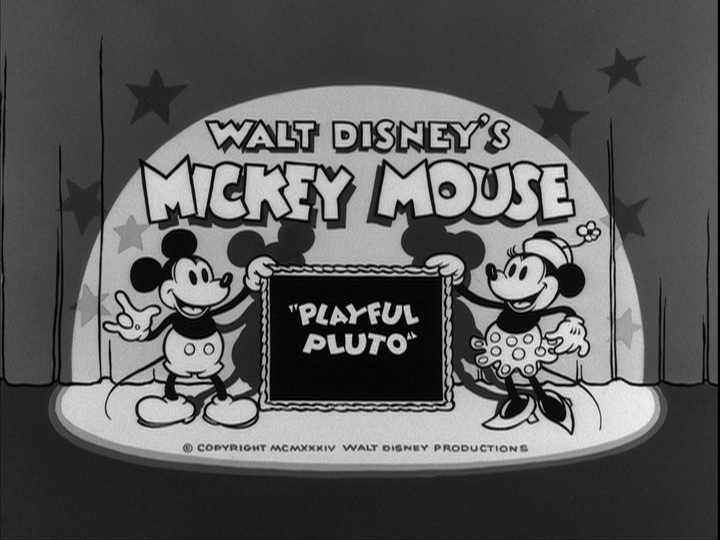
March 3, 1934 – The Mickey Mouse Short Film Playful Pluto is Released to Theaters

vlcsnap-2015-03-03-18h50m21s65

“Now see what you’ve done, you big clown!”

On March 3, 1934, the Mickey Mouse short film Playful Pluto was released to theaters. It contains a piece of animation by Norm Ferguson that has been hailed within the animation field as being one of the first examples of personality animation, with the cartoon character expressing thoughts and emotions through their actions. The scene inspired the likes of Ollie Johnston to go into animation. The short was directed by Burt Gillett.

The short begins with Mickey raking leaves in his backyard and playing around with Pluto. As Pluto fetches a stick from Mickey, a small whirwind sneaks into the yard and starts scattering all the leaves. As Mickey accidentally knocks himself out with the rake, the whirlwind takes his basket and whirls everything once again neatly into the basket – which is soon knocked over again by an eager Pluto. Mickey is angry with Pluto to begin with, but realizes he can’t stay mad at his best pal. Mickey continues with his chores, with Pluto curiously following along and getting into trouble by pulling out the tap. Mickey rushes into the root cellar to turn off the water main, with Pluto holding the flashlight for him. The water main jumps out and hits Pluto in the teeth, knocking the flashlight inside. As Pluto hiccups, the flashlight briefly turns on, scaring the poor dog. Pluto races around the cellar with Mickey trying to calm him down. Pluto runs through the screen door and hides within Mickey’s chest of drawers before realizing that everything is okay. As Mickey steps inside to find Pluto, he sees that a whole swarm of flies has entered through the hole in the screen door, and lays down some flypaper to catch them. Pluto notices a fly nearby and starts following it, unfortunately getting his nose caught on one of the many strips of flypaper. As Pluto frees his nose he then gets the flypaper caught on his paws and his ears before accidentally sitting on it. As Pluto struggles, he ends up caught in the window shade until Mickey frees him.

February 23

February 23, 1939 – Walt Disney is Awarded a Special Academy Award for Snow White and the Seven Dwarfs

vlcsnap-2015-02-23-17h28m51s162

“Aren’t you proud of it, Mr. Disney?” “Why, I’m so proud I think I’ll bust.”

On February 23, 1939, the 11th Academy Awards were held at the Biltmore Hotel in Los Angeles, California. That night, Walt Disney was awarded an Academy Honorary Award for the full-length animated feature film Snow White and the Seven Dwarfs. A special statue was created for this honor, featuring one regular size Oscar along with seven miniature statuettes on a step platform. This award was presented to Walt by actress Shirley Temple.

February 18

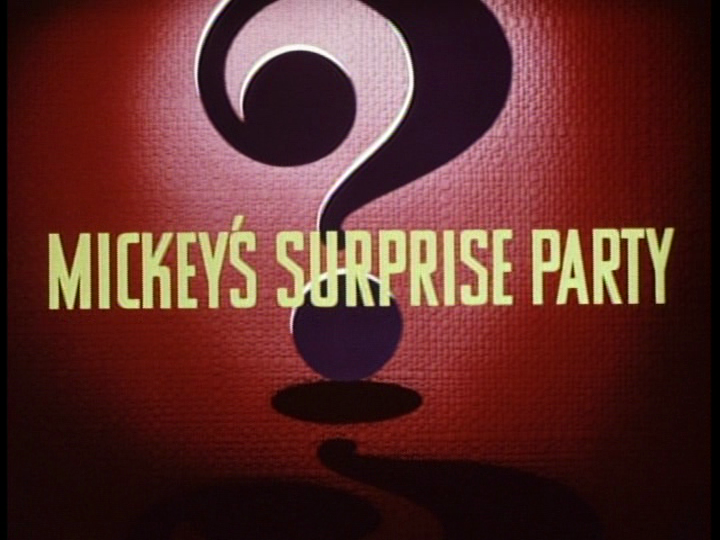
February 18, 1939 – The Commercial Short Film Mickey’s Surprise Party is Delivered to Nabisco

vlcsnap-2015-02-18-17h02m19s108

“My mother used to burn them all the time!”

On February 18, 1939, the short film Mickey’s Surprise Party was delivered to Nabisco. It was created as a commercial for the biscuit company to be shown at the 1939 New York World’s Fair. It stars Minnie Mouse and her dog Fifi, with Mickey making an appearance near the end.

Minnie is busy in the kitchen making cookies for Mickey, but when she puts down the bowl to grab an ingredient, a fly buzzes around the bowl. As Fifi tries to drive the fly away, she accidentally knocks over a box of popcorn, sending the contents into the mixing bowl. She hides as Minnie returns to finish making the cookies. Mickey arrives soon after, and Minnie quickly primps to receive her beau. Mickey gives her a bouquet of flowers, while Pluto gives Fifi a bone. When Mickey asks for his surprise, smoke starts to pour out of the oven; when Mickey notes that something is burning, Minnie races towards the kitchen, alarmed. She quickly pulls out the burnt cookies, which then promptly explode one by one, thanks to the popcorn in the batter. Minnie then sobs over her failed attempt to make cookies like Mickey’s mother made, but Mickey reassures her that his mother used to burn cookies all the time. He decides to solve the situation by running to the store and bringing back a slew of Nabisco products, including Ritz Crackers and Oreos, and Mickey’s favorite, Fig Newtons. Minnie is so thrilled with Mickey, she kisses him.

February 7

February 7, 1938 – The Daily Donald Duck Comic Strip Begins

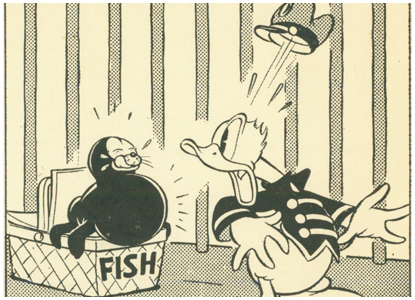
DonaldDuck_Comic

“Come back and fight like a man!”

On February 7, 1938, the daily newspaper comic strip for Donald Duck began publishing. Four years after his premiere in the Silly Symphony The Little Wise Hen, the series was first written by artist Al Taliaferro, who had worked on the Silly Symphony comics in the newspapers. Taliaferro lobbied hard for Donald to get his own strip, and after a lot of hesitation from Roy Disney and the comic department, Taliaferro was allowed to make Donald a solo star in the Silly Symphony comics. These strips were popular enough to be collected in a 64-page comic book from Western Publishing; the book itself surprised everyone with the high number of sales. This first strip in the Silly Symphony comic to feature Donald, and begin the comic career of the duck, has a plot similar to the Mickey Mouse short film Mickey’s Circus, where Donald is trying, and failing, to command the trained seals.

January 28

January 28, 1939 – Imagineer and Disney Legend Ralph Kent is Born

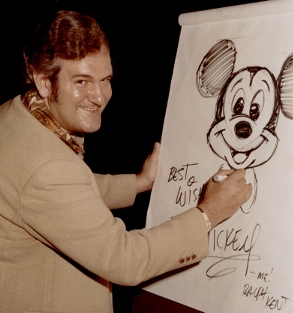
Kent-bio-pic-01

“He said he `fell under the spell’ of Disney when he saw Pinocchio, and much of his 41 years at Disneyland and Walt Disney World was involved in various artistic usages of the Disney characters for marketing, merchandising and Imagineering.” – Imagineer and Disney Legend Marty Sklar

On January 28, 1939, Ralph Kent was born in New York. At age 10, he was so enamored with Disney that he created a giant mural of popular Disney characters in his basement. Kent also sent a letter to Walt Disney the same year, as he wanted to work for the Disney Studios. After studying art at the University of Buffalo Albright Art School, he joined the Army in 1960, working on illustrations for military training films. In 1963, Kent achieved his dream of working at Disney when he was hired to work at Disneyland as a marketing production artist, working on marketing materials for several popular attractions. Kent also designed the first set of limited-edition Mickey Mouse watches for adults, which immediately gained popularity. Over his 41 year career with the company, Kent was known as the “Keeper of the Mouse,” as he was one of the handlers for Mickey Mouse, keeping the wholesome image of the character; this title was evident in 1990, when Kent joined the Disney Design Group as a corporate trainer, teaching new artists the proper way of animating the popular characters. Kent retired from Disney in 2004, and was inducted the same year as a Disney Legend. Kent passed away at the age 68 in 2007.